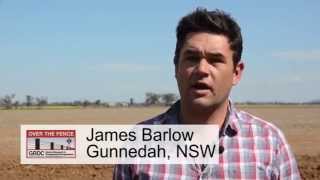
A short YouTube interview (Over The Fence North) with Gunnedah farmer James Barlow about investing in irrigation pivots on his 880-hectare property Mirabinda to enable better summer–winter crop rotation (moving from ~70/30 winter/summer to a planned 50/50 mix). Barlow reports multiple herbicide-resistant weeds on the property (group A resistant black oats; Roundup-resistant liver seed; Roundup and group A resistant ryegrass) that have significantly reduced yields (examples given: ~2 tons/acre down to ~0.5 tons/acre). The GRDC is encouraging broader crop and chemical rotation across the northern zone to limit spread and protect profitability.
Chapters
An investment in irrigation infrastructure is paving the way for greater summer and winter crop rotation as well as access to a wider group of chemicals. As Gunnedah farmer James Barlow battles herbicide resistant weeds, he currently grows a mixture of 70% winter crop wheat, barley, pulses, durum and canola, and 30% summer cotton and sunflowers. He is in the process of moving to a 5050 mix as new pivot irrigators are installed.
At the moment we're developing the place and getting more pivots in which will basically give me a greater area and of crop rotation. So not only rotating between the winter crops, but also with summer crops as well. So it's just management rotation would be key to controlling and getting on top of these weed problems.
On his 880 hectare property, Mirabinda, Mr. Barlow has discovered group A herbicide resistant black oats, Roundup resistant liver seed and Roundup and group A resistant ryegrass. The problem started in the head ditches and soon spread to the paddocks with a devastating impact on crop yields.
It could be going from 2 tons to the acre, back to half a ton to the acre in reduction in yield, just if they were that bad. There was one year that first year and that was when we knew they were kind of a serious problem. So you can imagine a large area getting those kind of reductions pretty dramatic and pretty severe.
On the bottom line, the Grains Research and Development Corporation is encouraging the adoption of greater crop and chemical rotations by growers throughout the northern zone in order to minimise the spread of herbicide resistant weeds and to maximise farm profitability.
Rotating back into canola has been key for the black oat problem. Being a big crop, it just out competes the weeds, covers over and they don't have any chance in those situations. And then to follow it up by then, possibly a summer crop like sunflowers and then maybe cotton growing winter crops still, but then throwing in a few summer crops so you can spray out these group A resistant black oats just with Roundup. They're quite easy to kill. What we're seeing is basically cleaner crops, that's for sure. So with cleaner crops comes better yield and better bottom lines. Obviously crop rotation is good for the soil and microbiology as well. So that combination of the crop rot is certainly helping everything across the board. And certainly paddocks that were quite dirty before are quite clean now, so much so that they don't even need a kind of selective herbicide spray.