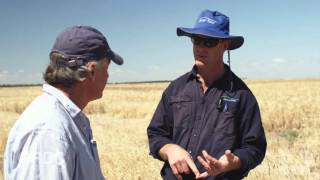
Transcript of a YouTube presentation describing a project to integrate pastures into cropping rotations in a high-rainfall zone. Key goals are weed control (notably ryegrass), reducing reliance on synthetic nitrogen, capturing out-of-season rainfall, and building soil carbon/biology. Early results include substantial reductions in ryegrass seed bank and trials of pasture-to-subsoil incorporation machinery in collaboration with research partners.
Questions this video answers
Up to 90–95% reduction over two years.
Southern Farming Systems, the GRDC, and Melbourne University (engineering department).
Chapters
The project, it's evolved over time. When we first started doing it, we needed a legume or a break crop in our farming systems down here. This was a perfect opportunity to put some pasture into our cropping rotations. We inherited a cropping regime from north of the Divide. Our circumstances down here are very different. We've got to make a new model for the high rainfall zone in this environment.
We obviously have got rye grass issues that pop up here that don't seem to pop up in our dry regions due to the high livestock population we've had here for a long time, and in particular the high use of ryegrass in pastures. When we have gone cropping, we've gone in with a high ryegrass seed bank for a start. And what's happened there is that we've actually developed herbicide resistance quicker than nearly anywhere else in Australia. And it's time now to start looking at other options that don't come out of a drum.
There are four main themes to the project. Combating weeds. Second theme was to try to get some nitrogen that we didn't supply out of a bag into our cropping systems. And the other two themes were try to utilise rainfall that falls out of season. With climate change and climate variability happening, we're seeing more and more often unusual rain events. And so we wanted to be able to find a way of capturing the benefit of those rainfall events. The fourth theme revolved around building soil carbon and trying to improve the soil biology and carbon levels in our soils.
I think a couple of key points that have come out really clearly is companion species to grow with that rye grass to improve the quality of the livestock feed. So whether it be a clover, whether it be a hay oat to try and grow some more bulk, and comparing that quality there and the importance of crop competition and how it really can affect ryegrass population, and we saw a lot less seed set. But some of the results now we've got out of this trial, we're actually starting to see some economics and some figures of of what we're losing or what we're gaining from doing.
And we've had sort of up to 90, 95% reduction in seed bank over two years, which is really exciting. One of the key findings was weeds were surviving our pre emergence and post emergent chemical sprays and our canopy wasn't closing quick enough. And so we were getting germinations of rye grass and radish that were going through and they were the culprits. They were providing the seed bank for the following year. This project has worked on capturing those wee, not letting them set seed. One of the drivers of this project in this high rainfall zone is there's a lot of mixed farms and traditionally a lot of livestock. So we're set up really well to utilise some of these fodders. The cropping system and the livestock system need to complement each other and work to the strength of both systems.
The initial cost is maybe a bit greater than just letting it run and do nothing. But the gain from extra livestock production, nitrogen weed competition and hence less rye grass, probably just now the importance of getting that out for growers to really fully understand and then to get it used more extensively out in the paddock.
This project has been a great catalyst for changing our way of thinking. One of the constraints to crop production in the high rainfall zone in western Victoria is subsoil constraints. Through this project, we've actually thought that we can use some of the pastures that we've grown. We're thinking that we can inject that directly into the hostile subsoil and have the same effect and help ameliorate, make it a more user friendly environment for plants to grow and flourish. Southern Farming Systems and the GRDC have worked together for a long time really well. This project's also allowed us to work with Melbourne University, the engineering department of Melbourne University, to develop a machine to take pasture and put it underground. Once we're confident that, that we're on the right track, we can then involve the farmers and get them to do broader paddock scale trials. And that's really important for us because we're trying to develop a new farming.