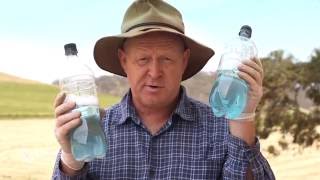
A short how-to/demo video by Gerri the NVT Guru demonstrating correct use of dry ammonium sulfate in spray tanks. The video contrasts two jar-test mixtures (one with proper water volume and dissolution time, one with insufficient water and time), concluding that using ~60% tank fill and allowing ~10 minutes for dissolution prevents precipitation when mixing with 2,4‑D and glyphosate.
Chapters
So here in front of us, we have two mixtures exactly the same mixtures of glyphosate, 2.4D and ammonium sulfate. And the outcome is very different. So one of the bottles showed precipitation. The other bottle is a perfect mixture. So we're going to establish what went wrong here. The problem is ammonium sulphate, and we use dry ammonium sulfate, which is the most commonly used ammonium sulfate in Australia. When you mix it, you need a lot of water. You can't skimp on the water. And the other one is you need to give it time to dissolve. So here we basically used only very little water, and we gave it hardly any time to dissolve. Here we use 60% of our tank volume before we put it in, and we gave it plenty of time. So I will redo this here and we see the outcome. Okay, so let's start with the high water volume in this jar test. I have here 400 milliliter. I'm working on 700 milliliter, which is based on 70 liters per hectare, 100 of that, and we're looking at 60% of our tank filled. So that's 400. So I put the ammonium sulfate in. Generally speaking, you should allow for ammonium sulfate to fully dissolve. 10 minutes. Okay. So I just agitate. Okay. Now, this bottle here have been agitated for 10 minutes in a relatively high water volume, at least 60% of the tank fill. Here I probably have only maybe 10% of the tank fill. We're pulling the ammonium sulfate in, and we will not give it the maximum time, but Instead, only maybe 30 seconds or so. Looks relatively okay. And now what I'm doing will be identical in both bottom. Put the 2.4D in. Bit of a shake. And last, not least, we put the glyphosate in. Bit of a shake. You can already see where we cut corners here with water volume and time. And it will finish up having precipitation on the bottom, and we won't be able to reverse that even if we get it up to our full tank load now. And the two basic mistakes we made here, we used too little water, we didn't use our 60% tank fill, and we didn't give the ammonium sulfate enough time to dissolve. So I give this a little shake, but if you let it stay for a while, you will see how it precipitates to the bottom. So, and here is our final outcome. Exactly the same amount of chemical. This mixture here worked perfectly. This mixture here on the bottom, we can see precipitation. And the problem with this mixture was that we didn't have enough water in the tank when we put the ammonium sulfate in, and we hardly gave it any time to dissolve. So common mistakes in the field. So if you mix a dry ammonium sulfate, what you really have to do watch out for is put 60% of your tank volume into the tank and give it 10 minutes to dissolve and you should have no problems. Now, in our next video, we going to talk about the mixing order, because the mixing order is a very important part of the mixing process as well.