Exploring the Deep Connection Between Sleep, Mental Health, and Neurological Wellness
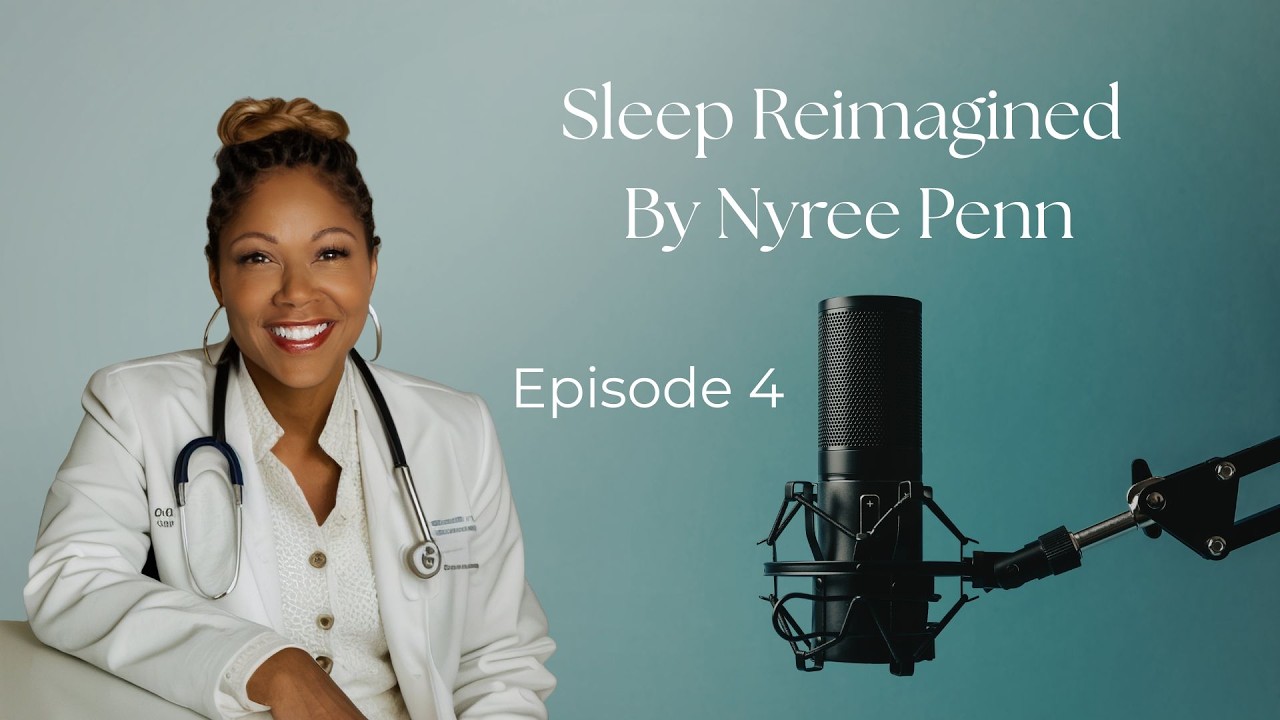
Sleep specialist Nyree Penn argues that "insomnia" is too broad a term and masks REM-sleep deprivation, which she treats with Prosomni Sleep Therapy. Only REM sleep provides true mental rest. Stress, caffeine, blue light, and inconsistent schedules are overlooked triggers.
Chapters
Welcome back to Sleep Reimagined. Nyree, how are you?
I am wonderful, Vivek. How are you? Happy holidays.
Happy holidays. And we are just recording this, sneaking one more episode in this year. Before we say goodbye to 2024 and bring in the fabulous year 2025.
Yes, I can't wait.
And lots of, lots of dreams, new dreams to accomplish, new goals.
Absolutely.
And get number one goal, get good sleep.
Absolutely.
So, Nyree, today's topic, we are going to talk about chronic insomnia or insomnia in general. And I was doing some research about this topic and I figured I didn't know that, that nearly 1 in 3 adults experiences insomnia at some point in time in their life. Is that true?
Absolutely. However, and the reason why that number is seemingly so large is because, you know, we have to understand that all sleep issues are thrown into one basket. Called insomnia, right? So, you know, a lot of times there's really no clarification as to what that means, right? Okay, I have insomnia. Okay, great. Now what? Right? So it's important to identify like what exactly. And that's definitely one of our hopes also is that we really have to expand our vocabulary when it comes to talking about sleep and sleep issues and sleep disparities, because there's just, there's temporary sleep issues and then there's real sleep disorders, right? But seemingly they're all put into this one basket of insomnia. So, you know, ideally I would love to, um, just define and identify what it means when somebody says insomnia, right? Um, and for us at Prosoni Sleep Health and Wellness, um, we look at sleep disparities from the perspective of mental rest, right, that occurs during REM sleep. So Prosoni Sleep Therapy is the only sleep therapy on the market that can target REM sleep. Therefore, today we'll look at how REM sleep is affected by chronic insomnia. And so it's important to identify and define what insomnia is. So when we think about poor sleep, it's easy to, like I said, lump everything together, but chronic insomnia and REM sleep deprivation type of things are 2 sleeps. So we have 2 sleeps. Right. And insomnia is really like the catch-all, the be-all. And then REM sleep deprivation is like the result of insomnia. So we'll definitely dive more into that.
Yeah. So let's start with this. Like, have you ever had sleepless nights yourself? And what was the experience like? And then what did you do to overcome with that?
Okay, so before starting this business, I actually didn't have a problem, you know, sleeping. So, um, which naturally, you know, I had to kind of, you know, evaluate and identify like what is causing me to not sleep all of a sudden. I sincerely did not ever have— I could lay my head, my son can sleep where he's standing. Like, that was— that was honestly okay. The issue though really is that The stress. The stress of starting a business and just being part of my personal sleep journey has really been an eye-opener for me. Just laying awake thinking about stress and responsibilities and looking at the clock and it's 2 o'clock. That means I have 2 o'clock to make myself go to sleep or I have to get up again and start this all over again, right? My mind isn't resting. I'm in bed thinking about this, right? So what does that mean? And then tomorrow I'll get up, I'm tired, I'm groggy, I'm not cognitively functioning well. I'm cranky, I'm irritable. So it's just a domino effect. So chronic insomnia is just the persistent inability to fall asleep, stay asleep, or achieve restful sleep independent of the opportunity to do so. So I'm in bed, why can't I just get that rest, that sleep? But insomnia is more so the persistent inability for whatever reason, right? Initiating sleep— why can't I fall asleep? Why can't I stay asleep? Um, and when I am asleep, why can't I get that rest? You know, I've been asleep for 10, 12 hours, but I'm not rested. Um, I wake up and I have this daytime sleepiness, irritability, fatigue. I can't concentrate, you know. And, and that insomnia is identified as happening at least 3 times a week for at least 3 months.
Okay.
That's how you know, am I just stressed out? I don't, you know, I don't necessarily have insomnia. I just now know that it's the stress of the business. And so it's important for me to identify those triggers. And, you know, most people just aren't aware, don't take the time, are not educated to take the time and identify what is preventing them from having and maintaining sleep.
So is it like when we see like it's happening 3 or more times, that's when you kind of should raise a flag and say like, get checked or whatever?
And unfortunately, you know, in our sleep community is that that's primarily what's looked at. It's like, okay, you have insomnia. So it, and it could potentially be due to sleep apnea. Right. So, you know, then that's when the devices come into play. I'm just trying to phrase my words appropriately. Just, you know, I feel like we can definitely expand on our knowledge in identifying other causes of insomnia and not just sleep apnea.
Okay. Let's talk about the common misconceptions. And I think we touched briefly in previous episodes, but There are a lot of misconceptions about insomnia that people need to especially unlearn. What are those? Do you want to debunk a few so that we can get them out of the door?
I know we touched on this in one of the other podcasts earlier, but the myth, and I know it's going to sound crazy, and I truly believe I'm probably the only person who says this, but again, we look at everything from the perspective of mental rest. Um, restorative rest, um, and sleep, you know. So the myth that sleep cannot be made up, I don't believe is true. I do believe you can make up sleep, specifically REM sleep. REM sleep is a zero-sum game. Like, it's— you— there is such thing as too much REM sleep, and there's such thing as too little REM sleep. Mm-hmm. Sometimes defined as you may have heard the words sleep inertia, sleep debt, adenosine sleep pressure. There is a limit to how much sleep rest you need in that capacity. So I do believe you can make up sleep. So if I can undo a myth or recreate a myth that I do believe you can make up sleep, just like you know you've been doing something, you pull an all-nighter, you only had three hours of sleep, but tomorrow you're going to sleep twelve to fifteen hours. You are making up sleep, specifically rest, right? You didn't— you slept for 5 yesterday and you sleep for another 7. So you— and your typical 7, you're gonna make up your 5. So 12 hours of sleep, that's not uncommon, especially college students. Oh my God, I pulled an all-nighter, I had an exam, I studied that. They come home and crash, right? They're making up sleep. And if we can allow ourselves the ability to make up that rest, um, which is Actually not that easy, right? And that's kind of also where the insomnia comes in. I have the ability to get 12 hours of rest because my exam is done, but I'm still thinking about that test. What if I should have changed this answer? Oh man, let me go re— no, that's that. That's the insomnia. You have the ability to sleep, but you just won't.
So I'm just, uh, clarifying this further so you can make up your Sleep. But I think what you are saying is, and correct me if I'm wrong, is really you can make up for your REM sleep. And that's the more important point, point here because you can have 15 hours of sleep, but if you didn't go into that deep sleep REM mode, you will wake up as tired or there will be problems, right?
Absolutely.
So it is really what you are saying is, uh, there is way to make up for the sleep and that is really deep sleep. Equals to REM sleep. That's what you're saying.
Absolutely. Now, if you can't, that's another issue, right? That is absolutely part of it, right? However, you still have insomnia. Given the opportunity, we help you find, or Prosomnia Sleep Therapy, we will get you that REM sleep that you are unable to get on your own because of your insomnia. Another myth we encounter is that People just accept daytime sleepiness as like a normal, or like needing to take naps. Like, I don't dispute naps, but naps every day are not good. I am nap queen. I love naps occasionally. If you had a hard workout or you studied hard, you work hard, Christmas, oh my God, you know, parents up late because Santa's coming, whatever, whatever. Okay, every— we all know what they're doing today. They're making up sleep. Right? That's totally fine. But the fact that that's normal—no, that's not normal. Right. Getting older, you know, our sleep patterns change. I have insomnia because I'm getting older. You still need appropriate amount of rest. You have an older mind still needs to rest. So there's a lot of myths out there because I believe due to the lack of information.
Well, this is why people need to hear this show. So you can imagine and, uh, you know, or come to you and call you and understand this better. Um, all right. So what are some surprising triggers of insomnia that, uh, most people overlook generally?
Um, I mean, surprising stress. Yes, no, maybe. Um, but seemingly justified. You know, it's like, oh my God, I'm stressed out, so I'm not sleeping. No, it doesn't make it any better. Um, you know, so, uh, it's the adrenaline levels and you're always like your cortisol levels and your adrenaline, those keep you up at night, right? So those are triggers. So stress, you know, you can't unstress yourself, but you definitely need to make proactive conscious decisions to try. Um, poor sleep, poor sleep habits. Um, people don't realize how important absolutely foundationally important it is to have a consistent sleep schedule. That is our number one thing we tell all of our patients. We, we get them on a consistent sleep schedule. What is your ideal sleep schedule? What does your lifestyle look like? What do you have to do? What are your responsibilities? Now, what time are you going to go to bed? What time would you like to wake up? And that is number one thing we tell everyone to do, the importance of a consistent sleep schedule, because you have to think of it like a habit. Right? You have to let your mind and your body know when they can rest. Just like it knows, I don't care if you're looking at a clock or not, come 12 o'clock, you know it's time to eat. So same principle, right? When can I sleep? You just have to consistently, you have to establish a consistent sleep schedule. People often overlook the importance of, or the effects of caffeine and these energy drinks. I'm personally really concerned about these energy drinks. The caffeine levels are so high. Caffeine has almost identical biochemical shape, molecular shape of caffeine and adenosine. So caffeine and adenosine have the same. Adenosine is what prevents you from going to sleep. So caffeine, essentially, especially caffeine after 3 o'clock, caffeine in the evenings, people do evening workouts, they drink these energy drinks, they finish their workout, 2, 3 hours later, they're in bed thinking they're going to go to sleep. Sleep? No. Sugar is another one. A lot of sugar can— it tends to prevent sleep. High sugar, especially heavy meals at night, tend to prevent not just sleep but rest. Definitely contributors of insomnia. Technology. We talked about the blue lights and the suppression of melatonin when you're looking at those devices at night. I think that's another one of the big ones. They think just because they're not actively on their phone, it might be over here, over there, whatever, That blue light is still emitting from your phones and the TV, you know, so turn off those devices, all the electronics. Um, dark and cold is the best way to sleep.
Light. Let's talk about light a little bit. So, you know, like there is obviously, there is also mental makeup, like you want to feel safe. So you're like, especially in children, like they want to keep the light on or something. Yes. Yes. Yes. Yes. And, but, uh, but, uh, Uh, but, uh, what's a good practice? Should it be dark or, because if, if they need a little light, they won't sleep anyway because they feel like, oh, I'm scared.
Right. Exactly. So, um, you know, think of it like this. If you, if you raise them to be scared of the dark, they're going to be scared of the dark. You know, we, I mean, I wasn't raised with a nightlight. That's, that's a, that's a, that's a, that's a third world issue, right? I mean, you know, you have the light from the moon. Okay, fine. But I mean, I don't know, it's just kind of reverse that kind of ideology. It's just, you don't necessarily need light at night. You have the motion lights if they want to go to the bathroom or something like that. I actually tell my kids, try not to turn on the bathroom lights because that emits a different type of response. And you got to go to the bathroom, okay, fine. But sometimes you can't get back in the bed and go to sleep. You know, so it's— I like, again, it's— we have motion lights throughout the hallways and, you know, along their paths to the bathrooms for that reason. Um, and it's enough light that it shines through the bathroom and they can go back to bed. Idea, just another idea. But yes, try to minimize the amount of light at night.
Yeah, I mean, uh, we did this. We had, uh, uh, motion lights. Now we switched it because the bathroom lights were like Right, exactly. So now, uh, our 4-year-old who walks in to pee in the night, and then if we have to make sure if she gets that much light, she's not screaming, but she won't even sleep.
Right.
So we need to, and since then we did that, that's very like efficient and like it works very nicely.
Right. Perfect.
And then it's easy, right? So that works.
Yeah, that minor change made all the difference in the world.
Yeah.
You consciously like, look, you're going to pay attention when your 4-year-old has a problem. All right. What about when you have a problem?
Yep. Yeah, very true. And it also works the same on us because it's the same thing probably that we don't, or probably we just ignore. That's the point we're saying that we ignore it. It's the light. And then we are up for like, I don't know, half an hour. Then you want to pick up the phone because we're not sleepy. And then it causes the, or, you know, the whole night goes wasted. You are. Yeah. Oh wow. Yeah, it's a cycle, let's say that. Yeah. Yeah. Okay. So on the devices side, like, I mean, there is a whole bunch of devices we have nowadays, right? So is there something that you recommend that, hey, turn off the, especially for the people who have insomnia, is it like a recommendation that, hey, turn on, turn off your devices and then go to bed? I don't know, even if it takes like 40 minutes, 1 hour to just be without phone and then it will be helpful? Or are there any best practices on that?
Specifically with the phones? Yeah, for sure. Turn it over. Just the regular screen light can disrupt you. Turn it over to where you sleep with your— it's on its face. Put the do not disturb on. It's just the dinging, the dinging, the vibrations, all that other stuff. Those are disturbing and you know what they are. And then you're going to start wondering, Oh my God, who's calling me? Who would be thinking? All right, why should I answer it? Should I not? Oh my God, I gotta go sleep. It's just a whole just turn off. Do not disturb. Turn the ringer down. You know, if you have children, you can have the do not disturb thing except for you know whatever, except for these people. And just get into the process. We tell people like, for instance, ten o'clock you want to go to bed. Nine thirty, turn off the gadgets. Start making your way to the bedroom. Putting everybody in their place. We are also firm believers of family sleep schedules. If I go to bed, the entire family's going to bed. I'm not going to be up making lunches and stuff while the kids are asleep. Okay, an hour or whatever, that's fine. But seemingly, because all that activity throughout the house is energy that even the kids know you're up, they can hear you, right? Especially if they don't want to go to bed. They don't want to go to bed, they're definitely going to be listening out for you, right? So even the animals, the dogs. If you notice animals, they actually go by the schedule of the sun. Animals get sleepy as soon as the sun goes down. Like, you'll see your dog, your cat over there napping. You know, they wake up 6 AM, 4 AM. You got to bring them out to walk. Why? Because the sun is starting to come up. So, um, follow, follow the sleep cycle of the household pet. You know, it just depends. Um, but just getting everyone on a consistent— with the lights, turn it down, turn— just turning down your own You know, bringing down the hormone, the cortisol and the the effect the I'm sorry the cortisol and the adrenaline adrenalines are so high. You know, we're just such a high stress society. You know, we are in this whole hustle culture, right? Where we glow. We talked about that. You know, sleep is seen as a weakness, right? The hustle culture. They glorify you know sleeplessness. You know, wake up at three. I don't want to call any people because that's my man, but. You know, just, you know, cut out sleep. No, I just don't— I don't think that's, that's the way to go. You know, we just have to be more cognizant of our need for, for rest. So start winding it down. 9:30, wind it down, turn off, put on do not disturb, get in the bed, turn down the AC, turn off the lights, journal, meditation, just any type of wind-down practice to where you can slowly, slowly start dimming the lights, turn off the screens. Some breathing exercises, and you know if the time is right, some sex. Like just get it in. It is a great sleep provider. We're huge proponents of, and because of all the hormones, oxytocins, the feel-good hormones that will allow you to have a really, really good night's sleep.
Sometimes I also think that once you are aware about your own cycle or how you feel, it's almost good to also. Put those things in practice. And I'll give you an example. Like, if somebody tells me take a 4 AM flight, I just said no because I know my next day is going to be ruined. I won't have that kind of energy because of the sleep cycle, how I, how I have. And, uh, what do you think about that? Should people like take a stand or should that, is that a good thing? Because a lot of time people, you know, just do it because that's the schedule is. And, and I'm kind of a big no person to like, no, I'm not getting up. I want to get sleep first. Only then it starts. I intentionally make plans afterwards, travel or whatever that is. Uh, how, how, how would you recommend? Is this a good practice for people to just make sure they have that awareness and follow and stick with that?
You said it, awareness. Awareness is everything, right? I don't, you know, you can't really, you know, help having to travel and You know, the time change and jet lag and all that stuff. But be proactive. Like, I know if I'm going out to California, like, I don't— well, prior, but, you know, I didn't consciously sit there and think about, okay, let me get in California and then I'm going to be like 4 hours off. But that means I have to— no, no, I'm going to California. Done. Period. Right. It's not until I'm in California and can't sleep that I start thinking, oh, shit. Okay, now how am I going to sleep? Right. So it's being cognizant and aware of it. Absolutely. Jet lag is a big thing and it's real. We do believe you need at least 3 days to counter that, to kind of get back on. So if that's the case, allow yourself 3 days. Usually going is okay. It's the coming back part, or, you know, east and west, west to east, depending on where you're coming and going. But be cognizant of it. Give yourself that extra 3 days on the end to readjust. We tell that to all of our travelers. Give yourself that extra time. Because you're going to— and it's possible as long as you don't have any major, major sleep issues. And/or if you're someone who does travel a lot with the different time zones, try to at least go consistently at a different time. Like you said, you don't do 4. All right, 6. Every time you got to go, I'm going to take a 6 o'clock flight. That's it. So every single time you travel that way, when your body gets to California, you're like, okay, I've done this, been here before. I know that means we're going to have to wind down. Or rev back up when we get back home. So that awareness is everything.
Okay. And how does insomnia affect our physical and mental health over time? What happens to that?
Man, just think about it. So it's like just the constant imposition of high levels of cortisol, high levels of adrenaline on a regular basis. Go, go, go, go, go, go, go, go, go. I'll stop and rest maybe. Right. So just to backtrack a little bit, at Presomnia, we believe that the only time your mind can rest is during REM sleep. So if you're not getting REM sleep and you have chronic insomnia, you're up all night for whatever reason, or you can't go back to sleep, that also means that your mind isn't getting the amount of rest it needs. So It— I mean, just think of it overall, cognizantly, your mood changes. Um, you know, when we think of insomnia, a lot of people think of sleep apnea. That's not necessarily different, it's just the reasoning is different. So the idea behind the physical health issues, the heart disease, diabetes, stroke, all those secondary effects of sleep apnea, that's more likely due to the lack of oxygen.
Mm-hmm.
So when you stop breathing at night, the other areas in your other organs also stop breathing at night. And so that definitely contributes to Alzheimer's, heart disease, stroke, diabetes, all those other cellular effects. So, and then secondary, your mind. When your mind can't rest or it's deprived of oxygen, it definitely— brains, I mean, cells start dying, brain cells start dying, you know, so it's just a domino effect. And that's just how important sleep is to every part of our body, not just our minds, our toes, our fingers, our arms, our legs, everything. So we've got to get in the habit of getting consistent rest.
Is there a minimum sleep required per person? Because I hear this all the time. The normal answer I've heard is like 6 hours. And somebody says like, no, it's 8, it's 9. Like, what is that? Is there a number that we can follow, or is it more like how your lifestyle, your body is? What is the real explanation on that?
Yes, yes, yes, and yes. So we should have put this in the Mythbusters section. Um, so no, no one has a certain amount. You, every individual person has a, a specific amount of time you need. I know I need 5 hours. At least 6 and 7. Okay, more than 8 I can't do. So I know I'm probably average, somewhere in between there. My dad, he only needs like 4 hours of sleep and fully awake taking us to school, the whole thing, right? Some people need 10 hours of sleep. Teenagers, especially teenage boys, they're growing, they need 10 hours. So it just depends. And so, um, this is when we were talking about your chronography, right? Getting to understand, are you a lark or a night owl? Right? Do you perform better? Are you better cognizantly in the morning or at night? Where do you fall in that? And that also identifies like how much sleep you need. Um, you know, physiologically, the idea is that the amount of sleep we need, humans need, is based on the length of the spinal cord. So that's how they came up with 8. Um, just, I don't know how, what the foundation is to that, but like elephants Giraffes need a little bit longer time, whereas people need eight. Birds not so much. You know, so it just depends. Scientifically, this is what they've said: the amount of time that we need is based on their spinal cord. Don't quote me. I'm sorry to everyone who's. I'm just saying this is where that idea of seven to to eight hours came from, right? So, and also the sun, right? This is how long the sun is up. We are sun creatures, so if our bodies respond to the sun, it's only natural that we sleep when the sun is down. However, there are some people who are binaural, so they need like— they can— they need to sleep 2 hours. Those are the people. There are some people out there who do need naps, so it just depends. And it's important— we don't really have a way to figure out. Nobody consciously said, or you were in school and said, okay, take this Chronograph test to figure out like where you better perform, where you're more productive, what time, how much sleep you need. Who asks you that? No one, right? So this is this is all part of it. We're we have to really educate person sleep. We're really out here trying to educate people on the proper amount of sleep. That's why we give everyone a personalized sleep plan. We talk to you. We help figure out what your life responsibilities are. I could say all day I want eight hours of sleep, but my life is not going to allow that. Right. But where, where's a good number that will allow me to get the proper amount of healthy rest?
It's a, is there any research or studies going in the field where the more focus is on, um, how do we make, um, kind of like everybody should know what's their best sleep hours and best productivity hours. Because if we know, we kind of, uh, it's, uh, it changes the world so much. Like it can impact GDPs of the countries.
Right, right, right.
It's like that level of things, right? Like it can change productivity. Your all economics will, uh, indicators will change because now the things are changing. So is there, do you, have you seen any, like anything that's in that direction happening? From what we can anticipate or coming in the future, especially in the sleep circles, let's say the medical world or even just in general in that world. Have you seen anything like this or nothing?
I do believe the wearable devices are really become, will become really important into navigating and taking a real step towards conscious sleep health because we'll be able to identify it better. We'll be able to see if we have sleep apnea, like, you know, with the rings and the devices and the phones, we'll be able to better identify. Yes. All right. This person, you know, I stopped breathing, you know, 5 times last night. Why? Right. I didn't stop breathing, but I'm still not sleeping. Why? You know, so it will definitely help identify. I slept deeper during these times, whereas, you know, I had more non-REM sleep during these times. So when we can really kind of, as a society, just take this information and streamline it and get people to identify, now that we have this information, what do we do with it, I think is where the best benefit will come from. Yeah, for sure. So I do think it's coming. We definitely need to expand our vocabulary and get more specific. Right now we're just treating symptoms, but prosomnia sleep definitely has the ability to target the problem, the root cause. And the problems. So as prosomnia sleep health and wellness becomes more prevalent in society, in the communities, then I also think we'll be able to help address a lot of these sleep issues.
Yeah, I think there are, I've spoken to, again, through Top Health itself with physicians who have been more on functional integrative medicine and they have touched upon sleep, right? But again, it's still been more of symptom treating rather than preventative, right? And I tend to think the bigger changes will— like there's a lot of talk about longevity and in general preventative care. So, but that doesn't work without sleep. Like I don't see that, right?
Absolutely.
So my question to you is, are you seeing Like, you know, the physician on the longevity and preventative side, partnering with the folks like you in sleep world and coming up with what would be actually the most optimized, you know, restful and healthy body in that regard. So, have you that or what is something we should tell more people and get notice of? How do we get attention to that if not?
Yeah.
If it's not—
Oh, I'm with you. I think you had a gentleman on one of the podcasts, the biomarkers. I think the biomarkers are going to be really important in identifying the sleep issues too. So another big thing too is the inflammatory biomarkers. That's a big thing, right? So everybody's like, okay, especially with the athletes, I anticipate them having high levels of the inflammatory biomarkers, and that's fine. Because of the constant stress and injury and the, you know, all that buildup and build down and catabolic and anabolic, all that other stuff. But how do we know? How do we know it's not due to lack of sleep or lack of rest or the inability? So another thing is too, I always speak about the mind needing rest, but your body does. Your muscles specifically definitely need rest as well. Any muscle, any body part that uses ATP energy It has to rest because the only time it can recycle and regenerate and restore is during rest. So again, you know, one isn't better or the other. It's just there are two sleeps, and we have to identify the importance of each and its purpose. So again, between the wearable devices and the biomarkers, I think you know the next coming years we have a really really great opportunity to identify how to optimize. Really, really good sleep health.
I was—
And overall wellness.
Yeah, I was watching this documentary on Rodman when he was playing in his playing games and he was a party animal. Like he was out, out before games, after games, between games. And then he, I always thought like, dude, like, is your sleep not impacting your game? And it probably is. I don't know. But Uh, but I was like, wow, this dude is like just playing in NBA. But, and then he was like, he might've done even much better. I don't know. I'm just saying. So.
One thing I can, I can definitely give tribute, of course, to Kobe Bryant, um, among other things, is that he was very vocal about how the importance of sleep. Um, he said initially he would, you know, as, as always, you know, he would jeopardize his sleep, you know, for more performance and more workout, more training and more, And then he realized he just, I guess he just like crashed, like hit a wall and like mentally, logically, I can't understand why I'm not performing. But then he went back and he realized he's only getting 3, 4 hours of sleep, you know, his mentally, cognizantly, like he just, you know, and he became a really, really big proponent of getting REM sleep.
Yeah. I mean, and then we know how far he went and yeah, great. Right. So we always made those improvements to whatever he was finding. About Kobe. Awesome. Yeah. Now let's talk about any real, without naming, of course, patient stories that has transformed their insomnia.
Yeah. So we have quite a few, which I love. And this is just one of the things that really keep me going is just seeing how much of a difference you can make in people's lives, which is sleep. You know, I don't want to minimize it myself, but it's just, you do, can, you can literally transform someone's life by just giving them rest. So we have a couple, I'll say the most typical ones, which is usually our stress-related type of chronic insomnia patients. Typical mom, she works executive, the whole nine, struggling. She's always exhausted. She's always wired, always on calls, always drinking caffeine. We'll catch a nap in the car when she can. Push, push, push. Go, go, go. Work stress, late night stress, screen time, inconsistent schedules, traveling—the whole night. Like the typical everything you can think of. So she she came just more out of like desperation because all her other medications weren't working. When she did it, she did what she thought she was supposed to do. She went to doctor. They gave her medication. I don't want to say, but it got to a point where it's like I I can't keep on increasing my doses, and that's. Usually what happens too, and it's in addition to it's not working anymore. So I'm on sleep medication that's not putting me to sleep, and specifically she's definitely not getting REM sleep. Medication is the biggest inhibitor of REM sleep. So you know we do have a whole medication management plan throughout our therapy as well. But that is what I felt like her biggest problem was. So when she initially came to us, we initially treat them for the sleep inertia that I spoke about, that, that adenosine. Oh my, I cannot. I'll do anything just to sleep, right? So we treat them with the prosomnia sleep therapy. We treat the sleep inertia, and it's an ongoing program. So then we later identify, okay, now you're rested, you're restored, you're rejuvenated, you feel great, you can think clear. Now let's develop a A sleep plan for you to help you identify what is preventing you from getting consistent sleep. Right? So at the end of the day, so we do cognitive behavioral therapy for insomnia and do behavioral changes. So with the prosomnia therapy and the behavioral changes, she was able to stop drinking coffee after 3 o'clock, make hard stops at 7 o'clock. Like at some, you know, I know you're busy. And if you need to share that, like, in your business life, to be like, look, I make a hard stop at 7. I respect your time. I ask you to do the same. Right? So that means I can get my family together. We can have dinner. We can wind down and then put everybody to bed, and we can go to rest, and you wake up and do it again. All her things with electronics— this woman had iPads, laptop, all in her room. Phone, laptop, iPad, the little mini she can bring to her bed. And the watch, that's another thing, the watches. I know some of the watches do— I'm trying to name names. The watches, you know, have the sleep information on them. Apple. Right. And they also, among other things that the watch does though, is deliver messages, makes phone calls. And notifies you. It's those disturbances throughout the night. That's why to have the apps or the devices or the rings that are exclusive to sleep and rest, then we can better identify. But when you have these other gadgets with these other things, that can tend to interrupt things. So she had the watch. We had to get rid of the watch and use something else. So after we kind of went through that whole and gave her a consistent sleep schedule, She's good. She just comes now for maybe— she only comes like once every 3 months now. And that's simply just to relieve some of the sleep inertia, the stress. You know, it doesn't minimize her stress, but the other things we can control, we help her with.
Got it. And specifically talk about now prosomnia sleep therapy and You know, people, you're obviously helping people overcome chronic insomnia, but can you share specific procedures or outcomes? Those are very much like you do it and that has helped patients and, or patients, you know, that can benefit patients who come to you.
Yeah. So like I said, we have to, we have to broaden our vocabulary when it comes to sleep. When someone can't sleep, it's not just insomnia. Why can't you sleep? We need to start identifying Not just the symptoms, but the initial problem. Why aren't people sleeping? And categorize it accordingly. I have chronic insomnia. I have REM sleep deprivation. I have REM sleep disorder. So once we identify that, we can target them accordingly, the root causes of their insomnia. So with prosomnia sleep therapy, what we do is we bring them in after they have their initial consultation. And we identify their sleep disparity, we bring them in for a prosomnias sleep session. After their prosomnias sleep session, we provide ongoing support. Someone with a REM sleep disorder may not benefit with cognitive behavioral therapy, right? They need real physiological changes to occur. We will implement medication management practices. We will partner with their PCP to identify A lot of times when people can't sleep, a lot of PCPs are quick to identify as depression. A lot of the antidepressants prevent REM sleep, so then naturally they put them on sleep medication. So, but we're kind of doing this, right? So we help identify what their sleep disparity is when they come and see if we can help maximize And optimize their sleep, health, and wellness. Because I think we're a little bit— we only do sleep, period. We don't do anything else. So all we have to do, we only have time to dig into your schedule, your time, your lifestyle, and figure out how we can get that person some rest. So with her, fortunately, like I said, we gave her some cognitive behavioral therapy, helped her. She didn't even realize that the things that she was doing were causing her not to rest. She didn't realize drinking coffee after 3 Was causing her not to rest. But but I'm you know happy to say we helped her, and it seriously was as easy as that. Came in for therapy for personality sleep therapy. We gave her the behavioral therapy, did some checks and balances, get her on consistent sleep schedule, implement some boundaries and some hard stops, and just you know it's it's literally that's just making conscious changes throughout your life.
And this is probably the last question I wanna ask more for clarification's sake. There is a lot of talk about GLP drugs going on and a lot of people are using it, which is in a good way as well. Or do you see like some connection already happening? Because you did touch upon like, you know, people who eat at irregular time or sugar intake. So now I don't know if you have personally treated people who are on GLP-1 and also saw their sleep issues getting improved because of that. Is there, is there something like this that's going on or is it just too far for right now?
No, it's, it's legitimate. So, um, the idea with the GLP-1s is that, um, the, the sleep due to the GLP-1s is more of a secondary effect, right? The GLP-1s help people lose weight, right? Sleep apnea is a disorder, is a weight-based disorder, okay? Usually there are, there are other types of, but obstructive sleep apnea specifically, which are usually the type of, of patients and clientele that take the GLPs, also usually suffer from obstructive sleep apnea. So once they start losing weight and the sleep apnea goes Goes away, then they can sleep better. So it's almost like the secondary effects of. But in their defense, they identified the root cause of the problem. The root cause of the problem is the weight, right? Get the weight down, the sleep apnea will go away, and you can sleep better. And then same thing with they believe you know GLP ones are good for like stroke and high blood pressure, and it definitely treats diabetes for sure. However, it's the secondary effects. It's the weight loss. It's not the GLP.
Yeah. Okay. That's cool. It's a, it's like, there's a lot of conversation on GLP in general, but, but, you know, like I did not know like, oh, this obstruction of sleep apnea or this type of sleep apnea is actually through weight loss. And now it's impacting sleep, but it's actually a weight problem, right? So, there's a cause and effect to that.
Absolutely.
And then, you learn about this and this is how you were like, oh, you know, that's how it's going to impact this side of the healthcare ecosystem as well. So, it gets really interesting. And, I don't know where, how it's moving, but we'll see where it lands. But, it seems like for the first time in the country, we have had I think it's great.
I mean, I think it serves its purpose. I'm excited for people who can, you know, manage their weight, you know, and, and, you know, however, it's not a long-term, you know, solution. Hopefully, once the weight is off, they also learn how to eat properly, you know, and that's another, you know, we also deal with nutrition, right? Getting people to understand how your nutrition helps, you know, You know, and affects your sleep. So it's, you know, it affects every aspect of your life. Definitely.
Yeah. All right. Fantastic. Well, we come to the end of this episode. We learned a lot about insomnia and how it can be treated, especially through prosomnia sleep therapy. And, and yeah, there is a few things that we came up, we still need to work on getting more awareness about this. So people should know more and And also the important thing is like how more physicians should collaborate, like experts like Nyree, or more companies should collaborate.
Absolutely.
To make sure how they can get, or, you know, get the devices to the level where they should be.
Right.
Where it should be all about the rest sleep. So thanks again for sharing all the insights. Once again, appreciate your time and appreciate all the insights that you shared with us.
And if anybody wants to know more about how to get, you know, better days, so please visit amazon.com, Why We Don't Sleep. It deals with the biological effects. I definitely speak more about insomnia and sleep apnea and how it affects your overall health and wellness.
All right. Thank you.
Thank you. Take care.
More from Dr.




NSOMNIA Sleep™ ~ A Conversation With A NeuroRestorative Sleep Scientist - Episode 4


What happens when sleep medication becomes the only way you feel you can sleep? 🌙 #shorts

Feeling sedated isn’t necessarily the same as getting restorative sleep. 🌙 #shorts

NSOMNIA Sleep™ ~ A Conversation With A NeuroRestorative Sleep Scientist - Episode 3

NSOMNIA Sleep™ ~ A Conversation With A NeuroRestorative Sleep Scientist - Episode 2
