How Hormones and Neurotransmitters Shape Your Sleep at Every Stage of Life
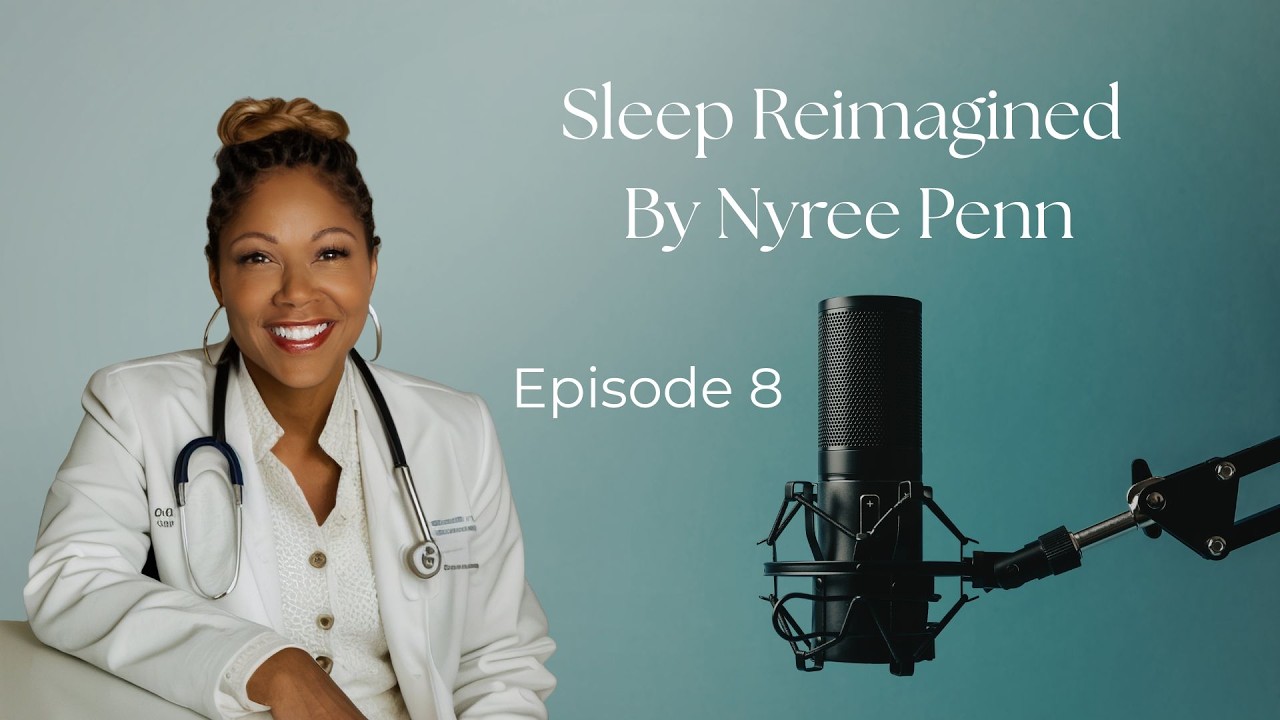
In this season‑2 premiere of the Sleep Reimagined podcast, host Layla interviews sleep specialist Nyree Penn, MHSc., CAA. Nyree explains that hormones act as neuromodulators that drive sleep quality across the lifespan. She describes how adenosine accumulation during sleep deprivation disrupts emotion, memory and cognition, and how key hormones—estrogen, progesterone, testosterone, cortisol, growth hormone, serotonin, melatonin and GABA—interact to regulate non‑REM and REM sleep. Nyree walks through life‑stage patterns: children’s high growth‑hormone‑driven sleep, teenagers’ brain‑development‑driven need for late‑night sleep, women’s estrogen‑progesterone fluctuations during menstrual cycles, perimenopause/menopause (and her coined “manopause” for men’s low testosterone) that cause night‑time awakenings, and how chronic stress‑induced cortisol suppresses testosterone and deep sleep. She emphasizes that sleep problems are symptoms of underlying hormonal or neurotransmitter imbalances, not primary disorders. The conversation moves to diagnostic approaches—blood and urine neurotransmitter/hormone panels, gut‑serotonin considerations, nutrition, stress‑management, and personalized “ProSomni” sleep plans. Nyree introduces ProSomni’s one‑hour anesthesia‑assisted sleep therapy (Prosomnia) that forces deep REM, allowing EEG‑guided assessment of adenosine, hormonal, or neurochemical blocks, followed by targeted treatment. She also promotes her app, home sleep testing, and her book “Why We Don't Sleep”. Throughout, she calls for societal change toward consistent sleep schedules and awareness of the hormonal underpinnings of insomnia.
Chapters
Because when we don't sleep, so from a neurotransmitter level, what actually happens is there's an adenosine buildup. Adenosine is what your body, your brain uses for energy. The only time your body, your brain specifically, can recharge and reset is during deep non-REM or REM sleep. If we're not getting into those deep stages at night for whatever reason, we're not letting our brains rest. So when our brains, the powerhouse of our body, isn't able to do with all the energy that it needs, things are gonna get dysregulated, including our emotions. Our thought process, our memory, our actions.
So what's the first thing that you want people to understand about how hormones affect our sleep?
So the first thing I really want them to understand, it comes back to the idea of hormones are neuromodulators. And as they're up or down throughout our life, they affect our sleep. Estrogen is another big one. It also affects serotonin, right? So as we get older, if our estrogen goes down, it suppresses our serotonin as well. If our serotonin levels are low and then our estrogen levels are low, we have an ongoing problem where Women in those menopausal stages tend to wake up in the middle of the night. It's one of those things that we always think, oh, my melatonin, and that's the first go-to when people can't sleep, but that may not be it. So again, you know, I want people to realize is sleep is the symptom. It's a secondary effect. It's important to back up a little, understand what's going on in our bodies. Yeah, it's a vicious cycle. It's definitely a cycle. Sleep deprivation has its own, you know, symptoms. We are naturally built as creatures to rest, restore, and recharge at night. Why aren't we getting there? Because we have a stressful day job? Because we think daytime sleepiness is normal? Because working 14 hours and then 8 hours and then 6 hours? No, we got to bring it back, and we have to bring it back as a society. We're past the turn out the lights, you know, have a consistent sleep schedule. We're past that. You know, it's— we got to start neurotransmitter level. What's going on in our brain?
Nyree, we're back. The Sleep Reimagined show is back on air. So how are you? How have you been? And how excited are you?
I'm so excited. I cannot believe the growth of Sleep Reimagined and how far Um, you know, like I was telling you, I'm happy to say we've approached our second year. So ProSomni is 2 years old, and the way the podcast has really taken off, like, I'm so excited. I couldn't ask for anything more. So let's keep going.
Awesome. I'm so excited. I'm so excited to be a part of it now. So this is exciting for me for sure as well. So I know we're going to start off with season 2 today. We're going to be talking about something That affects really every single one of us, but most of us don't even really think about it when we're trying to fix our sleep. So hormones, and you know, we're gonna be talking about why sleep comes easy at some points in life and feels kind of impossible at others and kind of the difference between why teenagers wanna go to sleep at 1:00 AM and older adults wake up at 4:00 AM. So there's so much that goes into it. So I am excited to dive in.
Yeah. So, you know, I, I think what I also want. I think people don't realize or consider that hormones aren't hormones and then like you just have this other stuff happening. Everything is so interconnected. You know, it's not just one thing. And the actual amazing thing about hormones is that hormones we consider neuromodulators. So what that means is it's almost like knocking on your door, or, you know, like that whole domino game. And it's like you knock over one domino and it just elicits this whole response in this beautiful pattern. That's exactly what happens in your brain and hormones. It elicits a response in other areas of your brain. You know, menopause is definitely a prime example of that. But if we just go through the series of our lifetime, even as children and adolescents, you know, we all know how adolescents need all this amount of sleep. And they have this amazing ability to stay up late at night. You know, so it's just diving into all those different hormonal stages that we go through in life and how it affects our sleep.
Absolutely. And speaking about different stages in life, I know, Nyree, you have worked with patients across the full age spectrum, right? So what's the first thing that you want people to understand about how hormones affect our lives?
So the first thing I really want people to understand is We always like to blame, you know, it's okay, naturally, you know, because of personal references, menopause, right? I can't sleep because of menopause. Well, you know, and it has almost like a negative connotation to it, but it's, it's, that's not it. It's like the not sleeping is the secondary effect, right? So it's almost like we need to back up a little bit with hormones. Even with children, like I was saying, they're going through these growth phases. You know, boys are known to just sleep for hours, 12 hours at a time. You know, as mothers, we go and check on them to make sure they're breathing. You know, it's just, why is it boys tend to sleep so much more than girls?
Mm-hmm.
Or hormones, when girls get their menstrual cycle, they tend to sleep more. So it comes back to the idea of hormones are neuromodulators. And as they're up or down throughout our life, they affect our sleep. Estrogen is another big one. It also affects serotonin, right? So as we get older, if our estrogen goes down, it suppresses our serotonin as well. The thing with that is serotonin is actually made in our gut. 80% of our serotonin is made in our gut. So if our serotonin levels are low and then our estrogen levels are low, we have an ongoing problem. Where women in those menopausal stages tend to wake up in the middle of the night. And the reason why that is serotonin, I apologize, serotonin is converted to melatonin and that's what kind of keeps us asleep at night. So melatonin isn't the only and all the be-all sleep neuromodulator or hormone that we tend to think of. And melatonin is a hormone. So it's one of those things that we always think, Oh, my melatonin, and that's the first go-to when people can't sleep, but that may not be it. So again, you know, I want people to realize is sleep is the symptom. It's a secondary effect. It's important to back up a little, understand what's going on in our bodies, what particular stage we're in, to where our hormones may be affecting our sleep. And it's almost like a, you know, like a little hint. That something may be going on and maybe nothing's going on. It's absolutely normal for adolescents to sleep like that. It's absolutely normal for girls to sleep a little bit longer during their menstrual cycle. It's absolutely normal for women who have lower estrogen during perimenopause and menopausal stages to not sleep as well. And it's absolutely important to recognize that there— I have coined a term called manopause to recognize the men and the lower testosterone that happens and how their sleep gets affected. They tend to be, you know, don't have as much energy. Of course, the libido goes down. So, they're absolutely, they go through stages as well that sometimes aren't recognized. And their sleep is also a byproduct of low testosterone.
That's so interesting too with manopause because That's something that you wouldn't particularly think of when you think about sleep or hormones, especially speaking about women and menopause. It's expected that women would wanna sleep more. And someone who's super not, you know, well-versed in or educated in sleep patterns and hormone, it's so interesting to think about cuz it, it does make—
Exactly.
So much sense, right? And then when we're talking about major hormones that control or influence sleep, Beyond just melatonin, as you stated, are there any other major hormones that really play a part in that?
Oh, there's not one hormone that does not affect our sleep. For instance, I had mess— excuse me, I had mentioned estrogen, right? It suppresses our serotonin, right? So that affects. When estrogen, low estrogen also comes into play with the reason why there's temperature fluctuations. Which does not— this is another thing too. You know, there's always often, you know, menopause and sleep and night sweats and day sweats and all this other stuff. But it's also important to mention that not all women go through those stages, especially women in other countries. You know, so again, sleep is a secondary effect. What we actually need to be looking at is our nutrition, right? And so that comes into play. So, I think that's what makes prosomnia sleep interesting is that we look at sleep on a neurotransmitter level and a hormonal level because it's not just about sleep apnea, right? Everyone isn't necessarily overweight, but there are people who are still not breathing at night, right? So, now let's dig in. Let's dig in a little bit. Look in the brain. Look at our hormones, right? Even growth hormones, right? That actually increases our ability to sleep. So it increases what we call GABA. GABA is what keeps us sleepy. Especially boys have high growth hormones, right? Hence their reasons to need to sleep more. So it's all of them. You know, we can go down the whole list. Serotonin, like I said, it's made in our gut. Anything, not just hormones that suppress, a lot of medications suppress our serotonin. So our gut health is so important. to look at when it comes to sleep. But unfortunately, we were never taught that, right? So this is why, another reason why I'm glad we're here. We're really trying to spread the message, educate people how sleep is not just a one thing, it's a whole body problem, right? And so let me think, the cortisol, that's another big one. Cortisol is huge. That's a stress hormone, right? Well, we all know We're in a hypercortisol life, you know, and then just because it's 9, 10 o'clock at night, we're just supposed to lay our bodies down and think our mind is just gonna rest? That's not how that works, right? So, it's a whole body thing.
Right.
Especially, this is when corporate responsibility on our employee health comes into play. When you have these hyper-stressful jobs, You know, especially community workers, hospital employees, nowadays everybody, right? I can go down a whole list. Teachers, IT people, like, you know what I mean? We, everyone, it's just seemingly so hyper, you know, I don't know if it's because of COVID I don't know if it's our society. I don't know. But we're in such a hyper stressful state on a regular basis.
Yeah.
And why people keep all the time. All the time. Now we're supposed to say, okay, it's 10 o'clock. Let's lay down and go to sleep. That's not how it works, right? So a lot of our patients, they come in, it's something as simple as just teaching stress management stuff. Again, we weren't taught how to sleep. We weren't really taught how any stress management skills until we can't. And by that time, we're so far in, so far into lifestyle habits, you know, jobs, work, Parenting responsibilities, animals, whatever. The list goes on. So, I think it's, as a society, it's time for us to reel it back a little bit. And I know sleep is probably the most boring thing I could ever sit up here and talk about, but it's absolutely the most important thing that we need to start talking about.
Absolutely. I mean, I love sleep. So, for me, this is not a boring thing to talk about at all. But you did mention cortisol and how we're in a very high cortisol state, right? So how, what would you say really throws, would you say that cortisol throws our cycle way off? Absolutely.
So cortisol is considered a stress hormone. Um, it, it kind of elicits the same fight or flight responses, the adrenaline, the norepinephrine. It works again, everything's a system. It's not just one. You know, our cortisol is high. So our body's like, oh, cortisol's high. That's our fight. Okay, what's going on? Where's the stressor? Where's the trauma? What do I need to do? What do I need? Norepinephrine. And that's our prefrontal cortex. That if that's always on fire, fire, fire, fire, fire. Oh, it's 10 o'clock. It's time to go to bed. No, your— it's just your body's natural response. Your body is doing what it's supposed to do. We aren't, and we're not being responsible. To ourselves and our body and our spirit. You know, it's important to really take that into consideration. It's not just about your body. Where's your spirit? Where's your heart? Where's your mind? Like all those things come into play. Sleep just happens to be an indicator and a byproduct that there's something going on.
Absolutely. And how does estrogen and progesterone affect the ability to stay asleep?
So they kind of work in tandem. So like I had mentioned, the estrogen Is kind of like the temperature regulator. That's when it gets lower. That's when the the hot flashes and all that other stuff. You know, there's been this big push to stay away from the the phyloestrogens, without us having a real responsibility to our absolute need for estrogens. We have men have a need for estrogen, so there is a need. It's just when that imbalance occurs. The other counterpart to that is the progesterone. The progesterone. So progesterone actually promotes the GABA, the calming effects, right? But again, with our diet and our nutrition, all that's out of whack. And when they're both out of whack is when our sleep tends to get affected. So the fluctuations in the progesterone, which is kind of like the GABA, the feel-good, the calming, and then the estrogen that kind of regulates our temperature. When those are off, that's the hot flashes. And even with the hot flashes, even if, you know, that's all okay, the hot flashes alone will wake you up at night, which now fragments your sleep and gives you REM fragmentation. And that's again where the tiredness and the sleepiness comes to play when people talk about menopause.
And touching on that, for the men listening, how might Declining testosterone or high stress show up as sleep fragmentation?
So testosterone is, you know, our men, big, strong, go, full of energy, right? But ironically, as I spoke about cortisol, cortisol, heightened cortisol suppresses testosterone. That's why a lot of men in our society have these low T levels, you know, saying, oh, I'm just getting older, thinking it's a natural response to getting older, and it's not. It's because the cortisol is out of whack and their sleep is out of whack. If you're, if you're in a low state of testosterone, they tend to have lighter sleep. They don't get into that deep REM sleep. Men tend not to have as much energy with, and that contributes to the energy, the adenosine, the turnover of ATP, all that suppressed. So it just, it's a balance. And it's important for us to be consciously aware, again, sleep is a secondary effect. It's a symptom. Let's stop saying it's because I'm older and excusing the fact that we're not being responsible to ourselves.
Absolutely. And, you know, speaking about what we touched on earlier with teenagers and, and men, even how basically sleep changes at each life stage, why is it that teens just naturally wanna sleep?
There's 2 mechanisms behind that. One, they still have growing brains. Our brains actually don't stop growing until like 25, and the time when that usually occurs the most and at the best is during the non-REM sleep. So that's, and you know, you could be vacuuming, washing clothes, every— they're like rocks, right? And forget it. And then what do they want to do as soon as they wake up? They want to eat, you know? So it's that energy cycle, right? Eating, restoring, rebuilding, eating, restoring, rebuilding, and growing. Right. So that's the need. And that is definitely amplified in the growth stage with growth hormones, right? So that's— it's not that they're being lazy, they just actually biophysiologically need to sleep. And same thing with the change of the clocks recently and how that we really need to start thinking about that. They really do need to sleep later or get more. But when they're constantly going, they're at school, then they have practice, then they have homework, Then that's fine. We just have to be responsible on when we're going to allow them to rest. With the sleeping late and the changes, their circadian rhythms shift up to 1 to 3 hours. Again, all because of the need for them to grow and sleep longer. So those shifts occur. So they can stay late, stay up later. Mm-hmm. But you best believe They're gonna wake up later tomorrow morning. So they, they will get their sleep, but it's not unlikely for them to shift their circadian rhythm.
Absolutely. And I think even for adults when the time change changes, kind of throws everybody off whack a little bit in terms of sleep. So it's, it's nice that we're talking about this now where I feel like so many people are probably struggling with that a little bit too, because it feels so much later. You wanna go to sleep a little bit later cuz—
Oh, for sure.
Your whole sense of time is a little bit off, I feel so. I feel like it's a very appropriate time for anyone listening for this too. And then in terms of like sleep debt, how do you think sleep debt really affects emotional regulation and memory?
We lose our ability to regulate ourselves essentially. Again, because we look at it from a neurotransmitter level, when we have the inability to get into deep REM sleep, that's when our growth hormones, and that's when we rebalance and reset that energy that I was talking about. The brain is a closed system, so the only time it can reset and restore is during deep REM sleep or deep non-REM sleep as well. That's the only time. And if we're not getting into those deep stages for our brain, the powerhouse of our body, to be able to recharge, then we're going to have a lot of dysregulation. We're going to have a lot of emotional dysregulation, a lot of physical dysregulation. You hear about how like your blood alcohol level can be 0.7 is the same as being sleep deprived. So they equate it to that. You don't think, memory loss, emotional dysregulation occurs. So, so many things, especially in the mental health space. You know, it's important for us to look at how Sleep deprivation affects mood, depression, and anxiety. Same issue.
How does sleep debt really affect emotional regulation and memory? I know you touched on it with teenagers and then also started to touch on how it affects everyone, but how does it really affect emotional regulation and memory?
Because when we don't sleep, so from a neurotransmitter level, what actually happens is there's an adenosine buildup. Adenosine is what we use for energy. Adenosine is what your body, your brain uses for energy. The only time your body, your brain specifically, can recharge and reset is during deep non-REM or REM sleep. If we're not getting into those deep stages at night for whatever reason, we're not letting our brains rest. So when our brains, the powerhouse of our body, isn't able to do With all the energy that it needs, things are going to get dysregulated, including our emotions, our thought process, our memory, our actions. Physically, we can't move. They say sleep deprivation is equivalent to 0.06 of being intoxicated. You know, there's been plenty of times some of us have been so tired. Or so sleep deprived, we don't even remember how we got home, right? So that's, that's how serious and important it is to get rest, to regulate our emotions, our mind, and let our bodies and our mind recharge and reset.
Absolutely. I'm thinking about like times I've just been exhausted and I've felt like such brain fog.
Like brain fog.
Did I do this? Like almost feels like sometimes you're dreaming. I was like, was that a dream? Was that, you know?
Absolutely. I always think about it like that. That is a biochemical, physical thing that happens. This isn't just, oh, I didn't get enough sleep. It's, oh, I didn't give my mind enough time to get into REM sleep or wasn't able to. Let me not say time because, you know, everyone has different sleep disparities.
Absolutely. And talk about like the big one here. Like, why do you think that sleep gets worse during this transition?
During like the transition of the daytime?
Yes.
Like circadian, the, the transit, the circadian and all that, how that works?
Absolutely. Yeah.
So what happens is there's 2 sleeps, right? And again, this is something we've unfortunately never thought about, taught about. There's non-REM sleep and, and REM sleep. And I almost like to think of it as like your body's time to rest and your mind time to rest. But the third component to that is the connection, right? That is also something that happens during sleep. So our bodies, because we're creatures of this earth and we're carbon-based beings, we follow the sun. That is our circadian rhythm. Our circadian, which means around the sun, you know, and that's the way there's biochemical responses. That occur in our body when our eyes see light. You know, there's chemical reactions with melatonin that happens throughout the day. You know, it's, it's low and then at night it's high to keep us asleep. So we very much function according to the circadian of the sun. When we decide as people to switch our clocks, our bodies could give To sunups, right? Because just because you want to go to bed at 6 o'clock and the sun is still out, it doesn't work that way, right? And so that's another reason you may hear people, you know, talk about the daylight savings time and, and the differences. Like, Arizona is definitely on it. Why, right? Their body, your body will adjust just fine. If we just follow the sun, so that is the importance with the circadian rhythm. Now aligning that with that deep REM sleep, which happens later on, so you need to be asleep at least two to three hours before you get into those deep REM stages. So those deep REM stages are sometimes not obtained when we have different things, hormones affecting. How long, how deep, or how fragmented our sleep is. So they're very much intertwined. One isn't more necessary than the other, but REM sleep is definitely the time that our, our brains need to rest, restore, and recharge.
Absolutely. And then in terms of women and menopause and perimenopause, why do you think that sleep gets worse during that transition for women?
It's, you know, that's, I almost want to say that's a myth. It's not necessarily that it gets worse because of menopause. It's our hormones are just off, you know, and because our hormones are off, our sleep gets worse.
Mm-hmm.
The sleep is a secondary effect. It's because our hormones are off, we're getting night sweats. And now I can't sleep because I got to take all these clothes off my body. Or, you know what I mean? So is it our sleep is getting worse or is the hormones in the menopause, right? And again, sleep is just a hint that maybe something is off and we need to check it out. And not saying that menopause means something's off, it's just that we may need to check our estrogen levels. We may need to check our nutrition. We may be in metabolic dysfunction. So, you know, it's important to really identify that it's not the sleep and it's not menopause. These are just signs that we need to back up and identify the root problem of, of the situation.
And you mentioned, for example, waking up in the middle of the night and getting hot and wanting to take all your clothes off. So why do you think that women start to wake up hot and anxious and wide-eyed? At, you know, 3:00 AM.
Again, it's neurotransmitter hormonal imbalances. With that, it's the progesterone, right? Those may be imbalanced. So that contributes to the wake-ups. Even if you don't have the night sweats, the progesterone, which affects the melatonin and the serotonin, is what creates the, oh my God, it's 2 o'clock. Oh my God, it's 2:37. Oh my God, it's 3:05. You know, That imbalance of the progesterone is what contributes to the constant wake-ups throughout the night.
Absolutely. And are there natural ways to rebalance hormonal impacts on sleep?
Absolutely. I, the first thing we do at ProSomnious Sleep is actually recommend that people come in for a ProSomnious sleep session. When they come in for the ProSomnious sleep session, we can at least Reset the brain, right? That building block of energy, that ATP, those adenosine sources—that's what we rebalance. So we at least can get you a state of now that we've treated your rest and we know that it's not the issue of a neurotransmitter imbalance, let's go back and look at everything else. Part of that is we actually do neurotransmitter testing. Blood and urine testing for specific neurotransmitters, estrogen, progesterone, cortisol, epinephrine, norepinephrine, GABA, all those neurotransmitters we can test for, including the hormones, estrogen, progesterone, and testosterone we test for. So, once we at least can identify if there's imbalances there, we set you up on your personalized prosomnia sleep plan. And so that's why it's not a one-size-fits-all. Everyone has a different sleep disparity. The first thing we do is identify if it's on a neurotransmitter level and guide you through getting that support that you need.
That's amazing. And so what kind of lab testing or practitioner support or therapeutic interventions do you recommend?
So definitely, like I said, we, we, we do a neurotransmitter test, right? If it's a serotonin imbalance, we definitely will treat you with a nutrition plan, right? Because remember I said 80% of your serotonin is made in your gut. Something's going on there. We'll definitely refer you to a gastroenterologist so maybe you can identify. If cortisol levels are high, we'll definitely offer ways that you can start off some stress management skills. You know, so it's very different, very individualized for everyone. If the hormone levels are off, we'll definitely consider Whatever natural ways or hormonal replacement therapies. Same thing with testosterone. If it's a body, if it's a metabolic issue, we look at that and figure out how we can normalize and reset your metabolism, especially with men. You would be surprised at how many men have metabolic dysfunctions. So we take a look at all that. But initially, like I said, we look at it from a neurotransmitter level.
Absolutely. No, that's so interesting because as someone who's struggled with hormonal imbalances before, I'm so interested. I really need to come and see you in Miami for sure because—
As you'll see, you know, at the end of this podcast will be the link to our app. In our app, you'll see me and we do, we offer, you'll see that we do offer The sleep neurotransmitter and hormone package. So you can do it right from your phone, schedule an initial consultation. We're going to go through every single one. You don't have to be in Florida. We send it to your house. We do. We also send you a home sleep test so we can identify if it's truly sleep apnea. A lot of times people have sleep apnea, don't even realize it because if they don't have a bed partner to tell them. or nudge them in the middle of the night to roll over or stop snoring. A lot of people don't, don't realize, you know, so we're here to help. We're absolutely here to help on every level.
And we'll make sure to include those links and everything below the podcast in the, in the information area as well. And then—
I'm sorry. I also have the book. I have a book on Amazon, Why We Don't Sleep, um, the biological secrets behind insomnia. And I identified things that we talked about today, the neurotransmitters, silver sleepers, why older people tend to go to bed earlier and wake up earlier. Those trends, it's still a transition of life, still based on hormones. And so the book, which is on Amazon, I dive deep from a neurotransmitter perspective.
Absolutely. No, that's so interesting. And You touched on it a little bit earlier, but the prosomnia. So, where does prosomnia sleep therapy fit in for patients with hormone-related insomnia?
So, I'm happy to say prosomnia sleep is the first and only 1-hour anesthesia sleep therapy for REM disorders and sleep disparities. What we do from a clinical level is we use anesthesia to get people into deep REM sleep. What they've been unable to do on their own for whatever reason. So once we can can do the sleep session and reset that neurotransmitter adenosine, we can identify: Is it an adenosine issue? Is it the inability to get into deep REM sleep, or is it a hormonal issue? And is it the hormones not allowing you to get that deep REM sleep? So all these things. We can tell from your prosomnious sleep therapy because we use an EEG monitor. I can see what's going on in your brain, why you're not able to get into deep REM sleep, what's happening when you get into deep REM sleep, how long you're staying in a deep REM sleep. So there's so many things. However, once we get you into deep REM sleep, you do get all the benefits, right? You get the growth hormone, you get the release of neurotoxins. You get the cleansing of that blood-brain barrier system, and then we can further analyze you, do the neurotransmitter testing, and identify what's going on that's contributing to your sleep disparities.
Absolutely. That is interesting. I have— that is something I haven't heard of. And is that something that resets you? So it's something you can do once, or is it something you need to do continuously?
It depends. We, everyone gets a personalized sleep plan. A lot of our patients have been on previous sleep medications that are preventing them from getting into REM sleep, hormonal issues, a lot of menopause, you know, low testosterone, post-traumatic stress disorder, military, night shift workers. It just depends. So, depending on the severity, Your very first sleep session is more of a diagnostic one. We'll be able to look at your EEG, get the data, and identify what exactly is going on in your brain. Once we identify what's going on, then we'll attack it from, is this a mental health issue? A lot of people like to put sleep deprivation on mental health. It's not a mental health issue. You're just tired and you can't get into REM sleep. We really need to start looking at that. Sleep is a secondary symptom. It is not the cause. So we need to backtrack and look at the root problem.
Absolutely. I think that is so common when people relate sleep or lack of sleep to mental health, 100%. So it is interesting to hear that that is not really the root cause. It is a secondary thing. And it does make sense because when you're tired, that also feeds into Yeah. Other issues as well.
Yeah. It's a vicious cycle. It's definitely a cycle because sleep deprivation has its own symptoms. So, you know, we got, what's the root problem? You should not need medications. Hormones shouldn't be out of control. All these issues that we have because people can't sleep. Why? Right? We are naturally built as creatures To rest, restore, and recharge at night. Why aren't we getting there? Because we have a stressful day job? Because we think daytime sleepiness is normal? Because working 14 hours and then 8 hours and then 6 hours, it's— no.
Well, we gotta—
We gotta, you know, so we gotta, we gotta bring it back and we have to bring it back as a society. It's not, it's not a, we're past the turn out the lights, you know, have a consistent sleep. Cold and that we're past that, you know, we, it's, we got to start neurotransmitter level. What's going on in our brains?
Absolutely. Well, I think that I've learned so much about this. I'm excited to learn more with you. And I know our listeners are probably getting so much out of this. I mean, season 1 went so well. I'm excited to continue this momentum and continue to learn about this and Yes, please. I'm super excited to be working with you now. So, and for all of our listeners, if you've ever been told that your sleep problems are just in your head and your labs are normal, this episode was just your permission to really trust your body and know that there can be so much more to it. Trust your body and you can reach out to Nyree. And thank you so much. This has been amazing. This is the first episode of season 2 of The Sleep Reimagined, and I cannot wait to do episode 2 of season 2 with you. So thank you so much and see you next time, everyone. Be rested.
Thank you, Layla. All right, stay rested, my friend.
More from Dr.




NSOMNIA Sleep™ ~ A Conversation With A NeuroRestorative Sleep Scientist - Episode 4


What happens when sleep medication becomes the only way you feel you can sleep? 🌙 #shorts

Feeling sedated isn’t necessarily the same as getting restorative sleep. 🌙 #shorts

NSOMNIA Sleep™ ~ A Conversation With A NeuroRestorative Sleep Scientist - Episode 3

NSOMNIA Sleep™ ~ A Conversation With A NeuroRestorative Sleep Scientist - Episode 2
