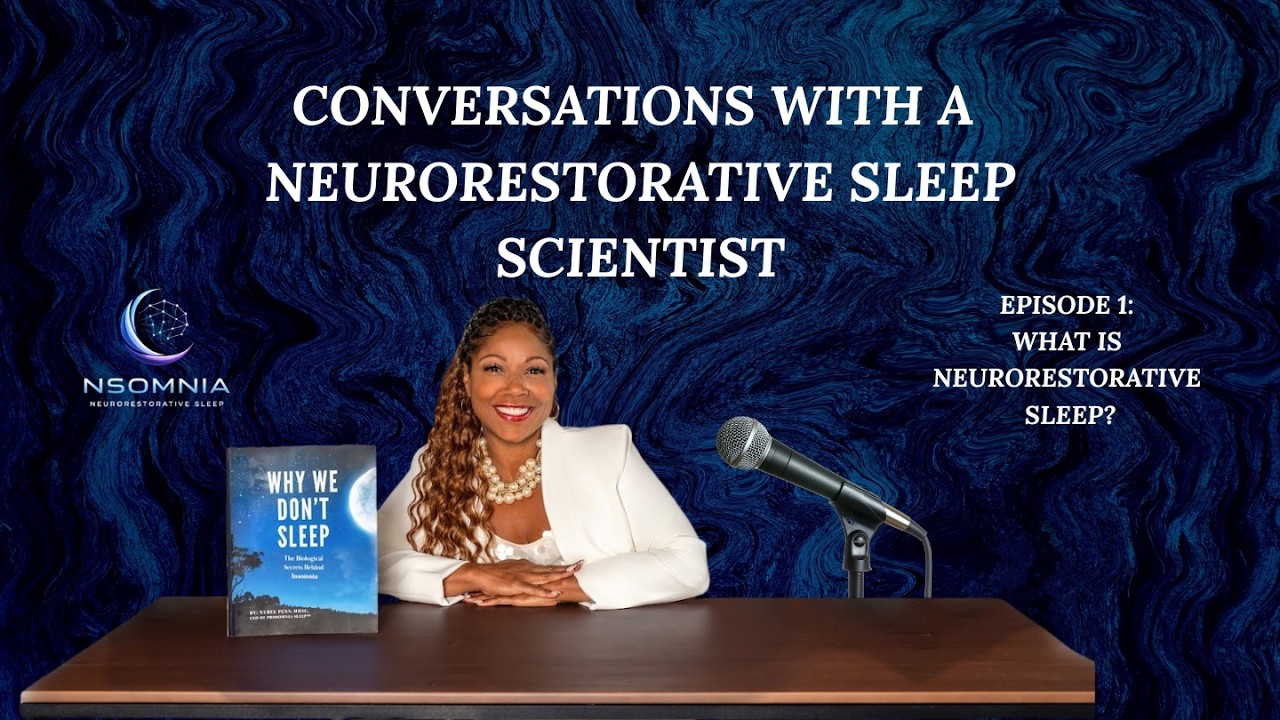
In this introductory episode, Dr. Nyree Penn, a neurorestorative sleep scientist, certified anesthesiologist assistant, and founder/CEO of Insomnia Sleep, launches a new series focused on the neurological aspects of sleep. She argues that mainstream sleep education and the sleep industry overlook the brain’s restorative needs, treating sleep merely as sedation. Dr. Penn highlights a pervasive information gap: medical training rarely covers why the brain needs sleep, the mechanisms of neuro‑restorative sleep, or how sleep architecture supports brain health. She critiques common sleep advice—bedtime routines, supplements, and wearable metrics—pointing out their limited relevance to true brain restoration. Drawing on her 20‑year anesthesia background and a master’s in health science, she discusses clinical challenges such as grief, PTSD, and night‑shift work that disrupt neurorestorative sleep, and introduces Insomnia Sleep’s unique EEG‑guided anesthesia approach designed to promote genuine brain recovery. The episode sets the stage for a weekly series that will explore sleep architecture, circadian mismatch, and practical strategies for optimizing neurological sleep.
Chapters
Hello, dreamers. Welcome to A Conversation with a Neurorestorative Sleep Scientist. I'm Dr. Nyree Penn. I am a neurorestorative sleep scientist and a certified anesthesiologist assistant, as well as the founder and CEO of Insomnia Sleep, the world's first anesthesia EEG-guided approach to neurorestorative sleep. We're going to start doing some series. We're going to have a conversation about sleep science, brain health, restoration, recovery, and human performance. I realize that no one is talking about sleep from a neurological perspective like we are. So it's time that I really come out and start explaining to people what this actually is, what we do, and And how we can help people sleep better, sleep more, and have them understand the real function and the benefits of neurological sleep. Because sleep is not just sedation, it's restoration. So let's begin our conversation today. I really want to talk about how I believe we have been Thinking about sleep all the wrong way. A lot of times I say that there's 2 things we weren't taught in school: how to sleep and finances, right? I got to sleep all day. But it's just we start learning the wrong information, misinformation, and we really don't even think about sleep until we can't. Right. And even in school, in most medical schools and professionals, we aren't really even taught about sleep. We are taught about nutrition and physiology and biology, but we really weren't taught about not just sleep, but the importance and neurological benefits of sleep. We weren't taught about why the brain needs sleep. Why do we sleep? What happens when we sleep? Why can we sleep? Why do we sleep for 8 hours? You know, there's just so many questions that we have about sleep that we were never taught or properly informed about, especially neurological sleep, which we refer to as neuro-restorative sleep. And that's the sleep that no one's really talking about. Even with sleep tests, you know, you hear about, you know, sleep tests and breathing and sleep apnea all the time. But no one's talking about when your brain can't rest, except here at Insomnia Sleep. And now every week we're going to come out with a series or a segment about neurorestorative sleep and start having real conversations with me about neurorestorative sleep and all the great benefits. The information problem, you know, let's, let's talk about that. You know, the information problem is that there's not any until, like I said, we can't. There's such a lack of accurate information, but more so, I do believe, you know, our brains are still not explored to the extent that some other parts of our bodies are. So there's also a lack of just general information about our brains and how it works. So if there's too much wrong information and there's not enough Of the right information, you know, we're kind of at a standstill, which is where we are within the sleep industry. You know, most sleep advice focuses on bedtime routines, supplements, um, gadgets. The wearable devices are a big thing now. You know, we see this on our watch and our wearable devices, but what does that mean? We were asleep. We don't actually know how much REM sleep or non-REM sleep we got. On top of which, what are we supposed to do with that information? So again, you know, there's just— there's plenty of information about it, but how do we fix it and how do we resolve it? And specifically, not just sleep, but neurological sleep. We all know there's been moments in our life, especially for me, my dad, you know, the lack of sleep from grief, you know, really caught me off guard. So What do I do with that when my emotions are just all over the place? Or PTSD. You know, these are all things that we see in our clinic. And because there hasn't been a solution for people until now. So like I said, most sleep advice focuses on bedtime rituals, behavioral changes, cold and dark, you know, no caffeine, take some supplements, maybe some melatonin, some magnesium. Just something to fall asleep faster. But there's not really any information or attention really even given to neurological sleep, brain restoration, sleep architecture, circadian mismatch. You know, for our night shift workers who have to be up at night, you know, what do they do? You know, what's their sleep architecture and their schedule like? What information or help do they have, if any? Right? So this is— these are the type of things that we're going to talk about in our series, in our conversations with a neurorestorative sleep scientist, because somebody has got to deliver this information in a safe and controlled, educated manner. I am highly trained. I do have a master's in health science. I've been practicing anesthesia for almost 20 years. I see it, I know. And I know the chemistry, the biology, and the mechanisms behind sleep, neurological sleep, and the drugs and how they affect our sleep.