Redefining The Neuroscience Behind True Restorative Sleep and Why Standard Sleep Studies Fall Short
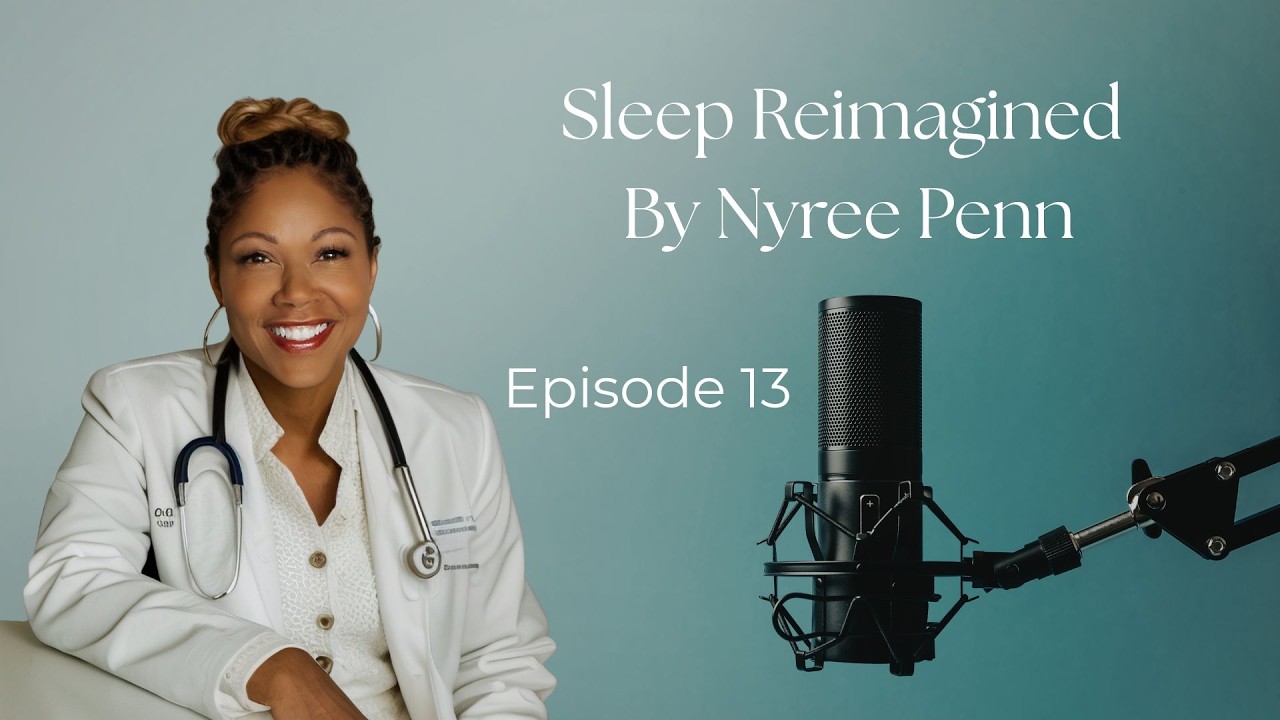
In this episode of Sleep Reimagined, host Layla interviews Nyree Penn, MHSc., CAA, founder of Insomnia Sleep, to introduce the concept of neurorestorative sleep—a brain‑centric definition of restorative sleep that goes beyond traditional metrics like total sleep time, REM/NREM percentages, or breathing and movement captured by polysomnography (PSG). Nyree explains that many patients, especially high‑performers and athletes, experience a "wired‑and‑tired" hyperarousal state where cortisol, adrenaline, glutamate, and depleted dopamine keep the brain in a fight‑or‑flight mode even when the body is exhausted. This state leads to fragmented sleep, 2‑4 AM awakenings, and a feeling of intoxication comparable to a blood‑alcohol level of 0.05. The discussion covers the neurochemical drivers of sleep pressure (adenosine) versus melatonin, the role of dopamine in wake‑sleep transitions, and how hormonal neuromodulators (cortisol, estrogen, testosterone) shape sleep architecture. Nyree critiques PSG for diagnosing breathing or movement disorders but missing brain restoration, and introduces Insomnia Sleep’s proprietary Diagnostic Neurorestorative Sleep Assessment (NSDX), which uses EEG monitoring in a controlled anesthesia environment to evaluate sleep continuity, arousal threshold, hyperarousal, and hemispheric asymmetry. Based on NSDX findings, a personalized three‑month therapy program (NST‑X) is prescribed, focusing on re‑establishing neuroplasticity, reducing hyperarousal, and achieving "restoration stability"—the ability to fall asleep quickly, stay asleep, and wake refreshed. The episode also outlines the ideal patient profile (those with normal PSG results yet persistent fatigue, brain fog, or emotional instability) and emphasizes the broader impact of technology, lifestyle, and genetics on modern insomnia.
Chapters
A lot of sleep studies look at whether you're breathing or you're moving, but nobody's really telling you what's going on in your brain. When you go to sleep at night, is your brain restoring? And that's a fundamentally different concept from how sleep is typically defined. You'll see our wearable devices, they'll say you had this much non-REM sleep and this much REM sleep. Does that guarantee restoration? High performers and athletes, that target market tends to, are always mentally using their brain capacity. They can They can't get that neuro-restorative sleep. They still have brain fog. They're not clear. People who are severely neuro-restorative sleep deprived can behave like they have a blood alcohol content of over 0.05. That is why bringing attention to neuro-restorative sleep health is so important. We are way past turn the lights out, cold and dark, let's get some proper sleep. Everybody's quick to tell us that we should get proper sleep, but nobody's trying to tell us how on a neurological level.
Welcome back to Sleep Reimagined, the show where science meets real life and where we refuse to just try melatonin as passing for good advice. Today, we're going somewhere we've never gone before, past the tired tips, past the sleep hygiene checklist, And straight into the neuroscience of what it actually means to restore a brain that has forgotten how to rest. Today, Nyree is stepping into a bigger conversation, one she has spent years building towards, because this isn't just about treating insomnia anymore. It's about redefining what sleep medicine can be. And through her diagnostic and treatment system, Neurorestorative Sleep Medicine, Nyree is changing the standard of care from the inside out. So if you've ever been told that your sleep study was normal, but you still feel like you're running on fumes, If you're a high performer who can't power down, or if you're simply running out of answers, this episode was made for you. Hi, Nyree. It's great to see you as always.
Hello, Layla. Thank you so much.
It's good to be back and jump into this with you. I know there's been lots of changes lately and lots to dive into. So let's kind of just start with the foundation. So what exactly is neurorestorative sleep and how is it different from conventional sleep medicine?
Thank you, Layla. So what's so exciting about this is now Insomnia Sleep, we are taking more of a neuro-restorative sleep approach. So what that means, neuro-restorative sleep essentially is a very specific concept. It refers to the brain's ability to regulate, stabilize, and sustain restorative sleep at the neurological level. And that's what's not being looked at currently. A lot of sleep studies look at whether you're breathing or you're moving, but nobody's really telling you what's going on in your brain. When you go to sleep at night, is your brain restoring? And that's a fundamentally different concept from how sleep is typically defined now. Like I said, most people think of sleep in terms of how long did you sleep? What stages did you sleep? You'll see our wearable devices. They'll say you had this much non-REM sleep and this much REM sleep, but that doesn't necessarily tell us like the duration and the stages, but does that guarantee restoration? And so, from a neurological standpoint, that's what we do. Sleep restoration depends on sleep latency. Can you get to sleep? Your sleep stability. Can you stay asleep? And the proper arousal regulation necessary and your neurotransmitters, that signaling. Does your brain transition properly into and out of the sleep stages? So in a nutshell, that is what neurorestorative sleep is.
And let's talk a little bit about the PSG sleep study. So We've talked, I think, about it briefly before, but I know it's kind of always been the gold standard for decades, but why are you starting to say maybe it's not enough anymore? Like, what's changed with it?
I don't wanna dismiss the importance of polysomnography, PSG, and that's what they currently do. It's still very, very important. It identifies sleep apnea, if you stop breathing during the night, if your oxygen levels decrease, and any movement disorders you have. Some people actually do have restless leg syndrome, and bruxism. That's where they move their jaw. So that's very important, and a PSG can absolutely diagnose that. So they answer very specific questions. Are you breathing properly during sleep? However, it does not fully answer, is your brain restoring during sleep? And those are not the same things. And so those are our patients at Insomnia Sleep. We see the patients with normal PSG results. They're persistently fatigued, wired and tired. They still have brain fog, fragmented sleep, but they're not neuro-restoring. And that's, that's the difference.
And like you just said, wired and tired, I feel like that's a phrase you use frequently and you hear it thrown around pretty frequently. So can you kind of break down what that means scientifically and what's actually happening in the brain and body when you're wired and tired?
Specifically with wired and tired, and that's what we look at at Insomnia, this phrase actually describes a very physiological state. We call it neuro-restorative hyperarousal state. When you're stressed, you're always on the go, you're hyper. Just because your body is moving and your mind is always on the go does not necessarily mean when you lay down at night you can rest. So you're always in fight or flight, right? But more so with the hyperarousal, you're always in fight mode. So you have elevated cortisol, you have elevated adrenaline, Your alertness signal is always on go, increased glutamate. And unfortunately, in addition with our phones, we have depleted dopamine. And so now our brain is always in a state of activation, even when our bodies are exhausted. And at the same time, our adenosine is high, meaning you feel that sleep pressure. And so it's that adenosine also that's often missed during sleep. It's that adenosine sleep pressure. When you stop moving, that's there. You know, it's built up during the night, same as melatonin. Melatonin is high. It's been building up during the day. But when you're wired and tired, you have the other counter, the adenosine, the acetylcholines, the cortisol, the adrenalines, everything's so high at night when you're supposed to be resting, right? And so that's the hyperarousal syndrome that we tend to refer to. So you get the paradox. You feel wired, but your brain is tired because you just won't shut off.
Absolutely. Yeah, I know. I definitely feel like that. Pretty frequently. And I think that that's super common for a variety of reasons. But like you said, even now with phones and things like that, it's probably even more common.
Exactly.
And I know for this happens to me sometimes. I'm, everyone's experienced this, but a lot of people will wake up in the middle of the night at like 3:00 AM and can't go back to sleep. So when that does happen, what's actually happening neurologically at that hour? Like for example, 3:00 AM. And why does it happen?
3:00 AM awakenings. are one of the most common patterns we see. They're not random, right? There's a couple of things that are happening. This is the peak neurorestorative time between the hours of 2:00 AM and 4:00 AM. Those are critical times for your body neurologically. Around that time, your body is highly sensitive to cortisol fluctuations, right? We're beginning to wake up, so our cortisol tends to be a little bit higher. If you're naturally in a state of high cortisol, That slightest adjustment or increase will wake you up at 3:00 AM. Your norepinephrine surges during that time because your body is preparing to wake up. It's going to get that final rest and then it's going to wake up. That slightest adjustment, if you already have high norepinephrine, can cause you to wake up at 3:00 AM. Temperature shifts for our ladies. It's not the menopause. It's the adjustment in the temperature. That's where estrogen tends to drop. We get ready for the day. So, the temperature shifts occur and we start to get night sweats, specifically between 2:00 and 4:00 AM. And same thing with our night shift workers or our night owls. The circadian transitions tend to happen. The melatonin is going down, the adenosine is hopefully being released, and, but then it's time to wake up, but you're a night person. And that usually happens around 3:00 AM. So, there's a lot of different things, but depending on, you know, your own personal, everybody has a different sleep story. So it just depends. If you have irregular sleep patterns already or menopausal wakeups, your arousal system is already unstable, right? And so even the smallest shifts, hormonal, time, bedtimes, neurotransmitters, your bed partner, your pet, all these things can trigger a 3:00 AM awakening. And then once you're awake, your brain is like, okay, it's time to wake up, let's go. But it's not that easy for some people to just turn around and go back to sleep.
Absolutely. And I was curious too, when you said 3:00 AM is depending on what time a person goes to sleep, if that changes or not. If someone goes to sleep at like, let's say 9:00 PM or 11:00 PM, how that changes. But it sounds like it really doesn't matter. It's really about that time of night where that shift happens.
Absolutely. Even if you had a normal sleep pattern, right? I'm fairly consistently normal. So around that time, my body does the same thing. I just have more of a sleep, a stable sleep cycle to where whatever's going on, I can pretty much just stay asleep or go back to sleep. But like I said, I'm also going through that transition sometimes, but I always notice I always tend to wake up between 2:00 and 4:00 AM, but I understand what's going on in my body and my brain.
Absolutely. And can you walk us through a little bit Addison and sleep pressure and how does the brain build the need for sleep and what really disrupts that system?
Thank you for asking that question. And this is the number one trigger with brain sleep and brain sleep health. Because we really haven't had a way prior to Insomnia Sleep to really identify whether or not our brains are getting restorative sleep, we just tend to focus on melatonin, right? So, melatonin is our key that puts our body to sleep. It rises during the day and sets during the night, and it allows our body to stay asleep. And that's a very important neurotransmitter. But another very, very important transmitter that a lot of people aren't speaking about or even know about Is the second part, and that's our brain sleep. It's adenosine. Adenosine sleep pressure is our homeostasis S, process S, to where when we go to sleep, same as melatonin, the adenosine rises during the day and sets at night. Adenosine is a neurotransmitter that our brain uses for energy, right? We've all heard of ATP, adenosine triphosphate. That's what it stands for. Specifically, our brains are a closed system. So our brains and bodies don't necessarily connect the same. So when our bodies need rest, our brains also need rest, right?
Right.
So adenosine is what signals our brains to rest, just like melatonin signals our body to rest. Same thing. During the day when we use— when our brains use energy, we're working, we're thinking a lot, we're exercising a lot, our brains need energy. It breaks down ATP. Adenosine triphosphate. Building block of that is adenosine, and that's what gives us that sleep pressure. If we don't release that during deep REM sleep or deep non-REM sleep or REM sleep, which is when it occurs around 2:00 and 4:00 AM, then that sleep pressure is what gives us the brain fog, right? That has to be released and reestablished and restored to make more energy for the next day. But if we don't recycle that adenosine, then we don't have the energy we need for our brains to move forward. And that's why it's so detrimental.
And another thing you mentioned earlier was hyperarousal. So can you talk about that a little bit? What is hyperarousal really? And how does that differ from standard stress or anxiety, which are things we hear about more frequently? But also, is this the missing diagnosis for a lot of patients or a lot of people that are going through sleep issues?
Absolutely. So hyperarousal is more of a state. It's the consequence of stress, right?
Mm-hmm.
So hyperarousal is different from stress. Stress is the response. Hyperarousal is the state. So when we're in a hyperarousal state, it's when our nervous system, our central nervous system, it becomes persistently activated, right? We're constantly in fight-flight, even in the absence of stress that's causing it. So it involves heightened cortisol activity, like I had mentioned, the sympathetic tone, the fight, and reduced inhibitory signaling. So if we're in fight, we're definitely not in flight. So all the neurotransmitters, there's 5 and 5, they all counter each other. If you're constantly in this, these aren't triggered. Your flight aren't triggered. You can't calm down. You're always stressed, even though you're not, supposedly, even though you're in bed thinking about your problems from the day or on your own social media. And you're looking at problems from the day. And this is where a lot of the patient responsibility kind of falls off, right? We know we're stressed. It's just our lifestyles really haven't allowed us the ability, or we haven't made the conscious effort to change that hyperarousal state that we're always in.
And I'm curious too, let's talk about a specific population. So executives, founders, high performers, why do you think that they may be disproportionately struggling with sleep and If you do think that, what do you think makes their pattern so distinct?
With our high performers and our athletes, we definitely look for those particular clients because we know those high performers, those athletes, they tend to use a lot of mental energy, that brain energy. They're always thinking. Our athletes are always moving. They always have elevated stress hormones, definitely high cognitive load constantly. And they're constantly in a goal-oriented state, which is fine. We love them for that. They're amazing on TV. They're great bosses and CEOs. But you have to remember, for them personally, their brains are always in a state of high activity. And over time, that type of high activity, high behavior can make it harder for them to establish stable restorative sleep. So they're functioning at a high level. And their brains are also recovering in a compromised manner.
And another thing that we talk about a lot is dopamine, and we hear that word. Everyone knows what that is at this point, but I think also dopamine tends to be part of the tech conversation. But what role does it play more broadly when it comes to sleep disruption, especially in driven, goal-oriented people like executives and those that you just mentioned?
Just like you said, Dopamine is often misunderstood. Most people think of it simply, like you said, reward, pleasure, chemical, and it does serve all those purposes, but it does have another purpose. Dopamine is a neurotransmitter that regulates motivation, a very goal-oriented behavior, attention, and anticipation. And so what drives you, those, you pursue those goals, you get ready for vacation, you're gonna solve those problems, you wanna stay engaged with your partner, And you have a very specific that focus, that's dopamine. That focus on your phone, that's dopamine. And so from a neurological standpoint, dopamine is very deeply involved in the wake-sleep transition, right? It helps us maintain and stay in an engaged state of sleep. So it allows us to have that stable sleep even when we're not engaged. So in high-performing individuals, we often see chronically high, elevated, and dysregulated dopamine signaling because we do measure, we do measure neurotransmitters here in insomnia because that is a very highly integral part of your sleep. So it's not necessarily a higher in the sense of high and, but higher in the sense of being persistently active in those type of individuals. And even now with our phones, with modern life, it becomes more relevant. Dopamine high, high, high, always Because today we're constantly stimulating dopamine. Those pathways, digital devices, constant notifications, goal tracking, including sleep. There is sleep anxiety associated with just tracking your sleep. Productivity cycles, how much more productive do we need to be? Social media and the constant cognitive input we have to employ on a regular basis. So our brain is rarely in a true sense of downregulation. Even when we're trying to go to sleep. So over time, our brain becomes conditioned to this constant state of high regulation, constant state of anticipation, engagement, forward thinking, drive, productivity. And that's usually fine until it becomes a problem at night. And so that's where we are. So with insomnia, we see that a lot. And so we, we notice that in order for people to stay engaged and initiate sleep to stabilize, the brain needs dopamine. And so if we're in a state of constant dopamine depletion, we have to address that. And that's what we do here at Insomnia Sleep.
And absolutely, I think that everyone's dopamine is a little bit depleted these days. It's just, it's exhausting to always, like you said, a high performer and a founder CEO, just busy with life, adding tech to it as well. There's just, it's constant. It's Like there's no end. All the time there's something to do or something to look at. So it takes, I think, a while to even get to that point to unwind.
And I noticed there is a consequence to all this social media. It's great. All this technology, AI, our advances, the way we can definitely do our biometrics, it is fantastic. However, we have to be conscious of the consequence. And I noticed that the consequence is starting to be our brain health and our sleep. It's not just technology. It's what is technology doing to our bodies and our minds and our spirits and ethically and morally.
And so what are we consuming with that too?
What are we consuming? That is absolutely the truth. Absolutely the truth. What are we consuming? Because there's a spiritual level to this as well.
Absolutely. Also, for example, me personally, I'm usually one of those people that my head hits the pillow and I fall asleep. But those rare occasions where I can't, One is super frustrating, but there's times I'll go on and go onto an app even to—
Exactly.
Relax or like listen to some kind of music or something. But even that is involved. We talk a lot about dopamine, but another thing that's super crucial and important are hormones. So I think hormones are a huge, but sometimes often even overlooked piece. So how do hormonal shifts, like you mentioned cortisol, estrogen, testosterone, thyroids, how do they directly impact the quality and architecture of sleep?
Very, that's another very good question. It's not just neurotransmitters. Hormones are considered neuromodulators. What does that mean? Hormones activate neurotransmitters, only certain ones. Specifically, our sex hormones are definitely one, one that, ones that do that. Cortisol is another one. Melatonin is a hormone that activates other neurotransmitters in our brain. So we have to also look at our hormones. Hormones are one of the most undervalued and underestimated drivers of sleep quality because sleep is just not enough neurologically. Hormones are neuromodulators. They're neuroendocrine modulators as well. So let me break it down. I mentioned cortisol. Cortisol, that's a primary stress hormone we're all very familiar with. Stress and timing hormone. Like I said, cortisol tends to be activated or higher between 2:00 and 4:00 AM. So those 3:00 AM awakenings can be triggered by cortisol. With cortisol and melatonin, they follow a circadian rhythm. So together, they're very, very important with your circadian rhythm. This is why night shift workers tend to be a little bit more unstable in their sleep because those systems are a little bit unregulated due to their work, right?
Mm-hmm.
Cortisol rises in the morning, it wakes you up, and then it also suppresses melatonin. So they work in tandem. Cortisol's high, melatonin is low. That's how they kind of counter each other and work together. And gradually they both decline and increase throughout the day. But many individuals, including night shift workers or those under chronic stress and hyperarousal, we see cortisol dysregulation. That's why you can't just look at melatonin. You can take melatonin, go get your melatonin, order it, do whatever you do, but you notice it's not the melatonin that's not working. Maybe it's the cortisol, right? It's not one or the other. It's all a system. So we also look at your cortisol levels. Are they elevated at night? Are they spiked in the day? Do you have inappropriate spikes during your sleep? What is going on? That's what we look at. So when your cortisol is elevated, it directly interferes with when you go to sleep, your sleep onset.
Mm-hmm.
Can you stay asleep because it affects melatonin? Your sleep continuity. And then can you get into deep, stable sleep, right? That restorative sleep that we're always talking about. And those are key drivers. Cortisol is a key driver during those 2 and 4 awakenings that we're speaking about. And also cortisol plays a big role in racing thought.
Mm-hmm.
If you can't just suppress your issues and minimize your stress to go to bed at night, then you're gonna have those racing thoughts, which also is known to maybe potentially increase nightmares. That's another thing people don't speak about very often, but that's very prefrontal cortex. So that's when you may have high cortisol, high acetylcholine, high glutamate. Those tend to keep those areas in the brain that tend to initiate nightmares during the nighttime.
Oh, that's so interesting. Yeah, that's something I think we don't talk about a lot either. Also, so you've built a proprietary diagnostic protocol called NSDX. So let's talk about that a little bit. And also, what does it measure that a standard sleep study might miss or tends to miss? And beyond that, also, what does the process actually look like for the patient?
NSDX stands for Diagnostic Neurorestorative Sleep Assessment. It's designed to evaluate what traditional sleep tests have missed. Like I said before, a PSG, a polysomnography, most standard sleep tests are done in in a hospital setting or somewhere else. They put the device over your head and they measure whether you're breathing or if you're moving. So, what we do at Insomnia with our NSDX, our neurorestorative sleep assessment, we assess sleep continuity. Can you stay asleep? Your arousal threshold. Are you in a constant state of hyperarousal? Any type of neurological activation patterns that we see that may be normal or not normal. Any type of neurological asymmetry that we may see, maybe your right side is doing something different than your left side is doing, and your capacity to restore. Are you really getting neurorestorative sleep? And that's what we assess. So with diagnostic neurorestorative sleep assessment, the NSDX, that process includes an EEG monitoring. We actually use an EEG to measure what your brain is doing, what your brainwaves are doing, where are they going? How are they going? Is your— the left side of your brainwaves doing the right side of your brainwaves? What is actually going on in your brain during sleep? It is in a controlled environment with trained anesthesia professionals, and we do use anesthesia to put you in that deep restorative sleep state. Once we use the anesthesia to put you into sleep, we identify what is your brain doing? What is your brain doing when it stops being hyperaroused, When all the neurotransmitters are balanced and if you are able to get into restorative sleep transitions. That's what we do. So your sleep continuity, like I said, we're all trained anesthesia professionals. So you're in a controlled sleep environment with us. And we do a clinical evaluation of, like I said, what your brain is doing. So the goal is not to force sleep. It's to understand how your brain behaves. When you sleep, can you sleep, and any changes that are occurring. And not just sleep, neurorestoratively.
And NST-X is your treatment plan. And you've been clear about this before that it's not sedation. So how would you describe what it actually does in plain language?
Before I said we use an EEG monitor and anesthesia. We are not sedation. We are not here to just put you to sleep. We are here to restore you. We use the EEG monitor and the anesthesia to put you into deep restorative sleep states. We identify what is going on in your brain. Can you restore? Can you stay there? Can you transition? Everybody's so different. Everyone's brains are so different. Everyone has a different sleep story. So we design a therapy program just for you. Whatever we gathered from your diagnostic assessment, For instance, let's say we identified your brain is in a constant state of hyperarousal. So we know that your treatment plan, your NSDX, your neurorestorative sleep therapy will be targeted towards those hyperarousal states. What wires together fires together. And it's to reestablish that neuroplasticity to get you not just into fight but to flight again. And so it's our neurorestorative Therapy once we diagnose what you have. It's a structured, personalized sleep therapy just for you once we identify what your sleep state is based from your diagnostic assessment. So, like I said, it's not a quick fix. It's a 3-month program that you have to commit to if you enroll into the therapy after we identify what your neurorestorative sleep issue is. So, it's not just sedation. It's restoration, and you have to commit to it. It's not a quick fix. It's designed to stabilize your sleep patterns. It's going to take some time to do that. It's designed to regulate your nervous system. It's going to take some time to do that. And it's designed to support your restoration. And we need 3 months to do that. What wires together fires together. And we have to reestablish that habit for you.
And what is restoration stability? And how do you know when a patient has genuinely achieved it versus temporarily just sleeping better or having a better night's sleep?
You may have noticed it on your own, right? Restoration stability is just, can you go to sleep? Can you enter into sleep? When you lay down at night, does it take you less than 10 to 15 minutes to go to sleep? Actually, I'll ask you personally, does it take you more or less than 10 to 15 minutes to go to sleep?
For me, 2 minutes and I'm usually asleep.
Okay.
So you— But I'll wake up during, I don't sleep through the night. Like I'll wake up periodically.
Okay. So you can go to sleep. So your sleep latency, your ability to go to sleep is okay. And that's normal. We have patients like that as well. So your restoration stability to enter sleep is seemingly healthy, right? Restoration stability also includes Can you maintain your sleep? Like you just said, you said you can go to sleep, but can you maintain sleep?
Yeah.
Can you do that, Layla? I tend to wake up about 4 or 5 hours straight.
For the most part, yeah. I'm like a pretty heavy sleeper, but I do have nights that like I'll wake up periodically throughout the night. For the most part, I can wake up and fall back asleep, but I'll, something will kind of generally wake me up at some point.
But rare, not like on a, on a regular basis.
Not like every—
Yeah, not like hot flashes or pain or anything.
No.
Okay, good. So seemingly again, you have a semi-normal ability to stay asleep, to maintain that sleep. So restoration stability also includes your ability to stay asleep. And then there's the third part of it. Can you recover? Can you transition in and out of your sleep states? And when you wake up, do you feel restored? How about you? When you wake up on a regular basis, I'd say 4 to 7 nights during the week. Do you wake up seemingly restored?
Not particularly. I feel like usually when I wake up, I'm still kind of like groggy or tired or like brain fog we talked about. It's rare that I'll wake up and feel like, oh, fully rested.
Okay, good. And that's very normal. You're like 90% of society.
Okay. I was like the kid that had to get woken up over and over and, you know, go back. I could wake up and go back to sleep and That's always been like my issue. So I guess I'm not alone in that.
No, not at all. And like I said, everyone has a different sleep story, different things throughout life, you know, highs and lows of life, you know, affect your sleep. On a regular basis though, you don't feel restored, right? And that's what we look at in insomnia. Just like 90% of the society, 90% of our society is sleep deprived. Why? Is it truly a consequence of technology or is there something else going on? Are there other genetic issues going on? Are there other phenotypes, endotypes genetically? That's what we look at. What's going on at the neurological level? And at this present time, regular sleep studies can't determine that, but we can at Insomnia Sleep. And that's why I'm so excited and so happy to bring this to the market because I know there's so many people out there that we can help.
Absolutely. And it's like you said, 90% of people, I think everyone struggles with something similar at some capacity. And even speaking about that, who is the ideal patient for Insomnia Sleep? Do you think it's someone— or if someone is listening right now and wondering whether it is for them, what would you say to them?
I would like to say this is for a specific population of people. However, as you can see, everyone has a sleep story, right? At some point in everyone's life, What do you go to when the melatonin and the medications and the behavioral change, when they don't work, right? Ideally, we do recommend, we did mention the high performers, the athletes based on the idea that they use their brains on a regular basis. We all use our brains on a regular basis. However, that target market tends to, high performers and athletes, Are always mentally using their brain capacity. People who have tried multiple medication approaches, melatonin, behavioral changes that they've made, however, they can sleep, but they can't get that neurorestorative sleep. They still have brain fog. They're not clear. They still walk around feeling like they're sedated or they're drunk. That's a very real feeling. Just a side note, adenosine, as it builds, It will make you feel like you are intoxicated. People who are severely neurorestorative sleep deprived can behave like they have a blood alcohol content of over 0.05. So sleep is real. You know, it's not just, I'm tired. It's, I'm neurologically exhausted. So people who have normal but inconsistent sleep results, we mentioned that the PSG, we have normal PSG studies all the time. We actually have people who've gone for sleep apnea tests. They don't have sleep apnea, but they're still exhausted, right?
Wow.
So those type of people, people who are always feeling exhausted despite sleeping 6 to 8 hours a day, but they still wake up with the brain fog. I don't feel fully rested. I'm not clear. I don't know why my emotions are still all over the place. Sleep plays a very, very big role in emotional stability as well. Mental health. So these are things, not just sleep rest, nor restorative rest. And that's what Insomnia Sleep is here for.
That is interesting too, because I've heard that too. And I mean, I've felt like that at certain points. I think everyone has. But when you're so exhausted, you're like, I don't even remember what just happened. Like, you, you like black out in the sense of if you're overly intoxicated, it's that feeling of like, I know I went through all of these things and I did all of these things, but what just happened? Or You know, that, that brain fog or that exhaustion is so real. It's like you're not even present.
It's such a— we have patients who will come in, just to give you an idea. So we use an EEG. On a scale of 0 to 100, just that easy. 0, you clearly have no brain activity, and 100, you're awake, fully rested, fully restored. We notice in the range of 50 and 60 is what people look like at the bar. When you're at the bar and you're drinking, You're between 50 and 60. Your neurocognitive ability is starting to diminish. We can see that on an EEG.
Wow.
I've had patients walk into us at 60. I've had patients walk into us because they're so sleep deprived. I could see the minute I put on the EEG on your head, you're sleepy. You are exhausted. You're neurologically exhausted. I could see it the minute you walk into the clinic. So that is why bringing attention to neurorestorative sleep health is so important. We are way past turn the lights out, cold and dark. Let's get some proper sleep. Everybody's quick to tell us that we should get proper sleep, but nobody's trying to tell us how on a neurological level. And that's why we're here at Insomnia Sleep, to get people neuro-restorative sleep.
Absolutely. Neuro-restorative. I think that that's something that's gonna stick with me. I hope it sticks with everyone else as well. Yeah, I think we've learned that it's not about forcing sleep and it's not about sedating. Like you said, it's not about sedating a racing mind, but it's It's really about rebuilding the brain's own capacity to do what it is designed to do. That's another thing. It has to be night over night. It's not just—
Consistency. It's a habit. It's that you have to rebuild that neuroplasticity. Your brain and your body are doing exactly what it's supposed to do. You want to be stressed out all day long and then lay down and go to bed? Your mind's like, okay, let's be stressed out in bed. No problem. But that's not solving the problem. It is your responsibility to take the time. Make the changes. Come to Insomnia Sleep. Let us help us figure out how to get you that neurorestorative sleep. Because if your brain is not working, nothing else is working.
Absolutely. And if you've been living on the edge of exhaustion, functioning but never feeling fully rested, I really hope that this conversation today gave you a name for what you're experiencing and a direction to move. And I think it probably is providing a lot of clarity to listeners and to your patients as well. And if this episode resonated, share it with a person in your life who says, I'm fine, but clearly isn't sleeping well. And make sure that you leave us a review, follow the show. And if you wanna learn more about insomnia sleep and the neurorestorative approach, we will make sure that everything is linked in the show notes and you'll be able to get in touch with Nyree and make sure you share and follow this show. And it's great speaking with you as always, Nyree, and thanks for bringing so much light and clarity to such an important topic as well. And until next time, rest deeply and you've earned it.
Yeah, exactly. All right, thank you so much, Layla. And if you're interested in learning more about Insomnia sleep and the benefits of neurorestorative sleep, please check out our book on Amazon, Why We Don't Sleep: The Biological Secrets Behind Insomnia, to learn more. Thank you so much, Leila.
Thank you.
And thank you, my friends. Stay rested.
More from Dr.




NSOMNIA Sleep™ ~ A Conversation With A NeuroRestorative Sleep Scientist - Episode 4


What happens when sleep medication becomes the only way you feel you can sleep? 🌙 #shorts

Feeling sedated isn’t necessarily the same as getting restorative sleep. 🌙 #shorts

NSOMNIA Sleep™ ~ A Conversation With A NeuroRestorative Sleep Scientist - Episode 3

NSOMNIA Sleep™ ~ A Conversation With A NeuroRestorative Sleep Scientist - Episode 2
