170 Units Buying One Rental At A Time with Michael Zuber
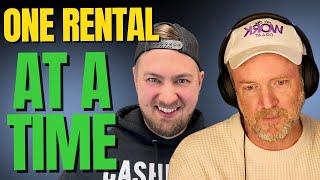
In this interview on the Multifamily Strategy channel, host Christian Osgood talks with real‑estate investor and YouTube creator Michael Zuber about his journey from a stock‑market loss in 2001 to owning roughly 170 multifamily units today. Zuber explains how he turned a single‑family portfolio of eight homes into an 80‑unit multifamily portfolio through 1031 exchanges, eventually scaling to 170‑plus units. He emphasizes the power of a narrowly defined "buy box"—in his case, single‑family homes in Fresno’s 93703 zip code with specific size and feature criteria—and how repetition and focus allowed him to dominate that market before expanding. The conversation covers his disciplined debt‑management philosophy, the pitfalls of syndication (over‑leveraged deals, unrealistic rent assumptions, and the looming “stupid tax” of costly mistakes), and his outlook that the next 12‑24 months will bring heightened pressure on investors. Zuber also shares his content‑creation strategy for the One Rental at a Time YouTube channel, producing up to 42 short videos a week (now three longer videos) and dedicating 15 hours per week to filming, driven by a long‑term goal of building a legacy that outlives him. He discusses hosting large‑scale events (e.g., a 300‑person gathering in Vegas at the Blind Center) to foster community. The interview concludes with Zuber’s advice: avoid being average, focus on a super‑power of disciplined, repetitive work, and continuously refine one’s buy box to minimize costly learning errors.
Chapters
I've been here for— I've been here before. It feels hard. It's going to get 5 to 10 times harder. There are going to be people that crack under the pressure. It's just starting, dude. And as somebody who has been getting prepared for this, I look forward to picking up the pieces.
Hello and welcome back to Multifamily Strategy. Today we're joined by a very special guest, someone who actually has defined some of my strategy in real estate. Everyone, welcome to the channel. Michael Zuber. Michael, thanks for joining.
Oh man, it's so fun to talk to you. It's been fun to watch what you, what you've been building over there. So I look forward to this. Should be fun.
Privileged to have you on. This is someone who very early in my career allowed Cody and I to speak. One of our first speaking engagements was with him when we were just starting to get in creative finance. I actually learned something at the event that we're going to talk about here today. Michael, you just ran a large event celebrating— you got your YouTube channel is now One Rental at a Time, by the way, everyone, if you haven't subscribed to that now. Your YouTube channel is over 50,000 subs now.
Yeah, we just cracked 56,000. We just had an event in Vegas celebrating 50,000. I do have to tell you, at least for me, it took time, right? Took 5 years to get there. But it was so worthwhile. We had over 300 people in person networking, sharing stories. And I think we had, I don't know, 15 or 16 different speakers. And it was a lot of fun. It was a lot of fun. I'm glad we did it.
So it was really fun. And you had a lot of my close friends there. You got Millennial Mike, you got Dion, Dion Talk Financial Freedom, Matt, the Lumberjack Landlord, Matt Hawkins. You had a lot of my favorite YouTube guys, a lot of guys who live near me too down there. So that was fun. I won't miss the next one. You scheduled it on my birthday, but next time we'll—
Yeah, we'll give you, we'll have a birthday cake made for you. We'll give you something.
There we go. There we go. I am extremely excited for you. That's a big deal. I've seen some of the pictures from that event that looked like that was a huge success. So congratulations. That's a, that's a lot of dedication. How many YouTube videos do you launch per week? I see you so consistently. I'm serious. This guy's YouTube schedule is ludicrous. How much do you post per week?
So it has changed the last couple of weeks. So I'll give you both answers. So for the longest time, I did 6 videos a day, 7 days a week. So that'd be about 42 videos a week. YouTube seems to have changed their algorithm where they're liking longer formats. So, now, I do 3. It's the same amount of time. It's just I don't chop them up. I used to tackle one topic in 12 to 15 minutes. Now, I do just one 30 to 45-minute conversation. But basically, I'm creating content for about 2.5 to 3 hours a day, 5 days a week. So, 15 hours of my life goes to creating YouTube content.
That is incredible. Well, a channel worth following because there's a ton of content there. Let's hear a little bit about who you are, what you've done. Let's start with where you got started in real estate. And then we're gonna go to where you're at today. Where did you first start?
Yeah, I got started in real estate in 2002. After losing a bunch of money in the stock market in 2001. I was defeated. I was broken. I was depressed. I I felt like a failure after losing 80% of my money in the stock market. And I turned to real estate because it was physical. It was something I could touch. It didn't feel like a casino. And yeah, so, we started in 2001. I wasted a year because everybody says invest in your backyard. And ultimately, we buy our first property in Fresno, California in December of 2002. First unit, 2002.
All right. And how large of a— was that just a single family? Was that multifamily?
Single family, 4-bedroom, 2-bath, 2-car garage, 1,750 square feet. Bought it for $107,000, rented for $1,100.
Is that one that stays in your portfolio today, or is that eventually sold?
No, we sold all 8 homes we bought from 2002 to 2006. We sold it at the peak and we 1031'd all 8 houses into 80 units. So, we went from single family only to multifamily only. Right at the peak. I knew there was pain coming. I took action. I got out of the way. I had no idea how bad it would be. It was horrible, Christian. I thought it'd go down 20, 25%. My market went down 75%.
Oh my goodness.
I sold North. Yeah, I sold North Drive for $265,000. I sold it a little early because it went all the way up to $300,000. But the next time it trades, it sells for $75,000.
Yeah, I'm going to say you did okay. If you, if you timed it exactly at the peak, that would be, that would be incredible. You hit almost the very, very, very top. That is exactly what you want. You got out with a tiny bit of margin before it all fell away.
I did. And the beauty is we sold 7 houses after that. So some of those houses were sold really close to the peak.
So what does your portfolio look like today? You started with 8 houses. You scaled those into 80. How many units you got today?
So we got as high as 187. I think we're sitting at about 170 or 171. Right. We've done some trimming. We've like the last 2 years, we sold 1 property a year, our worst performer. You know, when you get to where we are and you're, you know, 30 years older than you are, you sometimes think about ease of management. You do some trimming around the edges. So we have sold a couple of units that were frankly just the worst performers. One of them we 1031 into a couple of houses and the other one we just paid the taxes on.
When you're choosing which ones stay and which ones go today, when you're, when you're trimming the fat, because I'm actually in this process right now. I have more real estate than I need to hit all of my goals. We, we bought, we did our build phase. Now I'm looking at who are my winners, who are my losers. What metrics do you use to decide which ones you trim and which ones you keep?
So I'll give you mine, but then I'll give you what most people should look at. So we've done a great job over the years of making sure our debt structure is not a problem. Right? We invested through the last crash and it was always the debt that blew people up, whether that's seller financing, hard money, you know, ARM or adjustable rate mortgages, whatever it is. So, we spent a lot of time the last 5 or 6 years making sure our debt was never going to be the reason we had to sell. So, for us, it's very simple. Which asset has performed the worst over the last 3 years? Because 1 year is not enough time. 'Cause one year you could have a turn, you could have something, it's an anomaly. But we've looked at, you know, we sold a duplex on Glen. No, it was a triplex on Glen. We sold a duplex on 10th Street this year, Glen last year. And they were just the worst performers for whatever reason. We tried to make it work. We spent the extra energy. They just weren't performing. And we had a lot of equity and we decided to take it out so we could either A, put it into another newer asset, or B, we could raise dry powder. Because again, something I'm getting ready for is taking advantage of the multifamily pain that I think's coming in the next 12 to 24 months. So, you know, I'm very purposeful. I get ready early so I can strike when the opportunity's there.
[Speaker:RYAN] Well, that's served you well. And I see some of the same pain coming, especially on the larger multifamily things. Anything where the syndicators were in heavily, I think there's going to be some pain.
Well, there already is. They've already stopped distributions. They've already done capital calls. They're probably already in loan workouts. There's, dude, there's so much money going to be lost by syndicators.
Yep.
It's sad, but you know, I try to warn people. I've been screaming for 18 months, stop doing these things. Because I'm an accredited investor. I've been an accredited investor for 5 to 6 years. I see all the deals and they kept getting worse and worse. And it was always the debt, right? Oh, we're going to do a 1-year bridge with a 1-year add-on. We're going to— we're going to assume rent goes up 7% a year. 7%? What are you freaking, a moron? I mean, there was just some stupid assumptions and they just kept getting worse and worse. So—
but Michael, the market's been so good for the last 5 years, it's always going to go up. Oh, ridiculous. Oh, so far I know some good syndicators and I actually know some that have put together some great deals like it. Every strategy can work in real estate. Sure, of course, works, works. The problem with syndication is one, it was marketed to people as a way to get into real estate without money. Buying a huge building to learn how to get into real estate is always a disaster. We're going to talk about the stupid tax on here, but there's a price to not know what you don't know. When you buy a deal that's 100 times the size of what you should be buying, the cost of your mistakes are amplified 100x. Incentives don't line up with objectives. When you are paid on the front end, people come in, they go, I don't have money, I'm going to get paid to buy the deal, and then hopefully the deal does well. The two major problems with syndication— it should be done by experienced professionals, and I just think they need to restructure these so that they have limited upside on the front end. I think they should be paid heavily out of the results of the project, and that should be their sole or primary compensation, which is not always the case.
Well, I've been doing this for 20 years, and one of the things I love to do is speak at events. First, obviously, we love to give back. But I got to tell you, one of the reasons I go is the hallway conversations or the Q&A after. And in 2019, I went to a San Jose, which is where I live, meetup. It's full of tech employees, full of people with lots of stock money and, you know, some real liquidity. And everybody was a brand new syndicator. Nobody was an operator. I'm like, oh my God, this is going to be a disaster. And I'm like, run the other way.
And every time it is, you meet so many new people and they're all like, yeah, I'm here to learn how to buy a huge deal. I'm like, I'm all for buying bigger deals, but for me, bigger deals is start with a 10-plex. Start, start all the way, all the way up to 25 units. 25 units isn't that hard to run as an individual, and your mistakes aren't that costly where you can't pivot or do a small capital raise. Like, there's so many ways around a deal. 100 units, 200 units, super heavy value-add. I mean, some of these things, the deals only work because of your short-term debt, and they're like, yeah, I think the value-add is going to cost me $5,000 a unit, and it cost them $25,000 a unit. Oh, and then they're just— it's like, what do you You can't earn your way out of that on 100 units. For most people, your day job doesn't pay through that. No, and you're out, but you're out other people's money, which is 1,000 times worse. And it feels terrible.
Well, I think this— I think it's even going to be worse than that. I think there are some syndicators, again, probably the newer ones who maybe raised incorrectly, but let's just assume they raised correctly. But then they start getting stressed out and they start doing unethical things to try to survive, robbing from Peter to pay Paul. And it's like, oh, there's going to be people going to jail, right? I've seen this movie before. And we're in the very beginning of this, unfortunately.
Yes, we are. By the way, for those who are watching this, if you have no idea what a syndication is, I'll give you the 2-second rundown. Basically, it's crowdsourcing real estate. You're creating an actual SEC, you're creating a security. You're going to get paid a fee on the front end, usually a couple of points all the way up to— I've seen up to like 5 points, which is insane. Wow. If you're Grant Cardone, you're pulling a ton of points for deals that yield like 3%. Yep. But you're basically finding a deal. You're going to raise it with a blend of bank and private capital. People put small chunks of money, but you'll get tons of people to fund this deal, crowdsource it, and then you're going to be paid to manage the deal and eventually exit the deal. The big problems that we're talking about here are, one, people are doing deals that are too skinny because they get paid up front, or they're doing debt structures that allow them to do their deal because they have one year of interest only at lower interest, and then they balloon, or they have like really expensive extensions. This channel, we talk about two things all the time, every video: how to buy it, how to never lose it. You need to have a plan so you're never forced to sell. Long-term cash-flowing fixed-rate debt. Syndication rarely uses that. It's not that you can't, it's that they opt not to because they try to make these big deals work. And when rates go from 4% to 8%, No bueno. What do you do? You buy these expensive caps on them, but it's still, it's like your deal just gets wiped out and you do capital calls. People's equity is diluted. I have a friend who lives right down the road from me. He spent his entire life saving up $2 million and he wanted to do a couple deals with us. I'm like, wait for the right deal. And while he was waiting, he's like, oh, I found these syndicators. He spent all $2 million, lost 100%. They're trying to do a workout over the next 5 years to try to recoup as much as they can. Just gone. Whole life savings because they were impatient and they wanted to hop in. They're like, I'm an accredited investor, let's go. Really painful. So when we're talking syndications, uh, this is a really hard time in the market for a lot of these, these operators. People think the market always goes up.
I've been here for— I've been here before. Yeah, it feels hard. It's going to get 5 to 10 times harder. There are going to be people that crack under the pressure. It's just starting, dude. And as somebody who has been getting prepared for this, I look forward to picking up the pieces.
Both Cody and I have, have done very well when everyone wants to pause or stop playing. That is when we like to take the field. Unfortunately, we'd never have liquidity because we started with no money and we're 2 and a half years into this thing. We're not You have 3 resource pools. You got liquidity, you got cash flow, and you got equity. We got equity, we got cash flow. Liquidity takes some amount of time. Yeah. You're only rich when you have all 3 pieces. And 2 and a half years in, if you have all 3 pieces and you're at your goal, you're a much better investor than I am. It takes time creatively. So we'll figure out the liquidity thing. But like playing when, when the, when the music stops, if you can keep playing the game, it is the best time in the world to pick up. Beautiful. That's where the money's made. Which brings me to the thing that I learned from, from Michael. So this was about a year ago, year and a half. It was not that long ago. We're at an event in Fresno with Michael. Fantastic event, by the way. Thank you for hosting that.
No, thank you for coming. That was a trial run for Vegas. So I appreciate you being there.
Well, that was, that was an excellent event. And it was really fun being out there. You talked a lot about the buy box. And when I was listening to that, I'm like, I hate the idea of a buy box. I don't want to be boxed in. We're so creative and I'm always deal than debt than equity. I'm like, let's find opportunities with really no parameters. Let's find the opportunity and then let's go, how would I make it work? So getting so creative that it's like, okay, if I'm starting from nothing, I don't know what I'm going to buy yet. I'm going to see what's out there in the market I want to buy in and I will build my business around that. I think that works for deal one and I think it works for deal two. As I've started to build my business, we're up a little over— I lost count. It's— I'm somewhere between 200 and 250 multifamily units and a resort. And I want to clarify, I have equity partners. Michael owns more real estate than I by, by a lot. I have my share, roughly 30% of a lot of these because I share it with Cody and we usually have 60 to 75% of our deals until we buy partners out. Okay, as we build up though, we have all these units. The buy box is like everything. I'm so sick of doing unique projects every time. We're gonna talk about this later, the stupid tax. You learn the things you don't know, you don't know. I have a new one on every single deal because every single deal is unique, so I pay a premium to learn every single time. So talk to us a little bit about what is the buy box, what does yours look like when you're buying deals and why is it important that people define this early in their investing cycle?
So, people that follow One Rental at a Time, generally speaking, they're not you and Cody, right? They're generally full-time employees. They generally are doing this to add or improve their financial future for retirement. So, I have quickly diagnosed most people that are excited about real estate waste a lot of time because they chase rabbits or butterflies or whatever you want to call it, squirrels, right? They're just all over the place. They probably feel like they're making progress, but they're going nowhere. They're just spinning their wheels. Yeah. So I am ridiculously focused in saying stop the nonsense. You've got to create a buy box, and I'll give you my buy box from December of 2002.
93703.
So Fresno, California, one zip code, one asset class, single-family homes, 3 or 4 bedrooms, nothing more, nothing less, 2 baths, 2-car garage, one story. I think it was 1,250 square feet to 2,000 square feet. Why is that important? A buy box is important for 2 reasons. One is it's repetition. You're looking at the same thing over and over and over and over again. It's like a golf swing. You get better the more you practice. But second, and most importantly for most people, is you ignore everything else. You get really, really, really good at 3 or 4 bedroom, 2 bath, 2-car garage, 93703. So the last thing I'll say is That criteria, I looked at nothing else for 3 years. So in about 6 months, I knew that market better than anybody else on the planet. And we did 8 deals that kind of fit that buy box in that market until I felt comfortable expanding it. So a buy box to me is everything to a new beginner.
I absolutely agree. When I was finding my market, so with the exception of the first deal I bought in Bremerton, Washington, I bought a duplex because I was open to where opportunity my next duplex was 4 hours away in Moses Lake, Washington, in the middle of the state. That's— Moses Lake is my Fresno, by the way. That's Grant County, Washington. I own the property management company, which I recommend no one do unless you have to. Yeah. Super low margins, super high lawsuit risks, though I haven't been sued yet.
But it's coming.
Yeah, exactly. You will face legal problems. Your margins are really low. The staffing's really hard. Don't do it unless you have to. But like my buy box has been Grant County, Washington. If I set my box too strict too early, I wouldn't have had the success I did. So my recommendation everyone is be a little flexible with your opportunities when you start. A good friend, Caleb Hommel, one of our earliest mentees, he was dead set on, I want to invest in Nevada. And I was like, he was not having any success. I'm like, where else would you want to invest? He's like, maybe Texas. I'm like, just try both. Yeah. And once you find that first deal and you close it, double, triple, quadruple down on that market. I like it. That worked for him. But the earliness of the buy box— what I was so wrong for being resistant to this. This is why Michael has the experience here. This is why he's on the channel and I'm interviewing him. You need— once you find your lane, stick to it. Do not hop out of your lane. Cody and I bought a resort. The resort makes money. The resort hosts our events. It is beautiful. It is on the water. You can— from some of the cabins, you can actually look out over the water and see the orcas swim through. I mean, it's crazy cool.
Hmm.
Except I'm not a hospitality guy. My team's not hospitality people. It drains so many of our resources. Yeah. No one has had fun running the project. I have fun exactly 3 times a year. For 2 days while we run our events. And I'm like, oh my gosh, am I glad we bought this. And then I go home and I'm like, wow, I have another basically 360 days of running this thing and I hate every minute of it. Hmm. We are value-add multifamily guys. I like entry-level housing, studios and ones because I know how to do replaceable parts. I call it functional flipping. Same floors, same paint, same countertops. I know the cost of the roof. I know the plumbing. I know everything about everything and I control the market rents because I have enough units in that asset class. That made the difference. Michael is right. Christian was wrong. Please call MythBusted. Seriously, that— I think about it all the time and I think back to that event and I was like, damn it, I could have learned that earlier had I listened to Michael's experience. But it worked. And now that I'm doing my second market in Texas, I'm on the board. It's so much easier because I'm like, okay, I'm learning a new market after I've mastered one and my buy box has changed a little bit, but it's now fixed and it's a new adventure, which is what you did. You went from single family and now it's multifamily.
Yeah, exactly. Exactly. You change when the market tells you to.
Absolutely. So this limits your, this limits your stupid tax. If you have a box where you just become amazing, I'm imagining compared to some of the people on this channel, you may have less stupid tax paid. Let's test this. When you're learning, you don't know what you don't know. What is the highest stupid tax you had to pay while learning how to play the game?
Well, my stupid tax actually occurred before real estate, and basically it was I turned $7,000 into $200,000, and then I got hit with the stupid tax. I remember saying, I'm smarter than Warren Buffett, and any freaking person that says you're smarter than Warren Buffett, you're about to get your ass handed to you. And in a very short amount of time, I lost 80% of $200,000. So, I lost $160,000. My stupid tax was essentially gambling. I was investing. I'm old enough to be investing during the dot-com crash. $7,000 to $200,000. I had no idea It was the market that was making me look like a genius. And the really sad part, Christian, is in the beginning, I was doing the right things. I was reading financial statements. I was doing deep dives on the company. I was investing in what I liked, and I made some money, right? Like, let's put this in perspective. I probably turned $7,000 into $25,000, but something really unfortunate happened is the less work I did, the more I made. So I'd stopped reading financial statements. I only looked at summaries. I made more money. I started trending, uh, watching the trends and trading on CNBC headlines. I made more money. And by the end of it, I was gambling, I was using options, I was doing all this stupid shit. The thing I wasn't doing was the homework. And my stupid tax was, you got to do the work all the time, you freaking moron. And it just wiped me out. Took, took $160 grand, which in the— dude, this is a fact. It's sad, but $200,000, Christian, was more money than my entire family had ever had.
Mm-hmm.
Ever. Like mom, dad, grandparents. Nobody ever had $200 grand liquid. And I lost 80% of it and went into a deep funk and depression. And there's my stupid tax. Never say you're smarter than Warren Buffett.
You know what? I think every time I've asked that question on the channel, the answers essentially boil down to, I thought I was smarter. Every single person, myself included. I just, I thought that we knew something that we didn't know yet. Mm-hmm. So for those who are beginning, or, or it doesn't really matter where you're at, you can be in the middle of your career. If you think you know something and you are trying something brand new or you're, you're changing your buy box.
Yeah.
Know that it's going to come with a price and you don't know what that price is going in. So continue to factor it in. And it's okay because you will pay a price to learn things and you need to learn things and you need to evolve. But you need to know that it's coming with a price. My first deal. We raised $300,000 to close the deal. We gave everyone a 2-to-1 in 5 years, which I think is very fair for a deal that we bought for 2 and appraised for $4.1 million a year later. So we had $2 million of upside. We had to refinance to finish the project because we didn't raise enough money to do the project. We raised enough money to close the deal. Mistake 1. Mistake 2, none of the investors wanted to be on the bank loan. If you have a 2-to-1 in 5 years, but you want to buy them out in 11 months, it's still a 2-to-1. So, we borrowed, you know, just a little— we borrowed a little over 100% interest, essentially, is what we did to do that deal. Did we make money? Yes. In fact, Cody and I have cashed out 7 figures from that. We could have pulled another $300,000. There have been 5 times in our last 2.5 years where the money has gone to zero. And I'm like, you know what I could really use right now? $300,000 of cash. And we would have had it had we either one, raised enough or just done like a tiered system of, hey, if we buy you out in 5 years, it's this. If we buy you out in 2 years, it's going to be, you know, I'll buy you out at, you know, a 1.25 to 1. And everyone would have been happy. We ended up moving our pieces around. We converted their— they basically, they seller financed their equity back to us. So we turned— we got the cash flow up, turned their equity into debt. I've paid off like half that debt. I still have notes at 10% from buying out partners on my first deal ever. So you can make money, you can win the game, you will pay a price to learn. I am grateful for you though. The amount of business that you've done, $200,000, or I guess less than that, you know, $160,000 in stupid tax. That's kind of what I expected. You've paid a lower stupid tax than most people to get to your size, and that is because you are calculated. And for those who haven't read One Rental at a Time or followed his channel, um, simple and boring. I mean, I mean this in the best way possible.
No, yeah, I, I— no offense taken, it's awesome.
Yeah, simple, it's repeatable. Repeatable, it's scalable. And scalable is the number one mark of a successful business. So I, I think you nailed it on the head. You can just do the same thing again and again and make money and not lose money. And that is the genius of Michael's game. Learned a lot watching it. What is the thing that you think that you are best in the world at? This could be you or your team, but what are you the best in the world at and how has that affected your business?
You know, sometimes in life you don't understand what your superpower is because again, a superpower probably by its nature comes to you naturally. Yeah. And it doesn't really stand out as a superpower. But thankfully, mine has become remarkably obvious and you kind of hit on it. I am able to focus on a defined set of tasks daily for years that would likely drive most people crazy. And I am excited for the next day. For example, I have looked at my buy box in Fresno, California for going on 20-plus years, probably 99% of the days. It is very rare that I miss a day, and I always— every time I pull up my phone, I'm like, what treasure is my buy box going to give me today? I am already looking forward to doing that tomorrow. Most people can't do the boring and monotonous and life-changing things for a week or a month, and I could do them for 20 years and look forward to doing them for the next 20 years. So, my superpower is being remarkably disciplined and focused and just keep showing up and doing the work.
And for those who want to have a YouTube channel with 56,000 subscribers, 3 hours a day, 5 days a week, all the time, again and again.
I have, I have 12,000 videos. How many YouTube channels have 12,000 videos?
I think I'm getting close to 1,000. Maybe, maybe. And my attention span is like, well, I just keep ripping out shorts. They take me 30 seconds. Like, the amount of commitment to, hey, I have a strategy. And how long did it take for your YouTube channel to start catching? I'm imagining you didn't just launch it and it just took off, right?
No, dude, no, I don't edit videos. I got no hooks. I got no fancy editing. I got none of that stuff. I'm just a guy in front of a camera. I did 1,000 videos, 1,000 before I was monetized.
For those wondering, that's horrible.
Yes, that's horrible.
And you kept going. You chose your strategy. It was simple. It was repeatable. And you're like, hey, I'm going to do this until it works. And look at you now. 350 people in Vegas. That looked like a heck of an event. Where did you host that, by the way, in Vegas?
Where's that? So, the hook, if you're going to ever host an event in Vegas with less than 400 people, you need to check out what's called the Blind Center. The Blind Center functions Monday through Friday as a center for the visually impaired. But what they do on the weekends is they rent it out for corporate gigs. And I was blown away by the facility. I rented the whole place as a way to get back.. And yeah, the Blind Center, Melinda, if she ever happened to see this, is amazing. She was my host, my, my superwoman that made it happen. So shout out the Blind Center. And I've already booked next year. We're going to do it again in 2025. President's Day weekend, Saturday, Sunday, Blind Center.
Look forward to it. There we go. I volunteer as a speaker.
Awesome. Pick me. Awesome. Let's go. Let's go.
So everyone, yeah, Blind Center, Vegas. And I imagine because you are a, hey, let's do something that we can do again and again and again, I'm guessing we're probably going to see a lot more events in Vegas every single year and it will get bigger and bigger each time until I guess you fill the building. What's the capacity of that place?
400. We're going to push it to the capacity next time. 400.
Okay. So I guess we have one more, one more at the Blind Center. And then I'm imagining that this is going to get a lot bigger than that. It certainly could.
We'll see.
I've watched your audience scale. You're bigger every year because, yeah, ripping out a ton of content will do that to you.
Well, here's the key. So I think this is the most important thing, right? Doing 1,000 videos and not being monetized sucks. Most people would give up. Yeah, but here's the wrinkle. My motivation has not changed since my first video, and that is very simple, Christian. I want to create something that outlives me by 50 years. I have this belief that you die twice. Once your physical body expires But then the second death is when does the last person talk about you? I'm trying to have that second date be at least 50 years past my first one, and the only way I can do that is, dude, I have to impact generations. I'm not playing a small freaking game. We're trying to help generations, and I'm going to keep showing up every day.
I love that. So in summary from today, choose your buy box and you're going to minimize your stupid tax a lot. Become the best in the world at your thing and then stay in that lane. You don't need to do everything. You don't need to be a legend that you're— you're not going to be a business legend in every single adventure that you want to go on. Choose the thing that you could be the best in the world at, do that thing, and continue to do that thing again and again and again. There you go. I mean, that's, that's the message I got out of this. If you had to leave the audience with one final thought, one more piece of advice, and this could be for anyone starting, this could be for people who are farther in their investing career, what's one thing that you wish that you knew throughout your entire adventure that, you know, maybe took you a while to learn?
So this might sound harsh, I, I actually mean it to sound harsh, but I also want you to kind of scratch your head. The average person cannot earn financial freedom. Don't be average. Just don't be average. In today's world, it takes so little effort to not be average. Just don't be average. Don't settle for average. You don't want to be average. Just do a little bit more. That's what I'll leave them with. And lastly, it is possible. I talk to people every week that have done it, that have started from horrible positions. It is possible, but it really keys on not being average.
Don't be average. Well, the good news is average seems to be going down. You watch the last few generations, so it's not that hard to suck a little less than average. So, amen. I love that advice. Keep competing. It's getting pretty squishy out there. You'll be surprised how fast you can dominate competition with a little bit more effort and a little bit more focus. Michael, thank you so much for joining us. Where do people find you, by the way? You got a book, you got events, you got YouTube. Just give us the whole rundown.
I've done very little right in life, but this is one. Everything I do is one rental at a time. Website, Instagram, YouTube, books, one rental at a time.
There we go. Consistent with the message, one rental at a time. Do the same thing again and again and again. Consistency will win. If you haven't yet, like, subscribe, follow. We post 2 times a week. We go live every Wednesday at 3. If you have questions, ask them there. We'll look forward to seeing you all on the next episode.
More from Christian


What Investors Want in Every Pitch: Property, Business Plan & Team #RealEstate #Pitch




Speak with authority to turn broker rejections into deals - boost your confidence #RealEstate

Turn Broker Objections into Closed Deals - CRE Negotiation Tactics #RealEstate #Negotiation

How to Get Multifamily Deals Under Contract Without Having All the Cash | Objection Series Ep. 1

How I Scaled 500 Apartments in One Texas Market in 12 Months #RealEstate #Multifamily


Turning a $12.2M, 200-unit mess into profit - live multifamily turnaround update #Investing