25 Million In Seller Financed Debt before I turned 31
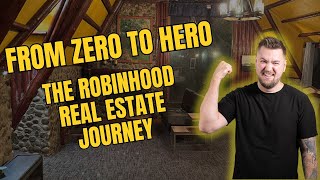
Christian Osgood recounts his journey from low‑wage jobs and corporate roles at CoStar to becoming a multifamily real‑estate investor who, before age 31, accumulated $25 million in seller‑financed debt. He describes his early career, the pivotal partnership with Cody Davis, and how they sourced capital through informal networks (coffee‑shop conversations, personal contacts) to fund their first 38‑unit deal. The narrative details their deal‑structuring philosophy: using simple, repeatable contracts such as purchase‑option addenda and straightforward joint‑venture agreements, emphasizing cash‑flow‑first acquisitions, adequate reserves, and the importance of keeping structures bank‑friendly. A deep dive into the “Robinhood” resort acquisition illustrates the pitfalls of over‑complex financing, lack of reserves, and the strain it placed on their partnership and cash flow. Osgood reflects on lessons learned—keep contracts simple, focus on cash‑flow‑positive deals, scale problems down to make them manageable, and maintain disciplined reserve policies. He concludes with encouragement that anyone, even without family money or extensive experience, can scale a multifamily portfolio by following these repeatable, cash‑flow‑driven principles.
Chapters
Large part of what I learned throughout my career was I needed to scale. So I'll give you a little bit of backstory on me specifically and how multifamily strategy even came about. So this will be a little backstory for me, a little backstory from Cody. I started, got outta college, got a business degree, and I subscribed to the Dave Ramsey policy of save, save, save, save, save. Don't take on debt. Eventually you can afford to buy a house and then you can get a couple of rental properties and you can snowball this into infinity. The problem is that the government kept printing money the whole time. So every time I would save, the money's less. And it took me 8 years of scaling a career. I started at $11.50 an hour printing screen, screen printing t-shirts. I then went to the supplier and started selling for them for a salary of $42,000 a year. And I did that for 2 years. I finally got a job at lands.com. I'd always, my whole career, wanted to get into real estate. Zillow was never going to hire me because I had no relevant experience. Lands.com, selling farmland, ranchland. It's advertising. It's basically LoopNet or Zillow for hunting land, ranchland, or developable plots of land. I worked for this company for about a year and a half. CoStar buys them and they own LoopNet, Apartments.com, the CoStar data product. And I move up that company for 4 years. I made this one critical mistake. I wanted to get into real estate, so I worked for LANS and then I worked for LoopNet, then I worked for apartments, then I sold the main CoStar product. The whole time I managed to buy a single duplex. So I have my single family house, I have a duplex. I spent 8 years saving and earning, saving and earning, saving and earning, saving and earning. And I bought that property. I had a little bit of money left over. COVID hits, I leave the office. I, I, I could not do corporate world in COVID. Working from my house. Wife's a kindergarten teacher, so she's teaching kindergarten from the other side of our 1,000-square-foot house. I'm over in the other office just having all of my clients call in. I have a whole lot of office and retail clients in COVID. Hey, we're not doing any business. Can we cancel our subscription? That was my job for a year was, hey, we're not buying anything, but can we get a refund? Like, that was, that was the job at CoStar. So I leave CoStar and go to this little office in Tacoma. I'm running a data center. Where we're generating leads for brokers and I'm working for a brokerage that has no idea how to service a lead. There was one kid in that office. I was 20 at the time who you send him a lead and then magically he gets you an offer. In fact, he was so good at this, I got my broker's license and Cody Davis and I just started knocking out all these leads in the call center. We do a fourplex right there, actually not too far up the road over in— I was at Port Orchard. We did a duplex over in Bremerton also, just up the road. We just started knocking out deal after deal from this call center. And Cody being a young broker, just keeps showing up at the office. I'm like, what's this kid doing here? I'm like, oh, of course he's sniping all the leads. He's coming in here brokering deals. Cody's in my office probably once every other day. We formed this friendship and I have this realization. Cody at the time had seller financed a 12-plex. He'd seller financed a another 12-plex, and he was just, if I recall correctly, just about to close on the 6th. I don't think you owned the 6th yet when I met you. So he has 24 rental units. He's 20 years old. He's about to close on his 3rd seller finance deal. And I'm looking at my single duplex going like, wait a second, there is a potential problem with this Dave Ramsey's model. I have 2 units, 8 years of work, a college degree. I've gone up the corporate ladder. I don't have much more money than Cody does. I have a little bit of cash, but I spent most of my money buying my house and my duplex in a really expensive market. Cody then comes in the office, he is like, dude, there's this duplex right across the street from the 6 I'm buying. You should buy it. Now, what wasn't explained to me at the time was Cody was wanting to broker the deal to me as I was a real estate agent. That was not made clear. Cody was just like, you need to buy this. I was like, I do need to buy this and I can use my own commissions to fix it up. And Cody's like, and so began the rivalry that, no, I'm kidding. So Cody and I, that was really the start of the relationship. I buy this duplex across the street. I make up for it later. I buy this duplex. I'm fixing this thing up. He's running a sixplex. We're carpooling to Moses Lake all the time. And then this 38-unit comes up and Cody's like, hey, I've been looking at this thing for years and I want this thing, but That's a big project. He's like, I, if I could raise the money, but I don't think I can run my existing 30-unit portfolio and another 38, because this thing's a heavy value add. Cody in my office was like, hey, what if you and I figure out how to raise the capital? And I remember sitting there, and many of you, if you ever have to raise capital for a deal, it's your first time, you've probably had this thought. It's like, I love the deal. What if the money doesn't appear? And so I remember we were sitting here and I was playing with one of my clients gave me this sword. I have a sword from Lord Gandalf sword. I remember we were going around the office and we were just playing with the sword thinking, I'm like, how would we raise the capital for this deal? How would we do this? How, how, what are the risks? And Cody's like, well, the risks of not putting it under contract is not buying it. I'm like, okay, good enough reason for me. We put it under contract. We put together our deal. The capital raise ended up being the easiest thing of the entire transaction. We forgot to do it. We got so caught up with the negotiation, the due diligence, coordinating the contractors. We were, correct me me if I'm wrong, Cody, I believe it was 3 weeks out. May have been 2. We were 3 weeks out and Cody's like, so we should probably do the part where we bring in the money. And I was like, oh my gosh, that was the part we were worried about. We went through, found, so we went to the office. Our designated broker was named Brandon. The office specializes in selling duplex, triplex, and fourplex, which is not a 38-plex. We went to Brandon and said, hey, we're making some calls. Do you have anyone in your arsenal who might want to scale up their portfolio. And Cody had a couple of clients who we reached out to. Over the course of about 4 calls, we had 3 people say, hey, I would like to commit $100,000 to this. One of them was someone who had successfully run a flip project with Cody. So Cody had essentially just made them that money. Easiest pitch in the world. Hey, I heard you're liquid in $100,000. You want to put it here? Easy pitch. We had one of our pickleball friends from Renton ended up funding the deal. And then we had one other individual who lives actually not that far from here who's become a fantastic friend and Cody worked with on a lot of projects. These 3 people come in, fund the deal. It was 2 or so days of calls and a little bit of negotiation. It just came together and we closed it. And then at the same time, go under contract for 3 side-by-side duplexes, need another $90,000. I meet a guy in a Starbucks who just lost money on a flip and he is like, I'm tired of losing money on flips. Just want to double my money every few years. I'm like, boy, do I have a plan for you? I remember we were sitting, this was sitting in my home office and Cody and I were sitting there and he was like, how should we structure this? I'm like, well, we need cash flow. Welcome in, by the way, snag a seat. Good to see you. How would we cash flow? Because the investor coming in ideally would get all the cash flow. I was like, well, what if we give them all of the projected original upside? He's trying to double his money every 5 years. What if we just write a contract that does that? I'll buy you out. You put in 90, I'll buy you out for 180. I have 5 years to do so. We'll try to do it early, but all the cash flow goes to Cody and I. And somehow they're like, this is a great idea. He's like, I have a high-paying job. I don't need the cash flow. I need the appreciation. I'm like, well, I don't need appreciation right now. I'm trying to retire my wife from teaching. Appreciation doesn't get you out of teaching. So we took the pieces that we need and the pieces that the investor wanted and the pieces that the seller had. We mapped the same thing. We said, okay, we need someone who's trying to multiply their money, not trying to get cash flow right now. We found that one person in a conversation in a Starbucks after we were under contract, which is the craziest thing to me. And this, this tends to be what happens when you listen to the stories of a lot of people within the Multifamily Strategy Mentorship. A lot of people are like, you won't believe how the money came in. I'm like, trust me, I'll believe it. It's never how you expect it's going to come in. It's a conversation in Starbucks. It's a seller who said, hey, I like you guys. I want to sell this building to you. I'll give you less down because I like the way you guys operate. It was one relationship. The seller was some, or the, sorry, the funder was some random person in a coffee shop who had a high-paying job and was interested in what we were doing. They wanted to buy a little bigger and 6 units was better than what they were doing. Cody and I, all we cared about in the beginning was cash flow. I just wanted to, I really, I set my goal at $15,000 a month, but if I'm being honest, I really just wanted to get to $10,000 a month. I'm like, if I had that passive, even though it's less than half of what I made at CoStar, I can do that. I already own my house. I have a rental. $10,000 a month at least gets me to the point where I don't have to worry about the money coming in. I can afford my cost of living. And if my wife left her job, we can make it work and scale from there. That's all I wanted to do. And so Cody and I stacked our next deals very similarly. Almost every deal. How do we stack the cash flow so that we are getting paid? Investors are multiplying money. And then once we hit cash flow, we started playing with that structure. And then you can kind of swap it. You get $15,000. Oh gosh, how much was that? $50. We bought groceries with our— I do remember that. Yes. Year one. So in year one of this one, we did come in and we decided— so we had a few moveouts. Rents were low. When we raised rents, a couple of people moved out. That thing rips cash flow from year two on. I have 100% occupied at market rate. It's a— it was a great acquisition. Cody and I had a bad habit in the beginning of buying deals where they cash flow with absolutely no reserve whatsoever. We were like, hey, we can close the deal. So we closed the deal. We have no reserve. Someone moves out, it's cash flowing, but it goes into renovating the next rental and then we get it open. Cash flowing and still having no money is a hard place to be. This is a model for everyone. When you buy a deal, your renovation cost, your reserve, all of this needs to be in upfront. And if you can't do the deal, if you don't have the money, And if you raise the money, if the deal doesn't pencil with a full reserve, a full reno budget and the cash you need to close, you haven't negotiated a deal yet. Cody and I didn't quite yet understand this until 5 deals in and being broke for a year. We film a video from my house with a bag full of groceries. We're like, guys, it did it. Cash flow. I don't even know if we spent all $50 on groceries. I think it was like $45. And I was like, I'm like, we did it, bacon and eggs. And that fed us for, you know, 2 days because we were 2 young guys in our 20s. And that was our first year of real estate. Now, the 38 cash flowed a lot more. We had a lot of distributions from that one that helped us go. But what we did and what we focused on was based on cash flow. Let's stack as many rentals as possible. And that is the best decision that I think that we made is we set a fantastic base. And as we got better, we set more and more rules such as have a reserve, have, you know, all the normal things that one would do. But I think the most important thing for me was that we didn't let all of the unknowns stop us from moving forward in the business. You should plan, you should buy better than Cody and I did on our first like 5 deals. You, you really should have more money in the accounts. But what we ended up doing was we stacked a very, very large rental portfolio and eventually we were able to refi, restructure, fill those accounts. It was fantastic. Remy? Yeah. Associated with that property, do you have like a separate contract with them that says I'm borrowing this much from you? So we have a, we have an option contract that I put as an addendum to the OA. It's technically a separate contract. I just have us all sign at the same time, so it's nice and clean. So we have our operating agreement and then I add the option contract. So it's a standard purchase option. It just says, hey, within 5 years for this fixed price. So in that case of the 6-unit, for your consideration of $90,000, we can buy out your equity stake, which was 33% of the 6 units for $180,000 within 5 years. Now, one thing with options is options legally have to be optional, hence the word option. You can't have a requirement, otherwise you've created a security. The SEC doesn't like this. You'd have to file that as a syndication. To have an option contract, you have to have an option, but you can put triggers for if the option isn't executed, then this happens. And so our option is secured by our equity. So we said, hey, we have an exclusive right to buy you out for $180,000 within 5 years. In the event that we do not do that, we surrender 100% of our equity to you and you get all of these properties, like all 3 duplexes at the awesome basis that we currently have them for. You get a great deal. We do not want to lose our duplexes. That is not, that's not the goal. So we've incentivized the objectives with the outcomes. But that's how we use the option contract. It's essentially, I just tack it to the back of the operating agreement and those sit in our file. But that's all it is. Purchase option contract. Good question. Those are really helpful on the, on the JV structure, which is how Cody and I have done most of our structures. If you have 5 or less people on the deal, great way to structure it. If you're going to have passive investors who have no activity whatsoever in the LLC, or if you are doing, if you have guaranteed exits, if you have a lot of specific metrics, you're going to want to file with the SEC, run a syndication. I've done a few. They're expensive, they're time-consuming, and you have to report regularly to like 15 partners. It's not my favorite way to do real estate. If I was going back and starting over again, I would raise more money on the front end of my deals. I would not change the deal structures that Cody and I use, not significantly. We kept simple structures, simple contracts that we were able to actually structure correctly and then bring to a bank to refinance, which is something that I didn't realize. If you get too creative in your contracts, you do tons of crazy deals. I remember the first and second time we went for a bank loan, the lenders like, dude, your portfolio is amazing what you guys put together, but it is held together with like bubble gum and duct tape of like, how did you structure this? I don't know. Was it toothpicks and bubble gum? Is that what they— that was the phrase toothpicks and bubble gum was the exact words. Like this works. This is legal. They're like, this is going to be really difficult to explain to a lender because every single loan you have No bank has ever bet on you, ever. You structured everything creatively. So one of the things that Cody and I learned through this adventure is this: the simpler the contract is and the simpler the structure, the easier it is to take it to the bank. The 38, we have a very standard seller finance note and a few partners that are getting bought out at the refi. There's nothing crazy to explain to the bank. When we got the funding for it, they wrote us a big old check. We bought out the partners. We owned that building by ourselves for years. Eventually Cody came in and bought me out of the building. So Cody now turned it into 39 units. So the 38 is a 39 and it is solely Cody's. Some of these structures, absolutely, absolutely simple. And without fail, our best deals were that. I'll close on the biggest mistake from our structure here. Oh, little story of the Robin Hood. And we've shared this a little bit, but now that the transactions are all done, we bought this with a few capital partners. Cody, me, and we had another operator. The other operator, I'll be nice to them. They didn't work out. I'll leave them not to be named. So within the first year, Cody and I cut them a very small check and said like, hey, your options are we're going to pay a little bit of money or we're probably going to just have to sue you. This isn't working. And they're like, oh, I would love money. So that worked out really well. They left the resort. Cody was living here by himself with less help and was like, bad news, Christian. I'm now 21. And turns out living in Union and often commuting to Moses Lake or Renton is not super fun when you're single and 21. If you guys have seen the average demographic of Union, there's not a ton, there's not a ton of 21-year-olds. There's, there's, there's really not. So we ended up with, we had borrowed the, or not borrowed, but we partnered for the million dollars down. We had an agreement that, hey, we're going to, we're going to give you a little return on $700,000 of this was a private investor. We're going to give you a little return on year 3. What we did with the Robinhood is what we did with everything at that time. We started the Robinhood with no reno budget, no reserve, renovating out of cash flow. The way that we structured the note, all of our proceeds through the year at the end of the summer pay down our loan, which means Cody and I perpetually for 3 years on a project had $0. It makes money. Then you pay that money to the prior owner. We owe less. Our mortgage costs go down, which was sweet. So our, our money goes up a little bit every year and then a tree falls and we have to get trees removed and then we're out of money and then we bank all the money in the summer at a resort and then we hand it over to the prior owners. And so we were running in board games, we call that top decking. You're out of cards and you're like, next card's gotta save me. Let's go. We were just drawing the next dollar and putting it in the next thing. And we got stuck on this for a while. Eventually we got to a point where I had scaled my business enough in Texas. Cody is buying up Central Washington. And the other investors were like, hey, Robinhood's working, but not the way that we wanted it to. We traded around the pieces. Danny and I just in the last few months restructured the Robinhood. Cody and I traded around some properties. Danny and I now own and operate the Robinhood. That was 3 years of absolute pain from structuring our loan as we have 700 as a semi-quasi-passive investor. We have some private money lenders who joined for the accelerated tax benefits. So we did some special tax maneuvers. Kody and I are partnered with an operating team that no one has ever run a resort in their life. So we put together the dream team of 3 inexperienced people. It was the dumbest thing that we did in our career. Now today, if you were like, hey, would you sell the Robinhood? No, this is mine. I love this. If I could go back in time, I would've not bought the Robinhood. I put my whole business behind 3 years. It put strain on Kody and my— I put strain on our friendship, our partnership, but more importantly, it put strain on our wallets while we were trying to build 2 other businesses. We're trying to scale property management. We're trying to scale multifamily.. And every time we earn money, it gets sucked up by this project. It was very, very frustrating. So if I have one lesson for everyone, I'm going to repeat the beginning of this. If it's simple, it's repeatable. If it's repeatable, it's scalable. Buy based on cash flow with margin. If you just do that, you will get a raise every single time you close. Your stress level will be like here, actually lower than here. It's less stressful than it was before you bought the property because now you just have more money. I have done that pretty much exclusively through my Texas portfolio. That's the way Cody buys all of his deals now. Cody, I'm sure you'll probably talk about it, but Cody is swapping a lot of his old 1950s inventory for new built 2023, 2023 build buildings that are gorgeous. They cash flow. If you get nothing else from this entire event, just remember, if I buy income, my income goes up. That's, that's Christian's Dave Ramsey equivalent. Dave, Dave, Dave's like, if you spend less money, you have more money. It's like, well, thanks, Dave. I see why everyone buys your book. That's hard to argue. So Christian's Dave thesis is if you only buy income, you will have more income. So everyone buy my upcoming book. I'm kidding. I don't have one yet. The down payment for this was $1 million. I was told zero, but it became $1 million. The original plan for the— embarrassing. Cody and I were in our 20s. Cody's still in his 20s. Our exit plan for this was they're making so much top line income, but we're going to run a tighter set of expenses. We're going to be much better marketers than the prior owner. Basically, we did our projections on we're going to be better than the prior owners, but with our pro forma, we were going to increase the value of the Robinhood substantially and just earn our way through the buyout with the projected cash flow. We're going to write them a check. We're just going to earn it out of cash flow. So all the operating income from the first 3 years were going to go to the investors. We'd buy out the first one and then the other person who was in for 3. So one was the $700,000, we're going to buy them out. And then the other person at $300,000 had a 5 to 8 year window for us to buy them out. They're like, we'll write as long as you want, we just want to return. So we had staggered timelines to buy everyone out, out of cash flow. Then what happened is there was no marketing budget because the marketing budget was spent on tree removal and cabin revitalization and roof fixing. And all of the stuff, we furnace fires. That was actually one of the least expensive things we had to do. Thank you, Johnny Nyland, for cutting us a friends and family pity discount and for like, you guys got screwed. He came in and helped us out with some of our furnaces. But as we went through that project, the vision was, hey, we're going to do this out of cash flow. We're going to sacrifice the income to pay out everyone. What happened in practice was we realized Cody and I realized, because despite our original structure, Cody and I can both do math pretty well. That was one of the things that we both have the ability to do, which I'm grateful for. We knew about what, end of year 1, we're like, oh, 2 years, we're going to be in a lot of pain. Like if we got through the first one, I remember sitting in my house just feeling numb on my fireplace. I'm like, Cody, I don't know what we're going to do in 2 years. The math's not mathing. There's no way. Yep. I remember when we were sitting down and Cody was like, so I mathed it out for how much we need to save per month outside of the Robinhood to pay off $1 million in 2 2 years. I was like, we're not cash flowing. What is that? $41,500-ish? We're not cash flowing $41,500 yet. We're a year and a half into this puppy. This isn't good. We ended up figuring it out. And the, you know, I'll leave this as my closing encouragement to everyone. I got this from Grant Cardone and love him or hate him. I tend to be more on the, like, not really a huge fan side. He has this saying that I loved, which was, hey, if you have problems, just scale until your big problems are small problems.. And so that was a big reason why I moved to Texas and started expanding the portfolio down there. If anyone has seen any of my content online, you're like, oh, you went from what, 4 units to 400 units? End of next week we should be at 500 and I'm closing on 144, roughly 550 rental units. It's like, wow, how did you scale so aggressively? I'm like, the Robinhood was scary enough where I had to get my butt in gear and get to work. That's the honest answer is You can scale it. But what I learned from that is I'm like, okay, so I could have done this the whole time. The 5 years, 4.5 I spent to build the portfolio that I have today, which cash flows way beyond the original $15K that I was targeting. I built that because I was worried about our decisions that we made at the Robinhood. And eventually what happened is that business did scale enough. We're just barely, barely, I sacrificed the income from those 2 years of all of the work we did to be able to own the Robinhood with just my wife and I, which has been really cool ending to the story. Now I still have like a million dollars of stuff to do here, but now we know we can do it because we've done it before. So my big encouragement was I spent 8 years trying to save for a couple of duplexes when I had a target that was clear enough. Someone with no significant real estate experience, no friends or family money, very limited connections, was able to build a huge portfolio. In fact, I'll have Matt speak. A little later today. Matt's done a very, very, very similar thing with a very specific why. So when you know where you're headed and you know what you have to do, it's amazing how much you can scale. Some points I'm like, wow, I wish we didn't go through so much pain. On other points I'm like, wow, I wish we had a $5 million problem. That'd be sweet if I could solve that in 2 years. That's my biggest takeaway from real estate. We'll start right at the top of the hour. And guys, thank you so much for attending.
More from Christian


What Investors Want in Every Pitch: Property, Business Plan & Team #RealEstate #Pitch




Speak with authority to turn broker rejections into deals - boost your confidence #RealEstate

Turn Broker Objections into Closed Deals - CRE Negotiation Tactics #RealEstate #Negotiation

How to Get Multifamily Deals Under Contract Without Having All the Cash | Objection Series Ep. 1

How I Scaled 500 Apartments in One Texas Market in 12 Months #RealEstate #Multifamily


Turning a $12.2M, 200-unit mess into profit - live multifamily turnaround update #Investing