Achieving Financial Freedom with NO MONEY (Digital Social Hour Podcast)
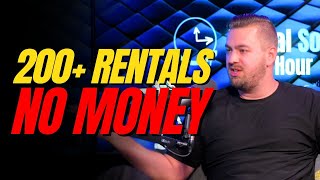
In this episode of the Digital Social Hour podcast, host Speaker B interviews real‑estate investor Christian Osgood, who claims to have acquired roughly 225 rental units in just two and a half years despite starting with virtually no capital. Christian recounts a turbulent personal backstory that includes a failed cult‑like church venture, homelessness, and a 100‑day vow of silence, which he frames as a crucible that forged his work ethic. He then details his early real‑estate steps—two duplexes purchased with modest cash—and how a partnership with Cody Davis enabled a seller‑financed 38‑plex deal that launched his rapid scaling. Christian walks through subsequent acquisitions (12‑plex, 6‑plex, 7‑plex, a $5 million resort) and explains his core investment principles: find a cash‑flowing deal, use creative financing (seller‑financing, hard‑money, long‑term fixed‑rate debt), and prioritize repeatable, scalable processes. He critiques alternative strategies such as “subject‑to” financing, referencing a public disagreement with Pace Morby, and discusses debt‑free philosophies championed by Dave Ramsey, arguing that leverage is essential for most investors. The conversation also covers market outlook (stagnant rates, banks tightening multifamily financing), state‑specific landlord challenges in Washington, lifestyle optimizations (quitting alcohol, improving sleep), and personal goals (retiring his wife, building a large Texas home). Christian closes by promoting his free mentorship community, MultifamilyStrategy.com, where he coaches aspiring investors.
Chapters
Money doesn't matter after a certain point. Everyone getting started for financial freedom, whether it's real estate or it's business or whatever it is, financial freedom, you do have to take care of the money.
Yeah.
But once you own your time, that's where people typically start doing the most meaningful things in their life.
Exactly. All right, guys, we're talking real estate today. We got Christian Osgood here. He bought 225 rental properties in 2 and a half years. Thanks for coming on, man.
Dude, thanks for having me.
And that is incredible because you didn't have any money when you started, right?
Yeah, dude, I started from nothing. Nothing. Got outta college, tried to figure out what I wanted to do. I actually ended up trying to start a church that turned into a cult. They took all my money and they didn't let me speak for like 100 days. I got it. So when I say I started from nothing, I started from like homeless, no dollars, no idea what I wanted to do. Yeah. And built up from there.
We gotta dive into that story cuz we can't leave it at that.
Yeah.
Yeah.
We probably, uh, probably should talk about that a little bit.
Yeah. So what happened there?
Well, I, I always wanted to be an entrepreneur, went to college, got a business degree and I was like, I don't know what I want to do. Throughout college, had some frustration with the church in general. And I think there's a lot of people who go to church on Sunday and then that's it. Like church has become entertainment for a lot of people. I was like, I wanna build something different. Joined a group, started normal, slowly started getting a little weirder.
Yeah.
One thing at a time. Like, hey, we're gonna restrict our meals a little bit, get in shape. I'm like, oh, get in shape. That sounds good. Oh, we're gonna start doing a lot of physical activity. We're gonna work out twice a day together. I'm like, oh, this Sounds all healthy, good. And then it got into like, hey, you know, we're going to get a little intense here for like 3 months. We're just not going to really hang out with family. I was like, oh, okay, weird. Long story short, in the course of 9 months, went from like normal, healthy adventure to like, don't talk to anyone for like 100 days. Like, vow silence. 100 days.
You had to be silent for 100 days?
Yeah. Wasn't allowed to talk to anyone because I talk too much, which, funny enough, I'm a professional speaker now.
So. Wow. And you made it all 100 days?
I made it 99.
Holy crap.
And I got to go home for Thanksgiving. I was like, oh good, everyone else thinks this is insane too. But yeah, no isolation, food deprivation, sleep deprivation. That is like the formula for brainwashing someone. I went through that though. So zero looks different for everyone. Zero looked like they took my money. They took like my sanity for about 100 days.
Yeah.
Got out of that, got a sales job, started rebuilding. Always wanted to get into real estate. Fast forward several years into the future and bought 2 duplexes.
Nice.
It was all my money. I'd spent 8 years saving up, house, couple duplexes. How much was it? Um, the, uh, the duplexes?
Yeah.
Uh, first one I bought for $400,000, $30,000 down. Okay. Uh, second one was 101% financed hard money with $50,000 of reno.
Got it.
So I spent $80,000 all in for 2 duplexes. They cash flowed about combined $2,000 a month, which was exactly the mortgage on my house. So my real estate was paying for my real estate. In 8 years, I realized, wait, I have decent income, I have rental properties, I'm still not rich. Like, I just don't pay a mortgage. I don't want to do this for 8 years and just build, build. It's so slow to buy small multifamily.
Right.
So I met this kid in my office. I left the CoStar Group and he'd never worked a job. He worked Safeway for, I think it was 35 minutes. It's the only job he's ever had.
35 minutes?
35 minutes. He had no money.
That's a story too.
And he had bought— his name's Cody Davis. I partnered with him on a few projects, quite a few projects. Nice. He had 30 rental properties at 20 years old.
Damn.
And I was like, how are you doing this? Because I've worked a fairly high-paid career. I've come through a lot. I've learned a lot. And I don't have anywhere near that. I want to get to 30 units by 30, and I'm 29. He's like, well, I can't help you because I want to take out this seller-financed 38-plex and I'll put you at 42 units. And 42 ain't 30. Talk to my wife and about 5 minutes in, she's like, I would like to own 42 units. We should figure this out. And so we bought a 38-plex, seller-financed, 15% down. Yeah. Raised the money. $2 million purchase. It only had a few problems with it. Chicken infestation. I'm not kidding. Chickens everywhere.
Chickens?
Yeah.
There's wild chickens?
No, no. Domestic. They lived in 2 of the units with tenants. Homeless camp on the back, bad roof, but $2 million for 38 units. The small mom-and-pop investors didn't want to buy it. Too big of a project. The large investors went, it's too heavy of a lift. It's too much work for us to get the upside because we can buy lower upside deals that are easier for us to do.
Yeah.
For two young guys who are like, we can take this out, no money out of pocket, stabilized, it should be worth $3.5 million. Fast forward a year and a half later, we get a valuation of $3.8 million. We cash out $1 million from the property. We still hold that deal today. Just did a cash-out refi.
Nice.
And yeah, since then did a 12-plex, 6-plex, 7-plex, bought a resort that we totally should not have bought. I'm not a hospitality guy, but we did a whole bunch without having any money. Now we have a little bit. You should have reserves if you buy $30 million of real estate. Yeah, but building it, we learned that it doesn't take money, it takes a deal. To buy real estate. You can figure out the debt and the equity. We have a few rules around that, but it's a really simple game. Yeah.
And you did it in 2 and a half years, man.
It was fairly quick. Yes. It was very intense.
Yeah. Because traditional real estate where you buy and just hold for 10, 20 years, you made more than that in 2 and a half years, basically.
Yes. Because we bought, because we bought aggressively and we bought deals on a couple basic principles, which is I— we had this mentor early, uh, he could buy anything and he had bought right before 2008, he bought like 20 condos zero down. And then 2008 hit and he lost them all. And then he bought all this office, $0 down, raised the capital, seller financed. And then COVID hit and he lost all the office. Also, he way overpaid for that office and he should never have bought that building. He could buy anything. And I remember sitting in the office talking to my buddy Cody going, if we could do that, if we could buy anything, but then not lose it. We would just be rich. And so we did all our underwriting like, oh, that's all you have to do. It's just how do you buy it and how do you never lose it? So the deal is deal, debt, and equity if you need an equity partner, or you can just buy it all with debt. But you find the deal, you find the money, and as long as it cash flows on long-term fixed-rate debt, you get to keep the property. Right now, interest rates are really high. Most of my debt is 10, 15, 30-year debt. I'm just going to ride it out because all my properties pay me to wait. So you have a down market, you get paid to wait. You have an up market, you get all the bonuses that everyone gets when you get rich in real estate, when all the appreciation takes off because we print too much money. Yeah, but the whole thing is just stack cash flowing real estate and just negotiate the deals in a way where they pay you day one and continue to pay you through the whole project. Every time you do that, your income goes up. If you want to accelerate it, buy larger deals.
Right. I love that. Talk to me about this $5 million resort you bought and what went through that.
Oh, boy. Okay. So this was in our first year, back end of our first year. We had a lot of success buying things. We're like, wow, we're really good at this business thing, which is not true yet. We did not have the experience. I had a property management company that was doing well. Our course and mentorship program, Multifamily Strategy, had taken off and done really well. We had people all over the country buying deals consistently. And with all that success, I was like, we're going to be able to run a resort. Like we've been Midas touch. Everything we touch turns to gold. This is real estate. I think we could run this thing better. What we learned is I took all my multifamily people and I put them in a hospitality job. I distracted them from what we're best in the world at, which is value-add multifamily and negotiating cash-flowing, stable rental deals. I put them into property management, like simple business model. Buy them, put them into management, lease them up, stabilize, maintenance. We're set for that. Resort, no idea how to run it. How we got the deal was the same way we do everything. I met an owner who'd done something I wanted to do, had this amazing resort on the water, foothills of the Olympic Mountains. Uh, you can actually see orcas go through the canal from some of the cabins. Where is this? It's in Union, Washington. Oh, it's about an hour and a half south of Seattle on a little canal. Funny enough, the West Coast's only fjord. Uh, but this cool little saltwater oasis, uh, right on the foothills of the Olympic Mountains. We met them and this is how we did everything in multifamily, but we just met the owners who've done it. My business partner Cody actually lived on site with them for a month. We learned the operations and they financed $3.5 million at 4.5%, which made the deal work. We needed $1 million down. And I found the larger capital raises are easier than the smaller. I figured, I figured we need maybe 2 or 3 people with some money to put that together. First person that we met with, 7 minutes in, I was like, this is our vision for the property and this is why I think we should take it out. We need $1 million raised. They're like, well, how much money do you need from us? I was like, probably if we got a few people, maybe $333,000, up to 3 partners, I'd be comfortable. They're like, what if we just funded all of it? What would that look like?
Hmm.
Check for $1 million. Like, let's do that.
Wow.
And so we bought it with a one capital partner, $1 million. $1 million capital raise that took 7 minutes to raise and a seller finance note that took them about 7 seconds to sign.
Geez.
Yep.
How'd you find this guy?
That was a deal that was listed online for about 2 years.
Okay. No, the financier, I mean.
Oh, the financier. That was someone— funny enough, that was the person who I bought my first duplex from back in 2020.
So he saw you killing it?
Yeah, they saw us. They saw us online. I've worked with them on a couple of projects. They're actually a private lender and they came in and said, what if we were an equity partner on this one? Like that is what I need. If you're trying to conserve cash flow and partners are variables, I don't like variables in real estate, but if you're trying to conserve cash flow and you have a deal where it's like, hey, we're trying to take the operations from here to here, an equity partner doesn't cost money monthly. They're going to be paid out on the back end of the deal. So having someone come in and partner with you on an opportunity can be a way to conserve cash flow day one. So it's the right deal structure from them. They got some tax benefits for being a partner on a large property like that.. And so worked well with them, with their tax planning, with what they wanted to do with their money, and worked perfectly for our project. Deal structure-wise, we did excellent on that. Yeah. Getting out of our lane for multifamily, absolutely the wrong thing to do. It would be so easy to be at 500 multifamily units instead of, you know, just over 200 had I stayed in my lane and focused on what I'm best at. This takes a lot of time. It takes a lot of planning. And when stuff comes up, in hospitality that I don't know, I don't know. We have to pause everything, learn something new. The lesson I got from this, and this is for everyone, find the thing that you're the best in the world at and just double, triple, quadruple down on that thing. Agreed. Had we done that, I would be much happier. I'd be much wealthier. No one plays a perfect game. That was my— I call it the stupid tax. When you don't know what you don't know, I paid a heavy tax on that, losing a lot of time in business.
It's important to stick with what you know, man. It's just so tempting to get into other industries industries and other investments, but what you know is hard to beat in terms of ROI.
Yeah, there's a lot of serial entrepreneurs out there. I don't know a lot of very rich serial entrepreneurs. The people are like, I want to start something, I want to start something else. Yeah, I, I just say master the one thing. If you're 5 years into mastery and you have something where I'm like, hey, I think this is a logical expansion that could make sense— like right now we're converting hotels into multifamily That's a, that's a sensible step where I'm like, I can take my teams, I can take my systems. We don't want to run a hotel, but I have enough construction crews where I can actually do the work. And the one thing to learn is just how do you want to work smoothly with the city to pull this off? Right. That's a sensible step to expanding your business. Going from, hey, I run multifamily, I should be able to run a hotel.
That's stupid. Yeah, that sounds like a nightmare. Customer service is the worst part about real estate out here.
Yes, it can be hard, especially in Washington State where you have laws where you can have criminals in your units and they're very hard to get rid of.
Oh, yeah.
Yep.
I didn't know that about Washington.
State will pay for your lawyer if you're being evicted. Eviction costs—
the state will pay.
Yeah. So you get free legal representation for non-pay. And I've had people like we've inherited tenants where they've put holes in the roof, damaged security deposits. Never paid once and still took a couple of months to get them out. Squatters, they call them.
Yep.
Yeah, they're squatters, but they were tenants who never paid. Like they were the old person's tenants. They never paid. So they're in Washington. You're still legally a tenant whether you pay or not. So you have to go full—
the state will represent you. That's crazy.
And the state lawyers are good, man.
Are they?
They got such better lawyers than everyone else.
Wow. That's— that sounds rigged. Oh, it's funny from their point of view. I see why they do it then.
Yes. Yes. We, we heavily incentivize people in Washington State to be terrible tenants.
So you're requiring 3 months upfront, aren't you? Yeah.
Now, the nice thing, if you're an investor, you look at a market like that, you're like, why the heck would I invest? The nice thing is you've never heard of a Texan trying to invest in Washington. People from Washington try to invest in Texas all the time. Yeah. As far as deal flow, you have opportunities to pick up things because it's hard. There are properties where people just don't want to do the lift, and that's where we've made a lot of our money. Is that first deal, that 38? No one wanted to do the lift because it was a hard property. Yeah. And for two guys in their 20s, that ended up being a million-dollar opportunity. In the first year, we made seven figures in real estate by taking one hard deal. I don't think you can do that in every market. No, because it's hard. There is opportunity. There's also more risk when you're, you know. Yeah. Your state is actively against you renovating your property. Yeah.
You said you had a homeless camp on that one, right?
Yes. Fortunately, that got moved really quick. That was a fluke. Oh, yeah. Oh, well, we had a very, very wealthy developer buy the land lot behind us same exact time, and they went ahead and cleared all the homeless and they built a beautiful wall all the way around our property. That was fortunate.
Yeah.
The rest of it was hard work. That one was just straight luck. That got self-resolved.
There's always some luck involved with success.
There is. There is.
I never realized that you could just buy land and then build a wall and kick everyone out.
That was— I didn't know that either. I don't know how they pulled it off, but whatever they did, it was helpful. Yeah, I found that if you're not getting the luck you want, you either need better dice or you need to roll more dice. In our case, we just did a lot of projects. We get some good rolls, we've gotten some bad rolls, but you just keep playing the game. And as long as you're buying again, long-term cash flowing, fixed rate debt, you can do it infinitely. Yeah. Keep buying deals. You have stable income. You can survive the long haul.
Absolutely. How do you feel about the market this year and next year?
Market this year? Gosh, everyone has a different opinion, don't they? Yeah, I think it's going to be fairly stagnant. I mean, we saw rates come down a little bit. We've seen them pop up a little bit. I think it's going to be fairly stable for most of this year. I think what we're going to run into in the next, let's say, 6 to 18 months is banks aren't proactive, they're reactive. So for those trying to refinance or purchase with bank debt, banks are going to look at the last few years where real estate options like syndications, where they relied on a lot of variable rate debt in a lot of these, a lot of those tanked. Banks are going to look at that and say, hey, because there were real estate problems 2 years ago when interest rates doubled, we're going to now start freezing multifamily. I think it's going to slow down the flow of money through conventional finance quite a bit because they're going to look at the data and say, I don't know how I feel about hospitality, how I feel about multifamily. And I'm already starting to see a little bit of that where some larger banks are saying, I just— we're not really wanting to deploy more into multifamily right now. Yeah, I think we'll continue to see that for the next, again, 6 to 18 months will probably get worse. So if you're doing a refi, do it now. And after that, we're still printing a ton of money. I think stagnant for a little bit, banks slow down and then it's going to pick up and we're going to skyrocket in rents.
Right. So best time to buy would be next year, you're thinking?
I would say, well, it depends on how you're buying. If you're doing stuff like I'm doing where it's 10, 15-year debt, right now, or the music stopped, is like the best time to play. While everyone else is like, hey, I'm going to sit and wait, or my money's on the sideline, or I'm trying to get out of positions, that is my favorite time to take the field. Whenever everyone else is gone, I just walk on.
Yeah, and during the bear market, right? Yep.
I love operating there, especially if you're a creative finance person. The deal isn't dependent on the market. The deal is dependent on the deal.
Yeah.
So we'll just keep doing good deals all the time. We just find more of them when the other players aren't competing.
Absolutely. Speaking of creative financing, let's talk about our good friend Pace Morby.
Oh boy. Pace Morby.
So you said earlier you and him had some disagreements. What was that about?
We have— oh, well, we had one short that he posted forever ago where I had mentioned he had a thing. It was just kind of— it was funny because it was just like a little text, but it was like, hey, if you want to speed things up, totally legitimate advice, by the way. But he's like, you want to speed things up, tell people about to hop on a plane. I'm like, okay. Um, but in the video he was clearly not hopping on a plane. And so I was like, you know, or you could form a relationship, say something true.
Oh wait, so he said he was hopping on a plane?
Yeah. So this is the first disagreement. Only time we've ever really disagreed. I have a methodology, uh, we have a methodology disagreement as well, but only time Pace and I've ever directly disagreed is he was talking about speeding up stuff with title reps. I sent one text and He blasted me online for, what was it? He was like, hey, good job using my brand to boost your following. I was like, oh, I felt like I had a legitimate claim there. It was just a little note. I like Pace a lot, and Pace is smarter than me by a lot. Like, he is a, you've had him on this podcast. He's super intelligent. Super sharp. I'm not that smart, so I have to do things that are simpler and more stable. And I think in some ways that actually has built a better business Subject To is a huge brand of his, and he can do everything, by the way. I mean, he can do seller financing and do any sort of contract. He can do options. Guy's a genius. He branded really hard on Subject To. Subject To has a fatal flaw if you're getting started in real estate and you don't already have a bunch of money, which is you're going to create financial freedom through potentially callable notes. Now, historically, this has worked really well because interest rates were low for a long time. You're not as a bank, you're not going to look at a loan really close that someone did subject to at— it's 5%. By the way, subject to, for those who don't know, just means subject to the existing debt. So you leave the seller's debt in place. They keep paying their mortgage. You pay their mortgage for them, but their mortgage stays in place in their name and you take title to the property. The problem is there's due-on-sale clauses. A bank's never going to call that if they have 5% interest and they're going to replace it at 3%. You're safe, right? So people have just loaded up on these and done very well. We're seeing a lot more of them get called now, and it makes sense. All that 3% debt that makes your deal work, you're like, oh, I can just inherit their debt. A bank's going to look at that, they're going to call it, and they're going to replace that money at 7 or 8%. So the strategy of subject-to, there's a place for it.
Yeah.
But making that a real estate strategy, if you're trying to build your portfolio, I would avoid that like the plague right now.
Yeah.
And I think Pace would probably say the same. Not, not avoid it like the plague, but Pace would definitely say like it's not a strategy to build your entire portfolio. I think he would probably agree on that.
If you don't have a safety net to— if they call the loan or whatever to pay it, then it's risky. I could see why. Yeah.
I think the difference between creative finance guys like us, because again, Pace and I never had the chance to debate this mano a mano, so I don't know what he disagrees and disagrees on. The one thing that I'm really big on is the only underwriting that matters to me is how do I own it? How do I never lose it? I don't feel that subject-to as an overall strategy answers the question for sure. How do I never lose it? Yeah, you can pivot it, you can protect it. But I just want to do simple things that are repeatable. If they're repeatable, they're scalable. And if it's scalable, that's the mark of any good business. So simple, repeatable, repeatable, scalable. That is what I am trying to build in real estate. I love that.
What do you think about Dave Ramsey? Because he's got one of the biggest podcasts in the world right now.
I love so much about what Dave's saying. I love the idea of debt-free. I'm going to go debt-free, which is crazy. I'm going to create a— Oh, you are? Oh, yes. Oh, yes. So here's the model. You have 4 phases in business. You have the build phase, you have the stabilized phase, you have the optimized phase, and then you have the pay it all off phase. Basically, here's my only problem with Dave. If you can make $700,000 a year or whatever he makes on his crazy successful podcast and his brand and his books. Way more than that. Yeah, whatever he makes. I have no idea what he makes. I was gonna say $700 million. Yeah, way more than $700,000. You make hundreds of millions on your brand through your lifetime. I think that was the last net worth number I heard him say was $700 million. If you can earn that crazy income, of course you don't need debt. And I see the same thing with Mark Cuban. Mark Cuban is an anti-debt guy. It's like, of course, you— he very early in his career had a huge exit. For everyone else, I found that it— most of us need to lever to get somewhere. And if you can build enough cash flow, you buy, you stabilize, which gets to your cash flow goal, you optimize, which pushes that cash flow to the most it can be, and you use that to pay off all the debt. When we went around— I've gone around the country doing this, but I just interviewed all the most successful entrepreneurs that I could find. And they're not people that we both know. They're not celebrities. They're the people in every market. It's the mom-and-pop guy who's like, oh yeah, I have 700 rentals in the city. I talk to all of them. So many of them do not have debt. And when I'm like, why not? And how did you get there? They're like, I built, I built, I built. And at some point I had enough and I just paid it all off and now I own it and I really can't lose it unless I stop paying my taxes. It's just the best strategy. Is it the best tax strategy? Absolutely not. Yeah, but there's something to be said about owning your universe, and you can do that without debt through real estate. You basically use debt to build enough cash flow to kill the debt.
Yeah, I like that long term. I think, uh, his thing is he's teaching it to younger people, and then it's hard to grow.
Yeah.
So that's, that's where the debate is, I think. Yeah. Because he doesn't want any debt at all, even if you're in your college years and teenage years, 20s, whatever. Yeah. And then at that point, like you said earlier, it's hard to grow, especially in real estate. You don't have any debt.
Yeah. No real estate. Well, especially because real estate is so uniquely geared with things like seller finance or with other options that you can use, even, even the way you can leverage hard money, like sometimes you just find a great deal with a ton of cash flow that can support really high debt. Yeah, I just bought a deal at 13.5% debt. It's only debt and we bought it like 100— was it like 120% financed? Like, wow, I got paid to buy the deal. Because we got an awesome price on an awesome project. But there's all these different ways in real estate where you can actually pick up an asset with a liability that is smaller than the asset that you're buying. And you do that again and again and again. You build net worth crazy fast. It's just very unique. But at some point, if your goal is, hey, you know, I'd like to be worth $20 million, have a few hundred thousand dollars a year cash flow, $1 million a year cash flow, you can build that. For a lot of people, that's enough. And when you've hit whatever enough is for you, I think it's a good time to pay it off. Yeah, because you don't have all that debt. You're enough is now a lot more cash flow than what was enough, right? And you own it and it's hard to lose. So on a Dave Ramsey standpoint, I would say he's right on everything except how to build there. I don't think is feasible because we print money too fast. Inflation runs way faster than wage increases. You just can't earn your way there unless you earn 7 figures a year, which is not most people.
Not most people at all.
Exactly.
And you recently sold 55 units, right?
Yeah, I've recently sold— I've recently sold a few. I would be fine. Like, I have more right now. I have more real estate than I need for my goals. I would be fine going down to 100 units and paying them off right now. I have— again, it's in the 200s. I'll still expand into deals because I love the game. But the things I'm trying to pay off is that first block of 100 units. So I will adjust my pieces however I need to. To own all of those debt-free because now I have a solid foundation of paid-off, cash-flowing real estate to build the next block of real estate off of. So you hit a goal, form a new goal, right? So you're just optimizing, just optimizing, paying things down, trading pieces. I had two goals when I got started, by the way. I wanted to retire my wife as a kindergarten teacher. Again, Washington State, crazy politics. Yeah, not fun, especially during COVID I was, I was like, okay, my 10-year goal for retiring her became like a We're doing that this year. Like, she's out. She's out.
She was a menace in kindergarten, man. I imagine she deals with some—
Then imagine that menace being only online for 2 years. Like, it's like, good luck. She was in a super impoverished area too. So I mean, she had a lot of families that had a lot of difficulty with the internet. And they have, you know, 5 siblings who are all on Zoom calls in one room. I mean, there was a lot of stuff that was just not working. So when we retired her from teaching, that was goal 1. Then I've always wanted to build a house in Texas. And it's not like a ridiculous dream house, but it's a big house. It's like the one thing I've always— square feet, we talking 4,000 square feet?
Oh, that's not too big.
Yeah, it's nothing lavish. It's— I live in a 1,300-square-foot house just outside of Seattle.
Damn.
By the way, my Texas house cost like $100,000 more than it. It's almost the same price. Texas is awesome. But I just wanted to have a bigger house that is nice, and it is like— it is fairly decked out for what it is.
Okay.
In this purchase, that was all I've ever wanted to do. The house is almost done now, like It's framed. I just did a walkthrough. Yeah, they're starting to install the interiors now.
You need some new goals, my man. I know.
I'm like, I'm like, I'm right there. So my first goal is like, okay, get to like 100 units, retire wife, build the house. I'm almost there. So end of this year, I'm going to be doing the part where I sit down and like, we hit everything in my 10-year goal and it'll take me about 3 years. Yeah, we made millions of dollars, which is awesome. But the important thing to me is I'm like, I hit the things that I needed to hit. I'll do the part this year. I sit down, I'm like, okay, what's next? I mean, I'm 32 years old. I have a ton of time.
You could retire right now.
I could, but that sounds so boring.
It'd be boring.
That sounds so boring.
You take years off your life going crazy.
I think, dude, people die so fast after they retire.
There's little studies on this now.
Yeah.
Yeah. I'm never going to retire.
Yeah, I won't either. There's no way. There's—
as long as I love what I'm doing, which I love podcasting, I'm not going to retire.
Yeah. Well, you've been immensely successful in a very short period of time.
Yeah. Well, that's because money is not the first priority anymore.
There we go.
So I'm just being myself.
Well, and that's— I think that's the main thing for everyone. I think that's— if there's one message out of this, I think that's what you need to focus on with goals, is money doesn't matter after a certain point. Like, there's a certain amount— everyone getting started for financial freedom, whether it's real estate or it's business or whatever it is, financial freedom, you do have to take care of the money.
Yeah.
But once you own your time, that's where people typically start doing the most meaningful things in their life.
Exactly. Those first 5 years—
I don't need to survive anymore. My survival is covered. My family is provided for. The house is built. I make enough to cover the house and the living expenses. I'm like, okay, the real estate has covered me now. I'm on autopilot. What does my life need to be? Yeah, for people who retire, they're like, my life needs to be golf and fishing. I'm like, they tend to die pretty quick.
Yeah, I can't live like that. No, those grind years, that's what people don't see though. Those first X amount of years for me was 5, 6 years where you're just grinding 15 hours a day, giving up your social life, giving up drinking, partying. In your 20s.
And, and that is the discipline. I stopped drinking years ago. Productivity through the roof. And I got— I get more sleep without alcohol. Yeah, I don't, I don't know if I could see that.
Alcohol inhibits your sleep.
So it does. I used to need a full, like, 8.5 hours of sleep. I feel just as rested as 7. I get a whole nother hour and a half. Yeah.
My workday. I'm not going to lie with the mouth tape I've been using. Shout out to hostage tape. I only need 6.5, 7 hours.
Oh, there you go.
Yeah.
Anything you can do to increase sleep, by the way, like anything, like sleep quality.
Yep.
You feel better, you're smarter, you're faster, and you have more time. If you, if you literally need less sleep, you get so much more time in the workday. You wake up earlier, go to bed later. It's awesome.
Yeah. I just bought this Whoop to, like, optimize my sleep.
Oh, there you go.
Yeah. I want to get in the 90s like Bryan Johnson. He's, he's averaging 100, man. Have you seen that dude?
No, I haven't.
Bryan Johnson?
No, bro.
He's a legend. He gets 100 every night.
Dude, I am such a hermit. I know. So I'm on social media so little. I only produce.
Yeah, dude, that's impressive for me. I have to be on it too.
Well, yeah, because I guess. Yeah, but you were in the industry.
Yeah, it gets toxic though.
Does it really?
Yeah. If you're just mindlessly scrolling, it could get really, really bad.
If you can avoid mindless scrolling and I'm not against drinking, I just don't drink. Yeah, but if you could stop drinking for a couple of years while you're in like the build phase and you can just lay off the TikTok and the Instagram, the amount that you can get done competing with other people is ridiculous, especially if you're my age or younger. The competition is squishy, dude. Yeah, it is. A lot of people doing a lot of nothing.
I can see that. I don't know about the real estate space, but in the podcast space, I'm outworking 99% of shows, guaranteed.
And no one else is putting in the work. Not at our age.
They only film once a week. I got 9 episodes today, dude.
Yeah, you have a— right down the hall, you have a whole room of awesome guests.
Yeah, good old workout ethic, man. Dude.
And yeah, shout out to your podcast. I mean, you guys have stacked that room next door.
Yeah. Crazy. But like you said, I'm not the smartest one. It's just like the work ethic and certain things. People don't need to be geniuses to make millions of dollars.
No, being a genius would be nice. And I, if you're a genius and you've been able to leverage that, awesome. Like, yeah, like I wanna plug this again, like Pace, smart guy, not talking bad about him. We may disagree on some things or we may brand on different things, super smart guy, and I think he's leveraged being super smart to the highest possible level.
For sure.
I mean, incredible. For me, I was like, you know what I can do for sure? I can outwork anyone. I mean, even like the ridiculous cult story I told at the beginning, that's like nuts. It's like I wasn't even sure that I was on board with that, and I still was able to not talk to people for 100 days because I'm like, what if I should be doing that? Like, it would be hard to outwork me because I'm like, I can just do things. I can go days without food. I can go days without sleep if I need to. I'm the only one in my company is like, we have 24 hours of work to do. I'm like, awesome, I will sleep tomorrow and it will be fine.
I love—
I don't do that often, but I mean, I've done that multiple times here where it's like, we have to get this done. You guys go ahead and go to bed. This stuff will be done and I'll sleep tomorrow.
Yeah, that's discipline, man. So not talking for 99 days, were you hallucinating?
Yes. Yes. They limited the sleep to like 4 hours.
Oh my God.
There wasn't enough sleep. There wasn't enough calories. I lost, I lost 43 pounds in 30 days.
Holy shit.
Yeah, that was, that was what we call really bad. The bad happened fast. Like, so people don't listen to this and go like, oh, this guy's just a crazy person, which may or may not be true. Like, the descent into that was like normal, normal, normal, little bit weird, back to normal. But yeah, it wasn't— it got weird fast. It got weird fast. And then we got out.
And how many people were with you?
That was like a group. It was like 7 people. So it was low and everyone was weird. And the 3 things that get you into that, by the way, is sleep deprivation, calorie deprivation, and then isolation. Isolation is the big one. When all of your inputs are one thing, you're like, I feel like this is insane, but obviously I'm the crazy one because the other 6 people here are all totally on board. And of course, the other 6 people are all thinking the same thing. It's—
Yeah, that's crazy.
I'm also crazy. Cults are gnarly.
I'm watching a cult documentary on Netflix right now, actually.
Dude, there are weird people end up in cults and then there's like normal people who get sucked into them and it's two distinctly different personality types. But dude, the way that that like programming stuff works is wild.
I could see that, man. That is insane. So did you ever talk to any of those people again? The 6 people?
You know what's funny enough, I made peace with it really quick. I was like, that sucks. They suck. I don't need an apology. It's fine. It's one of those things where it's like, this could really bother me and define me.
Yeah.
I mean, even on like a spirituality level, I'm like, this could define how I view God. Or I can just say these people were weirdos and move on.
Right.
I chose to do that. They did. Two of them, actually, the ringleader of the group and then one other guy actually called me years later and gave me like a full apology.
Really?
Yeah. Surprisingly, pretty soothing. I was like, well, that was actually kind of good on the soul. I didn't think I needed an apology. Uh, turns out still very helpful.
Yeah.
But, uh, yeah, a couple people turned it around and were like, hey, this, this got weird and this was obviously very bad and I apologize. I don't know what happened to anyone else.
Wow.
And then like, we should meet up sometime. Like, absolutely fucking not. That will never happen for any reason.
That's insane. I wonder why the cult leader came to his senses.
I don't know. He was very cryptic on the call. He's like, yeah, I've been going through some stuff. I'm like, I'm not gonna ask. I'm not gonna ask. Don't care. Not, not, not good. Not engaging. I'm like, thanks for the apology, dude. This was, uh, This was a little bit of therapy to get over. And yeah, no, I'm good. You took away money, you took away speech. I have money. I'm a professional speaker now. So.
So you were paying for that too?
No, they just, they just drained all my bank accounts. What? Which I had. I got out of college with $4,000. So they drained 100% of your money is a lot. $4,000, fortunately, is not. So.
Well, it's all relative because at the time it was everything you had, though.
It was everything I had. And if I had money, I would have been able to fix the calorie deficit thing, right? I just had to eat food when—
Damn, you were skin and bones.
Oh, dude, it was terrible. That's a terrible thing. People shouldn't go through that. If anyone's listening to this, be like, I should go through something really intense. However, it is interesting as an entrepreneur when stuff is stressful or hard. I'm like, I have been through worse, right? I find most people who've been hyper successful have been through something ridiculous.
100%.
The best stories are from people like, this was wild and it was intense and it defined my mindset.
Yeah.
I think if you are an entrepreneur who hasn't failed at something yet or hasn't had some sort of trauma or chip on your shoulder, it's going to be harder for you to compete with some of the people who have— not impossible, but absolutely. Yeah.
Christian, it's been fun getting to know your world, man. Anything you want to promote or close off with?
Dude, we started a group, Multifamily Strategy. It's multifamilystrategy.com. When I learned how simple it was to do creative finance— not easy by any means, but simple— start talking about this. People start buying these in other markets. I got a friend, Caleb Hommel. We had another mentee recently, Logan Pritchett. These guys have 70-plus multifamily units. One of them is 22, one of them is 21. They did this in less than a year and they bought better deals than I did because they had a mentor to actually walk them through it. I had to figure it out on my own. I love this group. I am so passionate about it. I am the coach. Unlike all the online gurus, or a lot of them. Yeah, I'm like, I will coach this till the day I die. It's always me. MultifamilyStrategy.com if you want it for free.
What a domain.
Yeah, check it out on YouTube, by the way. Multifamily Strategy. You want like the free version of what I'm talking about? Follow me there. Cool.
We'll link below. Thanks for coming on, man. Thank you very much. Absolutely. Yeah, thanks for watching, guys. See you next time.
More from Christian


What Investors Want in Every Pitch: Property, Business Plan & Team #RealEstate #Pitch




Speak with authority to turn broker rejections into deals - boost your confidence #RealEstate

Turn Broker Objections into Closed Deals - CRE Negotiation Tactics #RealEstate #Negotiation

How to Get Multifamily Deals Under Contract Without Having All the Cash | Objection Series Ep. 1

How I Scaled 500 Apartments in One Texas Market in 12 Months #RealEstate #Multifamily


Turning a $12.2M, 200-unit mess into profit - live multifamily turnaround update #Investing