Becoming A Multimillionaire at 23 (Caleb's Multifamily Journey)
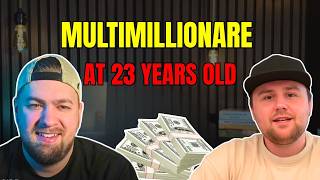
Caleb Hommel built a $2 million net worth and 413 multifamily units by age 23, focusing on 55+ senior housing in secondary markets like Stephenville and Abilene. He emphasizes rapid execution, hiring from within, and learning from mentors like Gary Mann, a 25,000-unit property manager.
Chapters
And we are back on another episode of the Owner Meeting Podcast. I'm Christian, your channel host, joined today by Caleb Hommel. Caleb, good to see you again, man.
Appreciate you having me back.
Caleb and I have done 9 deals. I think 8 or 9 deals. We're closing another deal here on 81 units next Friday, which is a week from the filming of this episode. Dude, how many units will that put you at roughly?
413.
413 units, 23 years old. You crossed the millionaire status at 22 in your portfolio. So this is just going to increase the— have you done the math yet for how much net worth the 81 and the 144 are adding to your total net worth stack?
I haven't done it yet. Last time I checked, it was closer to 1.5. So this actually pushed me closer, if not over, around that $2 million mark.
That is— so first of all, congratulations. Absolutely incredible. So you are close to being a multimillionaire now. $2 million is technically multi. You are sitting near multimillionaire status. You started buying 4 years ago. Is that correct?
It's hard to remember at this point, honestly. I don't remember. It's hard to remember time in real estate because it's all we did. Uh, it was like 18 going on 19 I joined the mentorship. So yeah, it's been like a little—
Oh yeah, yeah. So you would have closed that first deal at 19. You recently turned 23, so you're sitting probably just under 4 years.
Yeah, like 3 and a half, 4.
That's amazing. And then you, yeah, like you said, you started at the very back end of '18, so you've been working at it for just over 4 years, you've owned real estate for just under 4 years. Dude, that's ridiculous. I mean, that is a ridiculous portfolio. And a lot of these portfolios are joint ventures where you have high equity stakes. This isn't— I see people online be like, oh yeah, you know, I have 5% of the GP that owns 20% of the thing. It's not that. I mean, you have like— Yeah, I think the minimum— 20, 30, 50%.
Yeah, I think the minimum stake I have in something is like 15 to 20%. On larger deals. And obviously, when you get larger deals, diluting equity is kind of something that happens as you have to bring in more and more capital. But overall, yeah, I definitely have more than 2% of a deal on everything.
What deal are you enjoying the most? You've closed— I'm going to give everyone a quick recap here, but tell me if I'm missing any. You've done an 8, a 10, a 10, a 25, 26, 44, 76, 144, and then you're about to close this 81, but of all the ones that you've closed and operated already, which has been your favorite?
That's a good question. Out of stuff we still own, I think it's honestly the 44-unit senior village community. I've just found the senior deals, one, they're the most stable, so they're the lowest stress, which is always a benefit in business. Other than that, yeah, I think it's just that one.
It's really cool.
I don't know if you remember when we got photos of like the fall or Christmas, Christmas party or a party for like the seasonal party. That was one of the coolest things I've ever seen. Like, I'm like, oh, these tenants actually come together and it's almost— it's hard to get lost in the numbers. Sometimes you look at tenants as numbers on a spreadsheet and these things, but it's like, no, these are living, breathing people and we're providing them a really awesome place to live. And they're even having like seasonal parties. Yeah, this is one of the cooler things, like sentimental-wise in business I've ever experienced.
Yeah. Well, and unfortunately, occasionally, because it is a senior living, they're the living and breathing part, it happens a little bit less. Us from time to time. Yes. But that's pretty good.
But the satisfaction—
the turnover we ever have at the building is, which is, which is great. If you are in a position where you can find the place that you want to live all the way through to the end of your days, that's pretty, I feel like that's a pretty good community.
That, I mean, the satisfaction on the landlord side too, it's like, man, I'm providing like people places to live where they never wanna leave. I'm like, yeah, that, that feels pretty cool.
Yeah. Uh, running bingo nights there. I think I agree with you. It's— for me, it's between the 76 and the 44. The 76 is a much harder project, a lot more, a lot more work. The 55-plus community is so fun because a lot of them, one, they know how to be tenants by now. They're 55-plus. And there's a lot of people like in that demographic. Either you did the thing where you save, save, save, you bought your house, you fixed your— you did your retirement. Or if you're renting over 55, You're typically on fixed income, you're retired, you don't have— you're maybe not as well off as some other people of that demographic, but you're typically a pretty good clean tenant. Our unit turn costs there are like nothing on the rare occasion that we have turnover.
Absolutely. And it's like if you're a 55, let's say 65-year-old person, I find it very in my head. I imagine 25-year-old kid who's a deadbeat versus 65-year-old grandma on Social Security. Who's going to damage the unit more? I'm like, Grandma goes all from the, the long journey of her bedroom to the couch and back a few times a day. It's like, doesn't leave the house much, maybe goes on our little scooter a few times a day. But it's like, it's just such an easier tenant mix to have than some of these— like, we're buying these, um, low-income, we're buying these affordable properties, and it's like some of those, it's like, okay, we got to go in and clean house and provide a little bit of order here. They got to go into an area and clean it up. The seniors are just Okay, cool. Like, do I get bingo night? Do I get a ride to the food bank? Like, it's a lot easier to deal with.
Well, and this is something that I think a lot of younger guys miss, this 55+ niche, because that's our next deal we're closing. The 81 units, also 55+. Uh, their occupancy is 100%, 100% collections, which means they have no delinquencies on their, on their books. And they have like a 40-person waitlist for an 80-person property, 81. That's, there's a huge demand. And I think there's a lot of like, you're, we mentioned this already, you're 23. I don't think a lot of 23-year-olds go out and say, hey, I should buy a 55+ community. That my tenants are going to be more than twice my age. Who's going to take me seriously? And on my own end, right? I'm only 33. I turned 34 in like 2 days, but I think a lot of younger investors skip 55+ because it's just, it's You just don't think about it as much.
It doesn't sound, it doesn't sound sexy either. It's like, oh, 55 plus. It's like a lot of people are trying to get this assisted living thing and all this, and they're just blatantly missing an opportunity for, hey, what about the folks who can't afford the primo 4-story assisted living building in Highland Park, Dallas? And it's like, okay, what about the people who just need a nice place to live? They're old, they're kind, they're respectful. Some of them are a little ornery and it's like, that's gonna happen.
But I, I have to agree with you as opera. If you're looking at just raw operations and money that we made dollar per dollar on running a property well, 55 plus. Hands down. It is simple, easy, can print money. Obviously, you still have to buy right, but absolutely. We bought 44 units for $1.8 million. I mean, the pricing that we bought that for is unbelievable. Uh, it, I agree with you. Best deal we've done. Uh, you walk the campus, it's beautiful. The office is beautiful. The Bible studies, bingo nights, Christmas parties, and you can do it all on one campus. You get to contribute to the community. I, it's a great, that's a great pick. My hope is that the 81 unit ends up being basically a clone of that.
A carbon copy. Yeah. That, that'd be ideal. I mean, honestly, dude, talk about fitting well into our business where we have management in-house as well. It makes our skill of hiring good managers in a market like amplified. Cause like these 55 plus out of 76, you know, we're kind of cleaning house out, so to speak. They don't really care as much. Like, hey, the property manager's really nice, respectful, always there on time. But when you talk to a 55, 70-year-old lady, let's say, and Hannah day in and day out is there ever, like whenever she's supposed to be there, she's there. She's, she's nice. She's kind.
She's charming.
It's like that goes so much farther on tenant retention on these communities as well. And just having decent human beings. Sitting in the office a couple of days a week, if not every day of the week, goes 10 times farther. Let's start.
So, so for people listening, this is one of the biggest operational pieces and this is something that we've had to learn by doing. Kaleb and I invest heavily in secondary markets. So we're not like, I don't invest way out in the middle of nowhere like I used to when I was younger.
But have you— the example I give people is you've heard of San Diego, California. You've heard of San Diego, Texas. I've never gotten a yes. I didn't even know this place existed. It's like 400 people. It's like, we don't buy in those kinds of places.
We buy where there's kids.
What do you say from San Diego?
They don't assume San Diego, Texas?
No, I've never gotten that one before.
But these secondary markets, Stephenville, fastest growing college in the entire— Probably America. Yeah, in the entire America. They do fantastic. Their football team just won state, their high school football team, which is crazy. Uh, you have the, it's like 35,000 person population if you don't count the college, which isn't counted in the census. Uh, if you do count the college, close to 60, Abilene, Texas, 180,000 people, rapidly growing market. They're basically big small towns is what we— Exactly. Where do you find that you need an onsite unit count-wise? Where does it make a difference? Because there, there's certain buildings like our 25-plex, there's no universe where it makes sense to have an onsite manager.
Yeah, it really comes down to exactly like you said. It comes down to like really size of the building. It's really cool with our managerial efficiencies too of having everything in-house. Like 44 and a 76, the 44 does inherently not need a property manager on site if we're being really honest. Like we don't need an on-site manager there inherently, but since we manage everything in-house, it's like, hey, you could spend a few days a week at the 76, then you spend a few days a week in office at the 44. So the managerial efficiency probably the most valuable piece, I think, like that I didn't expect of our company. So when we started kind of throwing this thing off the whiteboard, hoping things would stick, I would say that if you're just buying a standalone building in a new— and there's just so many, there's so many answers to this question. If you have a, like, Stephenville, we've got almost 200 doors there. If we bought— we might even get to be able to get away with an 80-unit not having on-site in Stephenville. Like, truly, like, we might be able to get away with that because we have so much efficiency. But if you're entering a new market, like, you cannot go in to a deal smaller than that can support a property manager on site. Like looking at deals in Huntsville, Texas, north of Houston, we cannot enter the market for less than like 100 units because it doesn't make sense. There's no managerial efficiency there. We buy a 50-unit. We were actually looking at one this week and it's like, okay, what am I going to do? Charge a 1% management fee plus payroll? I'm still way over my budget for that. It doesn't make sense. So kind of a long-winded answer to your question. But again, it just depends on if you already have efficiencies, you already have a team there, you're already up and running.
Yeah, and we found like the difference on that, that 44-unit, the real difference ended up being like we had the right person and she started taking office hours. We had the hardest time, uh, we were sitting at 5 vacancies out of 44 units, so we weren't heavily vacant, but we were more vacant than we should be for sure. Uh, we're sitting, you know, in the high 80s for occupancy. We call in our portfolio the 95-95 rule. We want to be 95% of market rent, 95% occupied. That, that's what we consider the property stabilized and performing. So we're sitting a little bit under our standard and we were there for what, most of the first year.
It was, it was a significant chunk of time. I remember that as our quarterly meetings, it's like, okay, we haven't had anybody leave or die and we also haven't had anybody move in.
Yeah. We, we got, we got like one person move in and one person move out was like the, the, what we'd done for the year. What we ended up doing on that campus, we parked someone in the office and this was really important to 55+ as well. We have more applicants actually just drive to the building and ask to rent there and what it looks like than we do online calls or anyone through the portal. We're just not seeing the same virtual traffic that we are on other properties. We put the right person there with standard office hours. 2 months later, 100% occupancy, and we maintain that. Someone moves out, someone passes away. Fill— I mean, it's filled within probably, uh, leased within a week, moved in within a month. There's a lot of— it's very moving that I found.
But it's very quick. And like, all these people out there, like, we were, um, actually Christian and I had an owner meeting with the property manager who's done 25,000 units at one point in time and talked about just like, it's still a people business and even more magnified with seniors. My grandma, if my grandma's looking for a place to rent— by the grace of God, she has a house— if she's looking for an apartment, She's not calling, she's driving there and seeing, hey, can I talk to somebody and figure this out? AI is not a solution for seniors in any way, shape, or form.
No, it, it, it's you. If you're doing a senior property, I think it needs to be a bigger one. If you try to do like a small one where it's too small to have an in-office, I think you're probably gonna really struggle. Uh, you actually, you want common areas, you want common spaces, you want some sort of event space on the campus. Doesn't have to be huge, but you need to have common area. And you need to have onsite leasing. We found that that was the most important thing for that 55+. I want to talk about this, this owner meeting thing. So we're sitting here on the Owner Meeting Podcast. I built the whole business. You know, I started my career talking to Gary Mann in Moses Lake. He owned over 100 rentals. I wanted to own over 100 rentals. Gary's in his 70s. A lot of what I did in the beginning is I modeled what Gary Mann did over the first 50 years of his career, or I guess 40 years of his career. I modeled that, was able to do it in 2 years, not because I'm awesome, because Gary spent 50 years refining his model and he passed the knowledge to me. And so we start this whole Owner Meeting Podcast doing exactly that. So when we need to do something, we're talking about buying an office building. We're going to see, depending on how negotiations go here in due diligence, whether that happens or not. But I'm talking to people who own office. We're scaling our PM company. What do you do? Do you muscle it out and read a whole bunch of books, or do you just take the cheat code, go to the people who've already built the business that you want to build? Uh, Caleb, how did you find this individual? Because you actually booked this call for us. Uh, second person that we've talked to has built a huge PM company, uh, 25,000 units. Do we remember how long it took him to build that?
I think it was like 10 years plus. It was, it was fairly quick for that size units, but still an extended period of time.
So it's a little over a decade, 25,000 doors. If you guys are curious, I looked at some comps for what those sell at. Some of those companies, when you have your exit, $25 to $40 million is what—
He was a big fish. Look, at the very least, very large fish. Yeah.
That is the value that he created in a decade. So if you're looking dollar per dollar of what you created value-wise, I think most of us would put in the work to do that, right? Now what if you could do it faster learning what he learned? So, uh, Caleb, how did you find this guy?
He's actually, um, very close friends with our favorite broker, um, Garrett. Best broker in Texas and kind of the United States. He does a lot of stuff in the South. Yeah, by far the best broker in Texas.
He doesn't live in Texas, he's in Oklahoma. Yeah, in OKC.
Best broker I've worked with to date by far. Not even close. Uh, a little rough around the edges, which I think Christian and I both prefer. So one of the guys actually at his brokerage who does very, very little brokering on the side— it's basically clients from his PM company who need some help— he works with Garrett at the brokerage, not in office. The guy lives in Arkansas. And talked to Garrett like, hey man, really trying to grow this PM company. Oh, you should talk to Dave. Cool, let's set up a call with Dave. Literally got the call booked the next week and we're talking to him.
And tons of insights. And the takeaway from the meeting— and this is just like every single real estate owner meeting The takeaway from the meeting was like, hey, there's some things you guys are doing right. There's some things that you guys should double down on. And if you need anything else at any point, you have my number, give me a call. And that's, that's literally to build any business. That's all you need. You don't need 1,000 people giving you feedback, though you can always listen to the Under Meeting Podcast. We'll, we'll cover a whole ton of people here. What you really need is you need 2 or 3 people whose model that you really like, that you want to follow, and you get them in your corner. And you ask for help. And it is very, very, very common for these people to want to help. They give you a lot of knowledge. They've built the business, especially these guys or gals who have retired. Caleb and I have talked to a lady who had 80,000 doors in her PM company named Kathy. Some of these people have built absolutely massive businesses. And if you can take that knowledge and you can use it to compress time, This is like, you can build 8, sometimes 9-figure businesses in less than a decade. It's hard, but like, if you look at the pay scale, that's pretty good. Our PM company, I don't know if I've shared this online, but like Caleb and I have 35% stake in our PM company and then our, our, between our designated broker and our leadership, they have the rest of the remaining equity. You have a $30 million exit and you own 35% of a company that Frankly, that doesn't suck.
Yeah.
I would like to get there faster rather than slower.
And it's talking about simple takeaways and just like overlooking basic things like, hey, probably need a revamp on the website. It's like, cool, that's great feedback. If you're going to talk to an owner, one of the first things they ask, hey, let me see your— hey, can you send me a little bit more information about you? And it's like, okay, you want to make sure you have something presentable and that looks kind of badass. Other than that, just like it's a people business. What did he say, Christian? For the first 5 years, he never hired outside management. He was promoting internally. It's like, hey, The on-sites turned into the regionals, the regionals turned to the managers, the managers turned into the VPs, the VPs turned blah, blah, blah. It's like everything was done internally based off people.
And I'll tell you this, being on the— because I'm on year 5 of owning management companies, I've successfully actually built, scaled, and sold my first one. Uh, certainly not for $30 million. Uh, but I have actually sold my, uh, you know, I've actually gone to private company and done a transaction before. So I've done this once before at a small scale. When you are doing the hiring and firing on the PM level, it's a ton of hiring and firing. It is so hard to find great PMs. So when you find one, they tend to make really good regionals. I would say it's a 50/50 on a regional, whether they're perfect as a regional or they're actually a good candidate to move up as a VP. Certain people just are— there's sometimes there's a perfect role that they're awesome at, but a great PM almost always makes a great regional. And you're gonna fire, like hire and fire 4 PMs on average before you find someone who's great as a regional. So absolutely. Hiring from within is so important cuz if you, at least in this type of business, I found if you bring someone in from the outside, they don't know their, your systems, they're from a different company. Uh, they have a great resume, but they don't have the experience. They almost always fail. It is a company that does so well if you can hire from within. I love building PM companies from the ground up. It's the only business I like doing that with, cuz you get your systems, your processes, you get your core team and the people you built with, you can continue to scale with, which has worked immensely well for us.
I mean, last thing, add there, talk about culture. It's like somebody who's already involved, somebody who's been there for an extended period of time understands the culture. If they're still there after 3 years, 4 years, they probably like the culture. That's a pretty, that's a pretty safe assumption. They're still there for that extended period of time. You don't hear any gripes in 4 years, either they are horrible communicators about how they express their feelings or they genuinely enjoy working with you. And those are going to be the 2 options. And if you have somebody over time, for us, it's like we've had certain, certain people who actually moved from Washington and done this thing with us and they're still here for a reason. They're a part of leadership for a reason. It's like, okay, this person's really valuable. And talk about being in the right role. Sometimes somebody is an A player and they're in a role and they look like an F and you're like, gosh dang, I cannot do this with this person. Shift them around to a different position. Oh, here's what was missing. Yeah.
And sometimes it's hard to do, right? Sometimes you let go people who might have thrived in another position. Sometimes you move people around and they just never quite get the hang of it. You know, we've had, we just recently dealt with a situation where an employee started a competing company and stole a lot of our business. You run into all of it. You said something that is really cool to hear a 23-year-old say. Culture. When you're first starting a business for your first, usually your first couple years, sure, culture's important. You're gonna see a lot of books on how important your business culture is. When you're first starting a company, butts in seats and surviving is all you're working on. You're like, hey, we got roles. The company's grown beyond me. We gotta get a body in here and hopefully it's the right person. And it's usually not, you know, you interview, amen.
You're building your team.
Culture is not the first thing you work on. No, culture is not. You get to work on when you've established a team and you're like, okay, good. We're keeping everyone. It's really fun to get to have these talks of culture. So Caleb has been a huge part of building multifamily strategy, the mentorship. So it's a great example. There are enough people on the sales team today to field a full fantasy football team. Like we could, we could, we could start an awesome league. When we started, there's like 2 guys and we have to hire and fire like every 2 months. Yeah. There's no culture there. By the time you, you start liking people, they're already gone. Yeah, literally. It takes some time to build culture. We're just entering this phase where it's like, hey PM, this is why we're looking for an office. There are enough humans where we, it's faster and better to have space. Projects that take us all day to do because, hey, like, hey, I'm waiting on Caleb for this piece of information. Good. I got it from Caleb. Now I need something from Christian and now I need to go back to the other property owner. Like all these different roles. There's certain things where it's like, hey, projects that take a few hours remotely can take 15 minutes in office. If I can go down the hall and we can knock out this project, this is, you start to get this. And now, now you see each other every day. You guys have office parties. Yeah. You actually get to start to build the culture of the company. This is where you get real retention. From everyone I've spoke to, you don't start with that. That would be stupid. You're just gonna lose money. But as you start to hit that phase, that's where your business tends to start blowing up in a positive way. That's where, hey, we're faster, we're sleeker, we see each other all the time, we're an actual team, and you start performing like a unit. It's just like a sports team. If everyone practices individually as a remote company, you can have people who are pretty highly skilled, but you don't play as a team until you play as a team, which is why we're at the phase that we're at. Just so cool that you get to do this at 23. Yeah, I know.
And even it's, you can still build it remotely. It's more difficult. Like for, you mentioned MFS, like we're over a 10-person team pretty easily at this point. And it's like, okay, how do we build culture? Daily meetings. How do we build accountability? You're on time or you're not let in the meeting. Or if you show up late a couple times, hey, one more time and you're out and you're actually out. How do you build people that respect your time and respect their own time? You start throwing challenges in there. Hey, if you do XYZ, monetary reward of some sort. Okay, we're all bought in, we're all in line.
There's—
if it's not in-person communication, the second best thing if possible is virtual communication. Slack has been incredible. It's like just keeping guys engaged, keeping like following up in group chats, guys responding throughout the day. It's like actually building a culture. It's so much easier in person, especially like a man-heavy business like PM. For sales, sometimes sales isn't always feasible when we've got some dudes working for us in Germany who are knocking it out of the park. It's like, hey, I can't bring Dan from Germany to the States right now. It doesn't have a visa, any of that stuff. So, uh, virtual culture is extremely important as well.
Oh, I love that. What, what would you say thus far for you has been the hardest part of starting and running multiple businesses? I tell everyone not to start multiple businesses at a time. You convinced me to break my own rule and do that with you. So we, we did exactly that and it's been exactly as hard as I thought it would be. Yep. What has been the hardest part for you going through, you know, helping scale and launch Multifamily Strategy and then directly owning and launching property management while doing real estate acquisition, both JVs and syndicated? Syndicated, you're running a fund. I would almost call that its own company. So you really have like a capital raising company. You have a real estate acquisition company, essentially. I know it's the same thing, but really it's two things. Totally. You have a property management division, which is absolutely a standalone company that does, you know, personal and third party. And then you're scaling full-time another company. Yeah. What's the hardest part?
Yeah, I think it's like mental management. I don't know if that's the perfect term for that, but like being able to stay locked in even when it's like, hey, great success in company A and Company C, we're putting out fires all day. It's being able to hit an equilibrium, which is the battle. Most of the time it sucks. Most of the time you're not going to be able to find it. For me, it's the worst at night when I start getting a little more tired. I'm like, "Dear God, my whole universe is collapsing in right now. This is horrible." Trying to find equilibrium throughout the day and just being content. It's like, "Hey, cool." Being able to celebrate the success of Company A and deal with the hardship of Company C at that same time and still try to keep some sort of even keelness. By far the most difficult aspect of everything. Yeah.
Well, and, and you guys may not know this, but like when I'm running, uh, we, I, we've done this webinar series, uh, that we've developed over the last several years now. There's been, I, I was looking at the registrations, 100,000 people have registered for this webinar series in its various forms throughout the past several years. Caleb's on every single Wednesday that we run this at night with me making this thing happen. Caleb's a morning person, not a night person. Like there's some, uh, there are some evenings I'm imagining the last thing you want to do is, uh, help out with the webinar. And we're going until, you know, oftentimes, you know, I'm ending, I'm supposed to end closer to 8. I'm ending closer to 9 o'clock. And, uh, Caleb's in there helping me out and answering questions and pushing the, it, the state management is really hard because. Companies, you can't— you don't really get time off. Like, stuff happens and you deal with it. Same with the buildings. If a fire happens at 3 in the morning, I'm still getting called. I need to— you know, not that it happens often, but a few times a year you get a flood or a fire. We own hundreds and hundreds of units. Caleb has over 400 units in his portfolio. That's a massive portfolio. Stuff happens. It is really, really hard. What, what has worked for you as far as that staying locked in while, you know, 95% of business is just a grind. The 5% is awesome, but the 95% is like you're just banging your head against the wall. How do you stay locked in? Yeah, absolutely.
I mean, like the 5% is like the top of the mountain. Like you're feeling that for a brief moment every day or every week. Most of the time, more than anything, it's like you're kind of in that middle phase of grind, head down, nose to the grindstone, not thinking. Then another vast portion of it is, hey, feeling kind of— this sucks. You're not very— you're not very— like, you're not happy. You're not joyful of certain parts of that. For me, it starts in the morning and due to spending time in the Word. Like, seriously, if I'm spending time with God in the morning and realizing, like— because business is great. Business is fun. Business is cool. Like, I wouldn't choose my— I wouldn't devote my career, my profession to anything else. But there's something more than this. We're not here for a billion years. We're here for like 100 years tops. And it's like being able to set my mind on something else in the morning. Like, hey, What am I doing this for? Who am I doing this for? Why am I doing what I'm doing today? And being able to see like, hey, does that align with God's will and what God wants for my life? Man, that makes total difference when the storm's like, whether it's partners are being turds, tenants are being turds, people are the hardest part of business because inherently people suck. So it's like dealing with that stuff throughout the day is the thing that gets me more than anything, when people or customers or just whoever's being a pain in the butt. And it's like, okay, when that's going on, how can I treat them as God's will for me to treat them, how God intends for me to treat them, and like go through that storm and be like, okay, I'm going to make it through this. This is temporary. And being able to set my mind on something a lot more important than business is the only way I know how to get through. Like some days, dude, it's like a 12 to 16 hour day of pure slogging it out. You don't even get the 5% at the top of the mountain. You're completely underwater. It feels like all day. There's no other way to make it, make it through than that, in my opinion.
Oh no, I love it. Yeah, well, that's sticking with the best book of all time, which I usually have behind me here, but I was like, where's my— where's the Bible? Oh right, it's out in the living room because I'm reading it. It misses the podcast background too often because it's in use, which is a good place for it to be. Dude, that is— that's hard to replace. If you're listening to the podcast and you're like, well, I mean, I don't know. I'm not a Christian, or I don't have faith, so that doesn't really apply to me. Uh, first of all, hard recommendation, find your faith immediately. And, uh, yep, I, I would start there. But that practice of getting centered and understanding what you're doing beyond just the business, at the end of the day, you're worth— again, we've discovered this, right? You're worth about $2 million. There's a point as a 23-year-old worth a couple million dollars you don't end up needing more money pretty soon. Like you're, you're entering the point. Yeah. You, you still have some hustle in front of you, but you're getting to the point where you're like, when it gets hard, more money is not going to be a fantastic motivator. Yeah. You need to know why you're doing things beyond business. Otherwise you hit a certain point and you just stop. And I've seen people do it all the time and it tends to be people who don't have any other driver than I want to compete or make more money. When it gets hard, those things don't hold up. You need to know exactly what you're doing and why you're doing it. Totally.
It's like people talk about, like, I think the term that got really overemphasized over the last decade and a half was just, I haven't been in business that long, but just seeing stuff is what's your why? What's your why? What's your why? And it's like, there's some kind of corniness to this. Like, hey, this is a little overplayed. And there's also some truth to it. It's like, hey, if you're, if your why is, hey, I want to make money. That's not a very deep why. It's truly not. Cool. Go do something else. Honestly, you could go— not endorsing this by any stretch of the imagination, but you could commit crimes, steal drugs, blah, blah, blah. There's a million different ways to make money. But it's like if you actually have a why that's deeper than, bigger than you and you have ethics that are bigger than you and you have a goal that's bigger than you, that's how you get through the tough days. Not, "I want to make more money," and then as soon as stuff hits the fan, you start bowing out pretty quickly. Yeah.
Well, and I had the privilege of seeing that with my first, the first ever mentor I had when I left the 9 to 5. I went to work with an entrepreneur to help them launch. So, I mean, kind of like I did a hybrid exit of the 9 to 5. I worked for an entrepreneur in a 9 to 5 role starting a company. So, I was like, I consider that like my master's degree in starting a business. It's like, oh, let's go out with someone who's done it and start a business. Stuff got hard. They, I mean, they went like ultimate give up. They went in and, you know, I won't name names, but, you know, they stole security deposits from their PM company.
Which is highly illegal. Which is, you know, federal crime.
Stealing money. Embezzled from his other companies. You know, bought planes, cars. Left the state and, and tried to hide. Like I have seen people give up on incredible levels. And I'll be honest, when I first met this person, their full intention was, hey, I want to create an amazing culture of work. They loved their businesses. They were a joy to be around. I honestly think they started this thing being like, hey, this is gonna work. The problem is business is hard and all of your plans don't always work. Correct. When it got hard and everyone was working, I would catch him in his little secret office playing Minecraft. I'm like, it is— if you give up and you play Minecraft and then you steal money and flee the state, uh, there's not going to be a sustainable way to run business. And I know it's a silly example, but I mean, that's really— that's what happened the first time I tried to learn how to do business. I literally watched someone implode at an unbelievably high level of— they just went nuts and made bad decisions. We get the privilege on the back end of that, of watching all that happen. We got to learn all the good, all the bad. And, you know, talk about owner meetings. That's why we share the stupid tax on almost every single episode is you can learn a lot of things about what not to do. And if you avoid those mistakes and build the same business, you can end up with an amazing business. I learned how to start a PM company and hire from— I had a great PM company. I gotta learn a lot about how to run, you know, learning from quote unquote the wrong mentor. I got a lot of value out of that. And that's one of the questions I ask myself today. I'm like, sometimes you— there's especially creative finance, there's stuff you can do and there's stuff you still shouldn't do. I ask myself, would this guy do this? And if so, then we're like, probably not. Going to be the right side of ethics. Totally. Yeah, just be scandalous. Absolutely.
It's those guys are the guys when you start squeezing something, so to speak, that's when you start seeing what comes out. And for the guys like, we won't name the John Doe Christian speaking of, but when you start squeezing them and stuff starts hitting the fan and it's like if it's a one-time thing and the guy needs to catch a break and he's in the middle of the day playing a game on his phone or whatever, cool. It's when pattern recognition happens and it's like, hey, this has been 4 times, 5 times I've seen you doing this now. It gets ugly. And those are typically the people in business. I had this really ignorant thing when I got into business. I'm like, there's gonna be no problems, it's sunshine and rainbows all over the place. It's— you never get— that's not real for anybody thinking about it. It's hard. It sucks most of the time. But you get to pick your problems. Like with PM, we are choosing a different set of problems than somebody who runs an AI startup business. Like we picked the lane, we picked the problems we deal with. And it's the guys that usually think it's going to be all sunshine and rainbows and they continue to believe that. And then they have this rude awakening of it's not sunshine and rainbows and la-la-landing, singing Kumbaya. And then they start getting squeezed and then you start seeing the good, bad, and everything else to start coming out of them.
Yeah. Oh, Caleb, it is fantastic having you on. Um, guys, the reason that I have Caleb on, and I bring Caleb on quarterly, uh, to the podcast. So we've seen him multiple times as a recurring character. And not only is he my business partner, I think it's such a great example of what you can do in a very short period of time. He started at 18. He's 23, like recently turned 23. Since I've met him, he has found his faith. I was at his baptism. I was at his wedding. He's been married. He's gone from— I remember that first deal that you did. You put the down payment on a credit card, which I do not recommend. But Caleb did not have the like $6,000 or $7,000 to put down on a property. He's made millions of dollars in a 4-year period without a college degree, without all the advantages that one might have. Like, he, he went from no money to lots of money. It did— I'm not calling it get rich quick, but you built a shocking amount of wealth in a relatively short period of time. It is such a great example of what is achievable. It's something that I was never able to figure out in my career. Like, I, I did the whole college 9-to-5 grind, grind, grind for 8 years to build a half million dollar net worth by the time I started on my first significant apartment project at 29 years old. You can compress time if you learn from the people who've done what you want to do. Caleb joined the mentorship group with me, and I'm not saying like Christian's the perfect mentor, especially back then, but Caleb found someone who's done the thing that he wanted to do and he learned and he compressed time from what I did. And I did it with Gary, and I'm sure Gary had multiple mentors before him who've done it. If you can just accumulate and apply the knowledge, that is the one thing that Caleb is just incredible at. You can go from idea to concept. We go, we get out of meetings, we have ideas. Usually by the end of the meeting, Caleb's already texting me like, hey, so I've already knocked out this, this, and this, and this is in motion. Hey, we're launching a new product. Awesome. Um, I know you haven't actually like finished the product or created a landing page, just so you know, the boys and I have already sold 3 of them. Uh, so you better, you better get that done cuz you have, uh, you now have to deliver in a week. That, that is the one thing that I have learned and it's been reinforced by relationship with Caleb, that lag time between, hey, I have an idea and hey, we're gonna go out and do it. For Caleb, it's, it's, there is no lag within the same meeting that we talk about doing it. It's already starting to get done. If you can do that. You will end up with a business like Caleb. If you're listening to this being like, man, I've thought about going into real estate or buying a bigger apartment complex. I've been thinking about it for 2 or 3 years. The only significant difference between you and 18-year-old broke Caleb is Caleb started working on it the second he decided that he wanted to go buy apartments. That's the only significant thing about Caleb that is unique and different where I'm like, you know, sometimes like, oh, anyone can do this. You can't if you don't have that. That is a thing that Caleb has really taught me and reinforced me. So Caleb, I appreciate you being on the pod. I appreciate all your insights because you've gone through more business than most people will go through in their career.
Yeah, most 23-year-olds for sure.
You got a long time to go, bud. You said we might live to 100, so you got about 75 more years of play in you. You got some time. Who knows?
If Bill Gates starts doing all this weird stuff, maybe we get longer. But the last thing I've got to just wrap in that, it's like, Speed to like idea execution is like the number one thing in business. And it's a sense of urgency, but it's not rush. And it's like a lot of people have this misconception of like, I'm one of them. I want to be at X amount of units, X million in real estate, X AUM, whatever metric you want to use by certain age. It's like, great, that's down the line. That's like 100 million steps in the line is that result. But it's like taking the urgency from steps 1, 2, 3. And it's not a rush. It's taking your time. Like there's stuff like I figured I would have a certain X amount of units, X big portfolio at 23. I want to hit X amount of net worth at 25. Granted, those goals probably haven't come true yet. They might. It'd be really cool. I could hit $1 billion net worth one day, like, as a goal. But it's truly, it's like speed to, like, speed to idea to execution is the most crucial thing. But just don't rush through it. If it's a really stupid idea, like you should go, like, take people's security deposits and buy a plane, let's probably hold off on executing that idea. But just taking it one step at a time and how quick you can go from step 1 to 2 to 3 to 4 to 5 to 6 to 7, 8 to 9 to 10 is like literally the name of the game. Absolutely.
Well, guys, that, that webinar that we run, we've been perfecting that. We run that on Wednesdays. If you want to check out the next one, you're listening to this podcast, the link for that is multifamilystrategy.com/workshop. If you go to that site and we have an upcoming webinar, that will show up there. So whenever you're listening, it's almost every Wednesday I go live on that, and I'll always be tweaking it and iterating it. So if that is something that you're interested in, check that out. Again, multifamilystrategy.com/workshop. You guys want to join our free school community, just check out Multifamily Strategy Community on school. About 3,000 people there talking deals, growing a lot, setting goals. Yeah. And, and growing. We have no marketing budget that goes through that. That is an organic community of 3,000 people who have joined and set that up. Tons of free resources, calculators, mini courses, all the stuff that you're looking for on the education side. Lives there, a lot of it lives there completely for free. So you can connect there. Multifamily Strategy on Skool, S-K-O-O-L. This is the Owner Meeting Podcast. We do this meeting so that you can speed up your journey wherever you're trying to go, especially if it's real estate multifamily. But learn from the people who have done the thing that you want to do. Caleb's one of the people who's done a lot that I think a lot of people want to do, and he's done it very, very young. So Caleb, thank you for joining us. You guys like, subscribe, do the thing, and I'll see you on the next episode.
More from Christian


What Investors Want in Every Pitch: Property, Business Plan & Team #RealEstate #Pitch




Speak with authority to turn broker rejections into deals - boost your confidence #RealEstate

Turn Broker Objections into Closed Deals - CRE Negotiation Tactics #RealEstate #Negotiation

How to Get Multifamily Deals Under Contract Without Having All the Cash | Objection Series Ep. 1

How I Scaled 500 Apartments in One Texas Market in 12 Months #RealEstate #Multifamily


Turning a $12.2M, 200-unit mess into profit - live multifamily turnaround update #Investing