From Prison to Apartment Haven: Renovation Strategies from Lumberjack Landlord
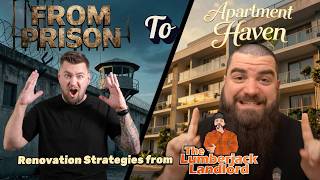
In this YouTube walkthrough, host Christian Osgood tours a former jail that developer Matt Stickney (the “Lumberjack Landlord”) has converted into a high‑end multifamily building with eight units, an indoor playground, and a community park. The conversation covers the acquisition of the property for $200,000 from the town, the design philosophy of preserving historic elements (jail cells, exposed brick) while adding modern amenities, and a series of cost‑saving tactics such as welding a stair‑rail for $1,900 instead of $20,000, re‑using donated playground equipment, sourcing cabinets in‑house, and optimizing granite slab yields. Technical details include triple‑pane acoustic windows installed with a custom panning system, ceiling‑mounted cassette HVAC units, Viper low‑flow toilets, leak‑breaker shut‑off valves, and a water‑heating layout that keeps fixtures within 20 ft of the heater. The project’s original schedule (12‑18 months) stretched to 32 months, and the budget grew from a $1 M target to about $1.1 M, with $80 k extra due to holding costs. Stickney discusses vendor challenges (fire‑suppression, plumbing), the importance of rapid vendor replacement, and the financial outlook: a $7‑8 k monthly debt service, projected rents of $2,200‑$2,400 per unit ($18 k total), potentially valuing the building at $2 M and creating roughly $1 M of equity. Community benefits include a free indoor playground for kids, a cold‑kitchen, a park with granite benches, and ADA‑compliant units. Osgood wraps up with takeaways on efficiency‑driven design, water‑saving fixtures, and the value of learning from peers, while promoting his new book on creative real estate.
Chapters
I'm here at Matt Hawkins Prison. This is a really cool conversion. I've converted hotels. I have never even imagined taking a prison and turning it into residential. So I'm here with the Lumberjack Landlord. Uh, so we are making do in the prison. He actually kept the jail cells in here. This will be the kids' lunchroom. I am so excited to show you guys this building. This is one of the coolest projects I've ever seen.
And this is the jail over here.
Oh, no way! Yeah, we've made it.
Yes, we have.
Yes, we're close by.
So this is all brand new mastheads. So yeah, absolutely beautiful configuration. This was a $20,000 problem, this stair rail. And they basically, the city said you have to have stuff for the 4-inch sphere rule. You take a 4-inch sphere.
Yep.
And if you can stick it through any part of a staircase.
Yeah.
That means that a child's head can get stuck and it does not pass. So the challenge that you have is that we had to add these pieces. They said, we need you to tear it down and build a brand new stairwell. That was going to be $20,000. Instead, I called my welder friend and I said, hey, this is what I want to have happen. He's like, yeah, I can build that. And we built it. And that was $1,900. Dude. So we saved $18,000.
That's a good start.
That's— I mean, $18,000 saved is $18,000 earned.
Yes. Something went right.
Yes. Yes. This was the deal that I worked out, uh, to actually take a mall's inside playground. We made a deal for me to take all of their toys and all their padded flooring. They were kind enough to donate it all. This will be an indoor kids playground right where the entry door is. We put a wall right across so moms can sit there on couches then there will be a gate so they can literally let the kids in the gate and the kids can just run around here. And because nothing is going to be taller than this, you can see your kid from any point.
So is this going to have a daycare component or is this just—
no daycare— for the kids only? This— so no, this is actually a full-fledged indoor playground business where we wanted to make an impact in the community. And so parents or grandparents, because so often you have parents and grandparents that are watching kids, And so the biggest challenge is they get stuck in a cooped-up apartment for the entire wintertime. It's really cold here. And so for months and months and months, they don't get outside space. They don't get a chance to run around. They're going to be able to come in here, and for $20, they're going to be able to play here for unlimited time for that day. And they're going to be able to get food next door. And it allows mom, dad, grandma, grandpa, auntie, sisters, whatever— it allows all of that opportunity for them to sit in front, chill out, be on their phone, and let their kids just run around. Awesome. This is going to be the cold kitchen, but we got all these kids' tables donated.
Oh nice.
Which was, yeah, which was super awesome. And so those things seat, uh, those seats seat like 16 apiece. And so that's what we'll use over here for, uh, for our, you know, kids' parties.
And cold kitchen just means there's no stove or—
Correct, there's no hood or anything like that.
What about this deal when you were shopping for this property? Because this doesn't look like anything else you have. No. So what about this deal made you say this is the project we wanted in?
Money.
Oh, I like that. That's a good answer. That's why I like buying things.
Yeah, I'm very simple. Very simple. The big thing was, honestly, for us, it was we were able to buy this from the town. It was a dead asset. So the town had basically done the things towns do. Yeah. Which is they reassess it and they say, oh, it's only worth this amount of money. And so the tax bill was $600 a month here.
Oh, okay.
So that's all the town was collecting in taxes from itself was $600 a month.
And you bought this from the town?
I did, I did.
And they were, they were a huge fan of the project while you were buying it?
Yep.
And as soon as you bought it, they immediately permitted everything and were super easy, right?
Yeah, just like that. Yeah, you stole a page right out of the book. Yeah, sure. It was a challenge. I was like, oh, we didn't mention that that's actually a 2-month process, or that that's a 3-month process. I'm like, No, you didn't. I know I would have kept track of that. Oh no, the coolest part we don't have a light for, but here's the jail cells.
Oh, there we go. A huge piece of having a playground is having a discipline area.
Yes, exactly. Exactly.
Non-ironically, Matt has 4 kids.
Yes, it's true.
Yep.
So that is a real deal jail cell. This is an old police station and the drunk tank is in the last one.
Oh, there we go.
They would put you right in the drunk tank. But these are actual legit jail cells. Oh, that is so cool.
Yeah. I love the decision to keep the jail cell. Oh, heck yeah. That makes it way— that makes it— you get the full feel for the history. It's so cool. Go see the apartments. Absolutely. Cool.
Upstairs.
Ooh, welcome to jail. Question: put together or glued on LVP? Standard construction, what is your preference?
Click commercial. The residential stuff is too thin. The commercial is the right thickness. And because we took the time to re-floor and basically we redid the floor of the entire building, this is what you get.
This is awesome.
Killer, right? So what we did was a lot of people think you have to get remnants when you use smaller pieces. What you do is you let them know I don't have anything longer than a 36-inch span, and they'll actually— you can have them CNC a slab. So because we had 4 kitchens, we bought 2 slabs, and we had like one piece that size left over. Take a wild guess what that— with that kitchen with granite, the sink, that's leather granite. So have you ever—
my favorite, my favorite.
Have you ever felt it?
This is my favorite thing to put in units. It's so just tactile. Tactile. That's a word. Tactile. Perfect.
I love it. It's awesome. People should guess in the video now what they think that kitchen actually costs, and then Christian will figure out what he's going to give you.
Yes. Whoever is closest in the comments the day that we launch this will get a free copy of my book that's coming out on the 22nd because I actually have something to give away.
We should feature the cabinets because this is ridiculous. So one of the main complaints you get in apartment buildings is, I always hear my neighbors next door. You're never going to hear your neighbors next door slamming this. I mean, look how hard you have to throw that. Like, that's the thing is, look how hard you have to throw it to get it to close.
Yeah.
And then same thing with the drawers. Drawers are actually double piston drawers.
Oh, that's perfect.
Yeah. So absolutely phenomenal.
And G-Option, the cabinet company that does this.
Yeah. So yeah. So we actually, we realized we were buying far too many cabinets from our cabinet supplier. We're just like, why don't we just open up a— we just need our own. And so that's what I did. So I just filled out paperwork with a couple of different makers, manufacturers. And so we carry just those two lines. When people join my course, when they join the boot camp, they actually get access to cabinets for wholesale price.
Oh, that's epic.
Yeah, it's pretty cool. Yeah. So we've got a bunch of people that became students, then they did the boot camp and, you know, we have 2 or 3 guys that have done a dozen kitchens. And then we have a bunch of people, literally hundreds of people that have done one or two, even if it was just for their own house and it wasn't for the rentals. But most of the time, this would be a $12,000 to $15,000 kitchen. This kitchen all in was $7,000. And that includes the granite.
It is so nice.
Yeah.
It's so nice. Yeah.
It's like, where else are you going to get that? Yeah. For $7,000. And that, again, it's granite. It's a high-end faucet. It tastes of butcher block. That will also include the handles that we'll put in here as well. Yeah, but yeah, it's an awesome spot. It really is. It's just a great spot and it'll be— it'll be pretty. Oh, this is going to be pretty. This is bedroom number 1 behind us. And so if you listen real quickly, you won't be able to hear it on camera. You can't hear anything. These are triple-pane acoustic windows.
That's why we can't hear it on camera.
You can't hear it.
You can't hear it off camera either.
You can't hear it off camera either.
So triple pane.
How does—
you're talking to me about this. The install of these is also unique because these will transfer like no heat. This is like having a wall.
Yeah, exactly. So basically what we do is we fur out the wall with our studs. And then this is actually like what's called a panning system. And so the metal pieces come cut. Then you float the window in there with a couple of stabilizer points and screwing it into the edges. And then you're able to fill it with spray foam all the way around it so you can You can put your hand to the window and you won't feel the cold transfer.
Which is absolutely insane. Like, it's pretty much the same temperature as the wall.
Yeah.
There's no difference.
None.
Oh, it's awesome.
Yep.
So this was a new supplier. These did not come in exactly as you expected.
Yeah, they were scratched up, murdered. Like, they did not have the QA.
From the manufacturer, they get damaged in shipping, or could you tell?
QA. Definitely QA. Yeah, because it gets delivered from the manufacturer.
So this is one of those things that save you a bunch of money. Yeah. Long-term through energy efficiency. Yep. What is— what did this cost per window?
So these windows, normally you'd find a nice, what's called a wide berth double-hung, because this is a bigger window, you know, that's a pretty huge sash.
Yeah.
You know, and for those of you who don't know, this is a sash, this one piece of the window. This is an upper sash, this is a lower sash. And double hung, that's what kind of window it is because it's doubly hung. Yeah.
Ironically, Matt Stickney.
Exactly. True story. If I had a nickel for every time I've heard that, I would have been able to buy this property twice. But what's really great about this setup is that a typical window will cost you a typical, you know, double pane energy efficient window. This is an Energy Star Plus window. They run about $800 to $900 a window. So it's an extra $300 a window. Wow. You know, times the 30 windows that we did. So it was an extra basically $9,000.
So did you have to fix them up or did they replace the windows for you?
So it was the framing around the windows. We negotiated with them that we would get it painted and that they would pay for that. Okay. Because they were like, hey, we'll replace them. And I was like, well, you originally told me it was going to take me 4 weeks to get them and it took 12. So now I don't— now I don't believe you. I can't. And I can't afford another 12 weeks. Because this was holding up that process. But just little features around, you know, around something like this where we use the— we use the flat, what we call pancake lights. But we use all the pancake lights. When we buy those, we buy them in bulk, so we get them for $7, $8 apiece. Oh, that's perfect. You know, and it's like, it beats having a boob light hanging down in the middle of your room, you know, which is not conducive. And then these—
I was just gonna ask, that looks modern.
No, it's very—
yeah, super high-tech.
So that is, instead of a mini split where you see big ugly things hanging on the walls.
Instead of that, you spend a little bit more and you can get these things called cassettes and they go right in the ceiling.
Okay, one that looks way better.
Yeah.
This is just still hooked up to the outside like a standard. So this is effectively a mini split, but way more aesthetic.
Correct. It's beautiful.
Okay. And you can push air from all four sides. Yes.
They are absolutely amazing. And this setup is not that much more expensive than a typical mini.
What is the price difference?
Mini split for this space would have been about $7,000. And when you go with these cassettes, sets, it ends up being 8,509 grams.
Oh, those—
those really—
do these last longer as well, or is this just aesthetically way better?
So these haven't been out long enough to know how much longer they last. Look how these have been out a few years. Um, but so far there's no marked difference between this and what you find with a typical mini split hanging off a wall.
Okay, well, way elevated feel.
If anybody's wondering what style doors these are, these are called Craftsman 3s. Oh, that And so if anybody's wondering, because it used to be a jail cell, that's why I did the two slots right there. They look like jail bars.
Oh, that's clever.
Yeah.
So jail inspired.
Yes, exactly. Jail inspired. So the way that this living room is configured is it is TV on that wall and couch here and then coming out to here. So we expect like a sectional right here, TV on that wall, and then fridge, stove, dishwasher in higher end stuff. We always do the—
I was going to say, I was going to ask, does that depend on asset class? Yes.
In your portfolio?
100%. Same, same thing.
Yes. Dishwashers for sure. This is a bathroom, but that is the tile work.
So what would you expect this to rent for? Because I haven't seen prison rental prices recently.
Yeah, me either.
Well, in my state it's free.
Yeah, exactly. Well, free to them.
Very expensive to you. Expensive for me, yeah.
So $52,000 a year for you. I expect that these will be probably $2,200, $2,400, right around there. Which is a lot.
That's amazing.
Yeah, it's a lot of value. Washer dryer, combi unit right there in the closet. Perfect. So then they can just do one of these. Piece of cake.
This design is super clean. Thank you. And it's high end, but it's simple. They're not wasting money.
Correct.
So I did.
I architected the entire design.
Really?
Yeah. This is 100% my design. This is the closet. And then these are the access. So this is access to the shower next door. This is access to the shower here.
So the most needed thing ever. Well, you don't need it till you need it.
Everybody walls it off. And for us, we rather, you know, fill it, paint it, make it an accent point.
Yeah.
And we'll put the bars right across there so it'll be hidden. But when we ever need access, somebody can just slide their clothes to the other side. We can pop the panel. We get access right to the mixing valve. It's an hour-long change instead of a 4-hour-long break. Sheetrock, brack, mud it. Paint it, not to do any of that stuff.
We can literally just pop it off, have the team forget to clean, have the tenant call you back because they're upset because there's sawdust everywhere.
Yes, correct. 100%. All right, we'll go to unit number 2.
And how many total units do we have upstairs in this building?
So we have 4 upstairs and we have 4 downstairs. Nice. Yeah. This one will eventually do a roof deck. Oh, so we'll basically, we'll basically have like something that boxes out of the wall where they can pull it down and it'll be stairs and they can walk right out. Totally cool spot, cool feature. This layout in here is basically couch comes off the wall here. We actually have two cabinets that will get mounted on each side and then a butcher block across the top, and then the washer dryer combo unit is going to go right in there and we'll have a little sliding door on it for a little pop-out. How many weeks are you out from full C of O? So for a C of O, we're, uh, only about 3 weeks.
Okay.
All the cabinets, all that stuff is already here, but Um, yeah, for only about 3 weeks.
And you have a furniture design, but you're not furnishing this, right?
Correct. Furniture design, not furnishing. Perfect. Bedroom number 1. And so the cool thing here is I designed it where every single room can take a king-size bed. Well, that's clever. Yes.
As a king-size bed person, I can't imagine not having a king-size bed. Exactly. Any size apartment.
If you do, if you do a king— and so the other thing that we do too is we lay out, so I lay out all my rooms.
Yeah.
And so here we've got an outlet for each, um, you'll have an outlet for each nightstand.
Oh, nice.
Right? And then you boom, TV on the wall. We put internet in every room. And the reason that we do that is because maybe you don't like your roommate, maybe you don't want to hang out with them. So that makes it really super easy.
Oh.
And then decent-sized closets. I mean, that's a decent size for a rental closet. You know, it's not like this little one-door thing. Yeah. So with full bypass, you've got 8 inches on each side, so you can actually put in a decent amount of photos for shows. Here is the—
here's a fully lit bathroom. I looked at your house this week.
Yes.
Viper toilet.
Is that the—
okay, so you have a Viper toilet shower. I'm assuming that that is— wow, it's gorgeous. Probably a lower flow shower head as well.
It is. Yeah.
How much money do you save running a project like this where you actually think about water consumption from— like, are you paying utilities? Do you guys pay utilities?
So usually we'll pay— so the way that the city goes is they pay— you spend a lot of money paying for extra meters. And so we want to reduce our costs as much as we possibly can for tenants that are coming in and tenants are going to live here. So we don't want them getting a meter charge for this and a meter charge for that. Before you know it, it's $150 a month in charges.
Yes.
And you've not even gotten gas delivered yet.
And so this is correct, you are saving your tenants money and making it easier to live here, which is—
so we'll do water, sewer, we'll do water and sewer, we'll pay for that, but we'll incorporate it essentially in the cost of rent. So we can go from 4 gallons per flush to 1.28. When we can go from a head that goes, you know, 5 gallons a minute down to, you know, 3.1 or 2.6 or 2.2, we want to make sure that they're still getting a great experience. The cool thing is, is that if you can do low, if you do this mix where you do the actual head and a wand, yeah, you can actually have the head being just over 2 gallons per minute. Yes. So if you have the head be much lower, they'll use the wand to do the important things you need to do in the shower. And so you're using, for a majority of your shower, you're using less water for a majority of your shower. That's super cool.
And the Viper toilet, you were, you were, what's cool or unique about this?
So if you get a shot of the side and you look at what's called the discharge pipe.
Yep.
The way that they configure that discharge pipe is you actually get the force. So you see what we end up with, fewer clogs, and you have fewer issues across the board. And we use these toilets because they don't clog, they're more comfortable, they're proper, they're more ergonomic, they're, they're well height, they're, they're a good height for doing business. And again, the key for us is overall cost of time. This is a 1.28 gallons per flush.
That's fantastic.
It's a major difference maker when you look at how expensive city water, town water, sewer bills, and what they charge for those. You could literally go from, you know, in a building of this size, you can go from a $600 a month bill to a $200 a month bill.
And price difference on the toilet for your one-time payment?
Almost nothing, $229, $249 depending.
Whereas a decent toilet without that, maybe one thing, so maybe $100, one pipe, save $100.
I mean, you're probably not going to— unless you're buying Glacier Bay, you're probably not going to the door $200 anyway. Oh, so marginally more, maybe 10%, it'll pay for itself in the first 60 days.
Oh, awesome.
Yeah, it's pretty powerful.
Viper toilet.
Viper toilet, Gerber Viper. You're always having to figure out what's going on with the space. So everybody said, yeah, put the water heaters in the basement. The problem is that that's probably 100 feet of water line. So by the time the water would get there and that thing kicks on in the basement to start giving them warm water, they would get very intermittent warm water. So now with how this is set up, none of these things are more than 20 feet away from a shower, which is closer than most single-family homes. This is still near instantaneous.
Oh, that's so cool.
Yep. So we—
Plus, I love how clean this is too.
Yes.
That's when you see plumbing done right.
Correct.
This is art.
We are militant about it needs to look clean and it needs to be easily shut off. So I'm a big king on shutoff valves. I want as many shutoffs as I can get so I can quickly shut the water off. Boom, right here. There's no water coming to the system. And that's super powerful. It's isolated. I can shut this off if we ever get a leak. If you show the pan here on the floor, if there ever is a leak, it will actually— when this is plugged in and the sensor's there, this will actually turn a valve and shut off the water altogether from coming into the system.
All of them have to have a pan, but that doesn't really matter if it fills with water and floods your whole lower floor anyway. Correct. What is this actually called and where does one get this? So this is super cool.
It's literally called Leak Breaker.
Oh, there you go.
And what it does is it actually will close if the sensor in the pan gets wet at all. It will instantly close and it will send an alert.
How much does that little upgrade cost?
A couple hundred bucks. That's it. And it can save you tens of thousands.
I was going to say floods easily.
Well, the other thing you can do too is, is you can actually do that on a line when it opens. You can actually— these things still work once a line goes open too. So it doesn't have to necessarily always be something like that, like a sensor. It can actually also do it based on the flow through the line and how constant that flow is.
Again, it's the little things that save you tens of thousands of dollars, which when you're talking net operating incomes, you're talking millions of dollars among a portfolio like yours.
The town wanted expensive exterior scapes on these different units. What we were able to do was I looked at the code, dissected the code, and the reason that they were saying that was because this door was too far from that door. This door didn't exist, it used to be that window. So we built this doorway.
Oh, that's simple.
In building that doorway, we now no longer need fire escapes on the windows.
So that's always saves a ton of money.
Yeah, I would say probably $12,000 to $13,000. Every single time I turn around, it's $20,000 or whatever, and typically you'll find that times. And then like the kitchens as an example, you know, we did all of the kitchens, including appliances. We'll be about $50,000 into all the kitchens.
Well, everything is really— these sinks are fantastic. The wood's fantastic. The color schemes are fantastic.
It's so—
it's clean, simple, and nice.
Yes, I appreciate you saying that. So there is a magic to this. People will look at this and say, I don't understand why you're configuring it this way. So we're doing it for 3 reasons. One, we want nothing more than a 36-inch span for any piece of granite.
Okay.
Number one. Number two, we want to make sure that we're not making them do a sink cut because they will charge $220 for the sink cut.
I didn't even notice that. Well, that's really clever.
We eliminate the sink cut by using a piece of epoxy, epoxy butcher block in the back, mounting this to it. This is still waterproof because of the epoxy. Right? But we eliminate the sink cut, so instantly we're $220 less expensive. One of the things that we designed, the third thing we did was we designed our, our cabinet setup. This is an upper cabinet. Yes. Okay, what we do is instead of using the proper type, you know, if you use like a regular sink, you're not going to be able to get a good 9-inch deep sink. This is far more grand and prettier than you're going to find in almost any other apartment.
Absolutely.
But it's actually functional as well because is we use an upper cabinet. That upper cabinet costs, you know, $250, $275.
Yeah.
A typical sink that's going to— a typical sink basin that's going to catch the sink is going to cost about $800. So we save $550 by choosing this setup instead of using a normal cabinet that's meant to take on a farmer's sink.
Well, and the cool thing about it is that it looks better than your traditional setup.
Looks much better. And They'll pay less, but like, this ends up, this ends up being an $800 granite job instead of a $1,600 granite job. Just because you broke it up a little bit. Instead of putting the fridge and the stove right next to each other and then having an 8-foot span and then having a cut and then having this and having that.
Yeah.
Getting low yield out of your slabs. We get super high yield out of our slabs. We literally had, you know, one piece left that was a little little bit bigger than this out of 2 slabs.
That's perfect.
So the entire granite bill for this job was under $4,000. With tip. It is your tip to us. This is the setup that we have for the washer dryer.
Yeah.
So washer dryer will slide in underneath here. And then TV will mount here.
Now, does this have to get treated with anything? Or retro block, I always hear, gets beat up like crazy.
Yeah, for people that don't know how to treat it. You know, and that's not the tenant side, that's the landlord side. So for us, we'll take these things, and this is unfinished right now.
Yes.
When we're done, we'll put it— we'll actually put it on sawhorses, and we'll do what's called an epoxy pour. And we'll just literally pour the epoxy on it. We'll make sure we take care of the edges. We'll do a nice pour on this. The really cool thing is if it gets scratched up, cut up, you know, knocked up, whatever, it doesn't matter. What we're able to do when you— when you use a nice quality epoxy, you can take a plumber's torch to it, heat it up, and you can actually just—
and it'll just smooth it out right back. Yep, perfect.
So there's—
you're not sanding it down, you're not treating it, you're not oiling it. It is a—
correct—
effectively a meltable plastic table.
That's it.
That looks beautiful.
That's correct. And then these are the last two bedrooms here. I think this is the smallest bedroom in the entire building, but it's still big enough for a king. You put the king right here and it actually comes out to Right about here on the floor. Yeah. What a cool project. Yeah, it was a fun project. Yeah. Took a long, long while, I suppose. But yeah, we'll show you the last unit up here and then we'll go down and we'll show you the ADA housing that we did. Oh, pretty cool.
You thought of everything.
I mean, we tried to. Every unit's a little bit different, but washer dryer piece goes right in there. That will be a mega-sized fridge. We'll put a much bigger fridge there. And then again, wall on this TV, couch right here. And then this will be like a nice little breakfast nook.
One thing that is really cool with this building is that the design doesn't allow you to make every space identical.
Yes.
But every space feels the same. Yes, it does. It doesn't feel disjointed. It doesn't feel like, oh, this, this unit is not better than the other units.
Correct.
You use the space really well.
Thank you. Yeah, pretty standard, you know, and Again, this was a wide open space. The cool thing is, you know, everyone says, you know, it's got good bones. Well, this is 3 layers. This is 3 courses thick of brick walls. And then we have steel I-beams is what the roof structure is. So above this is all your sprinklers and everything else.
Yeah.
We actually sprayed foam on the undercarriage, on the underside of the roofline. Yeah. Now that's conditioned space up there. We don't have to worry about broken broken lines. We don't have to worry about anything freezing. We're 100% good because the ceiling is what we—
which in New Hampshire, freezing is a thing.
Freezing is a thing for at least 4 months out of the year. The other cool thing that a lot of people don't think about is panels in unit. Yeah. So a lot of people have like a master panel. Certainly that's a big thing with small. Yeah. Multifamily. If you have it, then you have to give tenants access to it. You don't want them walking through a basement. You don't want them tripping on a screw.
No, we have certainly run into that.
Yes. So what we focus on is we always put the panels in the units. This means that you can do VA. This means that you can do Housing Choice Voucher. More importantly, you just don't ever have to give somebody access to the basement because if you give them access to a basement to go fix something, they'll likely store shit down there and then you're in a— then you have a problem.
And there's one unit on either side.
Yep. Yeah, we did butcher block throughout here. Yep.
And will this all be done with the, uh, with the, the certification? Is this also within that 3-week period?
Yeah, so we're— yeah, we're really close. Honestly, we're really close on this.
Yeah, there's not much to do. It's all finishing touches.
It's all Exactly. So I'll just—
if you're watching this and you've never done a reno project, this might look like, right, some parts are like a construction site. This is all pretty much just cosmetic and final touches. This is quick.
Correct. What's also really cool is from a fire perspective, they're in bed here, fire alarm goes off, they can literally roll over to this, pull this, push this up, and they can roll right outside and they're safe.
Oh, that's really clever.
Yeah. Tell us, is this part of the—
this is a good design idea, or is it part of the actual required design for egress on these units?
That was me designing it, yes.
Oh, that's super cool. It's a great design.
Thanks. Yeah. Yep. Yep. They want egress, but we're like, you know, it becomes very complicated when you start introducing physical challenges. And so, yeah, just— and then what's really cool is right here, again, they'll have— here's where their TV will go. There is couch and chair setup. Yes, it seems a little bit narrow. I get it. How much space do you need? And again, the key for most of these guys is they're, you know, they're going from a pretty lousy situation of, you know, sharing with a bunch of other people or living in a home where they only have a room. You know, this is going to be unbelievably awesome. It's going to really give guys their life back because they're going to be able to roll out their front door. They have access to handicap parking right outside the door, and they also have access to public transportation. This is— thank you. Just final touch-ups and paint and then a final clean. Upstairs has been all final cleaned, um, they just haven't gotten down to this stuff yet for the final clean. But yeah, all the construction is done. But yep, yeah, just final touch of paint and just, just to clear out and then the final click plates on top of this.
I love the areas with the exposed brick that you guys left. That's aesthetically super cool.
Yeah, we— exactly. You know, we wanted to leave it in some places, but we didn't want to kind of overdo it. Yeah, but yeah, we've got the window, everything ready to pop into this. But again, we left all this up because we want to do a grand reveal for everybody to see all at the same time. And we kind of thought that we're going to leave that open too, because that's the 18-inch I-beam that you so rarely see in construction. But we think that's kind of cool, kind of tells the story of the building. Yeah, I like it. So the last but not least is the final piece, which is the park. So we were negotiating the deal and putting it together, and we asked that they give us the park.
And they said yes?
The long and short, we got to yes, which was exciting. But yeah, we, you know, obviously for them, it's the city doesn't have to take care of it anymore. We take care of it.
Yeah, that's awesome.
There was a, there were a couple trees in here that were in really bad shape. So we had to take care of those, took care of those trees, and then we got the granite benches. And then what we'll actually do here to help business for not only for the indoor playground, but also for the cold kitchen is we'll actually create a big, huge patio area here. One for customers and one for not customers.
Oh, that's awesome.
That way the town can come by and they can sit out here, get some nice, nice little park time. But most importantly, we can get, give an advantage, a strategic advantage to the restaurant and to the indoor play space because they'll be able to come out here and grab food and sit here and eat either before or after playtime. Oh, amazing. Um, this tan one I own, I bought that for $155,000. Um, bought that for $155K and it just appraised for $450K, and that was in 10 years.
Wow.
Yeah.
So question on your final numbers for your Prison. We just got a tour of the prison. We're driving back right now. Uh, what was the acquisition price?
$200,000.
$200,000, which is ridiculous. That's a lot of building and a lot of work.
It is.
Yeah. Um, we covered this on our live, but for those who haven't seen that, what was the original timeline and what is the final timeline for that project?
Uh, original timeline was, uh, 18 months, 12 to 18 months. Um, and it was about a million dollar budget.
Wow.
And we ended up going about 32 months, and we ended up prob— pretty close to probably $1.1 million. So it might be about 10% over budget, but it's only because I actually know how to calculate properly. So I count our burn rate. So the project itself did not go over, over cost. The project itself, we actually hit all of our numbers across the board. What cost us that extra, you know, probably $80,000 or so, uh, was actually the extra holding. Yep.
Which makes sense.
Yeah.
And a 10% overage budget-wise is not crazy for a project that's as big as converting a prison into— yes, beautiful multifamily. So a great deal.
Yeah, we were happy with that. And like I said, I mean, the biggest thing was just how long the project took. So the biggest mistakes made with that— the biggest mistakes made there were the amount of time it took to get approval, um, the amount of time that we waited around for two specific vendors. One of them was the fire suppression company that got sold while we had the project, and they spent months figuring out which end is up. And then The last was the plumbing vendor, which was, uh, you know, abysmal performance to say the least. So we should have— we hire fast and we fire faster, but we should have fired a lot faster. We just kept on thinking it was going to get better. Yeah, we kept on thinking it was going to get better. We had a contract, we had this, we had that, and every time you call them, they make excuses. We can do this, we can do that. No, let me take care of this for you. And When it was all said and done, it was just a bunch of empty promises. It was a bunch of lousy work that they could never actually deliver what they said they were going to deliver. They were always behind. Then they would say things like, well, we're, you know, it's not just us, we're waiting for payment from you. I was like, you're waiting for payment for a gate that hasn't been hit yet. You're going to keep on waiting for payment. We're not going to give it to you because you haven't done the work yet. So people get very confused about sometimes very simple things. But yeah, so after we fired them, we actually got the next plumber in. He's, uh, he finishes Monday, which means start to finish it was about 3 weeks from when he said he would start and finish. So we're now clear of it. And so the more exciting thing is we have a great debt on the building. It's still kind of pricey from the perspective of it's about $7,500, $7,750. So we can refi. We're going to look at the numbers and see after we get it rented up, we're going to look and see what we're actually going to be able to do and potentially do a cash out on it because purchase price, project price, we ate the purchase price to basically say this is our down payment on the loan. So we only have a loan for about $1 million.
Oh, that's fantastic.
And so we only— and on top of that, it's about 7 It's about an $8,000 a month payment with taxes and insurance. And so now we will be in position to probably refi it. I believe that what we're, what we're projecting on rents based on what we own in the market and what we see, we think we can get there probably about $18,000 a month, I think is possible. Um, and if we hit that $18,000 a month based on other valuations in the area, you're probably talking about a $2 million building. Which means that we probably in that time built about $1 million worth of equity.
Geez. Well, well done. Well done.
Not bad.
Makes you feel a lot better about a project taking a little longer. You made it.
I'll sign up for another one if the numbers look exactly like that, cuz my time is worth about that much.
Oh, there you go.
So yeah, good stuff.
Good stuff.
I think meeting with other people with other strategies who have done the thing that you want to do yourself is the most important thing you can do. And I still practice that in my business all the time. I don't think any business owner plays a perfect game. Game. So learn from as many people as you possibly can, which is the purpose of this channel. Matt is a lot farther than me in real estate because he's been doing this for 5 times as long. Looking at his portfolio is really fun. That project with the prison is one of my favorite projects. It's really cool driving out to it though and passing all of the buildings and neighborhoods that he has acquired over the last 20 to 25 years. It's really fun to see someone else who does the same aggressive investing, uh, but in a different market. As you guys might have noticed, there's a lot more fourplexes in New Hampshire than there are in the markets that I invest in. So you has a whole lot more residential on 30-year fixed rate debt. It's still a great strategy. There is no one size fits all. My personal takeaways from this video though, you can save so much on the efficiencies, the kitchen design, the little things that he does, the water sensors, choosing the right toilets with the right flow rate. It's the little things that go a long way. You save expenses for yourself or you save expenses to your tenants, which ultimately allows you to get more profit with less rent, which means if you pass savings onto them, they stay longer, which makes you more money. All of these are strategies that make for a better building and a more profitable business. So I hope you got as many takeaways as I did. Any time I'm out with Matt, it's usually an hour-long video with lots of stuff. So I appreciate you guys getting to go along with me for the ride. Also, shout out to my editing team for going through all of that because I just filmed hours of footage with Matt and they put that all together. I dumped it all in one file. It was like 27 videos and they made this happen for us. So shout out to Josh. Thank you for putting that together for us. By the way, the book is officially out, The Book on Creative Real Estate, and we just hit the Amazon bestseller list, which is super exciting. So if you guys want to copy that, first of all, one person is going to get a free book based on their guess of the cost of match renovation. But after that, this is available. There's a link in the description. I'd love for you guys to do that. That's not just my deals, but almost everything in there are deals that I've done. The few examples that I have that are from other people are from friends within the multifamily Strategy, mentorship, and friends of this channel. So I go through actual deals that me or my friends have done in this book, the creative lessons that we have learned, and we learned them just like we learned on today's video by going out and actually doing the thing. So I hope you love the book. I hope you appreciate this video, and I'll see you on the next episode.
More from Christian


What Investors Want in Every Pitch: Property, Business Plan & Team #RealEstate #Pitch




Speak with authority to turn broker rejections into deals - boost your confidence #RealEstate

Turn Broker Objections into Closed Deals - CRE Negotiation Tactics #RealEstate #Negotiation

How to Get Multifamily Deals Under Contract Without Having All the Cash | Objection Series Ep. 1

How I Scaled 500 Apartments in One Texas Market in 12 Months #RealEstate #Multifamily


Turning a $12.2M, 200-unit mess into profit - live multifamily turnaround update #Investing