He Lost $50,000,000 - Rod Khleif Exposes the Truth About Real Estate Wealth
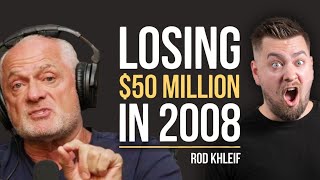
Rod Khleif lost $50 million in the 2008 crash after over-leveraging scattered C-class properties with poor cash flow. He rebuilt using goal-setting, meditation, and a shift to multifamily assets, which he argues scale far more efficiently than single-family homes.
Chapters
Welcome back to another episode of the Owner Meeting Podcast. I'm Christian, your channel host, joined today with real estate legend Rod Cleef. Rod, welcome to the pod.
Thank you. Yes, Rod is a legend in his own mind.
Yes.
And that's the only place he's a legend. But thanks for having me on, Christian. This will be a lot of fun. So let me tell a little of my story. It'll— for those of you that haven't suffered through it before, I'll try to be as brief as I can. But, you know, I'm a Dutch immigrant, you know, think wooden shoes and windmills. I immigrated when I was 6 years old, my brother Albert, my mother Svantje. We ended up in Denver, Colorado, and we didn't have much growing up. And I'm sure other people had it harder than we did. But I remember shopping at an expired food store for food. True story. They had one, you know, drinking powdered milk with our cereal in the morning because it was cheaper than real milk. And trust me, it sounds better than it is. And then I wore clothes from the Goodwill and the Salvation Army, hand-me-down clothes all the way through junior high school till I lied about my age when I was 14 because I was tall and got a job at Burger King flipping burgers so I could buy— finally buy my own damn clothes and ultimately buy a car. And like I said, I know people had it harder than we did, maybe even have it harder now while we're shooting this, while the freaking shutdown's going on. Democratic shutdown, I may add. But we don't have to go down that political rabbit hole.
But anyway, I moved from Seattle to Texas for a reason.
All right, there we go. There we go. Good. We're aligned. Anyways, you know, I knew I wanted more. And luckily, my mom had an incredible work ethic when I was growing up and no formal education. She babysat kids so we'd have enough money to eat. And with her babysitting money, she invested in the stock market successfully in IPOs. But she also invested real estate. Her first real estate acquisition was the house right across the street from us when I was 14. She bought for about $30 grand when I was 14. When I was 17, she told me she'd made $20,000 in her sleep that had gone up in value $20 grand. And this was when $20 grand was a lot of money. Okay, we're talking 1975, '76, '77. And I'm like, what? You made $20 grand? You didn't do anything? Screw college. I'm getting into real estate. So I went out and got my real estate broker's license, believe it or not, right when I turned 18. You could do it back then. With education. Now they got smart. You need some experience to be a broker. But I could have had my own office and I was smart enough to go work for someone else. I was still living at home. My first year in real estate, I made about $8,000, pathetically, maybe $10,000 the second year. But my third year, I made over $100,000, which back in 1980 was some real money. And so what happened between year 2 and year 3 to cause me to 10x my income? What happened was the broker I was working for, I was dating his daughter, and he taught me about the importance of mindset and psychology and how really 80 to 90% of your success in anything is your mindset and psychology. Ology. Only, you know, 10 to 20% is the stuff we, you know, belabor on our podcast here, Christian, you know, real estate stuff. It's really the do and it's a freaking keep doing. So, you know, fast forward to today, I've owned over 2,000 houses that I've rented long term. In 2000, now I own thousands of apartment units in 7 states. But in 2006, my net worth went up $17 million while I slept. And you might say, wow. And I said, wow. And I got a head so freaking big I could barely fit it through a door. I thought I was a real estate god. And you know, when that happens, you know, you get a big head like that, God of the universe to give you a nice little smackdown. Well, that was 2008, 2008 and '09, conservatively, I lost about $50 million. And so that's more than, you know what I'm— yes, yes it is. And, and, and so, like I said, I think I'm going to take the record for your lesson learned question that you, that you do on your podcast. But anyway, I, You know, I, I'm known for talking about, I'm blessed to host the largest commercial real estate podcast really in the world at this point. And, and, you know, it's called Lifetime Cashflow. And what I'm known for talking about on that and at my bootcamps is really the mindset it took to have $50 million to lose in the first place, cuz it's mindset to maybe even more importantly, the mindset it took to recover from that to the success that I'm blessed to have today. And so happy to drill down on some of those strategies with you if you like, Christian, or we can talk multifamily, whatever you want, brother.
Well, my biggest question, we're starting this backward. I usually close on what we call the stupid tax. You make that one mistake that costs you a ton, and I love to—
Well, it was a culmination. It was a culmination of mistakes. But I'm happy to talk about that. You want me to bring up why that happened?
Then is coming out of that, you're on the back end of that. How do you mentally recover from—
I made some great— Great question.
I think I'm a god, and now all of a sudden I've lost 50. I'm over. It's out. Most people go, I'm done with real estate. I'm done with everything. I'm going to stick my head in the sand.
People killed themselves. People killed themselves over losing less than what I lost. Jumped off buildings back in '08 and '09. And then, of course, in the Great Depression as well. And I will tell you, the way I got out of it is the same strategy. If you're listening, that you used to get— go kick ass and get off your butt and go make things happen. It's the same frickin strategy to get started as it is to recover. And it starts with your goals. It's the first thing I reassociated with my goals. And if you come to one of my boot camps, we just had one last weekend, a virtual one, and I'll tell your peeps how they can come to the next one if they want for a song and a dance. But, but, you know, the first thing we do is goal setting on steroids, because how do you get anything if you don't know what it is? You got to know what it is you want. But more importantly, you've got to create a hunger because so many people have fear or they have limiting beliefs. And the only way to push through that fear is to have a burning desire like Napoleon Hill talks about in Think and Grow Rich. A book, or a hunger. You've got to have that hunger. You see, when you've got that hunger, you get up when you get knocked back down, you know, and you've got to want it bad to push through the fear. You know, average ability with a burning desire equals success. Success is inevitable if you've got that burning desire. So, you know, I would tell you, if you're listening, find what you love, find your mission and purpose in life, and then get aligned on what you want, where you want success as bad as you want to breathe. Success is inevitable, but you've got to have your goals. You've got to have pictures of your goals. You've got to know why those goals are a must, which is all the things that, you know, I teach when I do that goal setting exercise. By the way, if you're not interested in going any further down this path with me, go to rodslynx.com and I do my goal setting workshop there. It's free. I'm not going to try to sell you anything. It's at the bottom of my Linktree. There's a guide you can download, you know, and here's the problem. Christian, people spend more time planning a freaking Christmas party than they do designing their lives. Doing your goals is designing your life. If you're hearing this, have your spouse do it. If your child is over 10 years old, have them do it. Have them design their lives. Very powerful. It's about an hour. You'll leave so motivated, you'll be coming out of your skin. So go to Rod's links. And at the bottom is that goal setting workshop. Well, it's one of the most amazing things.
We talk about this consistently on the podcast. It's a recurring theme, the lack of time that people spend thinking about their goals and action. It is an hour-long drill. And if you really want to get into it, spend an hour a day for one week sitting quietly thinking about what do I actually want my life to look like. It is not this massive project. Like, to, to—
Well, it doesn't even take an hour. It doesn't even take an hour, brother. I mean, and it takes an hour to do, to have me coach you on it. Yeah. But, but listen, I sit for, I sit on my recliner in my other office here and I've got my vision boards there. And then I just do gratitude cuz it all starts from a place of gratitude. Gratitude's the foundational piece that starts this. And I'll do gratitude for the things that I have in my life, the beautiful people I love in my life, my students, my foundation. But then I'll do gratitude for the things that I want as if I already have them. And that's the key piece to manifest what you want in life. And sometimes I've gotten emotional being grateful for things I don't even have yet. And I know I lost some of you analytical ones on that one. It's like, oh, geez, he's in foo-foo land. Well, this is how I had $50 million to lose and how I got it back. So ignore it at your peril. Okay. But it starts with goals and that's how you manifest. Like I said, with gratitude. I've even got a gratitude vision board. It's just got the things I'm grateful for on it. I look at that first and then I've got the things that I want and other boards behind it. But goals are the first thing. Yeah.
How much of this was born out of that $50 million loss? Was this a process?
No, I knew this before.
Did you start day one? I'm out. Don't care. I already know who I am, what I'm doing, or was there a period of like, No. What did that feel like when it was happening? What, how did that feel?
I was, I hid under a rock with a little eyeball poking out for a few months, feeling sorry for myself. Trust me. 'Cause I thought I was set for life, man. I had 800 houses. I had multiple apartment complexes and the whole thing just collapsed. I mean, you know, countries went bankrupt in my defense, you know, in that crash. But, you know, it took me a few months to pick myself back up. Luckily, you know, I spent 22 years with Tony Robbins. He's the best in the world around mindset and psychology. I was on his team for 8 years, and that's why I incorporate so, because I love that, you know, that framework about getting what you want in life, because it is all mindset and psychology. It's 80 to 90% of your success. And, and that's why my students are so successful. I'll brag for a second. I've got coaching students that own about, I think, pretty close to 300,000 units under my tutelage. Something I'm very proud of. And every other asset class under the sun, mobile home park, self-storage, senior housing, industrial flex space, you know, I mean, all of it, student housing. And it's because of the mindset. They actually freaking go do it, you know, and that's what it takes. So it starts with goals. The second piece is you got to make a decision, okay? And I don't mean dip your freaking toe in the water. I don't mean one foot out, one foot in. I mean, it's freaking done. You make a decision, it's done. And then you're like a train on a track. You're committed. Now, if you're not committed, you're going to get knocked off track. Okay? You see, motivation will get you started, but commitment's what brings you home. Okay? And so, you know, and it's, it's people fail with a lack of commitment. If you, if your goals are strong enough, you know your reasons why, and you make that decision to take action, you're not going to get derailed. You take 100% ownership, you know, really for every aspect of your life. And, and I'm going to tell you, you should be 100% responsible for every aspect of your life, not just The good stuff, but also the bad stuff. I'm willing to own what happened to me with the $50 million. I know exactly what I did wrong, and I know what I did right. And, you know, again, happy to belabor that a little further whenever you want. But after the decision, Christian Osgood, the next piece is you got to take that first step. And this is what hangs a lot of people up. You know, Dr. Martin Luther King said, you don't have to see the whole staircase. You just take that first step in faith. The next step will be revealed. You know, Lao Tzu, thousands of years ago, said the journey of a thousand miles begins with a single step. But sometimes taking that first step can be the scariest and the most important step of your life. But, you know, there's a lot of analytical people that listen to this, and I know who you are and I love you, and you're some of the most successful people in this business. And you know how you have to check off every friggin box before you make a move. And you can't do that in, in the multifamily business or in most businesses. You have to have some faith and some trust, remembering that you can drive all the way across the United States at night with your headlights seeing 60 feet in front of you, and you know you can make it. You may have obstacles, you know, other people have done it before you. It's the same way in this business. And, you know, a lot of people get hung up fearing failure. And I'm going to tell you, don't fear failure. Fear freaking regret. Fear being in the same place you are right now 3 years from now. Okay? Because this life is not a dress rehearsal. You know, I will tell you, I see it with my students all the time. It's called the law of the first deal. That it takes the longest. It's the scariest. It's the hardest. It's like they're like 6 months in and they're whining. I'm like, and I'm kicking them in the ass. And then it's 8 months and they get one. Next thing I know, they've got 3. I'm like, what the hell just happened? It— this is— they realize that the only draw, the only thing holding them back was between their ears. But back to regret for a minute. There was this nurse in Australia named Bronnie Ware. So she was a hospice nurse. So she took care of patients when they were about to die. And Christian, she asked him a question. And the question was, do you have any regrets? You know, at the eve of their life, they're about to die. And she wrote a book about it. It's a bestseller, something like The Five Regrets of Dying. You know what the number one regret was? Not living the life I could have lived, living someone else's life, not doing what I know I'm capable of. Screw that, brother. I don't want that kind of regret. I don't want you listening to have that kind of regret. Okay? So, you know, go push yourself, get uncomfortable. That life of your dreams is just on the other side of comfort. You know, comfort's nice, but nothing freaking grows in a comfort zone. So you got to push yourself and it starts with goals. And, you know, I love to talk about fear and limiting beliefs as well. You know, what is fear? F everything and run. That's what a lot of people think it is. I believe it's false evidence appearing real. Okay. But I also believe that, you know, the most successful people on the planet have fear that, you know, us achievers, we call it stress, but it's fear. And they push through in spite of it. Massive action mitigates fear. But the other thing I want to talk about is limiting beliefs. You know, when I immigrated to this country, I didn't speak English and I got thrown into school and I found out what bullies were for the first time. So I got my ass kicked occasionally. Then my mom and I got them right here. I had them ready for you. My mom sent me to school in these frickin wooden shoes. These are the actual frickin wooden shoes. We found them when she went to assisted living and these leather shorts the Germans wear for Oktoberfest. I mean, I was like frickin crack cocaine for the bullies. So I got my ass kicked again. And then, you know, the bullies would chase me home and she'd chase them off with a flyswatter. I hadn't learned how to fight back yet. I wish I'd run into some of them now. But anyway, you know, I came up with this belief system that I wasn't good enough. I used to ask myself, how can I show them I'm good enough? Of course, presupposed I wasn't. And a lot of people have these limiting belief systems, like I'm not good enough, I'm not old enough, I'm not young enough, I'm not, you know, smart enough, I'm not analytical enough. That was another one of mine. I don't have enough money. I don't have enough time. And here's the thing. There's a reason the acronym for belief systems is BS, because 99% of them are BS. But see, we believe they're real. And for some people, they impact their entire life. I will tell you, I used to be afraid to raise my hand in front of 10 kids in a classroom, and now I speak in front of thousands of people a year, typically in flip-flops and shorts. So, you can beat these limiting belief systems, but here's what you have to do. You got it. When they pop up, if you're consciously aware of them, sometimes you're not consciously aware, but if you're consciously aware of them, drag them out in the daylight. Look at them with your adult rational mind. Recognize that they're BS, and they will dissipate and go away like they did for me.
What can someone do to identify their limiting beliefs that they might not even know they have? How do you find them?
Yeah. I wish I had better advice on that, but I would say chances are you have an inkling. If you start to think about doing something, look at what holds you back. What are you thinking to yourself that's keeping you from moving forward. You know, maybe you've got an okay job, and like I say, you're comfortable, but you don't have time freedom, you don't have money freedom, you're not able to retire your spouse, you're not able to show your kids what incredible success looks like. Look at what's stopping you from taking action. And, and that— there it is. That's what it is. And for some people, they don't think they're worthy. Some people don't think they don't deserve it. Some people don't think they're good enough. Some people don't think they're capable of doing it. If you think about it, you'll figure it out. And again, if you drag it out into the daylight, you look at it with your adult mind, you'll recognize that it's BS. It's your own brain playing tricks on you. But you got to do it consciously. That's the key word. Don't let it slide by. Pull it out, think about it, look at it, and it will dissipate. I had to say to myself, I'm a gift from God. Anybody that would reject me just doesn't know who I am at my core. I'm put on this earth to make the world a better place, and I truly believe that, and I own that. And that's how I dissipated it for me. And so, like I said, anybody that rejects me just doesn't know me.. And so that's what I had to own and take on. Now, luckily I had Tony Robbins, who's the best in the world at this shit, but to help me through that stuff. And by the way, shout out to Tony. If you have an opportunity to ever see him, just go do it. Trust me, you'll thank me. Now, the next piece, Christian, is focus. You know, where focus goes, energy flows. And here's the thing, whatever you focus on gets bigger, both positive or negative. And I get people that call me sometimes and say, how do I get out of student loan debt? And I'm like, wrong fricking question. How do you make so much money that that's irrelevant is the question you should be asking. And you know, they asked Mother Teresa if she was anti-war. She said, no, I'm pro-peace.
Right.
I mean, there you go. And so, you know, focus is super important and I don't know about you, but I'll be sitting and watching Netflix and then I'll be flicking and flicking through social media while I'm doing it. That kills your fricking focus. Okay. And so, you know, think about, think about things. That, that, that minimize your focus and be careful with them. You know, I get excited about my podcast. I think I'm a little over 30 million downloads, which for, you know, the commercial real estate space is not unimpressive. And for some, it's, it's, it's not a big deal. But, you know, I listen to two podcasts. I listen to Joe Rogan and I listen to Tim Ferriss for both sides of the aisle. Okay. Obviously, I'm on one side more than the other. Now, on the other side is Tim Ferriss. And listen, I love the podcast because it's very intellectual, very stimulating conversation. He interviews the best of the best on the planet, the best athletes, you know, swimmers like Michael Phelps, NFL players, NBA players, billionaires like Ray Dalio, heads of the biggest companies like Zuckerberg, you know, actors like Arnold Schwarzenegger and Hugh Jackman, Jamie Foxx, people like that. And what he does is he deconstructs their success. And again, it's fascinating conversation. He has them. You know, speak to how they became successful. And I started to hear a pattern, Christian, and it really hit me. They almost all meditate. What does meditation enhance? Focus, right? So, so again, pay attention to your focus. Um, and, uh, and, and that's a, that's another big piece. Another big piece is, especially in our multifamily space, because I'm sure you talk about on your show, it's a team sport. Play to your freaking strengths. Don't try to do it all. I don't— I haven't met anybody with thousands of units that done it by themselves. They all have a team. And, and when you play to your strengths, they're your greatest assets. You're enjoying yourself. You're doing what you like because you're— if you're strong at it, you enjoy it. Okay? And I'm going to tell you, if you play to your strengths and you hire, align, or partner for your weaknesses, success is inevitable. And here's the thing. When you're playing to your strengths, you love what you do. And there's so many hats you can wear in our business. You can be the person that finds the deals. You can be the analytical one that you throw in a room with a spreadsheet and throw raw meat in once in a while, and they're happy analyzing deals, right? Then you could be the one that does, you know, maybe you got some construction experience or project management experience or some management experience in general. You can asset management after it's bought. Maybe you're great with people. Maybe you're a mouthpiece like me and you talk to investors and do investor relations. There's just— you can be the boots on the ground. You know, there's so many hats you can wear. But play to your freaking strengths. Okay? Again, and when you play to your strengths, you enjoy what you do. Some of the best partnerships I see in the business and the, you know, the over 1,200 interviews that I've had on my show is a combination of an analytical introverted person with an outgoing extroverted person. Because you need both. You need the empirical numbers, you need the analysis, and you need the relationships. So, you know, play to your strengths. And I'll tell you, when you do, You're gonna be passionate because when you love what you do, you're passionate. And when you're passionate, you can influence people. And passion is required to influence people. Maybe you can feel a little of my passion. I frickin' love talking about this stuff. And so you can feel the energy. It's 'cause I love it. And so again, when you play to your strengths, you're gonna be passionate. People wanna be around people that are passionate, and this business requires you to influence people, investors, sellers, brokers, you name it. And that passion equals that ability to influence, and your passion minimizes or even eliminates fear. You know, it, it also breeds creativity and innovation. So figure out what juices you. Do that. Don't settle. Don't play small. That passion is the fuel.
And you mentioned you can't do this by yourself when you're building a team. Back when I was starting, I had a partner I was bringing in. This was for a tiny deal. This was for a, a 12-plex. But I was coming in with a potential capital partner. We're going into a meeting. I let 'em know as we're going in, hey, this broker, he's kind of the C-team. But he has a deal I want to look at. And his immediate response, it stuck with me for years. He's like, I wouldn't know anything about the C team. I played select sports. A teams have A players. How do you attract a team that has A players and how do you get the right people? Let me put it this way. How do you get the right people on the bus? And then how do you get the right people in the right seats on that bus building your business to run a multi-thousand unit portfolio?
Great, great question. And what we do is we use the EOS, the Entrepreneur's Operating System from Gino Wickman's book Traction. Yes. And, and that book's extraordinary because it simplifies. You've got one behind you.
You got a copy of it? Yeah, there we are.
Yeah. There it is.
There it is.
Solid book. That's how you do, that's how you do it. I mean, that's how you organize the team, how to find the team. You know, there's so many pieces to that. I recommend personality profiles. Tony Robbins has one called the DISC profile, D-I-S-C. There's Myers-Briggs. There's other personality profiles that are excellent to see how well different team members mesh with each with each other, how to communicate with different team members, and to identify skills that they're good at. And so I recommend personality profiles, but I've made so many freaking mistakes. I mean, I've, I, you know, I call my mistake, my failures on business seminars, okay? And I've had, you know, that was a $50 million seminar. I mean, it was an expensive freaking seminar, don't get me wrong, but I have built 29 businesses in my career, several worth tens of millions of dollars. I got 2 right now that are. But most were spectacular flaming seminars. Okay. We fail our way to success. Don't fear failure. Again, fear regret. But, you know, I've made a lot of mistakes in hiring. You know, I trust my gut. You know, your brain is incredibly powerful. Use it. You know, you have something called intuition. And a great book about this topic is Blink by Steven Pressfield. About, you know, an example of it would be how an art expert can see a painting and they know it's a fake. They just don't know why they know it's a fake. It's the same way with people. If something doesn't feel right in your gut, trust it. Okay? Because your brain is so powerful, it will pick up on these micro nuances that you're not consciously aware of. So very important that you trust it. The other piece of this is you gotta pay attention to who you hang out with. You know, your peer group is so important as it relates to success in business. And you know, so many people default to peers they went to school with or that they work with,. And those people with their own fears and limiting beliefs could hold you back out of their fear. Right. And, and I kind of shifted gears there. I don't know if that was, that was pretty sneaky how I shifted to that.
Right. Anyway, so, hey, the rule of the podcast is the owner meeting. You are the owner that we're interviewing here. You run the podcast. I'm here to facilitate, my friend.
I love talking about peer group because, you know, it's, it's who you show me your 5 best friends. I'll show you who you are in every aspect of your life, your health, your happiness, and definitely your finances. Because who you hang out with is who you become. But I'll tell you, you got to be very, very careful about who you allow to influence you because people will put their fears on you. And sometimes it's family. And I'm going to tell you, love your family, but proactively choose your peers. You know, when I was losing everything in 2008, I was in Tony Robbins' Platinum Partnership, his high-level mastermind, and I was around people that were killing it in that crash. Okay. I mean, they were thriving and they're like, they're telling me like, get up, you puss, $50 million schmillion, get up and make something happen. That's who you want to be around, you know, when you're growing and when the proverbial, you know what, hits the fan. And so, you know, get around people that hold you accountable. That's why my coaching program is so freaking successful, you know, because they, they, they out of the 300,000, I think, deal units that they bought, almost 98% did analysis, 98% were done between warriors, between my coaching students. And so, get around people that want more out of life that will hold you accountable. Get around people that think what you think is hard is easy. I started my own mastermind for me personally, gosh, probably 6, 7 years ago. It's called, it's called the Multifamily Boardroom. I have probably about $40 billion in assets represented by that group. I kind of let it go just because it was like herding cats. But I did it for me because I wanted to be around people that thought what I thought was hard was easy. And it was a lot of fun. We learned a lot. And I'm thinking about reigniting it again with everything, all the exciting things that are happening in our business. But, you know, it's like the old adage, if you're going to learn tennis, do you want to play somebody better than you or worse than you? Right? Well, I mean, we know the answer.
If you could point to one thing that differentiates, and I'll caveat this with you've had an amazingly, amazingly long-running successful mentorship community.
I'm just getting started, brother. I'm just getting started. Come on now.
I believe it. Okay. As you are going, what is the core, like the key differentiator between a successful student or a student who doesn't make it happen? It's impossible to have 100% success.
That's a great question. And it's an easy one to answer. It does not matter where they live. It does not— if they can live in a town of 1,000 people or they can live in Manhattan, does not matter their education. They can have a PhD or fail high school like me. I didn't go to college and I barely made high school. I did graduate, thank God, but barely. They can have millions of dollars or be eating ramen noodles. It doesn't matter. What matters is them taking massive freaking action. It matters. What matters is they're changing their stories that hold them back. Like the ones I just shared with you. I'm too old. I'm too young. I don't have enough time. I don't have enough money. All these stories. We have these stories that we tell ourselves, and what they are is circuit breakers. So we don't feel disgusted with ourselves. We rationalize our lack of success, our lack of motivation, our lack of execution with stories. And it's the people that change their freaking stories and just go kick ass. Regardless of their station in life. And I've had everything. I've had famous actors, NFL players, NBA players, and I've had— and it's the people that are successful are the ones that just change the story and go take massive freaking action. It's—
I'm such an even-tempered person. One of the only things that deeply upsets me is when someone texts me and goes, hey, I can't build the business that you've built, and your business is much, much bigger than mine. And there's so many different examples. But when someone texts me personally and I get that, I thought I could do this and I can't do it. I'm like, half the time I text him, I'm like, okay, you're right. If you don't change that mindset, you're absolutely right. You can't do it. But there's nothing that would— the most successful investor I've ever had on the podcast, no one would've ever heard of him otherwise. He's from a small town. He immigrated just like you to America, young age. He worked as a potato peeler for $5 an hour. He's one of the larger developers in Central Washington. Hundreds of millions of dollars later. He started with no English, no advantages. He came to America by himself without his family, $5 an hour through his 20s. I think it was $5.75 an hour.
Roger can even harder. It's $2.75. There is no, I was a fucking snow for 2 years.
There is no one who is successful on the, I have not had any major, major successful people. I've had some moderate successful businesses. Critical massive success almost exclusively is held by those who did not start with an advantage.
Almost exclusively. There are of course exceptions, but you can make exceptions by doing the goal setting. I'm going to tell you, anybody can do it. You've just gotta find the juice to do it. And that's where it starts.
Because otherwise, you mentioned dedication in this, by the way, and I think this is so critical.
I think you mentioned what?
I didn't hear that.
Meditation.
I didn't.
Meditation.
You mentioned meditation and I think it's the number one most critical thing. I believe the biggest problem with people's mindset is that no one takes the time to think. You have social media, you have distractions, and you're just, people get into the 9 to 5 lie of, hey, I do my thing. I'm scared of losing my job. I go to work, I go home, I watch Netflix, I drink a beer, I go to bed. And they do this on repeat. They might, may or may not go to church on Sunday, rinse and repeat every single week. Meditation breaks that cycle. That is a time where you can set those goals. You can identify who you actually are and what it is you're trying to do. It gives you quiet. How have you used meditation in your business and how does that help?
Let me share, let me, let me share something. So, so my love language is gifts. Okay. I give lots of gifts to my warriors, my coaching students. One of them is Hal Elrod's Miracle Morning. Okay. I've had him on the show a couple times. I actually had the author of the Five Love Languages on the show, which was a real treat. Cause he's pretty old. But yeah, yeah. But anyway, Hal Elrod's been on the show a couple of times. So he has this book called The Miracle Morning about how you start your day off right. And one of the pieces is meditation and/or prayer. Okay. You journal, you exercise, and it's just how you start your day off to set your day for success. Highly recommend it. He's a beautiful soul, Hal Elrod. But, but anyway, you know what I do, I'll be honest. I don't do a formal meditation process. I will sit and think though. And, And sometimes, you know, I'll just sit and breathe and that's my, you know, focus on my breathing a little bit. That's my meditation. I need to do it a lot more, candidly, because I'm way too excitable and my brain is going a million miles an hour and I need to meditate more. I need to work on that. That's something I literally need to add, you know, to improve for myself right now. But that book will really help you if you're listening. Get The Miracle Morning by Hal Elrod. It'll help you set your day off right. But, you know, I'll be honest, it all starts with gratitude, Christian. You know, it's the most important foundational emotion we have available to us. You know, it makes us stronger when we face adversity. You can't be fearful and grateful at the same time. You can't be angry and grateful at the same time. You know, gratitude strengthens our immune system, makes our heart stronger, lowers our blood pressure. And like I shared with you, it's how you manifest everything you want in your life. It's how you bring it in. I mean, you do gratitude as if you already have it, as if you already own it.. And that's, that's the way, way it works. You know, it brings us closer to our spirituality. And so, you know, you, you absolutely must incorporate gratitude into your life. And I wanna share one other thing too, that I'm proud of. So, you know, when I immigrated, I ended up in Denver, Colorado. And, but I knew I always wanted to, I always wanted to live on the beach. And of course, there's no beach in Denver. It's about as landlocked as you can get. And, but I would visualize the, the palm trees, the surf, the sand, the waves. And 20 years later, I built this what's now probably an $8 to $10 million mansion on the beach. And it's right across from where I live now. And I owned the beach on one side and I had my boats on the backside. It was called a Gulf-to-Bay property, sliced through an island. I mean, just to describe this place briefly, I mean, there was a giant waterfall from the second floor balcony into the pool. You had to walk through the waterfall to get to the pool. Pool was in magazines. I had a spiral staircase up to the middle of the house, wine cellar, elevator. On the second floor around the staircase, I had aquariums built, curved aquariums, custom made, cost me almost $200,000. So this gives you an idea of the house.
Yeah. That's on my to-do list.
Amazing. So I worked for it for 20 years. 2 months after I moved in, I'm floating in the pool at night and I'm looking up at this. It's nighttime. I'm by myself. My family, my beautiful family's inside sleeping. I'm looking up at this testament to my ego, which is really what it was. It was to prove to the freaking world I was good enough. I mean, if that didn't do it, you know, frick it. I may as well give it up. And. You know, and I had the boats and the jet skis and the Maserati and the Mercedes and all the stupid stuff. 2 months after I moved in, I'm floating there and I got depressed. And I don't mean a little depressed. I'm like, holy shit depressed. I'm like, what is going on? I've just achieved success like times 10,000. I've got the beautiful family. I've got the financial trappings of success. And that's what I want to share with your peeps here. When I look back on it, there were 3 things that I realized had happened. One was It's never about the goals. You need the goals to create that burning desire. But what do they say? The happiest days of a boat owner's life are the day they buy the boat and the day they sell the boat, right? You know, you need it to get that burning desire and that hunger. But happiness doesn't come from the goals, as evidenced by this house 2 months after I, I moved in. Happiness comes from progress and growth. And I didn't know how I was gonna grow. And by the way, if you go to Rod's links or you come to one of my boot camps, one of the things I teach is a weekly planning process, how I manage 2 large companies at the same time.. And one of those pieces in that process is to acknowledge anything you got done, because you're going to have setbacks, you're going to have delays, you're going to get your nose bloody. But if you're progressing even a little bit, you'll be happy. And so remember that happiness comes from progress and growth. And I didn't know what I was going to do next, which is one of the reasons I was depressed. The second thing is you should never achieve a big goal without having other goals lined up behind it. That was another piece. Like the good book says, without a vision, the people perish. I didn't have a vision for the future, so I didn't know what the hell I was going to do next. But the big one was I'd been totally, totally focused on Rod. Rod, Rod, Rod. Show the world I'm good enough. Show the world I matter. And that's the year I went and saw Tony. 'Cause I was so freaked out about how I felt. I went, you know, I need to, I need a, I need a boost. I bought some books, you know, I got some self-improvement books, Dale Carnegie, stuff like that. And I got Tony's book and I started reading it. I didn't even finish it. I'm like, holy crap, I like this. So I went and saw Tony in Fort Lauderdale. This was about 26 years ago. And I found out that he fed families for the holidays and I'm like, what a concept, do something for someone else. I'm a little embarrassed. I had to be 40 to get that memo. And, and it's actually, it was 25 years ago. So I'm 65 anyway. So I called my brother in Denver, cuz I was gonna go visit him for Thanksgiving. I said, bro, let's feed 5 families. So he found 5 families. He called his church, found 5 families that really needed help. We bought food and toys and frozen turkeys and just had a lot of fun buying everything. The third family changed my life, Christian. We go up to this shack, which is really what it was. It wasn't even a one-bedroom. It was like a shack. And there was a Hispanic woman in there with 5 kids. And she came out on the porch and she saw all the food and the toys and she started crying. And her kids came out and 2 of the older ones started crying. I started crying and I was hooked. And please know what I'm going to share now is not ego. There's a real message in this. So, don't tune out if you want financial success. Stay with me. Okay. In the last 25 years, I've fed well over 150,000 children in my area here in Sarasota-Bradenton for the holidays, kids that wouldn't have holiday meals. I've done tens of thousands of backpacks filled with school supplies to local kids, you know, for their, you know, we live in the greatest fricking country on earth. Don't get me started on the fact that we don't have school supplies for kids. But, you know, I did 2,000 like a couple of months ago. I've done thousands and thousands of teddy bears, local police departments for their officers to keep in their vehicles if they encounter a child that's been in a traumatic situation. Just did 500 100 a couple months ago, the Sarasota Police Department. And I bring this up because we have been taught in our society we have to achieve to be happy. Like, we shouldn't be happy until we've reached some level of success through achievement. And I'm going to tell you, if you give back in any fashion— and this is going to— it's a play on words, but it's an important one— if you give back in any fashion, you are happily achieving. Tony Robbins calls it the science of achievement versus the art of fulfillment. Achievement's a science. You want to learn multifamily, keep listening to his podcast, my podcast, get get your ass to one of my boot camps. I mean, you come for $47, 2 days of training. I don't sell anything. It's a no-brainer. Okay. But achievement's a science. I'll tell you what to do. You just gotta go do it. Okay. I'll give you the blueprint, the map. You just gotta go do it. That's a science, but fulfillment is an art. You gotta find out what juices you. For me, it's kids. It's also the elderly. I'm doing senior housing as well right now. Maybe for you, it's animals. Maybe for you, it's the environment. Don't say to yourself, well, you had money. That's why you gave back. You want the money? Give back right now. Give up your time or give money. That's the way God works. That's the way the universe works. You want to be successful? Give back right now. I can tell you my most successful students are the ones that are the most philanthropic. They're the ones that make the world a better place. So give back right now. If you don't have the money, go give up your time. And power moves to those who serve. And so I want to share that, that last message with your peeps here, Christian.
I don't usually do this, but I'm going to get just a little bit political. This is why I really don't like most social programs. I do a ton of Section 8.
We do a lot.
Mandami just got elected.
I saw the news. I think he's going to prove why that doesn't work in New York. We'll see.
But oh my God, what a shit show. Here's the problem that you have all these different states saying like, hey, we need to provide everything to everyone. And it's a human right. Then you go to a national park and they go like, hey, please don't feed the ducks because they'll get dependent on food. Like, we're not all that much more intelligent than a duck, to be completely honest. The way sociology works in a way where if you keep people down, they'll stay down. People are now robbing stores because they're like, well, I'm owed food. I get— I'm sure you get this much more than I do. People hate landlords because they're like, I'm owed housing.
I get hate every single day. No one should have owned 800 houses, you scumbag. And I just feel sorry for them, man. They're in their mom's basement, entitled, feeling sorry for themselves. And with that attitude, they will never, ever achieve success. And so You know, when you lean on other people, even, even the billionaires, even the billionaires, like, you know, people are like, you should give your money away. No, you should get off your ass and earn your own money.
But you know, I'm all for providing for kids and the needy, but I think when we tax it and we make it mandatory, hey, the government will take care of your philanthropic work for you. You take all the heart out of it. I love this where you have come in and this is, this is what, this is why I'm pro-capitalism right here. You've just summed it up. Is you've come in, you've made money. What do you want to talk about on the podcast? How you give back, how people can get involved. It puts the heart into it. I think that is stuff that the church should be doing. I think that's something that the individual people should be doing. I think you should strive for wealth to provide for your family, then provide for others. And if we over-institutionalize it, the heart's gone and we just become cold, callous. That's why I don't— that is why I'm anti-socialist right there. It's not even the fact that it doesn't work.
There's no hard— when you, when you, when you approach it with that framework that I'm here to provide for my family, duh, it starts there. I'm here to, and I'm here to make the world a better place.
Success is fucking inevitable.
Okay. Absolutely. And I didn't mean to say inevitable, but I wanted to put some impact on what I just said. So listen, if you want success, give back, focus on making the world a better place. You know, we did a thing for my last bootcamp, about 1,000 people in Orlando.. And I did a Hall of Fame award for some of my warriors, exemplary warriors, students in my program. And, and we did a slide for each one of them. And I started noticing a pattern. Every single one of them gave back. And I talked to the 1,000 people. I said, that's what we call a freaking clue. Okay. Power moves to those who serve. I just had a couple, a beautiful couple on my podcast yesterday that are missionaries and they're killing it in real estate, but they've got schools going all over the world. Built. Okay. I've got students that have built schools in India, a student that deals with, you know, veteran suicide, veterans homelessness, sexual trafficking, you name it, all of it. And so, pick something that juices you, that allows you to be fulfilled. And, you know, I'll tell you, I've interviewed some very, very successful people on my podcast. I mean, tens of thousands of units. And I can tell if they're like I was before I had that epiphany about, you know, they don't, they're not truly successful because they're not fulfilled. They're all focused on themselves. Don't fall in that trap, my friends. Okay? Give back now.
Success will be inevitable and you'll be happily achieving. Now, let's get a little bit tactical. We've talked a little bit earlier about how it felt on the $50 million. We've talked a lot about the motivation and how you get to where you are. And I agree, it's 90% mindset, which is why this episode's been 90% about mindset. Let's talk about that 10% tactical.
What happened? To lose $50 million? Let me tell you. How does someone avoid that? Yeah, so I did it wrong. I had 800 houses, but they were 2 hours north of me, 2 hours south of me, and everywhere in between here in Florida, along the Gulf Coast of Florida. Florida has no state income tax, which means higher property taxes impacts cash flow. There's a reason my podcast is called Lifetime Cash Flow, because it took me losing $50 million to get the memo. But anyway, so I had properties in wind and flood zones. Higher insurance impacts cash flow. But what killed me was these are mostly C-class houses. And with C-class assets, you're going to have, you're going to have an older house. You're going to have a tougher demographic. You can have a lot of maintenance. The maintenance killed me. So if I sent, you know, I had some apartment complexes. If I sent someone to one of my apartment complexes, we can stockpile parts, plumbing parts, electrical parts, door locks, window locks, HVAC parts. They're in and out in an hour. If I had to send one to a house that's an hour away, they got to see what's wrong. Every house is different. They can't stockpile for every house. They got to go find a Home Depot or Lowe's where we have an account. I don't know about you, but when Rod tries to fix something, his happy ass goes back to Home Depot more than once because he forgets something. It's the same way with maintenance guys. So what took an hour at one of my apartment complexes took all day at one of my 800 houses. And so I never really cash flowed that well. And then people are like, well, you were overleveraged. I was at a 30% loan-to-value and I still crashed and burned. Okay. I only owed $0.30 on the dollar. Right. True story now. And it was because I didn't focus on cash flow. And then the— then what the— what the straw that broke the camel's back was, I didn't pay attention to tenant demographics. If they had a job, they had good credit, and they gave me a deposit at least equal to a month's rent, I let them rent. Well, what I discovered when I look back on it is I had a ton of contractors in my houses. Plumbers, electricians, drywallers, painters, roofers, and that work fell off a freaking cliff in '08 and '09. They didn't have work. And I had a bunch of people in retail as well. And so, you know, they couldn't pay their rent and it just completely imploded. And I lost the apartment complexes because in my wisdom, I cross-collateralized those with packages of houses to save a little interest, you know? And so, yeah, I lost the whole thing. It was painful. But you know what the lesson is? I don't do single family. Okay? And that's why I started my podcast. I'm like, hey man, if you're going to buy and hold real estate, for God's sakes, don't do single family. Do multifamily. It's safer. It's more scalable. It's candidly, it's easier. And then I say, ask me how I know. We give away t-shirts at my bootcamps that say #AskMeHowIKnow. Because I say so often, don't make that mistake. Ask me how I know. And one of my students got me the shirt and we just thought it was hilarious.
So we give them away now anyway. So, so the lesson here is if you want to scale your business, one, one unit at a time is a very arduous way to do it.
So you built this huge portfolio.
Why would you? Super hard to do. Yeah.
Right. But it's the management of that many small modular pieces is what imploded the business. Well, management is a pain in the butt. To scale is a pain in the butt. What's easier, buying 20 houses or buying a 20-unit? I can tell you the 20-unit's infinitely easier. So you can scale faster. It's safer. If you've got a house and it's empty, you're 100% vacant.. Okay. And you get, you might say, oh, well, I got cash flow, $500 a month off my house. Well, if you go vacant, you're going to have $3,000 or $4,000 in turnover costs to get it made ready again. Okay. So how many months do you lose there? You're going to lose a month at least in the turnover process. You lost your whole year's cash flow. I mean, ask me how I know exactly. I've had 2,000 houses that I've rented long term. I can speak with some credibility about this. But if you've got a 20-unit, you can have 2 or 3 units vacant. You're still breaking even. So, you know, it's kind of a no-brainer, honestly. And so, you know, that's what I started telling people on my podcast. It's kind of funny when I started my podcast, I don't know, 9, 10 years ago, I'm like, you know, I'm never going to sell you anything. I just want to add value. And I'm a freaking liar because I sell everything. I've got, you know, courses and coaching and boot camps. By the way, can I mention my boot camp?
Just get a little more insight on that. Absolutely.
And we'll link it in the show notes. All right. Yeah. So, so I do these virtual boot camps every couple of months. I've got one coming up. If you go to RodsLinks.com, my bootcamp site is there. If the price is more than $47, DM me and I'll get you code to come for $47. I don't sell anything there. I just did one this last weekend. I'm still kind of recovering because it's 16 to 18 hours of training. Nothing being sold about this business. So tell me your freaking excuse, okay? If you want to learn this business, get your ass to my bootcamp for less than the price of a lunch. And, and you get the bonuses are like $3,000. You get my deal evaluator software, online software, my document library. My Finding Deals course.
You mean it's, it's like, it's a no-brainer, candidly. And Rod is actually very, very, very well known in the industry for providing tremendously more value than you pay for. You, you are, you are extremely welcome. I'm completely comfortable endorsing that. You will go. No, no, thank you. He's not gonna sell you anything. He's gonna teach you what you came there to learn.
Period. The most successful people on the planet, I learned a long time ago, are the ones that add the most value. I mean, look at Bezos, look at Musk. I mean, my God, that's why they're the wealthiest people on the planet. Because they add more value than anybody else. And I, I try to live by that. I'm not comparing myself, by the way, but those, those are, those are, those are role models to add more value. And when you get into this business or any business that you decide to go after, focus on adding value.
That's the biggest secret to success. Well, and here's the beautiful thing too about multifamily and single-family. This is the big thing that I learned. So I started with duplexes, which is basically single-family. You have all the same problems. When I started doing multifamily deals, I found you buy a 20-plex, you have to succeed 5 times a year to add 100 units.
To your portfolio.
You get to be pickier on your deals. You can spend more time on your deals. It is so much more efficient. You have a business that is built to scale. It's built to be managed. Single family, you're competing with people who want to have single family houses.
Well, and single family, and single family and residential multifamily, duplex, triplex, fourplex. The problem with that is you can't ramp the value because you're locked into whatever the comparable sales are selling for. With our world, 5 units or higher, the value's based on the net income. A multiple of the net operating income. And so you can ramp that, which is why this business is so freaking exciting. How we painted parking, we painted numbers on a parking lot so tenants could have their own spot in front of their unit. Hey, you can reserve it. It's $25 a month. We were— we had 100 people taking this on a 290-unit asset we have in San Antonio. At that time, that property was trading at a 4 cap. Okay, that $100, 100 units at $25 a month. Was a $700,000 increase in value for some freaking paint on the parking lot. And we didn't even paint it. The towing company did it so they could have the towing contract. And you're like, oh, you can't do math. Well, here's the math. Okay? You take that 100 units times 25. That's 2,500 total. You annualize that as $30,000. If you got a calculator, divide $30,000 by 4% cap rate and see what that adds up to. And that's why we love this freaking business. You know, some paint increased our value by $750,000. Now, that's an ex— that's a great example. There are lots of examples.
But that's why what we do, commercial multifamily, is so much better than residential multifamily. Yep. I started in a 6-cap market. When you understand the math, every time we get $100 of new income, you analyze it, you divide by 0.06.
Like, we made $20,000 for every $100 we create. Boom, boom, boom, easy. Boom shakalaka.
That's why we like this business, brother. Yep. Then do it over a few hundred units and do it all at the same time. And that was the first time I realized we did this. We had a, we had 100 studios, which was way too many studios in proportion to our portfolio. Did not do a good job diversifying when we started. We did the rent increase after we didn't do enough in the first year, $100 rent increase over 100 units. A housing authority actually helped pay for a lot of these. So my tenants only paid like maybe 30% of my tenants actually paid for the increase. We looked back and we're like, we are worth $2 million more than we were before that decision, all in the same day. And you can acquire those rentals like we just mentioned, you do 5 transactions for 20 units in a year. You can have this $2 million a year by being this much better of an operator than the last person that you bought from. It's, it is just absolutely incredible business to be in. Rod, thanks for joining us on the pod. This has been absolutely fantastic. We'll list out all the takeaways. There's Rod's links is linked below. So anything Rod mentioned through who you're able to find here on there, again, DM him directly.
If that price is a ton of, ton of free stuff there, there's a ton of free stuff there. If it's, if the price is more than $47,000, let me know. Let me know you heard it on this show and I'll get you that price. There's free books. There's my goal-setting workshop. If you don't want to do the event, have your kids do it, have your spouse do it.
There's, there's all my social media there. So yeah, privilege to have you on. Thank you so much, Rod.
For everyone else, thank you. On the next episode.
More from Christian


What Investors Want in Every Pitch: Property, Business Plan & Team #RealEstate #Pitch




Speak with authority to turn broker rejections into deals - boost your confidence #RealEstate

Turn Broker Objections into Closed Deals - CRE Negotiation Tactics #RealEstate #Negotiation

How to Get Multifamily Deals Under Contract Without Having All the Cash | Objection Series Ep. 1

How I Scaled 500 Apartments in One Texas Market in 12 Months #RealEstate #Multifamily


Turning a $12.2M, 200-unit mess into profit - live multifamily turnaround update #Investing