I met the Service King - how Adam Chapman Makes MILLIONS from other peoples properties!
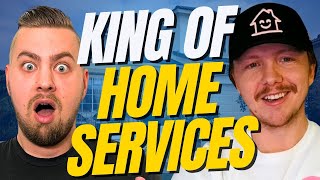
In this Owner Meeting Podcast episode, host Christian Osgood interviews Adam Chapman, founder of PadPal and creator of Home Service U. Adam recounts how a concussion‑ended hockey career led him to door‑to‑door window and gutter cleaning while in university, growing the business from a $0 start to a multi‑million‑dollar operation. He explains the ultra‑low startup costs, near‑100% margins on early services, and the step‑by‑step scaling path: hiring workers, building a schedule, creating SOPs, and expanding to a 12‑person team. The conversation covers leadership, team culture, and the importance of attracting and retaining A‑players. Adam details the “service‑stacking” model—seasonal services such as Christmas lights, soft‑washing, permanent lighting, and roof‑wasp removal—to keep crews busy year‑round. Marketing tactics are broken down: door‑to‑door sales, yard signs, Facebook/Google ads, and the critical need for a personal CRM that owns the contact data. He shares a costly mistake of giving away 30% equity for an accountant and the lessons learned about equity, mentorship, and rapid problem‑solving. Finally, Adam talks about Home Service U, his coaching platform, why he chose to teach, and his critique of traditional education and marketing courses. The episode is a practical, enthusiastic guide for aspiring home‑service entrepreneurs.
Chapters
So I always say to guys, you can be lazy, but you can't be broke and lazy. Meaning if you have no money, go door to door.
Hello and welcome back to the Owner Meeting Podcast. I'm Christian, your channel host, today joined by Adam. Adam, welcome to the podcast, man.
Thank you for having me. I'm excited to jump into things today.
Dude, I'm super excited for this. He has a business that— I use this type of stuff a lot. He has a business that is thriving. He's been doing it for 8 years. He's got into teaching people home services. So he actually has a company called Pad Pal. I'll let you list them off, but he does a whole bunch of home services. He's been doing this for a long time, very, very experienced, uh, things from, you know, like lighting to interior to like— right now you're doing a lot of Christmas lights, right?
Yes, sir.
Dude, that's— some of these businesses, they're, they're actually pretty high margin. They're always in need. I'm super excited to dive into this, man. I'm super excited to dive in. Let's start with Pad Pal. What, what made you get into home services in the beginning? Like, what was the starting point for that?
Yeah, it's funny how, uh, life works out. So I, I played major junior hockey here in Canada, so the CHL. And then when I was young, I signed pro, so I was living in Georgia playing in the East Coast Hockey League. Uh, had a really bad concussion. I was having like convulsions. And basically in pro, they're like, hey, sucks to suck, see ya. Basically, the team doctors said another year without playing. Um, and then that's when I went to university, uh, because the schools were kind of like wanted me to go there and if I recover, play hockey for them in Canada here. And then when I was in university, I kind of saw one of my teacher's assistants, he had an Audi, and I was like, what do you do? He said home services. I had no clue what that meant, but I knew he had an Audi, so I just went out and like basically begged him to teach me. And then I started with door-to-door sales, window cleaning and gutter cleaning. Yeah, I started with nothing, like literally $0. I collected deposit money to buy my first set of equipment. And then invested all of my time and energy and money into the business the last 8 years. So that's kind of how I stumbled into it, just at university. And my first day I went out, someone said yeah for $500, and I knew right away, I'm like, yo, I can't believe that people are paying $500 for window cleaning. Like, this is going to change my life. And I've been addicted ever since.
Well, and I'm such a huge fan of scaling scalable businesses. If it's simple, it's repeatable. If it's repeatable, it's scalable. If it's scalable, it's like, okay, well, there we go, let's get out there and compete. Um, it's the definition of that, right? Everyone has windows, everyone has gutters. Anyone who owns a house is a client. If you drive anywhere, there's buildings all over the place. Uh, I love simple businesses, and there's a lot of margin in simple businesses. Initial startup cost for you to start getting in— what was the first service you offered, and what was your actual, like, cost to get into the game?
Yeah, there's, there's a lot of things I love about home services. A big one being is you can get started with, like, next to nothing. Uh, and also you can really— my business was doing about $250,000. I was still living in a student house and storing the stuff in the garage. Like, there's not too many businesses at that size with like no overhead. And then our first overhead ever was $70 a month for a 2-car garage, just to rent someone's garage. So, um, you can get started like with less than $100. Like, I did a video before where I basically went to the gas station with squeegees and started cleaning car windows and then went storefronts. But the simplest service, window cleaning, you're less than $100. Get some squeegee or scrubber, some rags. Gutter cleaning, all you need is a ladder. You can get up there with some garbage bags, clean, and then there's a couple hundred bucks per job. So you can really quickly make your money back and then save up and get better and better equipment as you go.
Dude, so what was the, um, what was the first service that you offered? Like, what was it?
The, uh, window cleaning and gutter cleaning.
Those are the two.
Yeah.
What's the, what's the margin someone can make on those? Like, obviously you're, you're not really spending all that much. You have some baseline equipment. Um, you know, someone wants to get their gutters cleaned. What does that even run back then, 8 years ago?
So you'd be charging about $300 for a gutter cleaning on average.
Uh, how long does that take you to do?
Do you hit like an hour to an hour to maybe—
See, that's what I love about these things. You have, you have low cost It's, it's a job that no one wants to do. At least most homeowners don't want to do. You can come in and you can make, I mean, $300 an hour is really good money.
Yeah. Yeah. Like a solo guy, what if you're doing window and gutter cleaning, you should be doing about $1,000 to $1,200 a day solo, uh, in your pocket. Yeah. And then your margins on that is your Dawn dish soap and garbage bags. Uh, and that, like I said, you could store everything in your car at that point too.
So your margin's basically, it's basically 100% profit. I mean, very, very close to 100% profit.
At that starting phase, yeah, essentially 100%. Especially if you knock on the doors to get your jobs, that's free to do. And then the ladder, if you have the ladder, you can do your gutter cleaning and throw it in garbage bags. There you go. Yeah, basically pure profit.
So like a lot of great businesses, you start it with your own efforts. You build a baseline, you get some cash, you rent another garage. What does it look like to scale to the next level? So we'll say level 1, you're a college student, you're a solopreneur coming in, you're like, hey, I can make, I can make $1,000 a day with 3 to 5 hours of work. What's, what's level 2 of the company? What's, what's the next, what's the next phase in scaling that business?
Yeah, so I was really fortunate. So I had a mentor that like he taught me the basics and one of the things being get people to do the work for you. So my first year, essentially how I did it, I did door-to-door from February to mid-April. Like, you can't clean windows in Canada in that time. I was just collecting deposit money. And then April rolled around, already had a month of work sold. So I hired workers kind of right away to help me do the jobs, and I focused on selling. Absolutely. My first 2 years, I had to fill in quite a bit because you can't talk to your workers how you talk to a guy playing competitive hockey. You can just tell it how it is. So I had to work on those soft skills a bit. Um, but essentially that first stepping stone would be getting your schedule booked out and having someone do the work for you. Or if you're good at door-to-door sales and you know that you can sell— I tell the guys at Home Service, you know, you can sell $600 every day and clean, get someone else to clean for you. That's kind of that breaking point. Um, that's the first sort of step. And then each kind of phase, I guess you could say, in home services, at least in my experience, there's different obstacles and different like learning blocks. So I got it up to about half a million dollars without any standard operating procedures, no real structure. And I was making less money than at like $300,000 and my phone was ringing 24/7. And that's where I went and got that next mentor to help me build out my, my SOPs and teams. It's, it's, it's really good to invest in your guys. Like I've had some guys working now for me for, for 7 years. They get paid really well and they're loyal to the company and invest in those guys. So kind of just building your teams as you go. And like I would say, each phase has different learning curves for sure.
How many employees did you have by the time you actually went like, hey, I should probably start building some SOPs and actually like add some structure to this thing?
12.
You know what's funny? It's about the same for me. When I hit about 12 employees, I was like, you know what we should probably do? Like make some sort of operations manual so I don't have to like come back and like retrain them from scratch every time we have turnover.
Yeah, it was all hockey guys too, so it was like a lot of fun and stuff, but it was definitely, uh, not a— not— I wouldn't be able to manage that anymore today. I'm happy I got some help to get things right and structured and stuff.
One of the things I found as an entrepreneur is that there's usually a few skills in particular— if you're, if you're successful, there's usually a few things that you're particularly good at, and as you scale, you outsource the rest, like the rest of the things. Uh, what did you find that you had the highest aptitude for in all the pieces of the business of of, you know, operations, of sales and marketing, of actually doing the late— like, of all the different pieces, where did you find that you had the most aptitude in your business?
It's a really good, really good question. And it's, it's funny because I find the farther I get along in business and the air quotes better I'm doing, the more I realize I don't know anything and I'm not that great at anything. Because you start working with more and more A players. At least that's what I've noticed the last 2 years. Like, I have so many, like, A players and different things. I'm like, man, I'm I'm not that perfect at anything, but I think the big thing for me when I was getting into the home service space was the way I approached it in general. So it's a very old industry, like a lot of like old, it's getting a bit more cool now to do home services. But when I started 8 years ago, the only guys doing it were really super old school, like guys in their 60s. So I think I really doubled down on building out our brand name, being on social media, like setting up some backend like automations and using softwares, whereas a lot of our competitors weren't doing that. Um, and then I think I'm also really good at, um, getting a lot out of our guys. So I like taking a guy that might, might have been like a lifelong roofer, which is really like hard and hard, hard work, and taking one of those guys and kind of like believing in them and getting the most out of those guys. Um, okay, even good at—
that's a good skill. So, so of all the things, your, your best skill essentially boils down to leadership. You can attract great people and build great people.
That's, that's definitely a good, good one to kind of put on. Yeah, is getting the most out of people and wanting them to do, do well, and then you in turn do well as a byproduct of them doing well.
There's a lesson that I had back, uh, I was doing a real estate deal. I had this partner in town, we're driving around, and I was like, hey, I'm going to introduce you to this broker. He's kind of on like our B team, maybe our C team. Like, he's not that great, but he's really helped us out a lot. And my investor looks at me and immediately goes, I wouldn't know anything about that. I played select. And I was like, oh, that's a good, that's a good lesson for me. Like if you want to build an A team, you can't build an A team with B and C players. No. So either you have to be able to build people up or you have to be really good at hiring and then letting, hiring, firing. You gotta be able to let the wrong people go, get the right people in. As a hockey guy, I imagine that probably resonates, right? You can't have a winning team with a bunch of B players. You have to build the right team and get the right people in the right positions.
In hockey, we call it a— the term for that's called a cancer is what you call those guys.
Oh, there we go.
Yeah, so that's a real thing, and that happens in business as well. You get the one guy with a bad attitude, and then, uh, next thing you know, it's impacting your good guys too.
And, uh, yeah, when you have a cancer in your business, you got to figure out how to remove it. How often does that come up with you? Whether you bring on someone, they're not quite working out, what, what is the process? How do you quickly identify that and how do you respond?
So we haven't had any, I would say, like issues in a few years now. And the, the last time we had a big issue is when I really stepped— I stepped out of production completely and then brought in someone external to manage all the production, like put him immediately ahead of a bunch of guys. Um, and then I was really disconnected from the day-to-day of production. I didn't know that they really didn't like him until it was halfway through the summer. So it kind of like dragged on. Like I said, every point of business has different learning curves. Like when your business is growing, like next thing you know, you don't know everything about your business. You don't check in with the guys as well. So I think that was one was just not being like ears on the ground. So I make an effort now to make sure that I like meet up with the guys or stop in on site with guys at least like kind of like once every other week and just kind of get like a vibe of where they're at. And we have a really good core group right now that we've had for the last like year and a bit here. So they'll speak up now. I think it's a— I don't want to call it a cult, but we got some really good culture at PadPal.
And that's what it comes down to. It's so hard to build the business to the point where you have good people who step into leadership roles, who know they're doing that. That's not something that you start with. I hear a lot of like newbie entrepreneurs be like, oh yeah, I'm going to build the best team. We're going to be they use the word the best a lot, actually, when I'm talking to new entrepreneurs. And as you get more experience, you're like, we're not focused on necessarily being— we want to be the best we can be. But you start just focusing on like, okay, how do we build the highest quality team that we can? Who's stepping up? What's our next 3 steps? As opposed to just starting with like, wow, we're going to build this behemoth of a company. It's like, hey, we have specific objectives. Specific measurements. We have these people who are capable of this much. I guess as you do more business, you get very tactical with the goals and the people. Uh, how, how long did it take you to develop that core team where you're like, hey, I can rely on these guys and they can actually help me run the business, as opposed to you are literally running everyone?
I think it's a— I think it's an ongoing thing. I don't think you really ever settled between like PadPal and Home Service. You, you're always trying to make sure that you're getting the most of people and like making sure that they're doing well like outside of the company as well. So I think it's something that you never really fully lock in. I think that what I'd say to your first point there, and I say this to the guys in Home Service U, is even if you had an A-player walk through your door right now, I'd say this to the new guys, you wouldn't be able to keep them anyways because you're not at the A-level quality. So you get— you do want to hire people better than you once you're— I think that's once you're an established business. But at the beginning, you can only really attract like up to what you're at now. So I tell these guys that they're new, I'm like, hey man, like if an A player walked through and you don't have a bunch of leads and the phone ringing and stuff, he's gonna leave. Like you need to be able to get the most out of what you can right now and know that you have to constantly level up yourself to in order to attract better people. Like I have people now working for me that would have looked at me my first year, been like, man, this guy's an idiot. Now it's like they, they're on the team, right? It's just you have to level up and you're never gonna be able to hire people that are farther along than you if you don't have the money. And to get the money, I think you have to get the most outta the people you have in the current time.
I love that. Changing gears a little bit, there's home service that I'm seeing all over my neighborhood. So I recently moved to Dallas, Texas and it like pre-Halloween, 50% of the neighborhood has Christmas lights up, which I think is insane and sickening. However, we have Christmas lights up, you know, we're talking like 2 weeks before Halloween, people are getting their house it, and I get this notice on my door and it says, uh, 20% off Christmas lights if purchased before the end of October. And I'm like, I'm looking around, I'm like, someone just came in and absolutely cleaned up. Like, it's not a super cheap service.
No.
And it's also not that technical of a service. Like, I get there is some risk, right? You're on ladders. You're— it's a job that no homeowner wants to do. No one enjoys putting up lights. But someone put up like— I'm in a community with 300 houses. They put up like 100 lights before November. That is insane. Is that a service that you've, you've played around with?
Yeah. So we've done a lot of different services. Christmas lights is definitely my favorite service. So if you don't like those guys, you might hate us because we start the first week of October. Now we'll do— we do about 300,000 this year and like leased out Christmas lights.
No way.
It's a good service, man.
No, I don't, not, dude, I applaud the guys who are putting them up. It's the homeowners who are crazy enough to do it in October. I'm like, just don't turn them on until like after Thanksgiving.
Yeah.
It cracks me up.
That's what we do with a lot of them. We say, hey, like we got to get, we have to start early to get them all in. It's such a lucrative season. Like for each 2 guys on the road, try to book out about $5,000 worth of jobs a day for a 2-man crew on 1 vehicle. But still, even with that, we call it playoff season because we'll do 6 days a week kind of thing during this time. And you got to start early and you got to get as many as possible. But, but yeah, like it's— there's some guys this year, first year doing Christmas lights, putting up like, like $70K, $80K. It's, it's a really good service. And the thing is, like you said, homeowners don't want to do it. So I was on site. I spent like a full week on site last week doing some of the hard jobs. And I was like, man, Like, it's just a good reminder to me, like, there's no way that even like where the income I'm at now, I couldn't imagine going and taking a full day to go to the store, look for lights, they don't have matching, you pull them out of the box, half of them don't work. Like, it just doesn't make sense to do it for these people that are making that type of money. Like, and they have to get it done. The wife wants the lights done. It's, it's a very lucrative service. And then you sign like a recurring agreement. So they come back next year. Um, yeah, it's, it's my favorite home service that we, that we do.
Well, and it's one too where you land the business and it's, who's not going to just use you again next year? Like, that's not something I want to actively think about next year, right? It's like, okay, they put my lights this year, they're up, I liked them.
Yeah.
Uh, they're going to come back same time next year. This is fantastic. Like, this is now done. It's out of my life forever. As a home service, I, I imagine you don't, like, once you win a client, you probably don't get a lot of client turnover, right?
Insanely sticky, sir. Unless they move, they come back. Like, the funny thing is we have customers in August that are saying, hey, my agreement ran out this year, can you re-sign? And then if you don't answer them, they're like, hey, make sure you re-sign my agreement. Like, they're following up with you in the middle of summer. Like, it's because one of those things, you go and you do the service, like, let's say it's a $2,000 house, it looks beautiful. They don't go next year and say, ah, we're not doing lights. Like, they would have to be really down bad to be like the nice house on the block one year and then just say they're not doing it. So yeah, once they come, they stay.
Yeah, once you start, you're kind of committed. It's like, you know, we're a lighthouse. This is the service that we have. Yeah.
People love it.
What other services are big hitters? Because that's one that I saw where I'm like, someone is making a ton of money. And apparently one of those people is you, who could come out and be like, hey, this is needed. No one wants to, like, no homeowner wants to do that. And you guys can do it. And I imagine it's probably relatively a quick job. I haven't I put up lights myself. I have no context, but I assume for, uh, dollars per hour, that's like, it's highly needed, it's seasonal, so when you need it, you need it now. And I can see why there's great margin in that. That's a good business to be in. What are the other heavy-hitting services?
So it always depends, like there's a little bit of variance depending on where you are. So like down in like Florida and, and like West Coast and stuff like that, there's a lot of like soft washing and like wasp removal on roofs. That's a nice heavy hitting service because it's a high ticket job to clean roofs and stuff and your cost is basically water and bleach. So that's a good service. Window cleaning, that's a really easy one to get into. Gutter cleaning is also awesome. That one's like a lot more underserved. Another big one we do is permanent lighting. That's starting to get more popular now. We've been doing that for a while. Essentially where you put them in the soffits and they give them control on the app.
Oh yeah, yeah.
Yeah, so every service kind of has like pros and kind of, I guess you could say, cons to them. And then they each kind of have their hot times. So the thing I talk a lot about in my content and stuff is service stacking. So for instance, let's say someone started a business this year, you do Christmas lights for them, $1,500 job. When you go take down the lights in January, you say, hey, listen, we also do window cleaning and gutter cleaning, get them in for the spring services. And then throughout the summer, like maybe like down in the States, like paver cleaning, right? Like the paver stones, releveling, sanding. People spend $30,000, $40,000 on interlock. Well, we call it interlock in Canada, you guys call it pavers. Um, they'll spend $10 per square foot to go and have it so there's not weeds coming through it. And there's countless different services that you can do. Uh, it really depends on kind of like where you're at starting-wise and capital and what time of the year it is. So, um, I tell guys to avoid getting into like hardscaping and like lawn care and stuff like that, just a lot of capital up front., where you can use another service and like build a customer base first.
That's one of the things I really like about this, this home service business is that you have a lot of different services. You call it service stacking, which is exactly what I would call it. Uh, it's vertical integration of your business. Hey, we're already here doing this, this, and this. Uh, and I imagine the best way to do it would be to take the off seasons for what you have and go like, what is the best service I can offer here so that you have continuity through the year? You keep your teams busy. And you optimize revenue. So I'd imagine some of these seasonal things are the absolute best thing you can do. If you can have your winter season, your summer season, your— like, if you can fill out these seasonal things, you get heavy-hitting, high-demand items from the same clients.
Yeah, exactly. And then like you can hit your own clients up, which is nice. And the thing is like— and that's why I think we've done so well in the home service space, and it's getting better, and I love to see that— it's just super unprofessional and super old school. So If you— let's say we got them on Christmas lights, we answered the phone, we were good on the phone, we did that, we did our design consultation, we were friendly, we did a really good job. Most people aren't used to having that good of experience with these home service companies because they'll call them, they don't call them back. Like, a good contractor is going to be busy for a year. They don't really care about how you feel, right? Then if they're good, they're busy. So customers, they're just blown away that they had such a good service with you that when you go and offer other things most of the time they're asking you if you do other things because they, they know what to expect. Like, for instance, I could go tomorrow, run an email campaign to our contact base saying, hey, we're doing PadPal painting, and we've never done painting before, and we would have a massive list of people waiting to get quotes because they know what to expect from our company, PadPal. So it's like building your brand name and just doing what you say you do. And then the— to get new customers, exactly what you're saying, and In the spring, you can go and run ads and target the services that people are looking for. And then when it's Christmas time, you can go and run ads and target people that are looking for that service now. So you can really like get it with one thing.
Let's talk my favorite part of business, sales and marketing. Onboarding clients, maintaining clients, building the database. What have you found are the most effective marketing mediums for this particular task? Is it mailers? Is it door knocking? Is it emails? Is it text? Is it an even blend across the board? What works to build a client base and how do you store all of these clients so you don't lose business?
So I always say to guys, you can be lazy, but you can't be broke and lazy. So meaning, if— meaning, if you have no money, go door-to-door. Uh, door-to-door is how I started. Like, I could fly down to Dallas, Texas tomorrow and I know for a fact I can make $1,000 just knocking on doors to clean windows. Um, that's, that's my first answer to people. Door-to-door if you have no money. Yard signs do insanely well, believe it or not. I know a lot of people that aren't in this space might think, oh, I never call yard signs, but yard signs, trust me, people call yard signs, your door hangers. And then my first kind of baby step of paid ads, I would be going with Facebook ads. A big mistake a lot of people do is they go and use like Angie's List and like these kind of lead forms. I wouldn't do that. I always tell people to build your own customer base. So whether that be door to door, your Facebook ads, running your own Google ads, And then from there, have them in your CRM and nurture them. Like send them a happy Canada Day text before you ask for something like next time, right? Little things like that go a long way. And then remarketing to your own clients, email campaigns, calling them, getting them on subscriptions, stuff like that.
And you said something important there with not relying on the other services to market for you. So not paying like an Angie's List or the, like the list of contractor places. I found one of the most important things to do is to have a CRM in marketing where you own your contacts. One of the biggest mistakes I made in one of my core companies, Multifamily Strategy, is our main funnel for a long, long time was Instagram and YouTube. And we did a lot of business through Instagram and YouTube, but it was all done through the messages. And so I have this huge database of like direct messages. I had an Instagram error where they decided that I had violated something on an image that I absolutely didn't. They were just like, oh, I think this might have been offensive. They shut off my messaging for 30 days, which meant I can't engage my own pipeline for 30 days. That was one of the, that was one of the most obnoxious things that happened in my business. I'm like, we have to structure this so I own every contact. So we shifted to every time we have conversations with people, let's make sure that we offer them something free so I can get their actual number and their actual email address, and a profile is automatically built for them in a system. So now when we have conversations I own that contact, not an Angie's List, not Meta. No one else owns the contact but me. It's important. Fast forward a few years later, you have hundreds of thousands of contacts. You can actually offer your service and have real conversations with people, and it's your marketing, and you're running a deal. You said Canada Day. Um, yeah, I wasn't aware that was the thing. Um, but you can reach out for whatever, like we just had a Black Friday thing and I'm like, hey, I have 100,000 people who are unaware that this is the best time they could possibly sign up. Send them a, hey, happy Black Friday. If you guys were on the fence, if there's ever a time to do this, right now we're offering this and I can hit everyone that we've ever communicated with because you actually store the leads and manage the leads. It's a fantastic model to grow and I think a lot of entrepreneurs get really lazy about marketing and they're always chasing the new leads, or they get stuck on— they never get past door knocking. They start on it and they never scale past, hey, I know how to make $1,000 a day, that's good enough.
Yeah, that's, that's where I really— that's the kind of stuff I really push on guys is like, I always tell them, do it right. Like, yeah, like you said, if you're in Messenger, like, get their phone, get their email, get their address, put them in your CRM. Because you're right, a lot of guys get stuck on the door-to-door. They think, oh, I can do $100,000 a summer door-to-door, I'm just gonna keep doing door-to-door to a million. Like door-to-door is awesome, but, and there are times where I reminisce on the old days where you're just running around knocking on doors. Like I do reminisce the odd time, but not as much as I like going away for 3 months in the winter and my business operates without me. Like, right?
I don't miss it that much. Well, and on the door, the thing is people get excited about, $1,000 a day is nothing to laugh about, by the way. That's, I mean, that's fantastic money. That's really good. But you can't scale to like, hey, I'm consistently doing, booking $10,000 a day of business, $20,000. Like, you can't. No, you do have a bottleneck of yourself. I think one of the most important things in business in general is quickly identifying what is limiting me from growth, where, where is the bottleneck, and eliminating that. The fun thing is you, you open up flow over here and now it gets stuck over here, and you fix, say, I need more people. Now you get more people and you go, oh my gosh, those people are butting heads and there's not enough systems, then you get more systems and the whole system just keeps growing. But if you're constantly identifying those things, marketing is where I see, I would say for solopreneurs who are trying to really become an entrepreneur where they have a team and employee where they're scaling beyond themselves, marketing is one of the places that people really do get stuck first is they're like, I know how to make $1,000. I don't want to shift anything around. It's like, if your goal is bigger than $1,000 a day, you're going to need bigger systems. You're going to need scale and you're going to need that. The way that you built your business, I love this. This is why I love this, this particular episode. It's such an easy business to explain. I feel like anyone can wrap their head around, oh, lights, margin, that makes sense. Gutters, you don't clean gutters all year, but seasonally, huge thing. Cleaning windows makes it like simple services everyone needs, and you can stack them infinitely. Like, you can do as many things as you want, right?
And none of them are going anywhere too. Like, it's, it's, yeah, it's just such a— with all, like, the way the world's changing and stuff, like, the, the day that it's important enough to make a robot that will go and clean residential windows, like, it just doesn't make sense at all with all the other things they can go and do with AI. Like, it's a very safe industry. It's recession-proof. Like, during COVID like, we were booming because everyone wanted to make sure their houses looked good. Um, like, people will invest in their homes when there's, like, economic, like, downturns versus, like, traveling as much or buying and upgrading homes. So it's a stable industry, like, and people just don't want to do it anymore. Like, it's cool to see now more young guys getting into it, but for the longest time, anyone I'm trying to get help from was 65 years old, and their advice was shake people's hands and do a good job, which, yeah, I respect that, but there's a, a new way of doing business too. So people that can kind of mix, mix like an old industry and put a little bit of their own new age on it, it'd do really well.
Let's talk, let's talk Home Service U. Uh, the huge objective that we have on the Owner Meeting Podcast is interview owners who have actually done the thing that people want to do. I mean, there's a lot of online gurus out there. Obviously that is not you. You've done the thing, you understand the ins and outs of business, you've been, you've been through it. Why even bother teaching other people? Like, obviously there's a monetary piece, like you can make money coaching. Don't, don't get me wrong, it can be a lucrative business. But of all the things you can do, you already have a scalable company. You're obviously making a lot of money doing this. This is something you can just keep building and building. Why start Home Service U?
Yeah, it's funny because if you asked me, call it 3 years ago, if I'd be doing anything remotely helping people, I would have said not in a million years. So Well, for me, I grew up like, I grew up single mother, like low end, like me and my mom, my brother, my dog, like one bedroom, they all sleep in the same bedroom, like in a basement apartment. So like, I've never had that opportunity, like to go and say, oh, like get a handout or like whining and like complaining was never an option for me. So I had no, no fallback. So when people, like if I was like, let's say when I was growing up at coach hockey camps, the kids that are house league that don't want to be there. It's like that hour feels like forever versus like the kids that are playing like AAA and wanting to be on the ice. It's actually enjoyable to help them. And I had kind of like a mindset that, oh, like nobody else is like gonna work as hard as me and this and that. And then what happened was I was creating content for PadPal, like my actual company PadPal.
Yeah.
And then there were guys that were reaching out to me that weren't 65 years old saying, hey, I saw your video, can you help me with this? Hey, I saw your video, and I wasn't it wasn't like Home Service U, there was no Adam R. Chap, like it was just my— for my actual business. Um, I started doing it for free, just kind of like when I had the odd time, just like answer a message here, jump on a Zoom there. Um, and then this one guy from Ohio, uh, I'm not gonna get too much in his personal story, but had 2 kids, had a third one on the way, he was working for the city. Uh, I spent like 2 hours with him on Zoom, like I was just in like a really good mood that day or whatever, and gave him a bunch of advice, gave him some pricing help, door hangers, thought nothing of it. And then I got an email like 8 months later and it's like printed out my bedside drawer still. Basically, he quit his job, like making more money, has a guy that's working for him now. And I was like, oh shit, there's actually other guys out there that are kind of like me that need some help that will actually go out and do it. So I did it for free for a year just to make sure that would work. And also at that time, PadPal, that's where I was getting the mentorship help to like build some systems. So I had a bit more free time too. And I fell in love with it. I really did. It was cool to see like guys from all over the place that were around my age starting these businesses and changing their lives. Because like you said, home services changed my life way before any of the internet stuff. And it gave me a better life than I ever imagined for myself. And over the last 2 years, it's been, as lame as it sounds, I feel like it's like my life's purpose. We have some like insane case studies and I'll meet with guys like, hey man, like I just had our firstborn and my job's firing everyone and I feel like I'm next. Next thing you know, he's fired and he's starting his business and now his wife's staying at home and it's super fulfilling and it's a new kind of challenge and I think it's needed in the world. There's a lot of guys that kind of get into forcing university and do jobs they hate and they could just go work for themselves. Make more money and be happier. I just don't think that's something that as of today that we, we value as a society or really like see the potential there. And I want to be the one to lead that because it is there.
Not everything's about making money, right? But it is, uh, being a fantastic provider and scaling and moving forward is extremely important. And to be fair, I also, I like making money. I went to college and I've used very few of the skills that I learned in college. My friends who took stable jobs, a lot of them went into engineering. A lot of them struggle financially. I mean, not massively, but like they move forward really slow. It takes them years and years to save for things. They're capped at a certain amount of income and they got jobs that are high skill, high demand. And to be fair, they could start a company hanging Christmas lights and they could make more. Like, just to be honest, like, there's such a need in services. I absolutely agree with you. I think a lot of the people who go to university, they teach you anything but how to actually make money. And it's the craziest thing. You can take, perfect example, you can take Home Service U, you're like, I want to understand how to build this. And you've had to go through this, right? You've had to figure out the employees, you had to figure out the marketing, you know how to scale it, not from level 1 or level 2, but like, you know, straight through all the way through like the first 20 iterations of how you scale your company. You've actually done multiple places. You can go, hey, this is how you door knock, this is how you add this service, this is how you add this service. Sure, you can recommend services that they're not offering that should be the next one they should do. The ability to do that, I'm imagining you cost a heck of a lot less than going to a university for 4 years, and you're going to make a lot more money with those skills than most people would with their comms degree or their general business degree or even a degree in engineering. You're likely going to be able to build a business that gives you financial freedom astronomically faster.
It's crazy how many guys that are in university that drop out while they're in Home Service U or guys that are, have like the guys that are like in their 40s that have normal jobs that quit their job. Like, yeah, it's awesome to do my own business full-time now, but those student loans suck even more. 'cause I'm still paying student loans and I'm 40 now and I finally have my own business. I wish I did this 20 years ago. So it's one, like we're really like tracking things. I want it to be Home Service U to be a dinner table conversation 5 years from now when someone's in grade 12, be, hey Christian man, you wanna go to college or do you wanna go to Home Service U and like have a track record? And like we, the amount of guys that we help make their 6 figures in the first year is mind-blowing this year. We don't— we have our student surveys going out right now. We get like, we track it all. Um, but just off of like seeing when you guys, hey, first $100K, hey, first $100K, it's been like the last few weeks here because we're coming to the end of the season, it's been mind-blowing. And the amount of university jobs at a university you're getting for $100K is few and far between. And then you do have that cap. So like, it's— university, we call University Canada, college, it's the only business in the world that increases in price every year and decreases in value. More people get degrees every single year and the price of university only goes up. What other business can you do that? Tell me another business so you can get worse service every single year and still charge more money.
Uh, there, uh, anything I can think of is pretty much government jobs. Um, you can work for the government, you get continually worse service for more money. Yeah. Uh, we're good at doing that, especially down here in the, in the States. We're very good at doing that. Outside of that, uh, no idea.
Yeah.
No idea. The school district. That's been a good one. Teachers keep striking for more money and they get worse and worse. Yeah. Education's jacked up down here. That's about it. You can get it in government or you can get it in, yeah. It's wild, dude. It's more people. I don't think being an entrepreneur is for everyone. I really don't. There's a personality type thing. I honestly, maybe 10%, 15% of the population. A lot of people want to have a script and follow their thing, and that's totally fine. Um, hard to employ people if everyone wants to be an entrepreneur, right? It works well. Yeah. But for that 10%, just a lot of us go about it the wrong way, or we were told the wrong thing. And it's like, what had happened— you're talking about service stacking, it comes down to skill stacking. You get a few skills and you you know how to do a thing and become a master in your craft. And then you can teach others or you can hire others and then you get better at hiring and then you make a bunch of money and you're like, oh, wait a second, I'm getting taxed. And then you get good at managing your tax bill and you get— you go through all the different iterations, right? And the more skills you have, the better you do, which you just can't do working for someone else. It's not feasible. Universities, like you said, horrible business model. Uh, they basically follow the government business model of like, let's just be less and less effective but try to bill for more and more and more. Yeah. And I think a lot of people are waking up to this now, more than they were even a few years ago. Yeah, there's just a lot of— there's a lot of anger on the education system and how we're stacked right now. A lot of people now are like, they're actually doing a cost-benefit analysis of what happens if I go to college, but I don't know, when I was growing up, it was like, that's just what you do. Like, if you have the means to go to college, you go to college so you can get a job. That was always what we were programmed to do.
Well, I was nervous to go to university because I was a hot— like, school was never a thing for my, like, my mom on us. It was just hockey. And then in high school, like, I was playing junior, so I didn't really have to do school. The next thing you know, I'm sitting in a university class. And when I was like thinking about starting university, like, man, everyone's there so much smarter than me. And like, I was super intimidated. And then like, Maybe a month in, I was like, yo, bro, I can't believe people spend money to fucking beat— I don't know if I'm supposed to swear or not, but, uh, and money— I can't believe people spend money to be here right now. Um, like, my entrepreneurship prof never had, never had a business, and here I am doing my window cleaning business my second year university. We're doing like $130K. I'm in entrepreneurship class, I'm excited to take it, and he's never had a business. I'm like, what the hell? Kind of How can you teach that if you've never done it?
Yeah, let's talk about that. My marketing instructor never, never had a job in marketing. Told us how to do things in theory. I— none of the things I learned in that class have ever been applied to my businesses, ever. It— marketing is a stupid thing to try to learn in a class. It's different for every industry. It's constantly evolving. By the time you've paid to learn that skill, It's already obsolete and someone's doing something else. Like, you learn to market— in my opinion, the only way to learn to market is to get around people in your specific industry who are already succeeding, and then to innovate yourself. Like, be in it and do it, or be around people who are really successfully doing it. I mean, there's the only two ways to do it. The college model of like, hey, we, we have— we've put together this course, we've been teaching this for 20 years. I'm like, the only thing you know for sure is that the business stuff that you're learning today is outdated. Like, if you're going to college, yeah, it's going to be generic, one-size-fits-all, outdated garbage for, for anything in the business realm. I'm just like, oh my gosh, you want to be an entrepreneur? Do not go to college. That is the opposite of being an entrepreneur.
Yeah, we, we were talking about the history of print advertising for one of my marketing classes, and then I was— had the— my OneEd phone in, and I paid for this program called Door-to-Door U, and I was listening to that. I'm like, bro, like the history of print ads. Like, let's learn Google Ads, let's learn SEO. But that's never going to happen in the university. You're 100% right. Like, the cheat code of life is finding someone that has what you want to do. Like, make sure you vet them out and just listen to them. I always tell guys that, like, especially when you're new, it's the quickest way to get started and learn. And then I find when you get farther along, it gets harder and harder, harder to find people with like that niche thing that you need help with. So when you're new, like your skills can just level up so fast. So, so fast.
And that's why we run this podcast. So people, like you learn from meeting owners who are farther along than you. So I get the privilege, can interview people like you or farther along in your industry than a lot of people are. So if you're not out there getting to know people, don't forget to subscribe to the podcast, guys. Listen to this, listen to this every single week. Yeah. One thing that I think is really important that people need to learn is how to succeed is really important. The most valuable lessons I've learned are from the mistakes from other people. It's something they've already done and I'm like, good, now I don't have to make that mistake. I can go farther, faster with less mistakes, and that can save a lot of money for you in building your business. What was the most expensive mistake that you've made over the last 8 years? It could be personal, by the way. It could be like you burned a friendship. It could be I lost $1 million because I did something stupid. Uh, but what was the highest cost mistake you made while you were learning to do the thing that you do today?
Yeah, I, I have a couple. I always, I always laugh when I'm in Home Service U and someone asks a question, I'm like, yeah, that was a $15,000 lesson in a sentence for you there. Um, my most expensive mistake I'd say was I gave up equity in the company when we were already about half a million because I thought I needed an accountant, uh, on the team versus just paying to get one. So I gave up in the company, and that's when I was cocky and thought I knew it all when I was half the size I am now, and then I got these punched-in-the-face lessons. But gave up equity in a company and started myself for a position I could hire. And then 18 months later, we got approached to sell, and before we even got out of the— we went out for dinner there with the guy— before even the door closed leaving there, he said he wants his buyout. So now I'm spending money to buy my shares back. That was about a $170,000 lesson.
And with that How, uh, what percentage of your company did you, did you give up?
30% for zero. I just did. I, that was a time where I had no mentor and I thought I couldn't be stopped. And I'm 25 doing a little over $500,000 and oh shit, last year I got screwed on taxes and then someone wanted to be the accountant and wanted equity. I said sure, and that was a huge mistake because you don't want to give up equity to something you can hire.
An accountant you can definitely hire. No, that's it. And what it depends on the business phase too. If you're coming in and you have a— so I've played around with equity and I have done the same thing where I gave up, I only gave up 20% of the company, but I gave it to someone who almost, almost immediately, like they were amazing. They got equity and like within a year they stopped trying, stopped working. And now I'm just stuck with a worthless piece of deadweight. Yeah. Down, down, you know, a chunk of my company. When we, when we went through that, it's super stressful. The only time that I've had success is on the front end when we're building it. You have multiple people with multiple skills. Like, up on the front end, you have partners where it's like, this is what you're doing, this is what I'm doing. Whenever I try to bring someone into an existing system, it's just always hire them out. And there's all sorts of profit share models that you can do with people so they can, you know, they feel like they have equity. There's other ways to create buy-in.
Yeah, I didn't know that at the time. I, I never heard of that.
Yeah, I learned that. That's how I figured out. We, we learned by making the mistakes, right? That's a good one. No one's ever shared that, by the way. Don't give up a piece of thing that you made, especially not 30% of the thing that you made, uh, if you don't have to. If you can hire it out— could you have afforded them at the time that you, you, uh, gave the equity?
Yeah, I could have got a— yeah, I could have paid for something like that. I, it's That's, that's what I say. Like, get, like, if I, if I wasn't so cocky then, I would have, that was like a, I made a few bad mistakes that same year. And that's when I really thought I knew it all. And then that's when I was like, oh shit, I don't. And then I went and got a second mentor again to help me with my systems and like getting the bookkeeping together, like just getting more systemized overall. Uh, and that's something I wish I did before I made some mistakes.
How far into business was that, that you brought in the accountant? How many years?
Going into my 5th year.
Oh, well, the good news is it could have been, it could have been even more expensive, right, to ask you to buy out. But it could have cost even more.
Exactly. Well, and now it's like I look back on that whole like buying out and stuff, and it's like I'm happy I did it because it would be worth a lot more now than that. Like, did it suck? Yes. And did it like all that build up and then lose a bunch of it to someone that kind of just dipped their toes in the water kind of suck? Yeah. But Again, I just got it out and took care of it, and now it's in the rearview mirror and I'm happy I did it.
And, and that's, that's a lesson that I want, I want everyone to hear. It's like when you have a problem, just address it. Another thing that just kills entrepreneurs, they, they delay for months and months and months. Like, oh, this is gonna be hard. This is gonna be expensive. Uh, the, the longer there's a problem, it costs you money while it's there. It costs you more and more money the longer it goes on. So if you, if you have an issue, it's like, you know, whatever, whatever the cost is within reason. But whatever the cost is, if you can pay it, you gotta correct and move forward.
Yeah, you just got to keep moving. Money loves speed.
Yes, it does. People want to get in contact with you. People want to learn this business. I imagine a lot of people do want to learn this business. It's a good business to be in. How do people find you online? How would someone reach out to you?
Yeah, so all my social media is Adam R. Chap, C-H-A-P, like my name's Adam Chapman, like Tracy Chapman. So it's Adam R. Chap. So I'm on Instagram, it's probably the best one. And then TikTok, YouTube, I'm trying to get better at the, the YouTube for 2025 because people love the videos we put out. There's so much value in them, but, uh, haven't put out enough of them. So probably Instagram. And then I believe our site's joinhomeserviceu.com or joinhsu.com. I should have confirmed that. Um, but Instagram is great. Um, reach out to me on there.
There we go. And that's how you know you're talking to an actual coach, not a guru. If you can't even tell you his website, that's, that's a good sign, everyone. That's a good sign. Yeah, you said you had about 300 students through there too, right? I mean, you've taught a lot of people.
So we have our whole home service, our whole programs on our own app. Um, so like, and that was like literally my conversation with my team today. I said, hey, we need to make sure we have one central database with like our articles and stuff like that. So, uh, yeah, and that you are right, that's how you know it's not just some random thing. I don't know exactly what our domain is, right? This, I think it's joinhsu.com, but Adam Arccap is easy too on Instagram. And I have a lot of helpful info on there for someone that just wants to start thinking about the services. And a lot of people say I provide a lot of— I provide enough value that you don't need Home Service You. Like, I'm not a gatekeeper. There's certain services I tell guys that if you're going to do it, like, definitely reach out. Like Christmas lights or permanent lights, something like that. It's a bit more— I would definitely recommend getting help regardless if you have a business or not. But like something like window cleaning or gutter cleaning, like get it up, get start making $10-15K a month, then you can help reach out to me.
There we go, trying to grow, trying to scale. We'll, uh, we'll verify the website and we'll also put his Instagram in the, uh, in the show notes here. So we'll have both ways to contact them if you're trying to scale that business or something you just want to learn more about. You know, check them out on Instagram, check them out on YouTube. Dude, super awesome having you on the pod. I appreciate this a lot. This was, this is a fun episode. As soon as, as soon as I met you and you're like, yeah, I'm doing that Christmas lights, gutters. I'm like, oh, this is, this is right on brand, the type of stuff we love. So dude, awesome having you on. Thank you for having me, it was a pleasure. Absolutely. If you guys have made it all the way through and you haven't liked and subscribed yet, do the thing. Uh, we do this every single week with other owners who are just awesome in their space. Appreciate your time here. We'll see you all in the next episode.
More from Christian


What Investors Want in Every Pitch: Property, Business Plan & Team #RealEstate #Pitch




Speak with authority to turn broker rejections into deals - boost your confidence #RealEstate

Turn Broker Objections into Closed Deals - CRE Negotiation Tactics #RealEstate #Negotiation

How to Get Multifamily Deals Under Contract Without Having All the Cash | Objection Series Ep. 1

How I Scaled 500 Apartments in One Texas Market in 12 Months #RealEstate #Multifamily


Turning a $12.2M, 200-unit mess into profit - live multifamily turnaround update #Investing