I wrote the Book on Creative Real Estate... Literally!
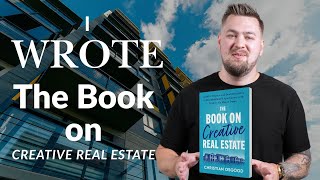
In this Multifamily Strategy Live episode, Christian Osgood announces the official launch of his new ebook and paperback, The Book on Creative Real Estate, priced at $2.99 (under the cost of a Starbucks black coffee) and already ranking #1 in real‑estate categories on Amazon. He explains the book’s purpose: to compile 15‑20 real‑world deals he’s executed, detailing creative debt and equity clauses, subject‑to and seller‑financing structures, and providing downloadable calculators. Osgood contrasts his book with typical real‑estate literature, emphasizing practical, step‑by‑step applications of concepts he’s used to build a multi‑hundred‑unit portfolio from zero cash. He then shifts to operational updates on the Robinhood Village Resort, describing his $1.5 M buy‑out of partners, a 43 % increase in property value, new master‑lease of the on‑site pub to a music venue, upgraded wedding tent, hot tubs, extensive landscaping, and plans to extend seasonal demand with flower plantings. He shares his business philosophy that less‑creative, repeatable deal structures are more likely to be accepted, stressing the importance of solving the seller’s “them problem.” Finally, he announces a three‑day, 150‑ticket workshop at Robinhood, featuring guest speakers and a step‑by‑step curriculum to help attendees build a real‑estate portfolio and close deals within a month. Throughout, Osgood blends promotional enthusiasm with instructional tone, offering actionable insights and resources for aspiring investors.
Chapters
Hello and welcome back to Multifamily Strategy Live, guys. I have been in and out the last few weeks, so if you've been here faithfully attending the Wednesdays, uh, you may have noticed my last live was from New Hampshire, and then I took last week off. So we are back full swing. I have done— I've been all over Washington State, I've been all over New Hampshire, I've been with mentors, with my properties. Working on the Robinhood, which I have some exciting updates on. Very exciting. But today's topic I'm really excited about— we launched the book accidentally early. It's coming out this Friday officially in, uh, the actual paperbacks. You can order the physical book. It is here, the book on creative real estate. And while this channel is not a promotional channel, this is an educational channel, um, I have no shame in saying that this book is awesome. And I priced it at under the cost of a Starbucks black coffee. So if you want the ebook It's $2.99. I literally went to Starbucks. I ordered a grande black coffee. It came out to $3.19 exactly. So for less than one slightly overpriced black coffee or heavily overpriced black coffee, this book contains a whole bunch of deals that I have actually done. So how we structured them, the different creative clauses for debt and equity. So I go through the deal debt equity I talk about all the time on this channel, but I wanted to put it in one organized place for you. So You're already here. There's 2,000 videos on this channel going over real estate creative finance, the journey, the actual deals, and the lessons that I learned. I summarized here. It's 180 pages. It's not that hard of a read, but I stuffed this full of all the best stuff. And no, I didn't use any AI on it. I actually wrote the whole thing, uh, my darn self, like an adult. Uh, but I'm really proud of this. I'm really excited. And with our accidental early ebook launch, uh, we currently rank number 1 in real estate on Amazon. So we officially have a, uh, as of today, a bestseller. I have not marketed this yet, so that is extremely exciting. But if you have not ordered it yet, you are falling behind. It is called The Book on Creative Real Estate. Not just finance, it's both sides, the debt and equity. So Creative Real Estate by me, Christian Osgood. So if you want to know how to buy stuff, no to low money down, of course follow the channel. But this book is out. It is ripping in readers, which is really exciting to see. So read it, review it. I love your feedback, um, but this is a huge deal. I'll talk about a little bit why I bought it and give you guys some updates since I have been all over the country here. Um, also since we're, uh, since I'm promoting things, um, I have a friend. I'm in Abilene. I was in Abilene on Monday, and while I was out there, uh, one of our mentee alumni named John, he owns Front Porch Coffee. I just finally, uh, made some espresso with this. It was amazing. Uh, this is not a paid promotion. I just wanted to put this out here. If you guys are ever in Abilene, this is an awesome company from, uh, one of my friends, and it's super good, and it's the only coffee beans I'll ever order. So I had it up here and I was like, you know what, so I'm talking about the book, I'm gonna also say, John, uh, you have an awesome coffee shop, more people should check that out. So if you're in Abilene, driving through Abilene, um, do that. That's another cool thing that you can do. Let me talk a little bit about the book. Let me talk about what we, uh, learned, and I'm gonna give you guys some Robinhood updates and some practical advice. I'm gonna do a whole bunch of stuff on today's live. Uh, so first of all, now you guys can go check that out. Book is live. I've officially written a book on creative real estate, so I am officially, I believe, uh, considered now an authority on the topic because the YouTube channel doesn't count. Now an author. We've done the thing. Uh, I came out this with a goal. I actually had this in the mentorship all the time. A good friend, uh, Saravan, and actually had been requesting multiple times, hey, can you have more videos going over your actual deals? Uh, I know this is not a video, but when I was going through and I was explaining the deals, I was like, you know what, this is actually a really— it inspired me to put it in a book. I was like, you know what, I've read all these real estate books and a lot of them talk about concepts and they talk about how they work, and many of them even show cool math, which this book absolutely does. But I didn't get a practical, this is how this was applied. Um, it's actually the only problem I have with the book Rich Dad Poor Dad. Fantastic concepts put together in a story that's really easy to digest. But there's no practical application. Hey, I built this business this way using this principle. They give you concepts, they don't give you an actual deliverable. With this book, I tried to— every single chapter ends with an actual deal for the actual concept, how I actually learned it. There will be nothing in this book that I have not done myself in an actual deal. This goes over how about 15, 20 deals, how they came together uniquely, how we use creative debt, Or Equity, and it is an actual exact accounting of the lessons that I learned building a multi-hundred unit portfolio, starting with no money, leaving my job early before I actually had the real estate. I go from, hey, I have no income, I have no cash remaining. I started with— I left my job with 2 duplexes and a mortgage that was equal to those duplexes. So I started with no free cash flow. No money. And I went, this is how you can create a portfolio using a little bit of creativity for every deal. So the goal of the book is to broaden your arsenal of creative options so that you can use the least amount of creativity to close the most deals. So I hope you really enjoy that. The book on creative real estate is out there. Uh, Robinhood updates. Uh, Robinhood Village Resort, as you guys all know, I bought out all the partners on that, uh, a long time ago. Um, that deal did not go according to plan at all. Uh, we did not know how to run a resort. We did not know how to run a wedding venue. We didn't know how to do anything. Uh, there's no reason why we thought we— I don't know why we thought we could run a resort. I think it's because Cody and I were young and dumb and were successful in multifamily and we're like, we're good at creative finance. Buy a resort creatively financed. Um, so, uh, all things considered, I had to buy out the investors and Cody on the deal. Uh, cost me about $1.4 million, $1.5 million-ish, which was all the cash that I earned in all of my businesses over all that time. That was my leftover. Uh, that's everything. That cost me everything. However, we own the Robin Hood and it is officially up 43%. Now, Robin Hood is not all about making money, but if you have a business, it's a really good idea to make some money. Um, here's what we changed. We have officially leased the pub to a group called Robin Hood Revival. Uh, they are owned by an event company. Uh, Kelly Cahote is one of our main points of contact there. She is amazing. She also runs Hoodstock, which we host at the Robin Hood, uh, multi-day concert events. Farmers market, food trucks. It's awesome. We also do a singer-songwriter series. I am a musician. I own an irresponsible amount of guitars. In fact, uh, that's the only thing that I really enjoy buying, so I have a whole bunch of them. They turned the old pub into a music venue. They— we just agreed on a master lease, so they are leasing the old pub from us. They run one or two concerts per week. They sell out for them within about an hour of posting. It is a wildly successful music venue, which was our dream. We get to give back to the community. We have people who are leaders in the community running the actual thing. I am not an expert in events. I love playing music. I do not know anything about that business. And we structured it in a way where I am now not the one running that part of the business. We just get to be a really cool part of it. It is so cool to go in that pub now. Professional lights, cameras, murals, paint. It's a space that I never imagined it could be. We're redoing the wedding tent. We just installed hard hot tubs. So instead of the actually really nice inflatable hot tubs. Uh, we've upgraded them to like Jacuzzi jet tubs. They're coming in, uh, they just arrived. We're getting them installed today. Uh, but watching that project go from, hey, I can't put any money into it because I only owned 20% of the Robin Hood, to I own 100%. $1 into the Robin Hood is $1 from me to also me. So I can now spend the money to market the Robin Hood, to improve the Robin Hood. The wedding tent is a new one. I believe it's coming in this week or next week. I was getting upgraded to a much nicer wedding tent. We were gonna do a permanent structure. Turns out, uh, massively, uh, everyone outvoted me. I put it up to the community and everyone's like, hey, we like the tent better than a hard structure. You just need a nicer tent. So I'm doing a tent and it's gonna be loaded with chandeliers all the way up and down. Uh, there's a restaurant in Dallas that I love, uh, called Town Hearth, and they have like a, a crazy amount of just way too many chandeliers. And it's a really cool vibe. And so we're gonna try to create that. I don't think it's gonna look junky. I think it's actually gonna look really cool. I'll put some pictures up when it's done. We're planting 25,000 bulbs here in the spring. So if you see a squirrel at the Robin Hood, uh, please for the love of God chase it away. Uh, we're gonna try to extend that peak season. Um, in resorts you have what's called the shoulders. You have an off-season, the shoulders, and the on-season. So the shoulders are that— that's that little month and a half, 2-month on either end of your peak season where you're definitely not peak, but you're not in your, like, the middle of winter in Union, Washington on the Hood Canal. We want to extend those shoulders into peak seasons. The plan on the front shoulder is if we have 25,000 bulbs— and they propagate, they double roughly every few years as long as you don't get a munch. So hyacinths and daffodils, they're deer resistant, which is the, the design here. If you have like 50,000 flowers all over this beautiful wooded thing over 13 acres, the theory is it's going to photograph well, it's going to market well. There's a reason for you to come out early and experience a very unique phase of the Robin Hood. And so we're going to try to drive sales based on a rebranding of, hey, in the spring we're all about flowers, in the fall we're all about the salmon run, in the summer and winter we're all about the concert series. But it's starting to work. And what it— as a business side, uh, and this, since this is a business channel, I hope this is really relevant to you guys. Robinhood is up 43% since I bought out the partners, and it's not because the partners suck, uh, it's because it needed a lot of money. It cost a lot of money to buy out partners. It also— the Robinhood itself needed a lot of money to get from A to B. I didn't realize that when I started. Um, it is fun when you have a business plan, you believe in the business plan, you execute it without any proof that it's actually going to work, and it actually works. We'll see what we do with the summer with all of our cool upgrades, but the fact that we are up so dramatically through the winter, I'm really optimistic about our on-season. And I hope that we get to continue to be an amazing, amazing member of the community. So I just wanted to share the things that are working here. Practical application, uh, for today, since I just wrote the book on creative real estate, I wanted to share a concept that I I need to communicate better. The core theme in this book, the less creative you are, the more likely your deals are going to be accepted. There's a saying that Cody came up with when we started the company together, and it's, if it's repeatable, it's scalable. If it's scalable, it's a business worth being in. It's what I love about real estate. You cannot possibly buy all of it. It's absolutely scalable. If you get too creative, it's not repeatable. However, you can't get creative if you don't know what the options are. So I— every deal I've done, and it was actually fun writing this book because I went through every deal we've done has been unique. There's not one deal that looks exactly like another deal, and this happens, uh, deal for deal for deal. And really what it is, is you're solving a them problem, not a you problem. I share this often, and this, this I'll share in almost every video. If you pitch like, hey, I don't have capital, so I am pitching a structure that works for me Your seller doesn't care what works for you. You are not the seller. I'm sorry. You're just, you're not that interesting. Your financial situation is not what any seller cares about. However, if you can identify what they are trying to do and you come up with a plan that happens to be low money out of pocket, but allows you to solve a them problem, they will accept it. This book is a whole bunch of solutions to a them problem where I paid little to no money out of pocket to close the deal and everyone wins. And so the goal is you take these practical applications, the creative clauses, the debt structures, the equity structures, the rules of real estate, and you have this in your arsenal. So when you see a similar deal, and a lot of these deals were on market for like a year, so it's not like these are these hidden secret deals. They're sitting right in front of you right now today. My goal is that you would read this book, be able to hop online, find a deal, make some phone calls, and within a week of reading this book, you're like, oh my gosh. I'm under contract for a deal, and I know it's possible. You can absolutely do this. Um, I am actually doing this right now. I woke up this morning. I haven't wanted to go under contract for a while. We just raised $5 million. Uh, I, I'm like, I'm kind of tired of, uh, capital raise. I took a couple months off. I woke up this morning and I said, hey, I think it's time to go under contract for a deal. Caleb and I have been calling through the day. We got one letter of intent out. Um, I have another offer going out. I believe we're gonna go under contract for both deals. I just want to point out, I decided today that I'm ready to buy real estate again. I literally did, uh, they're both strategies I use in this book in our proposals. I would be surprised if we didn't buy one of them. I think 80% chance we're going to go under contract for both offers that we wrote today. Uh, so there's nothing magical about me at all. Uh, highlighted in this book, there's nothing in here that's crazy, which is what I love about it. If you pass 5th grade math and you can do basic, basic, basic Algebra 1, you have all the math you need to do this. The analytics are simple. Um, I even included with the book, you can download the calculators that we use and a whole bunch of additional resources. They're included in this book. I wanted this to be as inclusive as possible at the lowest price possible. So, uh, that's available. But that's a lesson that I want to share, uh, as often as I can. It's not about being the most creative, and it's It's certainly not about the one online gimmick. When people talk about sub-to real estate— I love subject-to, it's the best thing ever— uh, it's one strategy. Um, I've used subject-to exactly one time to close a small portion of the Robin Hood, which was, uh, 4 different contracts to actually close the entire assemblage of properties that is the Robin Hood. Uh, there's a small little teeny subject-to note, uh, that has some protections on it, um, where essentially if for any reason it got called, the seller has pay it off, and then, uh, and then they seller finance that parcel to me. But not gonna happen. And we've almost, uh, I believe we've actually already paid off that note, so I think I own that free and clear. I will double-check that, but I, I don't think I owe anything on that anymore. But there's a use for subject to. You should know what it is. Should it be the, the magical mythical one strategy fits all? No. Uh, same with seller financing. I've done it 17 of my first 21 deals. Should you know it? Heck yes. Best, best piece of creativity there is because you can make up literally everything. Is it the answer to every single deal? No, there's nothing magical about it, but you should know how to structure them. The book will cover this. How do you reward partners? How do you attract partners? How do you look at a deal and say, this is how I'm going to offer this structure to these partners? Do you know the first in, first out method? It's a ton of different strategies. That you just use when it's right for your deal. And if you have the vocabulary, you can close the deals. That's why we wrote the book. And by we, I mean me, actually. This was one— I always give credit to all my teams. This is the one that I did by myself. I will take credit for this one. I wrote the book. This was me in front of a laptop. I've been working on this on and off for a year, but it was really a dedicated 6 months to come up with 180 pages. I worked on this every single day and I'm really proud of it. So I hope you guys love it. Uh, super fun. I'll link it in the description. I don't think I did before this, uh, but you can also just put my name, Christian Osgood, into Amazon and the book will come right up. Uh, and we are ranking number 1 in real estate, in buying and selling homes for some reason, which has nothing to do with the book, but whatever. Um, but we rank 1st in commercial real estate, real estate in general. I think we're, uh, top 75 in all business right now, and the book hasn't launched yet. Physical book available Friday, ebook available right now. Uh, if you're a Kindle person or you're looking for the, uh, the lowest cost to read the book, it's an awesome ebook. It's an easy read. Uh, but, uh, that is what we have going on. I appreciate all of you guys. I will be back doing this every single Wednesday. I'm not traveling for a long time, which I am unbelievably grateful for, uh, as I am unbelievably grateful for all of you. So thank you for watching. Thank you for your time here. Um, uh, looking at the chat here, uh, Connecticut in the house all the way from the beginning of the video. Thank you for attending and representing Connecticut. I was in the Northeast recently. Um, last announcement, look forward to this Robin Hood event. I'll be posting this shortly. Our biggest event ever. I am hosting my own event. I've booked the whole Robin Hood in our peak season, which I never ever do. Um, there's gonna be 150 tickets. It's gonna be 3 days going over all of the real estate strategies. It's me, Cody Davis. I have some— I actually have some guest speakers I'm really excited to announce. Um, but you're gonna have to stay tuned for them. I put it together so that it is an actual workshop. So I'm gonna go step by step exactly how to build your portfolio. One could go to that event, learn everything that they would need to know about real estate in one shot, go home, apply it, go under contract within the same month. Guarantee. But I'm gonna go through it step by step. Uh, that is coming out, so keep an eye out for that if you want to visit the Robin Hood and you want to see what this is all about. I've never actually done a multi-day event. We've done a lot of Robin Hood events that were small, little intimate winter offseason events. This is going to be the big one. It may be my last one, I don't know, probably because this is a lot to put together, uh, but I'm really excited for it. So, uh, stay tuned for that, and we will see you all on the next episode and every Wednesday live.
More from Christian


What Investors Want in Every Pitch: Property, Business Plan & Team #RealEstate #Pitch




Speak with authority to turn broker rejections into deals - boost your confidence #RealEstate

Turn Broker Objections into Closed Deals - CRE Negotiation Tactics #RealEstate #Negotiation

How to Get Multifamily Deals Under Contract Without Having All the Cash | Objection Series Ep. 1

How I Scaled 500 Apartments in One Texas Market in 12 Months #RealEstate #Multifamily


Turning a $12.2M, 200-unit mess into profit - live multifamily turnaround update #Investing