Immigrant to Single Family Real estate master w/Carlos Jimenez
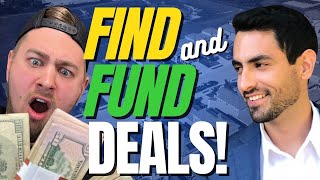
In this episode of the Multifamily Strategy podcast, host Christian Osgood interviews Carlos Jimenez, an immigrant from Mexico who built a real‑estate portfolio that includes three Airbnbs and over 80 single‑family rental doors in Southern California. Carlos shares his journey from arriving in the U.S. at 17 with no English or money, to founding a youth basketball academy, pivoting during COVID‑19, and entering real‑estate through wholesaling, flipping, and partnering with a seasoned operator. He explains how he sources deals through meet‑ups, investor clubs, and a strong accountability network, and details a recent subject‑to seller‑financed purchase of a $575,000 condo, outlining the trust‑building, negotiation, and exit strategy (refinance) that made the deal viable. The conversation emphasizes the central role of relationships, the importance of listening to sellers’ needs, and the value of creative financing when structured correctly. Carlos reflects on costly mistakes, such as promising unrealistically high short‑term returns to capital‑raising partners, and describes his “super‑power” as an unwavering belief in his ability to achieve goals, bolstered by a work ethic and a network of knowledgeable A‑players. He also discusses how to build and maintain an aligned team, the necessity of vision‑driven hiring, and his mission to empower the Hispanic community through social media channels (@carloscloses, TikTok, and a forthcoming YouTube series “Amigo Make a Million”). The episode blends personal backstory, practical deal mechanics, and actionable advice for aspiring investors.
Chapters
Generally, people want to help. So all you have to do is figure out what you want, ask for help, and then go to work, and you probably win. Very simple.
Hello and welcome back to another episode of Multifamily Strategy. I am your host, Christian. Welcome to the podcast, also available on YouTube under the name Multifamily Strategy. Today we have a very special guest. I'm super excited to have him on. This is Carlos. Carlos, welcome to the pod.
Hey, thank you so much, Christian. Thank you so much for having me.
I'm excited to be here today, dude. It's, uh, awesome, awesome having you on. We had a time to connect just a little bit before this. So I've got a sneak peek of this and this is going to be sweet. We're going to talk about his backstory, how he got to where he's at today. We're actually going to touch for the first time on this podcast on potentially a subject-to deal. For those who know me, I have some mixed feelings on subject-to. So we'll see. There may be some controversy. There may be some, uh, some fun moments in here, but, uh, stay tuned. There's creative finance, there's conventional stuff. Uh, this is going to be a fantastic episode. Carlos, talk to us a little bit about what your portfolio looks like today, and then we're going to get— I want to get into your backstory because your backstory is powerful. But where are you at today in real estate?
Today, so today I have, uh, my primary home, I have, uh, 3 Airbnbs here in California, and then I have, uh, close to 80 doors in the south of single-family rentals.
That is a lot. Now on those, uh Are those syndicated? Do you own them? Do you have partners? What does your actual ownership of those 80 units look like?
So I have a partner. He's the main owner, and I pretty much focus and I'm in charge of finding those deals and bringing the funding. And then he has the property management and all that system in place, the contractors, if we need to come in, fix them in, get them rent ready. Get them turnkey, then that's how pretty much we define those two roles. But yeah, so we're a little bit above 80 right now.
Nice. Okay. So you're the deal finder and funder. He is the operator, more or less, are the main roles.
Yes.
Yes.
That would be correct. Perfect.
Okay. Well, that's awesome. How long have you been investing in real estate?
Since 2020. When COVID hit, it forced me to pivot. It was a blessing in disguise. I lost a bunch of income because my first business was shut down. I originally had a youth basketball academy, and the city here was putting literally wood sticks across the rims outside of parks, and you could not do anything, right? As you— all of you guys know, right? So I had to refund parents a bunch of money. I had no income, and I was already dabbling into real estate. I was doing the YouTube thing, I was doing the podcast thing, I was doing the 'Let me take you out to coffee,' you know. And then COVID happens and I made some calls and I'm like, man, what am I going to do? Right? Like, I don't have money to pay my rent. So I mean, I can go into that whole story, but that's when I got started into real estate. 2020. Yes.
That's fun. 2020 is when it took off for me too. I was an outside sales rep, left my job. I was like, I'm not— no, I'm not selling from inside my house. Cannot do that. Won't do it.
It's interesting because If you talk to people that are doing well now or are successful right now and you ask them, what did you do during COVID It will be different to the people that are not doing well right now.
That is the number one indicator. Like entrepreneurs, for a lot of people, I think it was a wake-up call. People are like, am I doing what I want to be doing right now? And for me, it took like 2 weeks of sitting at home. I was like, I had at the time, I had 2 rental units. I had one duplex. I was like, Okay, I'm retiring from the 9 to 5 right now. This is definitely going to work. Never looked back. I started investing and fortunately, it worked. I don't know if that's good advice for anyone. If you have basically no income, probably not time to leave your job. But that's what I did. That was the wake-up call for me. Now, you have a super powerful backstory. So, before 2020, talk to us a little bit about why you are where you are. Give me a little bit of the history of Carlos.
Yes, so born and raised in Ciudad del Carmen, Campeche, Mexico. It's a little tiny island right by the Gulf of Mexico. It's a couple hours from Cancun, right by the Yucatan Peninsula. So I was born and raised there. I moved here in 2009 by myself. I was 17. I didn't speak any English. One day we were talking on the porch back in Mexico, and I was so obsessed with basketball. I wanted to make it to the NBA, and there's not a lot of resources in my small town. We will practice outdoors. Like, there's no gyms, there's like none of that out there. And I told my dad like, hey, what's— I want to get to the next level, what's out there? And one day he just told me like, hey, you have an aunt in Santa Ana, California. Why don't we call her and see if she will take you in? I've never met this aunt. Like, I've never seen her, I've never met her. She's been in the States for over 30 years. He calls her and he says, hey, like, Carlos really wants to go to the US, play basketball, learn some English. What do you think? And she said, well, Tio, it's 6 of us here, it's a 1-bedroom apartment, but we'll make it work. And ever since, I got my plane ticket. My dad actually borrowed money for that plane ticket. And got my visa, got over here, did all my paperwork to go to high school. And yeah, I managed to get through it. Yeah, it's funny. I just know no English. I was a foreign guy. I had a fro. But yeah, long story short, I got through high school. I got decent at basketball. I love the game so much. And I was able and blessed to earn a basketball scholarship. So after high school, I stayed. And then after college, I graduated, started my first business. That was in 2017.
So you came in as a 17-year-old, no English, from the sounds of it, not a whole— you didn't come in with a whole wad of cash, right? You came in with no English, no cash, and away you go.
Yeah, no, none, neither. Yeah. But back then, my family back then was struggling a little bit. And that was also one of the reasons why my dad wanted to send me here because, well, first of all, when Back in Mexico, when people have family in the States, they think that they're rich just because they're making dollars. So that might be a little misconception there. But my dad was like, okay, yes, if you, if you go with your aunt, like, she'll help you out, and then I'll try to get back on my feet here. So yeah, he sent me here, and he was sending like $50 a month just for food, and I was living off of PB&Js. I was introduced to peanut butter. I had never had peanut butter in my life in Mexico, and then I fell in love with it here. Peanut butter and jelly is very affordable.
That sounds like my college years, a lot of PB&J and a lot of bagels.
Yes, yes, and ramen.
Oh, God, ramen. Those are the days, man. Yeah, well, yeah, that's a great welcome to America. Peanut butter is a— yeah, that's basically— we put that on everything, and it's delicious. You're in here. What was the— what, what motivated you? So you came in and pretty soon, like, you had started— you become an entrepreneur, you started your first company, you eventually started investing in real estate. We're going to dive into your strategies and things that you've done there, but what is the motivation that got you to where you're at today? You have Airbnb, you do fix and flips, you have 80 rentals. What motivated you to get started down that path?
The, the real, the real, the real motivator was that I never wanted to skip a meal again. Back home, we didn't have much, and there were times where we didn't know where the next meal would come from. And when I moved here, from day one, I'm a high school kid, I'm, I'm, I'm pretty good at sports, I get popular because I have an accent and I'm tall, and And then I see all this, all this. I see the partying, I see the, the, uh, the, the alcohol, the drugs, etc., etc. From day one, I was— my head was down because I came here for a purpose, and I came here to do something, uh, to do what I needed to do. I was, I was all business from the beginning. And just being able to bless others and, and help my family out and, and change my family tree has been the biggest motivator as of where I'm at today. And when I started my first business, we were doing, I was doing well, but because of that, but because in the back of my mind I was already, I already knew where I was going, there was sort of a cap, right? And now, the more I studied and the more I talked to people, successful people, the more I saw that real estate was one of the main vehicles to get there. So that led me to really want to learn, to do YouTube, to do podcasts, to try to meet with mentors, et cetera, et cetera. Once I knew that real estate could be a vehicle, and then COVID happened and forced me to get in all in, I never went back. I never looked back, and I just put my head down and I had to figure it out. I cold called for 7 months. I did not find a deal. I worked under my current partner. I worked for him first cold calling for 7 months. Didn't find anything. I would be at the office for 12 hours a day. And then on the 7th month, I got my first check for $2,500. Nothing crazy, right? But it made it real for me. It made it real. Once I saw that it was real, man, like, it just We went up from there.
Now with that first mentor, how did you find them originally? Like how did you connect to that first owner who helped you get into the game?
Meetups. Meetups, investor clubs, doing research of local clubs, trying to text family, family, friends, reach out to them and be like, hey, who do you know? I knew some family friends that invested that were like very, very successful in multifamily space. And I would take them out to coffee, I would take them out to lunch, and I was very grateful for them to try to— for taking the time to pour into me. So yeah, just reaching out, asking, asking and reaching out and putting yourself out there.
I think you said two of the most important things that anyone can hear on this podcast. One, relationships got you in the game. It was not reaching out to people asking for a deal. It wasn't, hey, I'm going to go figure this out and offer on a million properties. What happened was you found a connection and someone who had a system, and you learned that system by building relationships and getting coffee. You found the deals. The deals didn't get you into the relationships. The relationships got you into the deals. And everyone needs to hear that, cuz that is how you play the game. Someone has done the thing that you want to do, like with very few exceptions, everything that you could want to do, someone has achieved at some point. Just go meet those people. You meet enough of them, someone will fill you in. Meetups are a great place to do that. Meetups— some people are really good at the online networking. That's not my specialty, but some people are just like, "Hey, I'm on these podcasts. I'm watching YouTube videos. I'm active in the chat. I meet people who I—" Just meet the people who've done the thing. I love that you said that. I think everyone needs to hear that because it doesn't matter what your starting point is. You can be rich. It doesn't even matter if English is your first language. Just go meet people.
You never know who's going to have your next deal. You never know who's going to have your funding for your next deal, for your next property. You just never know. I recently picked up a flip last week. We're supposed to close on it this week. I met with my accountability group in New Jersey, and then one of them knew Matt Faircloth. I don't know if you know him. Yeah. He came to the launch and then I got his contact and then he said, "Hey, I need to connect you with Diego Corso." And then I reached out, he connected me with Diego. So through Matt, through Justin, I met Matt. And then through Matt I met Diego. And then through Diego I met David. David is a flipper in LA. We connect and he texted me a week after we connect and he's like, "Hey Carlos, do you want this flip? I have too many on my table right now. It's off market. There's only like one more offer that they have right now." 'You want to submit?' I was like, 'Heck yeah, man.' Like, he connected me with the agent, we submitted like a few thousand dollars more than the other offer, we sent them proof of funds and everything, we got under contract, we're closing this week. Connection through connection through connection through connection. Like, literally, just that flip is going to be $100 grand right there. $100 grand profit right there. Just from meeting people.
And it's funny, people like owners of real estate, generally speaking, love talking about real estate and owners know owners. Like, perfect example, Matt Faircloth. I had dinner with him, I think it was 3 weeks ago. I spoke at a New Jersey event. He was one of the speakers there. We connected after. That's an owner meeting that I've had in New Jersey. Like, it's a fairly small, tight-knit community. You get a few relationships. For the most part, everyone knows everyone. When you're in, you're in, and you get in by asking good questions. And you said the one other thing, you're all about business. You are focused and intentional, and I think that resonates with a lot of people. Yeah.
I mean, I, I think, I think you gotta figure out first where you're going. Once you figure out where you're going, then you need to work yourself backwards. And like you like you said, meet with those people that are already there, right? Because people want to help. Generally, people want to help. So all you have to do is figure out what you want, then ask for help, and then go to work, and you probably win. Very simple.
Yeah, and that's the nice thing with this game. Real estate is a lot of work. It's hard work, but it is a very simple game. There's really nothing new in real estate. It's been around forever. Anyone who's online being like, I have the secret formula, is definitely selling you something because there's no secrets in real estate. Everyone wants to share. The rules of the game are relatively simple, and everyone helps move each other forward. Yep, yep.
There's enough for everybody. There's enough for everybody. Just get out there.
Get out there. Now, speaking of, uh, no secrets in real estate and, uh, you know, different real estate strategies, you're in a, a very nice condo, right? Right now? Uh, yes, you own it. You purchased it subject to. Now I have some reservations on subject to, and to be fair, I do have a very small subject to as part of the resort that I purchased, but I am not a huge fan of subject to. And my reason is, for those who don't know, uh, subject to traditionally, when you do it, it does create a potentially callable note. So the reason that I'm not a big fan of subject to essentially is a clause in a contract for deed that says, uh, I'm going to pay this person's mortgage, but the mortgage stays in their name. Almost every single bank will have what's called a due-on-sale clause, which means if they do a title check and decide that they want to, which usually they don't, but they have the power to call that note due. That is why I don't like the strategy, is because people who build their entire financial freedom on it have built their financial freedom on something that could be called. Now, it's an awesome tool in your tool belt. You've used it for the epic place that you are living at right now. So, I want to hear about this deal, why it was the tool for you, and a little bit about the structure. So, going back in time, how did you build the relationship to even get a deal subject to the existing debt? Because someone has to trust that you're going to pay that mortgage if you're going to do subject to. Yeah.
That was probably the main thing because nowadays, you'll hear like, "Oh, just pitch it to everybody that you come across by." and they'll say yes. And it's not the case, really. What you just said right now, that the trust, like that right there is key. And I think I earned that trust with the previous owner of this property because she had already done a couple transactions with us in like 2020, 2021. She has sold us a couple rentals. She was a tired landlord. She was getting older. She was clearly getting closer to retirement. And these two properties that she sold us were like 2 hours away. She lives in Huntington Beach. These two properties are in Palm Springs, so obviously 2.5-hour drive might be a little tougher for somebody getting older, right? So long story short, after these two transactions, I kept in contact with the owner. I kept messaging her, like, checking in. How you doing? How's everything? Happy New Year. Happy Thanksgiving. Merry Christmas, happy birthday, just trying to keep that relationship. And I do that with all of the sellers, like everyone that I've done business with. I think it goes a long way. Otherwise, people just see you as a transaction, and that long term, in my opinion, it's not the way to go, right? Long term. So going back to the story, She one day calls me and says, hey Carlos, I'm ready to sell my place here in Dana Point. I have this tough situation with the tenant that is living there, and I'm ready to sell it. So when we looked at this property, we do a lot of flips here in Southern California. We ran the numbers as a flip, and it was great numbers, great spread. Let's make it happen. And then literally I was sitting in my office and I was just thinking like, Why don't I, why don't I pitch her to seller finance the house to me and I can keep it and I can live in it, right? Yeah. And I was, I was thinking, so then I asked her, I was like, Mr. Seller, what's more important to you? I'm gonna pay you all this money and then you're gonna pay a bunch of capital gains or a monthly income? And she said, if my tenant right now will be paying at least $1,500, I will be, I will be dreaming. Like, all I care about, Carlos, is my income. I'm 78. I just want my monthly income that I can live off of. So that's when I said, okay, well, that's great, because if we structure this deal subject to seller finance, you can defer your capital gains, you'll get that monthly income, and then you don't have to pay Uncle Sam, right? And eventually you'll get more because of interest, obviously. So the way we structure it, she had a first— she had a first with Wells Fargo, okay, or $218,000, uh, 4.8% interest rate. And then the second one, again, because of the trust and the relationship that I had already built with her, she was very generous to agree to a 3% interest rate over 30 years with 2% down. Oh, that's fantastic. I came with very, very little out of pocket and my mortgage is very, very low. So I'm paying the first straight to the bank on her behalf, and then I'm paying the second straight to her plus my HOA. And then I have my $3,500 a month or whatever in mortgage. So yeah, very, very lucky. Very, very blessed. Go ahead.
What was the total purchase price of the house? I might have missed that.
Uh, total purchase price was $575,000. $575,000.
Okay. When there's $218,000 on a first, uh, minus a very small down payment, uh, you seller finance the rest of that transaction at around 3%. I, the deal makes a lot of sense. What do you think the property's actually worth? Like you paid $575,000. What's the actual value in the property?
The property, the, the property's worth right now, $1 million,000,000 at least. Okay.
So you have a very good equity position. That's one thing that I see happen a lot of times in subject-to is people end up working with distressed sellers and they end up buying these deals at a low equity point. So they'll buy them maybe where they cash flow because the interest rate's really low, but they don't have a lot of equity in it. And this, you've done the right thing here. You have a large, a large amount of this is debt in your own name that seller financed. There's a portion of it that's subject-to, but you bought the deal underwrite, which I, I think is gonna answer my next question. When I underwrite things, there's two rules that have to be hit. There's really only two to buy and hold real estate. You have to be able to buy it, which you knocked outta the park, and you have to be able to never lose it. How do you actually keep the property? If the bank wants to look at this and say, hey, uh, the $218,000, it's in this person's name, your name's on title, we're calling this note due. What do you do in that circumstance?
Well, yeah, let's hope Wells Fargo doesn't do that. In that circumstance, I would just refinance. There's plenty of equity. I would just do a refi and then just get a higher— obviously it's going to be a higher interest if it happens right now because interest rates are a little bit higher right now and my mortgage payment would be a little bit higher. But yeah, I don't— I wouldn't have any issues.
So yeah, you're going to have a little higher interest rate. If you have to refinance it, right? But what does that process look like? So you have a great equity position, refinance. Does the deal still work at the higher interest rate if you have to refinance that 2.18%?
Yeah, yeah, the deal still works. I can rent this place for $5,000, $7,000 a month. And the mortgage would only get up to like, go up to like 4% maybe. So yeah, it would still work. There's still plenty of equity. I wouldn't even have to do a cash out or anything like that. I think, like you said, you have to be very careful on your entry because eventually— or not eventually, but generally, like, that's how you make money in real estate, right? Like, we've all heard it before, like, you make money on the purchase. So I underwrote this as a flip. Which had plenty of spread. And obviously I was, I was, I was very lucky that she agreed and she was very generous to the, to the lower rate and to have a very low mortgage and the very low down payment. So that kept my payment low. But in case of that due-on-sale clause being called, then I shouldn't have any problem because there's plenty of equity and I would just refi it.
So, well, there we go. That passed the test, man. I was almost hoping for more controversy on this, but no, you followed all the rules. Uh, you bought it right. It— you did the underwriting as if you weren't buying it subject to. You have a clear exit on how you're going to keep the property, but because you did this subject to, you get to keep your payments lower and you get more cash flow on the deal. You put yourself in an excellent position. That is what a subject to clause is designed for. You're not building your whole portfolio off of a bunch of subject to notes. You don't have a whole portfolio of like, hey, everything could be called any day and I could lose the properties. You have a very clear plan on how you're operating the deal. I love everything about it. If you're going to use subject to, that is the correct use, just period. That is what a subject to clause is for. Well done. That has stamp of approval. Not that you need it, but if you do have it, no fights, no fights happen. No, no, we agree on this. Um, on this particular deal, I would do subject to. You did the Perfect play.
I think it's important though for people listening, like you said, I feel like a lot of people out there through social media or whatever it might be, they hear that, oh, if the seller doesn't have any equity, that's an automatic subject to deal. Because you somehow can still make it work if it cash flows. But now, like, again, if that clause gets called or or market goes down, like, what, like, what, like, yeah, you, you, if you don't have any equity, then that's where you could get caught with your pants down because how do you get out of it? Like you might, you might be in the red. Like if you can afford to be in the red for, for, for, for a while, then okay, go for it. No, but like in this case, I can, I can, I can do a regular refi. I can do a cash out because I did a whole remodel. I gutted it too. You know, so yeah, I mean, I'm not patting my back, but I'm taking advantage that you are agreeing and you're supporting this deal. So go me.
It's a good deal. That's the thing with creative finance too. You get what you negotiate. You put together a deal where you're like, I have multiple ways to take this out. What deal works the best for me? And let's use a basketball analogy. You did the right thing. You went with your relationship first. And you identified, okay, where are the boundaries? What court do we need to play on? And she said, "Hey, I want cash flow consistent income. That is what is valued." So, you're like, "Okay. I need a deal that works for me where I win on price and I have multiple exit strategies." Checked all the boxes. Then she laid out, "Okay. Here's the court we're playing on." So, when you get down there and you shoot your shot, you understand where you're playing, where the objectives are, what the basket is. And so, when you make that pitch, Of course it got accepted. You have the terms, you know what she wants, you know what works for you, and you basically pitched her on what she told you she wanted. That— how do you get a no to that? You— who would ever say no if they trust you, they like you, and you've just offered them exactly what they told you they want?
And that's why you have to listen first too. Yep. Because even, you know, even if you don't have the trust of like, let's say you, right, that you talk to a lot of landlords, a lot of, a lot of property owners, a lot of multifamily owners, like If anyone out there is looking for a deal, like, you most likely not going to have this trust, right? But that's why you have to listen to what they're looking for, what their needs are. So then, then you can somehow fulfill those needs or meet those needs, right? And structure the deal to where, like, they can see that they're also getting a win out of it.
And I bet you get a lot more yeses than other people because you do the deal the right way. You start with the relationship first, you identify Where are we playing and what are the rules of this game? And then you play within that structure. That is an awesome deal. I love it. Next question: highest stupid tax. So that's the deal you did right. What is something that did not go the way you expected? It could be personal, like this was costly to me as an individual. It could be just monetary. But as you were learning to play the game, what's the highest stupid tax you've had to pay?
Yeah, no, great question. Let's see, I think early in my real estate journey, I got so excited about flipping. So I started wholesaling, right? 'Cause I didn't have any capital myself. Like, I was cold calling, I was finding deals, like, I was just hustling. After doing a good amount of deals that way, and I started putting all that money into flipping, I got so excited into flipping that I started reaching out to my network, to raise capital. And I might have promised a little bit of too high returns in shorter, in shorter terms.
How high is too high?
So like 20, 20% north return on 6 months, 4 months, not even a 12-month term. Wow. I was very new. And it was a stupid tax because I ended up— the returns that I was giving them ended up eating my profits. So I didn't get to see much of that profit, but I learned very quick. I learned very quick to not promise unrealistic returns that nobody else is doing. And I was able— I was also like, just people around me told me, and it was a big lesson for me for sure, because I was able to learn how to structure deals better and go about raising capital better with the proper paperwork and the proper returns to where, like, it's still juicy and appealing to them, but nothing to where like, it's like not realistic. Right. So I think that's a good one that I can think of for sure. That's definitely a high tax. It's stupid, stupid for sure.
If anyone, like for everyone listening, this is why we do this podcast. You learn from doing owner meetings. So the mission of our podcast is specifically for me to meet with as many owners as I can for you to learn from them. That is the same mistake I made starting. We offered a 2:1 in 5 years, but we had to refinance to cash out in 11 months, and the investors didn't want to be on the new bank loan. So, I did not have any like, "Hey, if I pay it early, it's cheaper." So, I had to do— I borrowed essentially at 100%, returned in 11 months. It still made money. The deal made over $1 million. But I had to pay for the $300,000 we raised, uh, like right off the bat, I'm like, okay, uh, I had to cash out like $600,000, um, almost immediately. Deal structure really matters. That is probably the most common mistake people are gonna make is they offer too high returns because they, they think they need to, or they think they're gonna hit this and be able to— things get more expensive, things take more time. And at the end of the day, you have to run your business profitably. You don't have to offer ridiculous returns. I wish someone told me that when I started. So for those listening, that is a very common stupid tax. Most of us will make it.
Don't do it. You just get so excited. You get so excited and you're like, oh, I can do this flip in 3 months. I can do this flip in 60 days. I'll get your money back in no time. And that was the problem. Not only did I promise and I was giving too high returns, but This specific project took double the time. Now, I'm paying a very high return twice as much.
Yeah, it gets really expensive and everything costs more and takes longer than you initially think it will. Until you've played this game for a long time and you're actually accurate on your estimates, always it's going to take longer and cost more. For me, it usually costs 3 times as much and takes 3 times as long. From what you first guessed. You were fortunate it only took twice as long. When you're new, there's a lot of things you don't know you don't know. On the flip side, what's the thing that you think that you are the best in the world at, and how has that affected your business that you built? What is Carlos's superpower?
Man, thank you. You're making me feel like a superhero or something. I think my ability to believe that I can do anything that I want and I put myself, my mind to. I know it's cliché, uh, you can, you can do whatever you set your mind to, right? But from a very early age, when I moved here, I would watch motivational videos and I would watch like biographies and entrepreneurs and like Elon and, and Mark Cuban and Kobe and Jordan and, and, and all these GOATs, right? Like I will listen over and over to speeches or their workouts or whatever, right? And I genuinely believe that that brainwashed my mind into believing that I could achieve whatever I wanted. And now, today, moving forward to today, if you're talking about million-dollar deals, you're talking about a 25,000 square feet warehouse that is going to be a huge project in Irvine, like where the real estate, it's insanely expensive, like I'm like, okay, like, what is it gonna take? Okay, let me write some numbers. All right, let's do it. Like, not for a second there's doubt in my mind. Not for a second there's fear. Not for a second there's anxiety. Like, is there stress? Is there, like, for the workload and all that stuff? Absolutely, of course. But I don't go— I don't go in a way where, like, I don't go about in a way where, like, okay, man, like, is this gonna work? Like, no, it's like, what is it going to take? Let me figure out and then let's do it. I think that's probably my biggest strength or superpower because I'm not very smart, Christian, to be honest with you. I'm not very smart and I always tell people that you don't even have to be smart. You just have to surround yourself with people that know. Like, I don't know, I don't know at all. Like, now I've been a part of over 200 flips. And if you change me, if you tell me to install a dishwasher, like, I probably won't know how to do it. Like, I still don't know construction, but because I surround myself with people that know and I'm willing to pay for it, I'm good. All you have to do, all you have to know is know those people that know what you don't know. And obviously the work ethic, work ethic will never play you wrong. The work ethic will never do you wrong. Like, I would like to claim that I'm a very hard worker and it has served me very, very well. And I don't shy away from anything really.
Well, that's the way to do it. It's hard work and then building your network. When you know the things that you're strong at and you know the things that you're weak at, you just build around it. I'm the same way. I'm not that smart. I do know I'm good at figuring out how to structure a deal, like structure negotiation. My strong suit. So those are the parts that I really focus on. I'm like, I can make a deal work and I can get super creative. And I know, you know, 15 different ways to close the deal where it's going to cash flow on long-term fixed rate debt. That's the superpower. Everything else, you need to add A players to your team. So I'm gonna ask one follow-up question to that. Yes. How do you find good people? I have found that if you want to build an A team, you need to have A players. And there are a lot of B C or worse players, uh, in the game. How do you find the right people to build your network?
Yeah, good question. Um, that's been definitely a work in progress, but I think the main thing is from the beginning defining what the vision is or what direction you're going to, and then share that with those players, with those players, uh, with those A players. Um, because if they're not A players then you will see that there's not alignment in that vision, and there's no reason for you to collaborate, work, or hire these, these, these individuals. It's very, it's very, very important that I'm here, my partner's here, where are we going, are we going in the same direction. If we are, yes, everything else in the middle we can figure it out. It's about where you're going. If there's not alignment, Eventually you'll find yourself in some problems and you might get results, you might succeed, but there might be some tension there, some struggles and a little bit of a holdup to you scaling. There's—
this applies to those who are, you know, you can be Christian or non-Christian, it doesn't matter. There's a passage in the Bible that I think is actually perfect for this, but it talks about about having two oxen being unequally yoked, which means basically when you have like oxen pulling farming equipment, if you have one that's stronger than the other, it's gonna pull in one direction. Or if one wants to go one way and one wants to go the other way, you end up moving nowhere. So having people in the same alignment, if you're gonna put people together, you need the same mission, the same effort, and everyone going in the same direction. And if you're not seeing those things on the front end, it's gonna get worse and worse. Like the hardest thing in real estate to me is people. Like, variables in business are what slow you down or take you other directions. People's goals change, people fall out of alignment, one person go one direction. I think you nailed it on the head. You'll know in that meeting, is this person someone who is going to work hard? Do we resonate together? Do we have the same vision? Can we pull together? And is this someone who I want to attach myself to while I am pulling my business forward? Uh, I think of that analogy first that comes to me, but like, that's, that is the way that I think you should treat all partnerships, all hires, everyone you're gonna put into your network. You wanna build the NBA All-Star team, you can't have, you know, the chubby kid from the rec league on the team. It's kind of mean, but like, you need the, you need to build your team to be elite players. Yeah.
And it's gonna be hard to find those, right? Like those rock stars, like. They're not a dime a dozen. So hire people and then let them go fast. Don't be afraid to, ah, I got to give him a chance. I see potential. Oh, he has these other strengths. Like, no, because that's a mistake that I've also learned from, like, just trying to give people too much grace where it's clear that there's just no alignment and there's no mutual, uh, synergy, and I take too long to let them go. So now it's like, from the get, I love you, it's business, good luck, let's go our ways, you know.
And if someone's not thriving in that role, it's probably the best thing— it's the kindest thing you can do for them, is to give them a chance to do something else they're going to thrive at. Because if it's not working, it's not going to work.
Yeah, yeah, that too. Um, but yeah, no, you absolutely need an all-star team, uh, to scale, to do a lot of things. And I think knowing— just going back towards like, figure out where you're going and then work yourself backward— that goes for the team as well. Like, what does my team look like? It's not just like, oh, I want to make this much money, or I want to get this many deals, like, or I want to get this many doors. It's like, okay, well, you want to get 100 doors in the next 3 years? What's the team going to take? Is it going to be— you're going to have— you're going to need a project manager, you're going to need property management, you're going to need agents to help you find deals, etc., etc. And then you put that team in place.
Exactly how to play the game. That is 100% the way you do it. Be fast to hire, build an A-team, keep the A-team, press forward, and you're going to make mistakes in the hiring and the firing, and you're going to just do the best you can. It's a lot of editing to build the right team. And it's what you got to do. Carlos, thank you so much for joining us on this episode. If someone wants to connect with you more, they have questions, they want to learn from you, where can we find you online?
My Instagram, I'm very active, @carloscloses. I know it's a little cheesy, but I do close deals. And yeah, that's the best way. Shoot me a DM, I'll answer to the best of my ability, and I will be happy, happy to help. I also have a TikTok and I'll have a YouTube channel coming up as well in the, in the next 30 days. Perfect.
Okay. Links to those below. If the YouTube channel's not out yet, then, you know, they'll take a look for that. It's going to probably, I assume it's got the same name, Carlos Closes.
Actually, no, it's going to be named Amigo Make a Million.
Okay. There we go. Amigo Make a Million. Look for that on YouTube.
Yeah, I want to really, really help, help the Hispanic community in believing that they can achieve a lot, a lot of things more than that, than what they're already doing here in this, in this country, this beautiful country that gives you all the opportunity.
Oh, I love that. Thank you for joining us. If you want more of this, please like, subscribe wherever you listen to podcasts. This video is also going to be live on the YouTube channel Multifamily Strategy. We interview owners so that if you're on your busy day, you wanna learn from the best in the game. We interview the best in the game on this channel and do the owner meeting for you. So like, subscribe, follow wherever you listen, and we'll see you on the next episode.
More from Christian


What Investors Want in Every Pitch: Property, Business Plan & Team #RealEstate #Pitch




Speak with authority to turn broker rejections into deals - boost your confidence #RealEstate

Turn Broker Objections into Closed Deals - CRE Negotiation Tactics #RealEstate #Negotiation

How to Get Multifamily Deals Under Contract Without Having All the Cash | Objection Series Ep. 1

How I Scaled 500 Apartments in One Texas Market in 12 Months #RealEstate #Multifamily


Turning a $12.2M, 200-unit mess into profit - live multifamily turnaround update #Investing