Josh Villarreal's Secret Loan Strategy for Veterans
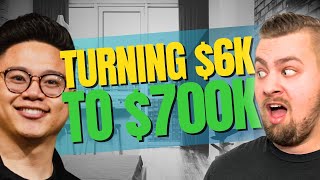
In this interview, host Christian Osgood talks with veteran‑entrepreneur Josh Villarreal about his journey from an immigrant upbringing and a 7‑year U.S. Navy career to becoming a multifamily investor. Josh recounts how, while stationed on a ship, he started buying distressed phones on OfferUp and flipping them for profit, which led to early e‑commerce ventures like dropshipping and a digital marketing agency. He then discovered the VA Loan Handbook, learning that two veterans can jointly purchase up to seven units with a VA loan, and used this to acquire a $800,000 two‑home lot in San Diego with only $6,500 out‑of‑pocket. By adding a junior ADU, rehabbing the units, and securing seller concessions, he generated $50,000 instant equity and later cash‑out refinanced to $920,000, pulling a $90,000 check and funding a $70,000 ADU build that now rents for $1,900, delivering a 170‑to‑1 gross rent multiplier and $323,000 profit. Josh explains how he pivoted from wholesaling and flipping—incurring a $100,000 loss due to permitting delays—to a co‑living model that turned unused rooms into cash‑flowing units, expanding a single property to ten rentable units and adding a 4‑cottage portfolio that will be redeveloped into a 49‑unit building. He reflects on the “stupid tax” lessons, emphasizes the importance of relationship building and social media for scaling influence, and shares his new mentorship program for military members via SimpleWealthAcademy.com. The conversation blends personal narrative, practical financing tactics, and strategic real‑estate growth for veterans.
Chapters
I didn't know this was a business. Like, what was I doing? Because I was getting paid more by doing that, buying and selling phones, than I was in the military.
Hello and welcome to another episode of Multifamily Strategy. I am your host, Christian Ozga, joined today by Josh. Josh, welcome to the channel, man.
Hey, thanks for having me.
Fantastic having you here. We just got to talk for a few minutes before this episode. This is going to be a fantastic one. I love your origin story. I love what you're doing. This can be really fun, but I'll let you tell the story. Josh, tell us a little bit about how you got started. Like, take us all the way back to the beginning. Where did you start from? What is— what does zero units look like for Josh?
All right. So zero units, all the way back. So a little background. I, I was born in Los Angeles, California, to two hardworking immigrant parents living the typical immigrant lifestyle. Everyone working, and pretty much the kids always behaving. Because if you weren't, you know, Mr. Chankla is gonna go over there and make sure you do right. So when I was 14, that pretty much all changed. So one day, I just found out while I was at school that my, my parents were, were going to be forced out of the country. And during that time, my parents were giving me a decision before they left. And they were like, hey, you could stay with us and go back to the Philippines, or I stay here in Los Angeles. And for some reason, I knew that they sacrificed something for them, for me to be living here in the land of opportunity, right? So I said, okay, I'm going to stay here. There's a reason why. So they went back to the Philippines and I stayed here and I bounced around with my two aunts and my grandma. So three different households. And I was pretty much couch surfing before I even knew what couch surfing was. I was literally sleeping on the floor. On a couch, and then I had this cot that I took with me everywhere. I might have a picture somewhere. Uh, but yeah, basically whoever could take care of me that time, and that was through my high school career. And then fast forward, uh, 3 years. So that was my freshman year and my senior year. It's like, all right, how can I help my, my parents? That was the only thing that was really in the back of my mind, having the immigrant background, right? How can I help my parents? Okay, I'm gonna do every Filipino boy's dream, which is become a nurse, right? Because they, they get paid well, right? With a pretty good schooling. And I saw a lot of my family becoming nurses. I was like, okay, I'm gonna be a nurse. This is gonna be my strategy. And I'm gonna— I might even be a nurse anesthesiologist. I saw they got paid like between like $150,000 to $200,000 at that time. Okay, that sounds like a good plan. But then that plan ended up changing. So my, my mom, she ends up calling me now. And now she's crying. And she's like, hey, we know no one could hire us right now. So if you guys don't know, in the Philippines, it's a third world country and they're very discriminatory about their workforce. So if you're a certain age range, you will not get the good jobs, unfortunately. So you will literally get paid like my dad. This is really what motivated me was my dad was, ah, man, my dad was, uh, working really hard and we bought a car. And this dude was doing Uber, right? And then he was working 16-hour days. I was like, oh, that's awesome. Like, oh, how much do you make? He's like, oh, after my gas, everything, I made $5. I was like, you're not going to work. I can't, I can't let you do that. $5 for 16 hours of your life?
Yeah.
No, no, that's not happening. So. My, my mom, after she said that, and then she was like, and we also ran out of our savings. There's literally no one that can help us. And I was the only one that could help at that time that was of age. So I was thinking to myself, you know, how can I get paid every first and 15th as a 17-year-old? To take care of my family. So, uh, literally just a couple weeks later, I, I go into a recruiting office, super nervous, and said, hey, I'm signing up for the US Navy. And that's how my journey started in the military. Wow.
Okay. So, so you were, you were 17 at the time?
Yep.
Signed up for the Navy?
Yep.
How long did you serve in the Navy?
I ended up serving for 7 years.
Well, first of all, thank you for your service. We appreciate it. 7 years in the Navy. Your parents are in a third world country. Now I have the advantage of knowing more or less where your story ends up today. Um, you didn't stay there forever. What got you out of the military and was it enough to provide for your family? Like, was that the— was that— do you think that was the right step at that time for what you needed to do? That's actually probably a better question.
Uh, during that time, so, uh, like every 17-year-old out there, I didn't have a lot of wisdom or experience with the real world. And when I saw, hey, you're going to get for sure pay every 1st and 15th, let's do it. But then quickly after bootcamp, I found out that getting paid $1,200 a month as an E-1, so E-nothing, right? Um, was not enough for me to live in San Diego, literally one of the most expensive places in the world and, uh, also not enough to support my family. So after that, I, I was like, okay, uh, I can't, I can't, uh, survive off this paycheck. So let me, let me do some side hustles, right? Um, so it was just pretty much survival mode. And, uh, with the, with side hustles, I started off with, uh, going online, trying to figure out like, okay, what are these people doing that does not cost a lot of money? Just sweat equity. So while I was on the ship, so I'm actually wearing my jacket today. This is what my ship actually looks like. I was on the USS New Orleans right there.
No way.
So when I was on the ship and we had some internet, I would go on OfferUp and spend every free time that I had putting offers on phones, on cell phones. No way. Yeah. So I was putting offers on cell phones. I saw it on YouTube, like make a couple thousand dollars a month by buying, buying a phone that's distressed and then selling it just a couple days later. And then I was putting 50 to 100 offers a day, got 1 or 2 phones. Each phone made me like between, if it was really good, maybe $200, but usually it was like $100 each. And I was doing about 5 phones a week during that time.
Well, if you were, if you were making $1,200 a month in the, in the military, that, that surpasses your military income pretty quickly then.
Yes. Yes, it did. I was like, yo, what is this? I didn't know this was like a business. Like, what was I doing? Because I was getting paid more by doing that, buying and selling phones than I was in the military. So it's like, okay, cool. I got exposed to arbitrage, buying something low, and selling it a little bit higher. So I got into the e-commerce side now and I was like, okay, I got exposed to this e-commerce world. I opened a dropshipping store. It was one of the hardest things I've ever— this was before dropshipping was even popular. So this is like 2016-ish or early 2015, right? Yeah. So with that, I had to learn how to create websites. There wasn't a lot of plugins back then, and I had to learn a bunch of skills. But then with the marketing side, I figured out how to market a product, and I used— if you guys remember when Elon Musk went to the moon with a Tesla, So what I thought was, you know, it'd be really cool is that I got a product and a hat, and I put a spaceman that looks like the Tesla that went to the moon because there was a spaceman in the Tesla. Yeah, so that was exactly what I did. I paid someone like, I think it was like $200 to post on a couple meme pages back then to a bunch of, I wouldn't call them nerds, but you know, they're, they love science. They, they love Elon Musk and all this stuff. But, I, I was a nerd too, 'cause that's how I knew all this stuff. And then, next thing you know, I sold 200 hats in, in 2 days. It ended up being 300 hats. And I was like, what? Not bad. And they were all $10 each. So I made, was that $3,000 or something? Yeah. Yeah. And I was like, okay, this is cool. But the thing is, I didn't know, but after all the expenses, I only made a dollar a hat. So I only made $300. Yeah. So, um, uh, I tried to find another offer or another, um, product, but, uh, it was really hard. So during that time, I, I found a new skill and that skill was marketing. And then people are asking me like, yo, how'd you do, how'd you sell 3 hats in 2 days? 300 hats in 2 days. I, I figured out a little bit about marketing. Can you, can you consult me on that? Can you, can you help me do the same? So I randomly just created a digital marketing company in 2017. So with that, oh yeah, you can stop me at any point.
No, I am fascinated. By the way, this guy has quite the Instagram following, which is now starting to make a lot more sense to me. This guy is— not only do you have an amazing backstory, you know how to market. You've played the marketing game for a while. This is all lining up for me. By the way, if you guys haven't yet, give this guy a follow, Josh Villarreal. Dude, this is fun. Yeah.
Okay.
No, I'm super interested. I love business as much as we do real estate. And for those listening, we will get to the real estate part.
Yes.
Yes. This is so interesting, though. Okay.
So you—
we went from military to dropshipping or to flipping phones to dropshipping hats. Then you realized, I'm a better marketer than I am a dropshipper. Let's, let's talk about the marketing company for a while. So you started that, you said 2017?
Yeah, I started 2017. And then, um, yeah, I was learning the ropes, how to create that business. And with 12 full months of working really hard on it every single day, every, uh, as much free time that I could get while being active duty, um, I ended up making $6,000 my whole 12 months and I had $5,000 in expenses cuz I, I love, I, I love learning, so I, I bought some programs and I, I invested into myself. So that first year I probably made $1,000, but I didn't stop there. So I ended up finding a really great niche that was underserved and it was the auto body niche. So the auto body. Yeah. Yeah. It's super niche, right? Auto body. So how How we found out was a bunch of these owners, they, they had a landing page that was literally a newspaper cutout. And that was, that was their website. You can't click anything. And that was for a lot of these owners. So what we did was we started creating websites, SEO, and Google Ads for them so they could start getting more leads. And then And we help like one of the biggest companies in Culver City here in Los Angeles become like the number one now. Like if you ever look up auto body shop in Culver City, we are— we take up the whole page now, all 10 spots. Oh, that's awesome. So we did that. But then, of course, something else happens. And that something else is The thing that shall not be named because I don't know if they're going to ban this name, but it happened in 2020.
C-19, right? Yeah, I have an idea what you're talking about. That's what— that was my catalyst for going into real estate is I took my— my wife at that time was a kindergarten teacher, actually, and she worked in a, in a lower income community where you have a lot of families that have 5 or 6 kids at home. And so she has kindergartners trying to learn online with 4 or 5 other siblings in the same room, also learning online, different class. It was a mess. I was like, this is not what we signed up to do. Um, so, okay. Okay.
Yeah.
Um, that changed everything for pretty much everyone. What did that mean for your digital marketing business?
It meant, uh, at least here in Southern California. It means zero cars outside for 6 months. That's what it meant. Like, I'm sure you could go up online right now what Los Angeles looked like. It was a ghost town, things boarded up. Everyone was scared. And what did that mean for me? At that time, I finally built a 6-figure income outside of the military. By doing this, right? So I thought this was the thing that was gonna take me to the promised land. Everyone that, uh, on the internet, I was like, yeah, you're gonna get financial freedom, all this stuff. And I was ready to get out of the military. And, uh, that was when that situation happened. And I was like, okay, there's this saying where if no one's marketing, you should market. I was like, okay. All right, let's do it. So that was a little bit of my dumb tax where I was spending money on marketing, but I can't force cars to be outside, right? Yep. So just a little over 30 days after that, I had to shut down the whole business. All my clients can't do any business. So of course I had to shut down and it was, it sucked. It sucked really, really bad because imagine Like, I was working on this thing for 3 years, every, every waking moment, every free time, and it just gets destroyed because of a black swan event that no one ever saw coming. And I could— it's— yeah, it sucked really bad. And during that time, what it— what didn't help too was, um, it was my third time, uh, tearing my ACL. I played a little basketball in, in the, uh, in the in the Navy. Um, so I tore it my third time. And so I was sitting in my room with my torn ACL. I couldn't do anything. And I was like, man, what is, what is life doing to me right now? I literally can't go anywhere. I, my, my business got destroyed. Like, is this really for me? And I was like, okay, what if I don't pursue entrepreneurship? And just go with my original plan of becoming the best registered nurse of all the Filipinos, right? So, like, come on. Uh, so what I did was, uh, I ended up praying a little bit and just asking for some kind of guidance, and then something spoke to me and, um, ended up giving it 'One more chance, just one more chance.' And that was when I found real estate. Yeah.
All right, let's talk about that. Well, so what was the first deal? You find real estate, what did that first deal look like?
Yeah, so with the, with real estate, I didn't know too much about real estate. I watched a lot of BiggerPockets, a bunch of YouTube videos. My, one of my favorite books of all time was Rich Dad Poor Dad. So for me, All I knew was I need to get a good team. So what I did was I got a good team, a good real estate agent, a good loan officer, and then I just underwrote a bunch of deals. So on that first deal, if you guys don't know, during that first quarter, no one was doing deals because it was up in the air. Like, Are we going to go like a deep, deep economical depression? Like there was too much fear in the air. And then what I saw was, what the heck? I took an economics class. Inventory is low, interest rates are low. That, that doesn't sound like a bad opportunity. Like what's going on?, right? So I was like, okay, let, let, let's get into real estate. And with the fearful market, there was a really big opportunity for me to find a great deal. So during that time I started underwriting deals, getting deals from a couple agents, and then I ended up finding this on the MLS and it was 2 single-family homes on 1 lot. And from my, my scrapped up ideas of what I could do to it. I was like, ooh, I could add a room there. I could potentially do an ADU. And then I'm saying this and I only have like a couple thousand dollars in my bank account, right? Like I could do all this stuff. But luckily with my first deal, I was in the military and I was an E-5. I was making some money on the side and I used my VA loan. If you guys don't know, a VA loan is one of the only— it was— I might be biased, but I personally think it's the best loan product out there. 0% down, no PMI, credit score doesn't have to be the best, and DTI. So the average DTI usually is like, what, 36%, 40% for some bank overlays, but for the, the military, the VA loan, it's 57% DTI.
It is the single best conventional product available for anything. For— is it 4 units or 5 units? I heard someone said they could push it to 5, but I'm not sure that's true.
Okay, so you can actually push it to 7. Really? Okay. Okay. So I believe I'm the first one to talk about this online. So like, it went super viral on TikTok when I shared it. It's like, is this real? And I literally just— so one of the things that I I do is I love learning. I'm a fanatic about knowledge and all that stuff. So I was, I was really into reading the VA Lender Handbook. And my, my loan officer was also a little bit annoyed because I was also teaching him a couple of things that he didn't know. And that was one of the things that I learned was if you could have two veterans jointly purchase a property, you could get up to 7 units. So 6 units is going to be your residential, and you can have 1 office unit. So this is purely commercial. The only thing with that though is you cannot, you cannot do it nowadays just because of the high interest rates and all this stuff because you have, you need, even though the VA Lender Handbook 2.6-7 states, uh, it's 26-7, Chapter 7, uh, it states that you can do that, but you need a bank to buy the loan. So that's the only thing. A lot of banks don't, don't do that anymore, but you can do it. Wow.
Okay, I am a huge fan of buying 5 units and up, a reason being the way that you can finance it, your debt products. If you, if you buy creative finance, you can buy any size deal. But if you're going to refi into traditional commercial debt or you're just going to buy it with traditional commercial debt, your options for what you can do are based on how good of an operator you are. The performance of the property has a huge influence on the valuation. And that is powerful. There's a lot of people in an up or down market where you end up with a fourplex and because the neighbor's property sold for less, your property's worth less. And that is frustrating. While you have some of those influences on commercial debt, your ability to outperform actually will affect your ability to get debt. I love that. I did not know for sure that you could do that with the VA. And so that's the way to push that is two people go together on their VA? Yes, yes. Very interesting. Okay, there we go. Well, I've— see, I've already learned something on this podcast. That is, uh, that is really cool. So it's, it's, if you can go up to 7 units, how many can you do if it doesn't have the office space?
So this is all pretty much theoretical because of the VA loan, right? Or the— it's in the handbook, but I haven't seen it done in person. But without that, you could usually go up to 4 units. So just a basic primary home residence loan.
Very interesting. Okay, for all those who, uh, who serve, this is the best loan product. You can get in with it or without money, and you can play it conventionally. So whether it's 4 units or it's 3 units, or you buddy up and it's 7 units, you can find the right bank to get the loan. Um, it is a fantastic way to play the game and get started. Now with that VA loan, did you use it once or were you ever able to refinance and use that a second time?
Just out of curiosity. Oh yeah. Yeah, I could tell you how the deal unfolded and actually refinanced twice out of that deal.
And oh, there we go.
Yeah. So, so when I bought it, I bought it for $800 grand, site unseen. But I had my agent go there and FaceTime me to go look through it because there was only a, only a couple people could go in. And because of the times, you have to wear a mask, only a certain amount of people could go into a certain room. So he, I just FaceTimed and I was like, I want this. I want this. One of the things that people were not seeing, and they thought it was a, a downside of this specific product or this property, is it had one of those— so it's two single-family homes on one lot. The front house, it had three bedrooms, right? But then in one of the bedrooms, you have to go in it to go to the master bedroom. Ah, yeah, but the master bedroom had its own private entrance. So you could go in from the outside and then go to the master bedroom, but there was just a door in the second bedroom. So I'm like, I know what I could do with this. I know what I could do with this. And everyone was like, oh, that's kind of weird. The rental, uh, people are not going to rent out a 3-bedroom, 2-bath like that. That's kind of weird.. But for me, I saw an opportunity. I was like, yo, this could be a junior ADU easily. Just put up a wall, divide it, and then that could be its own unit. Just put a kitchenette in there. Oh man, let's go. Right. And then the other one was there was a 3-car garage in the back house. And then I was like, yo, this is huge. I could probably do an ADU, but then again, I didn't have that much money. Right. Yeah. So I'm like, okay, but I have the potential to do that. And I know what I should do. So I ended up buying this property for $800,000, beat out someone with an $850,000 offer. The reason why I won that, one of the reasons, I really don't know because they didn't tell us why we won it. But one of the reasons was I gave, I call it a dear seller letter, where I told them my story, And you guys that are listening right now, you guys could use that. Like I told, it humanizes your offer because when they're getting numbers, you look like just a number to them. You're not a person, you're not a husband, you're not a wife, you're not a son. Like it humanizes you when you give your offer. And when I wrote that letter and I was a VA loan as well, I'm like, I want to go with this. I want to go with this guy. So I ended up getting it for $800,000. And then we did a couple strategies, like I got my agent to give me seller— or my agent to give me commissions concessions. I got the seller to give me seller concessions. And I actually would've got paid $7,000 to buy this property. So the only reason why I didn't get paid $7,000 was because it couldn't appraise for the number that we were going to get. So it's all good. But I still got the seller concessions and including my deposit and my closing costs, it was $6,500 to control an $800,000 property.
So, you know, that is how you start multiplying money. That is very, very little money. Into an otherwise fantastic property. Now, did you get any of the permitting figured out prior to closing for the ADUs?
No. So what ended up happening was I ended up scrapping together my credit cards, and I actually did some private money lending my first time in my life. I went to my aunt. She had a little bit of money, right? Nothing crazy. Just like the richest person in my family probably makes like low 6 figures. So, uh, so I was like, hey, I have this business plan and these are the exact numbers. I've been learning about this thing for over 2 years now. And let me, let me do this. And she was like, I believe in you. These numbers look good. Uh, so here you go. So with my credit cards, which I had, uh, $15,000, right? Not a lot. And then another $15,000 from my aunt. I ended up rehabbing the 2 units, so I just upgraded them to 2020 standards and I added that room. So there was a dining room or there was 2 living rooms in the back house and there was, it was like a family room. So all I did was put in 2 walls and a closet. And with the permitting, I paid about $5,000 including the buildout. So with $5,000, here's another thing is I found out that when you turn a single-family home from a 3-bedroom to a 4-bedroom, because that's essentially what happened, I gained $50,000 in instant equity. So I made a 10x return with that. And then with the rehab that I did with that $800,000 with the $30,000 in rehab, I ended up refinancing 6 months later into a $920,000 loan. So I cashed out refinance. I, I got about $90,000 check and some change. And then I used $70,000 of that to now fund the ADU. So $72,000 I used, I got permits, I talked to the people there in San Diego. And with that $72,000, after I did all that, it took about 9 months to build out. I ended up renting it out for $1,900. And with the gross rent multiplier— Yeah, the gross rent multiplier. So if you guys don't know, if for every $1 you get a certain amount in equity. So mine was 170 in gross rent multiplier. So $1,900 times $1,700— $170. I made $323,000 off that $70,000 investment.
So for those listening, this is— this is how we play the game. Yeah. You start without money. That's where I started. You have to just move the pieces that you have. You have a certain amount of cash flow, a certain amount of liquidity, and a certain amount of equity. When you started, you had little liquidity, little cash flow, and no equity yet. So you come in, he's like, okay, where do you find these pieces? You find them in a deal. You found an opportunity that other people weren't seeing. You got in for around $6,000 to get the thing closed. You had $30,000 upfront, $15,000 borrowed from family, $15,000 borrowed from the bank. Via credit card. Out of curiosity, was that an interest-bearing credit card? Did you do the, the take one out for like a year of zero interest?
See, I wish I was smart enough to do that. I had to wait until my refinance was down. I was like, okay, we're good. We're good. I paid off my credit cards.
Okay, there we go. Okay. So we came in under $50,000, of which like around 6 of that was your own money. You were able to pull off the project, refi, and with the new money, finish out your project. You made a lot of money with $6,000. That is a fantastic return. That's a great first deal. Okay, let's fast forward into the future. You've obviously done more deals now. What does your portfolio look like today? And what strategy have you settled on? I've noticed as you play the game, most people's portfolio starts to take on a bit of a personality. Oh yeah. What does yours look like today? What are your—
what are you specializing in? So, so after— so on that deal, I actually made $700,000 of equity from that $6,000, right? And then I cashed out, refi'd with the— I ended up getting like a $300,000 check. And then kept some equity in there. And with that, I started wholesaling and flipping. So I started wholesaling and flipping, and I found out that I didn't like wholesaling that much. I didn't like flipping that much. And I know we'll talk about this later, but my dumb tax came from flipping, and I'm happy to share my mistakes with that. But what ended up happening, what my portfolio looks like today, is with that, with that same property that I had, I kept it. So that first property, I kept it. And then I ended up accidentally was doing this strategy that's getting pretty popular today called co-living. So I used, I was turning unused areas like the living room, dining room that if you're renting by room, people don't really use it. They usually keep to themselves in their rooms. And I converted it into cash-flowing assets. So for example, one of the— or yeah, two of the rooms that we made out of nowhere was the dining room and the living room. It cost us a little over $3,000 to make, but then one of them was renting out $1,250 a month. The other one was getting rented out for $1,250 a month as well. So I was making $2,500 of income out of nowhere. And that's, that's about $30,000 of extra cash flow off of $3,000. And I ended up doing that with the whole property. So there's 10 units on there. In the co-living room world, it's units. So I have 10 units on that one property. And then for my other property that I own is, I own it with my partner, is 4 cottages. So they're all 1 bedroom, 1 bath. And in San Diego, those are great because the MTR market, it's the number one MTR market, midterm rental market in the nation. So that thing just gets rented out in like a week every single time to like nurses, military people, educators. So that's what it looks like today. And with the, that 4-unit, we're actually going to be tearing it down and turning it into 49-unit. And that's where our development is. So that's what it's going to look like in a couple months.
So a little bit of everything started in the converting a single family. Now you got a 10-bedroom, a 4-bedroom, you're going to be building 49-unit.
That's insane.
That's a lot of growth, especially in San Diego. That's a lot of real estate there when you finish that development project. How, how far out are you from doing the teardown and build up of that? When is the projected delivery date for your, your big building?
So we actually just hit a great milestone yesterday. We got our first comments back, so we got 70% of the comments. Now we're at 100% of the comments back. And then there was no major reviews that we needed to do. So in about 25 days, we're going to submit our second round. And then from there, if there's nothing else, we're— it's going to take about 2 to 3 months for them to come back. So after those 2 to 3 months, we might get stamped and ready to build.
And yeah, it came by really fast. Wow.
Congratulations.
Well, that's going to be fun. I'd love to have you back on as soon as you finish that out and see how that project went. Sir, let's dive into the two questions that we always ask. You said something that, uh, that I hear a lot. Wholesaling and flipping— people get into them and then people get right back out of them. There's a few people who really thrive, uh, and, you know, good on them, but a lot of people don't do a lot of them. I've done some— I'm in the middle of doing a flip on a hotel that's being converted to multi-family. It's 32 units. That one's fun because it's in my wheelhouse because I own midsize multifamily. So if I don't flip it, I have another midsize multifamily that I can keep. That's comfortable for me. A lot of people are like, how do we try to turn this with the, the mindset? And correct me if I'm wrong for you, but for most people it's, how do I have the lowest risk with wholesaling or flipping? I don't want to hold this, I just want to pull the money out, and then I want to use that money to help accelerate me into the future. That's usually the mindset of limit risk, maximize cash. Talk a little bit about that period of wholesaling and flipping. How long of a time zone was that?
How long were you in that model? Okay. In that model, I want to say 18 months. Okay. So it took me 18 months to realize this is not for me. So with my The wholesaling, it took me, I think it was 6 months to get my first deal. And it was out in Jacksonville. We were doing out-of-state wholesaling. And that's what started it. Ever since then, we started with 1 deal a month, 2 deals a month, and then we got to 4, and then we started locking up 8 deals. But the thing with that was, this is what a lot of the gurus out there talk about is like, you start with zero money, you could do all these deals. But yeah, I was spending $15,000 to $20,000 a month on marketing. It's a lot of money. Especially if, as if you've ever done wholesaling, a lot of these deals fall out. It's really hard because you're buying problems. And with problems come more problems. So that's what ended up happening. I was like, yo, I'm only getting a 20% margin. I've been in the digital marketing a business model. I've been in a real estate business model of keeping and holding and value adding. I'm like, this, this doesn't sound like the business model that I want. So I was like, all right, we already have this business, so let's just get more money per dollar spent in marketing. So the next best thing is flipping. Okay, so now during this time I was I was on a pretty, I was feeling really good about myself for a couple reasons. One is that I just finally finished my refinance with my house in San Diego, or my little multifamily in San Diego. I got that $300,000 check, you got to feel really good about that. And then I started, we were closing, I think we closed like 3 wholesale deals that month. I was like, yo, everything's going and I just, yeah, I just partnered up with one of my good friends into the food industry. So I also own like a brick and mortar over here and I was feeling really good. So what happens when you feel really good? You feel invincible. So I ended up going into the Los Angeles, now I'm San Diego, right? I went, I ended up going to Los Angeles market. Feeling really good, and, "Hey, there's this deal out here in your— near this area. Do you want it?" So I looked at it. I was like, "You know what? I've done some ground-up development. I've done some rehab." And then, so this deal was a full redevelopment. So if you guys don't know, it's completely different than a new development. New development, your problems, you already know what your problems are. When you open up a redevelopment, so a full rehab flip on a single-family home, you have no idea what's going on because you're uncovering walls, foundation, roof. But me, I was on a high horse. I was like, okay, hey, I have a lot of challenges that I love doing, so this could be my next challenge. So I went into an area that I don't know. I did my due diligence, got 3 contracts, picked the best one, but I still have not worked with them in that specific area. And then lo and behold, a 6-month project that I thought was going to be a killer, $100K exit profit flip for me, ended up being 18 months. 12 months of it was just for the permitting alone in a place that I had no idea. Like, LA is like the one of the worst places to get permitting. And I ended up ultimately losing over $100,000.
It's a lot. We talk in every episode about the stupid tax. When you get started or you do something new, there's always something you don't know you don't know. For me, it was on a resort. And it was on deal structures with creative finance. I had a $300,000 oops. It was on a deal that made $1 million, which is great, but there was $300,000 that we should have made where we just misstructured the deal. And that would've come in handy throughout my career. There's many times where I'm like, you know what I could use right now? A few hundred grand would go a long way. For you, is that to date, is that the highest stupid tax that you've had to pay?
$100,000? Yeah, so it was, yeah, right now that is, hopefully that's going to be the most costly in terms of monetary-wise. Yeah. The stupid tax.
But yes. That's, well, the funny thing is you said it was projected for 6 months and it went 18 months. I talk about this all the time. When you're starting any new project, it's almost always, it costs somewhere around 3 times as much and it takes 3 times as long. It took exactly 3 times as long as projected. That happens so often to so many people, and it's happened to me on projects that when you are learning, it is more expensive. And that is a message I just want to drive home for everyone. Like, you will— everyone thinks they're a genius, especially if they have early success. You are going to learn a lot of stuff, and it's going to cost you to do everything. I am all for buying bigger deals. I think people should buy things bigger than 4-plexes. I think people should move into the midsize multifamily much earlier in their career. That being said, scale up gradually because you're going to pay a premium to learn things that are new. And you want that premium to be $100,000, not $1 million. If you just jumped in, you're like, "Hey, I bought a property 10 times as big and made the same mistake." It's not going to take 18 months. It's going to take 3 years to figure out. And you're going to lose $1 million, not $100,000. Like push yourself on what you can do, but also be realistic about what you can do. I think that's a good message for everyone. Final question for you. What is the thing that you are the best in the world at? You've done a lot. You've come from— when we talk about coming from $0, you have a great example of what it looks like for you. Like what your zero looks like, I think is relatable to a lot of people. And that's a true, like, I mean, you came from the ground up, you've gone through the military, you've started businesses, you've sold all sorts of product, you've landed on real estate, you've done redevelopment, you've done, I mean, you've just done a lot. As you've gone through this, what is the skill that you have that is unique to you where it's just, this is what Josh is the best in the world at?
That's, that's a great question. And most of the time people don't know what it is, and I didn't know what it is until you get hit in the face. And then that's when you could really double down on what your strength is. So the time that I got hit in the face, it's so funny that your first question was the dumb tax. It was the dumb tax, like losing that money, like coming from where I come from, like $100,000. It's unfathomable. And when you get to lose that on one deal that you worked so hard for, you're like, okay, I'm never, I am never going to make this mistake again. I'm going to have the best coaches. I'm going to have the best mentors, best deals. But now how do I do that? How do I not make this mistake again? So now I wanted to go talk to my mentors and they all said the same thing. You know what you need to do? You need to get on social media. That's what you need to do. Because with social media, it's— yeah, you could talk to like maybe 3, 4 people at a networking event that you actually build a relationship with. But then how many of those do you need to have the same capacity as filming a video that goes viral? Now you could shake hands, virtual hands, 100,000, millions of people at a time. So what I found out was, it's funny, my, my superpower is in relationship building and networking. So with relationship building, that's all in social media. People want to follow you because you relate to them, right? Relationship. People, people want something real and something of value, and that's where networking is. So my superpower, I believe, for at least the last 2 years that I've experienced was I think I am pretty proficient at building relationships, whether that's online or in person.
There we go. And that is a powerful skill. Everything that I built, I found I met with the people who have done what I want to do and they've helped move me to the next level. And it is all just about building relationships. That is a powerful skill. And that's obviously worked very, very well for you. If someone wants to learn more about you, especially on your social media, where would someone find you?
So on YouTube, Instagram, X, I don't really, I don't really use right now, but my Instagram handle is Josh Villarreal for all my social medias. Awesome.
And do you, do you coach anyone? Do you have like a coaching program or a mentorship?
Oh yeah. So yeah, we, we just started. Oh man. So there's another story on that where we accidentally created a, yeah, real estate investing program for the military. So, yeah, I try. So for the longest time, especially on social media, everyone's reaching out, like get DMs all the time. And I was like, I don't want to do it. I don't want to coach right now. I'd rather focus on my business. But then I tried it out just last year and I was like, yo, I really like this. Like people are closing deals. Like I get to affect people's lives. I was like, you know what, let me try this. And then maybe you've seen it on my social media, but I barely just started it like January of this year, like really. Really talking about it. And yeah, so when we first started talking about it, we literally have 700 military members a week reaching out to us right now for our program. So what we found out, yeah, what we found out was we are the only— I'm telling you, like, I don't— I know some of the players in the military space, but it's all like community. We are all one of the, no, we are the only done-with-you coaching and military community in the nation. And that's why like we're getting all this demand. So yeah, well, we have that rolling out right now.
Wow. Okay. Military members. This is cool because you already taught me something I didn't know about the VA loans. This is fantastic. Where would someone find your mentorship program?
Yeah, so you could go on the simplewealthacademy.com.
Strong name, I like it. Simplewealthacademy.com. We will drop a link below. Everyone, this was Josh Villarreal. Follow him on Instagram. This guy's a titan. You grew really fast on Instagram, by the way. This guy says he's a digital marketer. You obviously know what you're doing. Great story, fantastic presenter. Josh, absolute privilege to have you on today. Thank you so much. If you haven't yet and you've made it all the way through, uh, like, follow, subscribe to us on YouTube at Multifamily Strategy. We'll see you on the next episode.
More from Christian


What Investors Want in Every Pitch: Property, Business Plan & Team #RealEstate #Pitch




Speak with authority to turn broker rejections into deals - boost your confidence #RealEstate

Turn Broker Objections into Closed Deals - CRE Negotiation Tactics #RealEstate #Negotiation

How to Get Multifamily Deals Under Contract Without Having All the Cash | Objection Series Ep. 1

How I Scaled 500 Apartments in One Texas Market in 12 Months #RealEstate #Multifamily


Turning a $12.2M, 200-unit mess into profit - live multifamily turnaround update #Investing