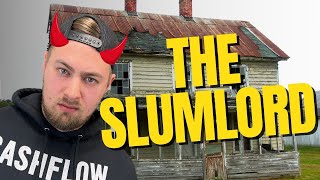
In this video Christian Osgood examines the common perception that landlords are evil by first exposing the severe problems caused by slumlords—such as pest infestations, drug activity, unsafe plumbing, and neglect—that degrade neighborhoods and endanger tenants. He then outlines his solution: acquiring multiple properties within a single block (e.g., his Marina Drive project) to revitalize an entire street, leveraging a strategy he calls “functional flipping.” Functional flipping focuses on affordable, durable, and uniform renovations—glue‑down LVP flooring, carpet replacement, neutral medium‑gloss paint, upgraded electrical outlets, and proactive leak repair—to create safe, livable, and reasonably priced housing while still generating profit. Osgood argues that this approach not only counters the “evil” landlord stereotype but also provides a scalable path to building a sizable real‑estate portfolio (claiming a $25 M portfolio in two years) and addressing affordable‑housing shortages. The video ends with a call to action for viewers to adopt the method and subscribe for more tips.
Chapters
Are landlords evil? Gonna tackle that question today because there are some landlords who actually do suck, and there's a right way to do business. So we're gonna talk about both on this video. Check it out. Hey, it's Christian Osgood. Welcome back to the channel. Today we're talking about, are landlords evil? Here's the things that are wrong with them. We've actually run into a lot of really bad landlords. Let me talk about the problems. Let me talk about the solutions. You're going to want to stay tuned for this because at the end of this, I'm going to tell you how to run this thing correctly. First thing we're going to talk about, the slumlords. We have bought a lot of slummy properties and some people just do not fix their stuff. There are truly awful landlords. We have seen about everything that can be wrong. We've bought buildings where there's bugs in there. We've dealt with all sorts of drug problems. And for some reason, whenever we talk about this, people are super surprised. Yeah, when you buy a beat up building where the landlord doesn't care, crime will follow. Any time it's easy to be a criminal somewhere, there'll be a criminal there. Which, by the way, is also part of how you fix it. You just make it difficult to be a criminal. But we've had fentanyl issues, we've had violence issues, we've had bug issues. And if none of this sounds sexy, it's because being a landlord and doing it well is actually hard. But there are slumlords where you see— we've seen like buckets holding up pipes. So it's like, oh yeah, you move this bucket, everything leaks and falls apart. Literal duct tape fixes on plumbing and electric. We've seen conveyor belts used as weed guards. Someone actually used to work in a manufacturing plant that had expired conveyor belts. They just threw it down on the property and they're like, done, weeds cared for. You're going to run into these. And if you're going to fix these, this is really important that you know you cannot fix an area unless you buy the entire, entire area. People talk about location, they're like, well, don't buy a crappy property in a crappy neighborhood because it's just going to be dumpy. Yeah, but what if you go out and buy the entire neighborhood? Cody and I have done this multiple times, and while it sounds insane, if you know how to buy property with or without money, you just need to look at what is the opportunity here. A lot of times the slummy properties, a lot of them are going to be owned by the same person. You can put together a transaction where you come up with a plan for the entire street. We did this on a place called Marina Drive where we bought multiple properties all along the road and we're fixing them up. At the same time, on the far end of the same street, a developer is building a whole bunch of new properties. We're taking a dumpy neighborhood that has had a lot of problems, and we are fixing up the old slummy problems while new buildings are being built and higher rents are being brought in. To do this, you actually end up adding a ton of value. Do you make a lot of money? Absolutely, because values go up on everything in that area. What you also do is you make safe and affordable places for people. It takes some money to fix these up, so we make sure that that is done. Now, how do these properties get in disrepair? Is it just that owners don't care? Is it that they just want to pull out as much money as possible? Uh, the answer is actually typically yes. There's a lot of people in our market, uh, who they buy everywhere. They're focused on the money, they rip out as much as they can, and they just do not care about their tenants. And we see it everywhere. We are on an absolute mission to provide affordable housing, fix the homeless problem, and provide nice places to live. We do this through something called functional flipping. So while you're on HGTV, you see these crazy stone countertops and beautiful designs and everyone wants to live there. Well, the unfortunate piece there is that is not affordable living. Those are very expensive renovations which command very high rents. When you get into functionality, you come into a unit that has real problems. So we're talking there's bugs, there's drugs, there's paint, there's deferred maintenance, there's water leaks, there's bad electric, you name it, it's all there. How do you fix it affordably, but consistently make it a nice place to live? And so we've worked, and it's actually a really fun game. If you want to make a lot of money in real estate and do something good for your community, copy this strategy. So here's what you do. You look at the budget. How much money do I have to work with? And it's usually not a whole lot if you're not pushing rents above market. So you say, if I get rent to within $50 of market rent, how much do I really have to work on this property? Then we take those pieces and we go, okay, how do we get this place fantastic within those constraints? And it's a really fun game. You get to move your pieces around, you get to be a little bit creative. What we've found is things like glue-down LVP floors. They are water resistant, they are easy to replace when damaged, 'cause you can heat 'em up, replace 'em one plank at a time. They look very nice. They look a lot better than that rollout LVP. And they don't cost a whole lot more. Again, You save on maintenance because you can replace individual panels, so you buy this in bulk and get additional discounts. That's a huge thing you can do to make a unit way better. Carpet is nasty, especially in a slummy unit. You're gonna have animal urine in the carpet, it's gonna be beat up, and people leave it like this for years. It's awful. Rip it out, replace it with something that's gonna last and be easy to replace. Paint, don't go for the crazy interior colors. You have all your neutrals. You have white, you got gray, Stay away from beige, that's out right now. But you can make these look very, very nice without getting creative. You wanna make sure that the space works for everyone. We're not going for a designer space. We're also going to use paint that has like an eggshell gloss. You're gonna go for some of the middle gloss. If you go for flat paint, it's gonna get scuffed up. You're gonna have to repaint these units every single time. If you go for the super high gloss, you're gonna have a reflective unit. It'll look like someone's living in a plastic bag. So you go right in the middle on the paint. You don't need the fanciest paint, you stay away from the cheapest paint. Cheap paints, you're gonna have to do more coats, it'll actually cost you more money, and it will look like you used cheap paint. There's no difference between the very expensive paint and the middle-of-the-road paint. So get a standard paint, medium gloss, and use the same paint colors for all of your rentals. Uniformity means you spend less, it looks nice, but that means you can charge less in rent because there's less overhead that you have to overcome. Major things that need to be fixed immediately. If you have a bad electrical issue, get good outlets in your unit. It doesn't cost that much. Do the electrical thing. It's going to help with the safety of your unit. The last thing you want is a fire hazard because that affects the safety of the tenants. You're looking for livability here. You're going to make sure that there's no active leaks because water damages your property like crazy and it causes mold, which again, health problem for your tenants. If you get ahead of the fire hazards the mold hazards, and you have a clean, easy to clean, maintain, and replace surface throughout your entire unit, you're going to look better than every single slummy property. You're going to be able to charge less in rent than your competition because you didn't break the bank to renovate. And that's how you do a functional flip and get away from the evil landlords. Because I promise you, there's a lot of them out there. They're in your market. They are all about the money. I have bought from several of them. When I see a bad landlord, I see an obligation and an opportunity to go fix a problem. The fun thing in real estate is if you get good at this, you actually can make a fantastic living bettering your community. Hope this was helpful. Please like and subscribe to the channel if you want more tips like this. Functional flipping is something that we are really passionate about, and it's how we were able to go as fast as we did in a 2-year period to build a $25 million portfolio. Anyone can do this. Follow for more.