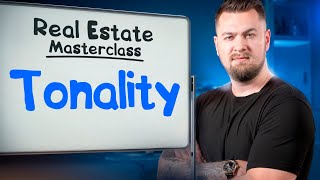
In this second installment of his sales‑marketing masterclass, Christian Osgood teaches the soft‑skill techniques that turn a booked meeting into a high‑closing opportunity. He frames the conversation as a story arc anchored by a verbal agenda, then walks through concrete body‑language tactics such as loose mirroring, sustained eye contact, and avoiding note‑taking. Osgood stresses the power of vocal dynamics, distinguishing “uptones” (open‑ended, inviting) from “downtones” (firm statements) and shows how to weave them into questions and statements. He illustrates each point with real‑estate anecdotes—buying duplexes to retire his wife, closing $35 million in property deals, and selling multi‑million contracts across industries—demonstrating that the same principles apply across markets. The video ends with a teaser for the next episode, which will reveal the specific question framework he uses in owner meetings.
Chapters
The secret sauce that people don't focus on. Here's how you master it. Do this when you order food at a restaurant. Do this when you talk to baristas at Starbucks. When you are out in public, practice up toes, down toes, be animated. Welcome back. This is part 2 of the sales marketing masterclass, the soft skills for how to negotiate deals. In part 1, we talked about booking the meeting. You need more at-bats. If you haven't seen that video yet, the link is below. Check it out. If you can get in front of people consistently, when I learned the skills there, I went from a low 6-figure to a multi-6-figure in sales just from booking more meetings, more opportunities, more meetings. It's awesome. But once you're actually in that meeting, so we're talking about today, what are some of those soft skills that make your meetings fantastic? In our next video, we're going to cover some of the talk tracks that we have. But I think this is the real, this is the real meat of it. If I can get to the meeting, say the same things as you do, but I say it differently than you do and my body language is different than yours, I will outsell you by a huge margin. Now, I bought $35 million of real estate. I've sold over $10 million of real estate, both for myself and as a real estate broker. I've sold for the co-founder. I've done hundreds of millions of dollars of contract in marketing contracts, in sales contracts. I've done it in data contracts. I've even done it in apparel. I have sold a ton of, a ton of product across industries. These skills relate exactly one-to-one, just translate perfectly to real estate. So you've booked a meeting, you're now sitting in front of the seller. Here is the soft skills that you need. First of all, your conversation is going to follow a story arc, and this is so important if you're trying to sell anything. There is an overarching beginning and end. We call this an anchor. In the movie The Wolf of Wall Street, there's a point in the movie where Matthew McConaughey beating his chest, going, "Oh," talking about sales, teaching Jordan Belfort, who's played by DiCaprio, about sales. Later, he brings that same chest beat and chant back into the movie. This is supposed to bring you back to the front of the movie, remind you of all the character development, but it is a tie-in. Movies use anchors because this works. You need an anchor point to your meeting. So when I get into a meeting, yeah, there's a verbal agenda and I go over what the meeting's going to entail, but there's a piece of the story. Now, if you watched part 1 of this series, I talk about telling a story using a specific fact to ask a general question. My example, I used retiring my wife, which was my actual goal. I bought a couple of duplexes. Hey, what I'm trying to do is retire my wife. She had recently got injured at work. So my goal of retiring her one day through duplexes needed to be accelerated. So my reason for the call is I'm reaching out to people specifically who have done the thing that I want to do. They bought bigger real estate. They can maybe help me move faster. That's why I'm calling. It makes a ton of sense. I reiterate this point in this meeting. I sit down. Thank you so much for helping. I've been working on this for a while. I've bought these couple of duplexes. It means the world to me that you're sitting down with me because you've done what I want to do. I believe that if I buy larger buildings, They have more tenants and with more rentals, there's more top line and with more top line, there's more bottom line. End of the day, I need to make more money, which means I believe I need to do bigger deals. You are doing bigger deals than me in the market that I want to do them in. I want to ask you a few questions today, but it looks like now that is setting our anchor while setting a verbal agenda. The next soft skill that is so important through this whole thing, body language. I'm going to keep this Very, very 101, because you don't need to go far past this to be way better than everyone else in the space. General mirroring. This does not mean copying everyone. You know, they cross their leg, you cross your leg. They fold their arms, you fold their arms. But generally speaking, if they're talking and they're laid back, I'm not going to copy immediately, but as I'm talking, I'm just noting, okay, they're a little bit reclined, I'm leaning forward, this is a little out of sync. So as we talk, I'll slowly lay back a little bit and match their general posture. If their hands are clasped like this, at some point I'll probably have my hands together very much like this, which apparently my camera doesn't like when I do. However, you generally loosely mirror them. Don't copy them, people will notice it. Also, you look like a weirdo. Also, you'll be thinking too much about the body language. Just generally throughout the conversation, notice what they're doing and loosely copy them with about a 5 to 10 second delay. Outside of that, do not take notes during this meeting. Note takers are distracted. You're not engaged with me. Eye contact is key. Look at those eyes. I want to see those eyes when you're talking to me. If I'm mirroring your body language loosely, I'm looking at you, I'm giving good eye contact, we're having a great conversation. We've already set an anchor point, so now we're just telling a story along the storyline. We're asking questions. We're learning things. We are letting them do about 80% of the talking and us 20%. You should be asking a lot of questions throughout this about how they built their business, individual stories, individual property stories. Like, how did you buy this specific property? What did the partnership structure look like when you got started? What was the most expensive mistake you made? Because I don't want to make that one. I'm trying to learn from as many people as I can. Who do I need to meet with next? These are all great questions you can ask, and we're going to go into them in the next video. But as you go through the flow, especially if you start talking about a deal, This made a world of difference for me. Tonality. There's about 6 or 7 tones that I use all the time in sales, but there's 2 that I use 95% of the time. And if you do this, you're gonna make a lot more money. It's uptones and downtones. An uptone invites more response. If I want to negotiate or I want to instigate an open-ended question, I want to get them talking, I want to build energy. Open-ended question. If I'm negotiating and I have a fixed point, it's going to be a fixed point. Downturn example: we get through a deal, that deal works really well for me. However, the price is going to have to be $800,000. That doesn't invite more response. That's a fact, is what it is. It will be $800,000. As opposed to, I could probably do $800,000, I may be open to more if you're willing to be a little bit creative with the financing. Now that's a little exaggerated. I wouldn't usually have like that level of voice crack, but you get the point. If you're willing to get creative with financing, that would be interesting, as opposed to, I can't do that type of financing. This needs to be very specific. This is where the deal works for me. Now, when I go through this, I'm going to be using uptones and downtones. If I'm stating a fact, it is a downtone. I'm trying to retire my wife. Now, how I do it is going to depend very much on the strategies that I follow. I'm really curious on how you got started. Up, up and down. What most people do is they focus on the words. And so you're there, your body language may be a little bit stiff. You might be like, oh, that's owner meeting. I've done this in a while. Where do my hands usually go? I'm going to be— hey, I'm looking to retire my wife. She has been— you might be looking off, feeling a little awkward. Into their eyes, relax the shoulders, uptones, downtones, have some animation, have some fun with it. My wife got injured. In fact, I have been looking for ways to accelerate my investing strategy. I bought a couple of duplexes. I'm curious how you got started in buying bigger buildings. Now they have an opportunity to talk. It's so simple. And if you're the one person who's going to comment like, this was the most simple thing I've ever heard, this is stupid advice, you're probably the same person who's going to just monotone blather on in one of these meetings. This is like the secret sauce that people don't focus on. Here's how you master it. Do this when you order food at a restaurant. Do this when you talk to baristas at Starbucks. When you are out in public, practice up tones, down tones. Be animated. When you say a sentence, be like, wow, did I say that with conviction? Do I go up and down with my voice? Does my volume stay the same all the time, or am I— when I'm thinking, am I a little quieter? When I'm animated, am I a little bit louder? You're not yelling in their face, but you get the point. If you can be a little bit more animated, speak with your body, let your voice go up and down, just focus on that. If you're better than 99.9% of people, yes, there are more tonalities you can use. Yes, you can read the book Jordan Belfort, actually listen to it on audio because it's really hard to read about tonality. You can learn a ton of tonalities and I lace a ton of them through my pacing, the way that I talk. But at the end of the day, if you're just the person who's really engaged, has great body language and can hold a conversation with some emphasis in their voice, it's clear when you're making a statement or asking a question, you're going to go farther than most people. Apply this to every single meeting proactively. You're going to go a whole lot farther. Hope this helped. In our next video, we're going to share some of the questions that we ask and the actual format for that owner meeting. See you on the next episode.