Phil Toth "The Deslumifier" and Christian Osgood break down a 10 unit apartment deal
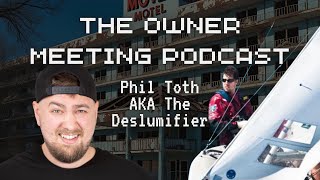
In this Owner Meeting Podcast episode, host Christian Osgood interviews former professional rugby player and Olympic‑class sailor Phil Toth about his first multifamily acquisition – a 10‑unit brick building in Pennsylvania. The conversation begins with Phil’s eclectic background, including a 1948 Seaberg record player, his transition from rugby to Olympic sailing, and the mindset of striving to be the best in any field. Phil explains how he sourced the deal through a trusted broker, closed on March 27, and immediately began a six‑figure, accelerated renovation program that includes new roofs, gutters, brick repointing, unit gut‑renovations, and mechanical fixes. He details unexpected structural issues (a capped chimney, boiler exhaust problems, collapsed ceilings) and how project‑management skills from sailing helped keep costs under control. The discussion moves to management improvements: fixing Section 8 rent collection, retaining legacy tenants, and planning modest rent increases tied to the upgraded product. Phil and Christian address common landlord criticism, framing housing as a value‑added essential good comparable to premium groceries, and argue that ethical upgrades benefit both tenants and investors. The episode also highlights the power of networks: Phil’s connections to Olympians, high‑net‑worth individuals, and the Multifamily Strategy mentorship program, which provides community‑driven learning, peer accountability, and rapid deal flow. Both hosts stress that community, repeated fundamentals, and leveraging relationships are the primary accelerators for scaling a real‑estate business.
Chapters
Hello and welcome back to the Owner Meeting Podcast. This is Christian Osgood, your channel host, with my good buddy Phil Toth. Phil is amazing. This is going to be a fantastic episode. I've actually learned a little bit about Phil before starting this, but professional rugby player to competitive sailor, this guy has done a little bit of everything.
Yeah, Olympic sailing.
Incredible athlete, successful real estate investor. He's just bought his first deal. We're going to talk about how that's gone down. If you guys know me at all. I am a sucker for brick buildings, but this is a very, very unique individual and very excited to get to learn a little bit of the story here on how that deal went, how it's going, and the whole nine yards. Phil, question number one. You have, for those watching on YouTube, by the way, you can see the video of this. You have a crazy cool record player behind you. What's the story behind that thing?
Yeah, so it's a 1948 Seaberg. Yeah, so the story goes back a little bit. I inherited probably 1,000 48 RPM records. Yeah, I inherited a whole bunch of records from my dad and had no way of playing them other than on just a regular record player, like a single one at a time. My uncle-in-law had one of these. He actually has this same unit that was owned by— this is where my brain just goes blank. Sinatra. Frank Sinatra. So Frank Sinatra owned this same exact unit. And the story goes that— so my uncle has it, and they figured out that it was actually owned by the Rat Pack because down the bottom here you can store records. And they pulled out these old record binders, and all the library sort of, you know, what song was on what record was all handwritten. And they got a handwriting analysis, and it was like Bing Crosby and Dean Martin and Sammy Davis Jr. It's like it was the whole Rat Pack. So the Rat Pack was sitting around at Sinatra's house listening to one of these units. So these, these originally came out of like department stores. That's why there's so many. They can just load up 200 units— sorry, 200 records— and it'll just play each one. It auto takes it in and out. And it's all mechanical. So from 1948, it's totally mechanical. There's nothing, no computers, no processors, nothing. It's purely solenoids and mechanical.
How did this end up in your house? How did you end up with it?
Well, so I, yeah, like I was saying, I had all those records and I went over to my uncle's, my wife's uncle, um, went over to his house and he had one and we were listening to my dad's old records and I said, oh man, I'd love to have something like this. And, um, so we, I found one in California, had it shipped out here, and we plugged it in and it started to spin up and went pop. And then spent the next 9 months figuring out where all the little circuitry and things went, that all the solenoids and things, just testing everything, getting it all fixed up and repaired, and got it working. And now it sort of sits in my basement and I get to listen to my dad's old records. Oh, that's mostly like 1920s, 1930s big band Dizzy Gillespie, that sort of thing. It's, yeah, it's a lot of fun. My daughter comes down and we sort of sit and listen to records and she dances on the little floor here. Yeah, it's a lot of fun.
That is, that is absolutely incredible. People are— this is one of the fun things about real estate is everyone has a unique background. Yours is a special flavor of unique. You went from pro rugby to Olympic racing. I gotta get, I gotta get the whole story here.
My understanding is like yacht racing.
You're a huge person. I know a lot of racing vehicles. I don't know anything about boats, but usually I feel like it's usually smaller people who do this type of events. You're a giant. How tall are you?
I'm 6'2".
I don't— that's not what I imagine in boat racing.
Leverage. It's all leverage.
It makes sense. It definitely makes sense for me though in rugby. How did you get into rugby?
Yeah, just at the— just at— I went to university in Australia and was just walking down the hall and One of the other guys on the team saw me and was like, "Oh, you're a big fella. Come play for us." So, having never played any sport at all, I played a season of volleyball in high school. That was it. Showed up to the rugby field and thought, "Oh, this looks like good fun. How do I get invited back?" Just picked the next biggest guy on the paddock and bowled him over as many times as I could. I just always lined up with him and would tackle him as many times as I could. And coach said, yep, come back tomorrow. And it was next day and the next day and the next day. And eventually I just got promoted up to the senior teams and then to some representative sides. Yeah, got sort of paid my rent for a little while playing rugby. And I mean, it wasn't much. Rugby over there is a bit like baseball here. You have like AA, AAA, you have all the feeder series that go up to full professional. I was a couple runs down from Major League Baseball, but it was enough to cover my beer money and rent. And when you're 22, what else do you want?
So then you make it from not an athlete to I'm huge and I can play rugby and pay rent doing sports to Olympian. Where does that part come in?
Yeah. So actually, I injured my knee, funny enough, playing rugby. And I was down on the beach in Australia doing doing some rehab. And there was a guy that had a sailboat sitting on the beach and we started chatting. I asked, hey, can I take it for sale? Yep, no problem. And it turned out it was an Olympic-class sailboat called a Finn, and it's a one-man boat. And when I found out it was Olympics, I was like, oh, how hard can it be? So I started looking up where I could buy a boat and turned out the US Olympic trials were in Newport Beach, California, which is where nearby where I grew up. So I moved back, bought a boat, started training. And at that Olympic trials, I met another Australian who was— he'd been to the games in '96 in Atlanta representing Australia in the same boat that I was sailing. So he and I teamed up and sailed a two-man boat for Australia for London. And then after London, he became my coach and we trained for the Rio Olympics. And then after the Rio Olympics, I retired from Olympic sailing. Now I just pro sail. So my full-time job is sailing for rich, wealthy guys and kind of like car racing where the guy driving the car isn't the guy that owns the team. That's kind of what I do in a nutshell.
I feel like the amount of times that you talk to people who are like, oh yeah, you know, I just decided I wanted to start sailing, so I joined the Olympics. I feel like that's not like a normal pathing to become an Olympian.
No, I've got this thing where Yeah, I can't help myself, but okay, if I decide to do something, I want to be the best in the world at it. Mm-hmm. And I, you know, with, with rugby, I was like, okay, I went to a certain point, saw the writing was on the wall. I didn't start at an early enough age. There was, there was a guy that I was training with that he was playing at the World Cup and he got a concussion and the doctor said You've had, I think it was like that was his 7th concussion. They say, look, if you get one more, you're going to be a vegetable. And he was in a position where he's 28, has no career other than contact sports, like his only job opportunity. He didn't make enough money to be able to retire for the rest of his life. And I was like, ah, man, I don't want to be in his shoes in a few years' time. So, okay, time to course correct. And yeah, that was when the opportunity to go sailing popped up. And I had sort of similar sort of thing too. Okay, I've run my course. I've got to a level where I'm comfortable, like, okay, I've achieved— I've put everything in I can and I've achieved, but it's not going to provide me— I'm not going to be able to retire. There's guys ahead of me that have been doing it for an additional 20 years and they're still hanging off the side of a starboat to make a living, to put rent over their heads, and they're in their 60s. Man, I do— my body is—
it creaks and moans when I get up in the morning and it's I was gonna say, at 6'7", there's a lot of limb to, uh, to get injured. You, you big guys don't, don't necessarily have the exact same durability as the, uh, the more compact competitors. Uh, there's a certain point where it just, it just gets painful.
Well, yeah, there's a difference. There's, you know, I've put— I've called it, yeah, it's hard city miles. It's not— they're not friendly, easy highway miles. These are city miles you're putting on your chassis. It's, you know, you do a lot to rehab and recover, but I've seen the endgame now. I now know enough to know how far there is to go in this game. And I, yeah, I don't want to be the guy that's in my mid-60s still making a living doing something physical.
There's two things I want to isolate there. One, you said, hey, if you're going to do something, you want to, you want to try to be the best in the world at it. And you've paired that with, you've analyzed where is the end of the road for this for me, and that's helped you determine the things that you do. So it's not just I want to be the best, which I think is everyone. Best is such an ambiguous term, right? But you define what is the best in the world and then you've done a good job selecting here are the things that I actually can compete in and here's where I could be the best. You've selected things. Doesn't mean you ever even become the best, but you've selected things that make sense with your current position where you can compete at being the actual best.
Yeah. As I've gotten older, you realize that with everything, I mean everything, whether it's rugby or sailing or life in general or business or school, there's levels to everything. And there, when you're first starting out, it's impossible to know how much there is to know. And once you get 10, 20 years into a field, you start to realize, oh crap, there's guys that are ahead of me that I'll never catch up purely because even though I'm in the top 1% best in the world at this, the guys that are in that 0.01%, there's two lifetimes of work to be done to get to where they are. There's just a point of diminishing returns where you just have to work so much harder and so much harder. And you also have to sort of have a self-analysis of like, do I want to keep putting eggs into this basket? Do I want to keep paying in to get to— is the payoff worth it? And for me with sailing, I've been doing it professionally for 20 years and yeah, I can keep doing it. It's an easy thing to do. I'm good at it. I enjoy it. It's fun. But I'm now in the position where I realize that the payoff in the end is not going to be what I want. And my goals have changed in the last 20 years. 20 years ago, I was a young single guy that didn't have a care in the world, and rent and beer money was all I needed. Now that I've got a family and a 3-year-old, and, you know, we have— I want to retire my wife just like you. The sailing thing was taking up— I'm gone 280 days a year when I was campaigning and training. So time at home is valuable. So I need to redirect and go in a different direction.
That makes a ton of sense to me. And I promise we're going to tie this into real estate, by the way, everyone. The background is just as important as where you're at today. I love the things that you have been able to pull off. The goals matter. And so you're now aligning, just like you have through your whole career, you're now aligning objectives to goals. You eventually, at some point, for those who don't know, Phil's actually joined Multifamily Strategies, but someone I've had the privilege to mentor, uh, did the program for a little bit of time. You bought a 10-plex in Pennsylvania. How long ago did you close on that now?
Uh, we closed March 27th, so I've had realistically 2 months of operations. We had closed at the end of March. It's now early June. So yeah, 2 and a half months. Okay.
So you closed just a little bit ago. Tell us a little bit about that deal. It was an older building, brick, which is my— I'm always a sucker for. But tell us a little bit about the actual transaction. How did you find it and what were the pieces of the deal as far as—
Well, yeah. It actually ties in perfectly to the lesson that you gave earlier today. Yeah, I've literally called one broker and it worked out. Called the guy, he ended up, you know, picked up first time. We chatted back and forth. He sort of connected me with the deal and ended up becoming a really good personal friend. Like just one of the few brokers that I think it's just like are on it. They're worth their weight in gold.
Love it.
Yeah.
And by the way, if you've been in the business a while, a lot of terrible agents out there, agents, brokers, it gets difficult.
I've dealt with enough brokers and agents from the single-family side. And when the diamond in the rough comes along, you kind of grab a hold of it. And this guy's become— yeah, he's just become a good friend too. So we hang out sort of outside of work, so to speak.
Was the property listed or was it someone you built a relationship with?
It was listed. It was listed super high. And actually, I'm going through that now with the same sellers on an additional 21 units that they have that aren't listed yet. So it's sort of hopefully going to make this happen off market.
Oh, that'd be amazing.
Yeah. I mean, like you teach, it's built the trust. I'm the most likely buyer because I've positioned myself like, hey, I've done a transaction before. I know their properties and their products. And I've been able to show them like, hey, look, I can close. So yeah, that's kind of how we ended up— it's just a standard close and standard transaction from there. Like, there was some back and forth, but yeah, definitely having a good broker definitely helped.
Well, first of all, I really appreciate that. This is the type of stuff that we love doing. It's putting together the relationships. And it sounds like you worked both sides of this. You have a relationship with the broker and you have enough relationship with the sellers where you can get repeat transactions. And you're working with people who have a lot of stuff. Now, on the condition of the building, you're picking up this building. This was not a Class A, ready-to-go, fully renovated deal.
No, no, this was, yeah, I think I've seen some slums and this was pretty, it wasn't the worst, but by far and away it was pretty slimy. Their whole MO was a bit odd. They renovated, they bought the building that was in pretty rough shape in 2018. They then renovated the interiors and but left the exteriors from— I mean, they're still original from like 1930, I think. Wow. I mean, the exterior is rough. They, you know, and then when, when it came time to do roofs and chimneys and all the sort of— they were complete slumlords there. They lived down— one lives in Florida, one lives in New York, so they've never even seen the building and everything. You know, they've got a, they've got a handyman and the two, and the two owners, and like they do everything by committee, so nothing ever gets done, nothing ever gets decided. And it's just, it was management. This was definitely a management play.
Which are my favorite flips, by the way. When you can fix it by redoing the management and being a better manager than the last person is not typically hard to do.
Yeah, exactly. When I walk through it, I'm fairly handy. I can, my dad used to always say, if you can't be handsome, be handy.
Fortunately for Phil, he pulled off both.
And for those listening, my wife finds me very, very handy. So yeah, so just walking through the property, like, okay, can fix that, can fix that, can fix that, can fix that. And got a whole bunch of quotes and estimates before we closed. It sort of had an idea of what it was going to take. And, you know, I just sort of was super conservative with all of my estimations. And so now, right now, we've done— we've had it for two— yeah, I've had it two and a half months. We're six figures into the maintenance and repairs. 2 new roofs on, new soffits, gutters. We've renovated 4 units and we're repointing the brick. And yeah, I've got 2 more units we're going to fully gut and remodel, all new lighting, new bathrooms. Yeah, we're pretty heavy into it, but the nice thing is it's going much faster than I was anticipating. I was anticipating sort of a 12-month project. I think we're going to have it done in 4. Wow.
That's fast.
Fully optimized. Yeah. Took one unit, one of the units was again, just poor management. They're Section 8. The tenant was non-paying, so they weren't paying their portion. So they were just collecting Section 8. And then the unit failed inspection, so they weren't even collecting that. So it was just somebody was living there, but nobody was paying the rent and the owners didn't even know. So took them from what was supposed to be $680 rent to now $1,350. So, wow. Yeah, yeah, yeah.
So this building is already worth astronomically more. For those of you who aren't familiar with commercial valuation, you're valued by your net operating income. You came in and basically in a very short period of time doubled the income here.
Yeah, pretty— we're— yeah, we'll be close. We'll be pretty close. My valuation should go from $430 up to just shy of $900.
I'm going to read this. I'm actually going to read this right now because this is a comment I got on a similar project I did. I was just on the Brad Lee podcast pretty recently.. And I got this comment today, and so I want to get your opinion on this. Let me see if I can pull it up here. Okay. Imagine being okay with being a parasite. They say a whole bunch of things about God not respecting me, and then basically I can't offer society anything of value, so I'll try to acquire homes and prey on families. Phil, you came in and doubled everyone's rent. Why aren't you a terrible person?
No, I'm not doubling anybody's rent. All of the legacy tenants are still at their current rent. They're seeing everything being improved. I've got one tenant that is— she's severely— she has some severe mental issues, and the old landlords wanted to evict her, and they were going to do so before I took ownership. And I said, no, let's, you know, just leave everybody in place. Let's let me— primarily my reasoning behind it was I wanted to be able to screen who was going to be in there next. Very wise. But at the same time too, I also didn't want to chuck somebody out onto the treat that may not have a whole lot of options. I looked at it as if this was my mom or if this was my sister or somebody like that, how would I want them treated? I would want them treated with a little bit of grace and understanding. So I've been in talks with her caseworkers about, hey, let's find her a better home to live in that's more assisted, that has some more medical options as far as supervisory medical I'm not sure. I mean, that's not my world, but yes, some supervised medical care that, that she could live in a home, which is really what she needs.
And we do the same thing in our portfolio. I've worked with people who, they have mental health issues. I work with their family members. I lined up some family members to help get them caught up on rent. We got them into a care facility that they really needed. Like, caring about people is really important. Also, I want to point out, so you've done this through correcting occupancy and collection issues. You haven't jacked everyone's rent yet. At some point you've put six figures into the building. It's a safer campus. There's better tenants, there's more going on. The building's getting repaired. They're not renting the same building that they used to be renting. It is a new management, there's new appliances, new interiors, exteriors, the whole nine yards.
Yeah, we just put in a laundry. We just fixed all the roofs, fixed all the interiors. Yeah, everything's improved.
The assumption is at some point rent does climb up a little bit for the fact that they're now renting a much, much, much newer building, right?
Yep. Yep. Yeah. And my, my goal is, you know, the current tenants, when their leases renew, I will speak to them and say, look, you've been— if you've been paying on time, they're quiet, they're clean, they're respectable, like, yeah, rent's gonna have to go up a little bit, but I want to keep you in place. So let's work out what works for both of us.
Do you know what I find so funny? You can be like a, you can go to Whole Foods and you have fresher food and it's more convenient and it's locally sourced and all the, all the stuff you want. And guess what? It costs more because it's a better product. No one has a problem with it and you need food to survive.
Yeah.
You do the same thing in housing, the exact same thing. You buy a property that's, your words, not mine, not the worst slum of all time, but pretty slummy.
Pretty slummy.
You buy a slum and you make it not a slum. Most people would say this is a good thing. You have made a better product. You now charge accordingly to the tons of money that you have put into this thing. A little bit more money for the improved product. Housing is the only place I've ever seen where it's the same thing, right? You need food to live. You need housing to live. You do it in housing, you're a parasite. And apparently, according to my Instagram, God hates you for fixing the building. And like, we get into some of these buildings.
Not everybody is, not everybody always playing with a full deck. You just gotta realize it is unique to this industry though.
If you're listening to this for the first time, and I'm assuming you're not listening to my podcast if you, uh, if you hate landlords, but if you happen to be, I want someone to come up with an argument for me of how this is any different than groceries. It's a one-to-one example. You need them to survive. You pay for higher quality. The organic label costs more. And no one ever goes, I went shopping for groceries, those should have been free. Those darn farmers are ruining my— Why would you blame the farmer for the cost of your food? I'm grateful that they made food. You're providing better housing, get paid for that.
I kind of look at it as I'm loaning them money. I'm loaning them money so that they have a better place to live and they're just paying me back over time. Like I'm paying it upfront to improve your living conditions. And then the deal is you just pay me back that money over time.
And you know what? Leases expire, and if you would rather live in a slum, you can find another slum in Pennsylvania.
Yep.
You guys have some old buildings in Pennsylvania. I'm sure there's another slummy property they could move to.
I just had a meeting today with— there's a lady that is Section 8 in my building that she was the victim of some abuse, and she's been moved into our building, and she's getting behind on her rent. And so a local charity came and was looking to help her get caught back up. And stuff like that isn't possible. They, when I was interviewing with them, I was speaking with them, they said, we've been into some pretty, some pretty slummy units. And this is one of the nicest ones we've ever seen. And it's like, okay, that made it worthwhile for me right there. Like that, just knowing that I'm providing something that's better than where they would find elsewhere. And I don't want them to leave. Yeah, I want them to stay. I want them to be comfortable. But you know, I'm not, I'm not a charity. I don't have, you know, and I've—
and no one should feel guilty for not being a charity. Everyone works for money. This is a, this is a job that we take on, which is another comment I get all the time on YouTube, by the way. Go get a job, provide for society. I'm like, I provide— I house almost 1,000 people. I actually think we're over 1,000 people. That, that seems like a pretty big job. I've spent, gosh, how many, over $10 million in renovation over the course of my career. People who are complaining about this has never seen, they've never seen $10 million in their life. And you don't get to do that if you run a business that loses money.
Yeah, you're the, the way I sort of see is you're talking to people that are on the bottom rung. They're on the bottom rung of when I said there's levels to everything, they're at the first step and they can't see the top step, or they can't even see the step that you're on. They're just— they're so— they're very low information, limited perspective observations. You have taken the time and dedicated your time and resources to leveling up, and you've gone past them to such a degree that They won't understand until they go to start to go down your path.
And at 6'7", Phil has a different vantage point than all of us. So the building, so you've been for a while. What has been the, what has been the most difficult piece of this particular project?
Just keeping costs under control. I mean, there's just so much that you can fix. It's been having enough. A lot of this comes from my sailing background of just the project management, like sort of triaging. Okay, we've got a budget. This is what we need to fix to get us to the next point where, okay, maybe we need to take a breather and then wait for funds to build back up or resources to build back up. But just managing the project, being able to get the priority stuff done as quickly as possible and then go on to the, the nitty-gritty stuff, you know, the, oh, that would be nice to have floor mats here. Like, oh, okay. I think you'd rather have toilets that flush, but okay. So you can't, you can't just give into every request that they ask for. You've got to fix the big stuff first. Let's, let's make sure the roofs don't leak. Let's make sure that the boiler isn't blowing inside the attic as opposed to venting to the outside. Ask me how I know that one. That's a fun story. So the previous owners were, again, they're a bit dodgy. They found some fly-by-night roofer off Craigslist that did a halfway job and then they stiffed them for the remaining down payment. So the roofer tiled over the boiler. So the boiler would go up the chimney. Well, they tiled over the chimney and like made the boiler exhaust captive. So now when I went and inspected the building before purchase, I saw steam coming out between the bricks. Uh-oh. Because the chimney was capped, but the moisture had been blowing away in there for so long that it had eroded away all the mortar between the bricks.
It found its way through the mortar and away it goes.
Yeah. And guess what it did to the interiors of the building? Two of the units on that side, the ceilings have completely caved in. So those were big renos on that. But we found that, we went to, took that to closing and said, okay, here's Here's what this is going to cost. Here's the credit you're going to give me. And, you know, they, they squealed and squirmed a little bit, but we got what we needed and yeah, got it taken care of. Yeah, that was fun.
Lesson there, uh, pay your contractors.
Well, yeah, just karma. Karma comes, but yeah, karma's a bitch. It'll come back. You try and stiff somebody, they'll stiff you, and it all rolls downhill.
I ask this every time. I think one of the most valuable things about getting to run this podcast, I get to learn from a lot of people the most costly mistakes they made. As much as making a bunch of money in real estate is fun, not losing a bunch of real money along the way is extremely important. What has been in the whole journey— and this can go all the way back to rugby if you wanted to, it could be this deal, or it could just be in life— but what's the highest stupid tax that you've had to pay to get to where you're at?
Ooh, one that I still very much struggle with, which is, you know, your net worth is your network. Or was it— no, it's the other way around. Your network is your net worth. Yeah. I think I'm a bit like you. I'm not a go out and party at the bar with all the boys, you know, till 2, 3 o'clock in the morning every night. Those days are behind me. But even, even in my sailing career, there's guys that, I mean, I'm, that I'm 100 times more technical, better, bigger, faster, stronger, I mean, in every way, shape, and form. But they would get more jobs because they were drinking buddies or they were partner, you know, buddy buddies with the right people. They just, they had the social network. They were, you know, they were friends with the right people and didn't have the skill set, but they were friends with the right people. And I just never bought into that until now. I'm starting to see, okay, this is, you can really expand your business much more quickly by having a bigger network. And I struggle, I really struggle with motivating myself to make that call, make the, you reach out and risk sounding dumb or sounding stupid or not knowing the answer when the question is asked. So yeah, that's definitely cost me the most over my lifetime, I think, is just not having people in my network that will provide more business. I need to change that for real estate.
I think that was the biggest— that may have been— I've shared mine a few times with getting into hospitality, but I think that was the monetarily expensive mistake I made for me personally. But that's a good point. I've shared the story a few times, but I, I started in the 9 to 5, went to college, did the, the career thing. I was building relationships, but not in the direction that I wanted to go. So I spent all this time where I had these clients who had all the information that I needed to start my business. I wanted to own rentals. I was connected to people every day, but I wasn't asking the right questions and I wasn't doing anything social with any of these people. It was just business. And my focus was how can I get these people to buy data from me and how do I come into their business and make their business better where they make many multiples of more money on the data that I provide them? That, that was the entire context of my universe was like you, I'm a bit obsessive. I want to be the best. So in the Co-Star group, I'm like, how do I have the best book of business with the best clients who have the highest value, who never quit? It never dawned on me until, uh, really until 2019, 2020 when everything shut down where I was like, What am I doing? I'm not spending the time. I even have the network. I haven't spent time building the relationships within the network that's right in front of me to go buy deals. And that's something that you found here is sailing. My assumption is basically all of these people have money.
That doesn't sound like a—
I have a friend whose son is in NASCAR and I look at the pricing of that racing. I can't imagine boating is dissimilar.
No, it's Yeah. If you have to ask how much, you can't afford, that kind of thing. We had an— oh, what was it? A North Americans or something in Newport, Rhode Island, which is like where old, old money is, where New York Yacht Club is, and pulled into town and it was like midnight on a Tuesday. And I said, "Oh, man, I'm really hungry. I haven't eaten all day." And the taxi guy said, "Oh, I'll take you over to here." I'm like, "What is open on a Tuesday?" It's like you— this is the kind of town where if you have to, if you have to work, you can't afford to live here. So everything's open. And it was just— that's the mentality of the people you're surrounded by in the sailing world, is just these people that have so much money. This is— they do, they do the thing that you want to do. They can just do it full-time because they're just— money is no object. They've been so successful in business that the— one of the big lessons I learned from them was they are in businesses where they're making money overnight while they sleep. We're— we'll do a race from like LA to Hawaii. There's a guy I raced with, he actually invented, um, he invented the camera phone. So the very first text message— I've heard of that. Yeah, the very first photo text message ever sent was his son when he was born. No way. So we did a race from LA to Hawaii, and he was on— he doesn't sleep much. He sleeps like 1 or 2 hours a day and he just works the rest of the time. So he would do his watch, he'd sail, and then he would go down below and he'd hop on the satellite phone and start working. And we got to the end of the race and his sat phone bill was like $40,000 or $50,000 for a week. And I said, what the— what? Wow, dude, we need to talk about this. Comes out of the sailing budget or how are we paying for this? "Here's this bill. It's going to come out of the sailing budget otherwise." He goes, "Oh, no problem." He strokes a check. "Not a problem." And we got to talking. He's like, "Well, he made X that by working, just by keeping his guys going." Because he's outside racing and sailing and he's got people back in the office that are making him money. It's like, okay, you got to find a business where you can make money while you're away doing the things you want to do. Vacation or time with family or what have you. I say, okay, what is that? Real estate's a pretty good one. All these guys, they make their money doing whatever. One guy I raced with, he started a movie studio. His company did Twilight, Hurt Locker, all those Dance Step Revolution movies back in the early mid-2000s. Oh, yeah. His company did all those. He said they were the dumbest movies, but they made a Oh, the money. Yeah. Oh yeah.
Oh yeah. I've heard Twilight did okay.
Twilight did all right. Yeah. But as soon as he sold his business, he immediately went into real estate. And then the guy that I was just racing with, again, I have this resource of knowledge that you just weren't tapping. Another guy, I say he has a business, he founded a family office. So he takes family money and invests it into sort of $50 million multifamily real estate, some commercial, but mostly multifamily. And their smallest deals are like $50 million. And it's like, okay, I'm sitting on a boat for hours on end with nothing to do while we're waiting for wind to build. I'm just going to start picking this guy's brain and learning what it is. He's obviously the best in the world at what he does. Let me learn from him. I've got a captive audience, undivided attention. There's nobody else within 100 yards of us. And okay, I can just pick his brain and ask him any question. And he opened up. So, his kids aren't interested in that sort of stuff because they grew up around it. They're off doing their own thing. So, all of a sudden, he's got this vessel that he can pour all of his knowledge into. And that kind of got me thinking. And then, that's when I found your course and your mentorship group. And that's sort of then given me the knowledge of being able to ask him more pointed questions. And yeah, it's just been, it's been a very fast roller coaster ride from there.
There we go. Shameless plug. If you join Multifamily Strategy, you'll be connected with Olympians and kajillionaires.
But when you're— but to be honest, you don't need that. You don't at all need that to be able to do it.
No. And there's always someone that you know who knows someone who's connected. Yeah. The degrees of separation that everyone has, and this is a great illustration, this will be one of our ending points here. But when I started, I didn't realize the connections that I had. I had clients who have a couple of them were multi-billionaires. One of them is the largest developer of the Seattle skyline by hands down, hands down, billions of dollars. Enter their house immediately, Rembrandts and all those collectible, unbelievable wealth. As a W-2 employee, I was, there was an immediate contact who I could text and I could text their family members who also ran the business. Like that is, that is right there. You have unbelievable connections that everyone, this is not an abnormal thing. Like you're like, hey, I'm sailing also tons of billionaires. It doesn't have to be sailing. It doesn't have to be the Olympics. It doesn't have to be working for CoStar, but you are connected to people who have capital. Most people believe in making money in real estate. People get stuck on the money. Guys, it's just framing the relationships that you have in a way that moves everyone forward.. And I found a way to do that through multifamily. Phil, it's a privilege to see you apply it the way that you have. You came in very much the same way I do and the same way that I've taught to do it. You just get around the people who've built the business you want to build and you build it yourself. And we've become very good at doing that. But for those who've ever looked at Multifamily Strategy, man, that's what it's all about. It's a relational way to learn real estate with an operator, which I do want to This is not a testimonial for my product, by the way. But Phil, I do just want, just for the audience, I do want to ask you, there's a billion courses online. Most of them are scams. A lot of them are like $50,000 and they try to upsell you and you never meet the actual coach. In Multifamily Strategy, does it cost less than $10,000? Do you actually get coached by me every single week? Do I ever kick you off to someone else? Is it an actual mentorship? I just want to hear it from a mentee on the podcast officially.
Absolutely. I am the type of person, I will research things to And a lot of that is, you know, the analysis paralysis. It took me probably a good 10 months to finally sort of commit to doing this program, to doing this mentorship. I looked at everything else out there and this was the only one I was like, okay, this is kind of a thing I think I can wrap my hands around and understand. It is one-on-one, sorry, not one-on-one, But it feels one-on-one in that you're, you're in front of us 3 times a week. That was what really impressed me was like, it's not just a once a week with somebody that is on the other side of a screen on YouTube where you, you just type in questions. This is like open forum. You can ask the questions, you can go, you can really turn the nuts and bolts and get into the details. And like, that's where, that's where the money's made is in the details. It's the small nuance. You can really get nuanced in the mentorship because there's one, you're a wealth of knowledge, but the one or two times we've had other guest speakers, even with Cody, I really liked having Cody as well because he was just so good with the numbers. And you know, you guys were fantastic. It's really gotten, it's accelerated and supercharged my path. And that's, as you get older, you start to realize like, okay, the only way to get up those levels is to just find people that can help you get up those levels faster because time is the limited resource, not money. They make more money. Nobody's making more time.
Just like this podcast, that, that, that is the goal. Let's be efficient with our time. Everyone who joins, the only focus is buy a deal. There's no upcharge. There's no like, hey, I got a super $50,000 thing. There's no other money-making scheme here. It's let's get— build a big community of people who execute and buy deals. And let's do it at a higher level than anyone else. Let's do it faster than other people do it, more efficiently, rip through the program. Then let's eliminate mistakes and learn from each other, which is the biggest piece of community. This is the thing I did wrong when I started Multifamily Strategy. We started with one-on-ones thinking that that is what the market needed, is you need more one-on-one mentorship. And while I'll always hop on a call with you or answer your text, like it's one-on-ones available. The forum is you learn with other people who are your peers at the same time. You learn from each other's questions, you get to see each other's wins. Everyone moves forward faster. I, if I could go back in time, I never would've tried to teach people one-on-one. Not because you can just get a whole bunch of people in a room, but if you build a community, everyone moves forward faster. And Phil has, Phil has referenced other deals to other investors in our group. Phil's a Fantastic member of the community. Did anyone ever buy that triplex that you posted?
No, no. Someone needs— I think her financing fell through or she sort of— I don't want to say chickened out, but yeah, it just ended up not being the right match.
I can't force someone to buy a deal. If anyone wants a triplex in Pennsylvania, Phil has a lead for you and it is a sexy, sexy deal. If you want a smaller building, is it still available?
Is it still out there? Yeah. So the guy that owns it is actually my, he's my general contractor, handyman. He's become a good buddy too. But I think he's going to end up, it's such a good deal. He's, I think I've convinced him to keep it. He's going to refinance it and keep it.
Okay. Well, if you guys, if you guys find Phil, convince him to unsell his contractor and keep it.
I have one, one last little story of going back to your comment about the one-on-one mentorship. It relates a lot back to what I experienced with sailing. Like, you would see guys— there's a whole group of us that would all race this Olympic circuit, and you'd have guys sort of in the top 20, top 15, whatever. And then you'd see a group of guys that would go off, they'd get together, they'd all train together, they'd go off on their own over one winter, and they just all train together. And all of a sudden, boom, all those top 5 guys are all in the top 5. It's like, where did that come from? Those— they just leapfrogged up several levels because they went off, they worked together, they got coaching as a group, and they all support each other and push each other. It's like in sailing, it's not like car racing where, okay, you can go out by yourself, set a lap time, change things, fix some things, work on the car, improve things, and then you go back out and test another lap because conditions change. Everything's so different— waves, wind, whatnot. You have to work as a team. You have to have 2 next to each other. You have 2, 3, 4, 5 next to each other. So, you're just constantly pushing each other. And by working together like that, you go up the level so much quicker. And I see what you do with multifamily strategy is much the same by having that group course. It's like I've become quite friendly with Chris Jordan. We met up for beers in San Diego at San Diego Yacht Club when I was there.
I'm so jealous.
I love Chris. For the North Americans.
I love Chris. He closed the deal the same month you did.
Yeah, yeah. And he and I have sort of been anytime, even in between calls, in between mentorship calls, like he'll call me and say, hey, look at these numbers for me. And I'll, I'll look at them. And I've sent him stuff that I'm looking at. And it's just a good checks and balance. And it's like, okay, we're, yeah, we're both on sort of the bottom ladder rung, but we're helping each other get to the next one. And yeah, he's been a good sounding board. And like I saw the deal he presented on, was it Tuesday? He showed that to me about a week or two ago. I like it.
Well, and the theory goes back to like the Nike running thing where no one, I think it's a 4-minute mile. I did track when I was a jumper. I wasn't a runner, quite frankly. I don't know why I could jump far because I'm not all that fast. Wish I could run faster than I can.
I had an old rugby coach, he goes, you're deceptively slow. You look like you're hauling ass, but I'm looking at my stopwatch. You're not really moving that fast.
But in running, it was like forever. No one was breaking the 4-minute mile. And then once, once someone did it, all of a sudden everyone can do it. When you're in those environments, when someone— you, you close the 10-plex, Chris closes the 6-plex, he does his second deal. You, when you're around this all the time, it becomes more real. I've found there's a lot of groups, and this is true of sports, this is true of real estate, this is true of business. When you are playing your own game, your context is just you're in your own bubble. And you're competing against yourself, which can be great. Sometimes you don't realize what's possible, so you're stuck on something that there's really no reason to be stuck on, but it feels like the biggest thing in the universe because your universe is you. When all of a sudden the context changes, I've seen a lot of courses where people will talk about like, hey, it's a lot of washed up investors, right? A lot of these are also taught by real estate investors who are like, I went bankrupt, now I coach. Don't do those. But they'll coach on like, hey, this is a deal I did 4 years ago back when interest rates were 3% and here's how it worked. And that's what the program is. What I found by doing the community thing is not only do you learn what deals that I'm doing, but you get to be on the call for this is what Phil did and this is what Phil struggled with. And you get to see, yeah, sometimes the deal, sometimes you miss something or sometimes the reno does cost more than you thought. And you get to learn alongside that and you get to see Phil push through that. A lot of those what-ifs and I'm stuck on analysis. When you have other people and you have bigger context, you go unbelievably further. This will help you in sports, will help you in business. This isn't just real estate. It's not just our group, but this is the type of stuff I look to get into is get into a community of people who are doing what I want to do in a way that resonates with me. And that's helped me find my properties, choose my markets, build my teams, build my companies. Even how I market my property management company. I was struggling for so long until I just talked to some bigger property managers and I asked how they get clients and they said like 2 easy things that blew my mind and all of a sudden my company blew up.
It blew up positively, like good, good. Being a part of the bigger group, it's, I think I've been a part of the group now for what, 8, 9, 10 months, something like that. But you're seeing similar questions get asked repeatedly. It's like, oh, Okay, that's something that a lot of people get hung up on. Okay, I really need to pay attention when that comes up in my journey. Okay, I've seen this enough times. I've seen enough reps to where now I know how to play that. That's been for me, I'm not a naturally gifted athlete despite—
You know, just being an Olympian and a professional rugby player.
No, but it's due to I'm just not naturally gifted. I have to go and work 10 times harder at it than the guy that is gifted. I've seen guys that are gifted. They can go out and do a roll tack twice and have it. Takes me 200 or 300 times. I just, I just know that's how I operate. So same exact thing with real estate is I like being a part of the group even though I've gone and done the thing that you've taught. It's like, okay, I'm not just going to turn my— I don't want to turn, you know, turn that resource off and go, okay, I now know what I'm doing. No, I want to hear the basics over and over and over and over and over so that it's reinforced 1,000 times so I don't make the mistake. Love it. It's, it's been hugely beneficial even, even having done it already.
Well, if you follow these steps and if you happen to look at Multifamily Strategy, you too can be 6'7" and an Olympian. Eat your veggies. We'll put that guarantee on the site. Well, this has been awesome. Awesome having you on. I'm so excited about this deal, especially because it's my favorite thing. It's affordable housing and it's fixing up slummy properties. At the end of this, yeah, you're going to make a lot of money bringing rent from like, you know, $6,000 to $13,000. You're going to make a lot of money on the deal. But more importantly, you're going to look back at this and you're going to be proud of the project. And what usually I find happens is you're going to look at more projects that also need some value add. You're like, hey, every time I fill these— Yeah, I can't fix everything. I've improved my community. And if you post any of this online, your community will hate you for it, but you'll still get to feel good about yourself.
That's what I'm— what does Joe Rogan say? Just don't read the comments. Yes, exactly. Don't lurk.
Post and ghost.
Yeah.
Unless you want to have a whole lot of fun blasting them back online.
Yeah.
Sometimes I'll throw them on my story. I'm like, this idiot. No, but if you want to do something that's really rewarding, I have found that this type of project, the beat-up building, the mismanaged property. If you can come in and do something good for your community and happen to make a ton of money doing it, you will feel very, very good about what you do. It's a very, very engaging business. It's a fun business. I'm excited to see you take off. I'm hoping that we get some great news on your 21-unit.
But yeah, yeah, that's still, that's still in its infancy, but I'm hoping they will. It's a big ask. They want a big number, and I'm hoping the only way I can do it is if they seller finance it to me. There's a lot of pieces to that puzzle still to figure out. No, you're right. I have a call with my broker later tonight. Well, we'll, we'll know more tomorrow, hopefully. All right.
Well, let me know if I need to weigh in. Okay, guys, this is Phil. Phil, if anyone has any questions for you following this episode, is there a best way for them to reach you?
But I'm not really on social or anything like that. But yeah, just philipsailing@yahoo.com.
That's me. There you go. Shoot him an email. Follow his racing career. There's only so many Phil Toths. So look for a very tall Phil online with a fantastic mustache and a soon-to-be a ton of rental properties, and you'll find the right guy.
All right. Thank you very much, man.
I appreciate the time.
Absolutely.
Thank you guys for listening. If you haven't yet, like, subscribe, hit all those buttons that help grow this channel. I want to get this out to more people, but we want to share what works, what doesn't work. And you know, if you, if you're lacking time to do the owner meeting, just listen in here. I'll do it for you. We'll see you guys on the next episode.
See ya.
More from Christian


What Investors Want in Every Pitch: Property, Business Plan & Team #RealEstate #Pitch




Speak with authority to turn broker rejections into deals - boost your confidence #RealEstate

Turn Broker Objections into Closed Deals - CRE Negotiation Tactics #RealEstate #Negotiation

How to Get Multifamily Deals Under Contract Without Having All the Cash | Objection Series Ep. 1

How I Scaled 500 Apartments in One Texas Market in 12 Months #RealEstate #Multifamily


Turning a $12.2M, 200-unit mess into profit - live multifamily turnaround update #Investing