Real Estate Market Crashing 2022? - Expand While Others Contract
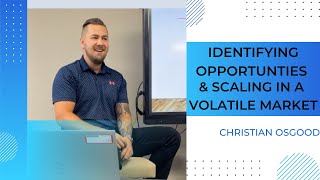
In this solo presentation, investor Christian Osgood (joined by his partner Cody) walks brokers and aspiring investors through a pragmatic framework for thriving in a volatile real‑estate market. He begins by acknowledging market cycles and the advantage of expanding when others contract. He then shares his personal journey—from a two‑unit duplex in Bremerton to a 95‑unit multifamily portfolio across central Washington—highlighting the importance of scaling for financial freedom and stability. Osgood stresses self‑awareness, setting ambitious, time‑bound goals, and committing to them within a supportive community. He outlines a three‑step deal workflow (identify the deal, secure debt, arrange equity) and explains how to select markets using population‑growth data, prioritize cash‑flow‑positive assets, and protect investments through long‑term fixed‑rate financing and strong owner relationships. A detailed case study of a 38‑unit property in Moses Lake illustrates how creative financing, operational improvements, and hands‑on management turned a near‑negative cash‑flow asset into a $25k‑per‑month cash‑flow generator. Throughout, Osgood emphasizes relationship‑driven sourcing, creative seller‑financing, and the necessity of cash‑flow‑first acquisition. He concludes by promoting a multi‑family strategy course that codifies his process into a step‑by‑step video curriculum.
Chapters
Alright, well I got a fun ambiguous topic of identifying opportunity and scaling in a volatile market. That is 3 completely different concepts. We're gonna go into all 3 of them appropriately. I'm gonna start with the volatile market because that's the one I'm gonna speak on the least. The market is volatile. It goes up and down. The purpose of finding opportunity and scaling is that you form a strategy that works whether the market is up, down, in the middle, No matter what, you need to do deals and find opportunities that move you forward in any market, any time. You need to build a ship that floats at all times. Right now we're headed towards what is very likely to be a downturn that will be for the next little bit. The fun thing is when that happens, for any brokers in the room, you might notice that you have a ton of buyers and maybe sellers aren't really as active in dropping their prices to beat interest rates. And what you might start seeing is some buyers want to sit on the sidelines and see what the market does. The great news is that if you're the one investing and you're out buying properties to expand your portfolio, the best time to expand is when everyone else contracts. So if people are on the sidelines and things are a little bit iffy, that is when Cody and I typically like to take the field. So that's what I'll say on volatile market. It is volatile. It will go up and down, and we will act accordingly. A little bit about me. So I'm an investor in Washington State. We've looked at branching out of state. We have not found the right market to do that yet. We will do that in the near future. But I started over here in this tiny little duplex in Bremerton, about 2 units. It's on the back end of a 7-year sales career. I was told, uh, go to college for 4 years. I still have not figured out what I did that for. Everything else is pretty much in most, like, Central Washington. Cody's kind enough to put some pins on a map for us, so The whole portfolio is over there. But about me, I worked for CoStar for 4 years. That was where most of my career was, selling data for LoopNet, Apartments.com. I didn't start investing until 2020, so that was like 18 months ago. It was in December I closed on that duplex. There's Jeff, Apartments.com, the best place to find a place. So I started with a duplex, and today's topic is scaling. And finding opportunity. Well, today I have 95 units. A vast majority of those are the ones on that previous map with Cody and Moses Lake. We built this portfolio in a really short period of time. We built a few other companies including property management, which we operate out of Moses Lake, for Moses Lake, Grant County, Kitsap, Pierce, and King. We manage our own portfolios and some of our clients. Why you need to scale is the most important piece, I think, for most people. If you don't know or don't have a great idea of like, okay, what am I trying to do? What is the goal of investing? It's to build something that, one, gets you to your goals but allows you to expand beyond that. It gets you time for you to own your own time, financial freedom, freedom for those around you. You get to be where you want, with whoever you want, whenever you want. Eventually, that's where you wanna go. You're gonna define your goal, but scaling's gonna give you stability. When I started, I had one duplex, and I bought a second duplex, and from there, my next deal was with Cody. It was a 38-plex. Wow. Going from 4 to 42 units is a big jump. I'm gonna go really deep into that 38-plex a little bit later, but that jump is what taught me, okay, we need to scale, is when you have more units, you have more tenants, you up your cash flow. When we have a vacancy, we don't feel that as much. I'm at 95 units today. Cody's at 105. He has a 12-plex I don't have. I have a duplex he doesn't. But with roughly 100 units, the nice thing is one tenant moving out is roughly 1% of the portfolio. 1% doesn't hurt that bad. We've created stability. We have some freedom to start exploring other companies, to start scaling. And have actual ownership of our time where we've taken ourselves from, hey, I have a little bit of income, I have 4 units to pay for my mortgage, to my wife retired from teaching last Friday, so she's one week into figuring out what she wants to do next, but we have the freedom to go explore that. And that is why you need to scale, is you get these freedoms. We're gonna focus on the few things that do work all the time, every market. First thing is knowing who you are. I think a lot of people don't identify this first and it leads to problems later. Cody is amazing at math, at real estate contracts, and at negotiation. He's the best I've ever met. He's the best single salesperson I've ever met, just natural talent. I'm pretty good at sales and marketing. I'm not a real estate guy. By myself, I probably have scaled to 15 units. I've been in the industry, but I'm not a master of that. I am a master at getting good content out, sharing stories, and just telling others like, hey, we're doing something really cool, you need to pay attention to this guy. I helped catapult him into the spotlight, and that's helped grow our company. So knowing myself is, hey, I'm not a lead guy, but when I work with others, I tend to multiply what they're good at. I amplify other people. Knowing that about myself has helped build our company, build somewhat of a brand, and help us scale our portfolio beyond what could Cody or I would have done by ourselves. Once you've identified, okay, this is who I am, this is what I want to do, set your target. There's a lot of people, their goal is, hey, I want to have this ridiculous car, like I want the Rolls-Royce and I'm gonna go all out for this stuff. That's not a big enough goal. If your target is like a thing or it's material or it's basic or it's— it needs to be bigger. We got a phone call earlier today from, it was actually one of our tenants, and he's been a trouble tenant for a while. And what he called about was essentially, "Hey, I've been on drugs for a while. I just got off drugs. I want to turn my life around. I saw some of your content online," which ideally my tenants wouldn't see all the content we have online, but they did. He shared, "Hey, I'm working on this. I'm changing the people I'm hanging out with, and I have 3 kids. One of them is 15, and before they graduate, I want to make something of myself." Can you guys help me out? A target like that, hey, I wanna move my kids forward. And it has a set timeline too, right? He's 15, he's getting great grades, he's gonna graduate when he's 18 years old. That's the type of target they need to set. I want to do this in this period of time. Next thing you do is commit to your goal. That one's pretty simple. And it sounds self-explanatory, but it's easier to do in community. If you have a group of people, if you have a spouse, If you have faith like myself, you know, between you and God, you pray about it. But tangibly, write it down, communicate to others, commit to that goal. And that's where you get to go absolutely crazy. So you go from, hey, I have 4 units, I paid my mortgage, I'm kind of plugging along at this, I have some loose goals, to I want to retire my wife, I want to get out of the 9 to 5. I personally wasn't a huge fan of the whole COVID thing, so I'm like, I want financial freedom so I don't have to live by other people's rules when the environment goes crazy. Committed to my goals, all of a sudden 38-unit. 3 weeks later, 6-plex. 4 weeks later, 7-plex. No, that was 2 weeks later. Bought into one of Cody's 12-plexes. Now we're buying a 6-plex and a 10-plex that we closed both this week. The trajectory there is really fast. We now have enough cash flow to pretty much float the ships, and now we get to focus on adding cannons You get a down market, you can start taking out new targets, and that is really fun. It's a different level when you scale and it comes from commitment. You have to keep it simple. Don't add a bunch of steps to it. Don't make it, hey, I need to do a deal of exactly 12 units. It has to be seller financed because Cody and Christian do a bunch of seller finance. It doesn't have to be any of that. Get different tools in your arsenal, but make sure at the end of the day, I'm going to categorize 3 things. I'm going to find a deal, and then I'm going to figure out the debt, and then I'm going to figure out the equity. And you figure out those 3 things, you can close any deal. It's that simple. And do them in that order. If you don't have the deal yet, the debt and equity doesn't matter at all. When you have the deal, you've seen the property, you love the property, property cash flows, and you have it under contract, it's an actual deal, debt and equity follows. Great deals. You can raise debt easily. There's more money than there are opportunities right now, especially. You find a great opportunity, you're going to find the right deal for you. It's that simple. The equity, you may have to give ownership in that, you may not. I always figure that out after the debt. But those two pieces are always separate from the deal, and that's as simple as we keep it. Every time you close on a transaction, you're moving yourself forward. And that is it. How do you actually identify an opportunity? So what you're going to do is first, you're going to identify your market. If you don't have a market, it doesn't really matter, right? If you don't know where you're investing, none of the rest of this applies at all. How do you choose the right market? We keep this stupid simple. So what you're going to do is I go to World Population Review, but there's a ton of other websites. But in any market, if people want to move into that market,, it is likely a good place for you to be. Just consistent growth over time. It should look like this. That graph looks like this or it's steadily declining over time, probably not somewhere to invest. But the main thing, population going up, love your market. Next we ask, how do you own it, how do you never lose it? When people get into those crazy metrics, the, again, basic math, but you know, IRR, cash on cash, ROI, what's the cap rate? What's the going in cap rate? What's the exit cap rate? It's not that there's not a place for those, but for the most part, it doesn't matter. What are you going to do with the property? How do you own it and how do you keep it? If you can answer those two questions, how do you never ever lose that property, you would 100% do that deal. So how do you own it comes down to relationships. There's a lot of people being transactional right now, and we've had a market where people have benefited from that because the market just keeps going up. It's been very forgiving. So you have a ton of wholesalers, a ton of flippers, a ton of syndicators. Nothing wrong with any of those individually. As an entire business model, I don't like it. You need to be able to buy and hold cash-flowing assets. If you're not doing that, you can't preserve the wealth. If you're in the middle of the biggest flip of your life and the economy just tanks, there goes all that success that you just built up. You need sustainable success. So how do you own it? For Cody and I, we just met every owner. Most like— by every owner, I mean if you own multifamily, when you know your market, you just find relationships. You don't go after transactions. Transactions will come. They just, they just flow in when you know everyone and everyone knows who you are. That part's easy. How do you never lose it is also easy. Does it cash flow? Does it cash flow day one, especially as you're starting? That's the most important piece. And can you get that into long-term debt? Cody's first deal, seller-financed, 30-year fully amortized loan. Cash flowed. Cash flow is way higher now. How do you own it? You met the owner and you asked nicely. Hey, I'm trying to get started. Can you help me out? Can you do 20% down? No. How about 10? Yes. Done. It was actually that hard. I've heard the story several times from him. 30-year fixed rate debt. You're going to be able to keep that forever. Upmarket, downmarket, the cash flow is all the way through. Your tenants will pay it all the way off for you. They're really nice like that. Now you have 12 units that pay you forever. 2 questions answered. A question that we get all the time is, okay, sometimes people see us do short-term debt. I'll buy something, we'll do seller-financed on a long-term note, and we'll raise the down payment, say 10% down, and we do it on a 1, 2, 3-year note, shorter-term debt. All of those would go into a very specific plan of how are we going to either pay off this debt from earned income or refinance the property into longer-term debt. Right now we're taking our 38 from a 5-year note to a 10-year note. We're mid-process, we'll know more on that in about a week, but we are right there on moving our 5-year notes to 10-year notes and taking various cash outs to take our 1-year notes to 5-year notes. You need to get into long-term debt, but it's that simple. How do you own it? It's relationships. How do you never lose it? It's cash flow and long-term fixed-rate debt. And lastly, does it move you towards your goal? A lot of things make money, not everything makes sense. There are certain things that, sure, they can work. Sure, you can answer all the questions. Does it really move you towards your goal? If you love design and you want to get into the Airbnb space, I don't love it as a model, as the only thing you do. But if you love it and you're super good at it and you built your business around it, and that's what you want to do, then that might not move you towards your goal to buy a big 38-unit apartment complex that needs a lot of fix-up. Make sure it's something that you want to do that's gonna move you forward, and that's it. So practical application, then I'll close up. I have 9 slides, we're on 7, so here's what I got for ya. This is the 38-plex right there. Big long building. Those are 3 8-plexes in the back. The mobile home park has nothing to do with us, but that whole area around the park, all the land out here, one transaction. Moses Lake, Washington, 38 units. Crazy part, we're talking about finding opportunities, right? On market for 13 years. Anyone could have found this. I know it was on and off market a few times, got under contract a few times, and then right back out. Anyone could have done this deal. There's me all excited that I bought 38 units. Then we got a little bit less excited because this is the one deal that we bought where the cash flow was not super positive day one. By not super positive, I mean like negative $15,000 a month. 38 units bringing in about $5,500 a month, every month. That is what we call really harsh. Utilities on that are not cheap. 7 septic tanks. I think only 3 or 4 of them had failed drain fields. Small homeless camp on the property. It had a lot of problems, which is why no one acted on it. It was listed 13 years ago when Cody was 8 for $2 million. We bought it for $2 million. The price was never the problem. I mean, back then it probably was, was, but it never had to change. The opportunity was always there. It needed the right person to look at it differently. Today, it brings in a positive $6,000, $7,000. We took the income from $5,500 to over $25,000 a month in a 6-month period, and all we had to do was show a little bit of love. Tenants hadn't had appliances replaced in 20 years. 20 years in some cases. They just, they never invested a dime in it and they didn't have enough cash flow to— they were stuck. The owners were stuck, the tenants were stuck. Half the tenants weren't paying. We had several vacancies, renovated those units, filled the vacancies like that at market rate. Pretty much everyone else just started paying. If you didn't, we worked really hard with them with housing assistance. We set a goal that was high enough, uh, and we just took our little experience. I flipped a duplex— or not flipped, but I had completely turned around and renovated. I was like, 2 units, 38 units, it's about the same, right? Same market. Cody built himself a 30-unit seller finance portfolio. I was like, well, if you can self-manage 38 units or 30 units, 2 of us should be able to handle another 38. That, I mean, it stands to reason. But ultimately, if we didn't do it, this building's already worth more than $1 million when we bought it. It's made us more than $1 million in cash flow. Cash flows, this building by itself after refinance will be enough to retire both Cody and myself. It's one deal on market for 13 years. If I was focused on buying more duplexes and if I didn't make the decision to scale up, and if Cody was still trying to scale up a 112-plex, 16-plex, scrape together all the money, if we didn't team up with a common goal, this opportunity wouldn't have happened. This is just one. We've done this with 7-plexes, with 6-plexes, 10-plexes. If you look at that map, that's 18 months of like two 20-year-olds. I'm 30 now, so I'm old, but when I started this at 29, I was young. And we did quite a bit. Like, it feels like a lot. It's a cool journey. But what I really appreciated about the topic of the speech when you guys asked me to come down is like, it really was that easy. I can summarize it in 9 slides. We made a commitment to a goal. We came up with 2 rules: how do I own it, how do I never lose it? We prioritized cash flow. Every single property on that map cash flows today. Our property management company is cash flow positive. We have a successful little business. It is an incredible amount of work. I would not recommend picking up 95 units with like no property management experience at all. I wouldn't recommend trying that. It was really hard. But it was so simple. We built relationships and people suggested, hey, what if we sold the property? Well, what would that look like? I never— I've never asked what's the price of the property. I don't think I've ever heard Cody ask the price. Even when a property is offered, it's like, okay, what are the terms? Let's just figure it out. We start figuring out what they want in terms. Way easier to negotiate the price. And when you do creative finance, which has been most of what we've done, almost all of it, sellers are just willing to work it out with you, especially on some of these rougher properties. That being said, we bought turnkey properties. That duplex deal I referenced a few times, gorgeous units. Some of them really newly renovated, 2-bed, 2-bath, backyard, maybe 1 bath, but they have garages. They're nice units, turnkey, great deal, bought under market price, cash flow day 1. Seller finance. The opportunities are out there, but they don't come if you don't just go meet people. It's all out there. It's all available. It's on market. It's off market. But just form relationships, meet people, hang out in rooms like this. There's more deals than people know what to do with. Once they start coming in, just line up the deal, find the debt and equity, and make sure you answer the two questions. The most important part is how do you never lose it? I've also seen a lot of people buy huge portfolios and then just lose them, and that's not very helpful. That's how I would scale in any market, is I would just prioritize cash flow by cash flowing assets. You just keep stacking them. Every time you do a deal, you have a little bit more income. And now we can afford to do new projects. We're putting new roofs on one of the 12-plexes we have over in Central Washington. But things start to get really nice. And even if you pick up a property that has, you know, a few homeless camps and a lot of septic tank problems. You can pick up these opportunities and you can make them work as long as there's enough income to fix those problems. You guys want to learn more about like how we've actually put together our structure? We— Cody and I actually launched a course on this. You can scan the QR code if you want, but it goes through a couple hundred videos, just a series of how do we set our goals, how do we structure every deal, How are we talking to owners and brokers? Because that's something that you just need to be a human being and have a conversation with people. However, it helps if you have a roadmap for that. So we threw that together in this course. Welcome to the Multi-Family Strategy.
More from Christian


What Investors Want in Every Pitch: Property, Business Plan & Team #RealEstate #Pitch




Speak with authority to turn broker rejections into deals - boost your confidence #RealEstate

Turn Broker Objections into Closed Deals - CRE Negotiation Tactics #RealEstate #Negotiation

How to Get Multifamily Deals Under Contract Without Having All the Cash | Objection Series Ep. 1

How I Scaled 500 Apartments in One Texas Market in 12 Months #RealEstate #Multifamily


Turning a $12.2M, 200-unit mess into profit - live multifamily turnaround update #Investing