The Gamification of Products in the AI Era - Mark Stern and Christian Osgood
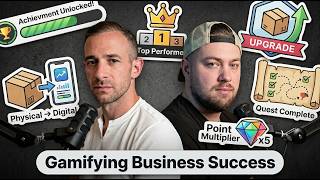
In this Owner Meeting Podcast episode, host Christian Osgood interviews Mark Stern, founder of Custom Box Agency, about turning digital services into tangible, gamified physical experiences. They explore how physical product assets—custom boxes, cards, and game boards—can enhance the customer lifecycle (acquisition, onboarding, retention) by engaging all five senses and combating digital distrust in the AI era. A central case study is the "57 Hats" deck, a role‑identification game that uses QR‑coded cards to help businesses map, delegate, or outsource functions, and serves as a repeatable onboarding tool. The conversation delves into the creative process: brand identity, mood boards, design teams (10‑20 designers plus warehouse staff), typical three‑month development cycles, and the importance of custom versus cookie‑cutter solutions. They discuss integrating AI and digital tools (cloud code, Replit, Vibe) to make physical products interactive and scalable. Real‑estate education examples, such as a box set for Krista Mashore, illustrate how tokenized milestones (coins, medals) create open‑loop gamification that drives lifetime value. Mark shares entrepreneurial lessons, including the cost of hiring incompetent accountants/bookkeepers, the need for legal safeguards, and the value of learning “stupid taxes.” Both agree that pure information is being commoditized by AI; the future lies in experiential, mentorship‑driven, gamified offerings. The episode ends with practical advice on how listeners can engage Custom Box Agency for their own brand differentiation.
Chapters
Hello and welcome back to the Owner Meeting Podcast. I'm Christian Osgood, your channel host, today joined by Mark Stern. Mark, welcome to the podcast.
Christian, it is so good being here. Thank you for having me.
Absolutely. Now, Mark is absolutely fantastic. I'm actually really excited to share this episode specifically. We have so much real estate-specific content. I love to bring in other entrepreneurs. And while you've done stuff in the real estate space, I'm sure we're going to get into that. I'm really, really interested to talk to you about, one, the way that your business is Branding, packaging, and using creative. I think there's a bunch of universal things that you are dealing with right now in your business with the rise of AI and actual human relatability. I, I'm really interested in your company. If you happen to be listening to the podcast, uh, just know that Mark also has an epic background of a ton of projects that he's worked on. So I, I'm very, very interested in this on a branding and just human connection in business standpoint. Uh, this is gonna be a fun episode, Mark. Officially, welcome to the Owner Meeting.
I'm thrilled to be here. Thank you for having me.
Oh dude, absolutely. Absolutely.
Okay.
Diving right in. You're not, so I actually started my career literally in the apparel and promotional products industry.
Oh yeah.
You are not, you are not a swag product industry. What you do goes way, way, way, way beyond that. Tell us a little bit about your core business.
Yeah. And so there's nothing wrong with swag. Uh, we joke and say swag means stuff without a goal. Swag has its place, but what I find is people are spending a lot of money on swag and And if you have an established connection and community with your people, it's just stuff. And if you send me stuff, it goes to Goodwill, it gets left in the hotel, it gets thrown out. And so when we think about it, at the end of the day, what I really care about is what are the tools and resources that your people, customers, clients, members, students, whoever you serve, what do they need to be set up for success out of the gate? So, so much of what we anchor on is customer journey and the customer experience you're trying to create. We anchor it on a simple formula, which is your customer lifecycle, you acquire, you onboard and deliver your services, and then you want to retain. Those are 3 different ways that we start to think strategically about the campaigns we build out and we specialize in physical products. So what that means is whatever your goal is, we'll get into your business and build a unique product asset that literally will take your people from onboarding and minimizing the overwhelm that typically happens when they start working with you to having a clear pathway to getting the result. And this is why we love physical is in this age of AI that we live in, especially, and when we talk about experience, experience is seen through the senses, your, your 5 senses, sight, sound, touch, taste, smell. When you're only digital, you're only tapping into, into what people see and hear. And the question that people are having right now is this rise of AI is also this rise of digital distrust. What's cool about a physical product is I can create a unique experience that keeps you top of mind, takes up real estate in their house. And truly gives them the tools and resources to navigate what it is you're trying to get them to do. And then we can incentivize behavior with physical products as well. So having that real human touch, I can activate all the senses. But more importantly, when you think of physical and digital or physical and local or physical and in-person, yeah, there's just so much you can do that takes that experience to the next level and truly removes obstacles to give people what they need to get results faster.
Give me an example of a company that would be traditionally digital, uh, that you guys have worked with and how you would take the, hey, this is a digital brand and we make it physical without just adding swag. So we're assuming you're not gonna, we're not just sending them Yeti mugs and a branded cap.
Yeah.
How would you get an online product, community, education, any of it? Yeah. To be a physical, it takes up real estate in their house. I'm really interested to see how this works.
Well, I'll, I'll show you one of the campaigns that we deployed. Um, and it was a simple concept, which is If you're a business owner, the question I have for you, and it doesn't matter what business you're in, do you know how many hats you're wearing in your business? So part of this is in our ecosystem, we have a staffing agency to help staff these roles. So if you're looking and it's a virtual service, hey, I need people that can fill, whether it's a graphic designer or project manager or client manager, you probably have roles that you need filled and you, and we have a service to help fill those. But how do you grow that? Well, part of what we did with the Box experience, and this is what we would call an acquisition play. Is we created this product called 57 Hats. And all this product is, is it's a deck of cards that represents all the most common roles in a business. And you literally can go through the system and say, what are the different roles or hats you're wearing in your business? You flip through the cards and you can pull out all the different hats that you're wearing or that your team is wearing. And then we'll take you through an exercise. There's actually a game board inside, like Think of like a Monopoly board. Yeah, I wanted to build a game board out. So within this experience, we literally had our own game board produced that literally takes you through two different exercises. One of, if this is a role that you're deploying, should you do it, delegate it, or delete it? And there's an evaluation criteria to help you think through. This is a hat I'm wearing, but I could delegate this role. I didn't even know this was a role. And then we'll take you through an exercise. Can you delegate it with AI? Can you delegate it with an existing teammate? Can you outsource it or is this something that you need to hire out? So at least it's driving awareness to, if you don't have a vernacular for all the things you're doing in your business.
Yeah.
Um, now you can go through the system in less than 15 minutes and you can see like, here are the different cards we literally played off of like CEO and the hat you'd wear. So all the different colors represent different departments in your business, but we're trying to give you the power to understanding, you know, what it is. So if in 15 minutes you can do it, it opens up the question of, You drove awareness. These are roles I need to staff.
Yeah.
Can you help us staff it? And the best part is for every card, there's a QR code on the back, which gives you for that role. We already give you job descriptions. You can manipulate interview questions, personality tests, KPIs, roles and responsibilities. So you have a lot of stuff behind every single role and an online portal to help you on this. So it's all about relationship building, introducing the products and services we can do on the backend. But this is how we've taken something that's a digital service, tied a physical element, and oh, by the way, when you're thinking about physical products, repeatability is important because if I play Monopoly today or play it a year from now, I may have a different experience. It's no different than how we think about products because if you know you're wearing 28 different hats in your business, do it again in 6 months. And if you find out you're wearing 16 hats or there's new hats you've introduced because your business has evolved, Now this repeatability keeps us top of mind and taking up real estate in your house. And the last thing I'll say is you don't realize, uh, until you release products, other use cases. So now we're seeing people use this as part of their sales process, taking their prospects through how many hats are they wearing to be able to simply say, oh, by the way, if you hire us, we can replace all these hats. So there's been so many different use cases that we're seeing roll out, but it just started as a simple idea, which was me going, as my business grew, Yeah. Um, I took hats off of me and teammates and people went through a mourning phase of like, do you not respect me? Do you not appreciate me? And I'm like, no, I just want you focused on why I hired you. Yeah. I wanna get rid of all this nonsense. And the second they realized that, how it transformed my business. And so it's just been really cool to see how quick people can get a quick win.
Um, this 57 hats concept is so interesting cuz, cuz there's a bunch of boring business tasks that I do. So this reminds me of two major things that we do as a recurring theme in all of my companies. one way less cool, but once a week when we're, when we're implementing these, we'll go through every single week. I want one day, all of my leadership. I'm, it's, it's, it's arduous, but write down every single task you do. So, so just for one day, and then we'll do this for usually about 8 weeks. So you'll end up with 8 full days of notes. You're gonna highlight them either, uh, red, this, this task could be delegated to someone else or an AI and also makes no money immediately. 2, this is an important task that does need occasional human input. I probably should manage this occasionally, but we may be able to systematize this, or maybe AI could beat us. Or green, this is an income-producing task that is high value to the company right now and needs you. So we just put it into 3 boxes. I love the idea of saying, hey, let's make this fun because it's a chore in my company and it's a really valuable one. We took in, like, a recent example. We took a similar concept to what you've done in 57 Habits, but a way like less cool version. We redid things to where the same staff, we averaged getting a lease signed every 4.5 days was our average. We've brought that to 2 in 2 markets. So we've done this, you know, we've rolled this out 2 times. That was the only change that we made in that time as we went, can we build in like cloud code? Can we go through and just build an app that will take responding to Facebook Marketplace create a lead and send someone out. How much time will that save? It will be the little things like that. If you can gamify that, the other thing that that does is it fixes your org chart, which is something that I do. Yeah. I, I should do quarterly, honestly. I, I really just do this annually.
We all should.
But we get together and it's like, hey, let's write out the roles and let's assign everyone to the roles. Let's make sure no one is doubled up on the same task and let's make sure that there's no critical task that has no one assigned to it. Like that's the rules for the org chart game. But all of those are like, they're the meetings that everyone dreads. Like no one's excited. Like, oh yes, it's the annual org chart. We're gonna go to Christian's house and hop on the smartboard. Like no one's excited about that. 57. I mean, listen, what a great idea. As a board game nerd, I would have so much more fun being like, okay everyone, here's your deck of cards. I want everyone to sort out by card. The graphic's cool. The art's cool. If you're listening to this, I actually recommend going to The Multifamily Strategy YouTube channel. I also host the podcast episodes there. So you should see the image that he held him up just a minute ago. Awesome artwork, but it makes it visual and tactile instead of conceptual. That's really the only difference of what you did. And that's, I'm already excited. I'm sitting here being like, I need that.
Like that's a, oh, I'll send you one. That's one of the products that we need.
Like that's just a cool idea when you come up with an idea like that, because that's really well thought out. Like you've come up with 57 things, you have QR codes, you have concepts, like that's a, you do these in mass. You've done this for a ton of projects, but let's use the 57 hats. How many people, how much time, what does it look like to actually develop, hey, I had this cool idea into a beautiful, simple product like that?
Yeah, it's, it honestly, it just depends on the complexity. I always tell people about 3 months.
Mm-hmm.
Um, and it, there's a give and a take with the client. And so we can drive most of this ourselves on our, we have a full service team. My team, my core team is over 20 people and we have our warehouse. House that has about another 20 or so people in it. Um, but really it's a fun process. What we find is step 1 for us is, um, we do a 2-hour virtual strategy session with our clients to understand their universe. Where are you today? What's the big vision? What is your suite of products? What do you offer the market? Because sometimes they think they want to go here from a physical product standpoint, but once we see all the pieces, we can at least paint the story of all the different permutations. And then once we land on where we want to focus our energy, Typically people will fly into Austin and spend a day with me. And at that point, if you have a book, we're going to read your book. If you have a course, we're going to go through your course. If you have any services, we're going to want to understand the slate of services because what I don't want you to do is show up in Austin and be like, or it could be done virtually, but it's more fun in Austin because you can touch dozens and dozens of examples in real time and see things that are really, it just, when people think about it themselves, they don't think about physical products the way we do because we spend 100% of our mental capacity own physical products. The designing of the experience, what we anchor on is backend first. What is success? What's that success metric? An easy example is right behind you. A success metric for YouTube is have you hit 100,000 subscribers and you get the award behind you. ClickFunnels 2 Comma Club Award, if you're familiar with it.
Oh, there we go. They have such an aesthetically cool award too.
Yeah.
They do a great job of doing that. Yeah.
So if you ever want to do a plaque award, like what's behind you or whatnot, that's what we consider retention because that's all about incentivizing, but understanding the success metrics, you know, we've had clients in the real estate space say, success for us is you have 10 properties in your portfolio generating passive income. So the goal is they want you to build generational wealth and that's their litmus. So if we know that's what success looks like, the pathway needs to be clear about getting your first property. And then eventually, how do I celebrate you when you have the milestone? Because the cool thing about having a success metric, we know what success is. When your client hits it, they know undeniably they've achieved it. Um, if you don't have that, then sometimes I see this in most businesses. How do you know they've been successful? And they may be happy, but I need them to know they've achieved the outcome of this part of the journey because how do I extend lifetime value? I introduce the next success metric. And so you're constantly from one game to the next. We love gamification or game in disguise. And so that's a lot of how we do it. If we know that, then we go to the beginning and say, what's the onboarding process? Because this is where a lot of people get— lose customers, which is they don't have good onboarding systems to say, here's the journey you're about to go on. Let me set you up for success. This is where a box comes in perfectly because it can paint the story of your universe as well as delving deep into the product, the benefits, what they have access to, how to get started. And then the pathway to it. So there's so many different ways to incentivize or gamify that journey. Yeah. But that's what we look at is 10,000 feet down to 1,000 feet down to ground level. And by that point, it's so clear in terms, we built so many of these on how we're going to engineer it, but not every experience is the same. So it's not a cookie cutter, it's custom box. Custom is a key part of our brand name.
Mm-hmm.
Because how we deliver for you may not be how we deliver for someone else in your space. It's all relative to what you're trying to achieve. And one last thing I'll mention is, yeah. Even hearing you talk about like, here's systems that we do in our business and your dashboarding and your red, yellow, green metrics in terms of the health of the business, things that you are already deploying may be perfect recipes for a product to develop. 'Cause all we're doing is taking what you already do, turning into a product, and now I can scale you without tapping into your time. We just turned you into a product that's an extension of you.
What a cool design. Oh, the creative process. This, this is where I find this the most interesting. 'Cause your, your business is imper— this is a very fun business.
For, for like, it's a blast.
We are, as an entrepreneur, you get to wrap your head around new challenges that already have some framework, right? You know, you're working with clients who already ostensibly, they're already making money before they work with you, right? So they, you have these, these products, you're like, hey, we have a working product. We have a customer base. We are lacking this side of the creative. How large is your creative team? Like when, when you on the front end, so someone comes to Austin, they touch, feel, you give 'em all the pieces. What does the creative process look like on your guys' end? 'Cause that sounds unbelievably entertaining.
Oh my gosh. Yeah, we have a big creative team. I mean, our creative team is so much the bread and butter because now people are coming to us. We always focused on initially physical products, but like our design is— we don't do sloppy. Like we have it so dialed in at this point. We have about 10 people on the team and that's growing. I look forward to the day we have 50 to 100 different designers on the team that specialize in different types of crafts. Yeah, but like this is kind of where if people have a vision, like we'll bring it to life. Every time I see what the design team puts out there, it is impeccable. Um, anything with design has to start with some type of brand identity and, uh, some type of mood board look and feel, because we call it a stop the presses moment. If we can't align on look and feel, you're just designing blindly. And this is kind of where, you know, what I always say about design is design is personal. There's things that I love, but if I'm not the client representing the product in the marketplace, at the end of the day, it's what you want and what you love. So we tell people there's 3 options from a design standpoint. If you already have your brand identity buttoned up, we're going to replicate the same look and feel with the products to keep it in your family. Most clients want the other two options, which is taking our existing brand identity and taking it to the next level so we can keep the same look and feel, the aesthetics, but how do we create a modern spin on it, but it still feels like it fits in your family. And then the third category is blow it up. This doesn't exist, or we're ready to rebrand. Branding is huge for us because once we anchor on that, now we have a common language for designers in terms of bringing it to life. So we'll focus on that brand identity piece initially, because otherwise a lot of these experiences may have anywhere from 30 to 50 unique assets in them. If we don't have that buttoned up, we have to redo the work around it. So that's kind of like our approach initially is we have to capture that look and feel. But this is, I would say it's getting into our bread and butter because we're so any day of the week, show me pretty pictures. Don't show me a bunch of black and white words on a page. I don't want to read a book. I want to I want to go through an experience that the picture brings it to life.
What a great show. Well, and so being in the real estate, so like, oh, I've several companies, but my 3 core companies, I have real estate acquisition, which is just me and my buddy buying real estate. Then we have our property management company and then Multifamily Strategy, which is our actual, like, that's my education brand. That's where I spend almost all of my time. And one of the biggest problems I, as soon as you said it right at the beginning of the podcast, I instantly went like almost every real estate, really large Real estate education, right? We're, I've, we've coached over 1,000 students. We're a way larger group for that space, especially in creative finance. All the groups do the same things though. You get like your first deal pen. It's a, it's a promotional thing that you don't do, you know, or you get a coin. It's always something small and it's, but it's always like a tokenized, like, congratulations, you did the thing. You get your first deal pin. It's not interesting. So what I, what I like about your group is that you guys can come into this and say like, okay, If everyone's doing this, how do we take this not one, not two, but three levels farther? And like, how, how do we take this and make it completely one-of-one unique experience? Do you have any examples of where you've done this in the, in the real estate space outta curiosity?
I have so many different examples. You know, real estate, one of the clients we worked with, I don't know if you're familiar with Krista Mashore. Have you come across Krista?
Yeah.
Krista's a buddy. Krista, you can kind of see her tiles right here, but we did a box set. So she has a real estate education program. How do you, dominate your local market, especially if you're brand new competing against people who have been in that market for ages. And so we literally turned her product into an entire box set similar to kind of this, where you had the box with all the supporting resources on how to navigate her training and two workbooks. The first workbook is for your first 30 days. The next workbook is about amplifying marketing since so much of it is her approach to marketing in the marketplace. The example that you just gave with coins, so you, do you send out coins or pens or different things like that?
I don't, I've actually, I have, I have not gamified gamified or tokenized my thing out of a frustration of every other group that being the same thing. That's why, that's what somebody, you said swag and I really relate to that. I'm like, I don't want to be a swag company. I don't find a lot of value, especially because my logo is my, I'm raising my eyebrow. I get all the time on YouTube videos, people are like, why are you doing the rock eyebrow? I'm like, I don't know, it's just my face, but it's just my backwards hat on my eyebrow and then Multifamily Strategy. That's our logo. I'm like, I don't want to put my face on apparel or coins and be like, hey, you can wear my eyebrows on your head. Like that's just, it's not been interesting to me. So when you're looking at like, hey, it's a box that you can get this out. That's interesting. That's high value. I would, that's a really cool thing to do.
But I love open loops. I love like setting, like the painting the vision of what it's like working with you long-term, but focusing on where you are at the beginning of the journey, but you have preceded the broader journey. And especially if your 3 companies somehow interact, the people may need to leverage the other 2 in some capacity or have the opportunity to.
Yeah.
You have to tell that story as well. When I was a kid, my father and I, do you remember when the US launched a new quarter for every state? I don't know if you remember that.
Yes. Yes. I actually had, when I was a kid, we did the thing where we collected each, you have the little cardboard thing, you collect all the coins.
And so that's a perfect example is when you are collecting coins like that, you're never going to throw out that coin board because the inherent nature of collection is you're going to keep it till you collect all the pieces. So there's intentionality of how you can engineer in the experience. That simple thing is actually have this arm— woo, that can be engineered. And oh wait, this is kind of where I'd say you can get inspiration from anywhere, but I have a real estate client or an insurance client that does a lot of insurance agent education, helping them grow. And we built out a simple coin board for them that literally— oh, that's so cool. They got the first coin, but we want the two other gaps looking at them back at the face, something that they can put up and display. It's still the same type of material. We've done this in books and different things, but the whole idea here is I may give you the board with your first coin, but you got to hit the certain milestones to earn it. And the simple idea of this is powerful simply because when you have an open loop, people typically want to close the loop. This is exactly why we may have boxes that at the beginning of the process, you may get box one, but you don't get box two until you hit a certain milestone. And even how we did this as a client in the trauma space, helping people who have gone through immense trauma and how they can escape it and reclaim their identity. But even how we designed it, as you start to collect the pieces, you can even design it in a boxy way. So there's, there's all different ways to engineer that. For me, so much of where I got inspiration for this was I do Spartan races. I don't know if you're familiar with mud runs. Yeah. Um, I did my 23rd one this week in Houston. I did my half marathon. Wow. Um, but what Spartan does so brilliantly is when you cross the finish line, they give you a medal and then they give you a third of a medal. And when I got my first third of a medal, this was when I was not in shape. I spent most of my life in the 220s. I got up to 250 pounds during COVID I'm about 160 right now.
Wow. Um, congratulations.
But like, when I started that journey, like they gave me a third of a wedge and said, you have to complete a 10 miler and then a half marathon to get the other two wedges. And you have to do it the same calendar year. That was the rule. So how they engineered this experience, had you told me when I first did my first Spartan race back in 2016, I didn't even run. If you said I would be doing a half marathon in 6 months, I would have said you lost your mind, but they engineered an experience. And as entrepreneurs, we need to hold a bigger vision for our people than they hold for themselves. So it made me want to train for the 10 miler. I got 2 of the 3 wedges and there was no way in hell that, um, I would not get that last wedge before the year ran out. Because I didn't want to have this thing staring back at me that I left this journey uncompleted. And now I am on to my 8th trifecta this year, which is just crazy to think about, like how it reprogrammed my identity on helping me evolve. Someone who didn't see himself as an athlete to someone who is now in his 40s and for the first time in life truly considers myself an athlete.
Exactly why we have you on the Unreading Podcast. This is something where any entrepreneur, period, needs to be thinking about how you do this and make this a game. Cause I mean, what a great example, the wedges. Like I would never think like, hey, the goal is to complete a Spartan race, right? Like that's, that's most people's starting point, right? So they correctly identified this is the average first goal for everyone and they will get a piece of their full award if they want to continue, which of course you don't want to have a third of a wedge, you want to, or a third of a medal? Do you want the whole medal? So it gets you thinking like, okay, well, if I did this one, maybe I wasn't aiming high enough. Let's get the second one and let's get up there. What an easy way to turn someone who would run one Spartan race into someone who has now run— you said more than 20?
More than 20. You are nailing it.
Because that is insane. Because you didn't just do 3, right? You're now a repeat user. Well, this is now something I do, and now I identify with this brand, and now I'm excited about this brand, and now I want to push myself. What a great Perfect example. You could not have chosen a better example than that, actually.
That's the two lenses that you can't forget is your goals as a business owner. This is exactly what you were hitting on. And my goals as a customer or client, my goal was achievement and identity shift. Like, I was doing this because it sounded larger than life. And I didn't realize that my body was capable of even doing something like that. For them, it's lifetime value. They found a way to extend lifetime value without it making me feel like I'm just giving them more money and I don't know if I want to keep giving them money. Like they engineered a way that made me say like a Groupon that I bought in 2015 when I saw like a Groupon for a Spartan Race that I may have paid $60 for has now translated into me probably spending thousands of dollars. It has definitely with Spartan Race over the last 10 years. And so that's it is they want lifetime value. We want an experience. We want a transformation. We are in pain. We want a certain outcome. How they engineered, how they balanced the two. This is why I love that example. And it has anchored so much of my thinking in terms of how we design.
How long have you been running?
Me physically running?
Yeah. How long are you running the business? Like this concept? How long has this been your thing?
Informally, because this was never meant to be the business. This was the supplement to everything else we did because I was frustrated.
That's how a lot of the best businesses start, by the way. You have a sub-niche in a problem you're already solving. Like, oh my gosh, we could just be really good at solving only this piece. And now you have a way bigger business. That's awesome. But continue.
So back when I— so I was in corporate America, I was a corporate American junkie for years and I worked for a company called Deloitte. It's a big consulting firm for many, many years. And when I left, it was in 2018. And the first business I started was virtual events. I saw this opportunity in virtual events, but what drove me nuts about virtual events was sitting in front of a computer, just listening to someone talk just drives me nuts. Like, I don't want to just sit here for hours watching you and it may be interesting, it may not, or you may overwhelm me with 40 interviews. Um, so I, it started me with me just saying, I just wish they would just send me something that helps me navigate this so I can get the most value. And it's a benefit for them because if I can get what I need, then I'm ready to ascend, buy your more expensive products and services. That was back in 2018. So we always introduced a box. Or something physical with anything that we did. And people just kept saying, how are you doing this? How are you doing this? And when COVID happened, um, back in, uh, 2020, it would've made sense to just go all in because we had 2 years of experience in the virtual event space, but everyone became a virtual event expert overnight. And I was starting to build out Custom Box Agency in 2020 as a supplement, just because people kept on asking me about it. And it was my mentor who looked at me and said, are you the virtual events guy? Are you the custom box guy? Because you're confusing people. Half think you're one, half think you're the other. And in corporate America, I was celebrated for being the world's best generalist, being good at everything. Entrepreneurship, they want to celebrate you for being known for something. And I killed the virtual events business at the beginning of COVID and that one pivot turned me from being a competitor to anyone running a virtual event to being a strategic partner. And going all in on the physical, there was just something that was just, it was like an itch that needed to be scratched. And especially during COVID when everyone's quarantined at home, we were the means to be able to deliver a connection point and value with a physical product in a world that everyone's just trapped at home. And so this is really, we went all in May 2020. So we're officially coming up to formally 6 years in this business.
Wow. Congratulations. What a great time too, to launch a business with deliverables to at home. There's some great world events that made that an excellent time to launch that company. I know a lot of entrepreneurs had ideas that took off at that time. Like for me, two of my core companies, it was that time that got me out of corporate America. I was the ability to be at home. You're like, wait, everything shut down and I actually have time to sit here and think. Historic, amazing time to launch a business, but what a great vertical to be in. Like, hey, we, We take things from conceptually online, which being in the online space, 2019, 2020, 2021, great time to be in that event space you're in and using that to pivot into physical products. Awesome, awesome market timing. That's a fantastic idea.
Oh, I'm so blessed, but it's so crazy because it's like anytime you start a business, if I was like, hey Christian, we can build a box experience on that. You look back at me and be like, I don't know what that is. Because like box experience, no one knows what a box experience is. But Yeah. Like to refine it and to prove case in the market. You know, it was one of those things that I probably, everyone says emulate before you innovate, but I was like, but I need this now. And how it's evolved has been such a blessing, but it's been so cool to take just how I think and turn it into a business. That's the best part about it is it doesn't feel like work.
Yeah. Well, and AI is going to help your business a ton because the biggest, so especially in the education space. So we'll take, me or any of your education clients as a perfect example, all the information is now free and it's, and it's delivered better and faster and easier. You can ask AI anything. It will get, it'll spit it right back out at you. Right. You can even create a bot to research it for you.
You can turn a physical product into an interactive digital experience using Cloud Code or Replit or Vibe or any of them. Just the amount of like how SaaS is getting so commoditized at this point.
Yeah.
You can build anything. It's insane that ways that we could take 57 Hats. We're turning 57 Hats into a digital product as well. And turning it into a training tool that anyone can then take and do it with their clients and then leverage that as a sales piece. Like there's just so many different angles that we would not have been able to do if it wasn't for AI.
Yeah. But having that human element to like, hey, you really have to understand the brand at a higher level, at a human level to even start to prompt all the things you can do. Anyone can learn anything, but the only thing, so I, my prediction, I think by the end of this year, anyone like the classic online guru, right? Hey, I'm going to launch a $500 course. You're going to sign up for it. I think that's, I think that model's completely dead. AI can do that for free. So no one's signing up for subscription courses at low cost. No one's doing online information that's dead. The only surviving, and I think this industry will grow incredibly, the only thing that survives are experience and like direct mentorship. Those are the only two things that make sense, right? AI hasn't run the business yet. It knows a lot of facts. But it can't help you with hands-on and the actual gamification, having a community and an actual tailored experience. I think that's going to be the only way to survive for anyone who's in the education space because the actual fact educating, it has no value now. There's no reason to watch a YouTube channel when you can just have AI do the same thing, but faster with less mistakes and no brain farts. So I feel like people in similar businesses to me have to have your product. Like, I imagine your sales have gone up very notably over the last couple years and will continue with AI. That should be expanding pretty rapidly.
We're having fun. Everything you say, I completely agree with. The last thing I still, to this date, I can't tell you the last time I've gone through a course. I can tell you that I've bought courses, but I never go through it. And part of it is that one, sometimes you get a course that somebody locks themselves into a room and films a course, and I'm just like, They haven't pressure tested it. They don't understand my problems. They just put a bunch of stuff together. Um, and there's been so many times that even 7 and 8 figure businesses that we worked with, when we've gotten into their product and gone through their course, we will map out to a T to be like, did you know you have about 60 hours of video in this course? Is that what you hold up a mirror to what's being built? And it's one of those things that I love to look at people and be like, would you go through this thing that you created? And it's shocking, like how often it's like you create something, but it doesn't even reflect the systems of how you deliver it. Whereas that interaction. The experience results. I want results. So sitting and watching is not as good as taking something and building. And this is where AI is so powerful is if you can take what I'm doing and bring it to life, like an interactive experience, interactive workshop with a tangible result at the end. I value my time more than anything at this phase in life. And it's the one thing I will never get back. And so this is kind of where it's just, I don't want to sit and watch a course. I want something that when I'm done, like I have an actionable result that I'm proud of that's advancing the needle as to why I purchased this thing in the first place.
Oh, that's fantastic. When you are going through all of these, you, you've had like a ton of clients and I, I understand why your concept's so successful. I, I, I honestly do think that the industry need for what you do is going to triple in the next few years. So I, I think you're, you're positioned very well. It is very expensive typically for people to go into things that they know nothing about. And there's the dumbest you'll ever be is at the beginning. So I'm going to ask the question that everyone always waits for. If you're an entrepreneur, better to have someone else make the mistakes for you. And so they can pay the stupid tax for all of us. We all make mistakes in the building of this business or any of your business ventures. What has been the highest stupid tax you have paid to be where you are today?
Oh, God. Like, cancel your afternoon. There has been so much. And the thing that I will anchor on is I've learned Self-respect is something not to be undervalued. That it's so easy as an entrepreneur to be like, I'm not an expert in this. And so I'm going to tap into the person that's an expert in that. So I'll just keep it simple. You may say sales and marketing is not your expertise. And then on a scale of 1 to 5, I may say I'm a 2 at sales and marketing and 5 being exceptional, but in experience design and box builds, we're a 5. And then I find the next person who says, well, I'm a 5 in sales and marketing and you just trust. And um, hope that what they say is the thing that they're actually good at, but you realize that their 5 is actually your 1, that the meters aren't weighted the same. And we try and compare everyone and second-guess our own selves. And so there's been elements of that, that I was like, we hired an accountant. Um, this was the accountant that we worked for, for the last 13 months. And there's a lot of little things that went, that felt like it was being mismanaged, but I was constantly being told I was wrong. And it turns out that I was right. This accountant did not file my 2024 taxes correctly. They did not balance my books. They did not do a lot of the things that they said that they were going to do. And every time I raised a concern, they put it back on me when I knew that I was right. And when we switched, they knew.
I fired a bookkeeper on Monday this week. So as of the filming of this, 2 days ago for the same exact problem, it was just like, hey, You didn't deliver the deliverables and every time it's brought up, oh, well, it's because you didn't give me this one thing that I forgot to ask you for. Absolutely have been there.
So where am I now? My new bookkeeper was the one who revealed it and I kept on going back to the old one being like, hey, you told me no, but here's the thing. And when push came to shove, it's cost me probably almost $10,000 to redo and refile for 2024. The same with 2025. And so the amount of cleanup that I'm having to do, but here's the reality is I found the right partner, but I had to go through the exercise of going through bad to understand good and appreciate it. So sometimes as an entrepreneur, the taxes we pay is simply to learn the lesson that we needed to know at this phase. Same thing happened with, I never like had to engage a lawyer that much. Now we have a lawyer on retainer. It's some of the best money that I could ever spend. And lawyers are designed, it's scary when you get lawyers involved, but You don't want to have a lawyer involved because of blocking and tackling because you're dealing with something. You want a lawyer to be involved to help put in the systems to be preventative. Yes. So when you face things, and so what you learn in this game, there's a lot of smoke and mirrors. There's a lot of people who claim to be performing at this level, but when you really get into it, it's just not real. And a lot of narcissism and entrepreneurship. And we dealt with clients that their business worked at one point in time. It made sense. A lot of make money online excelled during COVID because when there's a recession in the marketplace, make money online typically skyrockets. And they were not able to arrive at that curtail. And all of a sudden you're in this situation. We had a client that would not get their inventory out of our warehouse, over 30 pallets for 6 months. And we wanted to love on them and take care of them, but we ultimately had to get lawyers involved. And so part of it is just, you know, it made us look at our contracts, our agreements, everything in place to say, are they designed to protect your clients? As much as your business. And so I feel like in the last 2 years I've spent tens of thousands of dollars cleaning up and blocking and tackling to preserve, because for me, my team is my everything. We love on our clients. We want to deliver an exceptional experience, but I can only control me and you can control you. And so it's just been one of those things that I feel like I've spent a lot of money to be in a position to ultimately say, Now I've learned this lesson. And this is kind of when I hear people say, okay, when you build a million-dollar or multi-million-dollar business, it takes a while to build the first one, but the second one you build a lot faster. It's because you've worked the muscle and you've learned all the little things that have happened. But that would be probably the biggest one in the last 2 years is the amount of things that I'm like, oh my gosh, I'm trusting these people to do the thing that they say they're going to do. And now I'm having to clean up in a way. And, but you, you can look at it as, ugh, this is just costing me money. Really, it's looking at it through the lens of Why is this happening for me? What's the lesson learned here? Uh, to ensure that it does not happen again. And so with things like this, we have the right lawyer partner, we have the right accounting partner. You're starting to build a moat and here's what happens. The louder you get and grow your business, you're more susceptible to risk. You're more susceptible to people who want to come after you because of your success. And in that sense, this is kind of where the best thing you can do is preventative means in finding the right strategic partners. And sometimes it doesn't happen instantly, but don't ever get pissed about this bad experience you had. It's a lesson learned that sometimes the universe needs you to experience it so you don't do it again. So that would be kind of the stupid tax of other people's incompetency and lack of follow-through and lack of doing what they said they were going to do. Doesn't just impact me, but impacts you, like impacts a lot of us.
And how you mitigate that, by the way, you just helped everyone a ton. You mitigate that by getting advice from people who've already gone through this. You already know, hey, accounting is something that needs to have a, you need to keep an eye on it and you need to be fast to fire when it's not going right. Trying to work with the wrong person in the wrong space, unbelievably expensive. Like once you know that it's not the right person for that, your ability to remove them and replace them in the organization, you could save, I mean, you got $10,000 is actually not too bad for taxes done, uh, done wrong. You actually kind of, you did a good job identifying early that same mistake done correctly. And not solved, that could have cost hundreds of thousands instead of $10,000. Oh, like that, that's an easy mistake to go way up in cost.
And look at someone like you who has multiple businesses, like how you structure your business to minimize risk to you. It's another thing that like as a new entrepreneur, I don't know how to structure the business or businesses, or if I wanted to have, you know, an umbrella business that other things fall under and setting that right. Up correctly to minimize risk across the entire organization. You personally, like some people just have a bunch of businesses that people work across all the businesses, which means if one business goes down and is susceptible to a lawsuit, it may expose all the other businesses too. And so thankfully I'm not, I've never been in that situation, but I've seen that play out in a way of like, you don't know what you don't know. Yes. But this is one of those things that could cost you a lot more if not done correctly.
Oh, fantastic advice. Super. Fun podcast. I actually learned a ton. So this is very fun. And I think my number one takeaway is almost any business, I can't think of any business that would not benefit from finding a way to gamify your deliverable. Like you don't have a business if you don't have clients. So everyone in business, you have end users. If you can have a way to make the task that you need done engaging and take a need-to-do task and turn it into a one-of-one experience. You now have a top tier product. That is a— opened my mind to a lot of things. I now have a bunch of thoughts, so now I'm gonna have to like, I'm gonna be taking like a ton of notes as soon as we're done with this. Uh, yeah. Now you got my entrepreneur mind just spinning on like, oh my gosh, we've missed out on a huge opportunity. Uh, it's awesome. Awesome. If, if someone's listening to this podcast right now and they're like, this is, I, I need, I need marketing team to do this for me. Uh, how do they reach you? What is the, what is the simplest way to get connected with you? Your team?
Yeah, no, thank you for asking. Um, uh, easiest way is go to customboxagency.com and just book a free consultation with us. Uh, we love to hear what you're doing. We always are very upfront. If we can easily help and support you, we'll show you what's possible. Um, if we're not the right solution for it is what you're trying to do, we always love to help people and guide them in the right direction. We're so focused on the relationship piece. You can also look me up on LinkedIn, Mark R. Stern, um, or find me on Facebook and just shoot me a note on Messenger. Um, you know, we love to hear from people. I love to hear what people are doing in this game. So easiest thing is to do, just go to customboxagency.com.
Awesome. Link for that will be below in the show notes and description.
Amazing.
Awesome. Any closing thoughts for us, Mark, as we are, uh, as we wrap up here, any closing thoughts or things that, uh, anything you wanna share to someone who is looking to do exactly that, they're trying to grow their brand or learn from you? Uh, final thoughts.
Yeah, my only final thought here is so much of what we do is just taking what it is that you do and pull it out of you and restructure it in a way that allows me to scale you and buy back your time. And so in that sense, like the sky's the limit in terms of what can be produced or built out. The process is meant to be fun. And what I don't expect is that you have a fully baked idea when you come to us, because chances are you don't know what you don't know. And so I actually like knowing what's the goal. That's all I really need to know. Yeah, because the second we know what it is you're trying to achieve, it doesn't matter the industry. Um, our whole thing is we are very like, we have a process that will take you through and guide you through and make it as easy as possible for you. But, um, like that's the fun thing about what we do is, you know, if you have a comparable service to other people, we all have businesses that a lot of other people, um, are doing some version of, but no one does it the way you do it. And especially when you tie a physical product into the game, when your competitors don't have anything like that. It's an instant point of differentiation and it stands out in a perceived premium way. And that's essentially what we're trying to do is how do we make you stand out in a loud, crowded environment in a way that represents you and, you know, really makes it easier for you to do what you do.
Oh, that's fantastic. Well, guys, we meet with owners on this podcast specifically so that you can get all the benefits of doing the owner meeting without doing that. I built my entire business off of meeting with the people who've done the things that I want to do. Mark, the business you built is incredible. I'm super excited.
Thank you.
As soon as we're off this podcast, I'm going to, I live in Dallas, so I'm going to be scheduling a trip down to Austin.
This is, oh, please, dude.
Fantastic. Fantastic idea. Yeah. Biggest takeaway, you gotta implement an experience in your business and you have to find a way to make these tasks fun. So Get creative in your business. Set yourself apart from your competitors. If you don't know how to, reach out to Mark. His team will help you do it. Guys, this has been The Owner Meeting Podcast by Christian Osgood, hosted by Multifamily Strategy. We appreciate you and we'll see you on the next episode.
More from Christian


What Investors Want in Every Pitch: Property, Business Plan & Team #RealEstate #Pitch




Speak with authority to turn broker rejections into deals - boost your confidence #RealEstate

Turn Broker Objections into Closed Deals - CRE Negotiation Tactics #RealEstate #Negotiation

How to Get Multifamily Deals Under Contract Without Having All the Cash | Objection Series Ep. 1

How I Scaled 500 Apartments in One Texas Market in 12 Months #RealEstate #Multifamily


Turning a $12.2M, 200-unit mess into profit - live multifamily turnaround update #Investing