The Real Reason Tax the Rich Fails - Its not what you think
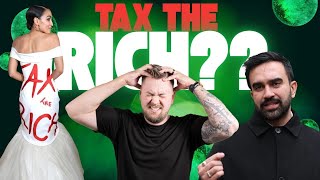
Christian Osgood, who built a multimillion-dollar real estate portfolio from homelessness, argues that taxing the rich doesn't work because governments spend inefficiently. He says tax incentives like Low-Income Housing Tax Credits already let wealthy investors fund affordable housing while reducing taxes, and that real estate ownership hedges against inflation better than government redistribution.
Chapters
2 lives in 1 week. What are we doing here? Well, today we're actually going to keep this relatively unpolitical because this is a non-political channel, but we're addressing a subject that, while tax-related, is kind of politically charged. So we're gonna go ahead and dive right on into it today, talking about why tax the rich hasn't historically worked and continues to not work. Now, for context, I have been homeless. I've worked screen printing for $11 an hour. I've lived in the back of my truck for an extended period of time. Today, through real estate, I am objectively a multimillionaire. So I can kind of weigh in on both sides of this. Uh, but why doesn't it work to tax the rich to fix your problems? This has been a slogan of a lot of politicians for a long time. We're seeing the effects of this in New York. We're seeing the effects of this in California. Now, If you have opinions on this, you're welcome to weigh in. This is a live, so you guys can weigh in. I'll actually respond to your questions as we go here. But the goal of today is specifically just going over the specifics of— there's two real reasons it doesn't work. And I think for most people, it's not the reason you think. What the reasons I hear online that are incorrect are like— I mean, they're less correct, I should say— is people go, oh, you know, the billionaires, they create all of the jobs. Yes, they do. And I think they should be rewarded for that. However, on the flip side, is it worth the billions upon billions upon hundreds of billions of dollars for the value they create? It's, it's up to you whether or not that is true, but I think that one is subjective, not objective. What you think people should be able to make, or should it be unlimited? I'm a big fan of free market myself, but there's actual legitimate arguments for both sides. So why does it actually not work? First of all, I think people are just totally forgetting on how taxes work. So what is tax? Tax is giving your local government money. I don't think anyone on either party side is under the belief that governments are good at spending money. You can do this any which way you cut it, left or right. California, they tend to give it to the homeless or spend it on a train to nowhere. Am I making fun of Gavin Newsom? Yes, I am. But also the right tends to spend it on stupid stuff too, or they could just be spending it on things you don't agree with. If you're not a big fan of what we're doing in Venezuela and Iran, those are things that tax dollars are going for. So if you're one of the people chanting tax the rich and then they're spending that money on warheads, yeah, that's what taxes is for. And ultimately, who do you see on TV making or influencing most of the policies? It's the rich. So is taxing the rich actually solving any of your problems? You don't get more money because someone who has more money pays more in taxes, and them having less money affects— in fact, affects basically nothing in your life except that your government now has more cash. Does the government spend the cash efficiently? I would say no. Now again, multiple people multiple opinions on this, but I consistently see this as the number one factor why taxing the rich is the wrong mindset. Uh, let the rich do what the rich do or come up with another program, but the money does not and has never filtered down to the poor because you give more money to your government. Now, if you want to do things to like more programs, the, the, here, here's the other problem, and this is what it leads to ultimately. If your stance is tax the rich, all of our problems will be solved. You're not really concerned with the rich. If the goal is save the poor or feed the poor, your slogan and your street signs would be save the poor and feed the poor. It's not. It's ultimately people who have less are complaining and they want to bring other people down, not build other people up. I mean, that is the actual— if you look at the basis of the slogan The, the whole eat the rich, tax the rich, the rich are the problem, it's the billionaires— that is a Disney Channel mindset. Uh, just because Scrooge McDuck had a lot of money does not mean the people with lots of money are bad. Now, some of them are bad, some of them also do a lot of good, just like poor people. Some people do really bad stuff, some people do good stuff. Money is not the determining factor. And again, there's a lot of different opinions on money. There's reasons why people are wealthy. There's region reasons that rich people do corrupt things. And yes, it magnifies the amount of terrible stuff people can do. It also magnifies the amount of good you can do. So going at this as a having money is evil, I think, is a really naive mindset. But really, where I'm looking at this is who are we giving money to? Now, how does this tie to real estate? Why are we doing this on the Multifamily Strategy channel? I thought this was really relevant because one, all of my audience wants to make more money and move from where they're at to a richer state, which means taxes are going to be an implication. And if you don't think tax has a ton to do with real estate and real estate investing, uh, you're insane. There are so many different tax shelters as well for the rich to move their money into different states, different properties, different asset tax. The tax code is based primarily— and there are problems with it— but it's based primarily on the rich being able to deploy their capital back into the economy. So what's one of the things the US government is the worst at. We're terrible at providing housing. Anytime a politician comes in and says, I'm gonna fix housing, that means they're gonna throw a bunch of money at creating slums. There has been no exceptions to this. Prove me wrong. Anywhere in the US where they've done a massive government-sponsored housing project, have you ever heard of government housing that just went fantastically? They created a utopia? No. Government's terrible at this, and they know they're terrible at this. For this reason, they give us huge tax benefits to develop, to operate, to provide low-income housing. A lot of my portfolio is LIHTC, Low Income Housing Tax Credit properties. We actually get government incentive to keep the rents artificially low so that excellent people can have excellent places to live above the average standard of living, below the average standard of pricing. This is all incentivized, but these are traditionally, I would say, good things. Like, if you are wealthy and you want to pay less to the government, you get to allocate dollars towards things that actually matter. You can invest in your business, which creates more jobs. You can invest in real estate, getting more write-offs, providing more housing, or more— you actually do have some write-offs in other vehicles of real estate, but multifamily is the traditional one. But provide housing, pay less taxes. What do you want the taxes to be for? For me, it would be feeding people, housing people, repairing our roads, and maintaining law and order. I don't want to get robbed or mugged. I want affordable housing. These type of— these types of things are really, really important. But when you say tax the rich, you're saying I want the government to do this instead of the people who generate lots and lots of money. I think we should be lining up the incentives for, hey, when you have lots and lots of money, you can be tax left if you do things like real estate. And I think we should expand that and have more ability for other problems. You know, if your big thing is like, hey, um, let's go solve the, the medical system, let's do some tax incentives around the rich, not corporate tax, but let's say, hey, you can put money into X programs that will do Y. It's just an idea, but I think taxing the rich as opposed to giving them investment vehicles, it just seems to make a lot more sense to me. So always curious what your thoughts are. I want to drop this video here. I just saw another video clip on, uh, Mondame's failed attempt of like, hey, uh, we're gonna just eliminate all these expenses, and he's already raided everyone's pensions. He's coming in raising property taxes. It doesn't help anyone except A lot of the ultra-rich are now saying, well, I can be rich in New York or I can be rich in Miami. New York hates me, Miami loves me. I'll provide jobs and services and investment in Miami or in Dallas. And all of a sudden we're getting a flood of all these people here. It doesn't actually work. It's not that the idea is wrong, and I don't think people are crazy for having these ideas. It usually stems from a great place of like, hey, I, I want, uh, I want more people to have more opportunity. My argument and my thesis here is giving people more opportunity and giving the government more money is not the same thing and will not have your desired outcome. Osgood says ultimate evidence is trying to tax a country into prosperity does not work. The fact that there are multiple states, countries, China, Russia, California, that I've tried it and every time it's failed. And the counterargument to this, because I will argue both sides here, California will often say like, hey, well, we're the biggest economy in the US. We prop up a lot of the USA. And I, to a certain extent, they've done amazing in the tech sector. They have a like Silicon Valley just cranks out a lot of money. But you look at what the policies have done, it shut down a ton of their oil production, which they're now paying to ship into California. So they've become less environmentally friendly by producing less oil. The policies are bad. California just happens to be a gold mine. You have a lot of great— I mean, you have amazing climate, you have abundant natural resources, but more than anything, you have A-tier talent all over your state in the most profitable sectors. None of that has to do with tax policy. But they are doing a good job of taxing a lot of those ultra-rich out. You know, he's probably— you know, some of you guys have probably seen the news where Zuckerberg, Florida, Bezos, Florida. Uh, you have a bunch of people, bunch of people going to Austin, going to Dallas, and it's because we're more business-friendly. We want to have people who are stimulating the economy. We have all this land. We would love for you to come in and build. Ultimately, that's what ends up happening. And good evening to Lee. I also have Instagram up here on the left, seeing a couple people who are joining in there. And quick, uh, quick response to the Instagram comments, which I have over on my other screen here. Um, but yeah, uh, they said, hey— oh, it's actually someone mad at me. That's perfect. They're like, hey, I thought this wasn't a political channel. So my Instagram is my channel. YouTube, if you're watching on YouTube or any of the other platforms, Kick, StreamYard, all the places we kick out to. If you're watching this here, I am trying to take a fairly apolitical stance. I'm trying to be objective on where does the money go. I don't actually— I'm not a huge fan of having a two-party system, especially with the advent of social media. All we get is feedback from two sides. So we hear, you know, whatever you believe is going to be reinforced in your algorithm. So you're only going to hear things that frustrate you about the other side and things that reinforce your, your views. So it doesn't really matter where you are politically on this. I think logically the argument I'm making is there is no such thing as tax the rich. The same people are in government. You have rich bureaucrats and you have rich business owners. Taking from the rich business owners and going under a slogan of give it to the government, while that currently is a more left-leaning concept, I know that You know, your AOC tax the rich, Mondami, the same thing. While it is a left-leaning policy, my greater point is it's a stupid idea no matter who proposes it. It's not really a left or right thing. It's just a— the proposal in its purest form is let's take from the rich and give it to the other rich. It doesn't make any sense to me. I think that's the core of my thesis. Then the, the second part is It's— if you're like, hey, let's tear down the rich, it should be let's build up the poor. The people who are voting for this and cheering for this are going to be predominantly poor people who are angry at people who have more than they do. You're not actually solving a problem by attacking the rich, but there are a ton of awesome systems you can do to funnel more money to the poor. But this is just what we've seen, and it's a bummer to see it as often as I do. Which was why I decided to film today's video. Is it a little bit charged? Sure. And that is a good point actually from Oscar. Yes, uh, tax the rich usually means tax everyone. The rich have too many tax shelters. And I will say this as someone who takes advantage of many tax shelters on over 7 figures of income, like actual active income, um, I legally and correctly paid about $17,000 in tax. Now, while some of you guys may have got a tax rebate, that simply means you overpaid your taxes through the year. So if you got money back in your tax returns, congratulations, that's the dollar amount that you gave to the government for the year as a free loan, interest-free. You don't want that. But I do try to bring my tax burden as close to zero as possible. We do this specifically through real estate, especially the cost segregation. You can buy a deal You can accelerate the depreciation as long as you continue buying. You can just not pay a ton of taxes. Now, does this mean that we're not contributing because, oh wait, Christian made $1 million and he only paid $17,000 in taxes? You would forget about the hundreds of thousands of dollars I pay in property tax and in sales tax and in all the different things that we pay to run the companies. I also employ a ton of people, so there's tons of money going through my company and the government is getting their cut. And that goes to local municipalities in Washington State. They make sure that they tax the daylights out of me for running a resort. So not only do I pay retail tax on that and capital gain, you know, for actual income that makes money, I also pay a transient rental tax.. So because we have people who stay there for less than 30 days, huge tax. I have a resort tax. We get taxed in Washington State for equipment tax. They will come in and they will count the number of shovels, rakes, mattresses for some reason, and machinery that I have, and they will tax me every year for owning them. When I asked the state how this got passed, their response was, well, if you have shovels and rakes, And lawn mowers, these are tools that help people do jobs more efficiently, which means you're hiring less people because instead— this is the actual reasoning— I could hire a bunch of people to dig a trench with their hands, but if I have a shovel, I hire less people. And that means the state is missing out on revenue that it would have otherwise earned. We need to come back and collect some of that. That is the actual logic. So when I argue against some of this, on my end, the rich actually pay a ton of taxes outside of their income tax. I'm also not calling myself super rich. I'm also not a billionaire. But as a multi-millionaire, I can still come in and say, hey, playing this game as on the I'm not poor side, I still pay a lot more than my fair share, and it's fine. That's where the goalposts are. But if I'm going to take all the risk and all the work and hire all the people and take all it's a lot to handle in a lot of hours. I do at some point expect to be paid. It is a little disheartening when you turn on your Instagram feed and it feels like the whole world wants you to fail because you actually worked your way through where most of them wish they could be. Oh, there's a good question. Um, so I want to join our mentorship. So Wealth Family Strategy has a mentorship, uh, we have a program and it's not a free program. We're not the most expensive, we're certainly not the least expensive. Expensive. So on the multifamily strategy mentorship, is that— is it essentially— is $10K to $20K on hand enough to invest in multifamily? Yes, it is more than enough. A common example I use, a guest on this channel all the time, Caleb Hommel, he started at 19 years old. He had like a few hundred bucks left in his account. He went through— today he owns— this is 3 years later, He owns 424, I believe. I could be off in the ones place a little bit, but he owns a little bit more than 420 rental units. He's about to go under contract for another deal that I'm going to announce soon that I'm actually going to be partnering with him on. Should be deal number 3 in Abilene, so fingers crossed. But yeah, he was able to start with basically nothing. When I started, I had enough money to close my first 2 duplexes, did my renovation. Before I could do a cash-out refinance, the 3rd deal came up, about a 38-unit building, when I had less than $5,000 in my account. That was a $2 million acquisition, $300,000 down. So the short answer is yes. If it's something that you want to do, absolutely talk to my team about it, make sure that's right for you. But $10,000 to $20,000, more than enough to lock down your 1st, 2nd, 3rd, 4th deal. You can do that and cycle it with that amount of money. Also, fun fact, Phil Toth, who I've had on the channel recently, he's a mentee. He joined around this time last year. I think he's been part of our group for about 13 months. He's done 2 deals. His first deal, put a quarter million dollars into it. Cash-out refinance is $1 million out. His second deal, he raised the capital. $300,000 into it. It is looking like the second deal is going to be better than the first. That is a grand slam home run. But I just want to point out, on deal number 2, he took $0 and he's going to turn it into more than $1 million. And the deal cash flow from day 1 all the way into infinity, even after the refinance. Now, I'm not saying every single deal is gonna be a home run. Phil hit 2, like, grand slam home run deals. They're Fantastic, both in Pittsburgh, which is an easy drive from where he lives, but a perfect example of like, there's an unbelievable amount of precedent for people taking $10,000, $20,000. Now, I today recommend like, if it's your last dollar, don't spend it on a mentorship. Like, save up a little bit of money, but $10,000, $20,000, $30,000, you can buy literally any deal. Any size. And we're overtaxed on things. No taxation. I agree with this too. I agree with this too. I'm keeping my, my personal political opinions actually in check. I know, lame. You guys are here for drama. But, uh, the country was founded on too much taxes. We are always increasing taxes. And I will say it again, it's not just a left or right thing. There's a ton of things that both parties do to raise taxes. One, one is more aggressive than the other at this current point in time. But it is crazy how it's flipped. A lot of the US now has somehow been sold on we're pro-taxes, like raise those taxes, raise those taxes, raise those taxes. And I think it slides in underneath that marketing of tax the rich. The, the rich people are evil. The rich people are coming for you. They're not. Factually, that's— I Most of them don't care about you. They care about their business, and their business makes money, and they're able to pay people and scale their business and add to the economy, uh, specifically because they love what they do and they actually get rewarded for doing so. Funny how that works. Uh, the people who I actually really don't want to have money is I really don't want the government to have too much money. What they have a habit of doing is getting someone in office who goes, oh my gosh, we have all this money, we got to spend it to make the world better, and they lose it all. Is where we see mass fraud throughout all over the country getting exposed. Uh, money's just going to the wrong places, to the wrong programs. It's back to my main point: when the money is taxed, it's not flowing back to the right people, and it never has. And someone show me an actual statistic where the money consistently does what it was supposed to do when you give it to the government. Rarely ever happens. Again, I want them to defend us, maintain law and order, make some fantastic well-paved roads. That would be awesome. Uh, how did Phil find the deal? One was listed, the other one was off-market from a relationship that he made with the broker from his first deal. Uh, so the first deal daisy-chained into the second deal, which is really similar how Stephenville worked for me. So when Phil was shopping for deals, uh, you know, he's calling brokers, meeting with owners, finally got some traction, went under contract. Uh, him and I had a whole bunch of back and forth on how to structure it. He closed. It's a pretty heavy reno project. Um, but again, he knocked it all the way out of the park, just absolutely dominated that deal. He did really, really well. But the first one came from a broker calling on a listed property. They referred him to another property. That's the property that he bought. That's a really common way to do it. It's one of the core methods that I teach in Multifamily Strategy. It's using the listed transactions to build the relationships with the brokers. There's only one thing I can tell you for sure when you see a listed property. One, everyone and their sister has probably already seen that property online. But it's probably not going to be the last time that broker has a deal in that market. There's not that many multifamily brokers per market. So once you get to know the players, they know you, you make some intelligent offers on the listed deals, magically you get labeled as a ready, able, willing buyer. Deals start flowing to you that are better. And it's, it's from actually structuring an offer with a broker, not just calling brokers being like, Hey, I'm going to take over the world. It's going to be awesome. There's an actual script to follow to do it, but he followed that script. He built the relationships. He's done multiple transactions. For a free tidbit of advice, CREXi better than LoopNet for that. Uh, LoopNet suppresses some listings. I worked for them for 5 years. I would know. You can use both. Sometimes LoopNet will have a listing that CREXi doesn't have, so use them both. More waiting on CREXi, easier to read the offering memorandum, easier to find the broker's contact information, uh, more total listings. Craxy.com, they do not pay me to say that. Agree. Yep, this is why we have, uh, that's why we have so many people moving into the US. I know we have, uh, net negative migration, but that's because we're actually like cracking down on everyone just like freely coming in. But yes, Um, the countries that overtax, or there's actually some exceptions to this. There's some smaller countries where some of these programs have worked. So I do want to be fair. Um, if you're gonna look at some of the stuff that Sweden has done where they have a lot of socialized stuff and it seems to actually have worked pretty well, it seems to be feasible to do on a smaller scale in a smaller country. There are some, there are some government models that work better in other popula— in different population sizes. You could not take that model and put it in the US. There is no possible way to make that work in the US, especially because who are we as a nation? As mentioned earlier, we broke off from the UK because of taxes. It's in our DNA. We're not a group that likes to be overtaxed. We're an entrepreneurial group. You can't just switch ideologies and have mass adoption. It doesn't work. The biggest taxation is inflation. And a lot of people didn't realize this. And this is a huge argument for real estate. It's almost a perfect direct hedge. So this is how I always— when I was investing in real estate, my dad's a believer in the stock market, even though he lost a lot of money in the stock market. He's always believed in the stock market. He's not as big in real estate. When I was going in and building my thesis, I'm like, when, when does real estate do well? You print more money, eventually it trickles through, rent goes up. And there— I won't explain the entire supply chain of this, but there's a, there's a very specific reason why it flows all the way through. But everything gets more expensive. Your cost of living, your cost expenses, uh, all these expenses are passed to your landlord, all those expenses end up getting passed to you, the tenant. Rent goes up if we keep printing money. So real estate at its core is betting on two things: humans will need housing, government will continue to print money. Value of real estate will always go up, period, if we keep printing money and humans keep needing housing. Now again, usually in almost every circumstance except very specifically right now, net population in the U.S. is also going up. But you stack the deck in your favor by investing in markets where population is increasing. If you're investing in places where population is increasing, you're You're making more money. Ta-da! Like magic. That's how it works. Yep, that's— see, this is the problem with California. And this is why I'll be completely honest. This is why I left Washington State. It's the same logic. Things are bad. The government hasn't taken care of it. Let's raise taxes so they can fund this. It's a management problem, not a cash flow problem. I try to look at this like a business because that's the only way I really know how to look at this as a business operator. California does not have— well, they do now because they've spent it all, but traditionally they're one of the largest economies in the world. They don't actually have a money problem, and they still today don't have an income problem. They have a spending problem. So giving them more money when they have a spending problem does not fix the underlying issue. I'm sorry if this upsets you, if anyone's watching this and like, wait a second, wait a second, this guy's, uh, you know, um, what are they, or whatever they call us now, uh, this guy's a right-leaning MAGA. No, it's just like California is at a huge deficit because they're spending all their money. Florida, who taxes their citizens much less, is pushing to abolish property tax because guess what? They have too much money. And as a policy, instead of finding places to spend it, they're like, what if we just didn't take it from people in the first place? And then you wonder why everyone floods into Florida. Texas is actually talking about doing some of the same things. Texas has some of the highest property tax in the country. That's how we fund most of Texas. We don't have a lot of other taxes. Texas is running at a surplus. A surplus. Florida is running out of surplus. They're not your highest income states, they're just better spending. So yeah, fix the spending problem in California, you fix everything. Just like fix the fraud in Minnesota, you fix a lot of it. And it is pretty crazy how we pay tax when the Fed prints money. Now that being said, uh, the Fed, the way that they run monetary policy, they need to They do need to keep printing money, uh, but, but we should be holding inflation. We should be limiting the printing so that we can't just do a massive run. The biggest mistake I've seen politicians make— and I want to be very clear, this was a right and left problem because both of them did it, uh— the money that we printed during COVID I just want to point out, first round stimulus checks were in the Trump era and Biden continued them. But I just want to like very much point out government sucks with money. Trump did it, Biden did it, both sides did it. No one blame each other. Um, they printed money as a solution for economic stimulus. They shut down the government, they pushed the whole thing. This is just what happened in 2019, 2020. It's part of the program. Um, they should never be allowed to print that much money at one time. They caused mass inflation and the only way they could solve it was interest rates. And that punches real estate right in the stomach. That is a huge bummer because when inflation— real estate hedges against inflation, but in the short term, runaway inflation, very damaging. It will devalue your debt in the long term, but that's how it works. Do I think Texas politicians will actually come through and lower property taxes anytime soon? It's hard to say. It— in a short answer, yes, I think there'll be some reduction because there's a lot of pressure for this and the protectors are really high. And there— it— we— Texas does not want to lose people to Florida because you have two business-friendly places that have traditionally fantastic weather. They're both economic powerhouses. Texas has a lot of tech and oil money, so Texas has some big— you know, there's some big business in Texas. I live really close to the Charles Schwab headquarters, so you also have a lot of finance moving into Dallas. Texas should keep incentivizing. Texas is a lot more mixed politically than a lot of other markets. Texas, which is traditionally a red state, is a very purple-red state, which just means you have warring ideologies. It's harder to pass these things. Will Texas do it? I think they will. I'm not as certain as Florida. Florida, I almost— I'm almost certain I know what's going to happen in Florida. The House passed the abolition of property taxes. It's going to go to the Senate. Senate's going to say, no, we're not going to do this, but they're going to come up with a middle ground, and you're going to have notably reduced property taxes in Florida. I am like 98% sure that is how that is going to play out, uh, when I believe they vote on this in November. I think that's how it's going to work in Florida. Texas, we might see a lighter version of that. But I'm guessing it's going to be a nominal reduction in property taxes. Still exciting though. It's the right direction to be thinking. Do we think we'll see 1980s mortgage rates spike up again like 19%? No, we're seeing no data whatsoever to indicate that we're going to see a run-up in mortgage like that. That would hose the economy, and we're not built the way we were back then. So if debt ran up like that, that would collapse a lot of industry, not just the housing industry. That would collapse a lot of stuff because even back then at 19%, your purchase price of a house— I'm going to get the numbers a little wrong here, so give me a little bit of grace. If anyone wants to correct me in the chat, you can. But I believe it was around 5 or 6 times your annual salary is what people were buying houses for back then. For a lot of people, it might have been less than that. You could basically pay off your house. Back in the 1980s, you could pay off your house in a few years if you just saved up very diligently. Today, people can't do that. Like, a lot of people save like $25,000 a year at the end of all of their expenses, and they're buying houses for like $700,000. Uh, 19%, just absolutely you could never do it. It's just totally different economy. Totally different economy. No, I actually don't. This is a good question. Um, so a place like Cleveland, long slow decline, unless you are losing buildings, like buildings are literally collapsing at a similar rate. I'm looking at this as a supply and demand curve, just a basic supply and demand. If your demand is just slowly going down and supply remains the same, it's downward pressure on pricing over time. Now, yeah, we're printing money, so yeah, you're gonna have some offset with inflation and you'll have some increases. But if you put that same money in another market where demand is going up, you're gonna have more upward pressure on pricing. You're stacking the deck in your favor. And that's actually my least favorite markets to invest in— not Cleveland specifically, but in markets where you have steady, predictable, slow decline in population. Ultimately, the name of the game is where do humans want to live? I want to provide housing for humans. Now, if it stabilizes after a decline— so we've started to see this a little bit in Detroit, Michigan, actually, where you had massive decline year over year over year over year over year. You would— crime spiked, all these things happened. It's been a fairly stable market for a while, but it still has a stigma around it. I think there are opportunities in like a Detroit, Michigan, if you buy in the right neighborhoods where it's, it's declined and now has stabilized. Those markets are fine. Uh, but if you're in a declining market, it's very important, very important to understand why, because if it's going to continue doing that, you're going to just have decreased demand for the same inventory. And, you know, I did go to school for economics and accounting, so I can, you know, for whatever a college degree from WSU is worth, uh, I remember supply and demand. Less demand, less demand, not good for your product. Your product is housing for humans. I want more humans. Good question though. All that means is that if you find an amazing deal in that market, it has to be extra amazing because you have other factors working against you. That does not mean I wouldn't buy a half-price property that is already performing well in that market. It just means my criteria has to be much more aggressive to offset the fact that I am missing out on the appreciation and the other benefits of investing in another market, which is why we see higher cap rates in these other markets that are in decline or these Midwest markets that just have lower population. Well, guys, thanks for listening to me chat. I know this was a little hotter topic and it's tangential to real estate. Tax is very important, uh, but I wanted to address it directly on the channel. It was on my mind, and so I figured, you know what, I could edit out a video and I can like plan this out, or I can turn on the camera and go live and hang out with a all of you guys. So thanks for participating with me. I'll see you guys all on the next episode.
More from Christian


What Investors Want in Every Pitch: Property, Business Plan & Team #RealEstate #Pitch




Speak with authority to turn broker rejections into deals - boost your confidence #RealEstate

Turn Broker Objections into Closed Deals - CRE Negotiation Tactics #RealEstate #Negotiation

How to Get Multifamily Deals Under Contract Without Having All the Cash | Objection Series Ep. 1

How I Scaled 500 Apartments in One Texas Market in 12 Months #RealEstate #Multifamily


Turning a $12.2M, 200-unit mess into profit - live multifamily turnaround update #Investing