The Top Syndication Lawyer and Christian Osgood Team up on 144 units!! The Toddfather and MFS
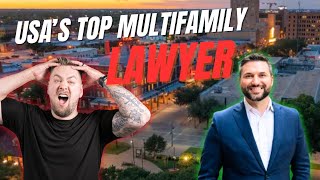
In this 20‑minute Owner Meeting Podcast episode, host Christian Osgood interviews real‑estate attorney and investor Todd Robinson. Robinson recounts his unconventional path from a social‑work undergraduate degree to law school, founding a full‑service law firm, and becoming a multifamily syndication sponsor with roughly 400 units and $75 million in assets under management. He explains how strategic partnerships and silent‑GP roles grew his portfolio, and he details recent acquisitions in affordable housing, LIHTC projects, and assisted‑living facilities that blend profit with community impact. The conversation covers ethical imperatives in syndication—transparent disclosures, avoiding misrepresentation, and the importance of the Private Placement Memorandum—along with practical operational advice such as maintaining working‑capital reserves and handling post‑closing performance dips. Robinson shares personal anecdotes about being fired, building his firm from a basement laptop, and using Meta glasses to film a POV office tour, illustrating the entrepreneurial mindset of balancing legal practice with real‑estate investing. He advises listeners on scaling businesses, the value of related side ventures, and the controversial but memorable mantra “if you’re not fired, get fired.” Finally, he provides contact information for his firm Robinson Franzman LLP and his Instagram handle @SyndicationExpert.
Chapters
Welcome back to the Owner Meeting Podcast hosted by Multifamily Strategy. I'm your channel host, Christian Osgood, joined today once again by Todd Robinson, the best lawyer for all real estate in the United States. Undisputed champion. Seriously, this guy has represented everyone who's everyone. He represented me on my last syndicated deal. He is the syndication lawyer. Todd, awesome having you back on the channel.
Hey man, thanks. Happy to be here.
He's happy to be here, but we're limited to about 20 minutes with Todd because he is in such high demand. So we are going to rip through today's questions. On the Owner Meeting Podcast. Todd, for those who didn't catch your first episode or who are newer, give us a little backstory of, you are a full-on real estate lawyer, significant investor. You've worked with all the big names. Where did you get your start in real estate?
That's a good question. You know, I started really through my legal career. I mean, being, you know, what I'm, what they call an entrepreneur that just happened to get a law degree. And so when I went into law school, I knew I wanted to, I have my own firm and be entrepreneurial. And I always knew real estate was kind of, you know, the secret to success in a lot of ways. I mean, I looked up to a lot of the founding families of this country, you know, Rockefellers, the Morgans, all of these families, they have significant real estate holdings. And so I thought, well, I need to get into real estate. And so I kind of pivoted my career into a transactional practice and started developing a real niche in multifamily and specifically multifamily syndications and started doing syndications for like clients really around the country and around the world that are investing here in the United States. And then, you know, probably 5 years ago, I realized, you know what, this is pretty easy to do. I mean, it's hard. It's, it's, it's not, I shouldn't say easy. I mean, it's, it's, it's hard to, it's hard stuff.
But it's simple to do. It's not easy, but it's simple.
It's simple. Exactly. And so I was also making a lot of connections with high net worth investors, individuals, clients of mine. And so by using a lot of these, what I call strategic partnerships, I was able to work my way into various deals really as kind of a silent GP partner and grew my portfolio that way. And then eventually started being a lead sponsor on certain deals. And so now we're about $75 million of assets under management. And we have about, I think about 400 units, including some senior housing and a bunch more to close before the end of the year.
Oh, that is just absolutely incredible. And it, this is where I find most people who are around real estate people, this is where they end up. We recently had Eric Bubel is one of my favorite brokers of all time. He started out as a golf coach and guess who happens to do quite a bit of golfing? People who own a lot of real estate.
Yeah. Yeah. Yeah.
As he gets around that, he's like, hey, wait a second. I'm not making enough to, to support all my dreams coaching golf, even though he was quite good. He's like, found one client. He was like, come work for my firm, man. Just, just, just come on in. I'm gonna teach you to buy real estate while you're a broker. And now he has same thing. He has a big portfolio. He has a lot of practice. This tends to be the backstory. How did you get, what was your start getting into law? Because if you found real estate after you were a lawyer, right?
So, yeah, that's right. Yeah. So that's another interesting, yeah, interesting story. And I do, you know, I am the managing partner of my own firm here in Atlanta, Georgia. We've got about, 25 staff members that work with us and for us. I've got 6 or 7 law partners and then we have a whole title team. So we, I'm still running a full-fledged, full-service law firm as well. And having the real estate, you know, it's not really on the side anymore. It's kind of more front and center, but it's taking up a lot of my time as well, which is a good thing. Interesting backstory. My undergrad degree is actually in social work. And it's, it's, it's really a, a, a 180 from, you know, where, where I thought I would be in life. So my, my dad is a psychologist, retired. My mom has her PhD in social work. She was a social work professor. And so for the longest time, I was gonna go be a therapist, honestly, and, and, and be a, be a, be a, I was gonna get, go into neuropsychology and do testing and things like that. And like my dad, and my dad actually had his own practice. And so I, and looking back on it, I think now. Because he was an entrepreneur, even though I never, I didn't see him that way as a kid, it really kind of sparked like, hey, if he can do it, I can do it too. Right. But so when I got into law school, I, you know, I, I have no lawyers in my family, you know, no one that I could really talk to or rely on. I just knew I needed to go to grad school and I wasn't gonna go to 4 years to get a PhD 'cause I was getting up there in age. I, I, I, it was 5 years in between undergrad and law school. So I went in, when I went into law school, I don't really know what I, I thought I was gonna be some hotshot trial lawyer. You know, I, I thought I was gonna be out there trying cases, you know, telling, telling stories in front of juries and whatnot. And, uh, and then when I got in and started doing litigation, I was like, man, all we're doing is fighting over money. And it's very stressful because there's so many deadlines and it's a gotcha game, right? It's like, you know, it's like, oh, you met, you missed this deadline. You're, you're screwed. I'm gonna file this. Right. So., I was like, I want something a little more, you know, exciting than not and less stressful. So then I, I, I kind of, my, my first transactional client was actually a bank. And I went to lunch with the bank. I actually, you know, hustled them to a lunch. They, they didn't know me from anybody. And I was trying to get their trans, their, their litigation work at the time. I wanted to, I wanted to, you know, represent the bank in litigation, like suit on promissory note stuff. And they were like, well, do you know how to close? Commercial loans. I never closed anything a day in my life. And I was like, oh yeah, sure. Yeah. The Royal's, we know how to do it. We can do it. I was at like a 200-person law firm at the time, right? Yeah. So using the Royal we, I was able to bring them in as a client, learn the ropes through, from older lawyers and older partners at the firm at the time, and then developed kind of the transactional practice that way. But it was a 180 from, from social work to law school for sure.
See, that, that's interesting. And social work, obviously a very, that type of work is a very fulfilling, like, hey, you get to do a lot of good for a lot of people. I got this question recently in my mentorship and I used a couple of examples for my career, but the question that they asked me is like, hey, can you do good for people and make money at the same time? And they had a really hard time wrapping their head around that. In your experience, you had a degree that was very much like, hey, you know, going from, hey, I think I want to be a therapist to I am a, you're a very significant landlord. 400 units is not small. You're a lawyer. People have mixed opinions on lawyers. How do you balance the two? And what is your answer to, can you be a good person and do good while also making a boatload of money? I've seen a picture of the house that you moved from. You make some money.
Yeah. Yeah. Well, yeah, the answer is yes. And I found a couple of ways to do that. One, in multifamily, and I actually have a client that does this. He does affordable housing. Specifically, and he's got some nonprofit ministry type thing that he basically attaches to every multifamily deal he buys. So he buys the affordable housing, he keeps it affordable on purpose because he wants to give back to the community, but then he also has some ministry type component to his acquisition strategy. So that's one way. And the second way is we also bought an assisted living portfolio recently. And it's actually two personal care home assets where we provide really end-of-life care to elderly residents, rich elderly residents, I should say, because they're paying, you know, $12,000 to $14,000 a month to stay here. Right. These are just residential houses. I mean, a lot of they're transformed into having the personal care home requirements, but you know, it's, it's $144,000 a month in top line revenue for both of these properties. But so, so we're making a ton of money there, but I get so much joy and satisfaction out of going to visit these properties and I'm developing personal relationships with all the elderly patients there. And it's, it's been really fulfilling. That's just been, we closed that earlier this summer, but it's been really great.
That, see, that, that is the type of stuff that I think people need to hear more about. Like there's so many different ways that you can do affordable. You can tie it to other Objectives or like elderly care. I have a 55-up community. It's not assisted living.
Right.
So we certainly, they're, they're not, you know, it's not $12,000 a month, but it's part of the LIHTC program. So we have mandatory subsidized rents. It's affordable housing. And we came in and we just did the clubhouse was in disrepair. You had this beautiful campus, great units, but some of the little details weren't done and they had a horrible onsite manager. We looked at some of the write-ups that they had, just like nasty, nasty person in there. Yeah. We came in and we just made it a better place, a cleaner place. We were reopening the Bible studies and bingo nights and the clubhouse. Right. It's the little stuff. You can go a long way. We're charging exactly zero more dollars in rent. Yeah.
Because I think the goal, I think we're allowed to charge. Yeah. The goal is do not be a slumlord. Right. I mean, that's, if you're, if you're not a slumlord and you care about your residents, like when we bought our 59-unit deal here in Milledgeville, we have spent 4 months just responding to maintenance requests and doing things that the prior landlords just wouldn't do. Like tenant maintenance requirements that, again, the prior management and ownership were just, were not responding to. And so tenants are now coming to us and being like, oh man, these guys care about us. Right? They care, they care that I've got mold in my bathroom that needs to be fixed. Right? They care that I've got rats in my ceiling. You know, like, so when you, and so, and when you're doing that, you do get a sense of satisfaction and joy out of being a landlord., you know, and providing housing is, is an essential need, right? So you do have to balance that. You know, yes, we're in it to make money, but also we're also in it to not be a slumlord. If you can see that intrinsic value, it's, it just makes it more worthwhile.
Yeah. And I've bought several properties from slumlords to turn 'em around. There is a huge difference between affordable housing and slummy housing. In fact, you will make a lot more money. If you can make your place the same price point, but just nicer than your neighbors. It's not about decking it out and creating this crazy fancy place to live. If the flooring's nicer, the windows are newer, the ACs are up to date, the kitchen countertops are nicer than your neighbors. Affordable housing can be very nice and you'll keep your, all of your units full if you just outcompete your competition at the same price point. Yeah. That's the, that's the name of the game. What's the least amount of reno we can do to create a nice, clean, safe place that's better than our competition at the same price point?
Yep. Yep. Couldn't agree more.
You had a video recently on your YouTube of walking into your office, and I loved this as an entrepreneur. This was like the, the, the, I'm like, this is the dream. You come in and it, it's your name and your partner's name on the, on the thing you're walking in. How did you get that, that piece of footage? Because that was like a, a perfect POV of, yeah, I made it as an entrepreneur. I loved that video. How did you film that?
Well, we, you know, through, I just bought these Meta glasses, right? So, so these Ray-Ban partnered with Meta to create these Meta glasses. And I just had the idea of, hey, I'm going to, I'm going to walk into the office and just sort of look around, show people the video. I mean, it is true POV footage, right? My point of view. And, you know, say hi to my receptionist and, you know, walk, walk up and down the hallway. And the whole point of that was, you know, You know, yeah, my name's on the door, but I didn't start out that way. Right. I mean, I, you know, I started my firm in 2018 with a laptop in my basement and I was actually fired from my prior law firm because I was, I was targeted as like a rogue associate because I was out here trying to build my own business at the same time, trying to serve my partners. Right. Yeah. And when I didn't, you know, when I messed a couple of things up, cause I prioritized my own clients over my partner's clients., they fired me. They were like, we don't, you know, we don't want, we just want people here that wanna do the, do our work, not, not your own work. Mm-hmm. And so even now as a partner and, and, you know, in, in charge of, of, of associates, I, I really have to strike a balance of like, yeah, we want you to build your own business. Like we do. Cause I, I'm, I'm very much a believer in, you know, a rising tide lifts all boats. Right. So I agree. If everyone is doing well and being successful, then everyone will share and, and profit.. But at the same time, you gotta do my work first. Right. So, cause I, cause I'm the partner, but yeah. So that footage was, that was kind of cool. I wanted to kind of tell the story of like, hey, this is where I'm at, but look, I didn't start, I didn't start out this way.
What does it feel like today to, to walk in? I know it's not everything having your name on the door, ego aside. How does it feel being like, hey, I, I didn't come from this and I walk into the office and actually having that moment. Yeah. What does that, does that actually feel as good as it looks when you walk into the office? You're like, you know, I did it. That is my name on the door.
And I, and I worked hard to get it there. Exactly. And it does. And I didn't, I mean, like I said, my parents were very middle-class people, right? I mean, from my mom's from like the mountains of North Carolina. My dad's from Philadelphia. Like, yeah, they're well-educated, but they're not, they're not, they're very middle-class. And to, to work hard and kind of see what you've accomplished, it's, it's very satisfying and fulfilling. At the same time, it's, it's a lot of overhead. So it's, it's, you know, that, that's the other struggle that entrepreneurs really have and owners is like, Yeah, you need to build your company, but you know, my payroll is like, you know, $300 grand a month in, in, in what we need to be to pay for everybody. Right. And, and luckily, but I was strategic. Like I ha— I have built partners around me that also have their own clients and also we're bringing in revenue. So it's not all on my shoulders. And that was part of the strategy of like, you know, I can't do all this myself. I have, I have to bring other people in. And I mean, you know, you know the saying, if you want to go far, What is it? If you want to go fast, go alone. If you want to go far, go together. Right. So that, that's, I think that's true in legal practices or any, any type of business that you want to develop.
Now you did one thing that I've seen a lot of very successful investors do. In my business, I have the property management company, I have the education company, I have the acquisition company. Like I, I've stacked multiple businesses that have different schedules of income streams. Would you recommend that most people when building their portfolio, because you have 400 units in your portfolio right now. Right now. And I happen to know that you're under contract for at least 144 more.
Yeah.
Because we're working on a project together. Right. That's, we're taking out right now in real time. So you'll be over 500. Yeah. As you're building this portfolio, many of the most successful real estate investors also have other businesses. Do you recommend trying to run both at the same time? Because they both takes time and it both takes effort. Is that something that you think people should do or should people put all their eggs in one basket and just focus on the one thing?
That's a good question. I mean, I think it kind of depends on what that other business is. If that other business is tangentially related and you can kind of work on both, you know, but it doesn't seem like you're working on one or the other, then I think it works. Right. But it's, it's hard to, especially those that are, that are trying to, you know, they have a W-2 and they're doing real estate by, on nights and weekends. You know, that's the, that's the hardest struggle is like, okay, I've got a W-2, I'm making, I make, you know, $10,000 a month. I want to replace that income. How do I do that? You know, and you go out and buy deals and what we always say, and I'm sure you say the same thing, is look, one acquisition fee can change your life, right? You can quit your job, you get one acquisition fee and you don't have to work the rest of the year. Right. But, but taking that leap of faith is really hard for a lot of people. And it's almost like, I, I don't know if I ever would've started my own firm had I not been fired. Like being fired was the kick in the ass that I needed to be like, you know what? I'm gonna, I'm gonna do this. I love that. So sometimes, you know, and maybe the, the, those W-2 professionals out there, you know, maybe they need to try to get fired if they want to start getting into real estate.
I don't know. There we go. That's the, that's the piece of advice we'll take from this podcast. If you're not fired, get fired.
Get fired.
That's the best way to say it. I know we have limited time with you today and I ask this every episode. You've shared this before, but I'm going to try to ask it a slightly different So I always share the stupid tax, the whenever anyone's new, it's the most expensive it'll ever be to do what it is you're doing because you just haven't learned something. For the things you can share, you or your clients, what is the most expensive mistake that you have seen made and how can someone avoid it?
Ooh, gosh. You know, I would say if you're in the business of raising capital and getting investors, the stupidest mistake you could make is lying to those investors, right? Misrepresenting facts to the investors, misrepresenting the deal, overpromising, underdelivering, or just straight up defrauding your investors. You'd be surprised how often that happens. I just got off a call with another, with one of my clients about, you know, like a $6.8 million investment that they made that has vanished, right? They're not even in the org structure anymore based on what the sponsor is saying to the lender.
Right.
So, So you have to be upfront. And when you're dealing with, with other people's money, you have to be upfront, honest, transparent, you know, to the nines because the SEC is watching you. State governments are watching you. You're just waiting for a lawsuit. So that's the biggest, I would think the biggest takeaway is the mistakes I've seen people make are those that they try to get too, too cute, right? They try to get, and it's almost, it becomes a Ponzi scheme. Like, oh, I'll just get money from over here and I'll pay my back investment. I pay my investors over here. But then when they need money, I'll go buy, I'll go buy this deal and get this acquisition fee. I mean, it just becomes a web of lies. And so stay true, stay honest, and don't lose investors' money.
How do you, how do you handle the situation when you do have a deal? And maybe, so let's, let's make the base assumption. We didn't exaggerate our numbers. We really came in and we truly believe this asset should do whatever. And we get surprised. We have more vacancy. There was more deferred maintenance. We didn't find something, something was missed within reason. What do you do on the front end to protect yourself so you don't get accused of doing exactly what other people do, which is lie on the numbers or fluff them up? Someone's like, hey, I feel like you ripped me off.
What do you do to protect yourself? Well, you have to be transparent with the investors, number one. And number two, that's why we, when we prepare offering documents and syndication documents, we have what's called the private placement memorandum. In that PPM, you disclose all the business risks, right? You disclose all of the potential problems that could go wrong in a deal. And so if an investor comes back and starts hemming and hawing and pointing fingers, you can just go back to that document and say, why don't you read XYZ disclosure where we said there's economic risk? Or say the cost of construction skyrocketed and we can't do our renovations now. Well, look, it says it right here in the PPM. So that's the biggest, I think, thing that I would do in that situation. The other thing I was going to say is, Every time, every time someone buys a deal, there's always a dip, right? Right when you close, the next 3 to 4 months, there's a dip, right? There's a dip in tenants, revenue. All of a sudden they come out of the woodworks and they all need everything done on their property because there's new management in town. You've gotta ride out that dip. As long as you can ride out that dip, you're gonna go up eventually. Have enough working capital reserves to cover those things. That's probably another, another piece of advice. And just be honest with your investors.
100%. Love it. All right. I know you have to run to the next call, so how do people find you? Because it sounds like the answer to this question is you need to have a great lawyer who writes the contract, right?
Yeah, exactly.
You teach how to do this. You have a community. I know people can follow you as Syndication Expert on Instagram, which Todd posts some great content for free there, shares a ton. But if someone wants to get in contact with you, either to learn how to do this or just to use your firm's legal services, how do they best get ahold of you?
Yeah, so Robinson Franzman is the name. F-R-A-N-Z-M-A-N. M-A-N. And my email is, you know, just todd@rfllplaw. And then find me on Instagram as well. Like you said, Syndication Expert. I'm on there quite a bit and we can, we can get in touch that way. Awesome.
Todd, thank you for joining. You have a fantastic rest of your day. Everyone else, we'll see you on the next episode.
Thanks, Christian. Absolutely.
More from Christian


What Investors Want in Every Pitch: Property, Business Plan & Team #RealEstate #Pitch




Speak with authority to turn broker rejections into deals - boost your confidence #RealEstate

Turn Broker Objections into Closed Deals - CRE Negotiation Tactics #RealEstate #Negotiation

How to Get Multifamily Deals Under Contract Without Having All the Cash | Objection Series Ep. 1

How I Scaled 500 Apartments in One Texas Market in 12 Months #RealEstate #Multifamily


Turning a $12.2M, 200-unit mess into profit - live multifamily turnaround update #Investing