Welcome to Q4 and Government Shut Down! What it Means for Investors
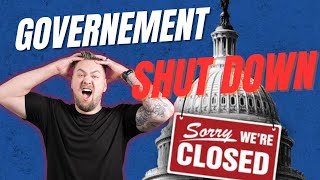
In this live Multifamily Strategy session, host Christian Osgood discusses the immediate effects of the federal government shutdown—particularly the delayed jobs report—on the real‑estate market, and offers his outlook on the Fed’s rate trajectory, citing influencer opinions from Grant Cardone and Ryan Pineda. He argues that the market is at the bottom of a prolonged down‑cycle and predicts a slow 3‑5‑year recovery, with modest rate drops eventually bringing mortgage rates into the high‑4% to low‑5% range. Osgood advises investors to acquire cash‑flowing multifamily assets now, leveraging banks’ eagerness to lend to active buyers, and outlines how inventory will re‑enter the market as rates inch down. He then fielded live audience questions covering a range of practical topics: JV structuring (preferred return vs. cash‑flow split vs. equity multiple), self‑management versus hiring property managers based on proximity, rent‑increase tactics (utility bill‑backs, “band‑a‑id” rent hikes, tenant retention strategies), hotel‑to‑multifamily conversion zoning requirements, low‑income housing partnerships with housing authorities and nonprofits, and how to raise capital through his free community school. He also critiques a controversial influencer (Tai Lopez) after a deep dive into SEC filings, labeling the deal as resembling a Ponzi scheme. The session ends with a recap of the macro outlook, encouragement to join his free community (which has funded $41 million in deals), and a reminder of upcoming weekly live shows.
Chapters
All right, welcome back to Multifamily Strategy Live. Today we're talking about a whole slew of things. We're talking government shutdown, we're talking the jobs report, we're talking interest rates, we're talking the economy, and we're talking about what's happening next. I'm also going to go into some of what I'm seeing the influencers say. I've seen stuff out from Grant Cardone, from Ryan Pineda, from all the guys who've been actually kind of quiet on the real estate front for a second. Uh, they've all started to weigh in, and I don't think it's a coincidence. Also got some great takeaways from Michael Zuber, who's a good friend of mine, Ken McElroy, and more. So ready to get rocking today. We're live on pretty much any platform we can be live on, so feel free to join the chat on YouTube. I can see up here on the main screen, down below I have the laptop, so you here on Instagram, ask questions. This is an interactive, uh, thing. So excited to see everyone here. Let's dive right in. We have a government shutdown. We have a lot of news going on about this. What does it actually mean for us? It means there's going to be a little bit of a mild hit to the economy, but really what annoys me about the government shutdown is we're not going to get to see that jobs report. Now, the last one looked a little bit weak. We would like to see strong jobs. We want to see low inflation. And if we can hold both of those, we should continue to have a very stable economy, which means we'll continue to see those interest rate drops. Now, on the subject of interest rates, the Fed has a whole bunch of presidents who all have different opinions on how they should run the country, if they should increase rates, decrease, if they should do 18 different rate drops, if they should do 3 of them, what it actually looks like. I was watching a video with Grant Cardone and he hasn't spoken on this too much lately, but I'm curious what you guys think about his opinion, which is essentially right now we're sitting around 4.5. If the Fed rate can drop down to 2.5, it should reflect, best guess, to about another 0.5 total drop to interest rates for mortgages. They're not an exact 1-to-1 comparison, but if we can fall in that range, Is 1.5 points enough to really stimulate the market? Will we see more transaction volume? We have been stuck in an interesting place for an extended period of time. Real estate has been hard the last 2 years. Now, for me, this is excellent news. Buy cash-flowing deals, load up in your portfolio while real estate's hard for everyone else. Most of the banks are so excited to lend to me because, like, dude, you're the only one transacting right now. You're our most active client. Well, go figure. When real estate gets sexy again, me and everyone else like me is going to look like a hero. This happens in every single market cycle. If you can make it work while it's hard, you can make it work while it's easy. For those who haven't seen an easy market yet, get ready. We're going to finally see real estate start to get a little easier. Is it going to be immediate and just a massive wave of real estate? No. It's gonna be slow and steady. We've had very low volume for 2 years. We've had massive rate increases as we're all aware of. We've seen a slowdown in real estate. We've seen a lot of us syndicators get wiped out. Here's what we're likely looking at in the near future. As rates continue to drop and they drop on the news of rate cuts, they don't just drop because the Fed drops the rate. So don't expect, hey, there's a new rate cut, rates are less. It's already baked in. The next one we're assuming is going to happen. You're not going to see a big drop when the Fed announces, yes, we're actually doing it, because everyone's already expecting it to happen. When we start seeing the rates come down little by little, deals that were on market that didn't work start to work again. So sellers start to get their pricing. What we'll see is a small wave of deals come back on market. So you're going to see inventory suddenly come up. Now, an economist might say, wait, if we're getting more supply, we're going to expect demand to, you know, the supply-demand curve. Demand's going to stay about the same, more supply, prices are going to drop. I don't think so. I think the deals that were ready to sell are going to sell at the prices they get listed at. Once we clear the latent inventory, the stuff that hasn't traded because it was close, we're back to a normal supply and demand curve, and then I think prices start going up. So very near term, next 90 to 180 days, What I'm calling for is we're gonna see a few more small rate drops. It's gonna bring some deals online. Those deals will clear. This is actually a great time to load up cuz things are gonna sell at the price that they were trying to sell at originally. What happens moving forward? Well, now that this stabilizes out, so we'll call this beginning of next year to maybe Q2 of next year, prices should start creeping up as the cost of capital continues to go down and sustains a downward trend. I'm expecting that this is going to be a 3 to 5 year slow recovery. So on our market cycles curve, I believe that we are coming down out of the bottom of the down cycle. I think we're almost there. And then we're starting the recovery, which we're going to see happen again, really start to slowly take shape in the next 3 or so months. So excellent, excellent, excellent time to buy. I'm hoping Grant Cardone's right with what happens with interest rates. I'm hoping that the Fed does reduce its guidance down to 2.5%. If we can get the Fed rate to 2.5%, we can get interest rates back in, let's call it, 5% interest, maybe even slightly sub-5%. Uh, massive refinances take place, cash flow starts coming in, your flippers can start flipping houses again, your developers want to start building again. Real estate should get back up and on its feet. That is my Prediction was what's happening with the economy. As far as the government shutdown, the biggest inconvenience here is just that we have a lack of the reporting, the reporting that we all want to see to really feel confident about the economy, or at least know how confident we are in the Fed doing its next rate drop. We really want to see that jobs report. That is a bummer. Now, if it's a bad report, the fact that it gets delayed may not be the end of the world. By the way, this is interactive. Uh, those here on Instagram or on YouTube, feel free to ask any questions as we roll here. Uh, speaking of, Oscar Pan is back. Oscar is a, uh, longtime viewer, big fan of Oscar. He's missed last few lives, but he's back. Good to see you here, man. Good to see you here. Uh, lots of other things going on in the country. I will address this here. I just launched a YouTube video on this this morning as well. Um, whenever we have someone on the podcast who gets significant news, we always cover it. Some people don't like it when I do this, but We have an Owner Meeting Podcast. This is because I built my business off meeting other owners. So, you know, you meet with the Grant Cardones, the Tai Lopez, which is the one we'll talk about today because he's all over the news for some not good stuff. You know, I've had all sorts of big names on the channel. I've got to have Brad Lee, and we love the Owner Meeting Podcast. Occasionally owners make bad decisions. Now, we had him on the podcast because what he did was interesting. It doesn't mean that they're good or bad people. It's what they do is interesting. He was the original online marketer. He was the big one to really take off. Now, a lot of people thought he was a scammer. I figured, let's figure this out for ourselves. I went to his house, his $112 million rented mansion. It was kind of weird. There's basically no staff there, which for that size house, odd. He was 40 minutes late to our meeting. I was greeted by his mom who was like milling around the outside of the building. It was— the whole thing felt a little off. Uh, his bookshelf was full of fake books or books that his staff had just literally picked up at a random bookstore. He doesn't read the books. They're totally there for show. And all of his advice was kind of weird. If you guys watched that podcast episode, it aired right at the beginning of the year. I had actually asked him a couple questions about his retail business, about this whole capital raise that he did. He dodged all of them. It was— it makes more sense now. So I went through all of the SEC documents. Um, here's what we found. It just— here's the findings. If you guys are interested, I read every page. Uh, one, it looks like investors are claiming that he had stated in multiple recorded calls and emails that they were cash flowing. Tax returns say they were losing $11 to $14 million a year, every single year. Uh, I'm not a math wizard, but usually when the negative sign is before the tens of millions of dollars, uh, that is negative cash flow. That has been my experience in buying only cash flowing businesses. For an extended period of time. If it's losing money and you say that it's making money, that's a problem. That's not— it's definitely unethical. The legality is also probably illegal. I'll have to look into that. Where it definitely goes into the beyond the gray area, into the not good zone, he continued to give distributions to investors out of the no money that they were making. This is also a fact. During this time, after multiple years, and one of the companies filed bankruptcy, so after one bankruptcy and multiple years of, you know, $10 million bleeds, continues to pay himself a total of $16 million from this capital raise and does another round of raising, which enables him to continue to make distributions to the original investors. As soon as you do that, it looks like from what has been released from the financials, from the claims that have been made, from the emails that have been sent and the Zoom calls that have been recorded, it looks like it's pretty much a classic Ponzi scheme. We'll let the courts decide it. I'm not calling him out one way or another. Uh, I am not our justice system, but in the complaints, the evidence, uh, is pretty compelling. I did have him on the Owner Meeting Podcast. Um, it was a weird episode. He talked a lot about the Amish. He played annoying noises and said that it will help you think. And, uh, did not answer my business questions. So it at least makes a little bit more sense. But for those who asked why I had him on the channel, he's someone who did something unique and interesting. He was first to a space in business. I don't regret having him on the channel. I do regret paying for the flight to do that interview, but the episode was what the episode was. Figured I hit that on the head, but did a deep dive on it. It was very interesting. All right, we do have some questions here, so I'll dive in and I'll continue adding some color commentary as we go. Today I'll have to hop off at 5:30 because my absolutely fantastic son, uh, needs dad to watch him while mom picks up our dog. So I will be, uh, I'll be here for another, uh, roughly looks like another 15 minutes. So let's dive into the questions. Uh, Sydney says, uh, was talking to me about a low-income project on school. Sydney, I'll have to go check out that low-income project. That is one of my favorite things to do. You can feel great about being a landlord if you're providing housing to those who need it and you do it well. If you make— if you're a slumlord, you don't make the same money that you do if you're actually really good at low-income housing. And as a bonus, you get to feel really good about doing good stuff for your community. We work with housing authorities, we work with, uh, Salvation Army, with all sorts of nonprofits, all sorts of churches, uh, to make sure that people in need can in fact live in our buildings, pay our rent, and have a beautiful place, uh, that still turns a profit. We can make a lot of money solving a really big problem, which is a really fun thing to do. So, uh, anything about low-income projects, always happy to take a look. Oscar, may invest in a hotel motel. Ooh, risky business. Um, I do have some thoughts on this though. When I call the city to ask if I can do an extended stay hotel or hotel conversion, um, What should I ask for specifically? Okay, so you're looking for the zoning if you want to. So these are two different projects. Extended stay hotel is a hotel. For the most part, cities can't ban you from doing extended stay hotel. I've often seen this done as like workplace housing. It's month-to-month leases or daily rates or weekly rates. There's a lot of different ways to run it, but hotels can do this. So your zoning will work, your value will go up. If you can turn this into a multifamily building and you can stabilize it, that's gonna be up to zoning and the city on what they're going to allow you to do and what concessions they need for you to get it done. So your goal, I think, for most hotel conversions is to convert to multifamily. You need to know what the requirements are, if you need to install sprinkler systems or not, cuz that can make or break a problem. If they already have kitchenettes or if they need to have kitchens installed, that's a huge line item. And then will the city play ball or will they require extra work from you? For me, they required me to, uh, the literal requirement for me to convert to multifamily was they wanted me to demo the building and then build a new building with higher ground floor ceilings and turn the ground floor into retail. Uh, building a new building was not part of my conversion. Uh, they said also I could just lift the building. Uh, these were all options that were obviously completely not feasible, so we went with extended stay hotel, which has gone fairly well. Uh, so that's what you want to ask a city is, is what do you need to do, what are the requirements, and will you get the zoning to do multifamily? Or if they say no, then you just go ahead and you run your hotels like extended stay hotel. Another person here from New Jersey. Hello, hello. We got a lot of New Jersey people, by the way. I don't know why, but New York and New Jersey watch this channel more than anywhere else in the country, and our mentees do more deals in Philadelphia than any other market or any other state in the United States right now. It goes Philadelphia, then Texas. Uh, go figure. A lot of great deals if you happen to be around Philly. Uh, well done. I guess actually the state of Pennsylvania. A lot of them are near Philadelphia. Philadelphia is in fact a city, Pennsylvania is a state. Damien just closed on a 24-plex in Arizona. Damian, congratulations. That is awesome. Arizona has been an awesome state to invest in a long time. Also a very competitive state. So scoring 24 units there, uh, well done. From Mason, funny enough, we have 4 Masons in Multifamily Strategy. That is also a very common name for some reason for people in the mentorship program. What is your favorite way to structure a JV deal? Ooh, this is actually gonna be— I do have thoughts on this. Do you like splitting cash flow 50/50 rather than giving a pref? So this is fun. Uh, if you get nothing else out of this episode, you guys attended a good one. So favorite way to structure a JV deal is going to be determined— I've actually never taught this on, on YouTube, I don't think. It's going to be determined by your deal. But what does that actually mean? Practical application, you're going to build a, a a square that's going to tell you how to raise capital. I'll do this on the whiteboard here in a YouTube video here shortly. Actually, this is a good idea. So you have your starting math and you have your exit math. So when you go into a property, you have, here's what it's doing day one, and then you have at the exit, which could be the exit of the partnership when you're buying them out. It could be at the refinance if you have a balloon. But at the end of your current structure, what is your conservatively conservatively projected numbers. So on the top end, we have day one cash flow and we have day one value. What is the property actually appraised for? Was it worth today? How much does it actually make today? Now, if we have a lot of cash flow, preferred return probably makes the most sense. If we're paying them out of the future value of the property, that's likely going to be on a value-add project. If we're buying at a great price, we have more value this way. If we're buying with high cash flow, more value on this side. Now, future cash flow. If we have a lot of increase here, we can do a ladder for how the returns look to investors. We can also in the future service more debt. If we have more value on the ends, we're doing more value-add projects, maybe renovation, adding new units, what have you. If the value is going to be pushed heavily on the back end, we may be able to create what's called an equity multiple. I can buy you out, out of a cash-out refi very similar to the BRRRR method. We buy, we rehab, we rent, refinance, we repeat, we pull out the capital. Instead of paying myself the repeat, the investor gets their money with a return, and I don't have to share any of the cash flow potentially. So the best structure for your deal, if it's a high cash flow deal, is probably giving a preferred return and giving up less of the total equity so that you get more of the upside of the deal. Because the deal services the debt day one, it also services preferred returns. If you're a little lower in cash flow, but you're stabilizing a deal or you're bringing it to the next level, you'll probably want to incentivize out of the future project, which means we want as little cash flow distribution as we can throughout the project. And we want to buy them out at the refinance. So the higher multiple, the less the cash flow, but whatever falls into that little square is what you're looking for in how to structure your deal. What is our advice on self-managing your first deal? First of all, if you can drive to the property, I think you should do this. So let's call this a 2.5, maybe 3-hour radius from where you live. You're going to learn so much more about managing your manager if it is a job that you have done before, period, full stop. That is the correct way to do this. I guarantee you, you will have so much more success managing your manager and having a passive income if you actually know what it takes to do on the work side of the deal. Uh, just like the best boss that you've ever had has probably actually done your job before. I've had a lot of bosses who I've worked for who have no idea how to do what I do, and they're the ones coaching. It's very much like that as an owner working with a property management company. So on self-management, uh, get really good at it, uh, communicate often with your tenants. You're learning two core skills: property management and financial management of a property. You're going to get some base accounting skills, you're going to get collections, marketing. Self-managing is running your own tiny little business until you get a big portfolio, and then I own my own PM company. It ends up being your own big business where it's a company that does tens of thousands of dollars a month, and we have 1,000+ doors that we manage. Half of them being Christians. This is the type of thing that you can opt to do. What I usually think makes more sense is if you're really good at buying, just keep buying a bunch of real estate, find a great manager, and you'll manage them so much better if you manage your first few rentals. Back to that JV structure, is it good to give the investor only an equity multiple? What if the deal doesn't make enough day one to give preferred cash flow split? Well, again, you have to fit inside the box. So if there's not enough cash flow, yeah, you're probably going to be rewarding them out of equity. If there's not enough cash flow or enough upside, guess what? You don't have a deal yet. You're going to have to either lower the price or borrow cheaper money. Those are pretty much the inputs. You can either lower your cost or increase your revenues, but you can't increase the revenue before you buy the property. So to get your day one numbers right, you may have to do, uh, really common, you could do a delay on payments. You could say, hey, I have a plan to get the rents up, But payments are going to start 6 months in. We just have a little delay. We'll close the property, we're going to get our projects done, we'll get the income up, and then we'll go ahead and start doing distributions. You can also just stack it towards the end of the project if you have enough upside. That's what I love about JVs. We talk about creative finance all the time. What we don't talk about enough is creative equity, which is about 50% of creative financing, is how are you structuring your capital stack. We have debt and then we have equity partners. How are they being compensated? Well, they're all being compensated out of the business, which in this case is an individual property that your LLC is buying. See if we have any other questions here today. If we don't, that's fine. This is— I have only 5 minutes left today anyway, so I will end with a summary. If there's any more questions, I'll answer them. But summary of today: we have a government shutdown. This just really for us means that we have a delay in the jobs report, which is going to be a bit of a bummer since it is a huge indicator on how we are going to proceed with our rate drops. Uh, we are hoping influencers like Grant Cardone, Ryan Panetta are calling for, uh, Fed rates to eventually settle out around 2.5%, which would result in roughly a 1.5%, maybe 2% drop in interest rates, which would put us in that high 4s, low 5s range. I think this is gonna take some time for us to settle out there. When we do, there'll be a little lag where the properties that were listed that didn't sell are gonna get relisted at the same price. They'll sell, then supply and demand will normalize again, and we'll start seeing increases slowly in rents, increases in price, increases in demand. But if you guys survived this last few years where real estate has been truly, sincerely very hard, the market has not cooperated. Rent increases have been unprecedentedly low. We printed way too much money in 2021 and 2020. We're paying for it now. I believe that we are starting the nice, easy, slow recovery where real estate slowly but surely will get really sexy again. Good time to get into the market, in my opinion. We've got a couple more questions here and we'll close out on these. Do you recommend self-managing if you live 4+ hours away from the property? Probably not. I think that the actual getting eyes on the property is really important. If it takes you 8 hours round trip to make it to the property, you're spending an entire workday just getting to the property. So in a 10-hour day, you could potentially spend 2 hours on site. It's too much of a hassle. What's going to happen is you're not going to go to the property enough. You're going to miss things. You'll have more delinquencies. You'll have more deferred maintenance. 4 hours away, I really think it's a 2.5, maybe 3-hour radius as far as you want to go. Oscar, best way to raise rents without losing tenants? Rents are under market and can be raised without renovations. Should I just not worry about losing tenants and focus on new tenants? Okay, so there's a few different strategies on this. First of all, if you're going to do utility bill backs and rent increases, don't increase the rent first. People will absorb a utility bill back so much easier than a rent increase, even if the dollar amount is greater. So my first round, if I don't need to do both of them immediately, my first round pick, what I'm going to do is I'm going to go ahead and do utility bill back. So I'll bill back the water, the sewer, the gas, anything that can reasonably be billed back to the tenants. I'll keep the rents the same. Before I do this, when we close the building, I'll be requesting every work order you can imagine, and I will come in and I will manage all these tenants and all their work orders, and I will get them all done so they at least set the precedent of Hey, the new ownership gets in here, they care, things are trending upwards, the property's getting nicer. Oh, we have to pay for our own utilities. I guess that makes sense. That's the usual flow. You shouldn't have too much turnover there. Now, if you're just doing rent increases, the best way to do it is to rip it off like a Band-Aid. Now, I've done this 20, uh, 19 times. On the last few deals, we didn't lose anyone. Last year I did this on a 26-plex. 10 tenants moved out. Actually, that's not true. 6 tenants moved out, 4 just straight up stopped paying and had to get evicted, which is even worse. Now, in Texas is not that expensive. In Washington, that would have been very detrimental. But we actually went through the project. We actually ended up kicking out some of the tenants. We had 10 turnovers because we did the rent increase. We had a lot of rough tenants there. We got those tenants out. The roughest tenants were the ones who happened to not pay. We got them out of the building, we renovated excellently, and we changed a lot of these to student housing. So now I have college students here on rents that went from $550 to $1,150, and they love the space. And most of these people end up renewing their leases. It's an excellent place to be, uh, but we more than, or just about exactly doubled the income on the property. We did have a season of mass moveouts. Out of 26 units, 10 vacancies is traditionally not good, especially if you have to turn all of them. Fortunately, we raised enough money to be able to weather that. But that is, that is a very legitimate strategy. I find if you can afford it, the best way to do it is to rip off the Band-Aid and let it happen. Worst I've ever experienced, 12-plex. We had 9 people move out And it was before we did the rent increases. Uh, they had a rumor that we were going to, uh, increase the rent. Apparently the painter at the building just started telling tenants that we're going to raise the rent when we had no plans to do so. Uh, basically everyone left. I've also had buildings where, you know, you have 44 people and you raise the rent and there are zero move-outs overall. So rent increases, it's all just about getting to market rent. It's not about trying to lose tenants. We of course don't want to just kick people to the street. We work with all sorts of different housing programs. Section 8, multiple government programs, the Catholic Church, the Mormon Church, uh, various nonprofits, Salvation Army. There's one more big one that I'm missing that's similar— Goodwill. Goodwill, we work with them. Many of these people have different housing voucher programs, different assistance programs. There's different ones— state, local, federal. I work with all of them so we can keep tenants and help them pay higher rent without actually hitting their bottom line. Love providing housing to great people. Also, personally, kind of a fan of making money doing it. It's a hard job. It's a dirty job. It's a job that doesn't come without some amount of legal liability. Therefore, it's a job I expect to get paid for, and we do get paid well. In addition, I think we do a pretty freaking awesome job for awesome tenants. So if you're any of my tenants watching this, uh, we appreciate you a lot. And if we can do anything to improve your stay with us, feel free to let us know. I don't just need all your money. I also want your appreciation for actually doing a good job running the properties. We have a ludicrously low turnover rate overall in our portfolio because I do think we do a very, very good job of managing the people at the property level, which ultimately how you treat your tenants is how you're treating your customers in your business. Hope this episode was as fun for you as it was for me. This is the Multifamily Strategy Live. We do this every single Wednesday, so mark your calendars. Uh, you guys let me know what the topic is. And if you're not a member yet, uh, school is free. We have free calculators. We have a free course available there recently on how to get unstuck in real estate. So if you are feeling stuck, go there, check it out. Free real estate, uh, course called Getting Unstuck. It's all the steps that you can take and all the most common things that you can get stuck on Join the free community. As a bonus, that community has funded $41 million of deals for investors over the last year. That's just people meeting up here and funding each other's deals. In fact, from people I've met in this community, I've had $4 million pop into my portfolio just meeting brand new people, partnering up, building relationships. I absolutely encourage you to do that. It's completely free. We will never charge. For our school community. We're 2,000 strong. That could be you as well. So join us over there. If you guys want to post what you want me to cover for next week's topic, I will be answering a whole other set of questions as I do every single Wednesday. Till then, see you on the next episode.
More from Christian


What Investors Want in Every Pitch: Property, Business Plan & Team #RealEstate #Pitch




Speak with authority to turn broker rejections into deals - boost your confidence #RealEstate

Turn Broker Objections into Closed Deals - CRE Negotiation Tactics #RealEstate #Negotiation

How to Get Multifamily Deals Under Contract Without Having All the Cash | Objection Series Ep. 1

How I Scaled 500 Apartments in One Texas Market in 12 Months #RealEstate #Multifamily


Turning a $12.2M, 200-unit mess into profit - live multifamily turnaround update #Investing