Cómo estructurar las campañas de anuncios para tu ecommerce

This is a YouTube video titled "Cómo estructurar las campañas de anuncios para tu ecommerce" created in August 2025. The content is a detailed instructional session by a single speaker named powerskrit, who provides consulting advice on how to structure, test, and scale ad campaigns for online stores, including retargeting strategies and budget optimization. The video is aimed at ecommerce founders looking to improve their advertising effectiveness and does not feature multiple speakers or a conversation format.
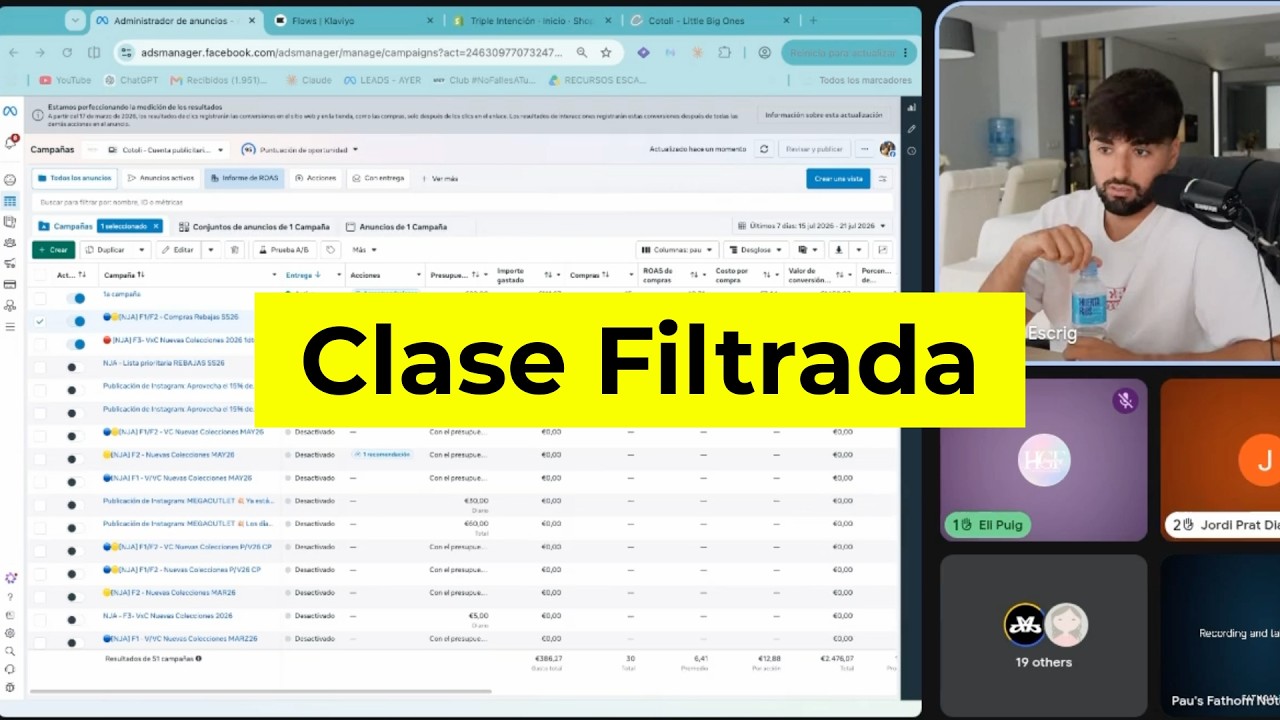
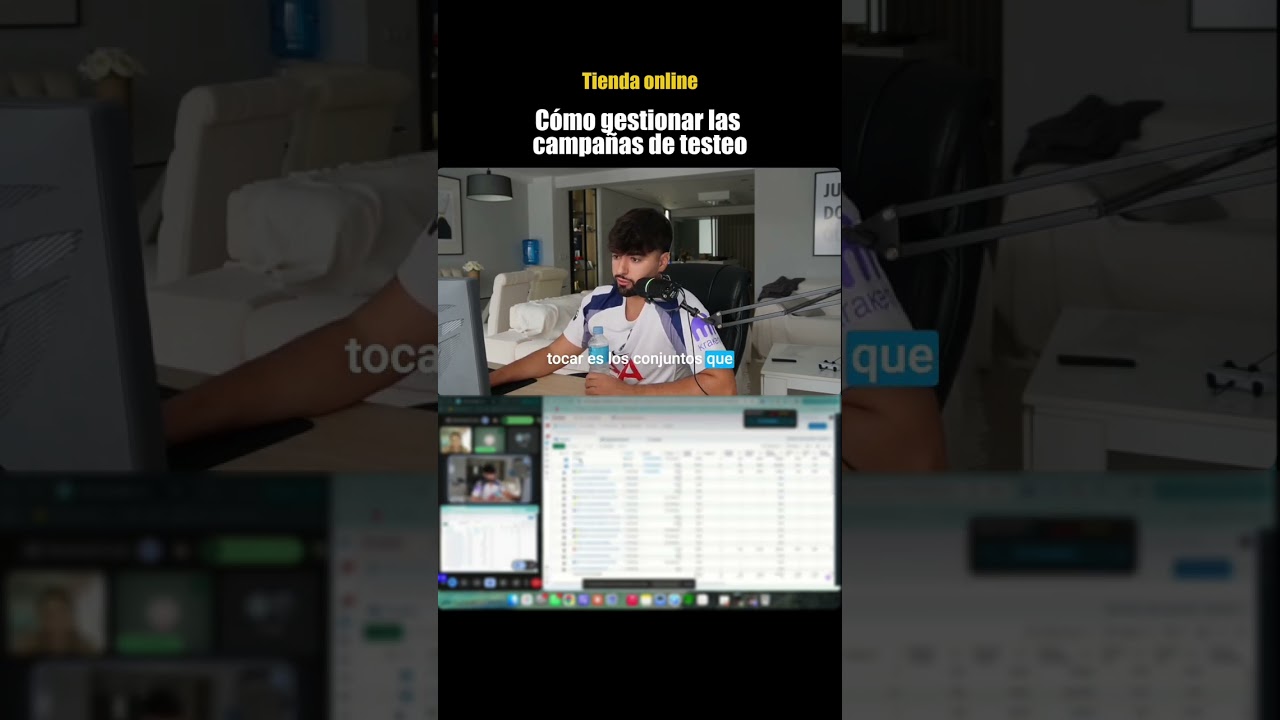
One of the biggest problems for online store founders is that they don't know how to structure their ad campaigns to get the most out of them. In today's video, you'll see a session with my consulting clients where I explain exactly what type of campaigns to use and for what cases and how to start with a test, end up scaling and use retargeting to recover all that purchase intent. In case you don't know me, my name is powerskrit and I'm dedicated to helping online store founders earn much more money without depending on agencies, freelancers or similar crap. And in the first link in the description, you'll have a free conversion calculator resource to see if your store is converting well flows that you have to use to recover customers and sell while you're at the beach and many more resources that you can download completely free of charge. It's very helpful because they are real online store founders like you with the same problems and who are looking for the same solutions that you need. I want you to structure it well with the hold rate, the hook, sorry, hook hold rate. And then the most important metric which is the hook rate to the center. You have to be surgeons in that because you make the videos very well. But he's simply going to say okay, these P's like to see if naming people from La Mancha, people from La Mancha and people from San Framier at the beginning is better or more. Instead of appealing to the person, appealing to the party, you have to analyze that. So I would mix your tactics and sauce to bring people in and give value to your product so that they see that it's not a €1 ticket from China. What you have to do to structure the campaigns is you have to get the scaled retarget testing structure down your nerve and each of those structures by product because the audiences are totally different. The target is totally different, the flamenco audience, the torito audience. You have to divide it by product and within each product you face two hypotheses. Storytelling with just the product or I don't know, or people from La Mancha and guys from La Mancha with that structure. And you'll see that going deeper will work much better for you. Trust, trust that you'll hit the nail on the head. You're very. Okay, we'll just have to find the key. Okay, types of campaigns and what they're for. There's ad set optimization. I'm doing this so you understand, optimize and ok, ad set means this ad set budget, budget and Optimization. Optimization. Oh, my goodness. So this is the budget for the ad set. That's the most important thing. This is at the campaign level. You tell it this budget at the ad set level. This is new. This is what a list asked for in the group that says, share part of my budget with other ad sets. This is like a mini Albontes. Plus. If we put this. I mean, what we want to do is put the budget here. Why? Because I want to see if testing Accessories or testing 2 works better. Testing collections, what did we do? We tested headdresses, accessories, flamenco, and we saw which one worked best out of these three. So this is useful for testing. What do we test? Different hypotheses. And here. Here, what do we face? Well, video versus photo. H. Product 1 versus product 2. If I only have one product, angle 1 versus angle 2. If I only have one Product here, or if I have many products, many products, more than 40, then I'm going to test collection one versus collection two. Imagine angle one works for me. This is it. I'm going to do it better with one product. Okay. For example, with Yolanda's store, we've seen that an offer worked. An offer really worked for Yolanda. Okay. An offer works. What am I going to do next? I'm going to go deeper into testing. That is, I'm going to have angle one work for me. So I'm going to confront. I'm going to do a testing campaign. And here I'm going to put angle one. I'm going to put, for example, offer, offer, discount. Okay? So I already know that the discount offer works for me. So what am I going to do? I'm going to test other hypotheses. Test two hypotheses within that angle. Product, winning format. So I already know that the discount works for me. So I'm going to do a photo discount or a video discount. So here I'm testing the format. The video works for me. Oh, man, I got confused. A chicken. Mmm. Video discount. Okay. And here. F. And I'm going to go even deeper. Why? Because I'm just starting out. I'm just starting out. The video has worked even deeper for me. What would I do? I'm going to try it. I'm testing flamenco photos. Flamenco photos. And here, what am I going to test? Flamenco podos. A. I don't know. Civilian. A. Because I don't know. A dress, red dress, or just a product. Sure. Flamenco photos, blue dress. And I'm going. And going deeper. I'm going Deep. I'm going deep. So. And this is this campaign. For each test, for each test and within the campaign I put two sets of ads. In each set of ads is a creative concept. And here it could be photo video. That is photo video. Product one, Product two. Do you understand me? And then within each set of ads, three creatives maintaining that creative concept. That is three photos, three videos. I'm going to do desire Castilla La Mancha. So here I'm going to test two sets of ads, A and B. Where it will be Costilla La Mangia only product that is going to sale. And in this here where I'm testing the angle Castilla La Mancha Gossip. Okay, imagine gossip works well for me. And this is a set of ads each time. But here are three creatives. Creative 1. Create 1. Create. Create 2. Create 3. And hear the same following the gossip. Create 1. Create 2. Create 3. This is the first test. Now I'm doing another campaign because the gossip campaign worked for me. And I'm going to test Castilla La Mancha twice. Damn, it couldn't be. I mean Castilla La Mancha is super long. Damn it. This test Castilla La Mancha Gossip. And inside here we what am I going to test the set of ads. Well, damn. Stain Gossip Hookoo. No. And stain Gossip Hook two. And I'm going to compare which works better, one hook or another. So I'm going to do Create one with hook one. Create two with hook two. And that is. Sorry. With hook one and create three with hook one. And here I'm doing the same thing. Create two again. Create one with hook two. You see? And here I get the. In here the H Tune works for me, right? Better. Okay. And you already know that both will work for you to some extent. Because here what works for you is the gossip. But you want to know which one will work better for you? Yes, yes. Then I'm going to send the document. Winning ads. Ok, three, four winning ads. We accumulate them and pass them to a scale. What is a scale? Budget at the campaign level. Okay, here I'm going to give an example. Here is a budget at the campaign level. This is it. We would activate automatically distribute your budget according to opportunities in your campaign. Also known as the budget for the Advantage campaign. That is the old Advantage plus. Ok. And here we set the budget at the campaign level and group three or four similar creatives together. Why? Because now you see it very, very simple. You know, for example, this from Castilla La Mancha. Castilla La Mancha Hook and everything well, imagine within this set of ads, this one worked for me here, that accumulated nine sales. Nine sales. Here I stayed with. Here I went deeper. And then here I put 16 sales. And here the creative got eight sales. So I'll take these three creatives and take them to one of advantages plus. And here I start with a higher budget because they're all winners, higher position. And I start with, I don't know, €30 per day. And here I give it more, how should I say it? At the media level, it's called liquidity. You know, I say, okay, conquer the world with this. What could happen? Here come the hypotheses. Because here, what could happen? That the perfect thing. What would be perfect? That the testing here, which I'm going to put here. Casuistry. Casuistry. One that the testing gradually fades away and the scaling fails. This would be the perfect thing. In a perfect world, when this happens, it's great. But what could happen? That the scaling, the scaling doesn't work and the testing dies. It sucks. And then many times it's also happened to me that the scaling doesn't start well and the testing keeps growing. So in this case, what would we do? Well, we start another test. It sucks, but it's the best move on the board, according to the board we have. And here we scale the testing and go to hell. Okay, these are a few of the casuistry and how I react to them. And then comes retargeting, which is what we call hot traffic. Let's see, the audiences, the web audiences. 180G. 180. And Facebook 180. And those are the audiences that we set. We set them here, we activate them here. Let's see, we set them here. Well, this is explained in the scaled retargeting testing lesson. Oh, of course. Damn. I mean, I made this whole document for scaled retargeting testing. Yeah, I was saying it sounded familiar. And here you limit the ads even more and set the audiences. Very important, very important to deactivate the button to go to more audiences. Well, I'll give you an example. I think my dear sober Mesa had one for retargeting. It sounds familiar. It sounds familiar. It sounds familiar. Okay. I mean, here it goes to retain audiences. Where are the custom audiences? 180 audiences. And this is very important to deactivate. We will also reach unlimited audiences, right? I don't want to go to similar audiences. I want to go to Web 180, Instagram 180 and Facebook 180. Deactivate. This button, and here is a budget at the ad set level. And we put high awareness. High awareness, that is, people who have seen products, know them, and are about to buy. What can we put here? Reviews, success stories, testimonials, resolving objections, value that differentiates you. Okay. And this is a little bit about campaign differentiation. I hope you like the video. So it's a completely real session with my consulting clients who are very similar to you and probably have the same problems that I solve for them. If you are sure that you want to work with me so that I can tell you exactly what you have to do with your store, you have a link below to schedule a meeting with me so that I can see your store from the inside and see if your store is ready to reach the next level. And I remind you that in the first link in the description, you have the free resources to scale your online store. Completely free. See you in the next. Videos. A big hug. Flamencos. A. I don't know. Civilian. A. Because I don't know. A dress, red dress, or just a product. Sure. Flamenco photos, blue dress. And I'm going and going deeper. I'm going deep. I'm going deep. Man, I got confused. A chicken. Mmm. Video discount. Okay. And here. F. And I'm going to go even deeper. Why? Because I'm just starting out. I'm just starting out. The video has worked even deeper for me. What would I do? I'm going to try it. I'm testing flamenco photos. Flamenco photos. And here, what am I going to test? So. And this is this campaign. For each test, flip each test. And within the campaign, I put two sets of ads. And each set of ads is a creative concept. And here it could be photo video. That is photo video. Product one, product two, flamenco podos. A, I don't know. Civilian. A, because I don't know. Do you understand me? And then within each set of ads, three creatives maintaining that creative concept. That is three photos, three videos. I'm going to do. Desire, cost. Still. A look, A dress, red dress, or just a product. Sure. Flamenco photos, blue dress. And I'm going and going deeper. I'm going deep. I'm going deep. La Mancha. So here I'm going to test two sets of ads. A and B. So. And this is this campaign. For each test, for each test. And within the campaign, I put two sets of ads. And each set of ads is a creative concept. And here it could be photo video. That is photo video. Product one, product two. Do you understand me? And then within each set of ads, three creatives maintaining that creative concept. That is three photos, three videos. I'm going to do desire Castilla La Mancha. So here I'm going to test two sets of ads A and B where it will be Castilla La Mancha only product that is going to sale. And in this here where I'm testing the angle Castilla La Mancha gossip. Okay, imagine gossip works well for me. And this is a set of ads each time. But here are three creatives. Creative 1. Create 1. Create 2. Create 3. And hear the same following the gossip. Create 1. Create 2. Create 3. This is the first test. Now I'm doing another campaign because the gossip campaign worked for me. And I'm going to test Castilla La Mancha twice. Damn, it couldn't be. I mean Costello. La Mancha is super long. Damn it. This test Costilla La Mancha Gossip. And inside here what am I going to test the set of ads? Well, dam uh. Stain Gossip Hookoo. No. And Stain Gossip hook two. And I'm going to compare which works better, one hook or another. So I'm going to do Create one with hook one. Create two with hooked where it will be Costilla La Mangia along only product that is going to sale. And in this here where I'm testing the angle two that is. Sorry. With hook one. And create three with hook one. And here I'm doing the same thing. Create two again. Create one with hook two. You see and here I get the. And here the H tune works for me, right? Better. Okay. And you already know that both will work for you to some extent. Because here what works for you is the gossip. But you want to know which one will work better for you? Yes, yes. Then I'm going to send the document. Winning ads. Ok, three, four winning ads. We accumulate them and pass them to a scale. What is a scale? Budget at the campaign level. Okay, here I'm going to give an example. Here's a budget at the campaign level. This is it. We would activate automatically distribute your budget according to opportunities in your campaign. Also known as the budget for the Advantage plus campaign. That is the old Advantage plus. Ok. And here we set the budget at the campaign level and group three or four similar creatives together. Why? Because now you see it very, very simple. You know. For example, this from Costillo La Mancha. Costilla La Mancha, Hook and everything. Well, imagine within this set of ads, this one worked for me here that accumulated nine sales. Nine sales. Here I stayed with, here I went deeper and then here I put 16 sales and here the creative got eight sales. So I'll take these three creatives and take them to one of advantages plus.