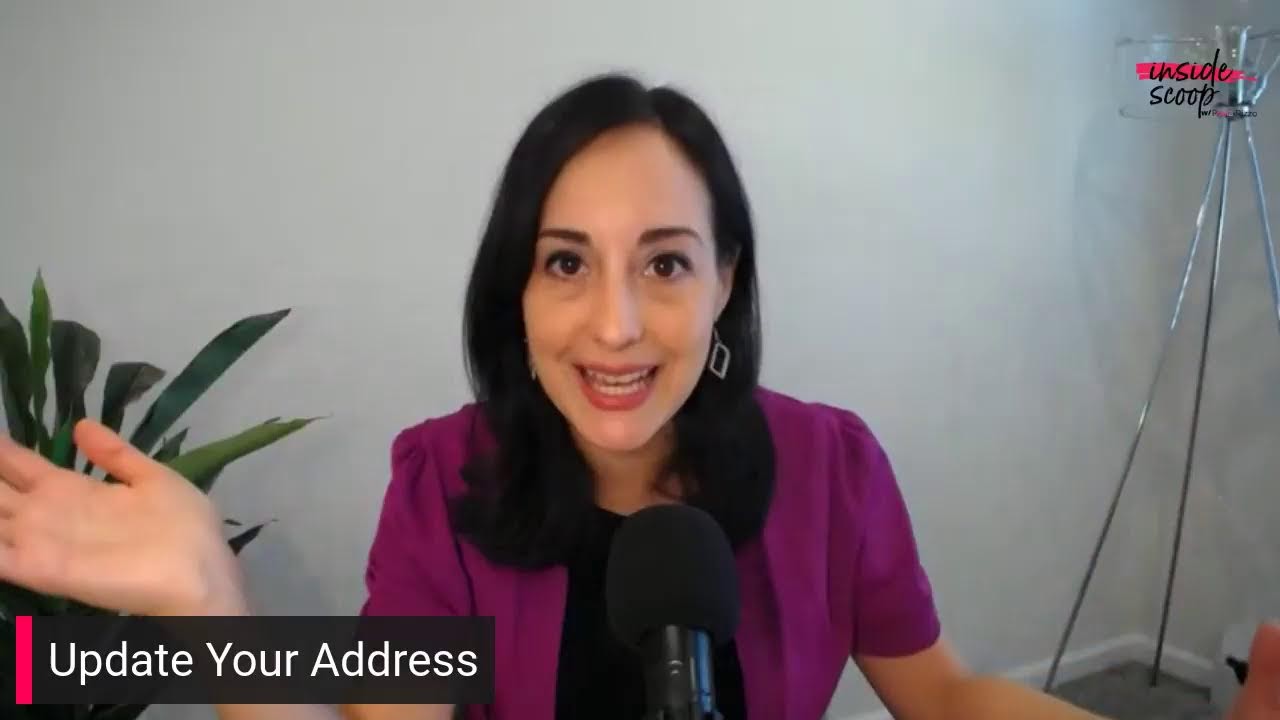
Paula Rizzo teaches four ways to handle on-camera anxiety: shift your focus to helping others instead of yourself, practice repeatedly using the accordion method for different answer lengths, visualize success like Michael Phelps does, and practice accepting the anxiety rather than fighting it.
Chapters
Hey there, welcome to Inside Scoop. I'm Paula Rizzo. Today we're going to talk a little bit about jitters, some on-camera anxiety. I know a lot of you have it. I understand. I completely get it. I've done a bunch of talks recently for authors and for people looking to put themselves out there in a bigger way, and the number one question that I get is, how do you handle on-camera anxiety? Anxiety if you're really nervous about doing it. So we're going to talk all about it today. Uh, but first I have a freebie for you that I think you're gonna love. It's a new one that I just recently put together and it is all about authorship. So if you're looking to become an author or you are an author, this is the 10 questions every author needs to answer. If you go to paularizzo.com/10q, you can grab it there. And the thing here is that as an author, you do a lot of speaking, hopefully about your book. You want to get it out there in the world. Whether it be at a signing, on stage, on air, wherever it is. So you want to be prepared. I do a lot of media training with authors, and so I have a bunch of questions, 10 to be precise, that I always go through with my one-on-one clients. And I thought, you know what, this would be really helpful for, for authors who are looking to talk about their books and get them some much-needed attention. So I hope that you check that out. And as you're watching, uh, you know, if you're watching on LinkedIn, I have a bunch of courses actually on LinkedIn, LinkedIn Learning. I'm a LinkedIn Learning instructor. There's one there about how to set boundaries and how to protect your time, which is super important, especially if you're looking to get any kind of video done. You need to be able to do that. So you could use the QR code there or go to LinkedInLearning.com to check out all of my courses. I have 7 now. And if you're watching this and you're thinking, hey, you know what? I have some questions, stick them in the chat boxes below. I want to hear from you. Or if you have a friend who you think might benefit from this, I would love for you to tag them and let them know and say, Hey, I know that you're, you're been, uh, you know, not doing video because you're a little bit scared about it, but listen, there's going to be some good tips on this show. So I want to dive right in and get to them. The first tip that I have to get rid of anxiety about being on camera is to be of service. All right. What does that mean? Well, there was a media training client that I worked with some years ago. She was a cookbook author and, uh, she was a vegan chef and her, her publisher hired me to media train her and she was deathly afraid of doing video. And I said, "What's the deal?" She said, "I don't know. I just don't want to do it. I'm just like very anxious. I just don't like the way I look on camera." And what happened was I said, "OK, so why'd you write your book?" Sometimes being of service makes you come back to say, "Hey, what's going on here? Why am I doing this? Why did I even write this book? Why did I decide to become an expert in this field?" Any of these things, right? So what you do is you say, Uh, you know, I, uh, you come back and you think about what it is that brought you to this place. So for her, here's what it was. She became a vegan chef because her husband had gout and they were eating a lot of meat, you know, like a lot of families do. And she noticed when she cooked vegan that his symptoms went away and they got their lives back because it was debilitating for them. They had to cancel, you know, vacations. They couldn't go here. They couldn't go there. They couldn't do all of these things because he would have these flare-ups. And that is why she created the book and her blog. And so I said, "Oh, that's interesting. So let's just say that a year or two ago before you decided— before you learned this, let's say there was somebody out there who could have told you that, who could have given you the shortcut, who could have said, 'You know what? If you start cooking in these ways, the gout will go away.' Wouldn't you love that?" She said, "Well, of course." I said, "Well, you're that person." It is now your job. You need to be of service. Be of service to those people. How dare you keep this from people? You can change their lives. When you make that switch and you think about how you can be helpful, it takes the limelight off of you and puts it back onto them. And that will really shift the focus for you in your mind. It's not about what your hair looks like. It's not about what your makeup looks like or if the lighting is perfect or whatever. It's about the message. It's about being of service and being able to help people and get it out there. You know, I worked in TV, TV news for close to 20 years, and I've always thought of it as a public service. It's a public service to tell people about, you know, things in their world, better, worse, or, you know, indifferent. But it is a way to get people information that they need. So think through, be of service. I think it will help you to have that mindset switch to not keep this wonderful information from yourself. Okay, next is to practice, practice, practice, practice. It really does make a difference. And I want you to practice and then watch your videos back. I know you might be cringing a little bit, but it's okay because how will you know how to get better if you don't watch? Now, this is what I do with a lot of my media training clients, obviously, is that I make them watch. I do it with them. And so it's easier if you have somebody to watch it with you. You want to have someone who's impartial also. You don't want to watch it with your friends or your family. They're going to tell you, "You look great and you sound great." You want someone who will really give you some constructive criticism. And for yourself too, because oftentimes we think, "Oh, I'll be great. This will be great. I'll just get on and I'll start talking about it." And then when you watch it back, you're like, "Wow, I rambled and rambled and rambled and did not get to the point." So you want to do all of that work up front. I do this every time I do a video for the most part. I think about it. I even write a script sometimes, and then I practice. I practice the first couple words that I'm going to say, and then I also practice the ending. Because it's really important to know when to stop talking. Somebody actually sent me an email just yesterday about this and said she feels awkward when she's doing an interview on camera with somebody else, um, as the expert, because she's like, I don't know when to stop. And then I just feel like I keep rambling. And then like the interviewer is trying to jump in and it's a little bit awkward. You really have to nail the landing. So practice that too. The way that I teach it is, is called the accordion method. And so you have a short, a medium, and a long response to anything that you're, you're going to be answering. Right. And so that's why the questions, the 10Q questions freebie that I have will be very helpful because I go through that there as well. So practice, you know, it doesn't always make perfect, but practice makes you feel better. You start to feel like your environment is not so strange anymore, right? Your camera's okay. Your light's okay. Everything okay. Now I can talk. It's very foreign in the beginning, so you do need to practice, practice out loud, and practice with other people if you can. The next is to envision the positive outcome. Now, this I stole from Michael Phelps, who, as you probably know, is a very famous, uh, you know, Olympian. And what he does, and many, many, many elite athletes do this, is at the end of the day, what they want to do is win, right? They want it— they want to win the race. And that's what I want for you too. You want to do these videos and feel really good about them and feel like you nailed it, feel like you have something really great that you can share with people and you're excited about it. So Michael Phelps envisions himself winning every race. He literally goes through it in his mind and he sees himself going to the end and getting there and the whole thing. That's what you need to do too. You need to envision yourself at the end of these recordings. Or if you're doing TV, at the end walking off the set or, you know, closing your computer if you're doing it at home and feeling really, really excited and feeling really great because you nailed it. It really helps. I have to say, I've done this with a lot of my clients and to have them envision the outcome and really keep the eye on the prize really helps. Now this last tip I got from one of my clients, Dr. David Rosemarin, who wrote a book, uh, that is called Thriving with Anxiety that will be out soon, and I've been media training him for quite some time to get ready for the launch of his book. I was just talking to him yesterday, and he's an expert obviously in anxiety and how to manage it and how to actually make it a superpower for yourself. This is his tip. He says, whenever you're feeling anxious about something, you notice it. It's a little bit of mindfulness there, mindful meditation sort of thing. You notice that you're anxious, and then you let it ride. You let it ride. Let it, let it play out. Feel the feeling. Don't try to get rid of it. Let it ride. I thought it was such an interesting perspective to do that because we instantly think, oh my gosh, I feel anxious about this. I don't like it. I'm not going to do it. Shut the computer, be done. But no, he says to push into it a bit. Let it ride. Feel it out. Let yourself feel the feeling. It's okay. And do it. You know, I think also as you're doing these practice videos, it's okay to feel this. And practice videos nobody ever needs to see. A lot of times when I'm doing this with my clients, the first 5, 6, 7, 10 videos that we produce together never see the light of day. I'm the only person who sees them. So, you know, it, it is interesting to be able to allow yourself to feel what you're feeling. And hopefully that will get you to a place of feeling a little bit less jittery, a little bit less, you know, concerned about how you look and how you feel on camera. Because the truth is, is that you have something to say, and I would love for you to be able to do it on video and to get out there. I hope this has been helpful for you to learn all about how to handle on-camera anxiety and jitters. And again, you know, I do have a freebie for you if you're interested. If you're, you know, interested in becoming a person who knows how to answer any question. If you go to paularizzo.com/10q, you can grab my 10 questions that every author needs to answer. This works for anybody really, but if you're an author specifically, it really helps. And I'm also a LinkedIn Learning instructor and I have many courses on LinkedIn that will be able to help, you know, you in all areas of your life. This one is about enhancing productivity in a hybrid work environment. So if you go to paularizzo.com/linkedin, you can check that one out. And, uh, If you have any questions, please leave them in the chat boxes below, and I will see you soon. Thanks for being here.