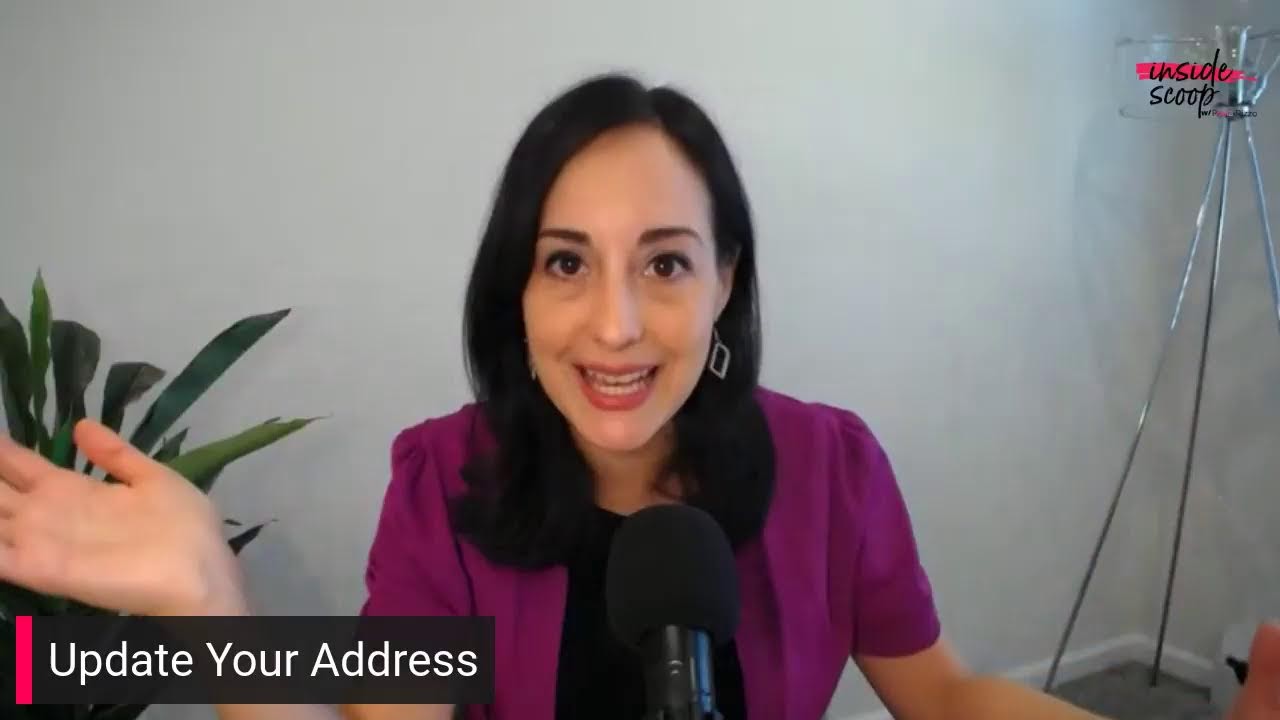
Paula Rizzo teaches media professionals how to handle live-video disasters like pet interruptions, technical failures, and unexpected questions. She walks through common problems with real clips and advice from Los Angeles County Fire Chief Darryl Osby, plus practical prep strategies to keep your broadcast on track.
Chapters
Hey there, welcome to Inside Scoop. I'm Paula Rizzo. As many of you may know, I media train lots of experts, CEOs, executives, entrepreneurs, authors especially, and I always hear the same kind of things. Live video makes me scared. I get it. I get it. I get it. As someone who worked in live TV for many, many years, Anything can happen. Anything can go wrong. Mistakes happen, but it's all about being prepared. So that is what this show is all about. Some of the biggest mistakes and mishaps that happen on camera, on video, and how can you handle them? And also how can you make sure that they don't happen? You can't always make sure they can't— they don't happen, but to the best of our abilities, we'll talk through those. Uh, and I have a couple of video clips and things that I want to show you and share so that you have it in your mind and you're not afraid. Of live video because it really is a great way to connect with people. And especially if you're looking to be an expert in your field and you want to do TV and video and maybe your own live stream show, you should be thinking about these things and have a backup plan in case things go wrong because they will. It's just the nature of the beast, right? So we'll talk through that. And if you're watching the replay, leave some questions below if you have any. I'd be happy to answer those for you. And I do have a freebie for you that I think will be very, very helpful in terms of this conversation. If you go to paularizzo.com/freebie, or use the QR code right there, you will get my checklist to become a go-to media expert. And media these days, it's not just traditional media. We're not just talking about TV and radio. You know, that's important, and I 100% talk about that, but also producing your own videos, producing all of your own content, getting out there and talking about what you know in a really compelling way. So if you check that out, you know, I have a lot there for you. And also, I'm a LinkedIn Learning instructor. And so you can check out my courses. I have several of them on LinkedInLearning.com. And especially for this conversation, I think my course on organizing your remote office for maximum productivity would be very helpful. Because, you know, we all work from home now. So your studio is your house, right, for some of us. So how do you make sure that you optimize your setup and make sure that you look and sound your most professional and also your most productive in that space? Space. So check that out on linkedinlearning.com or use that QR code right there to do it. Uh, you know, tag friends, anyone who you think might be interested in this conversation. Make sure to tag them in the, the chat boxes below and ask some questions if you have any. I'd love to hear them. Uh, you know, we'll be checking for those afterwards. So the first thing that I want to get through of the mistakes that might happen, the mishaps that, you know, go wrong. If something goes wrong, something goes wrong. There's so many things that can go wrong. And I've had this happen to me personally anchoring this show, right? Hosting this show. And the setup here is that I did a segment with the wonderful Suzanne Kingsbury, who is lovely, and I think you should go back and watch her full episode, which was all about finding time for creativity. She is a book coach, my book coach in fact. And so we were talking all about the inner critic and how you keep yourself from doing your most creative work. And what does that mean? And how do you do this? And this is what happened during that conversation. So when you're tired, when you're sort of relaxed and with your friends and like on a very excuse— with your puppy. Sorry. I'm so sorry, you guys. This is what happens when the critic is like— Enzo doesn't like the critic. He's He's upset about it. Hold on, I'll bring him over. Enzo, what's the thing that I have for you? So this is how we get my dog motivated. We give him a treat. Come here. What is this thing, Enzo? So sorry, guys. No worries. Mute me. Do you want to go deal with Enzo and I'll talk about the inner critic a little bit? Talk about the inner critic. All right, I'm going to do some questions. All right, let's let her get her dog. I know to be true because Suzanne is someone who I interviewed for my second book, Listful Living, is that she talks all about how being creative can really happen at any moment. See that? I mean, what can you do? The dog wanted to be part of it. We had to just go with it. This is not a good scenario, right? Thankfully it was on my show. It's kind of casual. It's no big deal. It's not like this was national TV. Suzanne is very lovely and goes with the flow and went over and got the dog. And all Enzo wanted to do was be part of it, so he came in and he sat with us, and then he was happy, right? But you do not want this to happen because you will panic in, in the moment. Um, but there's, there's a few things here that I want to point out. One, we had to talk about it, right? You hear the dog barking, you have to mention it. Everybody hears it, right? We all see it, we all know what's happening, so you might as well address it. This is the same thing if you're doing an interview, um, and you're in a studio and the bug flies into your face, or, you know, let's say you're doing a cooking demo and like the blender doesn't work. You have to be playful and cute about it because everybody knows that it's happening. So instead of just panicking, you want to address whatever it is and then try and save it. Okay. So that is why we muted Suzanne. We let her go get her dog. We put myself up full screen so that then I could talk about what it is that we were trying to kind of cross, because thankfully I knew it before she came back. So, you know, thinking through how would you handle these things, a lot of times experts that I work with, they like to take improv classes because that will really help you when you're thinking on your feet. To be able to just like lean in and just go with it and make it not a disaster. Okay. It sounds easier than it is. This will take some practice, but really, you know, this is something that you should lean into. So there's something when someone goes, someone comes into your, you know, into your live stream or into your, you know, your interview. Then something else that might happen is that your tech might fail, right? This could happen. We all know Wi-Fi is not as reliable as we would all like. So first off, you want to make sure that you have tested this and tested it beforehand and restarted your computer and did all of the things that you should do beforehand every single time. And I do this before every live show. I make sure that I'm hardwired and then I restart my computer right before. And this is just a nice way to reset everything, make sure my microphone works, make sure my camera works. And even sometimes the best laid plans doesn't work, right? I did a video not too long ago with, um, Tara Singh Carlson, sorry, who is the editor of Where the Crawdads Sing. And all of a sudden my camera gave out. I did my test, I did everything that I usually do, and there was no camera. It just didn't work. And so we had to just go with the flow. And thankfully, you know, she was able to answer some questions so I could stay behind the scenes. But you do need to think through like, what will you do if this goes wrong? So really think through that ahead of time, um, because it's inevitable, but you really do just have to go with the flow and try your best to get back on track. The last thing you want is to panic on camera and have people see that because that is not the look that you want, right? Um, the other thing that I talk a lot about with my media training clients, uh, is, is curveball questions, right? Like what if you are being interviewed and someone throws a question at you that either you don't know the answer to, you don't want to answer, or, you know, it's something that maybe you just are not that the person to talk about it, right? Uh, you never want to say, oh, I don't know the answer to that right off the bat, um, because I just, I just find that there's a more elegant way to handle that. Uh, and I, I want to talk about an example here that I find to be one of best ways to handle this. So this was a press conference that had happened when Tiger Woods was in a car accident. And someone in the audience during a press conference asked this question. They asked, "Can you explain to us Tiger Woods's pain threshold at the time? Was he in shock? Was he in tears? Was he in excruciating pain? How would you describe his reaction to those who first got to him?" Okay, so now the press conference was with all of the fire officials, police officials, all the officials were there, right? In LA County. And they were there to inform people what had happened. And that was the question. And when they were asked this question, the police chief was on the podium and he heard this question and he knew, I cannot answer this question. This is not something, this is personal information. I can't answer this question. So he laughed, he stepped aside and he gave the question to the fire chief. And this is how the fire chief handled it.
Good luck with that. Yeah, once again, Darryl Osby, Fire Chief, Los Angeles County Fire Department. I can't respond to the specifics of Tiger Woods. I mean, some of those questions are personal and need to be released from him or whomever is representing him. The only thing I can tell you from my experience of working in public safety for the past almost 4 decades, that anytime you're involved in a single vehicle accident like this with rollover and that level of damage and broken legs and lacerations, that you're going to be in severe pain.
See what he did? Handled that like a pro. I mean, this guy is no— not new. He's been doing this for quite a long time. He's been answering lots and lots of questions. But what he did was he addressed the question and said, "I actually can't tell you that." He literally can't. It's not that he doesn't know the answer. He is not allowed to talk about it because it's personal. Okay. So he addressed it and then he didn't just leave it at that. He pivoted to what he does know from his experience working in this field for X amount of years that he knows, "Hey, I can't talk about what happened to Tiger Woods, but what I can tell you is if someone is in that kind of accident, they will be in a lot of pain. That's what I do know, right? And so that is how you should answer any questions that either you don't want to answer, you don't know the answer to. You address it and then you move on to something that you do know. And likely you'll be able to get, uh, you know, get the interviewer to move on to something else. And to be, you know, that will be suffice and that will be done, uh, most of the time. So that is really the way that, that you handle that. It takes practice, but also takes preparation. So knowing that this is something that you might have to handle depending on what the subject matter is, practicing, you know, making sure that you answer those questions out loud, record yourself, see how you sound, have someone else interview you to do a little bit of a test, hire a media trainer. You know, this is what I do all day, every day. And if you're interested in talking about media training with me, if you go to speakwithpaula.com, you can check out my media strategy session questionnaire and, uh, the speakwithpaula.com and also have a QR code there. You know, if you're interested in launching something or being able to speak better and more clearly on camera, uh, if you're doing media, any of that stuff, those are the types of clients that I work with the most. Uh, and I would be happy to chat with you and see if it's a fit. Um, but first I wanna be able to go to our last thing that might go wrong that might happen is last minute cancellations. And now this is twofold. This is either I'm a guest and I'm canceled, or I'm a host and my guest cancels. Okay? So because we're all doing podcasts and livestream shows and all of that, this might be something that you will encounter at some point. But first, let's go through if you're a guest on someone else's show or TV or radio or whatever it is, and they cancel. So, you know, I worked in TV news for close to 20 years and things happen. Things go wrong, breaking news happens, and you cancel segments. And the experts who handle this with grace and don't make a big deal about it are the ones who actually get asked back. Because we don't want people who are fussy. We don't want people whose egos are like, you know, through the roof and we don't want to work with. You want to work with people who are really easy to work with and who want to be there. So if you do get canceled, even though I know you probably canceled things in your own life to be able to do this, and you got hair and makeup and you whatever, Use the hair and makeup for something else, right? Go out to a really great lunch or create some videos on your own because now you don't waste that hair and makeup. You know, take whatever talking points you were going to talk about on the show and make a couple of videos and, you know, put them on LinkedIn. Make sure you use that time wisely. So, you know, that will hopefully allow you to then be asked back. Those segments don't always get rebooked. That is what I will say. You know, sometimes it'll be like, oh, it was the best laid plans. We wanted you. This was a great topic. Now we've moved on. But don't be discouraged. You can always pitch again. You can always get back, you know, on that show at some other time if you do get canceled. Now, if it is your show and you get canceled, someone cancels on you at the last minute, you should always be thinking through this too, right? I always have like a little glimmer beforehand, right before the show starts, just be like, you know what, is the guest gonna show up? Is something gonna happen? Are they gonna be here? 'Cause my show is live. And so we always check with the guest the night before, the day before, Allie, my producer's always checking the week of, we're sending them some, you know, promo materials since it is a live show so that they're seeing and remembering that it's happening this week. She checks in with them beforehand to make sure we're all good to go, and then the people show up, right? But if they don't show up, what do you do? Think about this, okay? There are several options. One is to always have a backup plan. Producers always have a backup plan. You always think about, okay, worst case scenario, unfortunately, can I get somebody else to, to jump in? You know, can I get somebody else to talk about this? Can I, uh, you know, can I talk about it myself? Can I make this a shorter version and say so-and-so couldn't make it today, but you know what, I really want to talk about this topic because it's really important? Does that make sense, or does it make sense to just cancel and reschedule? Think it through, but it's something that you will likely have to do very quickly. And for me, I always like to think through those scenarios beforehand because in the moment you might not know what to do. So always think about that ahead of time. If you have other questions, leave them in the chat boxes below about anything and everything that can go wrong when we're talking about video and live video specifically, leave those for me below. Um, I would love to help you with that. And also, you know, I have a freebie if you're interested in my checklist. Uh, it is a checklist to be a go-to media expert. And again, we're talking about media being not only live TV and radio and podcasts now, but also producing your own content. So if you go to paularizzo.com/checklist, playlist. You can check that out. There's a QR code there as well. And if you're interested in, you know, seeing how you can be seen in the media in a better way, uh, you know, if you're looking to get some coaching and some, some help, uh, to, to be able to produce your own videos and also look your best and sound your best on camera, whether you're an author, an entrepreneur, a CEO, you know, whoever you are out there, uh, check out, uh, my media strategy session questionnaire if you go to speakwithpaula.com. So we can have a conversation and see if it's a fit to work together. There's a QR code there for that as well. And thank you so much for, for watching. I'm glad that I could bring some of these, you know, worst-case scenarios your way. I know that it's a bit of a downer to think about what the worst-case scenario could possibly be, but trust me, it will definitely, definitely be worth your time. When something does go wrong, you will be very prepared to handle it. So thanks for watching, and I hope to see you next time.