No Priors Ep. 75 | With Co-Founder and CEO of Brex Pedro Franceschi
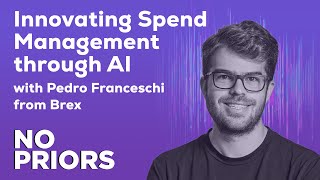
In this No Priors podcast episode, Brex co‑founder and CEO Pedro Franceschi discusses the company’s growth, its shift from a co‑CEO model to a solo CEO, and how Brex is embedding AI across its product, go‑to‑market, and internal operations. He explains the rapid development of the Brex Assistant, which now serves about 30,000 customers and automates over a third of expense entries, and details the design principles used to manage AI uncertainty—exposing confidence levels, integrating suggestions into existing workflows, and scoring outputs with data‑science rigor. Franceschi outlines three AI focus areas: product (expense management and accounting), operational efficiency (prospecting, compliance, KYC), and developer productivity. He describes how Brex is building a proprietary customer data platform to power hyper‑personalized account‑based marketing, arguing that the real value lies in signal aggregation rather than generic email‑generation tools. The conversation then moves to the durable parts of Brex’s business—money‑movement infrastructure and compliance monitoring—highlighting that AI cannot replace the core financial rails. Franceschi introduces Brex’s “continuous finance” vision, a real‑time, AI‑augmented view of every dollar that could replace traditional ERP cycles. Finally, he reflects on the strategic decision to drop the SMB segment, focusing on up‑market enterprise customers, emphasizing leadership bandwidth and the need to be world‑class in a narrower market. Throughout, he balances optimism about AI’s potential with a pragmatic view of risk, trust, and the importance of customer obsession.
Chapters
Hi listeners, and welcome to No Priors. Today we're talking to Pedro Franceschi, the co-founder and CEO of Brex. Since its inception in 2017, Brex has been building fintech tools that make employee and employer lives easier when tracking and paying expenses and beyond. So it makes sense that they're now implementing AI to make this process, always annoying, even more automated for their enterprise clients. We'll talk about that and the business overall. Welcome, Pedro Franceschi.
Glad to be here. Thanks for having me. Thanks. Yeah.
So just to set context, I think the vast majority of our listeners know, but for any new customers or potential ones, can you tell us what Brex does and sort of what scale it's at today?
Sure. Brex is a corporate card and spend management platform, and we help companies make better financial decisions and push every dollar of spend further. We serve companies from all sizes, from, you know, to YC, to founders out of YC all the way to, you know, large public companies like DoorDash of the world, Coinbases of the world, and everything in between. We have, you know, tens of thousands of businesses as customers. One in every three startups uses Brex today. 130 public companies are also on Brex. So we have this sort of wide range of customers, which means we're pretty proud to, you know, be able to scale our customers from inception all the way to, to really large global scale.
Recently you and Henrique shifted from co-CEOs for a long time to solo CEO. It's an uncommon arrangement, and I think a lot of founders would love to hear any advice you have on both that and then how the, how the transition has worked.
Yeah, so I think for many years we were the poster child of co-CEO success. So now, now it's changing that maybe, maybe we're, we're, you know, just changing that pattern, I guess. But So for us, honestly, not a lot has changed in how we actually run the company day to day. So we had this co-CEO structure where Enrique was more external, I was more internal. And the reality is at some point we, we, you know, we've been doing this for really 10 years almost since our previous company in Brazil. And I think the learnings for us were at some point, you know, we massively simplified how we run the company over the past 7 months. Streamlining, you know, layers of management priorities, fewer decision makers. And, you know, there were a few decisions that, you know, there was a need for more clarity on how decisions got made. And even though Enrique and I, I think, figured it out ourselves super well over the many years as the company scaled and we started to getting a bit closer to a different level of maturity as a company, closer to being public and things like that. It became, you know, relatively clear that it would be good to go back to the traditional governance model of CEO and chairman. And we're happy about the change, but nothing really changed about how we run the company, how we handle customers, how we talk to investors or anything. So it's been mostly a formalization of what's been true for a few years now. It's interesting because when I look at European AI companies, there's an increasing number of them that actually have the co-CEO structure, and often it's a very technical founder plus a more business-centric or business background founder. And so that's companies like Helsing, like there's a couple of these actually, and it's some of the leading companies in European AI. And I don't know why it's so Europe-specific. Obviously in the US there was Robinhood and others where, you know, they had a co-structure as well. But I find it striking that in Europe it seems like a more and more common pattern. So just as kind of an interesting aside, could you tell us a little bit about how Brex is starting to think about AI and some of, some of the innovations and approaches that you're taking there? There's 3 big areas for us. One is the obvious, which is product. So how we come and improve the product and make the experience of essentially expense management better, right? And within product, there's two areas that we spend a lot of time. Accounting is one, and the other one is essentially expense assistant and expense management, basically what EAs would typically do. Second big bucket besides product is go-to-market and operations. So things that are very ops-intensive internally, prospecting, you know, KYC, underwriting, compliance, lots of use cases there. And the third broad bucket is like developer productivity. So how we can help engineers be more successful. And there I don't think we've done anything particularly remarkable in the third one because, you know, we're using the same tools that folks have used, Copilot and things like that. We're experimenting with new tools, but I would say buckets 1 and 2 is where we spend the majority of time so far.
Maybe even one step back from that, like at what point did you say internally at Brex, like, I'm going to get up to speed personally on this, or we're going to make this part of the product?
Probably 18 months ago, I think right after ChatGPT launched, we started to just play with, you know, ChatGPT online. And I had played with GPT-3 through the APIs before ChatGPT was out. And obviously it was impressive. But ChatGPT was that moment that everyone started to think, okay, what does that mean for my business now? The mental model that I don't think is particularly unique that we have is You know, if we were to think about, you know, humans are now free, what would we do? Turns out there's a lot of work in expense management and accounting that people would automate. Right. And the one that was really obvious to us early on is, you know, if we think about what is the best customer experience when it comes to expense management and corporate cards is essentially what executives have, which is there is no experience. You just swipe and it's done. Right. There's an EA in the background that will figure out how to get a receipt for that, how to categorize this expense, how to get it approved, right? I prototyped something on the weekend with, you know, in Python with GPT-3.5 on can we just get someone's calendar and use that context to generate a memo, categorize an expense, and potentially find a receipt on someone's email? And the results were like surprisingly good. And it took me, you know, probably, I don't know, 48 hours to get something working. And we tried in a few transactions, And then, you know, probably in a week we had a team trying to build that on a side of Brex. And I think, you know, that was sort of the original impetus of us trying to get some of these things out because we knew that it could essentially give this pretty amazing customer experience for everyone. And today, you know, we have roughly 30,000 customers on Brex that use Brex Assistant for expense compliance and, you know, over a third of their expenses today are completed by Brex Assistant automatically, which is basically something that would require them for going in manually doing. And, you know, over time we want to get this number higher. But it's, it's, you know, basically a net new product that we build by just playing out of a model in the beginning, seeing what works and getting it out there.
That's really impressive velocity, especially in an area where, you know, I like from other fintechs to sort of traditional financial services companies, a lot of them feel like they cannot use AI because it is probabilistic and there's like risk and reliability issues. Like how do you, how do you handle this or get something into production relatively quickly?
So for us, that is sort of the holy grail of AI in fintech, I would say, is like how do you build this degree of conviction that what you're, what you're suggesting is correct, right? And, and maybe, maybe it's interesting to talk about accounting, which is one that people are fired if the results are wrong. But basically the way we thought of it is twofold. One is how do we expose ambiguity to the user, right? So instead of saying, hey, let me just try to predict something and put it in front of you and say, hey, you know, this is what we generated, you know, good luck. We thought it would be a much better customer experience if instead of having, for example, like You know, chatbots are particularly bad at this where, you know, a chatbot gives you something, an answer. There's no affordance. You can't understand other potential options that it generated. You can't understand context. So a lot of it is just like building ambiguity into the UIs and into the flows. And for example, like our expense assistant, when we're generating a memo, if we have really high conviction in a suggestion, we can go and say, hey, this is what we strongly believe is the answer. And we automatically apply it for you. If we're not that confident, we show suggestions in the bottom of like a field. And if we're not confident at all, we don't show you anything. And then probably the second bucket, which is really interesting, is how to use traditional data science on top of these AI models to build good results. Right? Because there was this phase when, you know, large language models came out where, you know, original data scientists were like, oh my God, before, you know, I was the only one that knew how to do machine learning and now everyone can do something that looks pretty good. And And they were like, oh, what is my role in all of this? And obviously I think as time matured, we going from my prototype in my laptop to something that works across 30,000 customers, you know, and, you know, hundreds of thousands of transactions a month requires a level of statistical rigor and analytics that I don't think most people appreciate. So over time, you know, those skill sets became really valuable in us scoring results from these models and understanding what is a good result. And understanding how users rank a good result, which is different than what we believe is a good result also. So I think there was a lot of that of like, of like solving for ambiguity into results and the quality of the results. And then the other thing that I think we spent a lot of cycles on is trying to think through how to add and contextualize suggestions that AI provides into a workflow that already exists. Because I think, for example, if you're thinking about an accountant, right? I think very few people will be comfortable saying, hey, you know what, you used to categorize these expenses now by hand and close your books by hand, and now we're going to press this button and this bot's going to go in a corner and do everything. Very few people are comfortable with that. What people are probably more comfortable with is as you're going through a workflow, if you're categorizing expense and we say, hey, we noticed you did this same categorization 3 times, we believe there are 15 other transactions that apply to this. Would you like to apply the same logic? Click here to review. And then it opens a nice modal with all the expenses that are going to be affected and you can review. That's like a lot more palatable. So, so I think it's like the small things in like UI and these interaction patterns that go really far. So and, you know, I was, I was looking at the metrics right before we jumped into this call, but we were looking at AI suggestions today and we have using the strategy, we climbed to 80% suggestion acceptance rate on the accounting side today. Wow. And I think if I started by saying, you know, let's go from, you know, click here, I'm going to close the books for you automatically, there wouldn't be enough trust in the platform to do that. And what happens over time is as people start just saying, okay, this is correct, I'm just going to click done, then you can start, you know, building something that skips a step effectively. So I think it's something just that gets users comfortable with the level of ambiguity that these results can provide. Yeah, there's really interesting historical precedents to this too, where I feel like with each technology wave there's things that users have to get used to and also new UI to help navigate them. And so, for example, in the '90s, people used to be uncomfortable putting credit cards into websites, right? The credit card numbers, they were to get stolen. And, you know, there's other examples like that throughout history. And here you always hear people really worry about hallucinations or ambiguity in AI output, and it'll both get solved from a technology perspective. But to your point, there's really smart UI things that you can do. How did you think about where to allocate time from an AI application perspective, or how did you prioritize what to focus on? So for us, I would say the biggest driver was where can you create the biggest difference in customer experience? And again, unsurprisingly, we're pretty customer obsessed at Brex, and for us we were just starting thinking about what are the things that touch the largest number of people and, you know, basically creating an EA for everyone that has a Brex card was a pretty high leverage initiative. And then obviously accounting is something that every single admin on Brex does every month, right? Everyone has to close the books. So I think it was very much, you know, thinking about just like impact and where can we lift the large number of hours in the system away from these folks doing these things manually. I think then the other sort of side of the brain where we went also was, you know, what does it mean for us internally, right? Because at the end of the day, there's sort of two ways of, you know, cutting costs and automation from customers and from us is obviously, you know, directly putting that in the product and enabling customers to save time themselves. But also what are things that we can do internally to help us serve customers better, right? And that's sort of the second big bucket of where we spend time on things like go-to-market, prospecting, demand generation and operations and compliance, where a lot of the brain went. I would say my original impetus was, and was very product-oriented. And then right after, most of the times where we spent time was on the marketing side where we, we, we had a lot of, a lot of a lot of sort of early thinking to do there, given that not a lot of people were actually thinking about how to apply this on a B2B setting.
If you were going to look at sort of outside of the product to, as you said, go-to-market and the operations-intensive parts of the business, do you have like a rank ordering of like where you think it's going to have the most impact?
In general, scaling marketing is the biggest one. And the way, the way I frame it internally to folks is like, you know, if you look at again, the same framework applies everywhere, right? Which is just like, what would we do with infinite humans? And back in the day, if you think about marketing 10 years or 15 years ago, you and you were at like Salesforce and you were trying to close, you know, Coca-Cola or a really large enterprise customer. You literally had an account-based marketing team where you literally have a PMM, a product marketing manager working alongside with a sales rep to market to that account. Right. They're literally creating a pitch deck. They're creating materials. They're creating— they're going to Coca-Cola and meeting the executives of like very specific pitch of like the value that Salesforce can provide and so on and so on. And really the way I think about it is like there is a world now where you can generate effectively account-based marketing for any accounts because the cost of doing that is marginal, right? So the way we think about this is like, how can we prospect across accounts that never got the level of personalization and that level of care with a lot of these tools and really in a really specific way provide value to these accounts in ways that we couldn't provide before. So, you know, for example, one of the things that we have done in the past is, you know, we're pretty— we started to this year to quantify literally how much value customers get from Brex. So, you know, effectively how many dollars we help them control spend, how much dollars stay on budget, you know, how many hours they save, how many dollars they save. Right. And over time, we were able to start being a lot more rigorous around, you know, folks in these industries, in these verticals, folks, companies that have these characteristics, companies that are global, for example, right, tend to have a lot more affinity and get a lot more value from Brex. So, you know, now we can say, you know, hey, XYZ company, we know that your peer in your industry is actually using Brex, and they also have a lot of global employees just like you. And, you know, they don't pay any FX fees because they use Brex for doing this on a global scale. Right. And this level of personalization is something that an SDR, for example, if they're just trying to outbound email someone, they would never be able to come up with. And a lot of the challenging part of what we're doing now is how do we build the systems that allow you to think of demand effectively as a system? Where, you know, you're basically tracking your entire TAM in your own systems and then effectively thinking how to target each account in a way that is highly relevant to the value they can get from Brex. And a lot of the content and a lot of the insights and a lot of the things that allow this to happen is effectively, you know, large language models because you can process not only a lot of unstructured data. So for example, is there any job postings about this company hiring somewhere else? Or even, you know, whenever I go write a code email to an account, like, can I— how do I write something that's relevant to them? And so on and so on. So that's like a big area where we're spending a lot of cycles on now. And we think there's like a lot of lift in terms of just creating a new playbook that hasn't been possible before.
Yeah, I think that's really compelling because there are— and I'm not saying that these things are not valuable, but I think they are quite commoditized. There are many companies that are doing some version of like email generation that can plug into an existing email orchestration system.
Yep.
And they'll call it AI SDR and maybe they'll like plug into LinkedIn, right?
A lot of those. We've tried a lot of those.
There's a lot of those. You know what that means is there's— it's very commodity and not very different from like one overworked SDR sending a spam campaign themselves.
Right.
But what you're talking about requires like much more insight into like what is a demand signal, a value signal, like specific data that Brex itself has to collect because it understands that signal and wants to meet it now. And so I think like that should be much more powerful.
100%. There's this book like Crossing the Chasm that is like a kind of classic go-to-market startup book and talks about this idea of like what is the definition of a market, right? And a very important concept is the idea of customers that can reference each other. So like, it's not— you're not really in the same market if this customer can't go talk to this other person about your product and hear something, you know, like, do they know someone that uses it? And effectively, like, I think now there is this ability of creating like almost an infinite number of markets where effectively, like, you know, I want to create a market of like construction companies in Missouri that, you know, are high spenders on card or, you know, they have complicated accounting needs that may leverage Brex and You know, you can essentially like outscale your ability of doing this with humans in a way that you probably wouldn't be able to do before. And to your point on a lot of the tools doing that, the writing the email is the easiest part. That's actually not that hard. The part that is the hardest is aggregating all the data and essentially building this, this database of your whole team, like who is every account in the market that could buy Brax potentially? And what do we know about them and how do we enrich them with signal that doesn't necessarily exist out there yet that, you know, could give us a higher likelihood of converting those accounts? And I think the interesting thing there is, which I actually think is why this is really net positive, is ultimately your outreach becomes so much more relevant that people don't actually treat it as spam because like it doesn't like, you know, at the end of the day, marketing is all about alpha, right? You want to be doing something that you are out, you know, you're being more relevant than someone, you're being effectively more specific to someone's pain points. And I think the degree of personalization that you can achieve now when it comes to pain points, customers, you know, understanding of your business and specific things that are going on in your life as a company, I think is materially higher. So I just think there is a lot of the work is the database and AI helps you actually build the signals and write all the email. But the actual hundreds of tools that help you compose emails with AI are not that relevant to this specific problem.
One of the challenges, the thing you're talking about feels like a very— it's a pretty big technical effort, right, to do this data consolidation and I, uh, I think that there's a prior generation of go-to-market infrastructure that will become less relevant.
Oh, 100%.
Because it doesn't support like the scale intelligence of like, okay, I want all of these first and second and inferred third-party signals. The way I collect that signal has to be very conscious. I'm gonna do it, I'm gonna do intelligent analysis with LLMs in order to interpret that signal. I do think that it is a big strategic advantage for companies and then a big infrastructure project in most many companies will be unable to do it internally, but it is an advantage for anybody who does build it.
And we had to build it internally. I mean, we effectively build our own customer data platform for this because it's, you know, you just can't use Salesforce. I mean, the tools just don't really work that way. You can't ingest a signal in the way you would want. And, and really like a lot of the alpha comes from the edge cases, right? So like if you can just source this data through like ZoomInfo, for example, and just put it on Salesforce, everyone would be doing it. The alpha comes from what are the signals that you can grab, you can gather that no one else is looking at. And because no one else is looking at, no one is reaching out to those people that way. And therefore it's extra relevant for them to, to do this in a, in a really specific way. So I just think a lot of the marketing playbooks are being rewritten and composing the emails or the ads is actually the easy part. It's just the signal that you need to even write a prompt that, that we spend a lot of time figuring out how to grasp. Yeah, I think one of the really cool things about Brex is that there's ways that AI can accelerate your business, but then there's also a lot of parts of your business that are very durable and robust in the face of AI. And I think these sort of AI durable businesses are increasingly valuable because you can't use AI to just directly attack what you're doing. Could you talk about the pieces of your business that are less impacted by AI or that you feel are really durable in the face of that? You know, people yawn at this, but, you know, when we started Brex, the number one feature people talked about back in 2018 is that you could go to our website, sign up and get a card instantly. And we were the first financial service company on the planet that allowed you to instantly onboard and get a corporate card or literally a virtual card number that you can just swipe. And, you know, I, there's this sort of Jeff Bezos thing of, you know, what are the things that are not going to change in the next 10 years? And I think something that's not going to change is people are still gonna move money and that is unlikely to go anywhere anytime soon. And, you know, there's crypto and, you know, we're bullish on that and there's a few things we're doing on that space. But I think the fundamental thing is at the end of the day, especially when complexity adds up, on the money movement side, that is the sort of underpinnings of all this our software does. And the way, you know, I sort of explain our business to new hires at Brex is, you know, fundamentally the reason this business makes sense is because back in the day used to have, you know, your money moving on this side and that's where the banks were and all that. And then you have your software on the right side, which is where your controls were. And what we did at Brex is we just said, let's just do these two things in one. And when you do these two things in one, you have a lot more control and all that. And the software side, AI is going to change and make great, but the money movement is still, you know, challenging, especially when you get at scale. So one example is like, you know, a lot of like large public companies and we just closed a $100 billion market cap public company a couple of weeks ago.
Congrats.
Thank you. Thank you. We have 130 public companies on Brex today. And one of the main reasons they signed up for us was because they need a card that works globally. They have— I think they operate across 20 markets, 20 countries, and they need to pay their card in local currency, settle in local currency. And the way we build our financial infrastructure, we don't rely on Stripe, on Marqeta, or any of these vendors. We literally go straight to the metal and do the money movement directly with Mastercard and local payment rails allows us to do that at a really large scale. And, you know, that's the reason they sign up for us. And that has nothing to do with AI. And it effectively becomes a really good moat for us to then go and build a great software business on top. But these boring things are really a lot of the value. The other thing which is interesting, which relates to AI in these parts that are not necessarily as sexy as a software is there are a lot of things there that are incredibly labor intensive. So for example, like compliance and understanding, you know, monitoring a business and understanding, you know, whether that business has any compliance issues. So, you know, one of the things, for example, that we use a lot of AI for is adverse media monitoring. So if a company has any news that they're doing something that is potentially shady or illegal, we need to act on that. And companies have an obligation to monitor that and which really meant that companies didn't really do it because it was really hard to operationalize it at scale. And we actually have one of the most robust programs now, I think, in the country on doing that because we started to apply AI there. So even that part has some AI, but I would say at the end of the day, money movement is money movement.
So maybe if we just like expand out from that a little bit, how do you think AI changes like finance even beyond Brex's immediate plans?
Yeah, I think— I mean, it's—
we're still moving money, but, you know, is there—
is there impact?
Yeah.
So, so we talk about this idea at Brex of like there's like roughly 3 horizons in which we operate. And Horizon 1 is like corporate cards. That's where we started. Horizon 2 is what we call total spend, which is this idea of how do we monitor every dollar of spend, even if it's not on card, and bring that under our platform. And then Horizon 3 is what we call continuous finance. And really the idea there is like, what would happen if you had this real-time visibility into every single dollar that flows in and out of your business? And effectively, like the way I think about it is, you know, what finance teams are doing at the end of the day is a reporting job. You're reporting to shareholders, you're reporting to your business internally, and you're trying to aggregate and make sense of data that exists in all different sources, in all different places. And a lot of the work of essentially accounting is a data cleanup job, right? You're basically getting data from these different sources and trying to make sense of it and categorize it. And of course, you know, it's one that there are very high, you know, legal requirements and accounting requirements to be correct. I think there is going to be a lot of new tools that will get built and we want Brex to be that actually, which allows you to have this very different degree of understanding of your business when you effectively have all of what accounting and finance team does happening in real time. And I think once you start having that level of visibility into your business, like, you know, I kind of joke about this today, which is like, You know, if you go to finance, if you go to a CMO in any company and you ask them, hey, how are you doing against your budget today? They can tell you. And the reason is because there are things happening in corporate cards, there are things happening on invoices, there are people traveling all over the map, right? And all this data is in these different systems and then someone has to go clean it up by hand, you know, normalize it, put it into a database, which people call an ERP, and then make sense of it. And I think as you, as you bring a lot of that data with, you know, assuming AI will get there and essentially operate with human-level performance, you won't need anymore this concept of an ERP. And then you effectively have sort of this real-time layer into what's happening in your business and be able to understand the data in, in much more granular ways across all these different data sources that today require people to, to clean it up. So That's effectively what we're building. And I think AI enables a lot of it, but that is, that to me is the biggest thing. And of course there's insights, of course there's things like that, but I think fundamentally a job of finance team is to understand what's happening in the business and report it and help the company make better financial decisions.
I mean, you're trying to change the sort of core cadence of how business operates then. 100%. Moving away from this like quarterly close and planning cycle. And you know, if that's true, that's pretty big. That's very cool.
That is effectively why we call it continuous finance because, you know, companies today operate the same way software companies operated, you know, 20 years ago, which is you have like a yearly release cycle, release software once a year, and then, you know, you get a CD or whatever and then you use that software. And then that's effectively how finance teams operate today. You do your plan once or twice a year, you, you know, put that in stone and then people operate using that plan. But you have new data every day and that's not being used to make your plan better. So continuous finance is effectively continuous deployment, I guess, before finance teams, which is not possible.
Several years ago, you all announced that you would no longer be serving like SMBs and focusing more on startups that were going to be high growth and enterprises. That's not like an easy decision, right? So I'd love to hear more about how you made and implemented that decision. And then, you know, obviously the big enterprise piece is going well for you, but what, what learnings would you offer other companies and founders making decisions about not serving certain customer segments and anything you would have done differently from the beginning or not?
You know, it's that old saying, you know, you can be anything, you just can't be everything. And I think we had this moment at Brex where we were just growing across all segments and we said, you know, we can do it all. We can serve small businesses, we can serve mid-market companies, enterprise startups, et cetera. And I think the reality is like, you know, I think focus is what gives meaning to your choices. And I think the fact that we were spreading ourselves across all these things meant that we were not deliberate about what we wanted to be world-class. That. And, and I think we did an okay job across all these segments, but that wasn't the goal. And I think we had this moment of saying, where do we want to be world class? And, and what ultimately the way we made the decision is by saying, what is the customer-focused thing to do? And, and for us, ironically, you know, it was going enterprise because our customers are going there. So, you know, for example, Scale AI, which I'm sure you all know, You know, I met Alex when, you know, Alex was 5 employees in his office and I went to physically deliver cars to his office. And then, you know, now we're 5, 6 years later and Alex is a massive company with, you know, a CFO and a global presence and with compliance needs and all of that. So, so for us, we had to scale with our customers and which made the decision, you know, somewhat obvious that we had to go upmarket with them as they continued to mature. And we knew that for us, you know, a lot of the value of the company ultimately would be in our ability to stick with a customer and scale with them as they mature. So that made the decision easier. So I would say it's, you know, focusing on the things that you— if you don't focus on fewer things, you're just going to do all of them poorly. And that happened to us very clearly. And the second one is just, you know, a really high degree of customer obsession on where can you truly be differentiated and continue to bet on the people that bet on you? And that's ultimately how I made the decision. And it was painful. We bite the bullet and, you know, unfortunately fired, you know, 20,000 customers. But it would not allow us to be where we are today if we hadn't done that before.
Was the product for those 20,000 customers different or the go-to-market motion or simply like it was attention that was the problem?
I think there were differences for sure. But the biggest thing was leadership bandwidth. You know, I think like there is this belief that what bottlenecks a company is your headcount or your team size. And the reality is, I actually think it's not the case. It's how many things your leaders can spend time on and do well. And we just found ourselves spread across 4 different segments that were completely different and, and we just couldn't ever make the tradeoffs work. And then at some point we just decided to you know, do fewer things and, you know, eliminate one. And that's, that's how we got to it. But it was leadership bandwidth at the end.
Well, I love that this conversation was as much about, you know, complex decisions and hard decisions as AI, though both are, both are amazing.
Thanks so much for joining us. It's really good to have you on. Glad to be here. Thanks for having me.
Find us on Twitter @nopriorspod. Subscribe to our YouTube channel if you want to see our faces. Follow the show on Apple Podcasts, Podcast, Spotify, or wherever you listen. That way you get a new episode every week. And sign up for emails or find transcripts for every episode at know-briars.com.
More from Pedro



Fundador da Brex fala ao CNN Money sobre venda de R$ 5,15 bi à Capital One | FECHAMENTO DE MERCADO



The Agentic Commerce Revolution is here - but it's not what you think! (Brex CEO Pedro Franceschi)

Brex founder Pedro Franceschi on the one question CEOs should constantly ask themselves


We developed 'best in class' enterprise travel expense solution, says Brex CEO on Navan partnership