The Agentic Commerce Revolution is here - but it's not what you think! (Brex CEO Pedro Franceschi)

In this interview recorded at Brex’s San Francisco headquarters, host Speaker A talks with Brex founder and CEO Pedro Franceschi about the emerging concept of "agentic commerce" and why it is especially powerful in the B2B space. Franceschi defines agentic commerce as the use of AI‑driven agents to automate the entire purchasing lifecycle—from policy checks, price comparison, and compliance to post‑purchase accounting and approvals—turning what is traditionally a multi‑month, multi‑persona process into a seamless, automated workflow. He explains Brex’s two‑track AI strategy: (1) Product AI, which re‑imagines Brex’s core offerings from the ground up with agents, and (2) Operational AI, which uses AI to make internal processes (money movement, support, implementation) more efficient. To build AI‑centric products inside a large, mature company, Brex creates small, startup‑like squads (often 10‑20 people) that operate with a 996 intensity, work in‑person, and are given full autonomy to zero‑base product design. The interview covers Brex’s co‑design approach with 20‑30 customers (mostly existing Brex users) to validate problems before building solutions, the importance of early‑stage success metrics (team pride, customer enthusiasm), and the need for a new evaluation framework to test multi‑agent coordination. Franceschi also discusses hiring traits (ability to operate at both strategic and execution levels, personal ownership, intensity), the evolving business model (from pure banking revenue to software‑driven automation and eventually labor‑replacement), and Brex’s global go‑to‑market strategy built on a proprietary issuing stack that now supports 100+ countries. Partnerships (e.g., with Navan, Zip) are framed as “stronger together” integrations that let Brex focus on financial infrastructure while partners handle specialized workflows. The conversation ends with reflections on the rapid AI progress, the still‑nascent state of fintech, and the vibrant San Francisco ecosystem that fuels Brex’s growth.
Chapters
Brex just announced that they're going all in on agentic commerce, so today I'm here in their headquarters in downtown San Francisco to talk with their founder Pedro Franceschi about why. Agentic commerce is probably one of the most interesting subjects in fintech right now because hundreds of billions, if not trillions, of payments volume is up for grabs.
There's $1.8 trillion of corporate card spend in the US today.
Today we're going to talk about what is agentic commerce, why it matters, and why some of the most interesting opportunities are more in B2B and not just consumer.
When you go into B2B side, there's a lot more exciting stuff to build there because the decision-making is a lot more complex.
We're also going to zoom out and talk a little bit about how if you're a founder already operating at scale and you need to build a new product or feature that is AI-centric, how you can build that within an existing organization, because that's what Pedro has had to do.
I don't think you change the company. I think you have to start new things.
I think this is an incredibly exciting time to be in fintech. It used to be that you had the same products from the same 5 big banks and they were crappy and nothing really changed. But now you have these tech-native companies like Brex who are operating at scale, who are going all in on AI.
I think it's really hard to be at the forefront of the product building if you're not at the forefront of the technology and really understanding what's actually happening.
And I'm especially excited to talk to Pedro because he is an amazing engineer. At age 13, he was the first Brazilian to jailbreak the iPhone. At age 15, he founded the Stripe of Brazil, Pagarme. And at age 22, he founded Brex, which is one of the fastest growing YC companies of all time. Now at age 29, he's going 996, working in person in San Francisco to build the future of agentic commerce at Brex. Well, thanks so much for coming on.
Of course. Thanks for having me.
First of all, congratulations. I think you're just back, recently married and back from your honeymoon.
Yes, very happy about it.
Well, are you ready to lock in now? Age of AI, agentic commerce is coming.
Yes, ready for it.
What I would like to do first, I think, is just define what is agentic commerce because everyone's excited about it.
Yeah.
Like, what does it mean? And then we can talk about some of the most exciting areas within that general landscape.
So, so I think at a high level, it means when you think about the buying decision and the buying process, is how many decisions exist inside of it. So you could imagine, you know, as a consumer, you wanna buy, you know, like a new piece of clothes. You have to decide, okay, from which brand I want, where's the store located, what price, what alternatives I have, what's the delivery time. And agents turn out to be quite good at a lot of that stuff and doing a lot of the decision-making for you. But, you know, for us, I think the really interesting part is, When you go into B2B side, there's a lot more exciting stuff to build there, because the decision-making is a lot more complex. So when you think about a buying decision inside a company, of course, you have tons of decisions about, okay, what is actually in policy? Most companies have a procurement policy. How do you compare prices? How do you understand terms? How do you understand the security implications of buying a vendor? Compliance requirements, and so on and so on. And a big part for us as well is not just the buying decision, but everything that happens after the purchase. So all the accounting implications, how do you book that, who needs to approve, who needs to review, right? So the way we think about agents in the buying process is how do you orchestrate this entire process to deliver the end user an interface that is, hey, I need to buy this piece of software, or I need to buy this furniture for my new office, or whatever it is, and the entire process happens and orchestrates automatically on the backend.
Yeah, I think you and I are both aligned that people think of agent of commerce and I think they default to consumer.
Yeah.
And that's interesting. But I think the B2B use case makes—
Oh, it's far more exciting.
—more sense.
100%. 100%. Yeah. Because I think that when you think about a lot of the way we think about agents inside companies and finance teams is every persona will have an agent. Right. And when you just think about the number of people that get involved in a purchasing process in a company, You typically have the employer, the manager that wants to make the purchase. Then you have someone on the finance team that holds the budget. Then you have a procurement specialist that can typically handle the negotiation. Then you have, of course, legal. You have IT and security. You have a line of business. You have a line of business. There's accounting implications of that. How do you treat that? You have all these different, you have maybe some sort of integration you have to do. So all these different components are, factored into the decision, and we think that each one of them will have agents that will help orchestrate the decision-making that you have to make that purchase.
Yeah, so in consumer land, it's like, you decide to buy something, you hit a button, it shows up the next day.
Exactly. B2B land? Not that simple. Yeah. Not that simple.
It might take 6 months. Exactly.
And even like a simple purchase, right? If, you know, one of the things we talk a lot about is, even if you go swipe, your card to go on a trip, right? There's a lot more to it than the swipe, because you have to get a receipt for that, get a memo, fill out all the attendees, deal with the accounting, any approvals, if you have a reimbursement because you had an out-of-pocket expense. All these things require so much manual work, and we see a world where agents will coordinate more of that work automatically to a point that it's just literally describing your thoughts and a lot of the work happening for you.
Yeah, I think every founder right now is going through the phase of like, AI has happened. I need to figure out what to do with my business in this new era. I'm curious when you kind of had that initial realization, like, I need to do something here and I want to focus on Agentic Commerce.
Yeah, so for us, I think there's like, the way we thought about AI in general is there's really two big avenues. To work on. One is what we call product AI. So how do we rethink our product? And really the prompt for us there was like, if we started the company again in 2025 versus 2017, how would we build Brex? And turns out a lot of things would be different. And what we decided to do is say, let's just go and build that version of Brex ourselves, because otherwise someone else, a new startup, a newcomer, were going to go and do that. So how do you disrupt yourself there? And really the interesting thing there is the mindset and the way you do it and the way you structure teams. And there's a lot of things that are different. The other part of AI is like all the, what we call operational AI, which is how do you operate as a company much more efficiently because of AI? And for us, there's really two use cases that are really interesting. One is operations. Like we have a lot of people that are just literally managing, you know, large amounts of money movement, support, customer issues, implementation, like all the things that deal with the operations of Brex, 'cause we move billions and billions of dollars a month. And then you have, at the same time, go-to-market teams that are going after customers and growing and generating demand, and there's a lot of use cases there. And I think the common thread across both is that I don't think you change the company. I think you have to start new things, right? So I think the discontinuities in AI, and I think when you think about the processes that you have, they are designed not to change. They're designed to effectively be relatively incremental from where things were in the past. So the way we've done it is actually saying, you know, let's have separate new units that can rethink some of these processes end to end with the technology we have today, both on the product side and the operations side. And on the product side, you know, for example, we're actually bringing to market a pretty big product release in a couple of months. Actually weeks now, that basically shifts a lot of the way customers interact with Brex. And the way we've built it was effectively zero-basing a lot of the sort of end-user experience and thinking, how would we build it with agents? And I think the kinds of people and the kinds of ways you run the team and the culture has to look a lot more like a 10-person, 20-person startup than a 1,100-person company that is Brex today. So a lot of it is replicating these like 0-to-1 environments in a much larger company to build that ethos and momentum and velocity again. Yeah.
And a lot of the work you talked about for AI, like it's process optimization internally, and that's hard but doable and aligns with your existing business model. But then there's also the scope of work, which is like maybe we have to be willing to disrupt ourselves. And so I'm curious to talk about that, how you approach that kind of thought with regards to Agenda Commerce and what you're thinking about building or are building in this.
I think the best way to think about it is when the company starts to have multiple lines of products and you have multiple different customers using you, you start to sort of have this mode where the company starts to move in a direction that becomes the demands of customers with the requirements they have today. Yeah. Right. So I think the way, the reason companies move relatively incrementally is because customers start pulling the company away from you, right? They start pulling certain directions, they start pulling certain features, certain integrations, certain requirements, certain products. And I think a lot of the way we thought about it is like, you know, a big topic, of course, in AI is like automation, right? Like how do you just replace a lot of labor that finance teams have to do manually? And 3 years ago, a big thing that we did is we said, hey, most finance teams thought of expense systems as a way of reaching compliance. And we used to pound the table and say, hey, no, actually you have to buy automation because automation is far more impactful in a process that touches every employee in your company. And now we're seeing for the first time, you know, RFPs coming in saying, oh no, we actually care a lot about automation. Automation is the main thing, especially in the enterprise, which is a segment we do exceptionally well. So I think a lot of it is like we place a lot of these bets very early. Even with AI, before AI and LLMs were a thing, we were investing already in automation. So I think a lot of this is treading the right balance between how much of it is you bringing customers along with your vision, with balancing your roadmap with things they need. And I think companies tend to over-index on one or the other, and having a way of balancing the two, I think, is actually harder. And AI, I think, is certainly now time to probably swing the pendulum a little more into vision land because things are moving so quickly that those will become demands very soon.
Yeah, it's like Henry Ford saying, you know, if I ask my customers, they'd say I want a faster horse, whereas here you're having to rethink the entire model. My question for you though is how do you think about bringing that product into existence? Like, do you go to existing customers? Yeah. Hey, finance person who is my customer today, you're automated, let me talk to your manager. Like, that doesn't— so how do you think about approaching that?
The way we thought a lot about it is we have this philosophy of co- co-designing, which is very strong for the way we build products, which is we don't build product in a vacuum. There isn't really anything that we shipped that we said, hey, let's go build this, make this work for us internally, and then get it out in the world and see what happens. Typically the way it works is we work with every product with at least 10 to 20, 30 customers. Yeah. Getting into a state that's even alpha where we can actually start having any real go-to-market traction demand. And the way we've done it with AI is we actually went to customers that were much farther ahead. Actually, a lot of these are AI companies, especially, you know—
And were all 20 or 30 of them, the design partners, current Brex customers?
The vast majority are Brex customers. Some are not, but the majority are.
So I think for some founders out there thinking about, like, okay, I need to do this sort of work internally at my own company, it's like, okay, do I start with my own customers or do I bring in external?
Yeah, I think, I think One mantra that I really believe in is like, you can sell a new product to existing customers, you can sell an existing product to a new customer, you cannot sell a new product to a new customer, right? I think it's just too hard to leap in both the product muscle and the go-to-market muscle at the same time. So we tend to over-index on trying to sell these very innovative products to the existing base first. So a lot of the customers, you know, there are actually 200+ billion-dollar companies in this cohort, by the way, as well as like startups that are like 10, 20, 30 employees. Yeah. And the reason— So $100 billion? There's 200+ billion-dollar companies.
And there's AI, probably AI companies. Yeah.
2 AI, actually one smaller one that's not AI. Yeah. That's more retail. And then like a very large public company. Yeah. And then you have 10, 20, 30-person startups. And the reason we try to operate with this wide range of customers is because we really believe that customers need to have a single platform across the entire range of growth, right? There's companies who use AWS all the way from 2 people to Fortune 50. They use Stripe at the same range of scale, and we believe the same should be true of Brex. So we try to anchor on what are the building blocks and primitives that scale throughout your journey. As you mature as a company.
Yep, and then, so you've got your cohort of prospective customers for this new product, but you don't know what the new product is.
We have a decent sense of it.
Or at the very beginning, you're figuring out exactly what it is.
So we have a decent sense of the direction we wanna go, and then a lot of the way it works is we say, hey, we're gonna go and solve this problem for you. Tell us more about the pain, and then it's just traditional product building. Let us understand why, and we actually try to go really inside a customer and do on-site, speak to people on the ground, find ways of quantifying success, and then really the product building process is like, a lot of the way we talk about it is like, there's this space in the journey of building a product where you're operating with an undefined problem, right? It's just like, what is the problem that's worth solving? And then a lot of the sort of early, or co-design phase, like really narrowing on the problem. And once the problem becomes clear, you can actually move to a much easier stage, which is like the undefined solution stage. And then it's like, okay, how are we actually gonna work? What is the design gonna be like? What's a good user experience? And a lot of people are actually much better at that once the problem is relatively constrained. So we try to separate these two things.
[Speaker] Defining the problem, I totally agree, is the harder part, 'cause once you define it, it's also very hard to go back once you start building product to solve it.
100%. Yeah, and I think to this point, one of the things that I think we've learned over time is once you start to roll out a product to the vast majority of customers, and you have something like tens of thousands of companies roll out, every product that you ship is 90% of what it will ultimately become. So getting that initial phase really dialed in is very, very critical. So we tend to actually operate with a much longer cycle than people think with these very small cohorts that are just battle testing things until we actually know and narrow down the concept. And then when the concepts feel right, we can start expanding use cases, the rollout, the number of users. But I think that original genesis of like, here's the kernel of something great, I think is actually really hard to replicate at scale. I think you have to start really small and and create the kind of environment that helps make that happen.
Brex went through YC in, I think, 2018. '17. '17. This reminds me of stock YC advice, which is do things that don't scale. Yeah.
And talk to customers. 100%. 100%. So two of the most important things. Yeah. And I think the challenge as the company gets bigger is like, you know, how do you create the mechanisms and systems and incentives that make that happen, right, at scale? And because the— Physics of product building are the same. It's just, you know, how do you, you know, and I talk a lot about this internally, that the way you measure the quality of a product organization and an engineering organization is like the speed between capturing the signal from the customer of like, there's a problem here, all the way down into we shipped a high-quality solution that actually solves that problem, right? And, but once you get bigger and there's scale and there's a a lot of customers and a lot of users and a lot of employees and a lot of people selling it, right, that becomes trickier. So a lot of the work is how do you make YC-level thinking and quality of operation happen when you have more mature.
Yeah, so you're like, general zip code, agenda commerce around procurement, need to get our 30 initial customers to find the problem, focus on that. Then the next big thing is how do you put together the team And what is the culture of that team that you built? So I'm curious to hear about the team-building side.
Yeah, I think for us, a very big thing that we realized is we did this exercise when we started Brax 3.0, maybe a year and a half ago, that really sort of inflected a business, which was who are the leaders that have been the most successful and the ones that have not, and try to find what is predictive of success. A lot of things are correlated with success, but are also common in those that were not successful. What is just showing up in the folks that have been successful? And we found this attribute that we call operate at all levels, which basically means someone that can operate at the higher level, like how does this tie to our mission? How does this tie to our overall company strategy, long-range plan, financial outcomes? All the way down into product design, engineering architecture, how is this actually getting built on the ground as an IC. And people that can actually flex across these levels tend to be much more successful because you start to get bigger, the company starts to operate through proxies and you lose connectivity with the ground and what you're actually shipping. So we try to run the company much closer to the metal there. So that's the first thing that we really I really look for in people. And I think it's just like the common trait in all the people at Brex that are successful is that ability to switch from 40,000 feet to 5 in like 10 seconds. The second one is, I think there's something about like people that are really good that they have, they believe that their work product's a reflection of who they are. So, you know, I think a lot of times people say, well, we have to build something with quality or better or all that. And I think people that are great, they see their work as a representation of them, so they tend to hold the bar for themselves and for what they put out in the world much higher than they would originally, because they take it personally. And I think the third one is, like, I do think there is something about intensity. Which is, you know, I think companies choose to be fast. I think like speed and intensity is a choice you make every day. And I think, you know, you can measure the intensity of a company with like, when you follow up on something, what's an acceptable answer? Is it like next week, next month, tomorrow, or like later today, right?
I think you decided for this team, you'd be in person in San Francisco working on this.
Yeah, I mean, we, We went back in person last year, actually earlier this year, and it's been a very good shift. Yeah. So we're very bullish on that. And then obviously for the AI teams in general, that has been a much bigger component over time that we prioritized more time and exposure in person and very tight collaboration. We do it here and in Seattle. We have a good hub there as well. Our CTO is actually there and I'm here. So it's been a good— and we fly over every couple weeks.
So this new product team is 996, but the whole company is not 996.
This product team is, yeah, basically. Basically, the idea is like, how do we replicate the conditions that would be true if we're starting a company from scratch today? And yeah, it would be 996. It would be in person. It would be much more intense, right? And I think you'd be shipping at a much different pace than a larger company. Company.
Yeah, I think when you work inside of a company, oftentimes people want to work on the new shiny thing, so it's a good filter to be like, you can, but like, this is the minimum. Here's the bar.
And I think there's a— we talk a lot about the self-selection being a good thing. Like, some people just say, not for me, and we're like, great. Like, we— that's why we're explicit about it. Like, it's intense, it's long hours, it's a lot of grind. It's like relatively improving technology, so there's a lot of like things that people people just haven't built. We had to build, for example, we had to build an entire framework for running evaluations on how agents collaborate to get tasks done. Actually, no one, that doesn't exist. There's a lot of tools for running evals on a prompt. Here's a prompt, a simple one. Is it doing what you expect? Yes or no? But when you have subagents coordinating tasks across like 5 or 10 or 15 different systems, it's very hard to test that. So we had to build that framework, right? We didn't know that when we started building this system.
Maybe to map that back to like traditional dev work, it'd be like eval unit testing people have done, but— Exactly. Integration testing. Integration testing is an example.
So to build a framework for that, and that's been something surprising. Actually, our CTO built a lot of the framework.
We talk a lot about open source your eval.
We actually probably will.
Interesting.
So there's been a lot of good work there, but that's the kind of intensity that's required of where you're like, yeah, there's a roadblock. No one's done this before, and you can sort of retract or lean in. And I think people that retract are probably not going to be a fit.
If you do open sources, I think that's great. It's also a great way, like, you see who's contributing to it.
You're like, oh, maybe they'd be a good— 100%. 100%. A good fit to come work on this at Brex.
Okay, so we've talked about the archetype of the team, some of the commitment the team makes to the product. What about the actual skill set the team— are you like, we want, the team is 30 people and we want 29 of them to be engineers?
Yeah, I think it's like 20. Right now it's probably 15 people, it's probably gonna be 20. We don't think we need hundreds, we don't think we need even more than 30 probably, just because we, we did a lot of things around actually building this new layer of Brex in a Gented codebase as well. So we built a lot of developer infrastructure on making sure that each individual developer that is contributing is materially more productive. So we did a lot of sort of work behind the work on that regard to keep the headcount small. The way we think about skills is a lot of the people that tend to do well, they have been been building LLMs for a while. The best ones probably since before ChatGPT launched. So they just have more affinity with the way of dealing with non-deterministic technology, which is a lot of what LLMs are. And I think there's also a fair amount of awareness of what makes these experiences good, right? So a lot of the quality controls happens on evolves, for example. A lot of quality controls happens on, is there a really hard problem that actually needs to use reinforcement learning? And there's a lot of things like that that I think we're starting to lean in more that folks that have been building these technologies for a longer time are good. Also, a lot of founders or ex-founders that had this, what I call, astronomical sense of agency, right? They just They just take far more initiative than any normal person would. So these are the traits, but really it's like a high technical bar, very strong product taste, very strong levels of ownership, and willing to endure a lot of intensity. Yeah.
What are your intermediate success criteria? The end state success criteria can often be easy. It's like, look, it's doing billions of revenue at high gross margin, making our customers very happy. But 3 months into a— Project, you've defined the problem and maybe you get an MVP out in a month. And you have to decide, do I keep going? Do I— more resources, fewer resources?
I think it's fairly simple. I think it's like, are the people building it proud of it? And I think the— I like writing a lot, and there's a— I've read a lot of the books about writing, and there's a good book. Called On Writing Well, talks about this idea that when you're writing something, people worry a lot about the audience. Who's the audience? What the audience are gonna think? And it's a very simple question with a very simple answer. The audience is you, right? So you're building for yourself. And I think the people, if you have the right people, they tend to have a very good pulse on whether they're proud of what they have, what they've built. So I think the question you can ask people I was like, are you proud of this? And typically gives you a very good sense of whether it's at the bar or not. And most of the time, people tell you not, and no. And then sometimes you have to be like, well, maybe you're being too harsh on yourself. But when they say yes, the bar's pretty much met. So I think that's a good one.
So maybe you'd also be saying if you set the bar on hiring very high, then it makes it easier to determine success because they'll self-evaluate. Exactly, exactly.
Well, and the other one is just like early customer feedback. Like, what are people saying when they start using it, onboarding, what are the outcomes it's driving for them, right? But this is pretty obvious. I think the early success is like, what's the level of energy and enthusiasm and pride of people building it?
Yeah, and talk to us a little bit about a scope of what that product is. I don't want to steal all the thunder, and I know you're going we're gonna have more to talk about later, but like what are the types of problems you're working on and what is the current footprint of the product?
Yeah, I think, you know, we're building effectively the agent platform that will sit on top of every single Brex product and surface and effectively automate whatever process happened on that part of the product or part of the company. So you can think about it as like ingesting effectively a policy or an SOP or a set of guidelines from the company and doing most of that work automatically on behalf of a user. So that's the general principle. And we're shipping a set of agents first and then others early next year. But really, a lot of the way that we thought about it is the investment on the platform is really important because the challenge is not as much You know, how do you build something that works well in a demo? The challenge is like, how do you get a chief accounting officer of a $100 billion company comfortable with this? And that requires a lot of like product thinking on like, and actually one of the things that we see a lot in AI is like people, most people that are working at this level and running finance in a company, they're actually fairly smart. And we believe a lot in this idea by talking up to users, users, right? So instead of like dumbing down concepts and saying, no, the AI did this for you automatically, like users actually gain a lot more confidence when they can go under the hood and see like, okay, what are the evals that are actually running here? What is this doing to my past data? If I change this, what happens to all past examples, right? So there's enough context and sort of bringing folks along the journey that you can do in order to get to a really good outcome. So we're trying to get these details right because we think that is what's going to make a lot of the future agents we build much better. So that's a lot of where the time and energy is going now.
Yeah. When we think about scoping a new AI product inside of a company. So you've always said, look, same customers, new product, and then we build our— Initially, right? Yeah, initially. And then building our own kind of independent independent interior team, and you've talked about what you find. Another question too is, does that product have the same or a different business model? And so for you, is it like, okay, look, this is gonna have the same business model as the core Brex platform, or are you gonna have to think about changing your business model?
Yeah, a lot of our business model is effectively, you know, the best way to describe it is we monetize customers like a bank. But we retain like a software company. We retain a differentiator like a software company. So, that remains true. A lot of the way you monetize directly early on is through interchange and banking and FX and all these things. In the future though, we think that the opportunity to actually start displacing labor is actually potentially even bigger. So, the way to think about it is like the phase 1 of Brex was very focused on like purely financial services, like card and banking. Phase 2 was very focused on— So interchange and flow. Exactly. Phase 2 was very focused on how do you add in software into a lot of these products and make them dramatically more compelling as part of a broader workflow that you have inside your company. And then replacing the sort of Concur of the world and all that, right? And then the third wave is effectively how to actually replace the labor itself. Itself. And the business model relatively maps to each of these phases, although labor is not— we haven't yet started to charge for it because I think it's unclear what's the best way of doing it, but we're definitely experimenting.
It's also unclear, even if it's a huge unlock, I think a lot of times there's unwillingness to pay, even if you can demonstrate labor savings. Exactly.
So a lot of it for us is is something we're going to experiment on. But the reality is we're much more focused at this stage of the game in creating the value and capturing the value. So as long as we actually, if customers are saying, you know what, my team used to operate, and we have stories like that already, my team used to have 30 people doing this thing. Now we have 2. That is a win for us. We can convince them to pay more and maybe we're going to under-monetize them for now. That's actually fine. The question is, Can we actually create that value first and do it really well?
I think one area that fintech founders are really lucky in with regards to AI is that fintech is often this invisible monetization layer. Yeah. Like Interchange and Float, it's kind of invisible to some extent to your end users. Yeah. And so you can just build a product and give it away for free and value still accrues you. But for some AI companies, they're automating labor, but do they charge for labor and people aren't willing to pay?
Yeah, 100%.
And they have to pay out of pocket. And so— And that's one of the things I'm excited about.
100%. Yeah. And I think the thing is, you compare our business like Amex, for example, and the retention is so dramatically different that you sort of get the best of both worlds, right? The retention differentiation of software with the business model and the economics and the revenue drivers of a financial services company. So that's been the thesis since day one, and it continues to be true of AI, I think it just opens this even bigger potential, potential honeypot in the future that we haven't tapped into yet. Yeah.
And to talk your own book for you a little bit, like one of the reasons I'm so excited about fintech is you look at companies like Amex and you're like, even before AI, companies like Brex were starting to take their lunch. Like Amex's business card business, I think, is actually flatlined. Basically, the consumer is growing.
They managed to get their earning costs—
That was before.
Yeah.
AI. Yeah. Do you think, how do you think the world is going to be for Amex post-AI? Yeah, well—
You can politely decline if you prefer not to speak on those. Yeah, I'm sure traditional banks are feeling the heat, but it's not coming from us, it's coming from the customer. I think that's the thing that people forget. They're like, oh, Brex is doing this. No, we're not doing anything. The customers are voting with their feet, right? And the way to think about it is, you know, AI, if AI research stopped today, there's like 20 years of product development to happen, right? And it's not stopping. So the way we saw it, we see it happening is, you know, as I said, 3 years ago, we used to pound the table on automation, say you have to buy automation. This is something that touches every employee in your company. You have to automate this process. Expenses, like everybody's incurring expenses left and right. And I think now with AI, the really funny thing is like, this is coming so much from the top, right? Boards are telling CEOs, CEOs are telling CFOs, CFOs are telling everyone in the finance team to say, we need to do this with far less people in a far more efficient way. So the tone has changed, and I think The buying criteria is changing, right? Customers are saying, I cannot buy a solution that is manual because, you know, the expectation has just changed. And, you know, there's the Jeff Bezos thing, you know, customers are always perfectly unhappy. And that is true to some degree. And I think it just widens the gap between us and the banks in a pretty material way. And I think it's gonna accelerate over time.
I think that point is worth driving home. Is my perspective as well, which is even if LLMs stopped getting better or there is no new architecture for intelligence that subsumes LLMs, like, do you feel that the current state of the art is sufficient to deliver a ton of value for customers?
Yeah, I mean, I think it's now pretty safe to say that for most tasks, you know, if a model can't do something, Maybe it's just because you don't have an eval or an RL case that gets you there, right? So especially reinforcement learning, it's been something we started to explore over the past few months and it's pretty amazing how quickly, for fraud, for example, we had traditional machine learning models that they needed, at best, maybe 10,000 cases cases, 50,000 cases to generalize and actually learn underlying patterns. And LLMs, because you can actually poke under the reasoning hood of the model and with like n of 100 cases, you can actually get a model to— and when you actually create good evals and actually you can go and boost the models with whatever you learn about these outcomes, the quality and the performance just materially improve. So RL is something we're very bullish on as well. It hasn't been something that I think most companies have realized yet, but I think there's a lot of meat in that bone.
Yeah, and it's a super simple point, but the idea that current state of the art is good enough, the incumbents are already starting to lose market share, and the pace of product innovation is accelerating. Yeah. That's gonna be pretty interesting.
Yeah, 100%. And the thing that we talk a lot about is like, you know, Brex is like, you know, tens of billions of card GMV a year, right? Yeah. There's $1.8 trillion of corporate card spend in the US today. Yeah. Growing at 12% a year. So, you know, we're still so small in the grand scheme of things. And one of the things we talk a lot about internally is like fintech hasn't happened yet, right? Yeah. We say, yeah, you know, Brex, you know, we're obviously very proud of what we've built and there's a lot more to do. But, but in the grand scheme of things, we have not happened in the United States. 100%.
The way I articulate is fintech is 1% built and that all the fintech companies basically started with customers banks didn't care about. Like you, you went to YC startups as your first customers and banks would not give them a credit card. And you're like, here's a credit card with a $10,000 limit because you have $100,000 in your bank account. 100%. And the banks were like, You can have that customer.
Yeah, exactly. We don't want it. We don't want it, right?
Yeah. And fast forward today, you're in a different place.
100%. 100%. So we think it hasn't happened yet. And it hasn't happened to a degree that I think banks don't realize. And that's the interesting part when you live in the software side, because the buying criteria for banking will change. And that's the part that— it's not going to be a decoupled decision anymore.
Yeah, I think it's like almost 10 years ago, Jamie Dimon was like, the fintechs are coming. And then 10 years passed and kind of nothing happened in that, like, kind of really like companies like yours were growing and doing well, but they still weren't taking the customers banks cared about. And it's like now you're like, oh, oh, it's starting to happen. Anyways, I'm super excited about the AI for, you know, agentic finance that you guys are building. Also that some of your other like at-scale startup competitors are building, but I think really the incumbents are gonna suffer the most, and that's where all the market share is. I do also though wanna talk about some of the other changes that are going on at Brex, which we'll loosely term kind of Brex 3.0. And I think in particular, there's two things you've done kind of differently relative to the field. One is orientation on partnerships, and two is orientation around a global go-to-market. And so let's start with the global piece first. Why— and this is a question a lot of other fintech founders have to answer— is when do I go global and why?
Yeah, so for us, the common thread across these two, right, both global and partnerships, has been enterprise. So when you go serve a very large company, a company with like 5,000 employees, 10,000 employees, they almost entirely by definition operate in multiple countries. Yeah. And what we saw is when you went into like a Coinbase, for example, and you said, hey, you operate in tens of countries and we solve US for you, they're like, that's great, but US is solved. I spend 10% of my time in the US, 90% of my time is in all these other geos that don't have Brex, that don't have any modern card solution. And guess what? I have employees there that are making expenses, they need corporate cards, they need reimbursements, they need to travel, need to buy things, et cetera. So one of the things that we've done is we actually are the only fintech in the US that build our entire financial infrastructure from the ground up. So we went straight to MasterCard and built all the payment rails ourselves. So we actually control the entire infrastructure. And what that allowed us to do in 2021 and 2022 is to go take those rails and bring them globally, right? So we actually operate now in 100+ countries, so we actually have our own issuing stack from the ground up, so we can issue a local card—
It's right there on your website, but I think a lot of people don't realize that you operate in 100 countries.
And the benefit is, you know, if you have employees in Brazil, EU, UK, Japan, India, whatever it is, you can have a local experience just like a local local bank. And the cool thing is, this sounds really simple, but the reality is it just does not exist. No one on the planet has built that. Citi sort of has a solution on the enterprise, but it's actually done mostly through M&A, so the systems are still separate. So when you go into an enterprise customer and you say, hey, we have a global solution that gives you local issuing in all these markets with a single platform, they almost fall out of the chair. They don't believe it's true. And it's actually because of this compounding mode on global payments infrastructure that we've built over 8 years. Early on at Brax, we had to do it because there was no Marketo or Stripe issuing. So we had to build our own rails to launch in the US. And over the years, that became a bigger and bigger differentiation. So that was like a very big decision for us.
I guess the simplified version of that story is we were moving into enterprise and enterprises were global. Yeah.
And so we followed our customers. Exactly. Exactly. And then the next thing that we saw there was like, well, not only enterprises are going global, all companies are becoming global sooner. So you had a company of 100 employees that said, you know what, I have employees in Canada, I have employees in Mexico, I have employees in Europe.
By the way, a lot of finance teams are heavy in like the Philippines.
Yeah, 100%. And you have, and you need the same issues there, right? They have expenses, employees, reimbursements, benefits, like all that stuff. And they need a platform to deal with it. So that became a very obvious thing that most companies are becoming global sooner. And then on the partnership side, the other thing we realized on the enterprise is you can't build everything yourself, because customers have very different, and there's this belief that, you know, people talk about the office of the CFO, But the reality is often the CRO doesn't exist. There's no CFO in an ivory tower making buying decisions saying, "You know what, now we're gonna buy—" You mean business make up terms for categories? Yeah, it does exist in the office of the CRO, because CRO actually has an ivory tower called RevOps, and RevOps makes a lot of revenue decisions, and they say, "We're gonna buy Salesforce, we're gonna buy Gong, we're gonna buy this and that," and actually aggregate these decisions under one umbrella. Not true in the finance team. Finance team makes decisions totally separately. Like, a person managing procurement doesn't know what's happening in FP&A necessarily, then doesn't know necessarily what's happening on accounting and which ERP is being used, that doesn't necessarily know what's happening on treasury and cards. So all of these things are done in isolation from one another. So the learning that we had there is, you know, when you go into an enterprise company, they already have a set of systems in place, and these systems need to do well and play well off cards. So instead of actually trying to go in and say, you know what, if you wanna buy Brex, you have to replace your travel system, you have to replace your procurement system.
I think it'd be great to tell like a customer story. You don't necessarily even have to name it, but Brex has done a partnership with Navant. Brex has travel expense management. Navant is a dedicated expense management. And from the outside, you look at it and you're like, aren't you competitors?
Walk through an example of why that partnership makes sense. Very clear example is you get a large public company, probably $100 billion company at this point. Who is a Brex customer. Brex customer. And they also use Navon for travel. And they say, you know what, I have Navon for travel. Navon has— there's literally a card on file to pay for trips. Right? So the first thing is that card being a Brex card makes sense, right? Because you already use both products. And then what we've done is we said, hey, if you integrate Brex and Navon together, we create this whole experience. We actually have a video of a customer crying when they saw this for the first time, where we literally—
You can send it to us afterwards.
We can send it, and we can maybe add it to your podcast. And the customer literally say, I don't believe this. I never saw this before because 100% of the travel spend gets reconciled automatically. 100%, every dollar. They literally do not have to do any accounting because Brex allows them to have, you know, literally a single virtual card for every trip, for every hotel booking. And we can automatically reconcile that to the right GL, the right department, the right trip, the right customer, the right everything on your accounting. And there's no work for you, right? So, so, so A lot of these partnerships started by saying, "How do we make a 1 1 3 scenario, where you bring 2 products together and actually make a great experience?" So Zip was similar. Zip was like, "We have a lot of customers that have really complex procurement flows, and they say, 'You know what? I wanna use actually a modern solution.'" Zip built a lot of that and serves a lot of companies, and we said, "Why don't we bring both together and build a perfect purchasing experience, where you actually have very virtual card provisioning, you have contracts, you have reviews, all of that integrated into a single experience. And then the benefit is we can actually go to both Zip and Avine and offer them all the capabilities that our customers have. So that all works globally. We do all the underwriting, all the risk management, all the back office of handling cards, settlement payments, treasury, etc., capital markets. And then they get to focus on the workflow that they do best. We get to focus on all the financial infrastructure, and it becomes a win-win for the customer because they have the best of both worlds, and the entire ecosystem plays well on the enterprise. And you can't just really go and assume that a single company would do it all, given the sheer complexity of these Fortune 500 companies and much larger scale companies.
Yeah, I think it's very hard for external observers to intuit Why exactly? Because these things seem maybe competitive outside, but if you're actually talking to enterprise customers, it's a very different—
Exactly. And I think we've been very fortunate to have great partners. And I think what we saw is like we're stronger together than competing. And I think it took us years to build a maturity on partnerships in order to realize that some companies have competition on the bounds, in the products they operate. But the reality at the end of the day is if you're interested in serving this specific customer really well, there are moments that coming together is actually much better for the customer.
So there's kind of the three pillars of Brex 3.0 would be partnerships, global, and then AI. That's right. At its core. I'm also curious, back up to like AI's core stuff and building the team. You're an ex-engineer or current engineer. Like, are you pushing code Do you push code to production currently on the new product or have you—
I do push some, not as aggressively as I would like because I have a— You have a day job. I have a day job. But in the evenings, I definitely, and weekends, I definitely push some code. I think it's very important to remain technical. And I certainly spend a lot of time trying out the new tools, especially on developer productivity and, you know, Things build on the bounds of products you build. But yeah, I think remaining technical is very important.
Why do you think it is important to remain technical when you're CEO? What insights does it give you?
Well, I think now we completely changed the way and the bar for building products. And if you don't have a very good intuitive understanding of the limitations and where the bounds are, the technology, Your ability to plan, to understand where the world's going, to think about the product and also just use tools that have good taste in the AI decisions they've made, I think is highly limiting. So I think it's really hard to be at the forefront of the product building if you're not at the forefront of the technology and really understanding what's actually happening. And not just on an engineering level, but also on the AI and research level. So, you know, a huge benefit of being in the Bay Area is you get to spend a lot of time with researchers in the big AI labs. You get to spend a lot of time with investors that are really understanding what's happening at the bleeding edge. And, you know, for better or for worse, that gives you more foresight and visibility into other worlds. Where the world's going. Yeah.
And we're doing this interview today from your SF HQ. How do you feel like San Francisco as an ecosystem has changed in the last even 6 months?
I mean, AI saved SF in some ways, right? So I think that's been awesome to see. I mean, we're very bullish on the Bay Area in general. And I think the best way to think about it is, you know, I don't think there's been Someone, one of my investors told me that there hasn't been, pre-AI actually, this was in 2022, there hasn't been this amount of wealth creation in a 50-mile circle, in the 50-mile radius since the Roman Empire, right? Just percentage of wealth creation inside a circle versus outside, which is insane. And I think now is going to be much more true than before. And I think that's a special, special statement. And I think actually the most special part to me is just the talent and what that means in terms of the kinds of people that exist. Yeah. And I think there's something special about being able to be part of the ecosystem here. We're pretty bullish on a lot of the things happening on the ground, not just on the sort of of larger companies, labs, et cetera, but also like smaller companies. Like, we have a lot of customers that are actually building really amazing things, even though they're just starting out, and we just see the rate of, and the quality of the products early on becoming materially higher than before. So, there's a lot of good progress there, and overall we're pretty bullish.
[Speaker] Yeah, it's an amazing time to be in San Francisco. Like, this building specifically, you guys are here, it's 83rd, 2nd Street, I think is the address. Used to be the Plaid headquarters. You can go down to Mission Bay and it's like Uber's headquarters, which was the biggest success story for a long time, is right next to like the OpenAI headquarters. It's just incredible to be able to walk around. 100%. Awesome. Well, thanks so much for doing this podcast. Excited to follow what you guys ship next.
Thanks for having me.
More from Pedro



Fundador da Brex fala ao CNN Money sobre venda de R$ 5,15 bi à Capital One | FECHAMENTO DE MERCADO



Brex founder Pedro Franceschi on the one question CEOs should constantly ask themselves


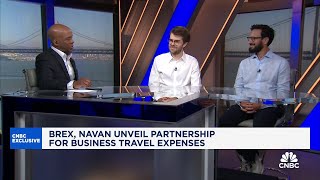
We developed 'best in class' enterprise travel expense solution, says Brex CEO on Navan partnership