Pedro Franceschi: What Brex Needs to do to be a Public Company | E1178
Brex CEO Pedro Franceschi on building a public company: spend six months finding the right idea and team, then ten years executing. He advocates early secondary sales to keep teams motivated, emphasizes founder mental health, and stresses retaining a scrappy mindset while identifying a single bottleneck to focus resources.
Chapters
If I were to write a book about how to build a company, there would be two parts, 50% importance of each. Part 1 takes 6 months, Part 2 takes 10 years. And the Part 1 is just finding what you're going to do and with who you're going to do it with. I think the initial conditions are like highly underestimated. There's this belief that I can just pivot my way around into an idea that works. It's really hard to pivot away into something else. And I think people just don't anticipate how much of just finding a good idea is still really damn important.
Ready to go? Pedro, I am so excited for this, dude. I have heard so many good things, especially from Neil Mater. So first, thank you so much for joining me.
Of course. Thanks for having me.
So Pedro, I know this is an unorthodox way to start the show, but I want to start with the question of what do you think many people underestimate or don't think enough about that they should maybe spend more time on?
I think people underestimate the importance of mental health to a very high degree. That's a very big learning over the past 7 years.
Did you underestimate the importance of mental health?
Oh yeah, oh yeah. I mean, it's the— 50% of the challenge is in here. It's not outside.
Was there ever a time when you were really depressed?
Not depressed. I think my issue was more anxiety, like paralyzing anxiety. Yeah, in 2021. Many times.
How does that manifest itself for you?
It's this like feeling where it's like, I remember this feeling vividly, you know, in 2021 where I was, there's a lot of things happening in my life outside of work too. But at work was pretty, pretty intense. And I remember being in my house in LA during the pandemic and feeling so anxious and so stressed. And I was like, I'm like 25 years old, 24, 25 years old, I don't remember. I am perfectly healthy and I can't work because I'm so fucking stressed that I just, I just can't function like a human being right now. And, and it's not great. It's, it's paralyzing to sit in front of your computer, start to, you know, cold sweat and it's not fun. Not fun at all.
What are you so stressed about? I mean this in the nicest way. You're in the one most wonderful American term, you're post-economic. Investments work, some don't. Life is long.
I always say this to people that, you know, I think when people are harsh with us externally, I'm like, it doesn't affect me that much because I'm way harsher internally with myself and with the company. I think there is a degree to which you have to learn how to be kind to yourself and you know, again, the battle's on here. And I think I wasn't, and I think it's a journey. I don't think I'm like there yet, but I'm definitely better than what I used to be.
Do you think founders can be this open with investors?
With the right ones, yes, I think so. Because I think there's something about like, it's not about hiding these things because these things are true and most founders go through them. I think it's about enduring them. And I think that's the point, which is, you know, Brex went through a lot the past 3 years. And the reality is it takes a level of fortitude and sort of a, you know, like you have to design your life in many ways, especially outside of work to endure the things that you go through at work. And I think, you know, you just hear the stories of how the great companies are built. There are moments that are hard and they're not ideal. And, you know, the thing that matters is like people not quitting. And I think, you know, I look at a lot of founders that are really successful and probably the second or third largest reason why startups don't work after product market fit, of course, is founders just burning out. So I think the question is like, how do you design your life in a way where you can compound the thing we're doing for 10, 20 years because it's not going to be all up into the right. And I think if you believe that, then you will burn out because the moment that shit hits the fan and you are in a tough situation with no support systems around you and you feel alone and you're anxious and stressed, life's going to suck and you're going to leave.
In terms of that going long, You know, you and Enrique, I think, quite reportedly took out a decent chunk of secondary. I'm always in favor of it for the long-term mindset. How do you think and advise others when you get asked about secondary?
I, I, I think we're very pro, uh, doing it. We do it for our team whenever we have an opportunity. Um, and the reason is because I think if, if money is going to take someone out of the game you just better do it early. Like, because the reality is, um, I think I have— there's a saying in Portuguese which is, you only learn who people truly are when they make money, right? Because before then, it's all shits and giggles, right? It's like, oh yeah, like, everyone can say what they're excited about, what they're interested in, um, and, and they can, they can very well be. But the moment they make money, and the moment you see how their life changes after they made money, then you know who they really are. And I think there's something to that, which is, you know, we made probably 3 tender offers since we started the company and like nothing changed. Like the people are the same, they're working as hard as they did before. And I think you have to treat liquidity as a part of life and not as this like point in time in an IPO where, you know, there's this one day where everything changes and people get rich. And then before that day, people were poor. After that day, they're rich and they're gonna change how they see the world and change the company. Because we don't see an IPO as like the goal. We see it as a milestone in the journey. And I think as you like remove the taboo around liquidity, I think people start to conceptualize and incorporate it into their lives earlier. And I think very little has changed as we've done that.
I mean, speaking of very little changing, I think it's so important to never forget where you came from. I think family is just really helpful in really rooting us in our past, and the relationships we have with our family are some of the most important that we could have. And I've heard from many of your friends and investors, Pedro Franceschi, how close you are to your mother. I think the best are always mother's boys, so it makes me very happy to hear. But also what an important role she's played in your obviously early life, but also your upbringing and how you think. I'd love to start with that. And what are your biggest lessons from being so close to your mother, seeing her work multiple jobs, and and how that instilled a work ethic and a mindset on you.
[Speaker:PEDRO FRANCESCHI] So it's funny because I grew up in Brazil and, you know, born and raised there. And I started coding as a kid when I was 8 or 9, originally hacking iPhones back in the day where they were not sold in Brazil. And as you can imagine, I spent a lot of time at the computer. I remember there was this article that came out probably in like, I don't know, 2007, 2008 or something. Saying that like Bill Gates's daughter could only spend 45 minutes a day on the computer. And then my mom read that and she was like, well, you're spending like 12 hours in front of the computer every day. And there was this point in time where she was like, well, I can either ignore what you're doing and say, you know what, this is not healthy, fuck it. Like you're not gonna spend that much time or I can understand what's happening. And I think she, she was wise to see that I was actually trying to build something productive and build something, right? And learning how to code took a lot of time. So she let me do that. And, you know, I think there's these like decisions that, you know, your parents make early on that, you know, they sound small, but they completely change the course of your life. And that was one of them. And then I think over the years, you know, I started working when I was 12 and I told that to my mom and she was like, you're not gonna work. There's no way you're gonna have to go do that. and then she came interviewing with me, uh, into this company back in 2008. Um, and, uh, you know, I think overall she's just been very supportive of the journey since the beginning.
So I have this weird thesis where I literally don't back founders who haven't made money early. I find the greatest entrepreneurs always make money early, whether it's Daniel Ek making websites or Tobi with Shopify. The best start early. Do you agree with me?
I think so. I think there's something about, and it's funny because I think there's been two experiences for me that were similar to what you're describing. First one is I build this thing online and the first thing I actually made like real money, I guess, was there was this, I was selling this app on the Cydia Store. Cydia Store was the jailbreak, the unofficial app store for the iOS back in the day. And I made like, I don't know, like $200K in like when I was 14. And my mom was looking at that and she was like, oh, what is this money? Like, what are you doing online? And then I explained to her and I think she got it, but it wasn't her tax return because I couldn't like file tax returns on my own when you're 14. You can only file them, I think, when you're 16 and above in Brazil. So that was a fun one. I guess the other one that was interesting for us is we built our first company in Brazil. To probably the first, you know, 4 or 5 years of the company, we went from zero to, you know, processing, you know, a few billion dollars a year in GMV and all the money we raised was $300K. So we had to make the company work with $300K. And the interesting thing is you just build this wiring in your brain around how do I create value on everything you do, right? Because you can't afford to ship a feature if it's not gonna drive, you know, more value to the customer and you can capture a percentage of that value back to you. So I think your wiring in your brain changes in this sense of like, you know, at the end of the day, you know, yeah, everyone can have MAUs, everyone can have all these metrics and numbers and growth and fuzzy numbers, but where is the money? Where is the revenue? And you can only get revenue if you generate value for someone. So I think it wires your brain around value in a really interesting way.
Do you think that approach would've been possible with Brax.
Not at all. Brax took a lot, Brax took a lot of different permutations of, and then, and, you know, just honestly a lot of different things falling in place in a very specific way to exist. And, and, you know, a lot of funding was one of them.
So do you regret raising as much as you did? I chatted to Mood before the show and he mentioned this wonderful hustle and scrappiness in the company and then mentioned, I can't remember, I think end of '21, '22, he was like, it got really corporate. Do you regret that? And was money the reason behind that?
In hindsight, as we look back, I think as time passed, like, we, you know, in some ways, I think Brex had this, like, interesting journey of, like, we thought we were a big company, and then you start behaving like a big company, and you do, like, a lot of things that big companies do. And I think, like, probably the biggest learning over the past 6 or 7 years is the sort of way of scaling a company is you have to become a larger business, but keep the mentality of a small company, right? So how do you keep a lot of the leaders closer to the ground? How do you keep a lot of the ears close to the customer and understand exactly what's happening? How do you understand how they make decisions and why they choose to go with Brax over others? There's something about like scale that like scale naturally pulls you away from thinking like a small company, right? Because you have all these layers, these people, these management systems and all of that place. And I think, you know, a lot of the work, especially for the past like 18 months, was like, how do we just unlearn a lot of that and go back to the basics? And I think like fundraising was like, you know, one of the offenders, but there's definitely, you know, hiring a lot of people is also another one. And perhaps some of those are enabled by the fundraising, but I think it's more the mindset of like, you know, like what is the core? And then like, what is the thing that you're actually, you know, scaling and And I think at the end of the day, it's like the mentality has to be this very scrappy and very early, especially as you get bigger because it's like harder.
You have a moment with Enrique recently where you decide that you're going to be the CEO. Can you take me to that moment?
I think for us was two things. One is like, I think, you know, we made a pretty big change early this year called Brax 3.0 where we really We basically changed the operating rhythm of the company in a pretty material way. And I think one of the big principles is that we're just gonna simplify how we run the company at every layer. And the first thing was like, if we're clarifying how roles and how people operate at every level, we should do this at our level too. So that's like the sort of impetus. And the second thing is, as a company matures more, as we start thinking about, you know, an IPO eventually, you know, public markets, it's an easier transition if you have like a traditional structure that every company has, which is a chairman and CEO structure. So, you know, we looked at both and we were like, you know, we're not going to go public anytime in the next year. It's something coming in the future, but getting ready for this and having the structure in place sooner probably just acclimates everyone to the way we actually run the company day to day. And so it felt like a very natural point to make the transition.
Okay, so a natural point to make the transition. I think one of your investors, I can't remember who it was, I'm not deliberately shying, but they said about many of your brilliant skills, but they said one of your weaknesses, you struggle to find your voice. Do you think that's fair?
I heard this thing from Brian Chesky once that really stuck with me, which is like, you know, for many years, I think founders become like apologetic in the way they went around the company because the company starts scaling, right? You have something that's working and then the business starts growing and then you have all these people from the outside that have seen a version of something working but not your version of something working, right? And then they start telling you like, oh, the CEO is supposed to do this, right? Your product team is supposed to operate this way. Your sales team is supposed to sell in that way. And then I think there was this moment last year that we just said, hey, like there's just a way in which I believe we should run the company and it's not very traditional. And I think a lot of people will probably, you know, it doesn't follow all the playbooks of Silicon Valley and how people have done it. And that's okay. That's just authentic to what I believe and the way I think we should do it. And I think as you stop being apologetic and you embrace something that feels authentic to you, I think a lot more things fall into place because just the company becomes a reflection of the way you think. I think a lot of the people around you naturally gravitate and think similarly because there's a reason why they got hired in the first place.
What do you think are the most BS elements of traditional thinking around great CEOs?
I think like, I think there is this belief which like, oh, the job of the CEO is like, you know, you hire a team and then you manage that team and the team does everything. And I think that's true to some degree, but I think the job of the CEO is to make the company successful. And I think there's very few things that matter. And I think there's this, what I see in the best CEOs that I was fortunate to spend a lot of time with is they just have this like unbelievably high degree of understanding of what matters. Like there's very few things that make a business work. And there's a lot of things that you can be average, there's a lot of things that you can suck at. But if you're really good at these very few things, like amazing things happen and they take care of everything else. And I think there's just this degree of like, how do you understand like what are the bottlenecks in the business, right? And what are these like structural points of leverage that if you make those very few things better, the whole outcome becomes just bigger, larger, with less friction, faster.
So I spoke to Anu before the show and she said a very specific quote, which was, "Find the one bottleneck that's throttling speed and unlock it." Yeah. How would you advise other founders when it comes to this statement?
Yeah, so I think it's like very simple. I think it all starts by asking, hey, what's limiting your rate of growth right now? And people say, oh, there's many things. There's not. By definition, there's only, there's one thing. In any system, like, limits the rate of progress for the whole system. It's called the bottleneck. And by the way, like, people should read Toyota Production Systems. It's like the best book on all this, like lean manufacturing. I love these things. And once you find that bottleneck, the highest leverage thing you can do is increase the throughput of the bottleneck more than anything else in the system you could change. If you could change only one thing, is changing the rate of progress in the bottleneck.
What does that mean, the rate of progress in the bottleneck?
Just so I get that. So for example, like you can ask yourself, well, like, hey, what is my bottleneck right now? And my bottleneck could be, well, I don't have, for example, Brex in 2021, our bottleneck was we didn't have an enterprise product, right? So we were limited in the kinds of customers we could serve because the reality is as customers matured and got to a certain scale, Brex, the product that we had back then, didn't scale for them anymore. So when you look into the numbers and you look into where the growth of the business would come from and you look at like how we retain customers throughout their whole lifetime, that was like a really big pain point. As time passed, you're like, what is that one thing that can change the trajectory of the business? And the one thing is building an enterprise product, because if you don't have an enterprise product, there's nothing you can do. You can have the best sales team, You can have the best marketing, you can have the best everything, but if the product is not truly great, you can't unlock the next growth phases of the company. So what I did back then is I just said, hey, I'm gonna spend 70% of my time building that product. And I just delegated everything else of day-to-day management of the company to my team. And I just spend 60, 70% of my time writing APIs of engineers on how would the enterprise product work, how would the platform that we're building would work. How would all that come to place? And it took us, you know, a year to get something that worked. And that's how, you know, ultimately we closed customers like DoorDash, like Coinbase, like Robinhood, you know, like all these large enterprise customers that would not have traditionally come to Brex. But because we were so obsessed over like making the bottleneck faster and making the bottleneck like just not be a bottleneck anymore. And I think the reason this is meaningful is because as you do that, you can allocate and marshal a disproportionate amount of resources into that bottleneck. So I can say, well, I know that the highest leverage use of my time as the founder and the CEO is to spend time making that one thing go faster. And I think there is this thing where a lot of anxiety building in a company comes from like what truly matters. What is the one thing that if I spend time on and not hedging, not like spreading across like 4 or 5 different priorities, what is the one thing that really, really move the needle? And I think when you identify this thing and you just put a lot of time there, there's this almost zen state, very liberating where you can just focus entirely on one thing.
Have you ever identified a bottleneck and it not been the right bottleneck?
I spoke about other founders of this, which is like, I think when you're deep in the weeds in a problem, you're in this state which I call high stress, low anxiety, which is like, you know, you're working on a problem, it's really complicated, you don't quite know the solution, but there's no anxiety because you know that this is the thing that matters, right? The flip side is when you don't really know what it is, you're in a state where it's relatively low stress because you're not deep in any problem 24 hours a day, but you're like higher anxiety because you don't know what the highest leverage point is. And I think I think you have to learn how to be in both ends of the spectrum.
What is the rate-limiting bottleneck today?
Overall, it's probably demand generation in the mid-market, if I had to guess. And actually, no, not guessing. This is the bottleneck right now.
The best podcasts, honestly, dude, are when people will talk about mistakes and talk about lessons learned. Fewer things, better. What did you not do that with the benefit of hindsight you wish you'd done? And on the flip side, what did you do that with the benefit of hindsight you wish you hadn't done?
I think there was this point in 2019, 2020 where we thought we could do it all. Like we thought we could be, we're going to be great at serving small businesses, we're going to be great at serving enterprise customers, great at serving startups, and all these different customers are going to come to Brex and be like totally happy with, uh, with what we're offering. And I think we try to build it all. Like we had a small business offering, we had like a startup offering, we had a mid-market offering, enterprise offering. And I think the learning is the limiting factor in how many things you can do is not the headcount, not the team, is the leadership bandwidth. It's like how much time your best people spend, you know, doing building things that are really high quality and really high craft, that's just really hard to scale. Like you can't, it's not just a matter of adding more folks, it's like their attention being divided and you don't trust that many people around, you know, a completely new business or new thing off the ground. And I think that just took us, we just completely underestimated how much headcount is not the bottleneck for just doing more things. And I think, you know, a lot of the themes and mistakes that we've made over the years were around that, I would say, like just like believing that we could do more than we could actually do. So, I think focus was like a forced learning that we had to do over the years that I think the degree to which it's true and the degree to which it needs to continue being true as the company grows is something that, you know, you always think, oh, I have 100 people, I'm gonna have 1,000 people and do 10x more. And it's like, no. you're gonna do maybe 30% more because now you have a lot more scale and you have problems with scale and you have a lot more, you can't just like build something and ship it. You have to like measure, roll it out over time. You have to have like A/B testing and a lot of things. So, all these things when you look at the complexities of doing it at larger scales where your leadership bandwidth goes, I think it's more, way more of a bottleneck than people anticipate.
Did you hire a good leadership team?
Oh yeah, I mean, absolutely. I mean, we made a lot of mistakes at Brex. One thing we didn't get wrong and we got pretty right in my opinion was the people. And you know, and I think honestly, like, I think it's not an accident. We just spent a lot of time on it, like a ridiculous amount of time that most people would find like borderline obsessive.
What did you not do that with the benefit of hindsight you're like, fuck. We should have done that.
We spend a lot of time early on focusing on the founder, and I think the founder is absolutely important to Brax, and that's been like the cornerstone in which we build a company, right? We started the company to serve founders and we still serve founders exceptionally well. We launched a new banking product today just focused on founders. But I think over time, it probably took us longer than it should have to focus on the finance team, which is like once you start scaling, you hire a finance leader and that finance leader comes in and they have their own priorities. And I think probably I wish we were doing more for them in 2019 and 2020. And I think we, in 2021, we basically said we're gonna do that really well. So we're gonna go to the most complex use case, which is like how do we serve a 10,000-person company? And their finance team and scaled that down, which, uh, which was an interesting pivot, I would say, from, from where we were. But, but I, I just, I just wish we had done more of that earlier.
I think one of the reasons the show has been successful more recently is because I've kind of got more direct in my question asking. When you look at Ramp's product marketing, it's always been tailored towards the finance teams and towards saving. And I think people criticize you as saying it's more towards free things, coupons, vouchers, incentive mechanisms, and not saving. Do you think that's a fair criticism?
I think it is. And actually, like, and I actually love the contrast because I just don't think any great company was built on savings. If you go ask like a CFO, if you go talk to like any great CEOs and you say like, hey, what moves the needle in your business? Like what truly made a difference in the finance team? And what they're going to tell you is that what made the difference was this ability of making sure every dollar counted. Like, how do you make sure the dollars are going to the right place and that in these places that really make a difference, that you're truly doubling down, right? You're saying, I want to understand what are the levers of growth, what are the levers of cost savings, what are the levers of where to hire, where are the levers of vendors that make a difference in your business? And it's less about cutting, it's more about shifting. That insight for us has been really remarkable because when we go talk to our customers, they, and we start to show them the product, how that happens on the ground, especially complex use cases, right? And, you know, we go to like an enterprise company and we just show how they operate with Brex, how they would operate with Brex. And for example, we have this feature called live budgets, right? And what it allows you to do is to have a real-time view into where your budget will land at the end of the quarter. And surprisingly enough, you'd be surprised, but if you go to any large public company and you go to the CMO and you say, "Hey, CMO, where are you on your budget right now?" They don't have an answer, right? And the reality is, if they knew that information, what they would do is they would say, "Well, I'm actually, you know, I'm a little bit ahead on this campaign. I'm spending a little more than I thought, but there's this other place that I'm not and I probably should spend more here." So this ability to reallocate funds and say, well, I'm actually going to put dollars where they convert the most, it truly changes the way this person thinks and operates because at the end of the day, you don't want to be under budget because you're leaving money on the table as a CMO. But if you go over budget, it is also horrible. So when you see the degree to which you build the product around this idea of how to make sure the dollars are going to the place where they have the highest impact and highest ROI, ROI versus just thinking about cutting, that's just a very different design decision that we build the whole company around and the whole product around. And I think customers just see the difference.
Why does it resonate so well then?
I think it's an easy pitch, right? Who doesn't like savings? But I think like reality is more complicated than that. When you go down on the ground with customers and you ask them and you go to a CFO and you say, no one says no to savings. But when you say, hey, let me just tell you what we think actually matters. Let me show you when— let's talk to like a few customers here, like call them and ask them how they run their business differently based on the kinds of things that you can do. Like when you bring all your global spend in one place and you start to see the difference of, you know, having this level of control in the software that allows you to push the dollars to the places that it matters the most and do this globally, right? And you start to add in the layers in which we do that. And I think the answer has just become different in savings. And, you know, don't get me wrong, I think there is a place for that. And I think, you know, offering free software and offering, you know, a product that helps you save money, I think, you know, I can see why that works. And I would be really surprised if we didn't see competitors in a $30 billion market, to be quite honest. But I just see a different reality speaking to customers.
Can I stretch your thinking on marketing and ask you a question that I ask myself every day? What would MrBeast do? If he were running Brax?
I love that question. You know, I think the thing that I believe about brands is we talk a lot about this idea of like left side of the brain and right side of the brain, right? And I think, you know, a lot of the times, like, you know, I was talking to the team and I actually wrote an essay about this to the team where, you know, we had this campaign and, you know, we ran the metrics and we were like, hey, what is the value that Brax generates for our customer? And we learned a few things that were really interesting. So we learned that over $50 billion went through Brex and that was automatically on budget and in policy, which is 99.9% of the spend. We also learned 11 million hours were saved by our customers using Brex. So when you look into the data and you understand, you know, what were they doing before, what they were doing after. And I think the thing is like, how do you, Well, like, so what? Like, what, what, like, what, what does that mean, right?
Well, that, that's my point. It's like, you know what the Brexit campaign should be then? It should be a mother picking up her child at 4 PM. Why? Because she has that time, because Brexit saved her the time. I don't care about— no, I'm being so blunt here, Pedro Franceschi. Maybe it's my painkillers, but I didn't care about those big numbers.
How do you make it relatable, right? How do you make it touch people?
And how do you tell a story?
And I think the story is like, obviously we're appealing ultimately to the finance team and with this campaign, which is like finance got the day off, right? Which is like exactly what you just said is like, you know, you got a day off and because Brex automated a lot of the work that you were doing manually before. And, you know, another one that we were learning about during this work is it took 7 million hours to build the Empire State Building. Brex saved 11 million hours. Like, what are you gonna do with that time? And what our customers go do is they're gonna build something great. They're gonna use that time to put back into their missions, into serving their customers better. And I think there's something profound about you telling the story. It is relatable and people are like, wow. And it's not just about the story, right? You have to also deliver it. And I think a lot of what we've done wrong in the past is we didn't, very inspirational campaign 2 or 3 years ago. The problem was when you use the product, it was very hard to connect that to that broader story. And I think the power comes when the whole thing is one, right? When you have— when you're using the product, you're seeing the way the product gets designed, the way you use the features, the way you get the benefit from it, the way we say, hey, you know, we realize you're doing this by hand 10 times. We're going to create a rule and automate it for you because our AI detected that this is something you do every day. Like, and when you see those things together, I think that's how the brand gets, gets built.
Do you know what I'd do? I think you focus on two things. I think you focus on impact, and I think you focus on investing for tomorrow. And what does that mean? I would have a competition every year where people have to submit the most impactful purchase they make with their Brex card.
I love that.
And then wait for it, if they get over a certain percentage of the company submit something on a social platform, you will pay the college tuition fees for 10 employees for their whole children. It'll probably cost you $2.5 million a year, and it ties into impact and investing in the future of tomorrow, which is this college tuition.
I love that, love that. Are you looking for a job in marketing?
Do you know, I, I actually love marketing so much. So yeah, but that would be really impactful. And then that's a New York Times headline. Brex, the a company that pays for 10 unbelievably talented children who win?
Love the idea.
It's free. Uh, um, sorry, that was totally random and unfair of me to embark on you. You said they're about the best quality product winning. So many of your investors told me what a brilliant product mind you are. As bluntly as possible and as granular as possible, How do you do roadmaps and what's been the biggest lessons here on what works and what doesn't?
We got a lot of pages from Brian's playbook at Airbnb. So the realization here is, so there was this feeling that I had probably in like, I had this over the years many times in 2020, 2021, even 2022, I think we felt this to some degree where, you know, we're investing almost $100 million a year in product. And then you go use the product every year, right? And the experience is like not that much better. Like it's getting like marginally better, but there's nothing like tremendously different. And that feeling bothered me because I was like, what are we doing here, right? Like why isn't this yielding to, you know, big things changing that actually, you know, makes the experience dramatically better? And one of the things that we did as part of Brax 3.0 is that we said we have a single roadmap now for the whole company. There's no more— product teams don't have their own roadmaps. We have a single roadmap. I choose what the roadmap is and there's a single editor. And most importantly, we do very few things in that roadmap. And typically the way that it works today is we ship 3 times a year. And each release has 3 to 4 big themes. I choose what they are and there's a process in which people inside a company and product teams can pitch what gets added to the roadmap. And the interesting thing is as we cast the roadmap and we understand exactly what it's going to be for the next release, the resources and the engineers and the designers and the PMs that we work on things. They're not married to the org structure. So what it allows you to do is to marshal a lot of resources on doing very few things really well. And the interesting thing is a lot of these dramas that you get as the company grows and like, oh, I have all these cross-functional dependencies, I have all these other orgs that I need to align to get something done. They all go away because everyone works for the roadmap. Everyone works in service of the roadmap and every manager works in service of the roadmap. So things like, "Oh, I need to shift resources from my team to this other initiative," are very natural because the goal is one for everyone. And I think what it does is, from a more quality standpoint, is it creates a very clear rubric of what you're trying to accomplish and most importantly, what is the story for the customer? right? Not just internally, but you ultimately, you start by saying, what are we actually shipping in this release? What is the narrative of this release? How do we tell that story to customers? And then you rewind that back and you work backwards into what do we have to go and build today and how do we align everyone to do that? So the degree of cohesion on like you as an entire company are working towards a single thing and a single milestone creates a much higher quality and focused output in my opinion.
Do you agree with the notion of disagree and commit? I don't think that it's possible for people to disagree and commit fully.
I agree. When you truly change the way people think and you really put one Brex and like the collective of the company above their teams and you put the mechanism, which is really important, you put the mechanism that makes that happen every day, I think people in fullness of time they converge and they start seeing, well, I didn't get funded today, but this next idea or this next big thing will get funded in the next release or the release after.
What was the hardest thing you said no to in the service of focus?
Gosh, I mean, there's a lot of like new products that we could build, right? I mean, and—
If there was one thing, so like specifically say 20sport, some of the world's largest athletes wanted to do a fund with me. Super $25 million fund. I would have a lot of fun with loads of famous sports stars. Fun, but a distraction.
And we said no to a lot of customers that came to us saying, hey, no solution in the market works for us. No one can solve this problem besides what you all have done, but I need these 3 or 4 things. And we said no to them, and a few pretty painful ones.
What do you think needs to change within the Brax business for you to be a public company? People always say, "Bullshit, there's no such thing as an IPO window. Great companies can go out at any time." Being a public company is very easy.
Like, it's remarkably easy. You hire a banker, you fundraise, and you're done. The question is how to be a low volatility public company. That's the hard part. And I think, you know, the only way that you can do that is having a very high degree of predictability in the business model. And I think for us, that has been the hardest part. So like last year we were behind plan in 2 quarters. This year we're way ahead of the plan. And the point is like, you know, we did our best to forecast it and there's a lot of levers in what happened in terms of customer spending, in terms of where a lot of these things come to mind. But I think we're not yet at a level that we can say, oh, we know for sure where revenue, where, you know, where income is going to be in 2 or 3 quarters. And I think it's really hard to go public unless you have that. And that's probably the biggest bottleneck for us into doing it, it's just the level of predictability that we wanna have.
Do you think you have good enough unit econ to go public?
For sure. I mean, one thing about us that we do very differently than most people in our space is I have this belief that we need to look at metrics the most punitive way possible. So a lot of times, like for example, CACs, I love this topic because a lot of people come like, well, like what is in your CAC? And people are like, well, it's like sales and marketing cost. And I'm like, well, is like the office overhead in your CAC? Is the brand spend in your CAC? Is the management overhead in your CAC? And people can like, you know, you can dance around these numbers and say, no, they're not. And you know, but who cares about that? No one does that, right? And I think one of the things that I learned from Neil and Green Oaks and, you know, a lot of our investors, but I think Neil was very adamant on that is like, like understanding the economic engine of the business in a very deliberate way. And from the perspective of like ultimately you want it to be a great business, not like, you know, investors will look at the CAC and the unit economics that way. And I think for us, a lot of what we did over the years is how do we become very sort of ruthless in looking at the numbers in a way that's like, where is the cash flow coming from at the end?
Traditionally, your business is viewed as a beautiful business for many reasons, but one reason is LTVs are long. People don't churn or change much when they're in, you know, with such a, a vendor. Um, is that changing in the face of increasing competition, more options, better products?
When you look at the card at face value, like just the actual card, I, I think cards are like not that sticky. right? Because the reality is that you can just start swiping another card. You can say, hey, I got more cashback. Uh, you know, we talked about some of our competitors that offer the same product for cheaper, right? Essentially higher cashback. And you see that dynamic playing out a lot in the market of like someone comes in and I— we always, we have a channel that we talk about like, uh, new competitors. And a new competitor comes in and they say, hey, I'm launching a card with higher cashback. And if you think about it like conceptually, right, as like, uh, the sort of like, uh, economic book, economic book view of the world, like the rational thing is, oh, customers are all switching away because they're getting more dollars back. But I think something different plays out in practice, which is a lot of the value they get from the platform and the software and the automation starts to play a bigger role where, you know, customers like, well, I actually run my whole closing process on top of this. So the cost is higher than what I gain as cashback.
That's why Eric comes on my show. And says we're like a workflow platform.
Brex is not, I don't think Brex is a workflow platform. I think that's a part of Brex, but I think the very misconceived notion that I think people, there's this way of looking at this business that says, oh, all that matters is software and financial services are commoditized. I strongly disagree with that view because I think when you're serving small companies and you're serving, you know, even some mid-market companies, That is true for sure. I think you can say most of the value is in the software, but when you go into the really complex enterprise use cases, that's not true at all. So for example, you know, we go to like a lot of public companies, and the way we pitch in a public company is we show them the software, they get value from it, that's great. But what really moves the needle is our global card. Customers come in and they say, hey, I have this problem in 25 countries, and I need a card that works locally in all these countries that I can I need to spend in local currency, like if the card was issued by a local bank. I need to settle in local currency. I need to not pay FX fees. I need to not book intercompany transfers across all these different entities. And I need to move the money locally in all these different markets. And Brex can do that. And today, there's 3 companies on the planet that can do that. Number 1 is Brex. Number 2, Citibank. Number 3 is American Express. That's it. And that's how we pitch in all these customers. So, I think the degree to which financial services underlies a lot of what we do is highly underestimated and undervalued, which is why we spent so much time in the early years building our whole financial infrastructure from the ground up, like down to the way we talk to Mastercard, down to the way we move money on ACH, down to the way we do global money movements, settlements, FX. We built all that in-house. We didn't use any vendors for any of that, and for a good reason, because it just gives us all the degrees of freedom to build all the way to the metal.
Is this an Uber and Lyft market? Is this a market where you have companies of comparable size? How does the market play out in a 10-year perspective?
Look, this business is not new, right? Banks have been around for a long time building cards, um, and card companies— if you even look at the ones that were the banks that were, you know, before 2008, more card heavy— it's not a winner-takes-all market. And again, I think it's too big and dynamics are too different from a marketplace where there's a benefit of like the incremental unit making the product inherently better.
I always think the best businesses have pricing power, which is why I'm bold in saying I don't think Stripe is a good business because you compete against Adyen and Checkout and your biggest customers will compete.
100%.
Do you have pricing power?
I mean, I think, I think just the reality today is like if you think about our product, right, we don't win on cashback, we don't win on rebates, we don't win on credit limits. We win on customers look at everything we do together collectively and they say, I'm getting more value from this than these other solutions in the market. So in some ways, I think that's the definition of pricing power, where we're offering the same product more expensive and customers are coming and staying and being happy with it. The other thing is when you go into an enterprise customer and they say, they come to Brax and they say, hey, like I, like I am paying a lot of our competitors come and say, oh, we don't charge for the software. And our customers come in and say, how are you not charging for the software? Like, you know, I want to pay for the software because I want a level of support. I want like a premium solution that someone I can pick up the phone, call someone, someone can come in here and help make me successful. I think pricing is kind of an advantage for us and has been for many years where the way we position Brax is like we want to be the best solution, not the cheapest. And that just creates a different mentality in the company, in the servicing model, in the way you sell and the way customers engage and ultimately find value in the solution beyond the initial use case they have because they know there's a servicing model that will deliver more value for them over time.
Pedro Franceschi, I want to ask one final question, then I want to move into a quickfire. Over a company life, culture gets hit. When was the culture the worst?
I would probably say in 2021 when we pivoted very aggressively towards the enterprise because we were serving small businesses and it was like a full, almost a 180. That was pretty hard. And I think the learning was as you prioritize, focus on serving your own customer really well before like trying to like, you know, serve the whole planet. And we had our own customers that were startups that were growing, they were becoming bigger, and they had these needs of larger companies because they became larger companies themselves. We didn't have something that could serve them as well as we wanted. And then we just had to make this really aggressive pivot to, to solve for that. And in some ways, the most customer-focused thing we could do was to serve enterprise customers well because our own customers were becoming that and startups that are successful become that. So in some ways it was like this very sobering and in hindsight special moment of like learning how to really focus on your customer. And it was really painful, but totally worth it.
I want to move into a quickfire. So I say a short statement, you give me your immediate thoughts. Does that sound okay?
Yeah.
So what do you believe today that most around you disbelieve?
That you should look for individual contributor skills in very senior levels of leadership.
What board member would you most like to have that you don't have?
Gosh, I don't know. Elon would be cool. Why? Just this, just pushing us more to be really, really aggressive and really intense.
What's the most memorable first investor meeting?
I think when we met the YC guys back in like 2017, They were like, "Hey, we like you guys, but we hate your idea," because we were doing VR before. That was sort of funny, and they still invested in us, thank God, but it was sort of funny to like, "I don't like what you're doing, but I like you guys." What's the most contrarian or unorthodox advice that you'd have for founders listening? Don't be apologetic in how you went around the company because all the people around you don't have the same visibility and the same context as you have. So if you believe in running the company a certain way, do it.
What have you changed your mind on most in the last 12 months?
How much more similar the founder role is when you are big or small than I anticipated.
Does it get easier?
No, I think you have more help, right? There's more people helping you do stuff. You're like, I think in the beginning you're playing two-dimensional chess. As you get a little larger, you're playing three-dimensional chess, and probably at some point it starts to be four-dimensional chess. And there's just like a lot more pieces of the puzzle to keep in your head.
Do you really want to be a public company CEO? It looks like an awful life.
I definitely want to go through the journey, and I think to realize the potential of Brex, I think that's the best path. It's, I think there's pros and cons for sure. But I'm just excited about how do we take what we're building to the next level. And I think that's part of the journey. So.
Which competitor do you most respect?
American Express. You're pretty good. And they've built a very impressive franchise over decades and very hard to be very big and have the degree of customer focus they have. I think they have a lot of issues, don't get me wrong. As you look into the history and how the company endured for that long, the way they've done, I think is really, really impressive.
What's the single biggest issue Amex have?
I think the product is pretty outdated, to be quite honest. And I mean, it's just literally a card. They have a great point system, but but it's just a card. There's no software, there's no controls, there's no nothing, especially as it got larger. But I think the franchise, the brand, and just the way the company was designed, I think, uh, over the past 30, 40 years— I love studying business history, and Amex is a company I studied quite a bit. Um, I think it's pretty fascinating.
If you were to advise me to study another company, if you study business history as you say, which should I study? I love it too.
I think there's still a lot more to be disrupted in fintech than people give credit to it, because I think people looked at all the sexy things in fintech. But if you look at the underlying plumbing of how money moves in the world and you look into like, there's a lot of things that haven't been touched yet. And yeah, maybe Brex is the— there's this investor that, you know, didn't invest in Brex, but I actually know quite well that says that Brex is the last good fintech idea. And I'm like, I don't think that's true. I think it's the last sexy good one, but I think there's a lot there. But I think one thing I changed my mind a lot about company building, I think like if I were to write a book about how to build a company, there'll be two parts. Part one takes 6 months, part two takes 10 years, and there's 50% importance of each. And the part one is just finding what you're going to do and with who you're going to do it with. And I think the initial conditions are like highly underestimated. There's this belief that I can just pivot my way around into an idea that works. And sure, that's true to some degree. But once you start something that has a little bit of traction, it's really hard to pivot away into something else. And I think people just don't anticipate how much of just finding a good idea is still really damn important. And Brax was a really good idea. I mean, a lot of the credit is just the idea. Like, yes, I think we executed well in some ways, but I think the idea was just that good. And if I were to start something again, I would certainly spend a lot of time getting that part right. And if that is in a good place, then the other 50% is the 10-year journey of leveraging those tailwinds. So to speak.
Pedro, final one. What question are you never asked that you really think you should be asked?
The battle inside you, not the one outside you. Like, how do you, how do you, how do you stay motivated and energized and excited when things get harder? And I don't see people talking enough about that because—
Do you feel you can show that level of vulnerability when you have 1,000 people I do.
I mean, I talk about this shit a lot with my team and I wrote about it. I mean, we did this mental health series called Catharsis where we have like founders talking about their own mental health journeys, which is really hard to convince people to do, by the way. Most people don't like talking about it openly, but I just talk to founders, you know, day in and day out and customers day in and day out. And that's the same thing everyone's going through. You need to find ways of how do you frame your mind and how do you frame the work you're doing around something that gives you purpose and gives you joy. Because if you are focused on the outcome, if you're just focused on and you don't enjoy the process, the math doesn't add up. Like it just does not make any sense. And I think a lot of the point about like not being apologetic in how you run the company, Honestly, 50% of the value is just doing it in a way that you get energy from the process. Because if you don't get energy from the process and the process is not rewarding on its own and you're just focused on the outcome, it's going to suck. It's going to take a lot of time and a lot of energy and more energy than you think because you need the energy that comes from the actual process being enjoyable.
Pedro Franceschi, I've loved doing this. I know I send you schedules and your team goes through them diligently and I just don't stick to them. But thank you so much for being so open, and I've really so enjoyed having you on.
Likewise, I really appreciate it, Harry. Great having— great being here, and, and really appreciate the time. You're a great interviewer.
More from Pedro
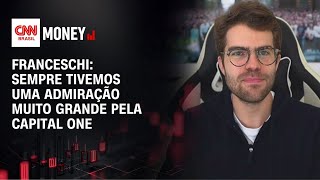
Fundador da Brex fala ao CNN Money sobre venda de R$ 5,15 bi à Capital One | FECHAMENTO DE MERCADO
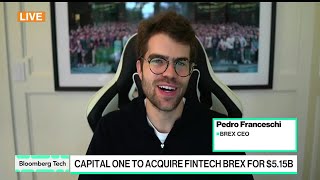


The Agentic Commerce Revolution is here - but it's not what you think! (Brex CEO Pedro Franceschi)

Brex founder Pedro Franceschi on the one question CEOs should constantly ask themselves
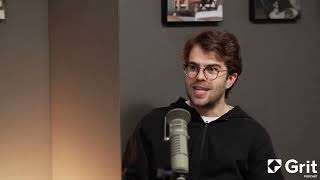
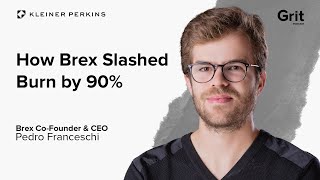
We developed 'best in class' enterprise travel expense solution, says Brex CEO on Navan partnership