In a Bloomberg interview, Julie VerHage speaks with Brex co‑founders Henrique Dubugras and Pedro Franceschi about a newly launched Brex credit card built specifically for e‑commerce merchants. The founders explain that e‑commerce companies often struggle to obtain financing for inventory, advertising, and shipping, prompting Brex to create a charge card that offers 60‑day interest‑free credit, higher credit limits, and a daily payment cycle. Underwriting leverages real‑time data from linked e‑commerce platforms and payment processors (e.g., Shopify) to assess risk more accurately than traditional banks. The card includes tech‑focused features such as receipt‑matching, advanced reporting, and easy user invitations. Brex monetizes the product through interchange fees rather than interest, positioning it as a cheaper alternative to merchant cash advances and working‑capital loans. The interview highlights early adopters like Gravity Blankets, Amour Vert, and Bev, and discusses lessons drawn from the founders’ previous payments business that informed product design and risk assessment.
Chapters
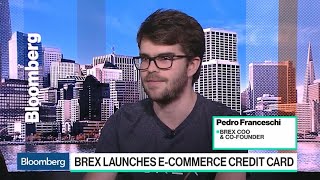
Brex, a corporate card aimed at startups, unveiled a new credit card specifically designed to help e-commerce businesses grow. Brex spent the last 6 months working with online brands including Boxed, Bev, and Draper James to better understand their needs. Bloomberg's Julie VerHage caught up with Brex co-founders Henrique Dubugra and Pedro Franceschi.
So e-commerce is like a very large segment of the online economy, right? People are buying in retail every single day, and we saw that there was this opportunity because they have a lot of trouble getting financing. Financing to buy inventory, advertising, and all that. And then we created this card that gives them 60-day free credit for that entire period. It was something, you know, they had to buy for a while. And also from our last company, we processed payments for e-commerce. So we had a lot of experience with the segment, and therefore we chose to be, you know, our second vertical to launch Brex4.
Got it. So now since you have experience with that segment before, what sort of like risk profile are you looking at? Because usually, I got to assume e-commerce companies, yes, they're selling a lot of products, but You could also be targeting companies that might not be around forever, so I'm sure there's things you have to focus on to make sure that you are giving access to that money to the appropriate companies.
Yeah, absolutely. The first thing is that Brex is a charge card, so our customers, they have to pay their balances at the end of the month. And the second thing is that we actually have this advantage that we have real-time data about their businesses, because when they onboard on Brex, they link their e-commerce platforms or their payment processors, so we have access to Shopify or a bunch of other additional data sources that gives us real-time insight insight in how the business is doing versus on a bank that looks at them very much periodically. And the third thing is that we had thousands of customers so far and no one that didn't pay their bills. So.
Got it. So what are some of the companies that are working with you guys? I remember when I had talked to you originally about this, it was a lot of current customers that were also asking for this that just happened to be in the e-commerce space. So are there some names that we would recognize on there?
If you're from San Francisco, Amore—
we have Gravity Blankets, Amour Vert, Bev. Those are three names that signed up in the last 2 weeks since we launched the product in the end of February. And every day we have new and new companies showing up.
So for those companies, why is there a priority to use you guys versus whoever they were using before? What's their advantage? And then how are you guys monetizing that?
So the first thing is that we can give them higher limits than they would get naturally because, you know, the bank's only looking for their financial history. We're looking at how they're currently doing. So you can give much higher limits. The second thing is that they get 60 days, you know, you know, for free in order to pay the bill. It's daily payment. So whatever you swipe today, you buy today, you only pay 60 days from now. Whatever you buy tomorrow, you only pay 61 days from now, which is traditionally different from the credit cards where, you know, you pay everything in like one day of your statement, right? So that gives them, you know, very, like a lot of very free cash flow to run their business. Plus, we have, you know, our technology is much better. They have, we have like receipt matching technology for them to keep receipts easily, better reporting, easy to invite users. Things like that.
And at the same time, what they were using before were things like MCAs and working capital and loans that are pretty expensive. So we also provide, because of the way we do the underwriting differently, a much cheaper way of financing their business.
How are you guys monetizing that then?
We, we monetize it through interchange, which is the fee that we make when the company swipes the card. So, you know, instead of charging interest, we monetize through that.
Got it. So Pedro Franceschi, now given your last company had done this before, what are some of the things that, you know, you learned there that you've taken into this outside of even just the risk profile part of it?
I think understanding how e-commerce businesses work and what are the concerns on their end was very helpful. So in your previous company, we were basically doing the payment processing for them, and we had to understand how their checkout process works and how their business functions. So like, what are the things that they have to buy on card and what are their biggest expenditures? And when we came to Brex, we decided to design the card very specifically focusing on these companies that had to pay for inventory inventory, advertising, shipping costs, and all that. And I think a lot of the insight on how these companies operate came from a previous company by seeing those customers closely and just adapting all of that to these companies at Brex.
One of the biggest differentiators for Brex is also that we don't bucket all SMB into like SMB, you know, like, oh, small business, because they're not all the same. Startups are very different, e-commerce companies that are very different, and professional services. We try to like deeply understand the business and build the product that's the best for them, and just to say, hey, this card works the same for everybody.