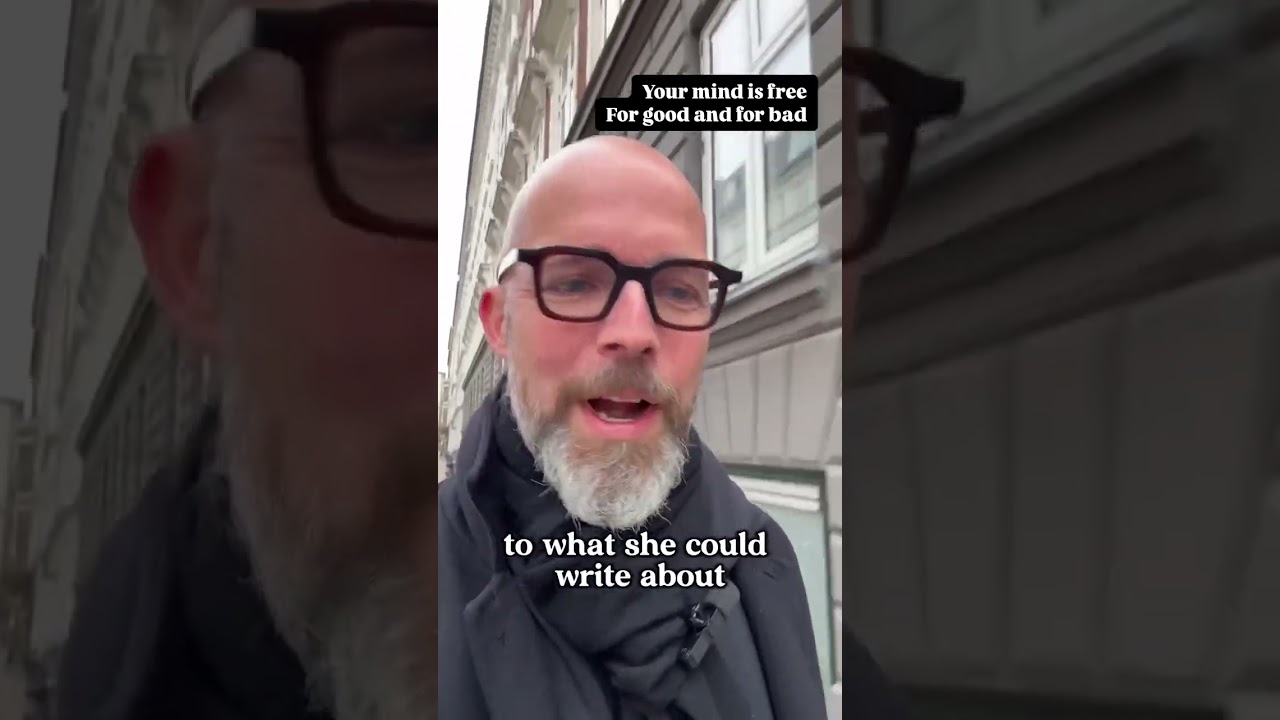
Peter Sorgenfrei uses Virginia Woolf's line about the mind's freedom to explore how that same boundless capacity fuels both creativity and anxiety. He asks whether you should build mental gates to stop rumination or harness that freedom for growth.
Chapters
Virginia Woolf said, there is no lock, there is no gate, there is no bolt you can set upon the freedom of my mind. And she was trying to express the idea that no matter what happens, there is nobody who can constrict or restrain what you can dream up, what you can think up in your mind. There are no limits, essentially, to what she could write about or to what you can conjure up in your mind. And that's both good and bad, right? Because we, a lot of us at least, struggle with having all these thoughts and anxieties and ideas about stuff because the mind is playing tricks on us, making us imagine things that are not real necessarily. But on the other hand, the mind is also the most powerful muscle that we have, and with it we can conjure up lots of new ideas and do lots of new things. So So think about that when your mind is telling you something. Do you need to put a gate on it, a lock on it, and constrict it? Or do you need to leverage the