AI Hacks from a 3x Founder to Scale Your Business and Life | Siqi Chen (Runway)
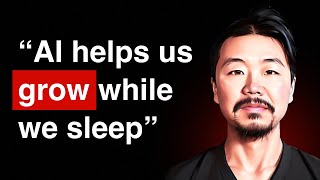
Siqi Chen, CEO of Runway, shares how founders can use AI to scale their business and life. He discusses AI's impact on startups, building company culture, and leveraging AI tools for efficiency, plus personal reflections on entrepreneurship and the future of AI.
When you and I pass away, like, we can literally upload a bunch of stuff that we produce online into AI and then maybe our kids can still have us around.
I don't think we will pass away.
So you don't think we will pass away?
No.
Tell me more about that. What do you mean we don't pass away?
Like, the human body, I think AGI is within 5 years, and if AGI is within 5 years and ASI is definitely within 10, if we get ASI, then we solve death or it kills everybody.
That's it.
I don't understand, like, what is like a controversial. Like, like if this happens, then this happens. This will happen. Like, so it's weird. That is like a controversial opinion.
So you think there'll be like a. Because the human body will still pass away or something like a robot version of us?
I don't know, but it can be that or it can be the human body will like, not pass away. You just have like nanobots in your bloodstream constantly fixing everything all the time.
All right, well, today my guest is Si Ki Chen, co founder and CEO of Run, a breakout finance platform for startups and businesses. Sikhi is also an incredible builder of AI tools. Welcome, Sikhi.
Thank you. Thanks for having me.
So why don't we start by talking about your startup journey? You know, you're like a three times founder and I think four times CEO. You know, having had all this experience, what do you now really believe truly matters when building a company? And what are some things that seem to matter but doesn't actually matter?
I think the number one thing that I didn't appreciate the first couple of times around is how valuable experience actually is. When you are first starting out, you value what you don't value, what you don't have. And when you're younger, you don't have a lot of experience or you're a lot of experience doesn't really matter. I think experience has helped quite a bit the third time around. And in particular, the thing that experience has given me is good expectations. And what I mean by that is like, one of the hardest things about doing a startup is the ambiguity of not knowing how long it's going to take and how hard it's going to be, but somehow expecting it just to be really hard, it makes it not as quite as hard anymore and it helps you keep going. So some combination of experience and expectations and having the right expectations is really important and helpful. And then the other two bits beyond expectations is this tension between the long term and the Short term. So you have this vision when you start a company of this what the world could be. And the art of operating a startup is how do you bridge that vision and what you have today and get there step by step. And you can't just like always go directly there. And that requires confronting reality and talking to customers and building momentum that show you can reach it. And that's very much an art. There are no right answers. And maybe the third thing is probably the thing that matters more than anything is self awareness. And it's almost toxicological in that like you can't be aware of what you're aware of. And this is why like talking to other people and confronting and testing reality becomes really important. So I would say roughly those are the three things or like you know.
What the product is doing or Yeah.
I think it's yes. And I think it's like a deeper thing than that because like one of the things I've seen and learned is that really the performance of the company is kept by you as a founder. And if you are not aware of the things that you are good and bad at and if you aren't able to quickly learn by confronting reality, the performance of the company is capped. And so the more you can be self aware, the more you unlock in terms of what the company could do. So it's not just quick product.
Got it. So you know, one of the ways that maybe you can, you know, every company I think is kind of has the culture or the values of the founder. Right. And I was looking at Runway the other day and I really like your values, especially the value of give a shit. I don't think anyone else has included a swear word or like a bad word in their value. But anyway, like, do you mind walking through the four values and kind of like why they matter to you?
Yeah. You know what's interesting is that we actually recently refreshed our values and these are the new ones. We started with different values that mostly came from me. But what I love about the current set of values that we have is that when we refresh them, we really thought about what are people already saying in the team. Because we didn't want to come up with a set of values. Where I'm saying it, I care about it, but no one else is. And there was like not a hundred percent, but there was like a lot of that going on with our previous set of values. And so give a shit is I love. Especially because that is a word that people were already using to describe how other people Felt in the company, it's like, wow, like, everyone seems to really give a shit. And what I love about that is, like, it's almost indescribable. It's like you either have it or you don't. And I really feel like there are. You can categorize people in these two categories, like, people who actually give a shit about their work and what they do. And then for others, work is a means to the end. To an end. It's the idea of, you know, I think the idea of work life balance reflects that dichotomy, right? Where it's like, you have work and you have life, but, like, life is rich. You know, you have friends and you have family, but, like, a big part of life, I think, is doing great work. And we want to work with people who believe in that kind of thing. And when you do, when you look at all around you and people all actually give a shit, both about their own work and the mission and company, it's just an indescribable, magical healing going to work. So that's why I love it.
Yeah, I really echo that, even though I've only worked at larger companies. Like, like, you either give a shit about the product that you're building and the customers, or like, there's people who give a shit about getting promoted or, like, how many people they're managing, how big their team is. And you can usually classify people into those two separate categories.
Yeah, you can tell the difference. It matters.
So let's talk about the other value. You have another value called raise the bar. And maybe you can talk about this in the context of maybe the web, the website, or something else that you're really proud of from Runway.
Yeah, we need it in a couple of different ways. In two different ways, to be precise. So one is like the idea of the bar being raised continuously. So one of the things that founders often say is, like, hiring is really difficult, especially early stages. And it was difficult for Runway as well, and it still is. But one of the things that I believe in is, like, it should always be hard, because if it's too easy, that means that you could hire better people than you otherwise are hiring. So this idea that as you're making progress, you should be raising the bar is something I saw from the Netflix culture deck. It talked about how on average companies, the average talent level goes down as you have more people. So the only way to make sure that you you to have the opposite is make sure that every person you hire is better than the average person you currently have in the company. So that's like one very specific image of raising a bar and the other one is like about the work itself and everything that you do. We're striving to like push forward the state of the art, raise a bar of what could be done. And our website is certainly a reflection of that desire. We're not going to always hit it, but we try to aim for that and in the ambition of a product too. That's also what we're trying to do. And I think that's motivating for the right type of person. Right. When it actually connects to give a shit like you, that's not. You can't reach there and it may not be interesting to reach there unless you truly give a shit.
Got it. How do you think about the trade off? Because the website is beautiful. It looks like, you know, it looks like looking out a window at the sky on a flight instead of a boring business website. And then you can also argue that, hey, like, should we spend so much time on this website, should we go back to our core product? Or like, did you believe that doing this website would get you more leads or you just want to do it because it's like you want to put on another shitty business website? Like, what was the main lead reason?
Yeah, yeah, I think like with business, I think what makes it good is what makes a business good is when you can do both. When it's the intersection of like doing great work and having some kind of business purpose, building something people want. And in the case of this website, I believe marketing is a core part of what a business does. You have, you can't just build a great product. You have to communicate that. You know, Apple famously is like very good at understanding this. And so I don't think of it as a trade off. I think of it as like, this is like part of the work that we have to do and if we're going to do something, it should be really great.
Got it. And it did have an impact, right? Like, I think it brought in a ton of leads. Is it still bringing a ton of leads or.
It is really. It's helped with hiring as well. It's helpful with awareness. But yeah, when we released it, we did no real promotion. I literally had a tweet. It says like, new website, funeral rolls. Check it out. It was like five words. People went on a website and they haven't seen anything quite like that before. And that shows you the value of like doing something new and striving to push the bar Forward to a point where it hasn't been great before. I think, like, one of my favorite quotes is from Penn and Teller, like, this magician duo, and Teller is the one who doesn't speak. But when you hear him speak, he describes magic as spending more time on a trick than anyone could possibly think would be worth it. And, like, that's what's required, I think. And when you do it, when you do something well, really well, the difference isn't like 10% better, 20% better. In our case, it was like 100x better in terms of the business outcome. Right. Because it just got so much distribution. So I think that is like our particular style of operating.
I think putting the 10% final touches and polish is kind of rare. So when people do it, people are attracted to men. Like.
Yeah. I mean, if you look at Apple as a company, right. They do so many things right. But, like, one of the, like, ways of looking at their success is they basically arbitrage the value of design. Right. What they've seen is, like, what they've proved is that design is just deeply undervalued in basically all of the other companies, and that's why they invest so much in it. And they're now the world's most valuable company. Right?
Yeah.
So into that, you also have.
I was watching your videos and somewhere you mentioned that Runway will never be more than 100 people or something. And I think that ties back to, you know, your uses of AI. Maybe you can talk a bit more about that. Like, how are you promoting this AI culture at the company?
Yeah, so that comes from this idea. So that, you know, may change. But like, we say that a lot internally. We're right now just under 50 people. But it was said because we are operating in a really interesting time. It's the most interesting time to be a founder and starting something new. Because we are living a time where instead of scaling with headcount, you can scale with the increasing leverage of AI. And right now we're a 50. We don't know we're going to be 100. But before we get there, we think, like, the amount of leverage that we can get from AI will allow a hundred people to do the work of a thousand. And by that time, maybe, like, it'll do the work of like a hundred thousand. And so we really want to very intentionally, like, have AI culture where, you know, we have AI channel with very tools. We build AI tools. I lead by example by building AI tools for operations and go to marketing that we actually do use. And we Also, like spend a lot of time looking at what's out there, what is the state of art in terms of AI tools that you can buy. And we will use those things, but if it doesn't exist, we will build them internally. So one of the things that I think we've talked about at least is this idea of the AI SDR where we have a lot of inbound leads and we have like an automation that was built with no code to qualify all of them and now there's products to do that. But we've built this like you know, a year and a half ago or so.
Maybe like talk a little bit more about that, like how does that work?
Yeah. So right now if you go to Runway.com, actually that's not interesting. I think we swapped it out for default, which is one of my investments. But now there's a tool to do this and have better workflows. But I think the Zapier is still running. But anyway, what happened is when we launched our website we were getting so many inbound leads, people filling out the form and we needed to qualify them. And to qualify them we need to have like one or two people on GM basically go through the leads and like figure out who they are and figure out we're qualified, reach out, draft an email, right? And so I thought, okay, this seems like a doable thing within GP4 capabilities. So I went on Zapier and I made an automation, a zap where an email comes in and we will see if it's a free email account or not. If it's free then we'll just throw it away because we want work emails. And then we call Clearbits on this email so we can get information about the role, the company, the size of the company and the market. And then now we have more context. And then we ask ChatGPT and then there's another step in automation. Say okay, we want companies who are like over 50 full time employees are growing ideally in technology based in the US that's considered qualified lead and tell us what it is based on misinformation. And if ChatGPT says yes, then it goes to another step where we say, okay, here's what we do at Runway. We're building a next generation finance platform that makes it easy for companies to understand your business. And here's what this company does. This company is a pharmaceutical company doing drug research and cancer. Can you come up with like a really creative like line that marries the two and references the two? Draft an email and then Put it in my draft drafts folder in Gmail. And so when we wake up now in our drafts folder is all of these like pre written emails, all to qualify leads, each of them customized and you just press send.
That's amazing, man. I haven't used zapier too much, I need to use that more.
But it's cool, you can do a lot. I think like that's the other thing about AI in general though, right? Like I did this talk for Operators Guild last two months ago and basically entire thesis is that AI has done more to make software and engineering and technology leverage accessible to everyone than anything else has happened before. And I don't think people really appreciate that. Right. Because like you know, you need to learn how to write code in Ruby and Python or whatever it is, but now you can literally just tell it what to do and it'll do it. So underutilized today and so much more accessible.
Yeah, I feel like, especially for people who are not technical. Right. But like do you have any? Because people who are not technical, they probably feel intimidated by all this stuff. Yeah. Do you have any advice for them to how to get started with this stuff?
Yeah, use ChatGPT. Use Perplexity and use it for everything and develop a habit and intuition for this. The issue is like, I think there's like a couple of things going on here. I think the first one is that AI just sounds like complicated, right? Like people are already intune to my software. AI seems like software plus, oh my God, that's like even more complicated. And it's actually not because you don't have to deal with any of that, you can just talk to it. And equally there's this other interesting thing that I think is affecting this where people underestimate how much chatgpt an LLM can do in the sense that we're used to like software not being that smart, right? So we're used to like you know, clicking on some buttons or moving like some things around and if you don't do it just the right way, it's going to crash. And elements don't work that way. And so people tend to ask it like relatively simple questions. But what makes it powerful is you can ask a very vague, ambiguous, intelligent question and it'll do that thing. And I think that takes time to get a sense of that intuition.
So maybe there's different levels of this. The first level is just using prompting chatgpt or Perplexity and then the second level is trying to do some sort of zapier integration and Then maybe you get into replit and start like writing code or something.
Yeah, I mean, you don't. I mean, you can write the code for you too, right? That's the wild thing is that if you want to learn anything, you don't know how to do anything, if you don't understand anything, like you can just ask it to teach it to you. And if you don't understand what it explained, you can ask it. Can you make it simpler so I can understand it or can you teach me this thing that I don't understand? Right. And it can even write the code for you and you can fix the bugs. Right. It's not going to be always right, but it's like having a pretty reasonable like expert, you know, like not the world's best, but like good enough where you can get like so much better at building these tools and learning anything that you want.
And it will never judge you. Right. Like if I ask my engineer some questions that are too dumb, at some.
Point you'll be like, you never judge you. Yeah, right. And it's completely customizable to you and your needs.
I think the key thing here is like, so I try to use AI to build some games and stuff and it made it happen. It built like Pong or like, you know, I think it built Duck Hunt for me or something. But then it was kind of annoying to like there were some bugs and I'd be like, hey, this isn't quite right. And then it would regenerate the whole code for me and I have to paste it in again. So I think the key step that I didn't do was like actually learn from this stuff, you know, like actually like, hey, what is actually going on here? Can you explain to me what you're doing?
Yeah, you can ask that and I will. Right?
Yeah. And you have this, like, you have this GPT that you built, I think a while ago. It's called Universal Primer GPT, right?
Yeah.
Is it still being used in like.
It's actually the number one GPT in the education category in the ChatGPT store.
Oh, wow.
Right now and go and explore GPTs. I think it's approaching a million conversations now. But yeah, I mean that's basically like that what I describe except, you know, it's ready to go. So the idea behind Universal Primer is like there was these things that I wanted to learn about that seemed really complicated. Like just seem like fancy like gauge theory or like Godel's incompleteness theorem or like how can he filter works and These things like kind of vaguely understood or how transformer works. That is something I have some knowledge about. But to understand any of these things, there's all of these prerequisites that you don't have. For example, if you want to understand how a transformer AI works, you need to understand linear algebra, automation, multiplication. You understand how recurrent neural network works. There's these concepts that you should have learned maybe in school, that you build up to and then you can understand the really cool thing that's happening right now, right? And the idea behind Universal Primer is take the thing that you want to learn and we're just going to explain that first in really easy to understand analogies like Richard Feynman saw, right? Give you an intuition for how these pieces fit together first, and then we can ask it. Well, the problem basically like will automatically figure out whatever that thing is and learn. Here are the prerequisite things that you might want to learn, like linear algebra or per neural networks. And then it will like test you or ask you, like, how much do you understand these things? And maybe you do. You're really good at linear algorithm already, but you've never encountered recurrent neural networks. But you've heard of this thing, but only like mildly. And it'll fill in the blanks in all your missing concepts until. And it'll do it recursively, right? So if you don't understand linear algebra, then it'll say, well, do you understand like how to multiply? You understand what a matrix is, and you're like, no. Then it'll teach you maybe how to add, right? Like it goes all the way down the stack. And then once you have it, you can now understand the higher order thing. So the idea is like, it is the most efficient way for you to learn something because you can just learn the shit you don't know. And all the explanations are in like really intuitive ways that are like easy to understand. And so I think that's why it's like so popular.
And did you come up with this thing completely yourself, by hand, or did you use AI to come up with this?
Yeah, this is completely by hand.
Okay.
I mean, the way you create a GPT is like you do ask GPT to like you can ask it to make a thing and it'll like try to write a prompt for you. But you know, prompt engineering is still like, you know, we're not at like an ASI AGI. You can get more if you're really smart and really good at prompting. And this is this Connects to what I was talking about in terms of people underestimating what AI can do. Right. Like some of the known sort of tricks in terms of increasing AI capability include like think step by step, like chain of thought reasoning, like writing with a tip. I was like, I will tip you $100 if you get this right. Or like guilt tripping it with like, oh, I'm gonna lose my job, you don't do a good job. Like I threw everything in there. And like you repeat things and you put things in all caps and you be very specific and you're basically like cajoling this almost like autistic intern who knows so much, but it's going to follow your instructions kind of. And if you can tweak it just the right way, you can build something really powerful.
Yeah, it's like a entry level intern that knows everything about the world for some reason, right? Yeah. What are some other ways that you'd be using AI in your daily life? Like, has kind of really improved your life in some ways.
In my life it's mostly at work. So I built. So this is something that I built, but I wanted to make it better. And this is like a request for startup. I haven't seen anyone do this, but like I use an app called sanebox.com and what it does is like it filters your emails. And the way it does it is like when you can add a label and when you add a label, it'll categorize future emails that are kind of like from that same sender category to the same label. And so it's really efficient way of categorizing your emails automatically. So what I wanted to build is a AI version of that where instead of like saying like from the sender put into newsletter, I want to say like, if it's a really interesting smart newsletter, put it in this category. But if it's like super, if it's like something about my family, just label it family, right. So like these AI filters in natural language. And so I built that in the form of a giant prompt. The thing that I haven't done yet and it's on my to do list is like you want to be able to train it, you want it to be able to learn. So when it gets a label wrong, if I apply a different label, then it'll know, oh, next time emails that are kind of like this should go in this label instead of that label. And that requires you. I think you can like, if you're really motivated to do it, you can probably make it Work with a Zapier. You can like store it in a vector database and retrieve it and like do something fancy with it. But at that point it's probably like worth just writing the code. And no one's like built that product yet and still super surprised by that, so.
So right now you're just using a long prompt that hooks up to Gmail to do this or.
Yeah, I am. It's just a really long prompt. Email comes in extremely long prompt. I think I published online in the slide and somewhere with Zap the Zapier team. And it just describes all the possible labels and what the email should be to apply that label. And then the automation actually applies the.
Label and you're just using like OpenAI API, just like paint by token or something. Is that.
Yeah, it's a very expensive automation. It's. I use VP4 on all my emails, so. Okay, it's. But it's still cheaper than like, you know, having an admin read through every email and categorize it. So.
Yeah, yeah, I think that's pretty useful. Like, just give me a ballpark, like how expensive is this per. Per day is like less than 100.
Bucks or is it more? Oh, it's a little less than 100 bucks per day. Yeah, less than 100. But yeah, I mean with between all of our zaps, we're like paying like probably close to 10k at this point.
Okay. But yeah, it's still cheaper than hiring like a fte, I think. Yeah. Okay, let me just ask you one more question about AI. Do you have like, do you have kids or something or.
Yeah, I have a nine year old and a four year old.
Okay. I just think it's crazy both, both the kids and also the older people. Right. Like when you and I pass away, like we can literally like upload a bunch of stuff that we produce online into AI and then maybe our kids can still have us around or like the, the virtual rare version of us.
I don't think we will pass away, so.
You don't think we will pass away?
No.
Well, tell me more about that. What do you mean we won't pass away like the human body?
Well, I think AGI is within five years and if AGI is in five years and ASI is definitely within 10, if we get ASI, then we solve death or it kills everybody.
Got it, got it.
I mean, I don't understand like what is like a controversial. Like, like it just seems like pretty like if this happens, then this happens, this will happen. Like I don't yeah. So it's weird. That is like a controversial opinion.
So you think there'd be like a. Because the human body will still pass away, right? Or so you do like a robot version of this. Or maybe they.
I don't know. But it can be that or it can be the human body will like not pass away. You just have like these nanobots in your bloodstream constantly fixing everything all the time.
That's true. We still have a good like 34 years left. So maybe given how fast things are advancing.
Right. If it's not 10 years, then if you get it out to 40, 50 years. And you don't have 40 years left. Right. I'm 40 now. But in 10 years then it should be 90. Right. In 20 years it'd be a hundred. So you have an ever increasing amount of time. So even if you don't quite get there to infinity, if you think you're going to get the hundred, well, that's 100 years to get to infinity, which is why you're going to get defending anyway.
That's true. That's true. Yeah. Okay, now you made me very optimistic. I do want to live forever. What about for the kids? Like, how are your kids? How do you encourage your kids to learn from AI or use AI because the classroom environment is so antiquity.
My main thing was to have them form a habit of using ChatGPT and they've done some really wonderful, interesting things. We were with a family on a vacation in Japan and when they saw Gundam, like the big statue for the first time, and then with my 9 year old, they decided they wanted to build a video game that is a cross between Gundam and Transformers. And they call it Transom. And they asked ChatGPT like, okay, like, give me some art. What does that look like? Oh, this looks so cool. All right, how do I make a game and what are the rules of this game? And then it said like, download Unreal Engine. So they download Unreal Engine and they're like, now what do we do? And so they're like working on this game. I mean, it's the same thing when I was a kid in a different way. Right. Like when we were kids, like Google was a thing and Wikipedia was a thing and you got to learn a lot that other people couldn't. I think this is like, like that, except like just way better, way more customized and way smarter.
Yeah. When I was in college, there was a. I had a classmate who didn't go to any class and he just like read Wikipedia all day and I Think it's actually way smart than me now. So may, maybe that's the future where the kids, like, the best way to learn is to like learn by yourself. Right? Explore your curiosity.
Yeah, yeah. I think the thing that you are curious about will lead you to good directions. The things that you want to learn, even, you know, as procrastination, like, even if nobody was paying you for it, that's what ends up making you valuable. I think that's definitely true.
So let's talk a little bit about. And I'm going to kind of go on a tangent. Like, so I think like the, you know, there's like Asian stereotypical tiger parent, right? Or like really wants you to, I don't know, choose a safe career path. And I think how do you. I guess what I'm trying to ask is like, how do you get your kids to not be risk averse? Like, because, you know, a lot of my Asian friends are like doctors or like, you know, the same path, right? Like, how do you encourage them to be more, a little bit more ambitious, to be comfortable with failure or like, maybe talk about your own upbringing? What led you to, you know, start three companies? I mean, that's a tough question.
Yeah, I think with them. The second one, I don't know what led to it. I had an interesting childhood where every four years between 0 and 16 I would rotate between China, United States, and I think like, not having a sense of like identity with like a particular group or country kind of disassociates you in some ways and like, you can step outside of society almost. And I think that kind of experience probably for me at least, was formative in terms of like, oh, I want to do something different and I can do something different. I've also been interested in people like Bill Gates, like entrepreneurs, people who have done really interesting things. And one of the thoughts I had really young was this idea of leverage. I was thinking about why different roles get paid very differently, get valued really differently in the world. And I had this framework of, okay, imagine like you're a person digging a hole. You're getting paid for digging the hole, right? And when you stop digging a hole, you're no longer getting paid because the hole isn't getting larger. So that's how you get paid. But imagine like a person who can build a machine that digs holes. The holes are being digged even if you're not there, so that's worth more. And you can get paid just by sleeping. And then if you take a step beyond that, like well, the most complicated things require more than one person to build. So if you can coordinate groups of people who can build things, then that becomes, like, even more an order of magnitude more valuable. And that's, like, how I made, like, a different levels of impact, how it makes sense. And I was like, I want to climb this ladder, which is why I got into engineering, and then I wanted to be a founder. So that's my own upbringing. I don't know what led me to it, but that's how I thought about it.
And then. And then maybe, like, once you have a few successes, like, you know, the social game stuff that you did, then you have more confidence in yourself to keep doing this.
Yeah, I think that's part of it. I do think, like, around sort of the college time, I just really got into, like, product and design. I think, with Steve Jobs. Went back to Apple, and it started with the ipod. Right. But, like, wow, like, you can build good products. And, like, good products made me feel a certain thing, and people value that. And I was like, wow, I want to build good products, too. So I think it was mostly about.
That kind of having the right role models and stuff. Yeah, I guess. Just two more questions. Like, you talk about digging a hole, right? So, like, what happens if you have a company, bunch of people are digging a hole with you, and you're just not striking gold? I think it was the first three years of Runway, right? Where, like, you had to pivot. Like, how do you keep yourself and other people motivated to keep doing this, Keep digging a hole without the reward?
Yeah, well, you have to have a really good reason to dig the hole. You know, if you do it for, oh, well, I want to make a bunch of money or I want to be well known. Those are, like, you know, probably, like, reasons within every founder, if they're being honest. Like, that's motivations. But, like, if that's the majority reason, you're just not going to make it. You know, you have to, like, believe in something bigger. The thing that we believe in Runway is that this is super impactful and is such an untapped opportunity to make the business itself that make finance understandable. And it's possible to do, like, those are the two things, right? It's possible to make this better, and we can do it. And it's important to do, like, that gets me up and gets everyone else waking up in the morning. But at some point, we need evidence of it working. So we didn't have evidence of that until, like, fairly recently. And, you know, it was about 2 and a half, 3 ish years before we had, like, meaningful evidence that this was even possible. So what happens in between? And I think for people on the team, they're not all going to make it. That's the key thing I learned from Dylan, who's one of our investors. Dylan from Figma. And when early on in the life cycle of Runway, we invited him to do a lunch and learn. And I asked him what is the most surprising thing between starting Figma and words today? And he said, what surprised me the most is how few people made it all the way. And I was like, okay. But the more I thought about it, the more I think that's just the most incredible answer. Because what he's saying is in the early days of Figma, he hired an amazing team and for a while it wasn't working, wasn't any fraction. And half the people on that team looked left and looked right and said, we're not going to make it. But empirically, what they were working on turned out to be one of the most successful private outcomes of all time in the history of mankind. So what that tells you is just because things are slow, you don't have evidence of it does not necessarily correlate or mean that it's going to work or not work. It is kind of the norm. And so if you believe, if you. So when is the right place to stop or start? Like, the right place to stop is we no longer believe. Yeah, but if you can believe and you do believe, then you keep going.
That's actually really good. Because, like, a lot of these AI startups, they see evidence right away, right? They cough. But then, you know, or like be real or something. Like one on one of these startups, like, just comes and goes. But I guess what you're saying is you have to believe in the actual mission of the company, right?
Yeah. I mean, the opposite is also true in the sense that, like, you can have, you can build something really easily, get a lot of traction, but if you don't believe in something deeper or bigger, then you don't have a retentive product, you don't keep going. And then you have like, things like the, you know, the early wave generative AI apps or like they were printing money and then like, it just fell off. That happens a lot in AI. That probably is like, there's an opposite problem there. How do you not build something that is just transient for a couple of months, but has real staying power?
But, but I think it's also important to like, have that belief, but also be able to adjust based on the feedback. Like. Like, you know, like some of the AI wearables. Like, if you only believe and you just spent three years doing it without the feedback, it doesn't necessarily work out. Right. Like. Like, maybe just talk a little bit about the pivot that you made at. Wrong way.
Yeah.
Yeah.
I mean, so my framework is this is, like, you want to trust your intuition on a very deep level, and certainly humane and other companies have done that. That's a good thing. And so I wouldn't say, like, you want to doubt your intuition or you want to, like, change your vision. I think they're just separate things. I think, like, there's the vision and where you want the world to go and what you can see and all of that intuition and all of the things are real, and that's fine. But what you want to be very flexible on is how you get there, because, like, you can't go straight there most of the time. You have to start with something really small and really humble and learn from customers on what you need to build momentum to get there. What people say, what customers say, what investors say should not actually impact your vision, in my opinion. And I think that's, like, the difference of opinion I have. It's like, if you believe in something and the reason why you're doing it, you shouldn't change that. It's okay to not change that, but it is not okay to, like, not learn how to best get there.
Got it?
Yeah.
Because you got to survive enough to get there, Right.
You don't survive long enough to get there. Yeah.
Got it. All right, why don't we close by talking about Runway? I don't have a ton of experience, but, you know, whenever I do have experience making spreadsheets and forecasts and stuff, and something pretty dumb is, like, you know, like, the more assumptions you make in a spreadsheet, sometimes the more bullshit it becomes, right? So talk about how Runway, you know, maybe ties this stuff to business context.
Yeah. So two thoughts here. So the thing that you said about more assumptions in a model, the more bullshit it becomes, right? Like, there's too much detail already. I think that is, to some extent, true. I think the nuance there is one. Like, it is a tool for thought, right? It's useful to do the exercise of thinking about what are the drivers of the business, Right. Like, the plan is useless, but the process of planning, famously, is quite useful. And a model does serve that purpose. The other thing, though, is that when you're not On a spreadsheet, when you use something like Runway or another finance platform, one of the key should it becomes right, like, there's too much detail already. I think that is to some extent true. I think the nuance there is one like, it is a tool for thought, right? It's useful to do the exercise of thinking about what are the drivers of the business, right? Like, the plan is useless, but the process of planning, famously, is quite useful. And a model does serve that purpose. The other thing, though, is that when you're not on a spreadsheet, when you use something like Runway or another finance platform, one of the key things that is valuable is connecting to your actual data. And so when I've operated Sandbox, what I was able to do every month is say, okay, here's what I thought was going to happen across all these different inputs, here's what actually happened, and then I can refine the model and refine my thinking, how the business works. And so that process of evolution happens over time. And I would argue it's probably a little bit more friction to happen just on the spreadsheet if you're not connecting to real data and actualize the model over time. So I think there's truth to that. But I think the most important piece of value that we're trying to create a Runway is this idea of understanding. So right now you have a model, and when you're a small company, it's fine. And with a small company, the financing would just understand it and the founder can maybe understand it. But as you get larger, less and less people, as a percentage basis, understand how the company works, how the business works, what the plans are, what the impact of those things are. And if you want the team to move fast, they have to collaborate and have to be aligned. And what enables that is context, is understanding, right? Like, they need to understand how the business works, where the plans are going. And what people do is they just share information, right? They maybe, and most people don't even do this, but, you know, maybe they share the model, maybe they share the data. But like all of the context in the world won't matter if people don't understand what they're looking at. And that's how the heart of this problem is. Like, if we can build something where you can look at it, an engineer, a designer, a PM can say, this is how the business works, I get it, and this is how I fit in, and this is how we can make the business better. I think it really has a huge impact both on the output of the business and in people's ability to feel fulfillment and purpose and make an impact on it.
Yeah, that makes sense, because whenever I get especially from the finance department, it's like there's no understanding at all.
The only person who understands how a model works is the one person named it in the first place. And that seems like a pretty big opportunity if you can fix it.
Got it. Awesome. So where can people check out Runway Runway.com?
We'Re still in early access, so you can sign up now, but we will be launching general availability very soon. That said, you know, we have very significant companies using it today, including Superhuman and Angellist and Lob and Lambda. Bunch of other companies.
Awesome. Well, thanks so much, Sakiya. I learned a lot from this conversation.
Thank you.
More from Peter

Dropbox VP's Best AI Workflows to Help You Take Back Time at Work | Morgan Brown


Canva Co-Founder: The AI Playbook Behind the World's Most Popular Design Tool | Cameron Adams

How OpenAI's Head of Business Products Uses ChatGPT to Save Time at Work | Nate Gonzalez

Complete Vibe Coding Tutorial: Build a Full Stack App in 30 Min with AI | Matt Palmer (Replit)


Complete AI Course (2025): Prompting, Evals, RAG & Fine-Tuning | Adam Loving (Meta)



