Build Your Spiky Point of View to Stand Out | Wes Kao (Co-Founder, Maven)
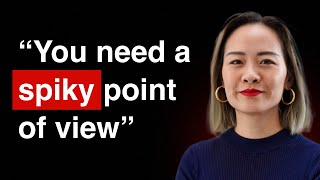
Wes Kao, co-founder of Maven, explains why course creators need a spiky point of view to stand out. He shares frameworks for building an audience, marketing cohort-based courses, and creating a creator funnel that converts students into loyal followers.
Spiky point of view is your unique perspective on the topic of your expertise that other people, other experts might disagree with. So if you brought 20 marketers into a room and you say your spiky point of view, 19 other people might disagree with it and they would have good reason for doing so. So the point is not to say something that is a mic drop controversial. Obviously, you know, crazy thing, you know, what you say has to be rooted in evidence, in rationale, in a logical thought process.
My guest today is Wes Kao, co founder of Maven, a very popular online course platform. Wes and I talked about how to create, market and teach an online course to make $20,000 or more per cohort. I especially love Wes's frameworks about how to build a spiky point of view to stand out with, with real examples and use the state change method to keep people interested. Consider subscribing for more great interviews every week. Okay, cool. All right, well welcome Wes. Thank you so much for making time for this. You know, you're the co founder of Maven. Maybe we can start by, you can start by describing your journey from, you know, just working in marketing at a startup to co found this company just at a high to high level.
Yeah, yeah. Well, this year marks my 15 year anniversary of working full time. So it's been a pretty long journey. But my foray into working with education, I was at an ad tech startup in SF for you know, three, four years and at the time I was looking for something new. You know, I was born and raised in the Bay, went to school in the Bay and like many people who are from sf, wanted to move to New York. And so I serendipitously saw a blog post from Seth Godin that he was looking for a special projects lead to work with him for six months to try to figure out what he should do next, what big projects should he work on, what big area should he invest in. And so on a whim I decided to apply. To my surprise, I ended up getting the role and I moved to New York. And what was supposed to be a six month role ended up being three years of working side by side with Seth and creating the Alt mba. So the Alt MBA was one of the first mainstream cohort based courses that really kicked off this entire category. This was in 2014, 2015, when the main mode of online learning was asynchronous, on demand. So there are Udemy courses, LinkedIn, learning, Skillshare, where you watch a bunch of videos by yourself. There's not A lot of interaction, there's no community, it's all self paced and completion rates are super low. It's around 4 to 6% completion. And you know, when Seth Gonin and I were looking at the completion rates, the impact that online learning could have, we just thought this cannot possibly be the pinnacle of innovation for online learning that this is. And we decided to flip the script on what online learning could look like. So we decided to do literally the opposite of what asynchronous course does. So instead of making the course free, we made it expensive enough that you felt like you had skin in the game. Instead of making it a solo activity, we made it a community driven one. Instead of it being mainly passive learning consuming videos, we made it entirely project based. And so this kicked off this movement towards core based learning that, you know, years later with Maven 2022, I joined up with Gog and Biani, the co founder of Udemy and we started Maven. And Maven was all about taking this trend of core based learning to the masses. You know, before it was if you were an author like Seth Godin, you had a big audience. You know, afterwards I worked with the co founders of Morning Brew to help them create their course. Professor Scott Galloway to design his course, the co founder of Masterclass on his new company Outlier. All of these people had big audiences or access to distribution channels or access to budget. But if you were an expert who knew your craft really well, it was still hard for you to teach online though, to put your materials online, to figure out the logistics, the administrative aspects, the technical aspects of stitching together so many different programs just to be able to have this fairly complex digital product. And so the vision behind Maven was let's open up access and democratize who gets to teach online by making it really easy to do so on the instructor side and then on the student side, let's open access to the kinds of people you can learn from. You shouldn't only be able to learn from, you know, professors in university or executive education or you know, people who have decided to become full time traders. There are a bunch of operators who are in house or who are consultants, who are coaches, who are executives, who have on the ground real world experience that, you know, unless you report to them at Amazon or unless you report to them at Facebook or at Kickstarter or wherever else, you're not getting to benefit from their sharpness and their learnings and all the things that they've learned. And so we wanted to bring those experts out of the woodwork and allow students to be able to learn directly from people like Sam Parr at the hustle now at HubSpot, or Sean Puri or Li Jin or Lenny Rachitsky. Shivani Berry, who was previously at PayPal and Intercom. So bringing a lot of these experts online so that students can get really targeted on the ground learnings whenever they want and wherever they are in their careers.
That's awesome. Yeah. Yeah. There's like, a lot of really good knowledge trapped inside companies. You know, like, like I said, the operators are in these companies and they have a lot to share with the world. But I think one of the things that has held some people back is like, you know, unfortunately, I feel like employers still have this, like, sensitivity around people just like, creating content online, or at least that's what I've seen. Like, do you have any advice for, you know, operators who want to teach courses or do something online to kind of work with their employer to make this happen or, like, does it matter? Yeah. Do you have any advice on that?
Yeah. I'm curious what you think also, because you're also in house and. Yeah, so we have a lot of instructors who are currently in house operators, and they've told us that their managers and their leadership teams are really supportive of it. So. Amanda Natividad, for example, is VP of marketing at SparkToro. Christian Wadig is, I believe, VP at DataRails. Mirali Nika is a product lead, AI product lead at Meta. Noam Siegel, previously at Twitter, now at Meta as UX designer. So they all have courses. And I think the way that they've described it is that they've positioned teaching as a way to give back to the community and also highlight the company that they're currently at. Right. So, you know, you might know sparkturo mainly for their, you know, audience research as a tool. But, you know, if you are a marketer and you are a fan of Amanda Tivitad, she posts amazing content on LinkedIn and Twitter. And you see her course and you see the level of insight that she brings, the level of craft, the depth of her knowledge. That brand Halo transfers to sparktaro. Right. And so, you know, I think it really depends on the company. But, you know, I think there are more and more companies that realize that they benefit when their people are posting on social, when, you know, their people are active in the community, speaking at different events, sharing their knowledge. You know, I think that the old school way is definitely, you know, let's keep our employees quiet. Let's not you know, we don't want them to share too much. Like we don't want them to build a personal brand. The more they have a personal brand, the more leverage they have. But I think in recent years, the last five years, and I think more in the next five is we've really seen a trend towards the employers that have been open and encouraging about their team sharing end up reaping benefits. You know, I think like Dave Gearhart is a great example, right. When he was at Drift, he shared a lot of Drift employees share HubSpot. I see HubSpot people on my feed posting all the time. Katie Burke, you know, is a prime example of someone on, on, on the leadership team who sets that example. So, you know, for me, I like following people on social that are individuals and there's a trend towards that where, where people like following individuals, not companies. So every one of your employees can be someone who is representing your company. I think that's a more modern way of thinking.
Yeah, I totally agree. Yeah, I, I think following an individual just feels more authentic than following a brand. So yeah, I, I think my perspective is, you know, as, as long as the person is doing a great job at the company, then I think what they do with their free time should just kind of be up. Up to them. Right. It's like it's a more productive use of time to teach a course than watch Netflix.
For sure.
Yeah. So, yeah, I think that's a great point. Yeah, it's a great point. I'm definitely encouraged by the fact that I think there's, yeah, like, like you said, there's more of a trend towards letting people share online or build a personal brand or just like, I mean, build a personal brand has this like weird slant to it, but basically people just sharing their expertise. Right. And that should like sharing their authentic selves online. And I feel like that should be okay. Yeah. So, so let's say like, you know, I'm an operator at one of these companies and like I, I, I want to share my knowledge. I want to create a course on maven from scratch. Like how do I go about thinking about this?
Yeah. So I would start thinking about market demand for your expertise and also what you are excited to teach. So I have a framework, I call it Outside In. Inside Out. Outside in is looking at the outside world. How many people want to learn about this? How urgent or important is the problem that you are addressing with your course? If it is a minor inconvenience that happens every so often, doesn't really bother you know, that working professional, they're not going to be likely to want to spend money on a course. But if there's high frequency, high magnitude, you know, this is a problem that comes up all the time. It's expensive. Fixing it would really help our company, would really help our team, would help me advance in my career. Those tend to be topics that people want to spend money on and they're more likely to get reimbursed by employers. So that's the outside in way of looking at it. Another aspect of the outside in is what are questions people ask you all the time. That's a signal of what people are already coming to you. If there's high frequency, high magnitude, you know, this is a problem that comes up all the time. It's expensive. Fixing it would really help our company, would really help our team, would help me advance in my career. Those tend to be topics that people want to spend money on and they're more likely to get reimbursed by employers. So that's the outside in way of looking at it. Another aspect of the outside in is what are questions people ask you all the time. That's a signal of what people are already coming to you for and what they already trust you for. Okay, so if you think about a Venn diagram, that's one circle, the other circle, it means looking in your heart of hearts and thinking about what is a topic that I can see myself talking about for a long period of time. Like anything, sharing your expertise, building a course, marking your course takes time. And if it's something that you yourself are not personally interested in or you're gonna get frustrated having to talk about this thing over and over. But if it's something that, that you find yourself seeing with fresh eyes all the time, that it's one of your natural obsessions anyway. You know, even let's say you're a marketer, there's many different kinds of marketing. There's different areas that you might be more excited to buy. You know, is it consumer psychology, is it messaging, is it copywriting? What are you kind of always noticing and seeing through that lens? That's a good sign. That is a potential topic that could feel you intrinsically to do a course. So what you want to do is bring those two circles together and look at that middle slice of where that overlap is. And I will say that the outside in circle should be significantly bigger than the inside out circle. So I do want to mention that because, you know, relative weighting wise, some people might think, you know, I'M really passionate about this topic and so I really want to teach it. There's a little bit of market demand, but, like, I can see this overlap. You really want there to be enough external signals that this is a topic that's worth building a course on. And the reason for that is, you know, you really don't want to spend a ton of effort building a course and then launch to silence crickets and tumbleweed, you know, and building a course is really not one of the. One of those things where it's not a chance to explore your curiosity for a new topic. I would say some people are like, oh, I recently learned about, you know, feedback, and so I want to teach a course on feedback. There are people who have been working on, studying, you know, talking about feedback for years. Those people should do a course on feedback. If this is new to you, that's great. Learn about it, you know, as a hobby or, you know, to improve yourself. But you're probably not as well positioned to teach on that topic as you are to teach on, you know, something else that people already come to you for. That is an obvious part of your track record.
Got it? Yeah. Yeah, probably, if you want to learn something, probably just like, tweet about it or something more lightweight because, like, having done a maven course, it is a big time commitment and the price point is, like, very high. So, like, people really think about, you know, what they get out of it. Right. Like, I think that's like an important part of it.
Yeah, absolutely.
What about, like, are there certain categories that are, like, you know, fairly popular, like, I guess, product management or like, maybe growing employees? And like, there's a lot of courses out there already on this stuff, so how do you kind of stand out or like, you know, I really like your point about a spiky point of view. Maybe you can explain that a little bit more.
Yeah, yeah, definitely. So the idea behind a spiky point of view is that we live in a really noisy world. And whatever you do, whether you're a designer, a marketer, an exec, there are thousands of other people with similar backgrounds, similar years of experience that do something similar and can offer the customer or student or client something similar. And so if you say the same things as everyone else, if you don't offer anything new, it's really hard for customers to justify why to pick you, or students to justify why to learn from you. So having a spiky point of view is the antidote to that. Spiky point of view is your unique perspective on the topic of your expertise that other people, other experts might disagree with. So if you brought 20 marketers into a room and you say your spiky point of view, 19 other people might disagree with it and they would have good reason for doing so. So the point is not to say something that is a mic drop, controversial. Obviously, you know, crazy thing, you know, what you say has to be rooted in evidence, in rationale, in a logical thought process, which is why someone could logically think the opposite and also have good rationale for what they're saying. Right? So one example of that is, you know, I. One of my spiky points of view is that if you want to create a course, you have to think about demand first, you have to think about the marketing first. How are you going to market this? How are you going to position this? To who? What are you going to say? Is it juicy enough? Before you even work on your curriculum, your worksheets, your content, your lecture material, your slides, most people do the opposite. Most people start with, what do I want to teach? They build out their curriculum, they build out their syllabus, they put together all this content, and then when they're done with that, they think, okay, I have this product now. How do I market this product? So there's logic to that as well, to this idea of product first, marketing after. You can say that a lot of companies do this. They build the product and then they market. And it might make sense in different situations, right? My spiky point of view is that does not work for products like courses and many other products. And that organizations and individuals would benefit from thinking about the marketing first before they even invest product development and engineering effort, et cetera, et cetera. That's how we built Maven too, by the way. We launched before we even had a name, before we had a technical co founder, before we built the product. And the initial traction really helped us to shape what we ended up building. So walking the talk here in various ways, but that's an example of a spiky point of view, you know, and it stands out because people are used to hearing the opposite. And so when you really think about your ideas, your point of view, your perspective, questions to ask yourself to draw out your own spiky point of view are, you know, what is something that you believe that you wish other people understood? What is something that you see other people talk about where it just wants. It just makes you want to pull your hair out because you totally disagree and you feel like people are missing this huge point about why, you know, X framework is, you know, actually not as useful as everyone makes it out to be. Right. What are things that, you know, you're almost a little bit afraid to say because you know that people are going to, you know, have a differing point of view. Right. Those are all questions that you can ask yourself. And many people, I would say most of us, all of us already have spiky points of view in us. We just need to draw them out. We just need to add that bit of courage to and confidence that, hey, my lived experience, my track record, my experience working in this field tells me X, this is what I have seen from years of experience working with clients, leading products myself, launching courses myself. Right. And if other people disagree, that's okay.
Yeah, that's pretty interesting. It is because if you express that, then there's going to be a segment of people who will think like, you know, finally someone said this or like really resonate with you. Right?
Yeah, absolutely. That's the most exciting part is when people come out of the woodwork and you realize that actually a bunch of people thought this too, but they were also afraid to say it. And now all those people feel affinity towards you. You're like putting out the bat signal, you know, and Batman like turns on the thing, I guess Commissioner Gordon turned on the thing on the roof and put the bat signal out, you know, and, and everyone could see it. So you're kind of a, a beacon, a lighthouse for looking at an idea a certain way. And you attract like minded people who believe in that too, who want to learn from you, who want to dive deeper into that kind of thinking.
Yeah, I think this is really important. Like, I'm not sure. Do you have any other examples of people this might be courses with like spiky points of view, like, who are really kind of like good at this?
Yeah, Well, a lot of Maven instructors, we teach this in the Maven Course accelerator. It's a free three week course that I teach you how to build a course. And so it's one of the first topics we teach in the first session and hundreds of instructors share their spiky points of view on what their topics are. So let me share a link to that because there's a ton. And the way that we then work with that is they can then use that content to fuel LinkedIn posts, to drive towards their course, at the top of the funnel to put into emails, at the middle of the funnel to incorporate into their landing pages. So it's kind of it to work into Their positioning. So, you know, a couple I'm thinking off the top of my head now. April McLean teaches community building. Usually when you think of community building, you think about people who love engaging, who are encouraging, kind of social people, good at connecting others. And April's course is all about why the best community builders are actually selfish jerks. And so for our entire concept is driven by this idea that, hey, if you think about community building from a this jerk perspective, you can actually do really well and how that benefits you. Right? So that's one example. Shreyas Doshi teaches a very popular course for mid to senior level product managers. And he has a bunch of spiky points of view about how PMs waste their time on various frameworks that are actually not useful. He has a lot of spiky points of view there. Emily Kramer was the former head of marketing at Asana, and she has spiky points of view about how marketers who primarily goal themselves on MQLs marketing qualified leads and SQLs sales qualified leads are actually setting themselves up for failure. So these are just a couple examples of, you know, these spiky points of view. You know, there are really so many. And I think once you start thinking about them for yourself and you kind of turn on a spigot and then you think of them all the time, you know, like, so that's. It's actually great because the more you think of it, the more other stuff you think of. And you know, for me, it's the only way that I can create content. Really. Like, it's weird because, you know, people ask me all the time, you know, Wes, you're so prolific. Like, you post on, you know, LinkedIn, Twitter all the time. You know, you grew your following super quickly. And, you know, how do you think of what to write all the time? And people assume that I have like a content matrix, you know, which, by the way, like, for some people, works where like you put a bunch of topics on the top horizontally, and then vertically you put different kinds of content. So a Q and A, a personal story, a rant, a revelation, you know, a mistake, whatever. Right. Case study. And then you multiply. You basically have like 52 grids of, you know, cells of content.
Yeah.
And it's like a video that just doesn't work for me. Like, I've tried it. I've tried all kinds of different tools. The only thing that gets me to write is when I feel like I have a burning thing that I have to say.
Yeah.
That I need to get out Right. And like that I feel like, is something that more people should tap into. Like what is that, that burning thing that you really feel like the world would be a better place if you said this. You know, and it's really about acknowledging that, hey, you know what, if I say this and some people disagree or get pissed off by it, that's a risk that I'm willing to take. But once, once you take that risk, like there's so many ideas that, that are just bursting, that are just bubbling under the surface.
Yeah, I'm the same way. Like, it's very hard to take an analytical approach to content creation for me or I try to do it, but the tweets I really take off are just like random win that I have or like feelings that I have and I just like tweet it out and then it takes off. Even after so many years doing this, like, I, I, I still don't know what the secret formula is.
Yeah, yeah, yeah. I've been writing on my blog since 2010, so it's, I'm near, it's been 13 years and I have, every so often I try to codify my approach. I try to make it more analytical, more systematic so I can regularly, you know, have insights or come up with great stuff. And to your point, it's still so organic.
Yeah, yeah, but that's part of the fun of it. I mean, that's why I'm entertained by all this stuff. So let's talk about, let's talk about. You mentioned you like to market first and then build. So how do you market something? Like, especially if you don't have a big audience, like how do you even know what people want or get in touch with, get in touch with your target segment.
Yeah, so I have a great example of an instructor who did this, Shivani Berry. She teaches a course for leadership and management on leadership and management for women in tech. And so she was an in house operator for most of her career. She was at Intercom, PayPal as a product manager. So she wasn't actively tweeting, growing her audience. She didn't have an email list and she decided to quit her job and build a course. And she was starting from zero across all channels. And within six months she had already run two cohorts and doubled the size of the cohorts. So you know, I think it's, she's a great example because her trajectory was, you know, her first COHORT she had 10, 15 students. Her next one 25, 30, the next one 50, some the next one 100 some. And now she's at 100 to 300 students per cohort. And her course I believe is $1800, 1,800. So I need to check on that. But it's over four. It's four figures basically. So it's a premium price point. You know, a lot of core based courses are 500 to, you know, 750 or, you know, 900. So she has a more premium price point than other price points. And she was able to grow really consistently from no audience. And the thing that she did was she got creative about tapping into other people's audiences. Most people think I can only talk to my own audience. Therefore if I am growing slowly like my, you know, that's it. I'm just limited that way. But that's not true. So Shivani did a bunch of different things that allowed her to partner with other people who had bigger audiences or tap into existing communities that existed. So one thing that she would do was approach companies like Amazon, like Instacart, like Deloitte, Microsoft, and say, hey, I run this workshop for aspiring and aspiring women in tech and I can do a free 45 minute workshop for your, you know, women in your company. And a lot of these organizations have ergs, employee resource groups, you know, surrounding different topics. And so, you know, I can do a talk for, you know, your women erg on some topic that is relevant for them. So in her case it was how to work with dominant personalities or how to advocate for yourself and balance the trade off of warmth versus confidence that women often have to deal with. If you're very competent, people assume you're less warm. If you're too warm, people assume you're not as competent. Very real challenges that her target student faces. So she would go into these organizations and run these different workshops and once you run a few, you can name drop to the other ones that you did a workshop at these other similar companies. Right. So the more she did it, the more steam that she gained. So she did that. She also ran and still runs an event series online where she interviews women in tech at various companies that she wants to get students from. And again, she worked her way up from people who were, you know, more accessible to her, who were already in her own network, friends from business school who worked at all these different companies, now connections, friends already in her network. And eventually she was able to interview people like Kim Scott from Radical Candor, Julie Zuo from Facebook. Right. So these really high profile women in tech that are going to attract a big audience. She did all this and she started posting more often on her own social. Right. So building up your own audience, it's great leverage. It's a great way to reach your audience directly. So she didn't just do these other things with existing communities, she also started building her own audience. So looking for, you know, where are people already hanging out? I mean Alpha, actually she, that was another great example. Alpha is a Y Combinator spinoff for women in tech. So she did an AMA with Alpha. She would, you know, she interacts with our community. Anyway, a bunch of, there are a bunch of places where your target audience is already hanging out, people that they already follow. What are creative ways that you can tap into adding value to those people's audiences so that they will be happy to invite you into their community?
Yeah, that's awesome. Because I love their strategy of running workshops and like maybe doing interviews because it's hard to say no to that kind of stuff. Like if I want to run a free workshop and I have like some other brand names that I already ran workshops for, like, why not? Like, why would a company not want this?
Exactly. Yeah, it should feel like a no brainer. I think that's the key. Right. And, and you should be prepared to add a ton of value and not just promote your course. So I think the way with the way to do it is to intersperse hints of mentioning your course throughout the free session. And I think this is a more advanced way of doing it. I think the more basic way of doing it is you mentioned, hey, I, you know, create a course right at the beginning and then you mention at the end, you know, hey, if you want more, I teach a course that's great and that might be a more comfortable place to start. But the way that I've seen more advanced creators sell while teaching for these free workshops is by casually mentioning different, mentioning their course during. So you might say, you know, you might do a 10 minute breakout with let's say these women in tech where you had them, you know, do an activity. And you could say that, you know, this is one of three activities that we do in my course. You know, it's super valuable because you are blah, blah, blah, blah. So you see how it's like just kind of casually mentioning like, oh, we do breakouts like this a lot. Or you know, there's more like this essentially that we go deeper on. We're only able to unpack a little bit because this is only a 45 minute session today. But usually we spend, you know, three sessions on this, because this is a pretty important topic. Something like that kind of just incepts during the workshop that, hey, there's a lot more. Not just saving selling until the end, because people are used to being sold to at the end. And so it's easier to just kind of tune out and be like, okay, now the person's in sales mode. Like, let me just, like, tune up.
Yeah, that. That's pretty good advice because, yeah, you want to sell. You want to hint at selling where you're getting the value and kind of.
Like, part of the organic.
Yeah. Wow. Okay. I guess just two more questions. Like, one. One thing that, like, I struggle with is, like, you know, create a cohort course is, like, a lot of work, and usually it lasts like, what, 46 hours or something. And I've attended presentations where the instructor is just talking all the time, and it's just incredibly boring, like walking through 300 slides sometimes. It also happens at work, but. Yeah. So how do you make this stuff interesting? Because otherwise it's just, like a total slog, both for the student and for the instructor.
Totally. Yeah. Especially on Zoom, you know, it's really hard to sit still for long periods of time, just staring into camera, watching someone speak. At least when you're in person, you're kind of like, in a different space, you know, and can kind of. There's a little bit of novelty there, but that's definitely a real problem. And I have a framework for this called the state change method. So the state change method is basically every three to five minutes at least, you interrupt your own monologue with a state change of some sort. So a state change can be anything from sharing your screen and then unsharing it, to asking your students to go off of mute to answer something, to asking folks to put something in the chat box, ask a question, say, like, go ahead and answer in Zoom Chat, what do you think to having someone else speak? Another speaker or, you know, anyone else? Yeah, exactly. So there's so many different ways that you can do state changes. Breakouts. Another obvious one, guided exercises where I say, hey, we're gonna. We're gonna all mute ourselves for two minutes. I'm gonna set a timer, and we're gonna work silently. At the end of those two minutes, we're gonna share out to doing popcorns. You know, there's 30 some students in a room. One person answers popcorn to the next person. They answer, they popcorn. Choose the next person. So there's so many ways to keep material engaging and to keep sessions engaging by adding These different state changes that I think we all really have no excuse to, to simply monologue the monologuing. It really doesn't benefit students because they are tuning out. And it doesn't benefit you because, you know, you can get bored just talking at a screen, you know, with no feedback from your students. Like, are people asleep? Are they hanging onto my every word? I have no idea. Right. Whereas if you engage students and you are interjecting these day changes, you can tell that people are there with you, they're engaged, you can tell their energy levels.
Yeah, totally. Yeah, I think that's really good advice. I think. Yeah. Even for like company presentations. Like, I think that's also very good advice.
So, yes, I remind myself of doing the stage change method, even if I'm doing a one on one with someone. Like, this is like the opposite of teaching a course or doing a big team presentation is a one on one with one person. If I feel like I've been talking for too long, I'm like, I need to stop, I need to pause, I need to let the other person, you know, either paraphrase what they heard, ask a question, reflect, react something. And it's a great reminder to avoid monologues.
Yeah, no one likes monologues even. Yeah. So the last question I have is like, you know, we talk about courses, we talk about building an audience on like Twitter and LinkedIn. I've seen like really sophisticated creators kind of weed together a bunch of this stuff. Like maybe they have a cohort course and they also have like on demand, like a smaller course at a lower price point and then they have a newsletter and they have all this stuff. Like, how do you think strategically about kind of like the creator funnel? And like, how do you get people, you know what I mean? Like, how do you get people to buy your stuff? And how do you set it up so that it almost works automatically? Or like there's like a strategy behind this instead of just like posting stuff on LinkedIn and hoping that people click through and buy your course. Yeah.
But yeah, I think thinking about this problem from your audience's perspective is a really good place to start. So if, you know, seeing your LinkedIn post is the first time that I've ever heard from you, I am not likely to spend $750 on your course, the course that you link to at the bottom of that post. And so I think it's useful for instructors, for creators think about this. Because a lot of times, you know, they'll put out a product and then be surprised that, you know, people are not, you know, banging on their door to try to get it. And a lot of times the problem is that you haven't been showing up for long enough to add enough value to that person's life.
Yeah.
Once you cross that threshold of hey, this person has added enough value for me to buy X like you're in. Right. The threshold is higher the more expensive the product is. So if your product is $5, it's like, all right, you've added over $5 of value to my life. I feel like if I paid you this, that your paid stuff is going to be good enough for me to get some value from it. Right. If Your offering is $5,000, to use an extreme example, I need to see a lot more proof and evidence and be convinced that if I were to purchase this course or you know, work with you as a consultant or whatever, that, that I'm not going to have buyer's remorse, I'm not going to regret this. Right. So there's a higher bar for conviction that the customer has to feel before they're willing to do that. And so I think, you know, when you think about the work that you're creating, you know, some creators have one flagship product, they keep it simple. Some creators have a portfolio of products. And so I think either can really work. But you really want to think about showing up consistently and be convinced that if I were to purchase this course or you know, consistently and adding in a value that in your customer's mind, making the leap, work with you as a consultant or whatever, that, that I'm not going to have buyer's remorse, I'm not going to regret this. Right into a paid product. Makes sense for them.
Yeah. Overcoming their hesitations. Right. Or like building that trust with the customer.
Yeah. And I think, you know, some people will have a lower priced offering of some sort. You know, they might have an ebook on Gumroad, they might be selling some templates on Gumroad for 2050, they might have a static on demand course for $150 and then they have their co op based course for 950. And so all along, you know, the customer journey, you know, it can either be. So there's a couple ways of looking at it. One is that same person might buy all of these things. Right. So they might start on one end versus the other. Some customers actually come in, so there's a higher bar for conviction that the customer has to feel before they're willing to do that. And so I think, you know, when you think about the work that you're trading. You know, some creators have one flagship product, they keep it simple. Some creators have a portfolio of products at the high end. Once they feel like they can get value from you, they actually want to buy the most expensive product you have. They might. And so I think either can really work. But you really want to think about showing up, have more cash than time, for example. Right. A lot of senior executives, like they don't want to do, you know, really they don't want to read your book. They want to just do an expensive session with you and have you solve or like give them advice. Right. And then solve the problem, move on. Other people have more time than money and they want to read your book or they want to, you know, you know, buy your lower priced products. So offering various products is a way to kind of consistently and adding in a value that in your customer's mind making the leap, offer multiple things to that one person. The other way of looking at it is that you can attract different people with different kinds of products altogether, like. Exactly. So there might be the people who are into a paid product. Makes sense for them.
Yeah. Overcoming their hesitations. Right. Or like building that trust with the customer.
Yeah. And I think, you know, some people will have a lower priced offering of some sort. You know, they might have an ebook. Buying one thing might be completely different from people who are buying something else. And so it's really up to you as a creator. I think that keeping things simple in the beginning is better because you know, it's when you make things on Gumroad, they might be selling some templates on Gumroad for $20, $50. They might have too complicated to try to capture, you know, all the value on the table. Like you really don't want to leave any money on the table. So you just try to do it all. It's really easy to get overwhelmed, to burn out, to get confused. Like for yourself to be confused about how does this all work? Like am I driving this post towards this product or that one? You know, a static on Demand course for 150 and then they have their cohort based course. Does my email funnel like should I promote this stuff first? And then that like so it gets really complicated and for $950 and so all along, you know, the customer journey, you know, it's, it can either be. So there's a couple ways of looking at it. One is that same person might buy all of these things. Right. So they might start on one end versus the other some customers actually come in, you know, when you're getting started, it's complicated enough and there's going to be unexpected things to happen and things aren't going to work the way that you expect. So I like just thinking, you know, what is one product? Start with one product that you can sell. What is one channel that you can start with? Like, don't try to grow. I would say I. This is, you know, my point of view. I would. At the high end, once they feel like they can get value from you, they actually want to buy the most expensive product you have. They mightn't try to grow on Twitter and LinkedIn at the same time. I would nail one channel first, get really comfortable with it and then expand. So for me, I grew up on Twitter in the course of a year and a half from 10,000 followers, have more cash than time, for example, right. A lot of senior executives, like they don't want to do, you know, really they don't want to read your book. They want to just do an expensive session with you and have you solve or like give them advice, right. And then solve the problem, move on. Other people have more time than money and they want to read your book to 150,000 followers. And I only focused on Twitter and then now I'm starting to post on LinkedIn. So but because I nailed one channel, I'm much more well suited to approach this other channel. Whereas before, you know, I tried growing my audience before, you know, this past year and I didn't make a lot of progress. I was at the 1 to 5,000 follower mark on Twitter for like where they want to, you know, you know, buy your lower pace products. So offering various products is a way to kind of literally nine years like so, so I, I am used to, I know what it feels like to be offer multiple things to that one person. The other way of looking at it is that you can attract different people with different kinds of products altogether. Like exactly. So there might be the people who are buying one thing might be completely different from people who are buying something else. And so it's really up to you as a creator. I think that be obscure to like have no progress with growing your following. And it was cause I tried doing too much. You know, I was posting on Twitter, LinkedIn, Medium, my blog, my website and like it was just too much.
Yeah, focus is so important even as a product manager. It's like focusing on the right features to build or like building on mayhem, like finding that one feature that actually makes a Huge difference in people's lives like that. That's like everything. I keep having to remind myself this. But yeah, even with the creator stuff, it makes a lot of sense. Like this year I'm really focused on just growing my newsletter. So, yeah, I think that's like, really awesome advice to close on. Wes, where can people find you online or, you know, if people want to start teaching a course, where do they go?
Yeah, go to maven.com teach and we have a lot of resources for new creators, new instructors. We also have the free three week Maven course accelerator that I teach. That is a live course where you go through the program with hundreds of other instructors. You get to learn from them, there's a great community and we walk you through the step by step of how to build a course. So that's maven. Com. You can also find us @Maven HQ on Twitter and you can find me at Wesko on Twitter. And I'm also Posting more on LinkedIn now, more active there than on Twitter. So follow me there too.
Cool. All right, Wes.
Keeping things simple in the beginning is better because, you know, it's when you make things too complicated to try to capture, you know, all the value on the table. Like, you really don't want to leave any money on the table, so you just try to do it all. It's really easy to get overwhelmed, to burn out, to get confused, like for yourself to be confused about, how does this all work? Like, am I driving this post towards this product or that one? You know, does my email funnel? Like, should I promote this stuff first and then that, like, so it gets really complicated and, you know, when you're getting started, it's complicated enough and there's going to be unexpected things to happen and things aren't going to work the way that you expect. So I like just thinking, you know, what is one product? Start with one product that you can sell. What is one channel that you can start with? Like, don't try to grow. I would say I. This is, you know, my point of view. I wouldn't try to grow on Twitter and LinkedIn at the same time. I would nail one channel first, get really comfortable with it and then expand. So for me, I grew on Twitter in the course of a year and a half, from 10,000 followers to 150,000 followers, and I only focused on Twitter. And then now I'm starting to post on LinkedIn. So. But because I nailed one channel, I'm much more well suited to approach this other channel. Whereas before, you know, I tried growing my audience before, you know, this past year, and I didn't make a lot of progress. I was at the 1 to 5,000 follower mark on Twitter for like, literally nine years. Like, so, so I, I am used to, I know what it feels like to be obscure, to like, have no progress with growing your following. And it was because I tried doing too much. You know, I was posting on Twitter, LinkedIn, Medium, my blog, my website, and like, it was just too much.
Yeah, focus is so important, even as a product manager is like, focusing on the right features to build or like building on mayhem, like finding that one feature that actually makes a huge difference in people's lives. Like that, that's like everything. I keep having to remind myself this. But yeah, even with the creator stuff, it makes a lot of sense. Like, this year I'm really focused on just growing my newsletter. So yeah, I, I, I, I think that's like, really awesome advice to close on. Wes, where can people find you online or, you know, if people want to start teaching a course, where do they go?
Yeah, go to maven.com teach and we have a lot of resources for new creators, new instructors. We also have the free three week Maven course accelerator that I teach. That is a live course where you go through the program with hundreds of other instructors. You get to learn from them, there's a great community and we walk you through the step by step of how to build a course. So that's maven.com, you can also find us mavenhq on Twitter and you can find me at Wessko on Twitter. And I'm also Posting more on LinkedIn now, more active there than on Twitter, so follow me there too.
Cool. All right, Wet.
More from Peter

Dropbox VP's Best AI Workflows to Help You Take Back Time at Work | Morgan Brown


Canva Co-Founder: The AI Playbook Behind the World's Most Popular Design Tool | Cameron Adams

How OpenAI's Head of Business Products Uses ChatGPT to Save Time at Work | Nate Gonzalez

Complete Vibe Coding Tutorial: Build a Full Stack App in 30 Min with AI | Matt Palmer (Replit)


Complete AI Course (2025): Prompting, Evals, RAG & Fine-Tuning | Adam Loving (Meta)



