Founder Mode Lessons from Instagram, Airbnb, and Coinbase | Sanchan Saxena
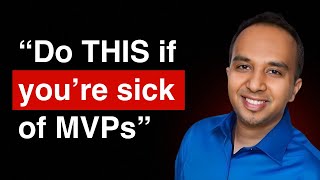
Sanchan Saxena shares what he learned building products at Instagram, Airbnb, and Coinbase. He talks about vision-driven development, how founders make decisions differently than managers, and what separates products that win from ones that don't.
This is the biggest difference that I see in many companies versus Airbnb and Apple, that marketing and product management are cohesively embedded together. Airbnb does two releases in a year, and the reason they do that is they work backwards from a narrative that they want the customer to experience rather than forward from the MVP. There's 16 different teams can ship, right? So typically, this is what happened, right? There are three or four different teams that are shipping some parts of it, and the user journey is broken. Let's say the user journey is sign up, and it requires five different teams to work together. One team says, I can do this much. The other team say, I can do this much. Other team says, I can do this much. The entire user journey looks crappy. It goes like this, right? But in case of Airbnb, what we'll do is we'll first design the user experience journey, the promises that they want to feel, and then we'll kind of challenge the teams to rise up to that narrative. So at the beginning of that year, we will sit down and say, okay, next June, we want the customer to experience and feel the following things from Airbnb. When I book and travel at Airbnb, I feel extremely safe. If something goes wrong, I'm able to actually report that stuff very easily and protect myself as an example. And then every team will be challenged to say, look, guys, you got this much time. Time is immovable. The time is the same time. But now your job is to rise up to the occasion and build the most amazing experience that you can together as teams to deliver this narrative to the customer.
All right, sunshine, welcome.
Thank you for having me, Peter.
Yeah, so let's dive right in. I think you have a really amazing career. You work with, like, three amazing founders, so maybe we can start there. Why don't we start with your Instagram experience? I think you joined the company pretty early. So what was it like working with Kevin and Mike?
Yeah, I joined fairly early. I mean, to give a measure of how early that was, Instagram at that time made $0 in revenue. Today, by some sources, it makes 50% or more of Facebook's revenue at 50 billion plus dollars. So it was like really, really early days. I think there were only less than 100 employees. You know, maybe 70, 80 employees, if I'm not wrong. And the context was very different. It was just like every other startup. It was a startup that had one product, one set of features for one set of users, and it was just taking off like a rocket ship. And at that time, as A reminder, there weren't a lot of things that you see in Instagram today, like shopping, et cetera. Right. So back in the day, it was just about joining a company that I really loved the mission on, love the product on, and just wearing multiple hats during that journey. You know, people always tell me, you know, I want to try my next job. I want to get this at JD I'm going to apply for this job, et cetera. No, typically you don't. It doesn't work out like that, Peter. You know, what typically happens is you join a rocket ship and during that journey, you get to enjoy and get to learn new things and try out new, different things. So, first year, I built the ads team. So the idea was we made $0 in revenue and we wanted to scale that to a billion dollars in 365 days. So help do that. And during this time, new ideas were coming around. So Instagram shopping was a new idea that we wanted to try out. And the way it was that people were hacking our system, hacking the product called Instagram, to actually do things that it was not designed for, which was to sell and buy from other people. So all this time, Kevin and Mike were the steady hand of the ship, if you may. And I think working with Foundry is an amazing experience that I highly encourage people get. But in case of Kevin and Mike, there are a few things that I want to share with you in the audience. Now, number one, Kevin is a very systems thinker kind of guy. He's not a founder who just shoots from the hip and just hopes that things work out. And that's a trend that I've seen in many founders like Kevin Systrom and Brian Shesky. They're very thoughtful leaders. In fact, at Airbnb, we'll come back to it later. But at Airbnb, a B testing was a bad word. And I'll tell you why that was a bad word. Similar things were around Instagram, where as an engineer, you just couldn't launch any and every feature that you had an idea around. You need to have a cohesive strategy. You need to need to have a cohesive thinking around why this matters for your users. And why should you do this? Because there can be hundred things you should be doing, but why this one? And that's, I think the biggest superpower of Kevin's Systrom is systems thinking. This other second superpower is distillation. You know, I believe every problem at the end of the day can be distilled down to effective communication. Man. You know, you might have A great vision as a founder, but if you can't do, you can't communicate that ain't nobody joining your company, ain't nobody investing in your company, right? And System Superpower was the ability to distill down complex things in simple to understand terms. And the litmus test was if it's too complex to explain, if it's too complicated to explain, you haven't thought through enough, you know, and I always tell people, you know, I can tell if you've thought through what a problem enough or not by the way you describe it, by the way you explain it. And if you are yourself complicating it, you haven't thought enough. And that was Kevin Systrom's superpower. Mike Krieger, on the other hand, was very different. Mike Krieger's superpower was like a laser focus on execution. You know, he was a guy who said, a million ideas doesn't matter if you can't execute them, right. So it was an incredible pairing between Systrom and Mike where they could complement each other. One thinking about what to do, how to, how to do it, and the other one figuring out to make shit happen.
And back then, Instagram was like a kind of like a very simple, very beautiful product. And they have a principle called do the simple thing first. Do you have any, like, personal experience with that? Like, you know.
Yeah, absolutely. I mean, a couple of product principles over there. One was do fewer things exceptionally well, and the other one was do, do simple things first, you know, and if you think about all of these things, there's something to be said about how Instagram became what it became. The number one experience, I'll tell you, is, you know, in every company, in every role, you will find more ideas to, to follow, then you will have resources. And oftentimes I see people chasing the next shiny idea, the next shiny thing, right? And they end up doing way too much than they can. So the thinking over there was, you want to be world class in a few things, then average in a hundred things. And that was a decision making framework, which is, okay, should we do these 10 things right, or should we just do these two things and become a world class addiction? Right. The other thing I want to share with your audience is the power of intuition that Systrom had and the power of not just ab testing everything, but rather ab testing as a means to get to it. So I'll give your audience an example, or maybe two. One is Instagram stories. You know, Instagram stories when it launched. I mean, imagine this, you know, when it launched at that time, you could not add any photo or video from your camera roll. You had to really live record that stuff. Right. And that was an intentional decision. Imagine you're Kevin Systrom. Data Science is coming to you and saying, look, I have looked at all the phones in the world. 99% of the content is not real time on their phone. People have recorded videos from a month ago, two weeks ago, one week ago, when they were celebrating their birthday. So we got to allow those people. Right. Otherwise you're not going to have content use a research community. And saying, look, I talked to 99 people and I talked to 100 people, and 99 of them said they would love to post an Instagram story from a month ago. Right. But that's not what Kevin did. What Kevin did was he said, look, our vision is to make Instagram story the only place to go to see what's happening right now with your friends and community. And if you allow people to post something that happened a month ago, that vision is no longer achieved. So we wanted to build the most live, the most recent TV channel, if you may, using an analogy, you know, the most important broadcast channel. So this is an example of how Instagram and some of the greatest founders, including Chesky. And I can give you another story about Chesky, Jesse, about the same thing. Operate with a strong vision and intuition about what the product should be, and then figure out the A B test needed to prove that hypothesis versus looking at data, deducing from user research, deducing from data science, and just say, okay, this is the most logical thing to do because this is the deductive analysis we have done and hence we can't do that. Right. So there's a difference in these two approaches.
Yeah, the difference between having a vision, like just not having a vision, I guess. Yeah, big difference.
And also having the gut and intuition to stick with the vision, because in the face of data, all the data is telling you, no, you should go left or you still go right. And you're doing that because as a founder, you have that ability and the intuition that gut, because you have immersed yourself in the product, but also you have the permission to do those kinds of things. Sometimes operators struggle with that.
Yep, makes sense. Let's save your Airbnb experience for later. I would love to talked a bit about your most recent experience at Coinbase working with Brian Armstrong. What was he like? You know, what kind of leader was he like?
Yeah, I think Systrom, Chesky and Armstrong were completely different leaders. It's so Funny. You know, these are incredibly successful founders, right? But they all took different approaches. They all brought different superpowers to the table. And this is a key message for anybody who's trying to be a founder. Don't try to be yet like another founder. Try to be who you are. Try to bring your superpowers to the table. And I'll tell you, Cesky and Armstrong could not be diametrically opposite on certain dimensions and could not be similar in certain dimensions. For many of those who don't know, Armstrong was actually an engineer at Airbnb and he left Airbnb to start Coinbase. And he comes from a very analytical. From a very analytically creative mindset. Chesky comes from a very creative, creative mindset. You know, I'm using these terms loosely and I'll explain to your audience what I mean by that. Armstrong's superpower are as follows. He is a hustler. Even as a CEO, he can do things. What do I mean by that? He's not this guy who doesn't know how to roll up his sleeves and get shit done. He's not this guy who only manages a process and hopes that if they follow the right process, the right innovation will happen. That's a Myth in many PMs mindset is that if somehow I can borrow the same spec template from Amazon, somehow I can follow the same Kanban process that Airbnb does, somehow I can do the same design that Airbnb does or Apple does, I'll somehow magically have the right product. That's not true. It is the intuition, the judgment, the gut and the data that these founders use to come up with those things that matter the most. So, number one is he can roll up his sleeves and get shit done. Very few CEOs can do that. Number two, he is highly, highly detail oriented, so that to this extent that he does, he breaks down problems in very minute details. So you can then act on it. An example of this would be, let's say there's a complex problem called climbing Mount Everest, right? I mean, it's very hard to imagine how you're going to climb Mount Everest, but if you can break it down into subsequent pieces, okay, step one is to get to base camp. What do I need to get there? Right. How can I survive and train to get there? That level of thinking is a superpower of Armstrong. And last but not the least, he's a leader who leads with trust. A lot of founders suffer from not trusting their own lieutenants that they have hired. There's this backseat driving, I call it. You know, the founders hired the driver, you know, the cpo, the cto, the CEO or whatever it is. But on the backseat they're sitting and say, okay, don't make a left turn, make a right turn. You know, they're doing backseat driving. Armstrong is not like that. Armstrong hires really talented people and has a framework around which how he empowers them. And that framework is very powerful, which is for every decision. We would never have a committee. He hates the word committee. Decision by committee is the worst kind of thing you can do. So what we would do at Coinbase is every decision will have a single decision maker. And that decision maker's job is to listen to all the diverse inputs, all the diverse things that you can probably hear from legal, finance, marketing, engineering, design, whatever that might be. But at the end of the day, it's the decide. Is that DRI's responsibility to make the right decision, you know, in that thing? This is very, very unheard of in many companies. I've worked at Facebook and other companies as well. While everybody wants to get to this model, to the extent that Coinbase has implemented, this is phenomenal. Right? And there's no passive aggressiveness. Peter, you know, let's say I go to the meeting, I pitch my point to Peter and Peter is a dri. I said, thank you, Sanchin, for the perspective. But I still go and do this and here's why I don't leave the meeting saying, hence you, Peter, you are the worst leader ever. You know, and I don't go to my team and say, yeah, dude, just do the bare minimum. Because this is Peter's idea. I don't believe in it.
Right.
There is no such thing at Coinbase. In fact, pocket veto is a fightable offense. And creating that culture, creating that leadership structure is one of the superpowers that Brian did.
That's amazing. Yeah, because often when decided by committee, they make a bunch of compromises and starts watering down the product, you know, is.
Exactly. And decision by committee, as you know, they result in a, in a culture. This is where I was talking in the last session, Peter, about feedback sometimes is not a blessing. And what typically happens is in a committee like format where nobody knows who's the right decision maker, anytime I hear, okay, who's making this decision? Oh, the VP of this product and the VP of this product together are making that decision. No, no, no, no, that cannot happen. That just doesn't happen. That's a committee. And what you're going to see is in Those scenarios, the decision gets watered down because you're trying to optimize for the least common thing that will not annoy anybody else. Right. So you start by saying, this is my great vision now. It's this guy or this discipline or this thing. Right. Because they don't align with that. So you keep watering it down until everybody can agree. Yeah, I'm comfortable with that. And that thing that everybody agrees, you ship it, the customer say, what the heck is this? You know, I never asked for it.
Yeah, exactly.
Yeah.
It might get really good peer feedback, might be well liked, but then your product might be crap, you know?
Yeah, it'll be crap. Right. So at Coinbase and Airbnb would try to empower the decision maker so they can go to building the right thing and in the process make sure the culture is such that nobody feels annoyed. Everybody respects that decision. Everybody gets behind that decision. And that cultural element is really important, Peter, because in many companies, you will see passive aggressiveness sets in and people start to jeopardize each other's work.
Yeah. So let's talk about Airbnb.
I think you.
I think you mentioned that Airbnb is like, you're one of your favorite experiences. And you also helped Brian basically build the PM function there. Maybe. Let's talk about Brian at a high level. What kind of lead leader is Brian Chastity like?
Yeah, Yeah. I mean, just for the context, when I got there, I was working on Airbnb plus. And then a few months in, Joe Bach was employee number 10, I believe at Airbnb, was taking a backseat. He ran the product management discipline. And he said, he selected me to take the baton from him to own the functional leadership role for all of product management. So we had only 40PMs, we grew 200 plus PM. And during this time, I got a firsthand experience of working with Brian. So there are lots of things about Brian that are very amazing and very inspiring. One, he is wired in a way to obsess over the creative aspects of a journey much more than anything else. What do I mean by that? His obsession is on what does a customer need? And he will spend the entire meeting talking about that. What are the customer's problem? What are the things you need to build? And then in the later on, we can talk about finances, we can talk about headcount, we can talk about the constraints, et cetera. So his superpower is to imagine and think in an unconstrained way. Many PMs, by the way, suffer from this unconstrained Thinking doesn't exist in many cultures and people. Let me give you a perfect example. If you ever look at any company and the PM comes and pitches you a new product idea, right? There's one slide that says, here's my vision. There's one slide, right? And everything else is, here's my mvp. Everything starts with an mvp. That's probably the worst concept to have been ever introduced in Silicon Valley, in my opinion. You know, I think it has been abused. So let me, let me give you how Brian will operate. Unconstrained thinking means you forget about the constraints of technology, resources, time and first design. An ideal experience for the customer, right? And it requires a different wiring, Peter. It requires a different wiring in the sense that you're not constrained by, oh, do we have this technology today? Right. I'll give you a very perfect example that will illustrate to your audience what we are trying to do at Airbnb. Let's say you're building Airbnb lounges. This is a real example. By the way, I ran a small test for this as well. At Airbnb, you book an Airbnb, it checks it at 3pm, right? But you fly to 6am what do you do from 6am to 3pm? Well, here's Airbnb lounge. You can hang out over there. There's going to be Internet, there's going to be coffee. You can check in your luggage. At 3 o', clock, you can get to your Airbnb. So a traditional PM, how would they approach this from. They'll say, let's build the Airbnb MVP of a lounge. What are they going to do? They're going to find a small space wherever they can. They're going to put whatever coffee they can, they're going to put whatever WI fi they can, whatever chairs they can, and see if there is a there there or not, right? At Airbnb, we slightly different. So, look, we don't yet know how to scale these lounges around the world, but we can, we can figure it out how to build the best lounge in San Francisco. So what we're going to do, going to go out, rent out the place, right? We're going to put the best hypes, meet Internet. We're going to put the best coffee in there, we're going to put the best chairs in there that we can, right? And test out that if we build something amazing, will people come over there? The thesis is, if you send it to the MVP lounge, it's crappy, ain't nobody coming back over there. Only going to get crappy feedback. Right. But you can design an experience of one very beautifully, very idealistically, without constraints. Right? Because you don't need a lot of budget for that. You don't need a lot of time for that. And then we send customers over there, and then we ask them, what parts did you like, what parts did you not like? The things that they did not like and resonate, we cut them from scaling version, and that's how we arrive at the MVP that we need to do. But the things that they love, we don't compromise on that shit. Right. If you love this thing, I'm going to have to figure out how to scale that thing to the next level as I replicate over that. So this level of thinking requires very different analytic and creative skills. And as an example of this, Peter, in most companies, here's most people will do, right? Okay. I'm going to build a lounge. Then I'm going to quantify if there is no Internet, what is the return rate of customer? Then I want to add Internet. I want to test to see if I. If I add coffee, what is the return rate for customer? So they're going to incrementally prove this value. Right. That's how they think about it. At Airbnb. You're not going to test ab, test to two lounges and send them with one with Internet, one without, one without, one with coffee, one without. To see how I can quantify that stuff. You're gonna quantify them at an aggregate level. Right?
Got it.
This aggregate is amazing.
So it's almost like build a ideal end state for like, even one customer, then a shitty experience for like a hundred customers.
Exactly. And that's what Brian and YC also say. It's better to have hundred customers love you than a million customers sort of kind of okay to like you. Right. And that thinking is Brian's superpower. It requires a different training of your brain to think unconstrainedly, you know, and.
Like, just pointing to the practice, I think Airbnb has this, like, customer journey maps or like, you know, there's like, can you talk a little bit more about, like, how you guys actually start thinking about these products?
Yeah. So I think it all started back in the day when Brian Red. Brian is inspired by Walt Disney, you know, and he mirrors a lot of the things in software as if he's building movies and creative things, you know, so in a movie, you first write a script, and that script has like a storyline. And, you know, there's like, there's a concept called Snow White at Airbnb, which is basically how the story Snow White was drawn and written. So Brian hired an illustrator from Disney, and he said, I'm going to do a storyline for how a customer's experience should look like at Airbnb. That was the genesis of that thinking, which is, instead of going into a spec, let's draw out the journey of the customer, let's draw out the experiences that they have. And that thing is in Airbnb offices as well. But how it manifests today is slightly different, but also the same. Where this is the biggest difference that I see in many companies versus Airbnb and Apple, that marketing and product management are cohesively embedded together. So what typically happens is at the big Airbnb does two releases in a year. And the reason they do that is they work backwards from a narrative that they want the customer to experience, rather than Forward from the MVPs that 16 different teams can ship. So typically, this is what happened, right? There's three or four different teams that are shipping some parts of it. And the user journey is broken. Let's say the user journey is sign up, and it requires five different teams to work together. One team says, I can do this much. The other team say, I can do this much. Other team says, I can do this much. The entire user journey looks crappy. It goes like this, right? But in case of Airbnb, what we'll do is we'll first design the user experience journey, the promises that they want to feel, and then we're going to challenge the teams to rise up to that narrative, as opposed to saying, oh, you can do this much, you can do this much, you can do this much. Let me write a fricking marketing narrative to tell the customer about it. It's pretty backward, right? So in most companies, but in Airbnb, that's not the case. So at the beginning of that year, we will sit down and say, okay, next June, we want the customer to experience and feel the following things from Airbnb. If. When I book and travel at Airbnb, I feel extremely safe. If something goes wrong, I'm able to actually report that stuff very easily and protect myself as an example. And then every team would be challenged to say, look, guys, you got this much time. Time is immovable. The time is the same time. But now your job is to rise up to the occasion and build the most amazing experience that you can together as teams to deliver this narrative to the customer. It's a fundamentally different way of doing this. And by the way, it's inspired part by hardware companies, product development life cycle, and part by movies and how movies are built, and part by software development life cycles.
Got it. Do you think this is applied to also how the PMs are evaluated? Because like you have to make the whole journey work as opposed to just like your product?
Yeah, PM evaluation. So when I got there, PM evaluation was pretty up and downish, you know, it was not very consistent. We were not sure if the PM discipline soul is there. So my, one of my job was to define the soul of the PM discipline, how are we going to evaluate them, who are we going to hire, etc. And one of the things we emphasize a lot on was this idea of solving the obsession about, on the PM's part to think about the customer and how much time they're spending devoting to designing that experience, thinking holistically, thinking across team boundaries, thinking about end to end experiences. And I think the key element, I would say over here is that when PMs today at most companies have to make a choice, they end up invariably making a choice towards an inward shenanigan, inward operation, inward process, inward meeting. Than it is about customer obsession because time is fixed, right? Everybody has to prioritize. And at Coin, at Airbnb, the thesis was if, if you have to make a choice, make it towards the customer side, go out there and spend more time thinking about them rather than missing a standup. It's okay, you know, if the Kanban process is not happening, it's okay, you know those pieces and okay to message. I'll tell your audience one thing I should do. Every company I've worked at followed different processes of managing the internal bullshit. Every company managed different, right? In fact, there was a time at Instagram and Facebook never wrote PRDs. There was no PRDs. It was never written. So my point is, if you believe your company's success is directly correlated to the processes you're following, you're making a big mistake. And let me give you an analogy for your audience to understand that. I'm going to give you, Peter, the same utensils, the same recipe that Wolfgang Puck follows. And I promise you, the food you will cook will still be shittier than his, because those things don't matter. It doesn't matter. You don't have to follow the Amazon process, you don't have to follow the Airbnb process. Those things are not that important. What is important is are you solving the right problem for the right customer at the right time in the journey when they're experiencing those things, that is the most important problem to solve. And that obsession of PMs and designers and engineers should do that is what differentiates companies like Airbnb, Apple from some of the other companies.
Yeah, I think it's hard, right? Because like, it's like, you know, it's about what the company incentivizes. Like, like when I worked at, when I worked at Facebook, maybe it's not the same anymore, but when I worked at Facebook, it was all about growing the numbers. Like every quarter you got to grow in numbers.
Right.
And that doesn't actually directly tie into solving customer problems sometimes, right?
Absolutely, it doesn't. And also, there's very little focus on craft. You know, PM's need. Everybody needs to understand there is a thing called craft, you know, and it is important for you to understand. People tell me a lot of times, you know, we will only do things if you can measure the impact of it. Yes, but you don't have to measure the impact of it for every little step you build. Measure the impact when the Taj Mahal is constructed. Don't measure the impact when Minaret is constructed. Right. I mean, you can measure cohesively those things, but you don't have to measure every aspect of it to do that because that will kill the craft around there. So incentives are really important. And that's why when I advise founders, when I chat with them, I always remind them to set the right incentives because right incentives lead to right behaviors at people.
Right.
So I want to give you two extreme examples. Again, I'm using extreme because it's easy to understand the extremes because you can live within the gray area within those extreme. Extreme number one is obsession over growth metrics. We need to have one North Star metric, guys, so we can all grow towards that. I want to tell your audience, one North Star metric is a bullshit idea. You know, one North Star metric results in just obsession over micro optimizations and it results in building a company that is not very holistic for the customer's perspective. So very growth oriented, numbers oriented companies, you will notice invariably they don't have the craft element. They don't have the right incentive to pause and understand if this is the right thing for the customer. They are obsessed about meeting some sort of a metric on the other side that lots of companies that I've seen and advice where the obsession is about the technology that you're building, look at how cool the technology is. And then they figured out what use case does it solve for the customer. And there is also problems in those companies where there's so much emphasis on making the code and making the engineering so amazing. There is value, there is value to making those things amazing to a point. Beyond that point is diminishing returns. Right. And until that point, you should absolutely invest in your engineering infrastructure. But I'm here to tell everybody over there, when I joined Coinbase, we had to rewrite the shit that we wrote five, six years ago. Because nothing can scale and nothing can be that beautiful to get there. Right. So what, what you do is you build what you can with what you have at that point in time to validate and figure out do you getting, are you getting customers, are you retaining them or not, et cetera, are you building the right product? And then you keep changing that technology over time. So these are two extremes that people have to watch out for when they're selling. The incentive structure too much growth oriented incentive structure, which is growth at any cost. Single node, some metric, everybody running in the same direction and forgetting about anything else. As if a product is a unidimensional thing. No human is a uni dimensional thing. Neither are products. And the other side, where engineering is so important that you, you're just spending so much time doing that you have forgotten what problems it is solving in the customer's life.
Yeah. If you want to obsess on one thing, you should make it the customer. I think, you know, that's kind of like the basics.
That's right.
Yeah.
So like if you're every. By the way. Yeah, no, no, go ahead.
I think a lot of like product people and folks in these companies feel the same way. Right. They just want to talk to customers and like build stuff and like have high quality craft. But I think there is a like a lot of internal politics and optics in some of these companies. So what's your advice for someone who actually cares about stuff but still needs to kind of navigate some of this internal shenanigans as you call it?
Yeah, I mean I'll break this down into two buckets. One is there is hope bucket and one there's just no hope. So get the F out of there. Just leave that job and leave it with. Because you don't want to be the martyr who dies in and change trying to change the company. And just to be clear, like I said, there is no one way of building companies and no one way of building products. Right. So that company that you are in that is not caring for these kind of things, it's okay, you know, for them to do that the way that they are doing it, because there's no one way of doing things. But this way that we're describing, if you're passionate about that, you have to drive those outcomes with your company and the culture around it. So let me give a couple of examples. You, as a pm, first and foremost have to also recognize whether you value craft, whether you value building holistic experiences as well. So it is actually true, Peter, what you said, which is most people want to spend time with customer, but I would also argue most people do not have the skill set or the eye or the, you know, the ability to do well. In that, I think it's important to recognize that. What is your growth? Mindset? What is your mindset? You know, some people are truly more analytical than the other side, right? So it's okay. You just have to understand where your weaknesses are, where your pros are. Not everybody can be Picasso, it's okay. Not everybody can be Brian Chesky, it's okay. But the question is, where do you fall on that spectrum? And just recognizing that this is important for you to do that. And from there starts the journey of resetting the culture. Three or four problems emerge a lot when I talk to companies and advise them in these kinds of things. One is what you mentioned. There's a lot of internal optics around there. So I'm here to tell you that there is no company where there is no such politics, you know, or optical optics management. Even at Facebook, Google, etc. You have to manage some of those things. And so what I'm trying to say to your audience is when you encounter those kind of environments, it's your job to go out there and have a frank conversation with the leadership, your manager, etc. To figure out, hey, are our incentives aligned? Give them examples of why this matters. So you're not playing the optics game, because otherwise you get caught up in doing the optics game. What is an optics game? Example, how was my product review? If everybody liked it, I must. I'll get promoted. Well, nobody cares if your product review is great or not, because the product that you are shipping may or may not be good, right? What really matters is the product that you're shipping. Doesn't matter if your product review was amazing. One thing I look for is if I ever go in a product review and everybody unanimously agrees, I send the PM back and say, you didn't think hard enough, man. You didn't push the envelope hard enough. If everything makes sense to everybody in that room, that was the most diluted idea we Just discussed, you know, so you got to go back and think about where you're going to push the envelope a little bit. Number two, I think there's a lot of things you have to do in companies to get promoted. There are unspoken rules. You know, every company has this matrix, right? To go from IC3 to 4, 4 to 5, 5 to 6, you got to demonstrate the following things, right? And I think sometimes people obsess too much about that. I had, I had a PM one time in my organization who came with me with an Excel specialist said, look, here are the attributes and these are green for me, these are red for me, these are green for me, these are red for me. I said, dude, nobody looks at that in promotion cycle. That's not how we evaluate. Right. These are guidelines, not rules. So there are unspoken rules that you have to understand in every culture. Absolutely. You have to understand in every culture and they vary. In some companies it is about great cross functional collaboration. What your peers say matters a lot more than what is in that thing. In some companies it truly matters what impact you delivered. There are companies in this world where impact is very important, right. And what impact your product had was really, really important for them to deliver. So you get promoted over there. And the last thing I'll say is as you cross a director level, let's say you could become a director any company, Facebook, Google, whatever, pick your favorite company. You have to also understand the rules of games have changed for you as well. So I always tell people, hard skills will get you to maximum GPM director, you know, but nobody ever became a VP because they wrote a beautiful product spec, they wrote a beautiful pid, they had a great meeting, nobody ever got to them. You know, the soft skills needed to get there become really, really pronounced. And you need to now start to develop those soft skills. So what are some examples of this? Can your team at the top trust you to get shit done consistently every time you have to earn trust of those people. You know, these are your executive team, this is your cpo, cto, whatever those people are. Right? Two, do you know how to manage your manager so he can do the right things for you? You know, people think my manager is to manage me. No, you also have to manage your manager so you can, he or she can manage you better. Right? These are the kinds of things that people don't spend time on. They would rather take a course to understand Kanban than to understand personal skills. And how to develop those things that allow you to do that.
Yeah, because I think at the Senior levels, you have to often work cross orgs or do something else to kind of get anything done.
Right.
It's not. Yeah.
Game is completely different, let me tell you. At the top level, Peter, everybody is good at strategy. Everybody's good at writing specs. Everybody's good at effective communication. Those things aren't given. You don't even get to cross that line if you're not good at those things. Those are like the baseline things. You know what I mean? Yeah, at that level. Right. It was like the baseline thing. I mean, when you're playing in the high school football. Yeah. Skills matter a little bit here and there. When you get to the top league at the top, everybody has good skills, man. They're the best defender, they're the best this and that. Right. And there's something more. And you got to start thinking about that something more because the game is different. The rules of that game are very different. Yeah.
I do think it matters in picking the right company and culture to thrive in because, like, 100%, I think, I think, like, like going back to the product review example, right? Like, like, I think some companies are like, if you have a product review where everyone's not in their heads, then you did a good job.
Right.
And then other companies, like, you have a fucking debate. Like, if you just. What's planned. Yeah. What's planning to have the product review if everyone just nods their heads.
That's right. And you have to look for that. Right. Company. You know, I talk. I spent a lot of my time, you know, as, you know, people from Facebook, Google, Airbnb, Coinbase, they all reach out to me when they're looking for the next job. Say, sanjay, I've got these two offers. Which one do I prioritize? Right? And I asked them. Both of them are great. If, if you don't have any preferences, right. You got to sit down and figure out, where do you thrive? What are the. The superpowers of you where you will thrive, you know, and different people have different superpowers. Right? So it's really important to pick the right company that amplifies your superpowers rather than amplifies your weaknesses. And you get stuck in that rat hole, so to say, trying to ride that corporate ladder.
Got it. And just to close on this topic, like, you know, when you were a VP at Coinbase or, you know, your previous jobs, like, what kind of PMs really stood out to you? Is it people who like, can get shit done or people who, like, set up meetings with you or people who?
Like, good question. So to me, I have found people who can operate at the intersection of the yin and Yang at the same time. Let me explain this concept to you. I want people who are peacefully restless. I want people who can operate in that humbly egotistical, you know, meaning they are in that zone where they can manage two opposite things at the same time. I'll give you an example. No founder would ever be successful in changing the world and building crypto or Airbnb like thing if they didn't have a little bit of ego to say, look, it hasn't been done before me, but I believe I can do it. They had this belief I can do it. It hasn't people, thousands of people come to them and say, you are wrong, Peter. But somehow inside of you, they have this overconfidence that, no, I can do it. Even though 7 billion people around the world haven't been able to do it. And many before we were not able to do it. But at the same time, that same founder turns around, goes to a meeting, looks at an expert and says, man, I don't know how to do this. You're an expert. I'm here to listen. I'm humble enough to recognize that I'm not good at this. So I want to be the fastest learner. So what I've Learned is amazing PMs are those amazing leaders. Let's call it leader, because engineering is leadership. Other things are leadership as well. Amazing product leaders and PMs are those who can operate at the intersection of these opposite forces. So what are those opposite forces? Strategically big thinkers, unconstrained thinkers. Go to the next meeting and get in the details and make shit happen. When a PM comes to me and says, I'm very good at strategy, but I need a project manager, make my shit happen, I'm like, dude, you don't know how to be great, right? I mean, you got to be able to operate in those things. I don't need PMs. All my PMs cannot be good at strategy alone. Who's going to get done at the same time? I don't need everybody to be good at get done so much so that they don't know how to do strategy and big picture thinking and constrained thinking, right? So I am looking for those people who can operate at these opposites with the right balance and can turn up and turn down the things that is needed to be thrive. Now, to be clear, when you start in a career period, it's almost impossible to be good at this. And you have to learn through your career to get good at this.
Yeah. You almost have to build these core competencies and then like, like you said, turn it up and turn it down depending on the situation.
Turn it up.
Yeah, right.
Turn it up, turn it up. I'll give you one example. Communication is the job, right? Andrew Bosward wrote an amazing blog that says communication is a job. And I fundamentally believe in that. If communication is the job, are you able to turn up and down the details in your conversation when you're interacting with the CEO versus the IC engineer? That requires turning up and down your skill set of communication in different amplitudes. Right. When you're Talking to the CEO, you got 30 seconds maybe at best, when you're talking to an engineer, they want to know the details of what happens when user clicks here and does something else. Can you operate on that? And by the way, I do not buy there are some leaders on, some influencers on LinkedIn. I won't name names who always say, you are either this type or you are this type. Right. There are many posts circulating around that if you're a storyteller, you hate details. That's not true. Right. If you're a visionary, you can't be in the details. I've seen Brian Chesky, Brian Armstrong, Kevin Systrom, some of the greatest leaders who can be extremely visionary and can get in the details as best as anybody else can be able to do.
You think there's like a natural area that you like people just generally like. Some people like, just like to execute and some people just like to think the big picture. Like you said, to balance out our skill, right? Is that what you're saying? Yeah, yeah.
That's how you start most of the time, by the way. You know, in every profession, you generally start with certain things that you spike at and you're like, okay, I'm really good at execution. I'm not good at strategic. You can say yes, when you're graduating from college, when you got like five years of experience, maybe you're right. But the game at the top is very different. Right. You might have seen LeBron dunk in the front and 30 seconds later came all the way to the back and defend the dunk of the opposite team really, really well. Man, I can't defend. I'm just gonna stand right here. I gotta do anything, right? At that level of performance, you need to be able to do multiple things. So my point is, you're absolutely right. You start there and they're generally good at one or two things, and then you're developing those skills. Right. Nobody's born from their mother's womb and wakes up, oh, I'm a great storyteller, I'm a great strategist, and I'm a great executor. Nobody does that. You gotta develop these skills over time. So my point is, if you want to get to a director, go ahead and spike in a few things, you'll be fine. But if you want to get to the CPO level, if you want to be an executive, you want to be building a company, you're going to have to spike in multiple things. That doesn't mean that as a founder, you don't want to hire a cfo. Of course you want to hire a cfo. Right. Of course you want to hire a cmo, but that's a different ball game you're playing at that point. But as a leader, if you can't talk, let's say you're a founder, like Cesky. In one meeting, he can talk marketing narrative. In the next one, he can talk product vision. In the third one, he can talk product design. And then the fourth one, he can sit down with engineer and say, what does it take to build this? What are the challenges? Let's figure out how to scale.
Yeah.
That is a great leader. That is the epitome of what senior leadership is all about.
Got it. That's really a good takeaway. Yeah. So don't try to, like, profile yourself into, like, a certain area. You just have to be the goat. You have to be competent in everything you have to get.
Yeah, yeah, Right. And again, it's not easy. Just to be clear, I want to make sure your audience understand you don't start that way, but the goal is to become that way over years of experience, learning, failures, coaching, mentorship, to get there.
Awesome, man. I mean, do you have any other closing words of advice for folks?
Yeah, I mean, I think a few things. And you can decide how to. How to use them. One is, I think this yin and yang concept is a personal favorite of mine. I tell people to be able to. To hold opposite thoughts in their head and be able to operate in the middle of it. I think I highly encourage everybody to do that. The other thing I want your audience to understand is somehow they believe. A lot of people believe that if somebody is a cpo, CEO, cto, somehow they figured out a playbook. There's a five steps to Nirvana playbook. There isn't. That's the secret. There isn't. There isn't a five Step to nirvana secret book that all the ctos in the world followed, all the cpu's in the world follow all the CEO's in the world. There isn't one thing like that. So the biggest mindset shift I want to everybody in Silicon Valley, PM leadership, engineering, whatever design wants to happen, is that they have to figure out that they cannot go and ask, give me the five step plan to alcohol reduction or whatever that is. Right. There is just none. Right. They got to figure out, so how do you survive in that world? Look, I'm, I'm here. I'm going to teach you what many people will teach you. That if you mix the spices in a certain way, if you fry the food in a certain way, this is the flavor that comes up. But then you got to take those spices and flavors and cook the food that you want to cook to sell. And that is the genius skill set that everybody should focus on isn't to go and ask, how did you do it? Give me the five step plan is to say, what ingredients did you have? What ingredients did this CTO have? What ingredient did this person have? And how can I mix them all from my superpowers perspective, from my constraints and resources perspective, from where I am perspective, to create something new because there isn't one step path for any of those things.
Makes sense. Yeah. Can just copy some framework. It doesn't work.
It doesn't work. If I had a bitcoin for every time someone bitcoin was $100, if everybody asked me, give me a framework, give me a toolkit, give me, I'll be a billionaire by now, nothing like that. And I want everybody to understand that.
Yeah. I think that's what I mean. A lot of creators and people are selling online. Right. Which is kind of batting away. Yeah.
It's literally that. Right. I tell people, and this many people ask me this as well. So what is the secret to your success? Like, what is that magic trick? Right. I tell them 80% luck, 20% skills. So now question is, imagine, Peter, if I show up at a seminar where they're paying me a million dollars to speak, and I said, Dude, 80% of my success was luck. I'm like, why am I listening to this guy? There's nothing I can learn from it. Right?
Yeah.
So many people don't talk like that. But let me tell you this. In order to become have a great career, you have to be lucky. You absolutely have to be lucky. So the next question is, how do you get lucky? And that is what I want you to focus on. For me, as an example, I transplanted myself over from India to Silicon Valley and I became lucky. I found I put myself intentionally in the middle of action in a field that I was passionate about. And all of a sudden, luck started hitting me. I wasn't searching for luck. Luck started hitting me. Right. So my point is, every morning when you wake up, think about, in this situation that you're in, how can you get lucky? Right? What does that mean? How can you optimize the surface area of favorable probabilities in your favor to become the goal that you have to get to the goal that you have? That's what you're doing.
Right, got it.
And part of this is not thinking about the worst case scenario. Many people think about the worst case scenario. I did a video on my social channel, but I said, always imagine the best case scenario. You know, when I was joining Airbnb, the last day that I resigned, my boss said to me, you're making the biggest mistake of your life by leaving Facebook and Instagram to go to this company that sells spare bedrooms. You know, that was what Airbnb was at that time. Right? And again, not to fault them, nobody thought Airbnb could be big, right? Nobody thought it could be big. But when you're making those kinds of decisions, don't come up with an Excel spreadsheet that has two roles. Rule number one, if I stay at Facebook, Google, Amazon, here's my compensation. If I. Here's my career trajectory, I do. If I go to Airbnb, startup, etc. Here's my compensation. What do I do? You get paralyzed with that. Right? Because you're factoring in unknown probabilities. Instead, act, behave. Operate as if you're going to have the best outcome possible. Not the worst outcome possible, but the best outcome possible. An outcome that is fucking beyond your wildest imagination. And act, behave. Operate every single day as if that's happening. Don't prepare for failure, prepare for success. And you will see how you operate. How you show up at work. What you do is very, very different. So that's life advice, not product management advice.
That's really good advice, man. Yeah, that's really good advice. I think that's partially why I'm somewhat active online. Because you meet a lot of great people like yourself that I probably wouldn't have met. I just, like, did what I did.
It was awesome chatting with you and your community. Hopefully they find it valuable.
More from Peter

Dropbox VP's Best AI Workflows to Help You Take Back Time at Work | Morgan Brown


Canva Co-Founder: The AI Playbook Behind the World's Most Popular Design Tool | Cameron Adams

How OpenAI's Head of Business Products Uses ChatGPT to Save Time at Work | Nate Gonzalez

Complete Vibe Coding Tutorial: Build a Full Stack App in 30 Min with AI | Matt Palmer (Replit)


Complete AI Course (2025): Prompting, Evals, RAG & Fine-Tuning | Adam Loving (Meta)



