How I Built an $8M Business with 0 Employees | Justin Welsh (Solopreneur)
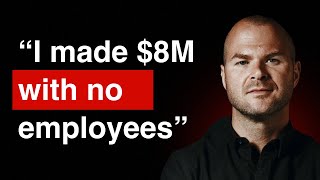
Justin Welsh went from burned-out startup VP to building an $8 million solo business. He shares how he found his niche, built a personal brand, and created products without hiring anyone, offering practical strategies for entrepreneurs considering solopreneurship.
There's the path of like being very specific and there's the path of being very viral and generic. I am really specific on solopreneurship. Like we talk about the same stuff every single day all the time. Right. So as you grow your audience, the audience that you're growing is specific. My first product was $50. If they spend $50, can you deliver $50,000 of value and like set the stage for a deep future relationship for the next decade? Right. You have that option a few years later, you could do a core product as your audience grows and maintains specificity. Right. Then if you keep growing like me, get you, you know, million followers, million and a half across a few platforms, you can drop your high ticket offer like I did with the creator mba, because I've been beating the same drum for so long. The reverse of that is when you don't have a specific audience, when your audience is relatively generic, when you're talking about things like just general productivity, for example. Right. Productivity in and of itself is a thing. But there are so many different types of productivity. It can get so much more niche than that. And so what happens is you might have a harder time as your audience grows. We don't think about that when we're creating our content, when we're building our brands, we're trying to be entertaining and get the most likes. It's like, no, be that guy. Be the guy who solves a very specific problem that's painful for a very specific company or person.
All right, well, my guest today is the one only, Justin Welsh. Justin left his startup executive role in 2019 after suffering from burnout. Since then he's made $8 billion by helping creators and entrepreneurs become successful solopreneurs. And I've taken his course creator mba and honestly, it's one of the highest insight per minute courses that I've ever taken. So. Welcome Justin.
Thanks man. Peter, I appreciate you having me. And thanks for the kind words and thanks for being a customer.
All right, so let's go back to I think 2018, 2019. You know, you were the VP of sales at a fast growing startup. You had 150 reports or something like that. So for by all means, it's kind of like society's traditional definition of success. Right. But like, when did you realize that you actually needed a change from that career path?
Yeah, you know, becoming like a VP of sales was sort of the upper echelon of what I wanted to reach in my career. And when I was a salesperson and then a manager and then a director, like that was the thing. That's what I wanted to be. And when I got there, I loved it and, you know, grew the team from just one sales guy to 150 salespeople. I had maybe six to eight direct reports. But the team was big and the targets were big. And back in 2015-2019, when that was my life, it was the growth at all costs phase in startups. And so, you know, every target got bigger, faster, you know, the stakes got higher and it got more nerve wracking, right? Like I hit, I think 16 quarters in a row of my target, even though they were massively big. And people think that burnout comes from working really hard or working too hard or working too long. And I don't actually think that's why burnout happens. I can work hard for a long period of time, as can a lot of people. I think burnout starts to happen when you lose control. And so I often kind of bring up this example where if you've played Tetris before, you know, as the levels get harder and harder, the pieces start falling faster and faster and you have to make moves much faster. And when you mess up a move, it compounds very quickly because the pieces just start stacking on top of one another really fast. And that is what it's like when you start to feel out of control at a company or in your role when, like, you make a mistake and one mistake becomes two, becomes four, becomes 16, becomes 109. Like, it just multiplies, right? And it multiplies fast. And so I knew that I needed a break because I coped with burnout in the same way that a lot of people do, which is I ate too much, I drank too much, I didn't exercise very much, I didn't get much sleep. I wasn't a great husband, I wasn't paying attention to my family. And that all sort of culminated in this panic attack that I had in December of 2018, which was like, if you've never had one, it sounds silly like a panic attack, but. But it was like, pretty. A pretty meaningful day of my life where I didn't really know what was happening and I thought I was dying. And that was the day that I knew that I needed to make a change. And I had a conversation with my bosses the following Monday and they were super receptive and understanding. And I ended up staying for another eight months and getting myself back into mental and physical shape.
Got it. And it's kind of like a big leap to make Right. Because you've kind of made it as VP of Sales. And for you to tell your boss that, actually, you know, I don't want to become SVP or CEO. I just want to make a change. But I guess when you actually, you know, go to the hospital or something, it's kind of like a life. It's like kind of like wake up call.
Yeah, it was interesting. Like, I had aspirations of becoming a chief Revenue officer. It actually happened. I. I went back to the company. A year later, I was rehired to be the Chief Revenue Officer. So I was able to sort of check that box in my career, which was really nice. And I helped them navigate growing the company through Covid. But I got lucky in a weird way. And the way that I got lucky was I was forced. Like, a lot of people sit around and they think about, like, should I, you know, grow my side hustle? Should I become an entrepreneur? Should I leave my job? Like, I didn't have a choice. I had backed myself into a corner, physically and mentally, and the only choice I had was to take a break. And in a weird way, that was like a very lucky thing to happen to me because it's like that was the only option I had. So I had to take it, and it made it a lot easier.
Got it. So I think, you know, tech industry goes through these ups and downs, and I think many companies, tech people are feeling burned out right now. Either they're like, they lost their job already, or you know how this stuff goes. Like, you could be doing well at your company, and then they want to do cost cutting and then you get laid off. But, you know, I think a lot of people still have mortgages to pay. They live in the Bay Area. What's your advice for folks who are thinking about doing this or trying to take back control a little bit?
Yeah, it's a phased approach. Right. I think there's a lot of, like, I think people talk about media propaganda. I think everything's propaganda. So, like, if you go out and you read, you know, Internet gurus propaganda, it's all about, like, working four hours a day on the beach or like, whatever it might be. Right. And, like, sure. Can you eventually reach that? If you put in many years, maybe. But like, the truth and the reality and the authentic way to sort of make it into. Gradually gain back some control is just what I said. It's gradual. And so the. The first thing that you can do is figure out just like, how might you get a little bit of attention online? Maybe it's not even online, right? Maybe it's local, maybe it's. Online is not the only game, it's the biggest game. And so like how might you get a little bit of attention? And if you can find 15 extra minutes every day to think about attention and to put yourself out there and to share the knowledge and the skills that you've accumulated over the course of your career or your hobbies or things that you like doing in your free time, that's a great start, right? Figure out like what does it mean to market oneself? Because so many people are smart, they have awesome business ideas, they've got great products, they've got great services, but they can't communicate. And in the end, communicating your value is the thing that matters the most. So I would practice that, I would practice that for a long time until you get really good at it. And once you get good at communicating your value and sharing your expertise and your knowledge, that is when you can start, you know, making a little bit of extra money, doing a little coaching, maybe building a product, maybe you have a micro SaaS consulting business. And as you get traction, you're going to start growing over time. And once you have reached a certain threshold, maybe you're 60 to 70% of your take home earnings getting 40 hours a week back, you're likely to continue to grow. And so think of it as a phased, gradual approach over many years. And just because you see someone who did it faster doesn't mean that's the right way to do it.
Yeah, in some ways it's almost good to, you know, do a couple years while having your main job because you know, if you just quit without having the income, you're gonna put a ton of pressure on yourself and it's gonna be pretty stressful. Right?
So that's right, that's right. People see that. I went on social media about eight months before I quit, right. I had this panic attack and then I started writing online. Cause I was like, okay, if I'm gonna quit my job, I have to like gotta do something, right? I didn't know what else to do other than like maybe I would go talk about my expertise. But like I had timing on my side. I did it in 2018, back before the platform that I chose, LinkedIn was even a popular place to write, right. So I got luck, timing, like don't follow my path and hope that you have the same luck and timing that I do. Follow a, A, a more gradual phased approach and don't attempt to be an outlier, like try and be the person that thinks in the long game and, and takes their time and has patience.
Another thing that I think you're really good at is you create your systems and stuff. And one of your systems is how to use your time more effectively, which is, I think, very relevant for people who wanna start side hustles. Right. So can you talk about the steps that you go through, think about where you're spending your time?
Yeah, I mean, it's, it's not too complicated. Effectively. The way that I think about spending time is you should probably, like anything around the Pareto principle is you should probably be spending your time doing the 20% of things that maximize 80% of your intended outcome. And that outcome may not be making money. It might be growing a social media audience. It might be, you know, something else, you know, spending more time on, on your hobbies. But what I generally do is I start by picking, like an intended outcome. Right. So you might say, my intended outcome is to grow my business revenue. Right. And so once you know that you want to grow your business revenue, all you do is you take a look at your week. Like, and this is what I do. Something I do generally quarterly. There's nuance to the process. So, like, if you look at your top 10, you're like, man, I hate doing one of these things. Cool. It's not a, it's not a steadfast rule. Right. You don't have to be like, oh, unfortunately I have to do these 10 things. Like, okay, you hate it. You're going to do nine out of the top 10 things and you're going to outsource that one thing or you're going to automate that one thing, or God forbid, you're going to eliminate it. So it's not steadfast, but it helps you get a sense of where you should be spending your time.
Got it. Okay, so now let's talk about finding your niche and, like, crafting your unique value prop. By the way, that. That's, like, probably my favorite part of your course. I think it's probably the most important part. So people keep talking about you. They gotta find a niche. How can people figure out, you know, what problem other people are willing to pay them for? Like, how do you even start thinking about this?
Yeah, yeah. I mean, there's a lot of ways, right? So, like, I don't. I'm certainly not the authority on telling people how to find their niche, although I think I'm pretty good at it. So I'm sure I'll share four ways that you can think through it. And again, it's not an exhaustive list. I'm sure someone listening will say, oh, I have a fifth or a sixth. You know, one way is just pretty simple. It's your practical experience and it's your credibility. So what have you done at work? Right. Like for example, I was a sales VP of sales and a sales leader for I think 15 years, 16 years, right. So that was pretty easy. So the first thing that I, like I did when I quit my job was I didn't become the creator that I am today. I built a consulting business helping healthcare startups grow. Cause that's what I had done for 16 years. So it was like easy transition, right? So one way is practical experience and credibility. Another one is just what I might call like a learned obsession. It's that thing that you don't do for a living but you're completely obsessed with. So I pivoted over time. I went from helping healthcare startups grow to, to becoming a creator and maybe what you might call like digital marketing, for lack of a better description. Right. And solopreneurship and things like that. I was obsessed with that. I never did it as a career up until me doing it now. But like I was reading every book, I was reading every, I was listening to every podcast, I was reading every blog post I could find, I was tinkering with tools, I was doing marketing on the side, creating content, lead magnets, webinars, everything, Right? Because I was super obsessed with that. And that was an obsession that I just learned. And since I learned it over time, I became an expert without having, you know, traditional experience or having it in my title at work or anything like that. So that's another thing that you can do. And a lot of times people are obsessed with something that's completely unrelated to their job. The third thing that you can look at is just what do people come to you for advice for? Like, we all have family and friends that come and they say, oh, Peter's really good at X or man. Justin, I was thinking about you because I have this one problem and I know like, you're the guy who can solve this thing and maybe you're good at three things, right? But it's like, keep your eyes and ears open for those things. We're in such a fast paced world, we're moving so quickly. We're not paying attention to much, we're consuming and creating. We often don't stop and like pause and be cognizant of the things that people are Coming to us for help for. And those can be really awesome things to build a small side hustle on. And last is just problems you've solved for yourself. So like right now I have a problem in my business and I'm actively solving it. And as I solve that problem I'm like, this is a cool product, this is a cool service. Like if I'm having this problem, how many other creators are having this problem and would pay a lot of money to solve it? And so as I, I'm thinking about that as a product and service because I'm fixing a problem that I have myself. So those are like four ways that I might approach solving a problem.
Got it. And how do you. Cause like it's just kind of like building a product and bringing it to the market, right? Like how do you valid this with real customers as soon as possible as opposed to try to build something and then realize people don't want this? I guess it's kind of an obvious answer but like how do you go about that?
It's obvious to me. Or and maybe you, but that doesn't mean it's obvious to everyone. Five years ago I would have said I have no idea, right? But to me my inclination is to, is to actually help them on your own, one on one, right? So it's like identify five to 10 people who have those problems, have those aspirations and want to work with you. Right? And are they willing to put some skin in the game? And the amount doesn't matter, it's just are they willing to spend money and time to solve the problem that you solve them to reach the aspirational stage that they want to reach? And if you can do that, what you do is you validate that. A, they'll spend the money, B they'll spend the time, C they'll show up and they'll do the work and then D, you'll help them reach the intended outcome that you told them that you would help them reach. If you can do those four things, then you have at least a viable framework of a business, right? If nobody's willing to spend money and nobody's willing to spend time, then you have an idea. But you don't have a business, right? And so once you do that, what I would do is I would try and wrap that into a process because I would imagine that if you have five guys and gals, there are going to be commonalities amongst all of them. And as you help them work through this problem or process, you will see all those commonalities. Those commonalities become a framework, right. So that as you bring more people in you're like I know the five things we gotta nail in order to let them reach their outcome, to overcome their pain points. And then you turn that into a process as a service business where you can continue to work one on one with people. Once you validated that there is more interest in the market and that your solution actually works, productize it. Raise your rates on your service side, lower the rates on the product side. For those people who don't want to spend a lot of money to do work one on one with you, let them work through a self paced product. Those people who want handholding and want to spend time with you one on one, they've got the service business. This is exactly how I started my business.
Yeah, it does seem like a pretty sure fire path. It's just like, you know, when I think services business is like a lot of, a lot more me, a lot more meetings and one on ones but I think you just have to do it. It's like doing a product. You just got to talk to customers one on one and figure out what they want.
Yeah, it's like saying I really want to build a product but talking with customers sounds like a lot of time like it. It is, but it's important. Right. So like, you know, I think you hear a lot about these startup founders who want to build something. I'm just going to make up an example, right. Like they want to build something in like supply chain, right. And they go and they spend like a hundred hours on the Amazon distribution centers or in the supply chain place where they're doing like you know, manual labor to try and understand the pains. Like you gotta live, you gotta live it before you can solve it.
Yeah. I think there was a step in your process that you skipped. I just wanna bring it back which is create a movement and find a. Almost like find an enemy or someone to fight. Maybe you can give some examples of that from, from you or from other your friends like Dan or other folks.
Yeah, totally. So that's more on the marketing side, right. So like I don't think you need that to validate a business necessarily. But if you wanna go out and you want to grow that business, you have to market. And so marketing is a lot like politics. And so I'll give you kind of an example. If you look at American politics and I'm not going to go down a political rabbit hole or either party, I don't care about any of that stuff.
Like, like Dan or other folks.
Yeah, totally. So that's more on the marketing side, right? So, like, I don't think you need that to validate a business necessarily. But if you want to go out and you want to grow that business, you have to market. And so marketing is a lot like politics. And so I'll give you kind of an example. If you look at American politics, and I'm not going to go down a political rabbit hole or either party, I don't care about any of that stuff. Like, just pick either party, right? Very rarely do they tell you all the good things that they do. Instead, most of the focus is on the bad things that the other party or candidate or person does, right? It's. They're creating an enemy. And if you think about some marketing talk, like, there's a famous quote and I'll probably mess it up, which is like, you want to give people, you want to help people throw rocks at their enemies. I think it was Blair Warren who said that. And he's like kind of an old, old school marketer. And throwing rocks at your enemies is like, you want to pick a target. It doesn't have to be a person. It could be a mantra, it could be a movement, it could be an ideology that you are 100% against, right? And so, for example, in your example, like, you're against the idea of the traditional career path, like, to become a better engineer, you do not need to lead people, you do not need to grow teams. You want to be a better engineer, build better product, right? Build a career, building the best product possible. So the reverse of that is your enemy, right? And once you have an enemy, you can build a movement because movements are built by defeating another enemy. So, for example, I'll give you an example for my business, I talk about solopreneurship, right? Is solopreneurship, right for everybody? It isn't. I'm very, very candid about that. I'm very clear about that. But I also won't tell someone they shouldn't try. I'm not a babysitter, right? I think adults should do whatever they want to do. My enemy is the traditional career and life path where you work for a company until they don't need you anymore and you get fired. And you do that for 60 years hoping you can save enough for retirement. And we know from the average American they can't. That sounds like a shitty life to me, right? So, like, that's the enemy. And I throw rocks at that enemy all the time. And by throwing rocks at that enemy, I am building a movement. And the movement is that over here we've got a group of solopreneurs who are taking control of their life, taking control of their time, and taking control of their freedom, right? A guy like Dan Go, a buddy of mine, the stereotype, and that stereotype is getting broken much faster by a lot more people of like, as an entrepreneur, you shouldn't be so busy that you're out of shape, right? You should be in the best shape of your life. Like, the way that you treat your body should translate into how you treat your business and your family and the type of person that you are, whether that's true or not, right? That is the movement that guys like Dan Go, a buddy of mine, is building. And by the way, I don't want to speak for Dan. That might not be exactly his movement, but that's sort of how I see it. And his enemy is, you know, the entrepreneur who's letting themselves go, who's not keeping themselves in shape, who, you know, says they'll do anything for their family, but they're not getting in shape for their family. That's his enemy, right? And so I think by having these two sort of juxtaposing things, the enemy and the movement, you can market a lot more effectively. That's part of what marketing is.
Yeah, it does. I'm not going to talk about either party, but with the politics stuff, like, one of my big frustrations is like, they just keep talking shit about each other. They don't actually talk about what they're going to do for the country if they get elected. Not like, nothing.
Tell me, tell me what you'll do for me. That's right. Tell me what you do for me. But that doesn't sell, man. Unfortunately, by the way. Yeah, I wish it did.
That's crazy. That's crazy. Okay, so after you've crafted a really good unique value proposition and you went to talk to a bunch of customers, you validated people, maybe pay you some money for it, you have this really simple funnel to actually get attention and to, you know, get people to actually, like build relationships and actually spend on your product, maybe we can talk about it just at a really high level first.
Yeah, sure. I keep it simple because I think most marketing is over complicated. Not all marketing, by the way. I'm not trying to paint with a broad brush. There are certainly, you know, times and situations that call for complex marketing, but for the most part, there's the old school marketing funnel, right? I think it's awareness idea I can't even remember. Awareness, something, decision, action, right? I can't even remember because I don't really follow that one. I follow my own. So mine's a little bit different, right? It's get discovered, build trust, deepen relationships and monetize. Very simple. So I'll kind of talk about it from a high up, right? So the top of the funnel is just called getting discovered. And so getting discovered simply means getting your name, your face, your brand, what you do, who you help, your knowledge, in front of as many people as possible, right? As many people as possible. Because you want people to resonate with your message. You want them to have an opportunity to hook onto your movement, to join you in throwing rocks at the enemy, to share it with their friends who say, hey Jim, this sounds a lot like what you were telling me about, man, you should follow this guy, right? Getting discovered is huge. And that is all organic social. So organic social to me is all about getting discovered. And so that's why I'm very active on platforms like LinkedIn, like X, like Instagram, like threads. I just try and get top of funnel discovery all the time. You know, my goal was like hundreds of millions of impressions every single year. Getting discovered in and of itself is not enough, right? You have to, it's the eyeing Aida's interest, right? But to me, less about interest, it's more about trust. So after getting discovered, I want to build trust. And I don't mean trust like, you know, you leave me at home to babysit your kids or watch your house or anything like that. That's not the kind of trust that I'm talking about. The kind of trust that I'm talking about is like, I trust this person is really good at what they do. I trust this person is not just lip service, that they're actually an expert in the things they say they're an expert in. And the easiest way, in my opinion today to show trust or to build trust is, is long form content. And so long form content can be written content, a newsletter, a blog, a lengthy article. It can be video, right? A robust YouTube video that takes someone from point A to point B in 25, 30 minutes. Like these are a podcast, right, where you're breaking down complex topics and making them really simple. These are all opportunities to build trust. If you can get discovered and build trust, you're in a pretty good position to take the people who want the thing that you have, trust, you're the right person and make some money at a business, right? If you sell Something very expensive, there's probably another step. The next step would be deepening the relationship. And that's why I think a lot of like enterprise level companies, a lot of high ticket sellers with really expensive stuff benefit greatly from events, communities, things where like people are getting access to them in real time and they're deepening that tie, they're strengthening that bond, they're really going deep on this relationship because we buy from people we know and like. So if you sell something that's a thousand bucks, you got to deepen that relationship. And by the way, a thousand is an arbitrary number that might be inexpensive to a company, inexpensive to an individual person, but hopefully you get the point, right? Whereas if you sell something low ticket $50, you might not need to deepen that relationship. After building trust, you might be ready to present your offer. You might say, hey, you've read all my stuff on LinkedIn, you've consumed all my newsletters and articles, you've checked out all my long form videos. Are you ready to work with someone to solve your problem? This thing's 50 or $99. Like it might be ready to pull the trigger right then. So it's discovery, trust, relationship monetization.
Got it. And what are some ways that you've kind of optimized this funnel that had kind of like a step function change in your business? Or is it just a matter of showing up every day and like doing, doing the work?
Yeah, yeah, it's mostly the latter. Right. But there are certainly some ways that I've, I've gotten better at it. So I'll give you an example of how I sort of fine tuned it for lack of a better description. So let's start with the top. Getting discovered. Well, getting discovered is a function of the value and quality of the piece of content that you create. So I've created probably 5,000 pieces of unique content over the last five years and there's new AI tools out there. So what's the first thing that I want to do? I want AI to analyze the thousands of things that I've created and tell me what is it about the top 50 that are similar? Right. What should I be, what should I be trying to do to maximize getting discovered? So often what I think is if you want to improve impressions, it's the opening, the hook. Right, the opening and the hook kind of drive impressions. If you want to drive engagement, it's the body, it's the call to conversation. Those things drive comments, reshares like the information. How good is it right outside of the hook. Like after the hook, did you deliver? Right. That stuff drives the engagement, drives the comments, drives the retweets and the reshares. So like, I'll look for commonalities amongst those things. And what I'm trying to craft, Peter, is like the perfect post. What does a perfect post look like that drives both impressions and engagement? Right. And then I'll look at a ratio of impressions to clicks to my website. So like, what percentage of people that saw this thing clicked through and went to the article that I recommended? And when I get these ratios, I can see, okay, just because something had a million hits and drove a thousand people to my website, that's good. But what about something that only had a hundred thousand hits that drove a thousand people to my website? That's a better call to action. I got a larger percentage of people to my site. And so like, I'll look at the commonalities in those things. I'll have AI break those down. Say, what was it about this call to action that you think drove a bunch of people to my website? Again, I'm trying to have the perfect post. So once you've got the perfect post down, it's like, okay, I know the hook's good, I know the body's good, I know the call to conversation is good. I know the link to my website's gonna work. Cool. We're getting them to the point where I'm starting to build trust. So I'm sending them to some article on my website. Certain articles work better than others. So the same ratio, how many people read an article versus make a purchase. If someone reads an article and 10% of them make a purchase on this article or they read this other article and 2% of people make the purchase, the first article is five times more valuable. Right. So how do I create more articles like that? So now I've got the perfect post, hook, body, call to conversation, link to my website, the right article. This is a well optimized funnel where I know when I stitch these things together and I hit post, it's going to lead to a lot of revenue. Those are the small and nuanced things that I do to make sure that the business is growing.
And you have to be like somewhat analytical with this stuff. Right? So like, how do you like? One struggle I have is like, you know, my newsletter is on one platform. Social stuff is on like these social platforms. Like I have to freaking like make a manual special of this funnel and try to figure out myself. Yeah, do you have any like tools or something that you use or just you specialize?
Yeah, I mean, for the most part, man, like, you know, I've got, I use publishing tools like most people. I use Taplio, I use Tweed Hunter and they have built in analytics, right. So I can export that stuff very quickly. I've got website analytics from Fathom analytics, like that stuff again, exported very quickly. So generally what I'd be. And then I've got, you know, purchase history from Kajabi. So like I export those three things, I put them into one spreadsheet, I up, I upload them to something like Cloud or ChatGPT. And I'm like, give me a breakdown, help me understand, like, what are the posts, what are the articles? Like, what is it that worked? That used to be all manual, but today there's no need with all the new tools.
Yeah, the AI is really good at doing this stuff, like summarizing a bunch of information, like getting you to take away st. That's probably what's best at.
So. Yeah, yeah. So many people are like leveraging AI to like write comments and like write posts and write newsletters and it's like, dude, there's so much. There's such a better way to use it right now. It's like, keep your creativity, let it manage the data. Yeah, yeah, exactly.
Well, this has been awesome so far. I just have. Let's talk about one more topic, if you don't mind.
Yeah, sure.
So I think this is kind of an eye opener for me. You know, like, you have this, you have this thing about creating stacked offers and there's two paths that you talk about. One is like, just like growing your audience as big as possible. Another path is much more specific and much more strategic. And you know, as someone who has like posted these memes that have got like million plus views but like, so nothing. Like, I'm very cognizant of this. So maybe talk about these two paths and like, why you recommend this other path.
Yeah, yeah. There's the path of like being very specific and there's the path of being very viral and generic. And so by the way, no path is wrong. It's just how can you harness the power of each path? So I'll give you an example. And by the way, just because I say this person is in this path, like, doesn't necessarily mean that they are. I am really specific on solopreneurship. Dan Go is really specific on helping founders get their time back and build their best bodies. Like, we talk about the same stuff every single day all the time, right? So as you grow your audience, the audience that you're growing is specific, right? And so as you grow a specific audience, your options are more plentiful, right? So you can do things like create a micro offer. As you get a little bit bigger, you're testing the waters. Will your audience spend money with you if they do? Let's say they spend, my first product was 50. If they spend 50, can you deliver $50,000 of value and like set the stage for a deep future relationship for the next decade? Right. You have that option a few years later, you could do a core product as your audience grows and maintains specificity. Right. Then if you keep growing like me, you get your, you know, a million followers, million and a half across a few platforms, you can drop your high ticket offer like I did with the creator mba, because I've been on the same, beating the same drum for so long and then eventually could probably do something even higher ticket. The reverse of that is when you don't have a specific audience, when your audience is relatively generic, when you're talking about things like just general productivity, for example, Right. Productivity in and of itself is a thing, but there are so many different types of productivity. It's, it can get so much more niche than that. And so what happens is you might have a harder time as your audience grows, establishing that exactly what should that micro offer be when you're just systems productivity, like what is the micro offer? How do you build that? How do you say I'm the exact right person to solve this very specific problem for you? When what you've been talking about is broad, right. It becomes much more difficult. So I think those people have a longer path to monetization, but when they get to the end of that path, they might be able to have a bigger payback. So let's take someone like James Clear for example. James Clear made some money on his way to becoming an author, but Atomic Habits was his money maker, right? It took him a decade of building a massive audience around Habits, which is a pretty broad topic, and then he dropped a five times New York Times bestseller. Right? But it probably took him a really long time to get there. Whereas other people along the way might be more gradual in creating those businesses. Now, caveat to all this, there are horse outliers in both camps. Those who have been specific and never been able to build offers the way up, and those who have been broad and have built, you know, plenty of offers on the way up. It's not a steadfast rule. It's not black and white. It is more likely to follow one of those two paths.
It does take discipline to follow the more narrow path because, yeah, you mostly speak about solopreneurship and I, I tend to like, just say random shit. Like it's entertaining to use Twitter.
Right? So, like, totally.
To, yeah, maybe talk to my family more or something instead of like talking to random online people.
Yeah, I think, like in the end of the day, like, there's an example in my course where I remember I'm actually going to pull it up because it's a really good example. So just give me a split second because I want to read to you this thing that I went through back in the day with my company. So as myself and the CEOs were building our company, we at some point wanted to invest in SEO for the business because we had built a real, a really big sales team. We were getting a ton of leads, but it was time for us to actually go out and invest in proper SEO. So we went out and we interviewed a bunch of people and this is basically what we heard, right? We interviewed one young lady and she said like, oh, I do SEO for companies. And you're like, okay. Next person was like, I help companies do better SEO. And you're like, all right, sounds about the same. I've been working in SEO for companies like yours for a decade. All like, super generic. I do SEO. I help companies with SEO. I've been working in SEO for a decade. Then we had this guy come along, right? And this guy basically said something like this. We're a healthcare company. Old school SEO tactics don't work in the crowd and healthcare space, especially for early stage companies, without a lot of traction. Over the last five years, I've built a new approach for healthcare SEO that lets up and coming companies compete with the entrenched healthcare businesses at a fraction of the price. Now new companies in the space can compete more quickly and with a smaller budget. Is that worth a conversation? Like, of course. Right? How much more aligned and relevant can that pitch be than I do SEO for companies like yours? And so the reason that I share this is because you can hear the relevance, you can hear the specificity. And a hundred percent of people would choose to work with that person or bring that person in to interview for the job. And we don't think about that when we're creating our content, when we're building our brands, we're trying to be entertaining and get the most likes. It's like, no, be that guy. Be the guy who Solves a very specific problem that's painful for a very specific company or person.
Yeah, it's just a matter. It's also just a matter of putting a little bit more effort into your outreach. Right. It's like he actually did some research on what you guys did. You provide some value upfront.
Totally. But also when people on social media go to read your tweets and your profile, like, they can't just find funny memes, they better find stuff that's aligned with what you just pitched, right?
Yes.
And that's why creating content that's specific is important.
All right, I'll try to make my memes more specific. That's what I'll try.
Nice.
Cool. I have two more questions. I noticed a lot of tech people, when they try to transition to the solar partnership path, they teach these like high ticket core courses, right? Like, like this live core courses that charge a thousand dollars. But like you're like one of the few careers that actually made a, like these low ticket courses or like 150 or now 500 and actually kind of scale. There's this concept of like selling stuff while you sleep. But yeah, I'm not sure if that's true or like you chose this path because it's like more scalable or, you know, what are your thoughts on that?
Yeah, I mean, a couple different reasons.
Yeah.
I think I chose this path first off because like cohort based courses were not really a thing when I started. Like, no one had built Maven, like it just wasn't popular the way that it was. It's popular now, or at least, you know, more popular. So I didn't think of it as an option, number one. Number two, when I built my first kind of little bit of my brand, I really wanted to decouple time from earnings. I had made money as a consultant for a year. I was working 40 hour weeks and 50 hour weeks of like meetings, right? Just like tons and tons of meetings. Like the idea of going on and doing these presentations, I didn't love that. So I thought to myself, like, can I automate this? Like, if I make this more affordable, is this a win for both me and the customer? And I wanted to test a hypothesis that like, I can make it cheap, I can make it valuable, and the word of mouth alone would spread a lot about what I was doing. And I proved that hypothesis to be right, at least for me. Again, that that may not be right for everybody, but I didn't want to spend the time. I just wanted to decouple Time from.
Revenue makes a lot of sense. All right, man, last question. So let's go back to our tech professional pro profile. You know, a lot of people are sitting. You know, a lot of people are saying these pretty comfortable jobs, right? They're making like half a million dollars or something. And like they have a big mortgages and maybe they just send their kids to private school. And what do you have to like, do you have any closing words of advice for these folks in terms of your solopreneurship or just like your previous life as a tech executive? You have any?
Yeah, yeah, I do. My goal is not to convert people. I'm not interested in making solopreneurs out of people who aren't interested in doing it or don't feel comfortable with it. That, that's never been my intention. My intention is simply to educate them that there's an option to show them, to lay the options at their feet and say there are other ways to make a living. So what I would do is I would encourage them to think deeply about what gets them motivated as a person. Is it working with teams, solving big complex challenges? Like, if that gets them out of bed in the morning, then awesome. Stay at the company. That's great. Like, be aware of how companies work, right? You should be cognizant enough to know that in most people's career, at some point in time, they find themselves on the wrong end of a layoff. All you have to do is be aware of that, right? So if you're the kind of person who likes working with big teams, who likes having built in vacation, who enjoys having health insurance, who, you know, likes the comfort feeling, the comfortable feeling of a 9 to 5 job, whether it's comfortable or not. Like, we could argue that back and forth. Like, if you like that feeling, have a job. At the same time, be smart enough to educate yourself about how the world is changing, how layoffs are happening, and invest a little bit of time in at least getting a megaphone every once in a while and letting people know you exist. Right? Like, yeah, build out your profiles, share your knowledge. Because if you do get laid off and you've built a sizable network and people know you for something, it's just so much easier to become re employed, right? It's when people are like, I got laid off and now I want to take LinkedIn seriously or I want to start writing on Twitter. That's the worst time. You're already under a lot of pressure, right? So like, if you've already done that before, then you're in much better situation. If you crave freedom, if you crave autonomy, if you like making decisions on your own and executing on the decisions that you've made. If your goal was eventually to be the owner of your time for, you know, and of course you have customers and things like that. But if all those things sound like what you want and you're okay with the risk of not having health insurance or having expensive health insurance, not having a steady income every single day, week or month or quarter, right. If those things don't scare you and you like the upside more than the downside, then it might make sense to at least start dabbling in that world. Get out the same thing as the person. Stand job. Get out there, make yourself known, share your knowledge, share your skills, your expertise, all the unique things that you've learned at some point in time. Especially if you get specific, start to experiment. Can you monetize a bit? And if you can monetize a bit, then you can monetize more. And if you can monetize more, you can monetize for a long period of time. So, like, those are the ways that I would approach it. But there's no right answer for everyone.
It doesn't have to be like a burn the bolts decision, right? You can just like correct get yourself out there and then you can decide what you want to do eventually.
Yeah. Burning the boats is the worst decision that you can make, in my opinion. So I will encourage them not to do that.
Okay, well, I think everyone already knows this, but where can people find you online?
They can find me at Justin Welsh Me. That's J U S T I N W E L S H me. And they can subscribe to my newsletter, the Saturday Solopreneur. I send out one tip you can read in less than four minutes every Saturday morning.
All right, Justin, thanks so much, man. I learned so much from this conversation.
Cool, man. Great question. I appreciate you having me. All right.
More from Peter

Dropbox VP's Best AI Workflows to Help You Take Back Time at Work | Morgan Brown


Canva Co-Founder: The AI Playbook Behind the World's Most Popular Design Tool | Cameron Adams

How OpenAI's Head of Business Products Uses ChatGPT to Save Time at Work | Nate Gonzalez

Complete Vibe Coding Tutorial: Build a Full Stack App in 30 Min with AI | Matt Palmer (Replit)


Complete AI Course (2025): Prompting, Evals, RAG & Fine-Tuning | Adam Loving (Meta)



