How Shopify Rages Against Meetings | Kaz Nejatian (COO Shopify)
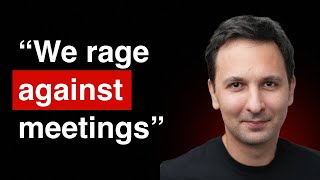
This is a YouTube video titled "How Shopify Rages Against Meetings | Kaz Nejatian (COO Shopify)" featuring a conversational interview involving multiple speakers including Peter Yang and Toby Lutke, with references to Kaz Nejatian. The discussion centers on Shopify's unique company culture, focusing on minimizing meetings to maximize craft time, the distinction between crafters and managers, product building philosophy, and supporting creators. The conversation highlights Shopify's approach to career ladders, meeting culture, and product management practices, emphasizing focus, nimbleness, and customer connection. The content was created in March 2024 and provides insights into Shopify's operational and cultural strategies.
No one, literally no one said, I want to grow up and sit in meetings all day long. And no one came to Shopify to sit in meetings. People came here to and help entrepreneurs succeed, help founders. And it just so happens to like, do really good work. As a builder, you need focus time and focus time and meeting time are the opposite things from each other. You uninterrupted focus time. And if your entire day is peppered by half hour meetings here and there, you just can't ever get going. Yeah, it's like imagine if Van Gogh had to paint while perpetually interrupted by someone every 20 minutes.
Today my guest is Kaz Nayatian, chief operating officer at Shopify. Kaz and I spoke about why traditional career ladders are broken, why strategy is the least important part of building products, and why Shopify canceled all recurring meetings. I think this interview will feel like therapy. If you ever worked at big tech companies, be sure to like and subscribe for more interviews like this. Now let's dive in.
All right, guys, I'm super excited to talk to you today. I think having worked at Shopify myself. Right. But I really liked the post that Toby wrote about Shopify being a craft centric company. Just curious, like, what's the difference between crafters and managers to you?
Yeah, look, it's actually an interesting thing because the main difference is about what is your primary job? Like, what is the thing you spend most of your job doing? Right. There's a famous program essay called builder time and manager time. And I think it kind of gets to the same idea, which is when you are at work, what is the most important thing you do? What's the most of your time spent on doing? And most people want their primary job to be building. Right? To actually be building things. And unfortunately, most companies aren't built for those people who want to spend most of their time building. Most companies are built for people who want to spend most of their time managing. That's because of very weird incentive in companies because the people who build companies are managers. They're optimized for the wrong thing. So our job at Shopify is to make this place a crafter's paradigm, to clear the obstacle from crafters so they can do their best work and can be rewarded for doing that work.
Yeah, that's amazing. I think a lot of product people, engineers, they actually really love to craft. But. But you know, I've worked at many different companies and if you look at the job ladders of some of these companies, it's always like, oh, you Want to become director, you got to manage like five people or like you got to grow your headcount. Right. So how do you kind of like celebrate the crafter or like the IC or like, you know, instead of just.
Like forcing people down path, Traditional job ladders that essentially everyone stole from the army post World War II are just totally broken. They're just broken. Right. Like you understand why in the army you wouldn't want a general that has no direct reports. That would make no sense in an army. But most things aren't the armies. Right? So one of the things we've done is we actually completely bifurcated job levels at Shopify. So there's a management track and a crafter track and they both go up to same levels. They both go down the same levels and up to symbol and like so in order to get promoted and get more money, more responsibility, broader scope, you don't need more people. Right. So you can actually. And those are like, it's incredibly, it's incredibly difficult to do this because most systems aren't designed to do this. Right. One of the things that is, what if you completely block yourself from considering number of people in the, in a career ladder for crafters now once you do that, you guys actually, actually realize type of things you care about. Like, is management complicated? Sure. But is leading like an open source project that affects the entire Ruby code base also complicated? Yes, that's also complicated. It's just different level of complication and in some ways it's just cheaper and easier hack to think. Well, complication equals the number of people, which is just totally wrong.
Yeah, I totally agree. And you know, I was talking to someone who was like a CPO at a company before and now he's just going back to being either like a IC or like a just like a line level manager. And he told me like what he really loves is just like going to a room and talking to engineers and like doing a whiteboard, talking to customers. And that's kind of what I really love doing too. And like as companies scale, like internal optics stop becoming more important if you don't fight against it. Like you know, like some examples is like, you know, people spend a ton of time on executive presentations or like, you know, this kind of stuff. So how do you guys prevent this stuff from happening as Shopify grows? I mean, it's already a big company.
Yeah, I mean part of our job at Shopify is to be a company that rages against being a big company. That's like literally part of our Job to be a flat company built of crafters rather than like discipline. And I think what happens is that there's a pernicious, like a exercise where, especially for product managers where executive product reviews become kind of a show where they become pixel perfect. And we just like kind of fight this. One of the ways we fight this is by literally telling people to not spend their time by limiting the tools they can use. Presentations such that they're not like designed to be pixel perfect. Right?
Yep.
That's one thing to do. Secondly, we actually jump into code very frequently in product reviews. On Shopify, we literally dump directly into coding. Show me the code, let's see how this would work. And the way we actually build product with Shopify is different than most companies where we build products in stages. The first stage called proposal will be like, hey, I want to propose a product to be built. The second stage is prototype. You actually have to prototype the thing and see how it work in code. And then we do a review at prototype stage which changes. Like no one ever asks in a product review in Shopify, well, what is the strategy for this? That just tends to be the least meaningful part of whether it's a good product or not. So this idea that every product manager should be kind of an internal, like a McKinsey or BCG consultant, a big company, a bad idea, like it's objectively wrong or you want it to be extremely user focused, have a high degree of empathy for users, take an insane amount of ownership over problems and then be risk maximizing machines. Right. If you're not careful with, if you don't those three things. And what PMs become is keepers of strategy, quote unquote. What you end up having is actually the worst of both worlds. You end up having very smart people who are incredibly credentialed, spending all their time writing strategy memos whose only job is to increase headcount so they can write more strategy memos. Like instead of shipping products, you ship career plans.
Yes.
The job of Shopify is to build products. Our job isn't to build career ladders. So we focus on our product reviews, on what product is shipping rather than our strategy.
Yeah, you should be my therapist, man. This resonates so much with me. I've seen a lot of really good optics PMs, they have this like big vision or like this like three year strategy and then they just ship to mvp and they never actually ship anything else. That's it. So it's like what do the customer actually get from your big vision?
Doc, people misunderstand, Honestly, people very broadly misunderstand how products are built. Like people who cosplay as product builders assume good products are built by like a three or five year strategy documents. That's not how they're built. Good products are built by tinkering, by perpetual tinkering at the edges of a thing. That's how they're built. And basically everything you ever use or love has been built that same way. Right. And it's just, I think people misunderstand the value, what value creation is as product managers and as a guy who prides himself on being a product manager.
Yeah. How does Shopify, like PMs or other roles, stay in touch with the customer? Like, is there a lot of like hurdles to jump through to even talk to a customer or anyone can just go off and talk to you?
No, it's part of your job. Talk to customers. You talk to customers all the time. In fact, even better, you should be a customer. Lots of Shopify product managers have stores. I have a store, Toby has a store, Harley has a store. We have stores that we sell things on.
Yeah.
So like it's not like a common thing. And part of our job is to talk to customers all the time. I talk to customers almost every day. And one of the things we do that's also very helpful, which I think more companies should do. We have like everyone at Shopify can become a customer service rep for a little while and just answer questions of things that are just totally fubar and that allows you to feel the pain. It's also honestly helpful because like in many ways, because we, the type of customers we have, like, our job is to serve independent business owners. Right. People who want to create a thing that doesn't exist. And in many ways they're like us, they're builders, just a builders of different kinds. We build software, they build brands, and so they can kind of speak our language, which is very helpful.
Yeah. They're basically all entrepreneurs. I mean.
Yeah.
Right.
So it's very helpful. It's also very helpful that Shopify is full of ex founders. So it's a company building for founders, but built by founders or people who at least are very founder. Like even people who are Shopify who aren't founders have the founder mentality.
Yeah. Like I get a lot, a lot better of ex founders at these large companies than like corporate types, even though I'm not a founder myself.
It's hard to imagine what Shopify would look like if it was run by corporate types. Honestly, it probably Actually probably would have never been built to be honest, in the first place. Because no corporate type thought this would be a good business. Right.
Yeah.
In fact, every five year strategy demo written about Shopify from when Shopify started even at IPO was like, this is a pretty bad business. Right. Cool, thanks.
Yeah. That's interesting. How do you guys, you know, like a lot of the other big tech companies really focus on the numbers. Right. Like you gotta hit some OKR or something.
Yeah. We're not an OKR company. I actually think there's lots of important things that can't be measured.
Yeah.
And not everything that can be measured is important. And we believe the problem is if you are too focused on making turning 1 into 1.1.
Yeah.
You will just forego like everything else that is good and that matters. So yeah. We're not an OKR driven company that's on how we think about product building. We're a company of crafters focused on tinkering and perpetual feedback motions. And we think the way we think about it. Our job is to answer the following question. You can build one of three things at Shopify. You can build platforms, you can build products and features, or you can build extensions. There are three things you can do. And I don't like, we could spend a bunch of our time trying to figure out what the right OKR for like each of those things are.
Yeah.
And we're trying to see what happens in lots of companies. Like half the meeting is taken up deciding if you can measure the right thing.
Yeah.
Or we can just go build the right thing. And I find a lot easier. This is not saying that there isn't a role for measurement. There's a large role for measurement and like making sure you're doing the right thing. But it's not. The product building is not the same thing as like being a stockbroker. It just isn't. It's just different jobs as a matter.
Of like having taste. And you kind of know when a product resonates with the customer or not. Right. You kind of know.
You have a feeling. Yeah, yeah, yeah, yeah, yeah. I can't. And again, like, unfortunately, this is why I think there's so few good product managers in the world. It's not a thing that I can necessarily take. I teach like I can't teach taste. I can't teach you to be the type of person that takes an extreme amount of ownership over every problem. They can't really teach you to have empathy. I can help you fine tune those things obviously. But My job is to pick the people who have those three things already.
Yeah, exactly. Like it's about people's core values, I think. Like they want to get. Yeah, yeah, exactly. Cool. That's awesome. I love that culture. Maybe I should conversation explore Shopify.
I don't know.
Yeah, that sounds awesome. Let's talk about the other topic. Meetings. So at the beginning of the year, you had this operation called Chaos Monkeys and you basically just like cancel all recurring meetings. I'm, I'm, I'm just curious, like, how do you guys end up doing this? Was it during like winter break?
You're like, this is like not over a Christmas break. Like we had a conversation and then like we wrote the code to do it. It literally happened over Christmas break. Yeah, because like, I think Toby and I were talking about, about how it is terrible, like what you want to do and what you end up doing. Like no one, literally no one said, I want to grow up and sit in meetings all day long. And no one came to Shopify to sit in meetings. People came and help entrepreneurs succeed, help founders. And it just so happens to like do really good work. As a builder, you need focus time and focus time and meeting time are opposite things from each other. If you'd uninterrupted focus time and if your entire day is peppered by half hour meetings here and there, you just can't ever get going. Yeah, it's like imagine if Van Gogh had to paint while perpetually interrupted by someone every 20 minutes. Like it just so. And the work we do is like honestly closer to that than it is having a widget factory. Right. Just how work is much closer to like that. So we think it's an important uninterrupted time is like precious. And what we did was two things. Right? We actually like, we did a series of things where we like cancel all meetings, one or three people, or reinstated our no meeting Wednesday, removed a bunch of channels that we thought were unnecessary. But the more important thing we did was we changed the default. We changed the default answer for a meeting from being yes to no. So if someone sends you a calendar invite, the default answer is yes unless you're otherwise busy at Shopify. The answer is no, unless you need to be in that meeting. Right. So the default answer changed. And this has like immense input. Shopify is incredibly more productive. This year it was like deleted some like 322 hours of meetings. That's like 36 years worth of meetings. And we've seen like the average time people spend in meetings is down like 33%. The company's shipping 25% faster. It's been meaningful change in Shopify.
Yeah, that sounds amazing. So basically, like it's less.
There was also no five year strategy behind this. We didn't write a strategy doc. We just wrote the code to do the chaos monkey.
Yeah, yeah. I mean, yeah. I mean, dude, like, no, no, no startup writes a five year strategy like that. That's just bullshit. Like how you know what the hell's going on in five years.
Yeah, the world's moving too fast for me to know what's happening five years from now. Like, my job is to keep our merchants on the leading edge of technology such that when you choose Shopify, you making the ideal choice that will always keep you tech forward. You'll never have to worry about being left behind because you invest in the wrong stack. That's my job. And in order to do that, the company needs to be much more nimble.
Yes.
Doesn't mean we don't do hard things. We don't do things that take a lot of time. We do do those little things we just don't do. Have like, you know, a central planning committee whose job is to decide how many widgets we need 17 years from now.
That's great. Yeah, that, that sounds great. You talk about having craft time. There's an argument to be made that like, you know, like, like people like you are like imagining hundreds of people that maybe your job is just sitting in meetings and try to empower people all day. Like, do you also value your personal craft time or.
Yeah, I have very, very, very few meetings on Wednesdays. Like, I like today I have two and this is one of them. So I have very. Like, I have my own craft time. Like, I build things still. I work on, like, I work on product. That's what I spend most of my time doing. So. And look, I'm not like, I'm a manager, so I'm not knocking on managers. Management is important. Managers are incredibly important. It just isn't the only thing that's important. Right.
Yep.
So do managers have meetings? Sure, of course. I have meetings all the time. But what managers need to do is recognize the most important part of their job is to make sure crafters don't have to spend all their time doing things that managers should do.
Yes.
Right.
Yes.
Like, you've worked in big tech companies, but most big tech companies, their largest problems they usually have is they run out of meeting rooms. There's a perpetual problem at big tech companies is there aren't enough meeting rooms and doesn't matter how many meetings rooms, there aren't enough of them. And I think that's a sign there's some, you know, some. The emperor doesn't have that much clothing on.
Yeah, it's like you build like a five lane highway and there's always cars failing or something. Yeah, yeah. It just kind of encourage the behavior.
Yeah.
Do you guys have a strong writing culture or like some other best practice to not have meetings?
Yeah, we have a much stronger writing culture than the average company does. Both have a much stronger sharing culture. Like shop. Like when you have offices, you don't have offices anymore. When you set up offices there was posters all over the world that said do things tell people. It was like all over the place. And Shopify's core, we have our own operating system for how we run a company. It's called GST stands for get shit done. That's we got our own software and part of it's a core thing is written updates frequently like weekly written updates. And that is much easier to do and much better to do. Much more easily consumed than like a daily huddle or like. Does that make sense?
Yeah, it's like a. It's like a lot of the decisions I've found can be just resolved through like Async written and then if you go back and forth like 20 times and you can't figure it out, then have a meeting. Sure.
I mean look, this actually is. This is literally true. Peter. Like what you said actually is true. An existence of a meeting is a sign of a failure of another process. It just means that like the back and forth you did Async didn't work. So let's just have a meeting. But like what you really should do is get wider back and forth can work and make it such that those back and forth work better in the future. Yeah, you'll eventually also need to have meetings. But like it's better if just that system works rather than like the existence of a meeting is almost always signs of a missing API. Just like what it is. Like the information you need to do to make that decision didn't exist. So you need to have a meeting to figure out what the answer was. Once you had the meeting, the thing you really should do is go back and fix the API.
Yeah. Also needs to run a retro of why does meeting even happen? Yeah. How do you. What if you work at a company that's not Shopify? Like how do you protect your craft? Craft time? Like can't just say no to meetings or do you have any?
I don't know. I mean, I can tell you that I think it's incredibly difficult at most companies because most companies are built for managers. They just are. You can actually kind of tell by how buildings work if you're in a company. Usually top floors reserved for managers. Usually. Like, this is usually how it works in most places. Like, one of the things we have at Shopify that's actually unique is Shopify's org chart of inverted. They have an inverted short chart. So the lowest level of the org chart is Toby.
Oh, right.
And so, like, it goes off from Toby. So we've been. The company's been deliberate about servant leadership since it's like, it's its founding. So I think it's incredibly difficult, man. So, like, my advice to people who want to spend their time building and focusing on their craft rather than sitting in meetings is this. If you're very good at your job and if you value your craft, just go to shopify.com forward/careers. Okay, got it.
All right, I'll. I'll. I'll definitely write that down. Keep that in mind.
Yeah, Cool.
Okay, just a few more questions. Let's, like, talk about the prior review some more. Right. You know, like, I'm. I'm just like a PM and I have this, like, big presentation CEO and I found that, like, a lot of PMs, they want to tell the DC story. They want, like, oh, you know, I thought about all this. Everything's going extremely well. Here's just like, a stats update for you. It's like a. To me, that's like, a total waste of time. You know, like, what do you think? From. From an exact perspective?
No, I think, like, I think you should not have that meeting. Like, I think it's a status update. Meetings are very odd meetings.
Yeah.
I think, like, David is among the world's best CEOs. Just, like, it's very clear he is. And I think Roblox also thinks about the world similarly in, like, as big as Shopify, which, like, what is the more important thing? And we're both on this journey of building software to get rid of the things that traditional company have basically done by management as much as possible.
Yes.
Because, like, once you give, like, root access to your OS to, like, someone else, you just, like, might as well be someone else. So, yeah, I think there's a. The real thing. And I don't think. By the way, I don't think Shopify is alone in this. There are a few of Us, I think Roblox is one of those companies that is trying very hard to build a new type of company that wasn't accidentally designed. Yes. So we asked the question as what? We asked why very frequently about the key tenants of a business that very few people would ask why about like, honestly, this is a real question. We asked why about gap accounting at one point and it turns out you should use gap accounting because everyone else but like that's like there are very few things about which that is not true. But we want to know why something happens so we don't cargo cult and we don't do something just because someone else does it. Just because someone else does it is a very good reason not to do that thing. Like yes, and this is like this is what happens at most companies, right? Peter, Most companies adopt industry best practices. But industry best practices are frequently because they've been written down. It means someone used to do them a long time ago. So so many people did them a long time ago that someone had time to write them down. So by the time you read about it, it's probably way out of date. In fact, the people who used to them probably no longer do them. So if you always try to get to industry pathbacks, then what you actually are doing is slowing yourself down, taking yourself back in time to something that people who used to no longer do. And that's just like really terrible. And that's basically what most companies that are not founder led end up being. Right? They end up being like run by a series of people who want to minimize their risk. Thus they always adopt industry best practices.
Yeah, I think the inertia as companies grow just to become like a. I mean just become like a crappier place to work. As you get bigger and bigger, you really have to fight every day to keep the culture that you had before.
You have to rage against the machine all the time.
The newsletter is called the Creator Economy. Right? And Shopify is like one of the main enablers. How do you plan to support creators beyond an ecommerce platform? Or like, you know, what are some big areas?
Yeah, I mean, look, so one of our jobs at Shopify is not to be perpetually distracted, like buy like things. So we try very hard to focus on this area we have picked, right. Which is how can we help people reach for independence? Building companies, building specifically retail businesses. Now it just so happens that a very good way to monetize yourself as a creator is by building a retail business. Right. Like Mr. Beast is on Shopify for a reason. Right. Yep. Like, it's a real thing. It's not like. Like, we have products in there. We have, like, a. A product called Collabs, which lots of creators use. We have a set of tools that are very good for creators. But I want to be clear what we're not going to do. We're like, our job isn't to do everything. Our job is to be the ideal piece of software you choose that guarantees that you have not made a mistake. When you want to sell something to someone Right now, you can be a creator that does affiliate links. Cool. We have a plot for you. You can be a creator, wants to start your own brand, you have a product for you. But if you're a creator who wants to create new content for VR, you should use some other piece of software. But when it comes time to sell something in VR, you should use Shopify, because we will be exceptional at that. But I found a good answer, because usually when you ask, like, company executives, do you have a solution for my problem? The answer every company executive always gives is, yes, of course I do. I have a solution for every problem. But we don't. We don't have a solution for every problem. If your problem is this particular size problem that you want to sell something to someone, we're perfect. If it's not, please go use someone else.
I think that's a great answer, actually. I mean, like, going back to the strategy part, like, if there's one thing about strategy, just, like, focus on one thing that's not a strategy. So I think just focus on that. Big Shopify.
The most important thing is to keep the most important thing. The most important thing.
Exactly. I don't know whose quote that is, but yeah. Cool. All right, guys. Thanks so much, man. Yeah. All types of stuff. And I'll share with you.
Yeah, cheers.
More from Peter

Dropbox VP's Best AI Workflows to Help You Take Back Time at Work | Morgan Brown


Canva Co-Founder: The AI Playbook Behind the World's Most Popular Design Tool | Cameron Adams

How OpenAI's Head of Business Products Uses ChatGPT to Save Time at Work | Nate Gonzalez

Complete Vibe Coding Tutorial: Build a Full Stack App in 30 Min with AI | Matt Palmer (Replit)


Complete AI Course (2025): Prompting, Evals, RAG & Fine-Tuning | Adam Loving (Meta)



