How to Become an AI-First PM and Designer | Paul Adams (CPO Intercom)
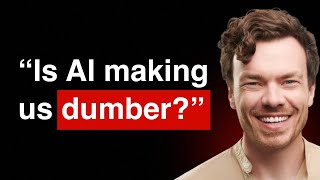
Paul Adams, CPO at Intercom, talks about how AI is changing product management and design. He covers AI use cases in customer support, how to build AI products, and what PMs and designers need to do differently as AI becomes central to their work.
Do you think AI can actually make PMs like lazier and dumber because we rely on it for everything.
Lazier and dumber? Yeah, I do worry a bit about it. In my experience, the best product people, not just PMs but like designers too, have like deep intuition and really excellent product judgment. And then like, where did that good judgment comes from? It's very, very difficult to build really good product judgment without having spoken to like many, many customers over many years in your domain. If the PM sits in 10 quantitative hour long interviews versus like asking, you know, some software to like summarize the transcripts, they're just night and day, different things. Just don't think you can build great judgment from getting AI to summarize all the issues all the time.
My guest today is Paul Adams, Chief Product officer at intercom. When ChatGPT launched, Paul and Intercom team blew up their roadmap to go all in on AI. Since then, they built an AI first customer service suite that can provide accurate answers to customers 24 7. Paul and I spoke about how PMs and designers can skill up on AI and get hired to work on AI products, why you may not want to start with the customer problem when building AI products and how Intercom blew up his roadmap to build an AI chatbot that can resolve 50% of support queries without a human. Paul is an incredibly thoughtful product leader. Be sure to subscribe if you enjoy our conversation. All right, Paul, well, welcome. I'm really excited to talk to you today.
Yeah, thanks Peter. Very happy to be here.
Yeah. So, you know, we're both product managers and we both have been playing around with AI tools to start. You know, maybe you can share what are some like Most common data AI use cases that have helped you or PMs or designers on your team save time and get more stuff done.
Yeah, probably all the obvious things, you know, you hear from lots of people. I use AI these days a lot. I use ChatGPT a lot for all the things you'd expect. I do research, I do a lot of research there as my kind of first starting place. I use it to learn about technology. Probably somewhere ironically I use it to learn about AI, how AI works. You know, certainly the early months of this kind of AI era and revolution, I was trying, I was using this, learn about like how do large language models work? Or you know, when someone says a term like rag I'd never heard before, what does that mean? And things. So I use it a lot for research. I use it for Synthesizing and summarizing. You know, I go to a lot these days for trying to like take big bodies of content and summarize it down into something even if it I read. I have a really long blog post someone's wrote written that I think is great. I'll ask AI to summarize.
Yeah, pretty similar. And when you use AI, do you like give it this like very long thought prompts or just kind of have a conversation with it or both?
Probably both. It depends. You know, in lots of cases I use it like I use Google, you know, like I literally just write in a search query. Sometimes that will give me what I need and sometimes it won't and then when it doesn't I'll try and give it more instructions, you know, and try and clarify like get it to clarify or get it to like constrain itself or give it a role, you know, Ura, whatever. So sometimes I'll do that but honestly a lot of the time I'm using it at least for research and things like that in a very informal way. I usually get what I need that.
Way that like you're not ashamed to ask dumb questions to. Right? Because it never judges you.
Yeah. Yes. Yeah, yeah, yeah, yeah. I'll often follow up with things. Sometimes I guess I take probably trying to think about now do different things but sometimes I'll write a question knowing that I probably need to ask more questions. You know, I'm kind of starting a conversation like, like with a colleague or with someone else where I expect there's more and I just start and experiment and see what comes back and then I'll adapt and change and ask follow ups and things like that.
Got it. Yeah. I mean I personally use it, I, I use ChatGPTN Cloud the most and I use it to everything from like summarizing customer feedback to you know, after a meeting just like putting a bunch of raw notes in there and like telling you to make it more concise. Sometimes I even use it to just like, you know, when I'm trying to draft a product strategy or some of the higher level stuff just to get a second opinion, be like, hey, you know, this is the strategy. Can you find some gaps? Can you find some alternative approaches?
Have you found it good that kind of do that?
Well, I think it's not perfect but it gives me material to work with. Right? It gives me like a bunch of here's a bunch of options, here's a bunch of gaps. Maybe like half the things that it talks about are not really Relevant, but the other half are actually pretty good. Like that actually helps me improve my stuff. Like, I almost never just like straight up copy and paste AI's answers into my stuff. It's more like, oh, here's what you think and let me modify my answers based on what you say.
Yeah, yeah, that makes sense. Yeah, that makes sense. It's like sounding boards or like, you know, kind of quality control mode as well.
Do you think, like, because, you know, a couple years ago, like I personally never imagined AI would be really good at making art, at like writing poems, at like doing some of the creative stuff that humans do. So going back to the product world, do you think the risk here, do you think AI can actually make PMs like lazier and dumb dumber because we just rely on it for everything.
Ladies here in Dubber. Yeah, I do worry a bit about it. You know, like I wrote a post on LinkedIn a while ago, I can't remember the exact, exact what I said, but I wrote a post basically like, AI will separate like even further separate the great PMs from the like average PMs or whatever. And so that was a worry I had at the time. I still worry about it. I still think it's true. And the kind of idea there was, at least in my experience, the best product people, not just PMs, but like designers do have like deep intuition and really excellent product judgment and kind of make bets or whatever that turn out to be good ones. Like, you know, later when you can kind of judge them with like data or more kind of quantitative things. And then like, where did that good judgment comes from? And oftentimes it comes from a lot of talking to customers, you know, and it's very difficult to, I think, build really good product judgment when I haven't spoken to like many customers over many years in your domain. And so one thing for sure is, you know, as an example, if a team is doing a research project, try and better understand the customer problem or customer space. And a PM sits in 10 qualitative hour long interviews or does interviews themselves even better versus like asking, you know, some software to like summarize the 10 transcripts. They're just night and day, different things, you know. Yep, night and day. And I don't think, I just don't think you can build great judgment from getting AI to summarize all the interviews all the time.
Yeah, you know, I've been mostly working at big companies my whole career and a lot of big company PMs like, they don't Even talk to customers. Right. They just like there's like a user researcher that talks to customers and then they look at like a 20 page slide, slide deck of what the customer said. And my opinion is like that stuff is useful, but it never just replaces just like talking to five customers yourself, you know, like for sure, that's how you.
Yeah, we're in which degree and as I guess moved into our senior roles over time, like I run the product team now, it's much harder to kind of find the time to talk to customers, you know, and it's critical, it's critical component. I don't do it enough anymore. I wish I did more of it. I think you just, there's a, there's something that that AI can't yet do, I think in it. And then maybe over time there'll be versions that you can't even imagine yet where it'll do things like that. But for now I think there's just. You build this incredibly powerful intuition and judgment from talking to people directly.
Yeah, I mean like that, that, that's how you build like a product sense. Right. You don't build it by like following some 20 step framework. You just like talk to like customers over a long period of time.
Right.
And look at the market that you. They build process.
Yeah, yeah, I deeply believe that. But like you said, many people don't do it.
Yeah, I mean, I think it's kind of like building a neural network in your brain a little bit. Like, you know, you just like make these connections that you're not even aware of and then you know, when you try to come with a strategy or like a builder product that you have these intuitions that actually make sense.
Yeah, totally. It reminds me of, I used to often say like pre AI days. I used to often say that I stole this from somewhere I can't remember where. You know, every new idea, it's not always this thing is like a uniquely new idea. Like every new idea is typically a combination of two existing ideas, but it's the combination that's new. And so to generate all these ideas, you just need to absorb and suck in more existing ideas. So there's something similar. It's the same kind of pattern matching that happens when you talk to dozens and dozens of people and subconsciously some process things happening where your brain is like you know, synthesizing and it'll resurface back up in the future at some stage.
Yeah, exactly. What do you think about this? Like a lot of people on LinkedIn are like calling themselves like AI, PMS, now, AI product manager, certification. And I just feel like there's like a lot of noise here in this industry because of the hype. So from your perspective, like what are some good ways for PMs and designers to, you know, scale up on AI quick, quickly and ignore the bullshit and actually like, you know, learn how to use this stuff?
I think at the start of any of these changes and like, you know, it's a different way to describe this. I think we're at the start of a new era in technology, like one of the big waves. You know, maybe the last big wave might have been mobile. But yeah, these things kind of typically happen every kind of 10, 20 years. These big super cycles of tech. I think we're at the start of one for real. I think AI is going to, it's going to be absolutely transformational, societally transformationally transformational. And so at the start of these things people gravitate to the words and the terms and things like that. Companies do it too, you know, becoming an AI company or having an AI product as opposed to a product or a company. I think in the future, the foreseeable future, all companies will need to be AI companies and all PA IPMs. It's just the new, it will be the new standard. And so for now I guess people are trying to differentiate themselves in the market maybe, but I think it'll all just go away. Like mobile. Like you know, we used to have like mobile first websites or like a mobile first strategy and then we had just mobile only companies Snap and you know, the early gang, it's the same, it's going to be the same so.
The hype will go away but like, you know, like I said, it's a real wave. So it is important to spend some more time to actually scale up on this stuff now. So, so is it just, you know, re reading all the AI blog posts or like what's the best way to scale up or that you first personally found to scale up?
Yeah, I do read a lot. Again like similar to talking to customers, you only have so many hours in your day. I wish I read more. I do think reading is a big part of it. I use feedly personally and then just have a bunch of different sources going into it and I kind of bounce through it. You know, stuff comes in, I think a lot of it I read quite quickly just go. I kind of hope it goes in to my brain and some of it sticks around and then these patterns emerge later, you know, so reading's a big One I read things like the Rundown is like a kind of a newsletter that I create. Lots of different news and sources. That's really good because reading the Rundown spins me off into like all sorts of things that would have never found anywhere else, you know, so that's very good. Trying stuff matters too, like when you build your own GPT. I built a piano teacher GPT and it didn't help me. I have to be at all, but I tried. So you have to try this. You have to try the products too, and try the new things that come out. I think that's really important just to stay abreast of like, what's happening, you know. Like one thing I haven't done, for example, yet, but I intend to, is a good example. It's like all the YC companies are kind of like emerging from the new batch and there's a ton of fascinating stuff. So many of them are like AI companies and you just need to go and try their products and maybe you can sign up and maybe you can't, or maybe it makes sense or maybe it won't, but you just gotta try the thing as well, for real, to build an intuition for it. So reading trying things is typically what I do.
Yeah.
At Intercom, I'm lucky. We have an AI team here, it seems actually been around since the kind of mid 2010s. I learned off from talking to them, to be honest. Like, you know, we have different slack channels where we talk about all the latest and greatest neural AI and they educate me on new things, how things work, speculation in the industry, new types of models, like when the latest version of Claude came out, you know, those discussions there about what, why or how it might be better or not, or, you know, technical things like that, for example. So colleagues are a big source too.
Yeah. Like our folks on it. Like, are these folks like ML PhDs or just people who are, or a bit of both. Both.
People who are, yeah. Both, yeah. Both for sure. Yeah. Our team, what used to be called Team Mo back in the day, they rebranded since they had AI team. Some, yeah. Some of the folks have PhDs, they're like deep specialists. But the team has to grow. Like we're growing the team, as you know, in big ways. We've lots of open roles in the team, like I'm sure many companies do. So we're also kind of like retraining is the wrong word, but like upskilling or other engineers in the company who want to learn much more about this world. And there's Lots of them. And so, you know, folks that have been. That it's come for a while and have worked in the kind of classic product engineering role are now joining the AI team and learning. Learning that world too. So, yeah, definitely a bit of both. Yeah.
So maybe we can flip this question around, like, as you're hiring for PMs or designers to work on AI products, what kind of qualifications are looking for or like, what kind of skills?
Yeah, yeah, I'll give you my kind of personal philosophy, I guess. You know, I'm a big believer in generalists, maybe because I'm a generator. I'm a big believer in generalists. People who actually display like different types of attributes as opposed to any kind of hard skills. So, for example, people who are curious, ambitious people who kind of believe they can turn their hand to new things and do them and they're kind of doers and makers, like inventor kind of people, you know, people who like, have made things and have built things and tried things, I think those types of people can learn anything. And so that for me personally, like, when I interview people that they're the kind of things I'm looking for, obviously it helps these days if people have technical knowledge and so on, but with AI, it's so new to so many people and it's going to be so big. We currently have this, like, massive gap between like all the types of people that we need to hire and the people with actual experience. And so for the most part, same as mobile. You know, I worked in Google, worked in the mobile team at Google when the iPhone came out. And then prior to the iPhone, we were building like J2ME apps, like the first versions of YouTube on phones and stuff like that. And at the time it was, people had to like, learn mobile. You know, no one knew how to write mobile apps, no one knew how to design mobile apps. You know, when the iPhone showed up was a completely different UI paradigm. Nothing like anything anyone had seen before. And so there was no, like, way to do it. So just regular people like me and mothers just applied our hand to it and learned, tried to learn it. You know, I think we're, I think we're in the same world now where I'd much quicker hire like someone who was, who didn't really have any AI experience necessarily, but they're curious and ambitious and like really wanted to learn and were trying things like they built a few GPGs or they like they were reading the latest and greatest news and things like that versus someone who might have had like 12 months experience building an AI product.
Got it. Yeah. You want people who have the kind of curiosity, the ability to kind of get their hands dirty, tinker stuff themselves, right?
Yeah. And open mindedness is a huge thing too. I think like it's very easy, especially people with more experience. It's very easy to like not necessarily dismiss the new tech or the new era or whatever, but you can definitely get caught up a bit in like trying to hold on to the skills or knowledge you had in the past. And I think AI is going to completely make redundant loads of like classic lessons people think are universally true and last forever. So I think open mindedness is another really big one.
Yeah, like applying some past companies processes or patterns to a new company, you know, it typically doesn't work.
That's right, exactly.
Let's talk a little bit more about building AI products and how it's different from a non AI product. So you and your team delivered Fin, which I think is one of the first AI chatbots right after ChatGPT came out. And I believe it has handled, it's a customer support bot. It has handled 8 million customer queries, it has resolved 80% of them. So what are some of kind of your most important lessons in building FAANG and like AI products in intercom?
Yeah, Let me try and give you a tiny bit of context first. Maybe when ChatGPT came out literally over the weekend after late one week, I can't remember, but literally over that weekend we being myself and other people like Owen, their CEO, co founder, Jaz, you know, our co founder, changed our mindset, changed our world literally overnight. We were like, this is one of those moments, you know, we were around long enough to have seen a couple of others. Like I mentioned the iPhone earlier. It's just one of those before and after, like before it was I guess pre, then after, it's like everything has changed and we just recognized it as one of those moments, I think and took a bet on it. And so prior to that we did have like an ML team. Like I said, we did have a product called Resolution Bot. It did answer queries, customer support queries. And when Resolution was set up pretty well, it did it really well. But it was so manual to set up. Like you had to give it all the answers, all the content it would suggest. Hey, I think these are the answers to the questions. And you'd have to like go, yep, that one. No, that's not right. You know, be very manual when it was really good. It could do, it could for some people it could do up to 50, 60% queries. But no one did it. You know, not no one, but very few people actually really spent the time curate all the content and the next thing chart GPT shows up and it's already kind of better, you know, just by having consumed the Internet. And so now there's no manual setup, you know, now obviously since then there's tons of training that we've been doing and all sorts of fine tuning and stuff, but out of the box it was really good with no setup and we were like, okay, this is like before and after. Before was most bots are kind of crap, you know, honestly, like pretty crappy experience because they're not set up well, they're just not great product. And then after is like, oh, the out of the box experience of the bot is actually really good. Pretty good. And so we completely changed our roadmap and strategy and said we must invest immediately in building a powerful LLM powered bot. And so we did, we both in, we shipped it I think four months later. And it's been transformational, you know, it's been totally different. Like all the numbers are just night and day different out of the box. Then was able to do kind of 25ish 28% of queries just by doing nothing, just by turning FIN on and giving your knowledge base of content, your support help content. And now it still was an average and then now it's at 45% a year later. So if you look at the graph like it's a bit jaggedy, but it's just up and to the right. We've added loads of power to it. It can do lots more things now, but now it's at 45, 48% and that's the average. We've customers, many customers who've got 60, 70%, you know, which totally changes everything about their customer support experience changes. Their customers get like instant answers and the economics all change. So yeah, we went all in really early. We are all in now, like fully all in on AI. But we went in early and learned a lot early.
What was the like the team that shipped the initial version of thing or like is working on fin was like a small team or you just put Everybody all the PMs on on it or.
Yeah, no, it was small. Well, people hear me, listen to this and interconnect wasn't this but it wasn't like all hans on deck. We're doing it. The whole company is doing this. We have like, we have a set of intercom is that we've lost lots of product teams that are fairly independent. The teams are like, you know, eight to 10 people. They work on a part of the product and then those barriers, teams are grouped into groups. Kind of classic setup. So I can't remember honestly how many people work on Fin. It might have been two or three teams maybe. So you're looking at maybe 20 people. I don't even think it was that big. Maybe 20 people on the R and D side, on the product engineering side. And then like it was as big a lift in the marketing side. Once we wanted to market it, we were like, hey, we need to do this properly. This isn't just another bot. This is like an agent. It's an AI agent, really. Or at least that's where it's going. And so we had a big marketing side to the launch as well, which is. So a lot of people ended up working on it in the end. But the majority, the vast majority of product engineering at the time did not work on Fin initially.
Got it. Got it. Well, I think Fin is interesting because I think customer support is actually like, it actually is like a really good fit for AI, in my opinion. I haven't done a ton of customer support with like tech products, but like my customer support experience is just like using Comcast or something. Right. Calling and it's like terrible, man. Like, you know, like this morning I called my retirement account company and like how to use my voice to navigate and I kept on getting it wrong. You know, like I would tell it information through the bot that then the person that I get asked me for the same information.
Yeah, yeah.
So I'm curious, like, well, this is like a bit of a side, but like, how did a customer support industry come to this state? You know, like, it's really devolved in my opinion.
Yeah, like, I think your appraisal is fair. You know, I would agree with it. I think customer support for the most part is pretty bad. And everyone, I'm sure everyone listening, you know, can, I guess resonates with most people, even customer support people, when you talk to them, you know, they would say, yeah, most of the customer support I experience not in my job, but is bad. So I think it is bad and I think it's due a revolution. It hasn't seen like a ton of innovation in the last 10, 20 years. So I do agree with that. One interesting thing is just kind of a side note, people tend to think therefore that like people in CS don't really care or, you know, and sometimes when you're on the phone with people that may feel like they don't really care. But that's not really our experience when we do research with our customers. Customer support leaders certainly and managers, they care deeply and they're trying really hard, but it's just the whole kind of thing is broken now. I think AI is going to fix this, which is an incredible opportunity. I think it's going to transform customer support because LLMs are really good at what CS people do, which I can elaborate on, but I think it's going to change it. But for now, like the economics are kind of broken. So there's more and more people going online, more and more businesses going online. More and more people have questions. We're moving to an era where people prefer messaging as their kind of communication channel. So it's easy to message, so more questions from more people. But you can't just keep adding more headcount to the customer support team. It just doesn't economically work that way. And so teams are under pressure to answer a lot of questions. So a lot of the time, a lot of the delay is just people trying really hard to get through the backlog of customer questions that they have. So that's like a big part of it. I think legacy software, I think I mentioned earlier is another problem. Like just not much innovation in 10 or 20 years. A lot of customer support teams like Comcast or whoever, I don't know who Comcast is but, or what product they use. But just legacy systems don't really talk to each other, don't integrate well. Hence like, oh hey Peter, thanks but yeah, you know what's in the back of that is the system. My colleague used to ask you all your details. It's not the same thing I'm looking at so I gotta do it all over again. You know, just stuff like that has been bad and maybe the thing that's held it back most is businesses don't see it as strategic. You know, a lot of businesses will say customer experience is paramount, but when it comes to the support team, it's almost always in a P and L in the cost center and something that's needs to be, costs need to be managed and things like that. So it's a bunch of things. A bunch of things.
Got it. So it's not really seen as a revenue driver or like it's kind of hard to tie it to some sort of revenue KPI I guess.
Yeah, like the KPIs for customer support are things like, you know, a lot of them kind of come back to kind of, you know, economic unit, economic stuff, but, like, first, you know, time to, like, first time to resolution, first response times. Like, these are customer satisfaction scores and customer satisfaction metrics. But underneath them all is, like, trying to manage the workforce. You know, a big part of the customer support manager's job is managing their team and trying to get as many of the people in the team to answer as many questions as they can really well, which is really hard to do. Really hard to do.
So maybe you talked about fin a little bit. Maybe talk about how you intercom holistically uses AI to solve this thing, like, to both make the customers happy and the customer support agents have happy too.
Yeah, yeah. So I think it's a fascinating case study, by the way. Obviously, like, I'm mired in the world, this world of customer support and AI, but I do think it's going to be one of the very first really positive changes that will happen. You know, a lot of people like to talk about whether AI is going to be good or bad for us, and maybe it won't do good things at times and so on. I think customer service will be one of those areas where people can notice, we see how much better it is. And the reason for that is, like I said earlier, it just turns out, like, you know, through no grand design. I don't think it just turns out that a lot of the things that LLMs are really good at happen to overlap heavily with a lot of the things that customer support reps do, like, you know, converse back and forth, answer questions, ask clarifying questions, summarize information, synthesize different pieces of information, content and so on. But the AI can do this faster than a person, and it can do it 24 7, and it can do it in any language. So suddenly it's like, you're really good at this. This needs to clarify that. This is like, for now, the simple, simpler questions, customer support questions come in, like, different flavors. You have simpler questions like you ship to Ireland or, you know, even things like, is my flight delayed? Or things like that. They're pretty clear. Yes, no answer. But then you have, like, more complicated questions like troubleshooting or like, people can't really. Not really sure what the problem is. It could be a bug, or it could be a product problem, or, you know, it could be product confusion. It's just really a lot of troubleshooting that can get turned into, like, I need to contact the engineering team or, your bill is wrong. I need to ask my finance team. You know, so these complicated Questions are still done by people. But AI is answering all the easy questions and getting better and better. It's starting to take actions as well, like actually change things and write back to databases and so on, right back to systems. So it can do things like change my, you know, oh, my flight's delayed. Can you please change my flight? Yeah, I can change your flight. You know, with the right permissioning and setup, it can do actions really well. And people are then left with all the hard stuff, which actually is good. Makes the job a lot easier. Or sorry, like, not easier. Makes it probably harder. Makes the job more interesting. A lot more interesting. And in that world, AI is going to change everything as well, because all of the human reps answering the hard questions are going to have a co pilot. You know, we've been building in copilot for the last few months. And it's also transformational, you know, it's as transformational as the fin agent is. So this whole world is going to get changed.
What's an example of a hard question? Like, you know that people that you need a human.
Yeah, there's different flavors of them. So one could just be. Someone might literally write in, the product doesn't work anymore. Okay, the product isn't working more. What does that mean? So suddenly you're into like, and, and, and the agent can do a lot of the back and forth. Like, you know, okay, can you clarify what you mean? Or can you tell me more? And it can start to disambiguate. And sometimes that might result in the agent, the AI agent answering the question. But sometimes it's just unknown, you know, like, maybe there's a bug. Maybe the product isn't working properly. Or maybe there's like bad data somewhere along the line. Or, you know, it's just. It's just really unclear. And it takes a lot of investigation across kind of different teams in a company. Companies get quite complicated. So it can take a lot of different people from different teams before you get to a resolution. Now, like, so that's an example. Well, it's kind of an abstract example, but something like, my bill is wrong. You know, hey, my bill is wrong. It's $97. I'm supposed to be on like $43 a month. That could be a lot of things. It could be all sorts of system problems in all sorts of different parts of the company. And it requires like, troubleshooting and back and forth. And so today people use ticketing for this and tickets. So today ticking works pretty well, but it's expensive. And hard. And over time, AI will certainly get better at this. And AI will help disambiguate. It'll. The AI will start to talk to all the different departments and then the finance AI copilot will talk to the engineering AI co pilot, you know, and like, it'll definitely start to answer more and more of the hard questions. For sure. I think like over time, who knows how fast this will happen, but it's happening even faster than we thought it would. Over time it'll get down to 5%, maybe of questions might be answered by people. And then usually that's a strategic decision. Like, hey, our VIPs always get humans. Or you know, there's some reason, like, or we hear this from some of our customers. Like, we differentiate on really personal support and bot. And like bots, AI agents, they're not humans. They're of empathy. You know, they don't have these human qualities. And so we want people in the mix. We want people talking to people and then, you know, to differentiate on that. So we'll see. We'll have to see how it plays out.
Yeah, but I think you can challenge all that too, right? Like you can make the bot very personable too. Like the bot can just remember all your past conversations. Yeah, like nothing. Like going back to keeping an open mind. Like nothing's impossible at this point.
No, not at all. And I do think over the course of like, you know, years, many years. Is it, Is it, what's that one? Is it two years or is it five years? I think over the course of a small number of years, the vast majority of customer questions, so I'm saying like 90% plus will be answered by an agent, an AI agent, because they're just going to be faster, quicker, accurate, and like a lot of the time customer support questions, it's not like the customer wants to talk to someone, you know, that's just a means to an end. They just want a resolution or an answer. And if a bot or an agent can do it like excellently, instantly, that's a better customer experience. Just a way better customer experience. So businesses would be like, well, of course we should choose the way better customer experience that our customers love. And then that, that, you know, that actually I think is also going to be great for the customer support industry. It frees people up to work on much more interesting things. I think rather than answer the same question over and over again, you get to work on things like hard questions or as more and more of them get answered, you get to work on designing the system. We already have a role here at Intercom called Conversation Designer. And so they're designing the conversation paths, like how does the bot work and when does it fire or who gets what type of experience and so on. So there'd be lows and notes of cool jobs and the bar is only ever as good as the content and data that it's sourcing, referencing. And so there'll be just really new types of jobs too on the content side, the data side. So I think for CS people, there's actually really interesting new types of queer opportunities.
Yeah, I think so. Yeah. Because right now it kind of sucks being a cs, right? Like you get yelled at by a customer, you say the same thing, like reset a router like a hundred times.
Yeah, it's like gig. Yeah, yeah, yeah. So I do think it's win, you know, I do think it's win. You know, a lot of people talk about, you know, will that mean like fewer jobs and CS and so on, but a lot of people use those jobs as stepping stones into other types of careers as well. So I think it'll work out just fine actually. And it'll be like I said, I just think a great example of like AI being applied and making things genuinely better.
Awesome, awesome. Let's go back to kind of building AI products, building fan other products. Do you have any kind of like nine to principles? I built some AI products and for example, is it still really important to start with customer problem? What about the issue with this thing? Just infinite amount of edge cases. Right. It's very hard to be deterministic with what this thing actually does.
Yeah. Here's a funny kind of experience I've had. I said earlier I'm a generous, I'm kind of like a jack of all trades master. I've worked as an IC individual contributor, I've worked as a pm, I've worked as a designer, worked as a researcher and as a result of that kind of like doing all those types of roles I was very much into, like, you must start with customer problems. You must start with customers. You must start with customer problems. That's always the starting point. And I guess I was, you know, maybe like reacting a little bit to like parts of my career in other companies where is quite used to happen at Google quite a lot when I was there. Like just people would start with the tech, you know, they start with the technology and like build things that were cool and that they thought were interesting, intellectually interesting and stuff. And like all the failed products resulted out of that like no one actually cared, it wasn't solving a real problem. So at Intercom we have these three principles upon which we build all of our process. I always say to people like, I don't really care, the process is there to follow the principles. But if you follow the principles and don't really follow the process, I don't really care. But I care a lot that people follow the principles. I had only three of them and the first one says start with the problem. And the energy by the way are like think big, start small and ship to learn. And we've changed it a bit over the years. We've added one about outcomes, now deliver outcomes because we were very output focused. But the first one, start with the problem. With AI we don't do that necessarily. And I have to like, okay, wrap my head around is this good or is it bad? And a lot of it is around the idea that like we don't really know what's possible with AI, you know, and we're learning all the time, we're getting new models all the time, the thing is moving at breakneck speed. And so like I've given examples with this concrete, you know, we're building a new product and like for support leaders. So what do support leaders do? They analyze information, they look at, do a lot of reports, insights, trying to figure out how to improve their customer service through dashboards. And we're like, AI is good at that, AI is really good at that kind of stuff. AI is really good at like sucking information, reports, data, generating charts, like amazing. But is it possible like ChatGPT can generate a chart, but can our like CS trained, you know, AI model actually do it for real? And we don't know, you know, now we've built some stuff and it's working in places but we don't know and we don't know what's possible and some stuff doesn't work. Like when we're building Copilot, which is, you know, a conversation, you can talk to the, you can talk to Copilot as a support rep and it's basically a buddy to help you like, like GitHub's copilot. And it's conversational and it can, it's really good, it can help you a lot. When we were building it, we built a different thing first and didn't work and we thought it was gonna be easy. So these days I say to people like we, you know, we gotta, gotta be open minded. Maybe we start with is this thing possible? And if it's possible Then we can map it to a customer problem we know exists for real. So it's a bit like chicken and egg. And I've always followed this like. Or I've always put forward this, like, problem first, solution second. But those days have changed for sure.
The maybe it's just about. Can you repeat your principles again? It's start the problem.
Yeah, yeah, start with the problem. I think I'm gonna. I might actually get. People in intercom will laugh at me for probably getting the names later on. I'll tell you what the ideas are behind them. Start with the problem. That's basically like, do proper customer research, properly understand your customer, make sure that the problem is real and make sure that there's high energy around it. Like, oftentimes you can have a problem, a customer problem that's real, but they don't really care, you know. And I've worked in many projects over the years where, like, we solved a real customer problem and then no one used the product. Then we go in, why aren't you using the product? Like, oh, I don't really care about that. Yeah, it's a real problem. Right? It's good. Nice. I like what you did. It's cool. I like it, but I don't really care about it. So high energy, you know, that's what. That's the first one. And then our second one is we. It now says as far as, remember, think big, start small, ship to learn. So we used to have think big, start small and ship to learn as a separate principle, but we merged them. So think big means, like, think big, have a vision for the product space. Like, think about what it might look like in a year. But don't start by building up. You know, start with the smallest, tiniest solution to the problem. You existed. So there is some order to these. Understand the problem deeply, then start small. Like, we're like, we try and be ruthless on scope and like, get creative on the smallest possible. That's the fastest to build and the fast. And then ship to learn. Ship it. Maybe we got it wrong. Maybe something didn't work out properly. Maybe the research you did wasn't quite right, you know. So ship to learn is part of now. Think big, start small, ship to learn, and then do that a lot. And then you can kind of like really get good fast. And then the third one now is called we changed it and shipped there and got it moved in. The third one now is called deliver Outcomes. So set some kind of success metric up front. What does success actually look like? And make sure you deliver that outcome. Don't stop at like we shipped the feature, stop that and people used it.
I really like how, I really like the second one. Think big, start small, ship to learn. Because a lot of people online talk about like there's execution and then there's strategy. Right. But like in reality the two things are like really tied together. Like I worked at companies where people have a big vision, they think big and they don't ship anything for like a year and they finally ship. It's like a water down version of what they thought about and no one wants to use it.
Yeah, absolutely. Yep. That resonates with me too.
So yeah, to me, I don't know if you agree with this, but to me these two things are heavily tied together like strategy and execution. You're going to have a point of view, but you got to execute, learn. Because most likely your point of view is probably not correct or need some adjustment.
Yeah, yeah, absolutely. We, I'm trying to remember we used to have like a different saying internally in Intercom years ago. Oh, it was be confident but humble. That's what you used to say. It wasn't a principle, it was more like a value culture value. But like be confident but humble. What that meant was like build up the confidence to think you've done a good job. Like you did good research, you did understand customers, they were involved in the process, you know. But be humble, like, we're probably wrong here. We're definitely wrong somewhere. There's no way you get it. You never get anything 100 right. So there's something wrong in here. And then that kind of gives you like, or puts you in the mindset that like this is kind of messy. You know, it's a lot messier than people make it out. And I think strategy execution is similar. It's a lot messier than people try and make it out. And in reality, like there's a con. This is constant feedback loops, you know. And with our, with the strategy docs we write at Intercom at least, certainly strategy docs I write, I. I'm always forever saying to people, these are live, these change, they change all the time. I know it might be a bit chaotic, I know it might be a bit confusing. Yes. I did change it again last week in a small way. I'm trying to communicate the change. But the ST strategy docs should always be live in my opinion and changing now. Like there's a. You need to be careful to change it too much. Right. Like you just have total chaos. Yeah. But I mean in the AI world it moves so fast that these things are going to change fast.
Yeah. As long as people like just want to find a truth, you know, it's like some machines are pretty obvious, right? Because like we learn something new and like you just gotta change it.
Yeah, yeah.
What about organization design? I mean since you're like a cheap product office, what about like, like when you want to make a big AI bet, like a 0 to 1 bet, do you like you get the CPO or CEO to personally PM this thing or are you like get like four teams to combine to one team or you just get a small team of really good people to work on this first?
Yeah, definitely small teams. I in Wheel Intercom definitely gravitate to small teams and trying to give teams as much independence as possible. So we try and set up the strategy and try and set up a roadmap in such a way that teams are fairly free to set their own roadmap as long as they follow the strategy and then follow the principles. So you know, follow the strategy, follow the principles and then we've lost and lots of individual teams even when we create new things. I'm trying to remember like fin I think I said was one to two teams. There's the AI. We are, we have a separate AI group that we were talking about earlier. And the AI group originally was like a small independent team, but now of course it must be everything eventually all teams must be AI teams ultimately in the, in the foreseeable future. And so we've started to blend them a lot more where some of our regular folks, like I was saying, kind of going, you know, learn about AI. Some of the AI folks go and work on projects outside of the AI group. We're trying to like move to a world where it's much more blended but still small teams. Like even if we're building a brand new product, we will try and keep it to like a team or two teams which is somewhere between 10 and 20 people.
Yeah, yeah. This is why there's like the same like PM's influence without authority. I'm like, dude, like if you spend our time influence without authority, you're not really learning from the market. You just give me a yeah, you.
Know, you gotta make, you gotta do, you know, I think you gotta do like directly be very close to like be very close to the work.
Do you just like a few more questions. Like we set up a small team, do you give them like, do you give them like a OKR or something or to give Them some like how do you set an okr around learning? Or like not just like you gotta get to like a million dau right away. Like you know, how do you give some rope?
We don't do okrs. We kind of want to answer this question. Personally I'm really big into goal setting so I kind of obsessed probably to the. I don't know, it's probably not healthy for me but I obsessed with goals and goal setting and so like for example in my team I set weekly goals every single week. I set quarterly goals and then I set weekly goals for me and all my team do it and we all set weekly goals and then teams answer this question. Personally I'm really big into goal setting so I kind of obsess probably to the I know it's really not healthy for me but I obsess about goals and goal setting and so like for example in my team I set weekly goals every single week. I set quarterly goals and then I set weekly goals for me and all my team do it and we all set weekly goals and then teams set weekly goals. All these product engineering teams all set weekly goals and then we work in six week cycles. So I'm kind of doing this backwards actually. I should have started the other way around but let me keep going. So weekly goals ladder up into six weekly goals. We have six week cycles. We found six weeks to be this like Goldilocks time horizon where it's far enough out that you can predict pretty accurately what you can and can't do. But it's also far enough that you can do a lot. Like you can build a lot in six weeks. So it's kind of nice this nice Goldilocks not too far ahead and everything goes off track but not too short term where you can't really be ambitious. And then we do a quarterly roadmap and a kind of a half roadmap. The quarterly one is kind of check ins the roadmaps actually these days more like six months actually. So six month roadmap and each team has their own roadmap. Each of these individual small product teams has their own roadmap and so and that ladders up to the strategy. So we have our kind of product strategy and then people can see which piece of it they own. It's kind of pretty clear in the intercom products like there's a human support group, they own all the human support side. Like humans answering customer support. We have an automation side like all of the non human answered questions like fin AI agent and things like that and we have a platform group, you know, work on things like integrations and interoperability and stuff. So it's pretty clear which purchase strategy they own. And then from there they've set their own roadmap, set their own goals, execute to the goals, and that's how it works. And it works really well. Historically, we've been very good at shipping like output, you know, quite predictably because of the people following the principles. But it's changing a bit with AI now where. Yeah, you know, we'll see. Yeah. Well, let's see.
So, okay, so basically you're actually letting the teams set their own goals and like, as long as you agree with them, like, you know. Yeah.
Personally I'm not involved some people, so sometimes I talk to other, like CPOs or heads of product and they think what I think is kind of crazy in some ways, but I'm not involved. I have a team below me who are like a combination of PM leaders and design leaders and then research and data science. They actually approve all of the roadmaps. They are in all the roadmap meetings, they do all the approvals. And I'm operating at the kind of strategy level most of the time. And then now and again things will bubble up or I might care about something, you know, more than something else, and I'll dig down a bit or whatever and try and shape an opinion. But you know, the strat, we try and stay at the right zoom level. Try and have people stay at the right zoom level. So the teams themselves and the group level set the goal, set the roadmap. And most of the time it works like it's very rare. It happens now and again, but it's rare to beat that. There'd be like a significant course correction, you know, and then I think that's just because you have to have a really clear strategy for people.
That makes sense. That makes sense. Yeah. You don't want to. You don't have too many people staying at the next three months level. Otherwise it's like you're kind of just micromanaging them too much.
Yeah, yeah. I think the zoom level thing is a huge. If you can get it right, everyone feels empowered at the right level and it just frees up people's time as well, I guess.
Last question. I think it's kind of like a privilege to be like a product person when this AI revolution is happening. Right. It makes things so much more interesting again.
Yeah.
Do you have any closing words of advice for people who are watching this or people who are reading this to.
Yeah, I agree. I think it's an incredible privilege. I age myself with these comments. I'm kind of old enough just about to have seen kind of three of these things. The Internet was the first one. When I was in school, there was no Internet really, you know, and it was when I was in college that it kind of became a thing. And so the Internet happened and that just changed society, deeply changed how society operates. And then the next one is kind of 10 years later. Call it mobile, call it social, you know, but like people forget, like if, you know, if I want to like see what my friend who lives in the other side of the world is doing, I can see in real time, HD what they're doing. They can video call me. Like, check it out. Not that long ago you had to like take a photograph, print it, put in an envelope and post it to the other side of the world, you know, like it's transformational societal change. And this is another wave of that. It's the next wave. And I think that AI is going to be much bigger than mobile. I think it's going to be bigger than the Internet. I think maybe we're talking like industrial revolution stuff here. Maybe we're actually talking about, you know, the initial evolution quickly changed how people live and work. Maybe we're taught an urbanization, you know, people moved into cities and factories and all sorts of stuff. We could literally be talking about like a complete change in how humanity live. And I think it's incredibly fortunate that we get to try and help design that world. Like, you know, how lucky are we? I agree with you. I think it's a privilege, a responsibility too not to do it, you know. Yeah, but I think it's a privilege. I think it's an amazing time to work in software. Amazing. It's like the whole world's been given a new birth, new energy. I think it's awesome.
So you think it's just like being open minded? Approach it from a beginner's perspective again?
I think so, yeah. Yeah, like here's kind of something that's really kind of unusual. I think a lot of people thought AI was going to take, you know, like lower paid jobs and just like kind of just revolution kind of change things. But like factories and robotics in the early in like 50 years ago, you know, cars are now made by robots, but cars used to be made by people, you know. And actually like what AI is really good at is all these like knowledge worker jobs, you know, us, basically all of us. And you Know, back to the stuff we talked about earlier. You know, AI can help you be a pm. AI will be a pm, and it's. I think it's going to really change what work looks like. And I think the way you thrive in that world is you stay. Yeah. Beginner mindset. Like, real true. Maybe most of what I've learned so far is going to be irrelevant in five years and my job's going to look completely different than it does today. And 80% of the code for my product will be written by AI, not by people. You know, just all sorts of things are going to totally change. And you have to have that, like, willingness to just shed the knowledge you've built up. Very hard to do, but necessary.
Yeah, I think so. I think especially, you know, I don't know about you, but, like, I'm pretty old too, and like, I have kids and stuff, and when I was younger, you know, I like. Like sometimes when I, like, play with some AI tools on a weekend, I'm like, am I wasting my time here? Like, should I go back to writing my prd or am I screwing around? But actually, like, this stuff, it could actually be the job of the future. Right? Like, the writing of PRD is not a job of the future. It's actually like playing all these, like, music tools, playing all the AI tools and learning what's possible. So I think that's the important part of the process.
Yeah, yeah, totally. You know, the. I don't know what the skills of the future look like, but certainly like people, I think people who make things and try things in these types of periods of history, the people who actually go and make stuff and try stuff and, you know, hack at it. Like, the word hack has a kind of. Can have different connotations, but, you know, I think hacker culture is good and healthy and positive and awesome. And, you know, I'm sure like 100 years ago, the people who are winning were the people who are making, tinkering and making stuff mechanically or whatever. And I think the same is true now. And I think, yeah, a lot of the job of the future might be a lot more that type of thing.
Totally agree, man. All right, Paul, well, thanks. Thanks so much for chatting.
Thanks for having me. Yeah, enjoyed it. Sa.
More from Peter

Dropbox VP's Best AI Workflows to Help You Take Back Time at Work | Morgan Brown


Canva Co-Founder: The AI Playbook Behind the World's Most Popular Design Tool | Cameron Adams

How OpenAI's Head of Business Products Uses ChatGPT to Save Time at Work | Nate Gonzalez

Complete Vibe Coding Tutorial: Build a Full Stack App in 30 Min with AI | Matt Palmer (Replit)


Complete AI Course (2025): Prompting, Evals, RAG & Fine-Tuning | Adam Loving (Meta)



