How Top Experts Use AI to Write, Code, and Run Their Business | Dan Shipper (Every)
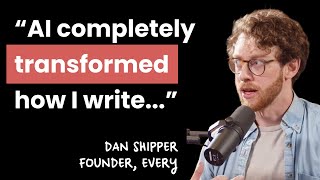
Dan Shipper, co-founder of Every, walks through how he uses ChatGPT, Claude, and Whisper across writing, coding, and running his business. He discusses AI's impact on productivity and creative processes, plus where the technology is headed.
What I will often do is I'll go take a walk, turn on my voice memo app, talk out loud about, like, whatever's on my mind, and then I'll transcribe that with whisper. Then I'll throw it into ChatGPT and be like, can you summarize what I said? Can you pull out anything interesting, any ideas that you think are, like, particularly good? And it's really, really quite good at doing that and pulling out the little nuggets of, like, insight for me. And then I'll have a big document full of notes. I have no idea how to, like, turn this into anything because I've been thinking about this for so long. And I'll often take that and throw it at ChatGPT or Cloud and be like, hey, can you please turn this into a outline? And it's actually really, really good at figuring out. Take the unstructured blob of notes that I gave it and then find the simple structure for me that helps me, like, get started. It's really good for helping you understand what's not working about a piece you're writing. With chatgpt and Cloth, I can just sort of like, throw it in there and be like, hey, you're an expert computer scientist. Can you, like, look through what I wrote and see if there are any problems with it? It's not going to be perfect, but it does find stuff and it gives me a level of confidence where I'm like, yeah, I think this is pretty much right. I think we can publish it. And that just dramatically expands the number of things that I can actually write.
All right, so today I have the pleasure of talking to Dan Shipper. Dan is the co founder of every popular tech publication, and he also hosts a great podcast that he recently rebranded to AI&I.
Right, I did. Thank you. I'm excited to be here.
Yeah, that's a great name. So, Dan, we're both writers, so why don't we start with this? How many hours do you think you save every week by using AI to write and do everything else?
That's a good question. I don't really think of it as, like, saving hours because I still spend, like, a lot of time writing. I think that there are certain tasks that would have taken me a while that are a little bit more instant or just are much, much, much shorter than they used to be. But I spend. I still spend probably a similar amount of time actually writing. I just spend it on other things. So I think there are certain tasks that go from, like, I don't know, like 30 minutes or an hour to like a couple minutes or something like that. But I'm just spending the rest of the time on other stuff.
Got it, Got it. I mean, like, why don't we go back to a time before, you know, ChatGPT and all these other tools. Like, how did you write a new post or article before this stuff existed? Like, maybe walk me through your process.
How did I write a post before this stuff existed? I mean, I would have, I had a lot of notes, which I still do. And I would go like, have, have a bunch of things in a note file or in a to do list of like different ideas and different, like sentences and quotes and all that kind of stuff. And then I would go and sit down in front of a Google Doc and try to turn it into something good and then publish it. I mean there's, there's like a lot of, there's a lot of nuance there, right? Like, there's a lot of Googling or Internet research or a lot of like looking at, looking at different books that I've read or talking to people or whatever. There's, I mean, at every. We have editors, so there's a lot of editing going on, which is still happening. So there's a lot of sort of complexity to that process, but it's sort of fundamentally a like, process of me gathering a bunch of different pieces of information or pieces of ideas or insights and then sitting down and typing them up in the right order.
Got it. So you do you have like a list of topics you want to write about and then you kind of gather a bunch of raw research on it. Is that kind of how it starts?
Yeah, and obviously like it sort of depends on the topic, but like how much research I have to do. But yeah, in general, like, I have a bunch of little ideas or little ideas for like headlines or topics that are kind of like catching my eye. And then I have a, for each one of those things, like, especially if it's a more complicated thing, I'll just have a little, little notes doc where I'll just throw little ideas into it as it. As I'm turning it over in my head so that when I get down to write, I usually have some raw material to work with.
And are you one of those writers who like writes a first draft first and then edits? Or do you kind of like edit along the way or how do you do that? Writing versus editing?
I edit as I go, which I think I don't recommend necessarily. So for me, like as I'm. When I'm editing as I go, it's not a sort of, like, perfectionistic thing that gets in the way of me actually continuing the piece. Sometimes that happens. Like, I'll notice that I'm, like, over editing, and then I will, like, just stop that, and I'll just, like, write something. And I'll just be like, okay, you gotta just write something terrible. And I'll just force myself to write without editing. But normally it's sort of like, I'll write some stuff and then I'll go back and read it. That'll get it in my head where I'm like, okay, this is the flow. This is the, like, the rhythm of the piece. And then I'll tighten up the little parts of it that, like, seem like they're kind of, you know, stuck or not or not really flowing in the right way. And then because I've caught the flow of the piece, I can go and add a couple more paragraphs, and then I'll do the same thing again. And I'll just start at the beginning and then. And then keep going like that.
Definitely some sort of quality bar. But you're not like, a perfectionist. When I'm trying to do this, yeah.
I really try not to. I mean, like, I publish every week, so, yeah, it will be kind of impossible for me to be too, Too perfectionistic about it. I'd go literally crazy. It goes back and forth, right? Different pieces have different levels of weight to them and different levels of, like, oh, my God, I really hope that this is good and this is really close to my heart or whatever. And sometimes those are the hardest pieces to get out because you've been thinking about them for so long and you feel like you have this brilliant idea, and then once it actually gets on the page, you're like, this sucks. Like, I hate this. I don't know why this is so bad. There's, you know, it's just different for different pieces.
Okay, so now that you know you're, like, a power user of AI, like, how has this writing process changed with these AI tools? Like, where do these AI tools come in?
They're kind of, like, infused into every part of my process. So in sort of, like, the first sort of, like, ideation stage one is I'm, like, constantly looking things up in ChatGPT or Claude just on its own or as I'm reading, I'm like, you know, taking a picture of what I'm reading and, like, being like, hey, can you, like, help me understand this? Or, like, Tell me if, tell me if this is actually right or like, let's go a little bit deeper on xyz. It's really helpful for that. And I think like, if you're a writer, to have good output, you have to have good inputs. And I think these tools are incredibly good for maximizing the amount of the amount you get out of your inputs. Um, I think also like, when I'm sort of starting to get into like, okay, like I need to find some ideas, I need to find some things to write about. What I will often do is I'll go take a walk and I'll turn on my voice memo app and I will just like talk out loud about like whatever's on my mind. And then I'll transcribe that with Whisper and then I'll throw it into Chat GPT and be like, hey, like, can you summarize what I said? Can you pull out anything interesting, any ideas that you think are like, particularly good? And it's really, really quite good at doing that and pulling out the little nuggets of like insight for me where I can look at them and be like, oh yeah, that's actually could be a good article idea. And those will either go into a to do list or they'll go into like an actual Google Doc or a Lex page. We have an AI writing app that we incubated every called Lex. So sometimes I use that. Once that happens, what I'll often do is like, especially for a piece that I've been working on for a long time, uh, like I'll have a big document full of notes and I'll be like, I don't have, I have no idea how to like turn this into anything. Like, I don't know where to start. Cause I've been thinking about this for so long and I'll often take that and throw it into ChatGPT or Cloud and be like, hey, can you please like turn this into a outline? And it's actually really, really good at figuring out how to like, how to take the unstructured blob of notes that I gave it and then find the like simple structure for me that helps me like get started, which is really, really cool. Very useful, I think in the actual writing process itself. It's also quite helpful. There's a lot of tasks that it makes a lot easier. So for example, a lot of writing is summarizing. So if you're writing about ideas, which I write about all the time, you're often referencing older ideas and in order to reference Older ideas like scientific theories or philosophy or what happened in a particular novel that you're relating something to. You have to summarize what happened, you have to summarize the theory, you have to summarize the philosophical idea. And language models are really good at doing that. And I wouldn't recommend necessarily doing it for things you don't already know about, but particularly for things where it's like, yeah, I read this a long time ago, I basically know what it says, but like, it would take me like three hours of Wikipedia reading to like fully summarize it in a nice way. ChatGPT is like perfect for like summarizing it for you right there in the, in the context of whatever you're, whatever you're writing, which I love. It's useful for all sorts of things like that. Like, it's really good for finding like the right metaphor or simile. It's really good for helping you understand what's not working about a piece you're writing. Even like, I published a piece today about how language models work and the piece itself is not technical because I tried to make it as jargon free as possible. But like, it's covering deep, deeper technical topics that like, I know, but like, I'm not the world's foremost expert on. And so in a previous world I would have been very hesitant to publish something like that because it would be really hard to check. Like, I'd have to go find a friend of mine who's like really deep into language models, then convince them to like read it and make sure that I hadn't made any mistakes. And with ChatGPT and Claude, like, I can just sort of like throw it in there and like be like, hey, you're an expert computer scientist. Can you like, look through what I wrote and see if there are any problems with it? And it's not going to be perfect necessarily, but it does find stuff and it gives me a level of confidence where I'm like, yeah, I think this is pretty much right. And, and, and Claude and chatgpt agree. So like, I think we can publish it and that just dramatically expands the number of things that I can actually write.
Yeah, no, I think you're right. I think from my experience it's also, I think it's like three things. It's really good at summarizing stuff, like you said, just pasting a bunch of research in there and telling you to get the trdr summarize it. I think it's really good at editing. I don't know if you do this, but I have a crappy draft that I write myself and then I paste into Claude with a bunch of examples of my past posts. And I asked it to like, edit based on my style.
That's really cool.
Yeah, it does a pretty good job of just like, make cleaning it up and making it like my style. And I don't necessarily just copy and paste it over, but I just like, look at what its output is and kind of like manually edit my own thing to kind of like pick the best parts.
I love that. I've never tried that. I should really try that. That's amazing.
Yeah, you should put your best post in Cloud and just like, you know, tell you to edit in a similar style. And like, when you talk to, you know, ChatGPT and Cloud, do you. Do you have like a prompt structure or do you kind of just like, talk to it as kind of like another coworker?
I think I always talk to it in the simplest way possible first, and then if it gets it right, great. And then I will, like, add more details to it if I need it to get better. So first it's just like a sentence and then if that doesn't work, then it's like, often asking it to simulate an expert. Like, you are a professional editor. Um, you are a, like, expert in computer science or whatever. See if that works. Um, if that doesn't work, then giving it some examples. So, like, here's what I want. Here's like, what good looks like, or here's an input output example. Here's like, for talking about article editing, it's like, here's a raw article and here's an edited article. Now I'm gonna give you a raw article. I want you to, I want you to, I want you to edit it in that style. I'll also have it. If that doesn't work or it needs more like, I'll also have it, like, analyze a bunch of examples and write itself a little rulebook for, like, how do you do well, and then I'll put that in the prompt, also have it critique its own work and then have it revised based on the critique. So there's a lot of stuff like that, but I tend to try to just be as simple as quick and quick as possible, and then to make it more complicated if I need to.
Got it? Yeah, yeah. I mean, like, I think my most frequent prompt is just like, you know, here's like a paragraph or a few sentences. Like, can you, can you make this more clear and concise? Or like, you Know, Yeah, definitely. We can't. We can't find the right words. It's pretty good. And maybe you ask it for, like, a couple of variations, right?
It is. It is really good at that.
Yeah. And how about for, like, your podcast and some of your other work? Like, do you use AI as part of that too, or.
I mean, I definitely use AI for podcasting because we, like, use ChatGPT and Claude and all these other things on the show. So it's definitely part of the show. I sometimes use it for prep, just like, guest research and stuff like that. I actually, I really like notion AI for that because I can make a little, like, dossier of, like, who the person is, and it's all written notion, and so it's like, really well organized for me, which is pretty cool. And then for other work, I mean, at every. We, like, build software products. So like, I built an app for us, like an internal tool we use end to end in like, two days with ChatGPT, like a month ago.
Well, what was the. What was the tool?
So it's. It's called Spiral. And basically what it does is it. I noticed like a month or two ago that cloud is like a. Basically a 70% as good a writer as I am for certain things. And there are all these, like, repetitive tasks that we do at every. That are kind of like summarizing content from one form to another. So, like, like taking a. An intro through an article and turning it into a. Into a headline, or taking an article and turning it into a summary for our Sunday digest, or taking a podcast transcript and turning it into a tweet to tweet the episode. Like, there's all this stuff that's very repetitive that I really want to have in my voice or like in. In every ish voice. And either I have to end up doing it, or we have a bunch of really talented ghostwriters on staff who have to end up doing it. But, like, for everyone, it's sort of like a dragon. And with spiral, you can just like, basically create a spiral. You can say, I want to convert this to this. And then you can give it a bunch of examples. It'll write a little guide for itself, and then it, like, gives you a text box that you can paste in, you know, your podcast transcript, and they'll turn into your tweet for you. Or it'll do like, five of them and rank them. And that way, like, everyone on the team can, like, start, you know, 70% of the way to good on these types of tasks. And it's sort of starting there. But I really think it, it could be used for lots of other things too. Like there's a lot of similarities to like decisions. It's like I'm often asked to like make decisions where I have like a pretty clear set of rules or heuristics that I'm using that I think like I could put into a spiral and have it like give people feedback without me necessarily having to be involved. I think it's good for code potentially for the, for the same kinds of things and you can like string them together. It's actually kind of cool. So we've been using it a lot internally. I think we're probably going to launch it publicly at some point soon. Um, so it's been really fun.
It sounds like it's like a tool that gets you like maybe 50 to 70% of the way there and then, you know, it's way easier to arrive with something on the page than like from, from blank. Right.
So it really is. Yeah, it's, it's really good for that and it's really good for kind of like making the, the taste that goes into whatever that thing is legible because Claude is like making it legible. It's writing it, it's writing a little guide for itself and then operationalizing it so that everyone on the team is starting from a place where they sort of have a little bit of that taste infused into what they're starting with. And um, which makes it easier to create a consistent set of tone or voice or decision making style or whatever inside of the org and it's, it's been really good.
So you've loaded the same with like a bunch of examples of your past tweets or it's like a few shot prompt. Right? It's, it's. Yeah, yeah, got it. Have you used this, I was talking to Lenny yesterday. Have you used this to like for your podcast titles and stuff? Have you used a. AI to make a more clickbait video or done some of that, like some of the packaging.
It'S used for that. So it's sort of like we'll give it a transcript and ask it like, okay, what are the what, what headlines should we use? And it's sort of, we, we have examples of YouTube or other kinds of headlines that we think work or headlines just from every. That that have worked really well. Um, so yeah, I definitely, definitely use it for that.
Got it. Okay, so let's talk about all the great people that you've interviewed. Like you interviewed RE Hoffman, even you, like top creators like David Perel, what are some common themes in kind of like how they use AI or some things that you learned that are common across these folks.
I mean, I really think everybody is sort of unique and different in that they all have very specific ways that it fits into their life. I think the sort of commonality is for the people that use it and figure it out. And those are the only people I have on my show. They're generally pretty patient, curious people who are interested in experimenting and don't have the sort of like knee jerk reaction of like, oh, this didn't work and are like, I'm making an investment and like learning how to use this new tool. And like, it's actually kind of fun. It's really interesting even, even when it fails, you know. And so I think that that sort of spirit of open mindedness and curiosity and exploration is like what allows people to get the most out of tools like this that are incredibly powerful but are also sort of like incredibly early in their life cycle and aren't particularly well understood. So there's not like a set process necessarily for anyone to do any of their work because it's like too new. And all the people on my show that doesn't bother them so much, they're just willing to like go for it.
Okay, so it's just kind of like constantly experimenting and trying new things and see what they can build with it. Right? Is that.
Yeah, 100%.
Yeah. I'm especially interesting some of the guests that you invited who are like more like solopreneurs or like trying to start a business. Like we talked about how AI can help you make content, but like, do you also use it to kind of run everything some other way? Like, does it help you run your business in some other way?
Totally, yeah, it definitely does. I mean, I think like the first thing is just that it's a very high leverage tool. So I think I, myself and everyone else at every, who are, who are all, they're all using it can just get more done. Like we have more powers, you know, Like, I can write a little faster, but I can code way faster, you know, and, and there are plenty of people on my team who like sort of went from like, English is a second language and like couldn't code to like, my emails that I send are perfect. And like I'm, I'm like coding apps even though I don't know how they work. And I'm like doing all this design stuff like there. It's just Like a kind of a crazy power up for small organizations. Because if you have that sort of spirit of curiosity and everyone's, like, willing and interested in doing it, you can just get, like, way more stuff done in areas that you wouldn't have been able to already. So that's one thing. I think it's also just quite good for decision making and sort of understanding different situations and understanding, like, what you want. So I'm very frequently using it to, like, help me, like, in a particular situation be like, okay, here's what's going on. I'm doing this negotiation, or I have to make this strategic decision, or I'm really excited about this new idea. Like, what do you think? And it's really good at helping me understand what's going on for me. And then it's also really good because I can put, like, my goals and stuff into its custom instructions or into its memory. And then I can say, like, you know, because for me, I'm like a very opportunistic person. I'm like a. I'm like a puppy with a toy or like, I just chase. I like to chase shiny objects sometimes because I'm just like, that's. I just get curious and excited, you know, And I think that's a really fun part of my personality. But it also can be a little chaotic when you're running a company. And so ChatGPT knows this about me, and I've asked it to be like, hey, like, when I'm talking to you about a situation, like, I want to be a little more strategic, a little less opportunistic. Like, can you just remind me that that's my goal and, like, and what my goals actually are so that I can see how this lines up with them? Or not? And it's very good at being like, hey, remember, you have a little bit of shiny object syndrome sometime. Like, think about how this connects to your goals. And I'm like, oh, yeah, you're totally right. I should just not do this right now. So it's really good.
Got it. So, yeah, I have this, like, GP that I made for myself called, like, personal coach or something. And then I loaded it. Yeah, I added a bunch of, like, my goals for the year and like, here's my current situation. And then I ask for random advice. Is that kind of what you're talking about?
Yeah, basically.
And then when it has a scar at your hands or whatever voice, it'll be even better. Right? It'll be like a very patient.
I'm excited for that. Yeah, I Have not gotten the new voice interface, but I think it'll be really cool for that.
Yeah. Because if you think about it, even my friends or even my spouse, she doesn't necessarily have patience to listen to me explain my goals and everything for, like, 10 minutes, you know, but, like, this thing is, like, so patient. It listens to you forever.
It's very patient. And it also just knows everything about everything. Right. Like, I have a therapist, but, like, he doesn't know anything about, like, running a media business, you know? So, like, he can listen, but, like, he doesn't have enough context to, like, help me make decisions. And so it's really nice to have someone who's, like, unfailingly empathetic and also has the entire knowledge of everything on the Internet in its brain to, like, help you figure out what you want to do.
Yeah. Even in my day job, I'm constantly surprised when people don't use this stuff. I feel like the adoption is actually not as much as we think it is because we're both enthusiasts. Right. I have this person who is not really good at writing concisely. And before I would give them advice about, oh, here's kind of some things you can do. But now I'm just like, hey, why don't just copy and paste all your stuff into AI? They get more concise immediately, become 10x more effective.
Yeah, I mean, I agree. I think that the adoption is lower than you think. I think it's incredibly valuable for people, and I think it's low because it's a very general purpose tool. So you have to be thinking a lot about, like, okay, where can I fit this into my life? Right. Like, you're staring at a blank text box. Like, that's sort of intimidating. And then I think people also have to kind of, like, always make this decision when they're doing their job or they're going about their daily lives and they're really busy and stressed and are like, okay, I can do this task in the way I know how to do it, and I'm guaranteed that it will get done and I can move on to the next thing, or I can experiment with this other thing that I don't really know how to use. And it might be that I spend an hour on it and I don't even get the task done. And now I'm even more behind than I was before. And so it's just easier to kind of like, stick with the status quo. And I totally get that. I think what I've tried to do at Every. And what I think is really important and helpful for companies is like carving out time and space for people to be exploratory about this stuff without feeling like it's going to make them get behind in their like day to day tasks so that they can get comfortable enough to, to use it well. Or I think another thing that, that companies can do is like there are some people who are just going to play with it anyway. They're just like so excited about it. They like love it. These are kind of like the tip of the spear people. Let those people play with it, figure out what they have learned, what they have figured out, where they'll reduce, they'll do all the exploring to reduce things down into a process that you can use and then take that process and teach it to the people who don't want to do the exploring and just want to get their job done. And I think that's a very effective way of getting more AI use in an organization.
Yeah. So you encourage your, your employees to kind of share best practices with each other and stuff, right? Share latest tools.
Yeah. And then, but specifically like encouraging the employees who are organically excited about it to go find the best practices and, and then encouraging them to share them with other people that don't really want to go do the finding but will follow it if they're giving instructions.
Got it. I want to ask you a quick question about using AI to code. Do you think this thing has got to a point where someone who is not very technical can actually build something that's not just a thing to play with like Spiral or something that they can actually use?
Yeah. And I'll tell you, the very, very first version of Spiral that was built like a year ago basically was someone who works for me. His name is Lucas Cresp. He's super talented. He's our creative lead. We needed a tool to like build to do Sunday Digest summaries. We have a digest of all the articles we publish and it goes out every Sunday and we have summaries of every article. And it's very time consuming to like write a summary, especially from scratch. And so he was like, I think I could do something about that. And he just like used ChatGPT to build and ship a Heroku app where you could like paste an article in and it would produce a summary of it in our style using GPT3, I guess it was GPT4 and it like he deployed it to Heroku and like he had no idea how it worked. And we used it for like A year. It's like not a good piece of software. Like I wouldn't sell it, but we used it all the time. It was, it was like, it's amazing. And it's amazing that he, all it took was him kind of like having the stick to itiveness to let ChatGPT figure it out and follow its instructions. I think that it's definitely though, like there's this whole, I think, misconception that yeah, like, yeah, any non technical person can like go and like make something and it'll like be a business and whatever. And it's sort of you can like, you can definitely build and ship something. And I teach a course where we take people from zero to. You built and shipped an app that people can use in 30 days, which is amazing. But the way that that happens is not necessarily like the AI is just doing it all for you. It's like what the AI does is it gives you something you can see super quick. Like the first day of the course you build something that basically works and you're like, holy shit, I can't even, I can't believe this works. And then you're like, okay, I want to understand how, like, how does this actually work so that I can learn how to make it better. And then we can do a lot of like, okay, here's the basics of programming and here's how you use ChatGPT to figure out what's going on in your program and all that kind of stuff. Whereas like when I learned programming it was like six months of like if statements and like while loops and like variables and all this kind of stuff that like, I had zero idea how it would level up into anything that I wanted to learn. And so it was like, it was very taxing to get through that. And I think AI sort of like means that you get to something that looks cool and works like, it works much, much, much faster, which provides the motivation to like go and understand, understand the underlying stuff. And the people who do both that use the AI and understand how it works are going to like move a lot faster than people who just have one or the other.
That is a key step, right? You can just like use it to generate some toy program. And like, I think you actually have to take next step to be like, okay, now explain to me how this works. Like add some comments in your code. I think one of the more frustrating parts when I play this to code is trying to create something, but it's not perfect. And then you are like, hey, go fix this specific part of it and then it just keeps generating. So you end up in this loop where you just keep copying and pasting stuff. Right. And hoping that it'll work. So maybe understanding how it works allows you to tweak stuff yourself and try to get out of this loop.
Definitely. I mean, like, you can get into that mode with it where you're like, I don't want to think about this, I want you to do it. And then you're just like fighting with it to like do it without having to think about it too much. And yeah, I think like, you know, sometimes being less lazy about it and just doing it yourself is like, helpful, you know, But I definitely, I have the same experience.
Okay, let's wrap up by talking a little bit about the AI landscape. I think you've been attending all these like, events, right? Like Microsoft Build and all these events. How do you think this space is evolving, man? There's OpenAI, Anthropic, Google XAI. What's going to happen in the next six months or a year?
I mean, I think basically everyone was sort of surprised that Google and Anthropic caught up to GPT4 when they did. Which to be fair, GPT4 came out a year or more ago, so they're about a year behind. But I think OpenAI was so dominant for so long that I think people thought they might even have had a large longer lead time. But my, my guess is that we'll see GPT5 in the next year. Nine months to a year. I pretty fairly confident about that. But without any inside information, I'm just like sort of reading the tea leaves. And my, my guess is that it will be substantially better. I think there's a lot of questions about like, okay, are we reaching like diminishing returns? And I think also the open source stuff continues to be really interesting. And what we're finding right now is that the smaller models, you can make them much sparser and smaller and still retain a lot of power. So the big models are relatively inefficient and so we're able to run surprisingly powerful models on smaller and smaller computers that are just your laptop or whatever. And I think we'll continue to find that over time. And I think that's really cool and that feels very exciting. Having more personal AI stuff available is, I think, good.
Yeah, because right now there isn't really a personal AI that just kind of remembers everything you do. Or maybe people don't want this, but I want this. Everything you do, I don't have to do Custom instructions. It just remembers all this shit. And then whenever I ask a question, it's very personalized to what I do.
I mean, that's basically what Microsoft launched two weeks ago at Build. I think it's called Reflect or I think Reflect might be. That might be another app. It's called Recall. And yeah, it just records everything on your screen and then. And everything you say and all that kind of stuff. And then it. But it's all local and then you can ask questions and it's. And all the inferences run on device on their like special Microsoft AI chip or whatever. And that seems really cool. I'm down. I'm actually, I'm also. I've been testing this, this app over the last day or two called Granola, which is really cool. And it's basically like your classic kind of like meeting recorder where there are like zillions of these things. But I think it's like the best, most well done meeting recorder I've seen, which basically it hooks into your calendar, it sits on your desktop, and then what happens is when you're in a meeting, you can start it recording, but it records through your computer's audio and mic, so it doesn't have to join anything. Like, it's not like Fireflies where it like joins the zoom call or whatever. And that's super annoying. It's just like recording everything that your computer is playing and hearing and that's. That's much more convenient. And then what it does is it lets you take, take notes and then it also produces a transcription. And after the meeting is over, it will take your like chicken scratch notes that you've taken where it's like a sentence here and a sentence there that's like not fully fleshed out. And it will use the transcript to like flesh them. Flesh all your chicken scratch notes up into like an actual like well formatted document. It's really cool. I think it's very well done.
I gotta check it out. It's called Granola.
Granola, yeah.
Okay. I just got to get. The problem is some of these large companies are like, hey, I don't want to use any AI tools for security reasons, but I'll check it out. What do you think about how AI is going to impact tech jobs? Man? First of all, Tech Jobs has already been impacted by just the deserved days being over. So a lot of people are impacted. And you wrote this post about the new job called the managers of AI models Job. Right? Can you talk, can you talk a little bit about that? Like what Would this person do?
Yeah, the whole kind of idea is we're moving from a world where a lot of IC work was like, doing the. Doing the work yourself and being in all the details yourself, to a world where I think many of us are going to be more like model managers, where we're managing models to do a lot of the work, especially, like, the preliminary work, like the first draft type stuff. And so the skills that are valuable in that world are. Yeah, definitely still having the, like, the sort of basic skills to do it yourself, but also adding the skills of managers, like knowing how to delegate, knowing which resources to use for which project, knowing how to scope something for a particular resource, knowing how to use that resource well and give it instructions that it can. That it can follow. Like, all those things are things that managers need to know. And I think, like, individual contributors of tomorrow will need to know those same skills, but for using models. And that's not to say that, like, people won't be, like, going into the details themselves. It's just to say that they will be doing it less frequently and be mostly, you know, if. If, like the metaphor for, like, previous, like, let's say programming work was a sculptor where, like, every little. You're taking a block of marble or something, and every little chip is, like, something that you do. I think you're going from that world to, like, thinking about, like, a gardener, where you're kind of like, creating the conditions for the plant to grow. You're kind of, like, adjusting the soil and the temperature and the sunlight and the water and all that kind of stuff. And the plant sort of does it itself. I think that's a little bit more what's going to be happening. With the obvious caveat that you also can go in and, like, do the sculpting yourself when you need to. And so you kind of can get the best of both worlds, which I think is really cool.
Yeah, I guess it's kind of like having a bunch of interns, like, you know, if they're new to the world, you give them, like, specific instructions. You're checking once in a while and correct their work.
Yeah, yeah. It's very, very intern. Like, right now. I mean, I'm hoping, you know, in the next couple of years it'll be like, you know, college or your first year out of college type person. I think that's definitely doable, but we'll see.
Okay, so, like, just to wrap up, like, you know, if I'm just a regular person who's not. Not as into this Stuff as you and I. Like, what are kind of like three things I should do to not get left behind by. Not get left behind by AI or just like actually, like, consume high signal sources and actually, like, make use of my time?
Well, I mean, like, you're kind of loving me a softball here. You gotta. You gotta listen to my podcast, AI and I. And you should read everything that we publish on every. I think. I think those are two, Two hopefully good resources. But I think the broader thing actually goes back to the. The thing I said earlier at the very beginning where you asked me, like, what's the common thread of people interview? And it's like, it's people who are literally just curious about this stuff. And so I think the beauty of ChatGPT and Claude, but, like, really ChatGPT right now, because it's like, free. Free to use the, like, frontier model is like, anyone can go use it. You don't have to pay any money to, like, use the best model available.
But.
And I think that's truly incredible. And so just literally going and being like, hey, like, how do I use you? Is a great start. And like, say, this is the kind of person I am. These are the kinds of tasks I do. Like, interview me to help me figure out, like, where I can use ChatGPT. Like, you don't need necessarily to, like, read anything, although you can. And I think it's helpful to, like, know. Use cases and know how other people are using it. But, like, you can just go and sit with it and spend some time with it and play around. And I think, like, cultivating that spirit of curiosity and playfulness is like, the thing that's going to, like, make the difference rather than any one particular, like, skill or resource.
Makes sense.
Yeah.
Yeah. My parents were asking me, like, hey, how do I use chatgpt them? Just like, hey, just talk. Talk to it. Like you would talk to a person. Yeah, that's how you use it. It's not that complicated.
You know, it's great. It's the first time in history that's happened. It's. It's so cool.
All right, so I think you mentioned some of this already, but yeah, like, where can people find your stuff online?
You can find me on Twitter anshipper or X these days. Anshipper. And then every. Every to. I write there every week about AI. And then you can find my show, AI and I on YouTube, Spotify or Apple Podcasts, wherever you get your podcasts.
Awesome. Dan, thanks so much for your time this morning. Yeah, of course.
Thanks for having me.
More from Peter

Dropbox VP's Best AI Workflows to Help You Take Back Time at Work | Morgan Brown


Canva Co-Founder: The AI Playbook Behind the World's Most Popular Design Tool | Cameron Adams

How OpenAI's Head of Business Products Uses ChatGPT to Save Time at Work | Nate Gonzalez

Complete Vibe Coding Tutorial: Build a Full Stack App in 30 Min with AI | Matt Palmer (Replit)


Complete AI Course (2025): Prompting, Evals, RAG & Fine-Tuning | Adam Loving (Meta)



