I Built a $100M Company in 3 Years by Betting on AI Agents | Arvind Jain (Glean)
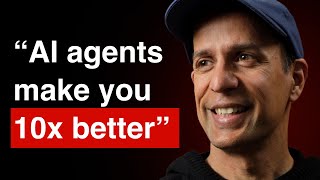
Arvind Jain built Glean to $100M valuation in three years by betting on AI agents for enterprise knowledge management. He discusses why companies struggle to adopt AI despite the hype, and how Glean helps employees find answers and stay productive without switching between tools.
It's not like AI that's going to replace people. I think it's going to be AI enabled people who are going to replace people who are actually AI laggards. I think we'll be able to do 10 times as much work in the future as we can do today. That doesn't mean that we have to work less. I think the history points more to that. We figure out new things. We're going to all have this amazing team of agents around us that are going to actually not only take care of most of our work, they understand who we are, what we do, but they're also going to actually help us, you know, like get better. Take a CEO of a company, you know, they've got an amazing team of people around them, can come right out of the school and you'll have that luxury.
All right, welcome everyone. My guest today is Arvind, the CEO of gleam. Arvin believes that every employee should have their own team of AI agents to help them get work done and glean, I believe, recently passed 100 million AR. So super excited to talk to Arvind about the future of work and his top product, Lessons from Building Gleam. Welcome Arvind.
Thank you so much for having me.
So, so Arvind, you've had a really long career. You've done multiple startups, you worked at Google for a long time. You know, in big tech. Let's start like a provocative question, right? So in big tech, you know, you have all these layers of management and then every person has like a very specific role on the other team. And do you think all this stuff will change fundamentally with AI or AI agents or how will the work environment evolve?
Well, AI is certainly going to change how everyone works, whether you are in a startup or a small company or in a large enterprise. I think one thing that's also going to be the case for the future is the work that we do today. That kind of work, I think we'll be able to do 10 times as much work in the future as we can do today. It's the same thing as well. Like, you know, if you had to sort of add and subtract numbers like, you know, with the calculator, we can do go one much faster than we had to do it manually. The same thing is going to happen with most of our work today. Like, you know, all these manual things that you, that you work on, AI will be able to actually handle those for us. That doesn't mean that, you know, we don't, we have to work less like I think like the history points more to that. You know, we figure out new things, you know, do we figure out how to build more advanced technologies and products. But certainly like, you know, there's a big change coming. And I think now coming back to your question, like, you know, in startup you tend to have broader roles. Like you, like, you know, for example, you know, at my companies, you know, that I have started, you know, when we start, like, you know, I'm actually, I play a lot of different roles I play and I'm the IT person, I'm the HR person. I'm also a developer, I'm also a salesperson, I've been a bdr. And so there's less specialization in, you know, in startups, you know, more in large company. And what does AI do to that? I don't have a direct answer to that. But one thing that I, but I do feel is that a lot of the tasks across these functions are something that AI will be able to do. So in that sense you can imagine a person who has a primary role of, let's say being a developer, he has a lot of mileage through AI to do a bunch of other things which you had to have other people to do in the past.
It's almost like everyone will become a manager of AI agents. Is that fair to say?
Absolutely. Like, you know, I think is the, like the concept that I'm really excited about and I think I like, I'll give you like a real world example, you know, like take a CEO of a company. You know, they've got an amazing team of people around them. They got their chief of staff, they got, you know, maybe one or two, you know, assistants, they got this executive team, you know, that is super capable and then also have a coach like you know, is constantly guiding, you know, you to be a great CEO. And all of that help around you like obviously allows you to actually make a much, much bigger impact on the company than like, you know, if you're an individual contributor in some ways because you know, you have these multiplier forces coming and helping you. Similarly, like go into a non work scenario. Take a tennis player, Roger Federer, like, you know, he goes and plays, you know, you know, with a racket and a ball on the court and I do the same but like you know, he's, he has a team of 50 people around him like you know, that's, you know, who are making sure that, you know, he's well practiced, you know, that he's the right coaching to figure out how to actually Play this match properly and here's a world class performance and I don't. Right. And is that concept like, you know, like, you know, when you come back into AI, you know, everybody is going to like have a different experience in the future. We're going to all have this amazing team of agents around us that are going to actually not only, you know, take care of most of our work, they understand who we are, what we do, but they're also going to actually help us get better. They will act as our coaches and so that's the future we're looking at. Can come right out of the school and you'll have that luxury. You don't have to wait for many years for that to happen.
This episode is brought to you by Merge. Product leaders cringe when they hear the word integration. They're not fun for you to build, launch or maintain, and they probably aren't what led you to product work in the first place. Luckily, the folks at Merge are obsessed with integrations. They built a single API that helps SaaS companies launch over 200 integrations in weeks, not quarters. Think of Merge like plaid or for B2B. SaaS companies like Ramp, Drata and Electric use Merge to access their customers accounting data for bill reconciliation, file storage data for searchable databases and HRIS data for auto provisioning access for their customers employees. If you need AI ready data for your SaaS product, then merge is also the fastest way to get it. So if you want to solve your company's integration dilemma once and for all, book a meeting and receive a $50Amazon gift card when you attend. That's merch.devpeteryang. now back to the episode.
Yeah, I have a cloud prod project where I've given it way too much personal information about myself and then I just check in with it every three months and it gives me like specific advice on what I should do. It's like a very nice personal coach, I think. So. You know, a lot of people listen to this are like product managers and you know, like product managers, they have to do a lot of internal alignment, they have to make a bunch of documents, artifacts. Do you think this role is like well positioned for the future? Like, do you think like how even in your own company, right? Like for the PMs, like how do you get them to upscale for this AI agent future?
Yeah, yeah, that's a great question actually. First, in our own company, the product managers are actually very heavy users of AI. And you know, in glean, you can, when you think about glean, like just for context, you know, we are, you can think of us as a more like enterprise or more powerful version of ChatGPT inside your company. Like, you know, it's able to actually help you with all the knowledge the world it has, you know, through models and web search. But it's also able to actually help you with all the internal knowledge that it's connected to, to answer questions for you, help you with whatever tasks that you're working on. But then we also have this agent platform, you know, where you can actually go and you know, build specific agents for like specific day to day processes that you have. So, so that agents like, you know, so people build agents in gleam, you can build agents for yourself, you can build agents for your department. And what I was saying was that when we look at like, you know, how many agents a product manager is using in our company, that's the highest. Like you know, across all the different functions, like you know, tech engineers, product managers, sales people, spoke people, they're doing the most. And why? Because I think, you know, their job is, I think is constantly about like, you know, working with information, working with, you know, data that's being generated by like, you know, by different people within your organization, you know, from your customers, you know, from your product usage. And you have to actually make data driven decisions, knowledge driven decisions, all the time. So a simple example I'll give you, you know, how do you decide on what features to prioritize? This is a process that in our company it has gotten reinvented with agents. And so before in an enterprise software company, like, you know, the way you decide like, you know, how to prioritize some of the new work and features is that you'll work with some of your most important customers. You would look at like, you know, you sort of learn from them, you know, what are the key things they're looking at and then you'll do this research like over data, like across like you know, 10 or 15 meetings, you know, that you would do and then build a roadmap based on that. But now what our team does is that, you know, you know, we, you know, they have access to all the customer conversations that have ever happened in the company. And we have thousands and thousands of them. And you know, they have built this agent which actually goes and listens to all of those call recordings, you know, that we've had with customers. And the agent is instructed to basically listen for like any requirements, any sort of new features that the customer is asking for and you know, and then basically collect that after that, like, you know, the agent is instructed to like, you know, classify those requests into different themes. Like, you know, you come up with like maybe six or seven different themes and they put those feature requests in that. And then you sort of create this, you know, big, huge, you know, spreadsheet with all the feedback from all the calls. And then you ask the agent to also summarize, synthesize and say, like, you know, hey, pick the top themes to pick. And so it does all of that work for you. And you know, and this is something that you couldn't do before, right? You know, before you had to work with limited set of information. You could only meet a few number of people. And now, like, you know, they're able to leverage, you know, from this collective knowledge that's sitting in the organization, which was completely untapped before AI, but now you can tap into it. So that's how our team is now doing roadmap planning. They feel a lot more confident.
Yeah, because then you can spend that time thinking instead of just trying to gather all the information.
Exactly.
Yeah. I do something pretty similar when I write a prd. Maybe I got too lazy or something, but I have this customer community that I've talked to and I just ask them some questions like, hey, what kind of problem you have, what kind of solutions you want? And then I have a template to just draft the prd. I don't actually drive from scratch.
Yeah, yeah.
But yeah, it's definitely helped a lot there. You know what? I think Roblox actually has glean, but I don't think I've ever used the agent thing before. I think I've been missing out. So you can actually create these agents that just like automatically every day, just like summarize information for you?
Yeah, so agents can. The way you build agents in glean is like first, like, you know, it's trivial to build an agent. Like, you don't need to be actually a developer or a product manager. Like, you could be a salesperson and you can just describe a piece of work that you do. Like, you know, something that you are bothered by. Like, you know, you feel it's too tedious. Like, you know, and so just go in and in natural language you describe to glean that, hey, this is the work that I do and can you do it for me from now on? Like that's basically, you know, as simple as that. And then glean will build that agent. It's already connected with your enterprise systems and data, so it's actually able to, you Know, provide the right data and access to that agent, use the power of LLMs, and then also, like, you know, take actions into those different systems, you know, to sort of complete the piece of work. And now look, when you look at these agents, there are two types of them. Like, you know, one of them is like, you know, something that, you know, a person uses. Like, you know, they, like, I go to an agent and ask it to do some work for me, and there could be another type of agent, you know, it just runs in the background autonomously, like maybe based on some triggers. Right. Like, for example, like, every time there's a new lead, you know, that comes, you know, you know, into our. Into your marketing system, will do a whole bunch of work and like, you know, like, enhance that lead with some information or whatnot. Right. So you can, like. Yeah, you can have agents of both types, you know, in Lean.
Okay, so the latter one is kind of like a zapier, but for like, internal, you know, company stuff.
Right.
It's kind of like workflows.
Yeah. And I don't know, zapier. Zapier is actually like, they're very extensive set of actions library and, you know, you know, and the. But an agent is a little bit more than actions library. Like, it's actually. There's a lot of, like, logic and thinking, you know, and like, so when you think about an agent and how you represent an agent, there are some parts of that agent process, you know, which are about reading information from enterprise systems. Some of it is about, like, you know, you know, taking actions into those systems. But then a lot of it is about thinking and doing analysis and synthesis, and that's where the AI shines. And then that's the new thing. Like, you know, when you think about automation in the enterprise, like now you're able to automate things which, you know, which should. We definitely needed humans in the past because of the requirement for intelligence.
Makes sense. So let's talk a little about, like, enterprise adoption of AI. So, like, I recently tweeted that, like, you know, it went viral, but like, the tweet was like, startups have an advantage over big tech just because they're allowed to use all the AI tools available. And like, why do you think some companies have been so slow to adopt this stuff? Like, is it security or just takes a while, you know?
Yeah. So large enterprises, I think the, you know, takes time, like, you know, longer time for them to adopt some of the AI technologies. Even for us. Like, you know, like, you know, as a company that serves large enterprises. We had to be very careful in terms of what technologies we use inside our company and because ultimately like, you know, if something bad happens, like you know, like we are risking like, you know, our customers in some ways. Right. So I think there is a natural friction. Like, you know, like security is definitely like one of those key points of friction. Like you know, in terms of how do you make sure that your AI is safe when you build these agents that you are actually respecting, you know, the governance requirements, the security and the permissions architecture of your enterprise. I don't expose information even internally, of course, not externally, but even internally. Don't expose information to your employees that they should not be reading, that they should not have. Access to. A lot of enterprise data is private in nature. So you have to sort of solve that. So that's definitely one factor. And as AI is taking off, there are new types of security attacks. For AI, you can be, you can be susceptible to prompt injection attacks. And so you have to like, you know, when you build these platforms you need to make sure that like everything is done in a, like you know, you know, in a button down manner with the right security controls. But that's only one of the challenges. Like even there are other challenges. Like one of them is, one of them I would say is inertia. And you know, you like in a large enterprise, like business processes are more solidified. Like you have certain way of doing things and humans don't want to change. Like you know, we like, you know, I, you know, like let's say that I, you know, I have a busy, you know, work schedule. Like you know, like I've come in and I have to like finish like 10 different things in the day. Like I don't have the time to actually think about how I'm going to do this thing differently with AI. Like I just don't, like I'm always just, you know, it's like, you know, you're on the treadmill, you're just, you're going to fall behind if you start to think, you know, the, and so you also have to battle that like, and like you know, we're starting a new company. You know, you are in a reverse situation. Like you don't get, you don't have people, you don't have processes. And well, like you need to actually figure out how to get things done. And you know, you use the modern tools because they're better than like, you know, and this, you know, you know, have the promise of like helping you with, you know, your Business processes without requiring, you know, people or like, you know, so, so I think that's the, so that's the divide. So you know that that's a big factor too like you know, which is often underestimated. You have to like, you know, when you think about AI as a large enterprise, like first thing you have to do is you have to educate people. Like, you have to actually like, you know, AI today feels inaccessible. Like as a, if I'm a HR person and you ask me that, hey, use an AI tech or you know, build an agent, you'll say like, what are you talking about? I've never built anything like that. Like you know, that seems like technology. Yeah, right. And so you have to sort of get to that like you know, like train your workforce, you know, give them Some basic fundamental AI tools like let them use ChatGPT or let them use Glean, which is a more, you know, like more enterprise focused product of like, of the same nature. And like, you know, like once they start to get comfortable, once they know how to use AI, then they will actually like, you know, both drive that demand for more products and actually adopt and embrace them. So anyway, so those are some of the things that we see as roadblocks. And then finally of course, like people are confused. Like you know, there are as if you're a CIO of a large enterprise, you know, you're being bombarded and pitched by like thousands of, you know, startups and large companies. Because every company you know, whether you're a startup or a company that's been around for 50 years, you are an AI company today. You have AI products and there is a lot like, you know, to sort of choose from and the, it's not, you know, these decisions are not easy. Like, you know, like people don't like enterprises, you know, they have to, they also have to be careful. They have to think long term. One of the things that I hear a lot is they don't know what LLM providers are going to win, who's going to be winner in the AI space. They don't know what startups are even going to be around in a year or two. So in that sort of dynamic industry, how do you make big decisions and replace transform your business processes with products that may not be around next year. So these are the practical considerations which makes enterprises go slow.
Yeah, and there's also for example, something as simple as using AI to take notes during meetings. For a random employee like me, it sounds like a great idea. Why don't we have it but there could be certain meetings that are very sensitive. Maybe employees getting laid off or something. You don't want all that stuff to record it necessarily. So maybe as someone building products for enterprises, you want to build the right controls, right? Maybe consumer products don't think about. And in terms of getting enterprise adoption, you know, like OpenAI and all these other companies are also trying to get enterprise adoption. Right. So, like what, what has been Glean's secret sauce? Is it just like everything you just talked about or is it, is there something that.
Yeah, well, I mean, there are two parts to it. Like, you know, one is just the product itself. Like, you know, we are focused on the enterprise and we've been around for a long time. You know, we, you know, our product is three times as much older as any other product out there. Like, you know, we've been building this for the last six years and part of our product has been connecting with all of our enterprise systems, data knowledge, and it's the largest application of AI today. Anyway, when you think about AI, what are people trying to do? Number one, they're trying to use it as a assistant that can actually help you with knowledge. They can actually answer questions for you. So that's a product that we built over a long time. We fit right into the most successful domain for AI right now in the enterprise. But also like the other thing that, you know, that we believe, you know, is necessary for adoption in the enterprise is that, you know, this is not a technology that's easy to use and you can't just build products and just ship them, you know, throw them over the fence to your customers and expect them to drive full success with it. You all, you know, you have to build a collaborative, go to market motion. And so we do that like, you know, we have a large enterprise team, go to market team and a lot of solution specialists, AI outcomes engineers that we have that work closely with our customers, understand their key business problems, build a roadmap with them on AI for the next one year, and then execute on it together. So a lot of it is also just that focus again on the enterprise and thinking of this as a people business, not a, well, I'm only a software and technology business and I built something and now you have to figure out how to use it. That's not the approach we take.
Yeah, because like a chat is just like a very horizontal tool. Right. Who knows we're going to put in the chat box? Like it all depends on. Interesting.
You make an interesting point there, actually, by the way, a Search or a chat product is easy, right? Like, you know, in the sense that, well, it's a blank box, go ask any question. But actually it turns out that it's actually super hard. Like, a lot of people actually have no context or orientation of what AI can actually do for you. And so we used to actually take pride in giving you a very clean interface where there's nothing on the page besides a box and you can just type into that box. And we realized that people are not using it, they're not figuring out what can be done. And so since then, we've taken a lot more proactive approach and AI education has become the key theme for us. We understand user. When they come to our product, we know who they are. And now based on their role, based on how much they've used the product and AI, we start to now sort of try their education for them. We prompt them, we suggest things for them to try out. And that has proven to be actually very powerful.
I think at every company there are these AI evangelists or people who are power users of the stuff and speaking to them. How can they actually try to drive, say they're not a CEO, they're just an employee, so how can they try to drive the rest of the companies who actually use this stuff? Maybe you can. Maybe your strategy is to partner with them to get adoption of Glean or these other tools.
Right?
How do you.
Yeah, we, I mean, like, you know, we absolutely need those. Like, every company will have a small fraction of people like, you know, who are those AI enthusiasts? They want to be on the frontier. They're the ones making very interesting discoveries. One thing that I want to make it make, make clear I don't think anybody in the world really understands what the current models can do for us, all the capabilities that they have, because you can only figure it out, you know, as you, you know, put them to task, as you sort of ask them to do things. And like you, that's where discoveries happen. Like, you know, that the model is actually pretty good at doing certain type of, you know, tasks for you. And then for that you need those folks, like, who are the enthusiasts and who are going to try things out and, you know, they're going to see very bad response, you know, from AI, and they're going to tweak it and they're going to work it, and ultimately they get to a good place where they've prompted the model in a particular way and it has done something magical for them. And when that happens, you know, that's the time when you want to make sure that, you know, the product that they're using allows, you know, makes it really easy for them to share that discovery with the rest of, you know, the same workforce. So, you know, in glean, we've taken this approach of, you know, we have a prompt library and an agent library and everybody can sort of tinker, you know, build agents, build prompts. When something cool happens, you know, they get to share it with, you know, with other people in the company. And then we figured out like, you know, how we take that big library, you know, that the enthusiasts are building, you know, that those evangelists are building and make sure that, you know, in an effective way, we are bringing it to people who are going to benefit from that work.
Yeah, I love that. Like I was uni Gemini the other day and they have these gems they can make right with my, you know, advanced prompts, but they forgot to do the features, let me share my prompts with my coworkers. So it's like, what's the point? Like, it's like that's like a critical feature to have.
That's right. Yeah.
What about like, so, you know, as you said, data is king, right? When it comes to AI products. Like if you have shitty data, your AI products are not going to be good. But like the company, like internal data, like a lot of times it's kind of bad, man. Like some of the documents are out of date or like, you know, there's like half complete stuff. How do you even know what's good?
You know, like, yeah, yeah, that's a big problem. That's a big problem. And actually it's not a, it's not as if like internal data is worse. Like, you know, the data on the Internet is also like, you know, of the same nature. Like a lot of it is obsolete information and you have to like, you know, that's the thing that you have to actually understand and work with. Like we've seen two approaches, some enterprises saying that, oh, like, I'm not ready for AI today and I'm going to actually go and first clean my knowledge. Because, you know, they tried all these, you know, POCs with, you know, different AI products and they didn't work well. And many of those products came back and told the customers that, well, your data is bad and therefore AI is bad. Right? But that's not the right approach. Like, I don't think you can ever fix your data. You can, like in the sense that, you know, data gets produced over a long period of time. You Know, it's naturally going to become out of date, you know, and some data is going to be of high quality because it's written by a good writer or a subject matter expert. Some of it is not. Like you have to actually take all of it, like, you know, the good, the bad, the fresh, you know, the out of date, the popular or the non popular content. And you have to understand that and figure out like, you know, you know, what's the right information, what's the best information for given any task. And for that you have to build a really good search system. You have to connect, you know, you know, your search system with all of this, you know, data and you have to start understanding these signals. You have to start like figuring out like, you know, what data, you know, you know, to use in any given scenario for any given task. And so we, you know, when we think about our own technology at Glean, I would say that a big chunk of it, like majority of it is actually spent just trying to understand the Enterprise, just trying to understand, you know, this issue of data quality and make sure that we are, for any given task that you're going to do with AI, that we can bring the right information to the models and then let them reason over it to produce great work.
Yeah, so it's like the rag or is it some system that's separate from the LLM, Right. It's like given the right concepts, our approach.
Yeah, so like RAG is one way to, it's a very specific construct in that sense, right? Yes. Given any task in the Enterprise, you do have to retrieve the right information from within the Enterprise because your models are not trained with that knowledge. And then you, to make that information available to the, to the models. But the overall sequence of how this works is that this is a collaborative process. Right. Where you may pick some information, then you may ask the model to say that, hey, this is the task. This is what I've picked up so far. You want me to actually pick some more data, like, you know, you can sort of have this, you know, engagement where they're doing multiple retrieval passes, you know, in conjunction with, you know, the intelligence that the model has to ultimately then like assemble all the information that you need and then work on it and you know, produce artifacts that you were trying to produce.
Is it kind of like a, is it kind of like a deep research or like the channel thought stuff? Like it just, it has the information and they ask for more information and like. Yeah, like that.
So we do that. And I think like you also have to. You cannot always be doing deep research because most of the times your users exactly have one second, you know, you know, to get to like, you know, what they were trying to get to. Right? And so like, you cannot be like sitting there, like being over smart and like take, you know, 20 seconds. Right. You know, so you have to like, you know, also understand the context. You don't understand the use case. And sometimes you do a real simple quick path. Sometimes you don't even. It's a question that doesn't even require retrieval because, you know, it's a. It's a general question. And the models, you know, Core Intelligence can answer that question. Sometimes you don't even use a model because, well, you know, your question was so factual and I can just use my, you know, retrieval and like, it already knows the answer to it. So. So you have to like, you know, you know, pick and choose based on like, what you're trying to do.
Got it. Okay, so let's talk about, like building. Building products, like glean, like improving glean itself. You know, there's always like, you know, the obvious stuff, like, you know, I got to talk to customers, you got to think about their problems. But like, what kind of new skills do people have to build AI products? I guess, like comfort of ambiguity or kind of skills.
Yeah, great question. So first, I think, like the biggest skill like, or like, you know, one of the key skills that, you know, our team had to learn when the industry suddenly started to move very rapidly was this. You know, you rely on certain set of technologies underneath, and you're building your systems based on that. And if that foundation is super unstable and it's constantly changing, like, it's a very hard thing to build, you know, the house on top of it. Right. And so our team actually felt that like, you know, stress, like, you know, I would say in 2023, quite a bit, you know, where we were struggling to figure out, well, how do you even develop in this new world? Like, nothing is a constant, nothing is true. Like, you know, like, you know, what's happening this week, you know, the other week looks completely different from that. So thankfully, like, you know, we're not there. Like, you know, I guess in some ways it's a bad thing. That innovation pace may have been like, maybe a little bit more mature or slow, but I think you have to learn that, like, you have to learn, like, you have to fundamentally change your.
More from Peter

Dropbox VP's Best AI Workflows to Help You Take Back Time at Work | Morgan Brown


Canva Co-Founder: The AI Playbook Behind the World's Most Popular Design Tool | Cameron Adams

How OpenAI's Head of Business Products Uses ChatGPT to Save Time at Work | Nate Gonzalez

Complete Vibe Coding Tutorial: Build a Full Stack App in 30 Min with AI | Matt Palmer (Replit)


Complete AI Course (2025): Prompting, Evals, RAG & Fine-Tuning | Adam Loving (Meta)



