Inside How Perplexity is Disrupting Online Search | Aravind Srinivas
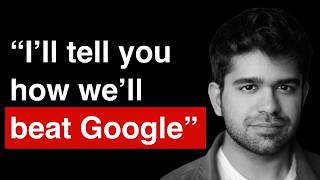
Aravind Srinivas, CEO of Perplexity, talks about building a search engine to challenge Google. The company ships features fast, has grown its user base rapidly, and is experimenting with new ad models instead of traditional search advertising.
We don't really do, like, product review meetings or anything like that. My mentality is that why even wait for a review meeting? Just give me the link I want to try now, and I'm going to give you instant feedback. Now, that moves much faster than, like, you preparing for a week for just a meeting with me, which shouldn't be the case. I'm not, like, giving you feedback as, like, a executive in the company. I'm giving you feedback like a user. I think that is the more genuine feedback. I think the feedback that you give just because you have more authority is usually coming from some other motivations, not necessarily a true user. Right. So the nice thing is the products we build here, Perplexity. It's meant for all Perplexity users, and I'm one of the main Perplexity users.
All right, welcome, everyone. My guest today is Ariven. Ariven is the CEO of Perplexity, the AI answer engine that's disrupting online search. Really excited to talk to him about how Perplexity builds products, how it's grown to, I think, 100 million queries a week, and how it'll deliver ads that are a lot better than 10 blue links. Welcome, Arvind.
Thank you, Peter.
Yeah, so let's talk about how Perplexity is building products. I'm, like, super impressed by your shipping velocity. I think you launched, like, half a dozen features over the last 10 days, including the Mac app, internal knowledge search, and so on. You know, what's the secret to shipping so much so fast?
I mean, first of all, yeah, internally, I'm always thinking we could move even faster. I'm externally very proud that people view us as, like, a very fast shipping machine. But let me just be very honest with you and say we have still a lot of inefficiency and we could be doing even better. So what causes us to at least do at this level is, first of all, like, we. It's been part of our culture since the beginning. We've always been operating with a very high sense of urgency, and that comes down from the top to, like, pretty much every person in the company that, like, every day matters, and every week is essentially 2% of the year. So, you know, if you don't ship something a week, like, you've lost 2% and for four weeks, you've lost, like, almost 10%. So it matters. And then we also motivate people to. To try to first get it up running for internal testing. There are approximately 100 people in the company, so the way we motivate them is like, look, you get your first users as those working here and if they're excited about your thing, if there is some virality there, there's some internal excitement, it's quite likely that it'll be an external success too, because like 50 people are most people, you know, a diverse set of 50 people. So I think the mentality of like, or operating with urgency, getting dopamine from, you know, getting some initial feedback, it still exists in the company. But in terms of how we organize, we try to operate very independently. Like a bunch of independent teams are working on features in a parallel manner. Now that's difficult because in the beginning a startup you're just doing only like one project at a time. You because there are only like three or four people. So you do that, you ship that and then you move to the next thing. And so then there's no need to think about parallel operations. You're only thinking about like how to move in a sequence. But as you get bigger, let's say you have 100 people, you obviously have to do more things. Otherwise, like, why even have that many people, right? But it's not quite obvious though. Just because you have more people doesn't mean you do more things. In fact, that's why big companies struggle, because they have a lot of people. But then because they have a lot of people, there's a lot of overhead and bureaucracy and communication gaps. So we felt like best to structure teams that are completely independent. Like the product team that works on shopping or local would not necessarily have to collaborate much with the finance vertical. Or like people are working on spaces or internal search. They're all like working independently now. That doesn't mean they don't talk to each other. There's some lessons to be learned from one another. I think they all collaborate, but the main perspective is that you should be able to have a repeatable set of playbook for how to pair the right group of people for any new vertical or feature you target, which could be like the right group of designer, front end engineer, full stack engineer, back end engineer, AI engineer, search engineer, product manager, engineering manager. That sort of like group of people that you can replicate across different features. If you've succeeded at it, I think it works out pretty well. And by the way, ByteDance, I had the opportunity to talk to the ByteDance CEO once and he told me this is exactly how ByteDance operates too, which is they have a group of people who can just go and do any app in the bytedance family. Doesn't matter. The Same group of people work on the growth for any ByteDance family app, not just TikTok. So whatever lessons they're learned, it's this pool repeated across, like, many different functions.
Got it. And you know, like, I think you're shipping features. Then it takes for Google to like, push one document to another Executive. Do you have like a. Do you have like a product review process or is it just purely, like, people play with it internally and then decide it's ready to go?
Yeah, I mean, we, we don't really do like, product review meetings or anything like that. I mean, like, anyone would be really motivated by doing such things because that's kind of how Steve Jobs ran Apple. Like an editor, almost like he. All the teams would just go demo to him and they would prepare for that meeting because they'll be worried what he's going to say. And I know some CEOs who have tried to like, sort of, I want to be like Steve Jobs. And we do the same thing in some sense. Zuckerberg did it, like, that's the whole thing concept in Facebook called Zuckreviews. And so he did it. But my mentality is that why even wait for a review meeting? Just give me the link I want to try now, and I'm going to give you instant feedback and then I will ping you again in a few days to ask if you fix those bugs. And then once you fix it, I'm going to give you a new set of bugs. Now that moves much faster than like, you preparing for a whole half an hour, half a week for just a meeting with me, which shouldn't be the case. You prepare. You only care about the user. I'm not like, giving you feedback as like a executive in the company. I'm giving you feedback like a user. I think that is the more genuine feedback. I think the feedback that you give just because you have more authority is usually coming from some other motivations, not necessarily a true user. Right. So the nice thing is the products we build here. Perplexity. It's meant for all Perplexity users. And I'm one of the main Perplexity users. Like, definitely not the top. I see a lot of people on X who use even more than me, but which makes me feel like I should use even more. But I definitely use like several tens of queries a day. And so I can easily, like, give feedback on almost anything we build here. And I think that matters, though.
That's amazing. So the other part of, like, moving fast is, like, staying focused and I See you sometimes tweeting like, hey, should we build a browser or should we do this and that? And how do you guys decide what feature to build next? You know?
Or yeah, it all works backwards for us from what moves the needle on like the more most important metric we care about internally and externally, which just how many queries per day are people doing? You know, Google also cared about only this one metric. That's why you wouldn't necessarily have Google. You see Google really talking much about like how many users they have for Google search, they only talk about how many queries they have. And like I think right now the count is around like 5 billion. I think 5, 5 to 6 billion a day could be even more. And so, so for perplexity, when we first started the first week we got like 3,000 queries a day or something very little, nobody was using. But again like from there we went to 3 million queries a day. We were like very happy, like oh my God, that we literally grew over a thousand X. And then from there like from 3 million to like, I think now we are around like 16 million or something. So another 5, 5 to 6 X. So that's difficult to sustain. This sort of growth rate is very difficult. But if we do like for example, if one day, if we are able to do 100 million queries not far away and from there if we get to a billion queries, that's like true success. It doesn't matter. Any else doesn't matter. You see my point? Like a lot of other metrics, but there's no way to win on the queries per day metric without getting users and without getting retention, you can have like billion installs and nobody uses the app, then you won't get it. Similarly, if you can have existing users use the app regularly, but most people don't have more than six or seven questions a day, right? So you have to get new users. So this is like essentially the one metric you can really core focus on. And then whatever feature phk, we can ship to increase this metric either like first order way or second order way, we prioritize that. I think like you, you can sort of approximate the cause and effect equation with like just first order and second order terms. That should be enough. Let me give you an example. If you ship auto suggest or something like that automatically, it's likely to increase the queries per day because people can like ask their first question much faster. So similarly, if you ship related questions at the bottom of an answer, it might increase the likelihood of a User asking a follow up question simply because they see a bunch of follow up questions. They don't even have to click on what you suggest. They can just get mean hack to ask another question. And then like, there are some other things that you could do, like making the search faster, improve the latency. So that means like people, once they get the answer really fast, they like using fast products, they use it more. So there are like a lot of ways in which you can increase this without it. Like particularly thinking about user growth alone. Right. And so working on different verticals means people start using it for many different purposes, not just like asking fact checks and research. So it becomes part of their daily habits. That's why I try to sometimes ground my thinking in what people are saying on X too. It's very important, by the way, like, it's not just wasting time. A lot of people on X are users. So I'm literally talking to users. It's very rare that like you get to do a job where being on X is also like part of work. It's not exactly like wasting time. So. And then I think like more people should do it. Elon Musk does it a lot, right? Like he asks a lot people a lot on like, what car should Tesla build? What do you think about fsd? You know, like he's constantly like seeking feedback. Right. I think that's very essential. And Mark Zuckerberg also does this on his channels. On what, the Meta and Instagram?
Yeah. No, I mean like, I love CEOs that like talk to users all the time and that's kind of like part of the main jobs. What? I mean, like, you know, I was using Google and then I tried Perplexity like a long time ago and it didn't take me that long to realize how good this thing is. Like probably just a couple queries to realize how good it is for information and knowledge search. But I think you had this long tweet a while ago. There's like many different types of searches, right? So like, so I guess a couple questions like, do you have like the Facebook Metro where like, you know, you get seven friends in 10 days and then you get hooked? Something like that.
Or yeah, by the way, that, you know, you should take that little bit of a grain of salt because it might not be exact, but it's a useful way to think about things. Yeah, we, in our case, it's all about like how many of your first K questions that you asked that you got a pretty good answer. If a user asks like maybe let's say 10 questions, then it's unlikely that they drop off, right? So you can essentially see it like the percentage of people who ask like one question, how many of them ask two questions, percentage of people who, how many of them who ask two questions? Ask five questions, five to 10 or 10 to 20, 20 to 50, 50 to 100. I think once you're like ask 100 questions on the blog, it's unlikely that you just completely drop it off and go to some other place. So that's all stuff that we see and we try our best to improve these ratios, each of these funnels and then it always comes down to three things, which is accuracy, latency and how readable the answers are. You don't want to like wall of text, you don't want slow answers, you don't want inaccurate answers. That's the worst thing actually. Inaccurate answer makes user lose trust in the product and move away. So that's that These are the three main dimensions to improve the product. And it's like cool to break it down to these three things because even a year from now I'll give you the same three dimensions. It's all about speed, accuracy. And that's a fourth dimension which is kind of more meta than this, which is robustness or reliability of the product. Like it shouldn't go down, infrastructure shouldn't go down. That shouldn't be like, we'll be back in half an hour. All those sort of like infra issues, I mean we had a lot of them in this quarter so we actually worked hard on trying to remove them. But we've also seen some users drop off because the product was down quite consistently that people might be like, oh, I don't want to go there. So all these issues contribute and we're still a startup, right? We're learning how to scale our operations.
How can you tell how accurate the answer is? It's just like do people search again or do people give you feedback? Or how can you tell?
It's difficult to know just from the logs if an answer is correct. I think if anyone's cracked that formula then it means many more things because you could literally just use AI to verify AI and make every answer accurate. Essentially if you can just parse the logs and see if an answer was correct. I guess like one signal is like rather the follow up question was to keep clarifying and asking for the same thing or ask another thing. I think that's a good signal to say if like a particular question, correct answer. Another way to verify this is to have even smarter model. Take the query, the sources and the answer and check if something was correct or not. Obviously that's expensive, so you can't do it for like a million prompts a day. Like it's, it's going to cost you money. But essentially, like, just have Pro throw more context at these larger models and see if they can verify stuff.
Got it. So how does your product team use AI or Perplexity internally to build Perplexity? Really curious about that.
Yeah, Yeah. I mean, a lot of people are using These coding tools, GitHub, Copilot, or Cursor, because I think these coding tools are integrated right into the editor. So you don't really have to think about which AI to use outside the editor. So I think that's like one, one place we're seeing a lot of productivity improvements. Then I think they're all using Perplexity or ChatGPT, whatever product they wanted to use it. And I say ChatGPT users are more like Grammar English, those kind of cases. By the way, they can use Perplexity for that too. But you can see why, you know, even if you work at a company, it doesn't mean you have to use a product. You have to earn the user. And Perplexity has. The first way we got a user is to first correct the use case of like searching, asking questions. And so chatgpt, the way they got there for a set of users is, oh, you can, you don't have to worry if you had poor English. You don't have to worry if you didn't know how to write code or like you, you don't have to worry if you didn't know how to like, you know, another language and you had to translate all these sort of like writing use cases, like a text generation use cases. They just nailed it, right? So even if Perplexity is able to do all that, or even if ChatGPT is able to do some search on the web, it doesn't matter. The initial mentality of the user has been cornered. So I think that's how I think about how people use these different AI tools is like coding tools are used by coders, Writing tools are used for people who need to write a lot, like send a lot of emails. Searching is used for people who need to do a lot of analysis and research. So depending on that function, they just use whatever tools they want.
I actually find Perplexity pretty decent at, you know, editing my blog posts because you've spent a lot of time like making sure the Report is concise and like to the point. And like actually it's not bad. Like I use it sometimes over a cloud or ChatGPT.
Yeah. Interestingly, I know a lot of people in the Bay Area are big fans of Claude actually. And I personally have used Claude multiple times in the context of like when I'm interviewing someone for a job, like say like some kind of like recruiting role or corporate counsel. These kind of like roles obviously. What do I know about these roles? Like I know, okay, I know to some extent what they do, but I've never been in those roles before to ask very pointed questions that will give me a lot of signal. So I just go to like Claude or like and ask like what question should I ask? And the answer gives a very interesting. Because it gives an answer from the AI model, not from the Internet. So there's like some decoupling. Of course I can also get the same thing to work on the writing mode of Perplexity. But I noticed some differences at times when Claude gives you like a pretty interesting answer that I would never have gotten otherwise. And so just sometimes I just use these search free AI tools to give me some perspective. That is very different. It doesn't always happen. The model sometimes just regurgitates the same thing on the web. But the only model I've seen that has some sort of like I would say opinions of its own seems like, seems to be like Claude, at least in my usage so far.
Yeah, it's my main AI tool outside of Perplexity because yeah, I really enjoy you using it. And you mentioned like hiring people. I watched your interview with this person from India and you talked about your career a little bit. Like this is kind of like a side. You mentioned how you got rejected by a computer science department and then after that you went to Google and you went to OpenAI and we went to Berkeley. How do you. I really believe this whole thing about chasing credentials and gatekeeping is like kind of a waste of time. So how do you think about this, having been on this journey and like how do you, when you're trying to hire people, how do you not get impressed by like the Google or like whatever the brand name is and try to figure out what they actually are?
Yeah, I mean, okay, let me be very direct here. Once upon a time, being ex Google MA was an insanely useful credential to have like I would say probably even like eight years ago, you know, or yeah, eight to eight to 10 years ago being ex Google was like a very interesting credential. You could, probably the most important credential you could show on your Silicon Valley resume was that mainly because Google hire hiring process was very strict. I think they had like three rounds of engineering and then two or three more rounds of like software design. So just to get in there and like was very difficult. And if you did well internally also I think it mattered because they were still shipping a lot back then. So that's why Google was the thing, you know. Now it is not because there's a lot more people they've hired. So obviously the hiring quality and the interview process needs to get like, little more easy going or else you just, they're not enough. If the world had like 500,000 extremely amazing engineers, then like that would be amazing. But that's not true, right? Yeah. So I think my what we look for is like people who are having a lot of potential but haven't really made it yet. And like we hope perplexity can be their big career step and we are happy if we can produce engineers who go on to do amazing things in their career. Even outside perplexity is fine too. Right? Like, I don't want to like think, oh this person's going to be here forever, but I hope like they learn so much here and they utilize those skills and like do amazing things. And ideally I would hope they go and start new companies assuming we continue to do well and they get somewhat well off that they don't have to work for anybody else and they can go do amazing things. And what we look for outside of potential is like track record obviously is a good indicator and that's not really coming from where you work, but what you've done in each of those places and especially if you, even if you were in a failed startup, but you really did a lot of the work, I think that matters a lot. Like because the startup did not fail because you didn't work. I think the vision or the idea of the startup was wrong. So that means you really need a victory of your own for yourself. But you gained the willpower and the determination to succeed in a startup already you've seen that. So you're like perfect to come to another. And that's happened, by the way, a lot of the successful engineers and like most of the unicorns and deco cons have been people who previously worked at a company that didn't work out, but they gained the skill of working at a smaller startup and probably have a.
Chip on the shoulder, correct?
Yeah, chip on the shoulder is a good thing. One of my Investors. Elad Gill told me this because I was very critical of one candidate I was trying to hire. I was like, hey, this candidate talks a lot. And they're talking like they've achieved so much. I'm like, why would they come and like succeed here if they feel like they've already done a lot? And he told me, in life most people have zero hits. Some people have like one amazing hit and extremely, extremely few people have like more than one hit in their life. And that's why people respect entrepreneurs who've done multiple successful companies. Because it's very hard even if you are very successful once there's no need that you can hire a lot of people, you can raise a lot of funding for the second one. But like it's not obvious to actually succeed again.
Yeah, because you know, find that part of market fit is hard.
Correct. Yeah. Chip on the shoulder, therefore. Yeah, shoulder is therefore like a useful criterion because they, that means they are still looking for their big hit.
Makes sense. Makes sense. Let's talk a bit about how Perplexity scaled to. I think now you're at 100 million queries a week. Is it just through word of mouth, people tweeting like, this is perplexity, this is Google. Is that the main driver?
Well, that was a very important source of growth in the beginning. And I think I still, I don't know why I'm still like on X, like tweeting about all these like comparisons. A lot of people give me a lot of bad comments there for doing it, seeing like I need to mature and become a more grown up like person. But I would say Twitter definitely is one of the biggest reasons people know about us, no questions about it. And we've almost given a playbook for other startups of how to use Twitter to grow and beyond Twitter, I think LinkedIn is pretty good. A lot more like professional posting there though. And then after that there's emails like, like we have a lot of users so we send periodic emails to them on like what we've shipped. So those newsletters help a lot. And then we've also like been successful at, I would say like this is not something you can track but lot of people who allow using Perplexity, they just send text messages to others saying like sharing a permalink the answer and then you go and check out the answer and then you know what product this is. So I think WhatsApp, like there's a lot of perplexity links being shared on WhatsApp or iMessages on a daily basis that has that inherent virality and like that is a feature we particularly built with that mindset. Hey, maybe like the answer is so good that someone goes and shares it and then people get to know like let's say you're asking a question on, on a group chat and nobody knows the answer and then someone drops the link and then like you're like oh, what is this product? Right. So I think that has also helped us a lot.
I, I think I onboarded my wife to it because we're planning a vacation. I, I was using spaces.
Yeah.
So yeah, it's great, it's great. Collaboration is kind of has some virally big thing, you know.
Yeah.
And also like I find that the free, like maybe you're too generous but like you're giving four free pro searches every four hours I think which is like very, is very generous. Like I guess that helps with like user retention but it might hurt the paid upgrades or.
Yeah. So I mean we could, the way we thought about it is like if whatever plan we come up with, someone will undercut us anyway. Whoever has more resources than us. Yeah. So we could optimize for revenue and then have a churn later. It's happened to very successful companies, I'm not going to name who but like they had like a lot of very fast revenue growth. But then once OpenAI came and gave it away for free, their revenue churned and like their valuation got affected. So from the beginning we were like, let's go for users, let's go for usage, let's go for queries. If people love using the product and their daily habits have changed already, there's very little chance that because someone else ships the same thing, they'll churn. But when people are paying for a utility and that utility is now offered by someone else with a bigger brand power for free, they will churn. It's historically proven. So we were like ok, even if we are not getting certain users to pay when they really should be paying us because we are spending a lot on their queries, it's okay, we will figure out later how to monetize them more effectively, but let's single mindedly focus on user growth and query growth for now.
Yeah, but the subscription plan is doing pretty well, right? There's like millions of people paying for the. Paying for the subscription.
Yeah. See that's another thing I would say A lot of people made fun of us when we launched a subscription plan saying like why would I pay for another AI? I'm already paying for chatgpt look at this person trying to monetize search through a paid plan. It's going to end up in a failure. Look, the jury is still out. I'm not saying we have succeeded but we made enough people to pay for search that Google considered trying to make us paid version of their search product. Like Financial Times reported that. So there is something to be said there of like, you know, like a lot of your assumptions about the world may not even be correct that there are enough people who want to pay for accurate, unbiased, fast answers. A neutral fast search product that just always works is pretty underrated. Like you can certainly get it to a point where millions of people are paying for it. Now you can argue hey, like you get millions of people to pay $200 a year, that's at best maybe like a 2 billion a year business. It's like a drop in the ocean of Google's 200 billion 1%. So who cares? You could argue that, but then you can also remember hey databricks Snowflake, their revenue is 2 billion a year or 3 billion a year. So you literally built a company that's as big as like 7,000, 10,000 people with like one amazing daily utility product. Right. So there are like multiple ways. When you're always thinking about things relative to Google, everything feels small and irrelevant. But when you think about like Companies that have IPO'd, Airbnb, DoorDash, Snowflake or upcoming IPO databricks, 2 to 3 billion or 4 billion a year in revenue with like significant chance for profitability and it's pretty amazing outcome for any venture backed business. So that's why some investors got it and that's why they like being part of the perplexity cap table because they clearly know that like the even the downside is pretty high relative to most companies that IPO'd. Whereas the upside, you know, if you get somehow you figure out a way beyond just paid subscribers, the upside is even more like amazing. And I think the future is going to be a mix of paid subscriptions that have a lot of utility as part of the plan, not just access to AI models and like some kind of advertising that doesn't corrupt the answer quality. If you can figure a good healthy balance of the two and monetize free users even more efficiently than what we do today, I think that would be pretty amazing.
Yeah, so that's our last topic. Let's talk about advertising. Like just as a user, you know, like Google search has obviously devolved a lot. There's like a lot of sponsored links like mobile websites is like just a terrible experience. Like so many ads all over the place.
Yeah.
So how are you thinking about delivering these ads that are better than what exists right now?
Yeah, yeah. So we by the way, just related to the mobile point, 60 to 65% of Google's ad revenue comes from mobile to the extent that they've actually optimized their indexing more for mobile web than web, which is why sometimes the experience on the web feels bad because you're like, why am I seeing all these other things? So that point aside, how are we going to approach it Now? All this confusion comes from making the ad unit being a link. When the ad unit is a link and when the UI is ranked order of links, then obviously there's no argument that helps you win here. You have to corrupt the rank order at the end. You have to show sponsored ads either at the top or in between or at the bottom. Right. And then when you show sponsored ads in between or at the bottom, nobody's clicking on it, which means the click through rate on ads is low. If the click through rate on ads is low, then your ad revenue at the end of the quarter is low and that will lower your stock price. So you have to put it at the top. So that's essentially why you're feeling frustrated. And if the core user growth, so as in user behavioral growth of typing in keywords into the Google search bar, if that is not a growing trend, if that's a saturated trend, then like you just have to put more ads at the top to increase, keep the click through, rate the constant and make sure the revenue doesn't go down. Now if we are saying let's avoid all this crap, let's make the ad unit a question at the bottom of an answer which incentivizes the user to ask the next question. So if there is a question about like best running shoes and different running shoe brands can advertise to be a sponsored question at the bottom of an answer. Now that's not really hurting your answer. The first answer that we gave you of what are the best running shoes? Different trade offs, that's still unbiased by any advertiser. But after the answer, after you finish reading it, if a particular brand like on or Nike or Adidas can like have a question about them, it's like what makes On Rogers like pretty comfortable to walk with something like that or which shoes of Nike are the most sought after in 2024 you might not have been interested in Asking those questions in the beginning but because you saw them, you might be interested in like clicking on them. And if you clicked on them and learned more about a brand and you're able to transact directly, if the answers come with the brand's product catalog directly and you're able to click on them and buy directly, essentially you've generated a demand. The brand has generated a demand for itself through a question and fulfill the demand through a answer. And I think that's more efficient than like paying a certain ad budget for a template link to be at the top when somebody types in running shoes and generate a demand on your own site through a referral traffic. This is how we you can get even more hyper targeted at the right user, the right intent without corrupting the user experience. And also like making sure you still have a ROI and the budget you spent. That's our view now I gotta say all this is TV remains to be proven. I'm not saying this is going to work but you asked me for my hypothesis and this is our hypothesis.
And there's a lot of people actually clicking on the follow up questions. Right. There's like I think half of the queries.
I don't have the exact count today but it's very significant enough that we feel confident betting on this being an ad unit. And there are other, there's other service area for ads. If you see some on this essentially the side space on Perplexity is blank like that real estate is not being utilized. So a sponsored image or a sponsored video could be anywhere. Where we think a multimedia asset can enhance the answer. A review video of different shoes could be a sponsor video. And it's not just like brands being able to buy that ad inventory. I think influencers can do. An influencer who reviews different tech products could be advertising for being a sponsored video. In a question about like comparing different gadgets of phones. So there are like so many different ways to get eyeballs that will not just benefit the advertiser but also the user.
Just like taking your shoe example. Like I think if I use Google I have to click on the link and I have to probably sign up for our account to buy the thing or like check out enter my information again like if everything I guess is just part of Perplexity UX it's probably less friction for me too.
Correct, Exactly.
Yeah.
That's one place we want to like you know I think both us. I think meta can also do this is like and they already began to do this is when you discover a new brand, you're still fulfilling the demand in Google. Like you're like scrolling through Instagram. You discover like a cool shoe or like a cool watch, but then you go to Google to type in the name of the watch or the shoe and then buy, go to the referral to the merchant and buy there. And so they never generated the demand for you, but they get to claim the credit for fulfilling it. And demand fulfillment is also the place where ad budget and ROI is highest. So people spend more there. Yeah. And that means that if you're able to transact natively on the place where you first originally discovered the brand, where the demand was even generated, I think that could go a long way into making the experience more efficient and streamlined for the user and also convincing the advertiser to stay more on the demand generation platform than the fulfillment platform. And I think that's the long term game to play for making a successful consumer product in AI where you can be very good at answering questions in an unbiased way, but very helpful for brands to get attention of users through questions and get the return on investment through a transaction. That's our idea. And you can ask me, why would Google not do this? I'm betting you that the margins on this might be like significantly lower than the current advertising business they have because the extent to which they go to actually claim credit is insane. If people were to get an award for who gets to claim most credit for doing something, it's probably Google will be number one there. Because apparently what I heard is like if you use Google Maps to go to a particular local business, they claim credit for generating the demand. Essentially like they claim that if you got a purchase in the physical store because someone came through Google Maps, then Google is the reason for that. And they can track that because if they use Android phones you can track the transaction and stuff like that. So that's how they get all these like, you know, long tail businesses to like buy a lot of ad inventory on Google.
Yeah.
And so when you're like seeing the Google stock go up, it's because of a lot of work put in by the ads and sales teams, not really by the product teams. And that's why, like I'm saying, there's a genuine shot at like changing all this and making a more consumer friendly experience.
Yeah, I think you have a, I think you have a really good shot man. Because you know, there's like the bureaucracy is dilemma.
Right.
Like Google has 100,000 employees. Like they're not going to blow up their Ad business model overnight.
Yeah. You created in the antitrust document, the DOJ antitrust document, where it states $8 billion was spent on search, infrastructure and payroll. But, like, $12 billion, $11 to $12 billion was spent on ads, infrastructure, and payroll. So they're really spending 40 to 50% more money yearly on ads rather than on improving the core product. So whether you should always read, like, where the money is going is where, like, the real intent is. If someone's, like, more focused, continually saying, we are staying focused on the mission of improving, like, the answers or, like, like search results. Yeah. Look at the money being spent on it versus elsewhere.
Yeah, that's a very good point.
Yeah.
Same for the elections, I guess, but let's not talk about that. Yeah.
So.
So I want to wrap up with this question. There's a lot of people watching this who are working tech or maybe students trying to make something out of their life. Like, just want to wrap up. Do you have any, like, closing words or advice for people who want to kind of, like, really achieve something? Like, you have, like, is there any. Yeah, either you're people who are like, students or people who are, like, looking for something more in their career.
I would say, you know, like, work hard. There's no substitute to hard work. It's, like, boring advice. But it's really, like, the one thing that keeps coming back to me. And the other thing I would say is when you do something you really like, enjoy work doesn't feel like work. So you can actually put in more hours. So that's actually the real secret. How to work hard is to pick something you really enjoy doing. And I think you're automatically driven to put in more hours on it because you feel like it's your life's work. And the last thing I'd say is, like, don't give up until you're forced to. There's going to be plenty of moments where when you're doing something pretty hard, people feel like this is not worth doing. They'll come and tell you on your face. But anything worth doing has always been difficult. I remember this because Jensen Huang told me this directly. It's like anything that was worth doing should have been difficult by design. If it was not difficult to do, it probably was not worth doing. And I don't know if it's 100% accurate, but it's pretty accurate that it feels if you're trying to get something new into the world or like, something different that goes against so many existing structures. I think usually if you come through at the other end, it probably was worth doing. It probably changed the world in a meaningful way.
And, you know, just to close, you had this tweet on Friday saying, like, you want your week to end, but I don't. So is that because just, like, you're motivated by just, like, delivering this product to users?
No, that's like, a random comment about, like, look, weekends. By the way, I'm not against weekends. Nobody works. Nobody's forced to work in the weekend here. People do it if they want to. And I'm not, like, forcing any. That's no culture of, like, hey, come on, Saturdays, let's work. In fact, if you're forcing people to work, probably, like, it's the wrong thing. But what I meant to say was, when you're, like, thinking about work all the time, it's not like on a Saturday, I'm just completely zoned out and not thinking about the product or the company. That's what I meant to say. Yeah.
Cool. All right, thanks so much, Aurora. Man, this is an awesome conversation.
Yeah, thank you.
Really appreciate your time.
More from Peter

Dropbox VP's Best AI Workflows to Help You Take Back Time at Work | Morgan Brown


Canva Co-Founder: The AI Playbook Behind the World's Most Popular Design Tool | Cameron Adams

How OpenAI's Head of Business Products Uses ChatGPT to Save Time at Work | Nate Gonzalez

Complete Vibe Coding Tutorial: Build a Full Stack App in 30 Min with AI | Matt Palmer (Replit)


Complete AI Course (2025): Prompting, Evals, RAG & Fine-Tuning | Adam Loving (Meta)



