Inside How the Best AI products Grow | Brian Balfour (CEO Reforge)
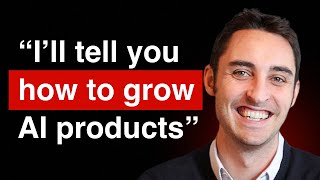
Brian Balfour breaks down how ChatGPT, Midjourney, and Perplexity grew so fast. He explains why retention is harder than getting users, what makes AI products different to market, and how the best ones stay ahead as the landscape shifts.
The way that I like to describe it is like my usage with Google, it just has increasingly turned into feeling like I'm consuming empty calories. It's like I'm just eating junk food and taking down Diet Cokes and stuff versus taking in substantial calories. So that's been degrading over time. And then the second piece of the equation is people have had harder and harder times converting visitors into whatever their goal is, whether it's a user or customer and stuff. And so people have gotten more and more aggressive on the conversion techniques with like massive popovers and all this like yeated stuff. Right. So both of those things have just fundamentally degraded the quality. And so I could do one of two things. I could search Google and then I could sift through three or four results, closing pop ups and reading through terrible SEO, you know, garbage optimized intros to get to the nugget that I want. Or I can just plug it into Perplexity and it frigging spits out the answer.
My guest today is Brian Balfour, CEO of Reforge. Brian and I did a deep dive into how four of the best AI products grew so fast. We spoke about why ChatGPT is investing in custom GPTs, how MidJourney grew to 200 million annual recurring revenue despite an interface that relies on discord, how Perplexity is competing with Google search, and how LinkedIn collaborative articles combines AI and user growth loops to be the most underrated AI product. Brian is one of the best growth leaders out there, so I hope you enjoy our conversation. Consider subscribing for more great interviews every week. All right, well, welcome Brian. So glad to have you here.
Thanks for having me.
Yeah, so I took your reforce growth class like back in 2017, so super excited to talk to you about growing AI products.
Yeah, one of the cohorts. So those 2016, 2017 years were a lot of fun. Those were. That was the beginning.
Yeah. Not sure how much I remember. So I'm glad to learn from you again.
Yeah, that's just it. Well, well, interestingly enough, that's always the challenge in education and we are building new product around that exact problem. So we'll talk about that at a later date.
Nice. So I guess we'll talk about growing AI products. I guess we'll talk about the most successful one so far, which is, you know, ChatGPT. So I, I think it came out early 20, late 2022 or early 2023. Like can you share like some of the growth loops that kind of fueled its rise to a hundred million users.
Yeah, I think ChatGPT is one of these interesting cases that nobody should try to follow because it's such a exception that it, you do try to follow it that you're very likely to fail. And so I, I think with most products it go, they all go through this sequence where you start with these non linear, these non scalable tactics that to kind of start to get traction and start to get some of that energy going. And then at some point you do the delicate dance of transitioning to something that is more compounding over time, more of these like growth loops. I would say ChatGPT is one of these rare scenarios where they had such a, you know, what I would call mind blowing differentiated like product user experience that it essentially, they essentially went from zero to a hundred million users just by building a 10x differentiated experience. And that experience fueled a couple different things. One was certainly word of mouth, people talking about it with each other. But that also manifested in some other ways, like other versions of word of mouth which would be people taking what they were doing on chat. ChatGPT recording a short video image, sharing it to social, that captured like the media's attention and then the media attention like continued to fuel it. It really was capturing lightning in a bottle around these things. And I think this is such a dangerous example for others to follow because especially builders get in this mindset when they're building their own thing that they also feel like they have this lightning in a bottle. And in 9,999 times out of 10,000, that's actually not the case. And that's not the playbook, that's not the playbook to follow now. Now ChatGPT actually is shifting into a totally different issue set which is that they grew so fast on the acquisition side that they now have to think about how am I going to retain and activate these users. And a lot of AI products are actually going through the same thing where the novelty effect of what these products can do really captures a lot of acquisition interest before people have really solidified the cement around what are those activation and those retention pieces? And so a big open question right now is how much leeway do these products have? How much time leeway do these products have to get these systems in place before people just get burned out and they don't even like reattempt to use the product again? It's actually pretty unclear and ChatGPT has actually benefited quite a bit from maintaining just public interest and PR interest and releasing these big Model updates and other components that have, that basically acted like a lot of reactivation loops to get people back in. But certainly underneath the hood I've seen the data is like gen AI products are retaining at a much worse rate than non gen AI products, but they have serious acquisition interest. So I know we're going to talk about GPTs. I think this kind of plays into that effect as well.
Yeah, like, you know, just talking to real people, I can only be part of like a handful of group chats at the same time. So like how many AI chat bots can I talk to, you know, on a regular basis?
Yeah, well, totally. So I think there's, you know, as I've gone deeper on this space, I think in the AI space there's this whole concept of input and output friction. So essentially with something like Chat GPT, there's how much input, how much effort do I need to go through to get it to generate the output that I want. Right. And in ChatGPT's case, well, I actually have to give it quite a bit. Right. Like if any, if you've gone any sort of deep on prompt engineering, you understand that actually there's all of these crazy different methodologies about how to give IT instructions, reasoning techniques, context, all these kinds of things, but the effort there is actually really high. And then there's the output friction which is how do I take the output and make it useful and whatever it is I'm trying to do. And that could be totally different depending on the use case of Chat GPT. And so I think actually Chat GPT is on one end of the spectrum where both of those things are actually very high. And then when you consider something like GitHub Copilot, they're on the other end of the spectrum where there's almost zero input friction. I'm typing code that I would have to type otherwise I'm actually not going through any incremental effort. And then the output friction is also very low. I just have to hit tab or some other key for it to like fill out the rest of the code. It's like the autocomplete. So they're on the other end of other end of the spectrum. And I think that's probably why they are doing a much better job at you know, high retaining high retention users over time. And this is where I think GPT strategy, the input friction is where the GPT strategy for ChatGPT starts to come into account. If you, if I don't know if that's where you want to go Deep on.
Oh, okay.
Yeah, yeah.
You mean the custom GPTs, right? Yeah, like they, they seem very interested in like building a platform, you know, first through APIs and then plugins which didn't really work, and now with GPTs. And I guess GPT to me is just like a way to save like a very long prompt. But is that what you're going with?
Yeah, a hundred percent. Right. Like so. So I actually a lot of people have been comparing plugins and GPTs, but I actually think they were quite different. Plugins were about how to increase the capabilities of what the tool could like execute for you, and plugins kind of fell a little bit flat. There's just, there's like too many. The error rate on it is just like way too high. GPT is, the platform is like a little bit different, which is, I think it gets to it. It's lowering the input friction, especially for new users or users who aren't going to get advanced. Right. So rather than, you know, I don't know, learning how to get this thing to teach me a new topic or something, like, there's a bunch of like learning GPTs, for example, where you just like plug in the topic that you want to learn about and then there's a whole, there's a whole set of sequence of things that it goes through to like teach you this topic. Now if you just have chatgpt, you've gotta not only give it the topic you wanna learn, but a whole set of instructions around how you want this thing to teach you. Right. And what you want it to do in order to go through that back and forth. That's very high effort and very few people are actually gonna go ahead and do this. And so now there's like a learning GPT where I don't have to do all, I don't have to input all that, all I have to do is input the topic and the rest of the. The prompt, as you said, is like, is basically already written. And so I think GPTs is really just a, it's an activation and an engagement play for ChatGPT. Like here in the short term is to massively reduce that input friction that users need to get value out of the product and that'll like fundamentally like play into to retention as part of it.
Yeah, that's a really good point. Like I, you know, I guess I'm a power user. I personally build a bunch of like personal GPTs. I tell you too much about my, myself and then.
Yeah, you're definitely a power user. Yeah, for sure.
Yeah, but because I have all these personal GPS various things, I probably don't want to switch to Atlanta platform just because I've saved all these prompts in GPS that I use on a regular basis, so. Interesting.
Yeah, it was a. You know, months ago I was talking with Joff Redfern, who was, he's the former CPO of Atlassian. We were brainstorming on this and my initial take was kind of what you just said, which is like, oh, let people publish the prompts, you know, in like a UGC way so that I can just, I can like save them and copy and paste them running myself very easily in the product. And I think GPTs was just like a better version of that where I don't, as a user, I don't even have to understand what the prompt is behind the thing. I just add this thing like I'm adding an application and I give it a little bit of information and it kind of does it, it, it sort of does the rest behind. It does the rest behind the scenes. So I thought it was a pretty good execution. Pretty. It was taking the power users like you and now they're trying to like layer on incentives like ThriveShare and all that kind of stuff to get you to like turn those into GPTs and put them in the store and let other people use them.
What kind of, I guess what, what kind of moat would you call that? Is that like a network mode or like broadly speaking, like what kind of modes do you think ChatGPT has with all these other chatbots coming up?
It's unclear. I think the. Certainly they're using this specific case that we're talking about. They are using their a hundred million user number to try to attract a bunch of people to create a bunch of GPTs and lower this input friction, you know, which will increase engagement and in an end and then monetization. Right. And because all of the other ones, whether that's Microsoft Copilot or a Bard or others, are going to have the exact same problem we just talked about, right? They're built for a very horizontal, very general use case and as a result, you know, horizontal use cases, their pro is their con. They can be used for so many different things, which is their Pro. But that also means they can be used for so many different things and it's actually really hard to get a user to understand what it is that they can use this thing for. And I guess in pre AI world, right, Horizontal products solve that by creating these huge template libraries, right? You can see that in things like Loom and Notion and Miro and all of these other horizontal products. And so I think GPTs is kind of the same thing. And so I think there'll be a question of, well, due to these other general use case type of chat experiences, do they get enough volume, do they get enough demand to essentially replicate, you know, this GPT layer or in the pre AI world, like the template layer, you know, to get. To help people get activated on these products? I'm not sure yet. Right. It wasn't. It's not really a defensibility thing in the world of productivity tools like Notion and Miro is really an acquisition and engagement mechanism that really helped accelerate it. But as you can see, there's so many folks that have completely replicated that template strategy to solve the horizontal use case problem in that world. And I think there's still a question of. I think there's still a question whether or not, like, what they've created with this actually creates defensibility or not. I do think it certainly accelerates usage in the amount of data that they're getting and how they're using that for reinforcement. Like, all these things that I think everybody has hypothesized will be their real advantages to getting to model advancements and like, essentially, and eventually like AGI. But certainly, you know, certainly, like, I think that's the real race. I don't think any of these products are thinking about network effects like we did, or other defensibility mechanisms like we did in the pre AI world. I think everything that they're probably doing is being ran through an internal strategic filter on how does this thing, you know, get us faster to AGI or not? Because the first person to get there is going to. That's probably the ultimate, like, defensibility. That's the ultimate, like, separator. So I don't know. We'll see. It's a different world for sure.
Yeah, that point makes sense. All right, well, why don't we move on to another product midjourney? So we talked about how activation is really important, but, like, you know, for mid journey, like, their entire user interface is based entirely in discord. And even for me, it took me like a while to figure out how to even make an image, you know, so I think you taught us before. But, like, why do you think they pursue this strategy? And like, how. Why has it worked out for them so far?
Yeah, yeah. I give a lot of credit to Nabil Hyatt, who's a general partner at Spark, for he came on this podcast that I do with a guy named Fareed Masavat called, who you've also interviewed called Unsolicited Feedback, and we talked through Mid Journey's strategic decision here in the growth model. And it's one of these fascinating use cases, right, where one of the common pieces of advice, you know, for early breakout startups is like, hey, you've got to choose a channel that has like low competition, right? Cause if it already has like high competition in your space, you don't have like the resources or whatever else you need to truly compete and to truly break out. And this was, I think, one of those examples where Mid Journey made a very strategic choice early on is like they chose Discord as a very strategic choice for their some of their product elements and some of their distribution elements. And you know, Discord had a lot of growth, had a lot of users, but there weren't really examples of other companies that had built off the back of that distribution. I mean, maybe you could say a bunch of random ass crypto projects. I don't know if we want to count those or not, right? Yeah, but certainly not a company that was getting to hundreds of millions of sustainable ARR like Mid Journey has. And as Nabil kind of pointed out as we talked through this, there are, there's like a few interesting pieces of this strategic choice one. And I thought the most important one was that Midjourney is very clearly a product that is easy to start with and hard to master. As you mentioned, you can plug in any kind of query where you're like, ah, I want, you know, an image of an office background with, you know, plants and a few posters, right? And you'll get something, but actually like nudging it in the right directions and getting it exactly, you know what you want. It has actually a lot of those deep capabilities, but understanding and learning those things, it actually, it's like really hard to master. And would be almost impossible for either Mid Journey themselves to educate the user base at scale themselves on how to do that, or the user's just getting there on their own. And instead what this Discord model really leaned into was this whole model where I'm publishing a lot of my creations, a lot of my queries, like publicly in these Discord channels. Not only that, is that there's very low friction to starting to collaborate and communicate with the other users about their creations, to like learn on my own. And all of a sudden you've got this like user to user learning to happen. And so if you haven't yet you should go into, you know, they publish a lot of the Mid Journey creations kind of on this like semi feed. And if you click into it, you can see the prompt behind it. And you read these prompts and it reads like a foreign language. You're like, what the hell do all of these things mean? Right? But that's what I mean by like, hey, this thing actually has really incredible depth, right? That is really hard to master in that strategic choice actually not only allowed them to do that, but it lowered the friction for that user in that like community element to like really start to take shape in a really fast way. There were some other elements of this. Like, you know, Mid Journey's early adopters were all like, there was like high overlap between that and Discord users. Right. So obviously you've got to choose a channel that, where that overlap is, is like very high and, and it exists. But it also allowed them to, you know, not have to worry about building a bunch of product surface area themselves to get these elements to happen. Just imagine what it would have, what it would have taken to build those onboarding flows, build a chat interface, right? Build like the feeds, like all of those elements. It would have been, it would have been a shit ton of work. And they, so they basically offloaded that all on a different product in a different channel. And that came with some trade offs, some cons. It certainly probably turned some users away. But what they gained, you know, in response to that was, well, I got, they focused on what was most important, which was building this model around, you know, the best type of image generation and some of those other advantages that I talked about. And so I think that's probably one of the important lessons in here is I think a lot of people avoid early controversial bets like this because they're like, oh, I'm gonna like, there's always cons to these early channels, right. And they focus way too much on the cons, what they're losing and they don't really focus on, well, what can I gain from that decision as like a starting, as a starting point as well. So anyways, I think it's a very fascinating case and if you don't know they scaled to a couple hundred million dollars of AR with like less than 20 employees. It's just like such an amazing story and use case.
Yeah, they really focused on like what really matters, which is like the, the quality of the model. Right. Like, to this day, Mid Journey has the best, you know, realistic images out there, I think.
Yeah. And my bet is that over Time what they're going to now that obviously they'll keep focusing on that strength. And so then the question becomes, okay, well, do I start to build tooling now that I have the best fucking model, right? And the most traction, do I start to build tooling around this to add like even more to this product and other pieces of the equation? So it'll be interesting to see what they do next.
I think I read a tweet where they actually did build a web interface to generate images, but it's only available to like people who generated thousands of images already. So it's like very focused on, I guess they really kind of focus on the hardcore user to make them, you know, empower them and then have them spread the word to the more casual people.
Yeah, totally, totally. And I do think that's one of the more, you know, one of the interesting points is that they have, I think as things have emerged, obviously a lot of stuff has come into competition in the image generation space. Adobe's done a bunch of stuff, Canva has or starting to do a bunch of stuff. And you know, I think where Mid Journey is like really focused is they've leaned more towards the advanced users, the hardcore users. And that's like really where they, they've monetized. And I think there's like a real market there to the casual image generation space where maybe if I have that need, maybe I'm just doing that via chat, GPT and Dolly or something like that. And that's usually how these markets take shape is like you got a product in the casual user space, you got a product in the hardcore user space. And the strategies are different. Right. But both can end up being really big opportunities. And I think Mid Journey has really positioned themselves probably more in that hardcore user space a long term. So they're almost like the new age Photoshop to, you know, versus the new age Canva just based on like, you know, market segmentation.
Yeah, that's a really good point actually because, yeah, I was worried like, you know, like ChatGPT can just put 100 million users to force to generate images. I guess Mitcher doesn't really compete there, so.
Yeah, yeah, yeah, my, yeah, my expectation is they continue to go down the hardcore market, which is why I bet they take a bet on starting to build tooling around this. They probably have smaller audience but higher price points. You know, all these things that are kind of pretty, pretty typical when you target that segment of the market. Got it.
All right, well, let's talk about another fun AI product. I'm not sure if you use Perplexity.
I have. Most of my Googling has that. What about you? Has, has. Oh yeah.
I still use Google out of habit just because it's like it's available in the browser like directly but like yeah, a lot of times perplexity gives much better results, you know.
Yeah, no, I agree.
So I guess maybe you can share like why you like Perplexity more. Just, it's probably people are less familiar with this product than the other two. Yeah, yeah.
I think if I just talked about it from a user perspective. I think there's a couple of reasons. One is we have now been through years of essentially just the Internet getting filled with very like low quality surface level content. And it's been this like giant game of telephone. The content marketing playbook has been, let me look at the top five to 10 queries. Let me aggregate a bunch, you know, a bunch of this stuff from those queries to like get back to number one and then rinse and repeat and then other people do it. And so it's like this giant game of telephone where things just keep getting more and more watered down. And so, so the way that I like to describe it is like my usage with Google just has increasingly turned into feeling like I'm consuming empty calories. Like, you know, like it's like I'm just eating junk food and you know, just taking down Diet Cokes and stuff versus eating something, you know, taking in substantial, you know, substantial calories. And so that's one piece. So that's been degrading over time. And then the second piece of the equation is, is that because it's been degrading over time people have had harder and harder times converting visitors into whatever their goal is, whether it's a user or a customer and stuff. And so people have gotten more and more aggressive on the conversion techniques with like massive popovers and all this like gated stuff. Right. So both of those things have just fundamentally degraded the quality. And so for most of my searches, like this morning I was, I'm very into like trying to gain weight and put on like put on muscle right now just like it a little personal and stuff. And so there's, I'm like doing a lot of like how much protein is in X and like all this kind of stuff. And so I could do one of two things. I could search Google and then I could sift through three or four results, closing pop ups and reading through terrible SEO, you know, garbage, optimized intros to get to the nugget that I want or I can just plug it into Perplexity and it frigging spits out the answer. But not only that is like I can look at the sources that it's pulling from and in a quick glance, like, make a judgment call. Do I, like, do I trust the sources that they're pulling from or do I need to like, dig deeper or prompt it to, you know, prompted to pull from. Prompted for deeper sources. So that's why I like it, like as a user. So it's replaced the majority, I would say the majority of my Google searches. And I think the additional part of that is even though it's replaced the majority of my Google searches and it cites sources I almost never go to, the source itself is, you know, which I'm literally using it as a judgment call on, like, whether I trust this, like whether I trust the source or not, versus going all the way to the source, which has its own implications.
Yeah, this is a very complicated ecosystem. Yeah, but, but yeah, like the, the whole, dude, like the whole SEO industry is like a bug man. Like it should not exist if the product was good, you know, if you were just.
Yeah, yeah, but there's some other things that need to happen. Like, so, you know, there's a lot of like Google searches that aren't informational queries like that, that they take some other form. For example, if, if I was like, you know, like one of the products we have in Reforge is called artifacts. It's like the real work from operators. You can see like real roadmaps, PRDs, experiment docs, strategy docs that people have written on former things to like, you know, get inspiration and elements right. And you know, when somebody searches in, you know, I would say like product roadmap for examples for a B2B startup, that's not a type of query that's going to work in perplexity right now, like, because I still want to see the actual asset, the actual examples. And there are types of queries like that. And so I don't know where perplexity is going with their strategy, but you can't think about Google as a world of like one type of search that's actually a bunch of different subcategories of types of searches. And I think there's a question of, well, each one of those categories is actually a ginormous fricking market. And so I don't know if you need to replace all of them to build a really compelling company. I actually think you could take A meaningful bite out of one of them and still build a pretty compelling company as part of it.
How, like if you were to founder Perplexity, like how would you grow this thing? Is it just like people like yourself tweeting that this is replace Google or how do you grow this?
I actually think that's a really hard question. I think I was thinking a little bit about this before we chatted and I don't feel like I have. I don't feel like I really have a great answer. I remember even early Google days, it was, it was like all word of mouth.
Yeah, right.
That's like really how it spread. And then over time, you know, one of their methodologies to essentially build habit and all that kind of stuff is that they just started taking over the entry points of where people would start searches, where it was like mobile or the browser or through partnerships and all of those types of things. And so there's possibly a similar. I don't think Perplexity is going to go build a browser, but it's possible actually that Perplexity wants to go down the partnership path. And we already kind of saw the start of this, just this past weekend or last week, where I don't know if you've Pre ordered the R1 rabbit device that was announced a couple weeks ago at ces, but it's like one of the new hot AI hardware things. And it looks like they went out and did a partnership with them to be kind of one of the default experiences they are. So that's potentially, that's actually a, potentially a path depending on what type of, you know, are they going to go. Are they really optimizing their experience for these like informational types of queries. You know, obviously they've got this paid plan which they call Copilot, which I actually think the branding is freaking terrible, but because it's so communicating in the space. Yeah, because it does not do what other copilots, like Microsoft's copilot and stuff does. But that's very much built for like a research use case helping you like go through multiple steps. So maybe there's like a multiplayer aspect to that at some point. But then I'm like, ah, well, like, like what percentage of my use case is that? Like, am I really gonna invite a ton of people in there? So I actually think this is an interesting question. I don't have a great answer for how Perplexity continues to grow beyond like word of mouth and partnerships of integrating into these new places. It'll be interesting to see what they.
Do, I think word of mouth can probably take them pretty far. Like just like make a meme generator. Their search results and Google's get people to share it go pretty far.
Yeah, well, I will. I think there's a limited window for that type of stuff. I think it still exists. Right. But I definitely think the novelty effect of that type of stuff of, oh, look at this cool thing, like AI built, you know, generate for me. It's gonna wear off at some point, right? At some point, yeah. At some point. The dopamine hits that we're getting from that is, you know, we're gonna fatigue from it.
Got it. All right, well, let's talk about the most innovative AI product next. Let's talk about LinkedIn, which is usually behind the curving innovation, but they launched these collaborative articles that actually, I actually contributed to one. But yeah.
Oh, you did. Let me ask why did you contribute to one?
Well, it asked me some questions about like, you know, oh, like you're recognized as an expert in like product management, like you should go contribute to this article. And I went there and like some of the answers were terrible. Just some random people, like really terrible answers. So, so I was like, oh, I feel I need to actually correct these answers so that I fix it. Yeah, so that's why I put my stuff in there.
Yeah, it's hilarious. That was like the motivation to get you to contribute. Yeah. Look, I think if you haven't looked at this, I actually from a. We've always said REFORGE that LinkedIn is just, they're just like masters at this whole concept of layering on growth loops into their product. And this is another great example of it, I think, where a bunch of people basically just went and started generating a bunch of, you know, content almost completely written by an LLM to like rank for SEO and all those other pieces, which LinkedIn could have very easily done and probably would have gotten positive results from that. They looked at it slightly different and they said, well, I'm going to use the LLM to solve the cold start problem on content. I'm going to have it generate the outlines and some like intro paragraphs to common questions, you know, that to. To rank in results. But then what I'm going to do is I'm going to get our users to basically add their thoughts on top of these sections of the article. So it's like kind of mixing this AI generated content with this user generated content. And what that does is a bunch of things. One is that it adds unique content to the overall article and therefore it's going to like rank much higher. It's going to rank much higher in, in SEO. It also gives them this opportunity to refresh the content automatically. So if they see something dropping in the rankings, all they have to do is bump this shared article in their algorithm. You know, to get more people to contribute, to add like more unique, like more, more fresh stuff. There's like all of these components to it that I think make it really interesting from a growth dynamic per perspective. And as a result like if you go to like any of the SEO tools, the traffic on these pages is just like up into the, is like one of the most up into the right curves that I've ever seen, especially for SEO, which usually takes a long time to bake. Right? Like that's one of the major cons and that has not been true for this. And so it's been amazing from that perspective to see how they've like used this to create kind of this new hybrid type of growth loop. But I think the question is like it does, you're right. Like most of the content I've seen, it is crap. It isn't good at all. And so like what happens to here? Because like crap just feeds more crap, right? Like, like especially when you're talking about gen AI models, you like garbage and garbage out. So but maybe they'll come up with techniques to identify know the needles in the haystack, the high quality stuff like do more with it. I don't know. But from a growth perspective I thought it was pretty fascinating.
They also have this additional incentive where you know, if you contribute to enough of these articles, you get like a badge, you get like a top thought leadership voice badge.
Oh yeah. Oh yeah, yeah. I mean they're playing the like gamification mechanics, you know, to a T on this one to get people to, to get part people to participate. So it's interesting. And then this other thing that they've launched, which I think is still only available for premium users, is they have launched like a chat, like a, an assistant experience. And then in the feed they auto generate these questions below the feed items and you can click on it and it auto opens the assistant and feeds it to the LLM and it's up and it's an interesting, I played around with it at the beginning when they first launched it, but I have not used it like sense. But I think it's an interesting example of, you know, I think a lot of these products are what launching these chat experiences, these assistant experiences. And what I've seen is that they get a lot of one and done users. People use the chat once and then don't come back to it a lot because like the novelty effect, they don't really going back to the original problems we were talking about earlier with like ChatGPT. And so what LinkedIn is exercising here is another really interesting growth lesson, which is what we call like environmental triggers in Reforge, which is they're finding surface areas in the product that already has eyeballs and they're generating like very low friction one click triggers to get people into like the AI experience. And their method of doing that is like they take a LinkedIn post that might be a little bit long and then they add these like one click triggers at the bottom which is like, you know, what are the top three points out of this long post? Right. Like stuff like that. So, you know, it's interesting to watch, you know, watch this team, you know, play around with this stuff and kind of see like what works and what doesn't work.
Yeah, I haven't seen the system feature. Yeah, I think LinkedIn's growth team knows their shit. They clearly know what they're doing. They gotta, maybe their strategy is to just embrace the cringe, you know, just embrace the cringe on the platform.
Well, for sure, like I think, you know, LinkedIn's business model is baked on. I need to get people back to the platform submitting as much profile data as possible because I'm going to go sell that data to recruiters, salespeople, advertisers in various, in various forms, in various tools. That's the whole business model. So at some point, like they don't really care, they don't really care about the quality of this content and stuff if it's generating engagement. They really only care about the quality of your profile data because that's what they're selling, that's what they earn their dollars on.
Yeah, it's actually really brilliant for a social network. I think it's very diversified. Yeah.
I guess just to wrap up with.
One question, like, what are your thoughts on this whole, you know, AI wave overall? You think it's like. And also like, how do you think it'll impact growth as discipline? Kind of broad.
But yeah, I think it's, I think it's very powerful. It's probably a more powerful shift than I live through, like the shift to mobile. I think it's actually more powerful than that long term. And so I am definitely on the like pro side of it. They're very much like optimist side of it and in creating opportunity. And so I think from the growth perspective, you know, I have a few thoughts. One is I think there are growth opportunities in chaos. So when like something gets thrown into the mix and chaos is created, you like usually these arbitrage, these new opportunities really emerge, right. And that, that creates opportunities for non incumbents, you know, the upstarts to find these opportunities and like really and really leverage them. And I think we're gonna certainly see that and, and are seeing that. And we are seeing that to a degree. I think it takes some of the old methodologies like content and stuff and in the short term makes them better by making them more efficient. But I think in the long term will basically render them useless. So I think like some of these things, some of these effects are gonna go through like a whiplash essentially where they're positive at first and then very negative overall. And I think as that happens and as the novelty effect of AI like wears off, I think all of these products are gonna be very much shifted into I think right now, basically what you do is you can launch an AI product, you can call it AI, you can like name it AI features, like all that kind of stuff. And just doing that gathers like a lot of interest. But that's gonna go away at some point and as a result people are gonna start to have to like shift to solving other problems. Whether that's around activation, retention and engagement, figuring out how to position and communicate, you know, differentiated value props without, you know, using AI as the differentiator. Because at some point almost like every single product is going to be AI powered to some degree. And so it's almost like this opportunity where you can take advantage of some of these short term things, but at some point it all ends up regressing back towards like the foundational things, the foundational lessons and growth. Like how do I position, how do I communicate clearly, how do I find arbitrage opportunities? Like all of those things that are sitting at the core foundation. Like that's where this all kind of regresses back towards at some point.
Yeah, like how do I retain you users? That's kind of important in the AI world.
Yeah, it's funny, we're in this period where it's not the M.O. most important thing, but it will be over the long term. It a hundred percent will be over the long term.
So I want to give you a chance to talk about like does Reforge have any great AI courses coming up? Or how do people learn more about this stuff in the right way.
Yeah, yeah, we do. Yeah. If you're a product manager and growth marketing, this is like, where we really specialize. We have multiple different courses on AI, depending on what angle you're coming at it from and what you're building. So definitely check that out. We also have a bunch of specialty courses around things like marketplaces, networks, as well as your core topics, you know, product strategy, product leadership, where, you know, we're talking about how AI kind of affects those things in the grand scheme of it. I would also, as I mentioned before, Fareed Massava and I have this podcast called Unsolicited Feedback. We're taking a bunch of these new products and new launches. We're breaking it down. We're kind of giving our own. Take our own unsolicited feedback on those things. So definitely check that out. And if I get any spirit moment from my kids and work life, I will eventually get back to blogging on my site@brianbelt4.com so no promises on actual dates, though.
Awesome. All right, well, thank you so much for your time, Brian. Really appreciate it.
Thanks, Peter.
More from Peter

Dropbox VP's Best AI Workflows to Help You Take Back Time at Work | Morgan Brown


Canva Co-Founder: The AI Playbook Behind the World's Most Popular Design Tool | Cameron Adams

How OpenAI's Head of Business Products Uses ChatGPT to Save Time at Work | Nate Gonzalez

Complete Vibe Coding Tutorial: Build a Full Stack App in 30 Min with AI | Matt Palmer (Replit)


Complete AI Course (2025): Prompting, Evals, RAG & Fine-Tuning | Adam Loving (Meta)



