Inside Suno, the AI Music App You Won't Be Able to Stop Listening To | Mikey Shulman (Suno)
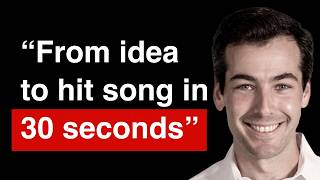
Mikey Schulman, CEO of Suno, talks about building an AI app that generates music from text prompts. The company has seen millions of users create songs in weeks, and Schulman discusses how the technology works, what users actually make, and where the music industry goes from here.
If we don't build the good future of AI in music, someone else will build the bad future of AI in music. What is the bad future of AI in music? I can think of a lot. Like someone is going to come and make some AI program that just lets me make an infinite number of songs that sound like my favorite artist, and my favorite artist isn't going to see a dime. We don't do that. But somebody else might. Another, I think bad version of the future of AI in music is one where, like, hyper, hyper personalization where I just log in and I stream music that sounds amazing to me and nobody else. And it is very antisocial and very solitary. It's like basically the equivalent of musical pornography. This is not the future of AI that I want to build for music. And you know what I tell everyone is like, let's make the good future. The good future is that there are a billion people way more into music than they otherwise would have been. Basically, I challenged somebody to explain to me how a billion people way more into music than they could have been is somehow bad for artists.
Cool. Well, welcome everyone. My guest today is Mikey Schulman, the CEO and co founder of suno. SUNO can generate amazing songs with lyrics just from text prompts. And, you know, it has brought so much joy to me and my family. So really excited to chat with Mikey about how SUNO works, how the SUNO team builds AI products, and how AI will change the music industry. Welcome, Mikey.
Awesome. I'm really excited to be here.
Yeah. So why don't we start with a little bit about your background and how you came about starting suno?
Yeah, I guess I have a little bit of a circuitous route to doing this. I've been playing music since I'm four years old, played a lot of piano growing up, and then played mostly bass in a bunch of bands in high school and college. But I actually left music a little bit after. After college, went to go do a degree in physics and then went to another AI company after that. And it's like a beautiful and funny accident how we ended up starting suno. You know, the founders of the company, we were all at a different AI company called Kensho, which is machine learning for financial services. And we're doing a lot of text, a lot of nlp and we basically, we did one audio project. It is the least sexy audio project that you can imagine. Just learning to automate the transcription of earnings calls. And we just had this realization that, like, wow, sound is so much more interesting than Text and also so far behind text. And yes, you know, we all happen to be musicians. In fact we used to have jam sessions in one of my co founders basements to blow off steam after work. But it took this like very circuitous route to get us to realize that like wow, audio doesn't have to be so far behind. And so we left and we started an audio company. And the truth is it took a couple months before we realized that like music is just is so special and so fun. And despite lots of people telling us that it is not a straightforward root forward, you know, it's not a straightforward company to start. Speech is really big, couldn't help ourselves. And so we started a music company.
Yeah. And I mean it's very interesting, right, because like speech, you can kind of tell if it's correct or not. But music is kind of like about your taste, right. It's kind of hard to think about what is actually correct or not in music.
Yeah, that's exactly right. And I think that is something that unfortunately people often get wrong about music, which is that it's too easy to look at the world of text, OpenAI and anthropic and all the hyperscalers who are just trying to do better on benchmarks, get the objective right answer. Most of this is done through scale at this point. And music is not an objective thing like that. It's not get the right answer on the SATs. It's far more taste based, it's far more subjective. And scale is not the only thing that solves that. And so it's a very different world, it's very fun world, but not all the same techniques apply.
So can you maybe give give us the explain like I'm 5 version of how kind of music based models or LLMs actually work on text to try to predict the next word. But for music, how does that actually work?
It's surprisingly similar. We've made no secret. What we do is just Transformers. And there's so much great open source stuff that made it a lot easier to start this company, honestly, to build and scale Transformers. And our whole edge I guess is just figuring out the right way to tokenize audio. You know, so it's somewhat obvious in text it's a word or there are different tokenization schemes, but the first approximation, they're words. And for us it's just a little bit of audio. And it is totally unclear how you should do that. If you think about it from first principles, audio is not discrete like words. It's a continuous signal. It is also sampled at, you know, approximately 50,000 times per second. And so, you know, a one minute chunk of audio has way too many tokens. And so you have to work hard to basically both discretize the signal and also down sample it quite significantly without being lossy. So you can think this is basically like a codec, like MP3 will kind of squish audio down. What we do is very similar and at the end you end up with some discrete representation for a little bit of audio. The model doesn't know that there are instruments. It doesn't know that there are 12 tones.
It.
It doesn't know that there's even vocals and background. It just knows that there's sound. And by teaching the model to predict the next little bit of sound, just like it works in text, out pops something that is kind of capable of producing arbitrary sound or arbitrary music in our case.
Wow. So, okay, so it's kind of like given like the 30 seconds so far, let's produce like a few more seconds of sound.
Exactly.
And let's kind of take a step back. Let's talk about like your vision for the company. Right. Like, what if Suno's a wild success? Like what would the world look like? Or what are you trying to achieve at the end of the day?
Yeah. You know, it's funny, music has incredible market penetration in some sense, if you will. It is part of every culture, it's part of every language. It is, as I get older, I realize more just how innate and kind of part of our DNA music is. And I think, you know, humans really evolved to resonate strongly with music. And so I don't think we're necessarily trying to bring music to more people or even necessarily try to get them to do music for more hours of the day. People are listening to music in the background a lot. But I think that music is just undervalued to most people. And we are trying to make music more valuable to a lot of people, like a billion people. And I think that while background listening is fine, it's not engaging, it's not a rich experience, it's not interactive, it's not really social. You're not doing it with your friends. And when I think about what music is for me and what it should be, it's all of those things. It is fun, it is a rich experience. It's fun by yourself, but it's more fun with your friends. It's very creative. You have fruits of your labor. And so, you know, in that light, it's a little Bit like a video game. And I think that if we can bring the joys of all of the other parts of music that are not available to most people right now because they don't play an instrument and they don't produce music, if we can bring those joys to a billion people, then we, we will have created a lot of value for them. We will have upvalued music for everybody on the planet.
Yeah, I mean, I think you're right. Like right now music is kind of like a, for most people, a passive listening experience. But what I love about Suno is it kind of blurs the lines between creation and consumption. Right.
If we do things right and you know, you and I are having this conversation in three years, we won't be making a distinction between creation and consumption. It'll just be like, I did an hour of music today and I'm not going to tell you exactly what I did in that hour.
Like the thing is like outside of like ChatGPT, Cloud and some of these other apps, like, I think it's very hard to find like retention for AI consumer apps. But I think Suno is like one half of apps that actually return to. And you know, my personal experience is like, I think being able to create songs that feel a lot more personal. Like I can create songs about my wife, about my kids and like the lyrics are like a lot more personal just kind of brings me back. And of course there's also the consumption side. Now you have an interface to actually discover music and some of the stuff is really good. I'd rather listen to this than some play playlist on Spotify while doing my work. So I guess question for you is what do you think is what are you seeing that's making users stick to the platform? Is it more on a creation or consumption or both?
I think it's both. People come. The thing that is new here is certainly creation and that is the reason people come a lot. And there's a couple of different kind of sticky use cases that we see amongst our user bases. But. And then, and as you said, like people may come to create and then they'll end up listening. And I think even the set of experiences that the average person has around listening are just narrow. They're just like, they're not varied enough. I think there is such a thing as lean in listening. You know, I don't know if you ever, when your favorite artist drops a new song and you go and you put on your best headphones or you listen on your best speakers and you put your phone in the next room and you just actively listen. Like that is an engaging listen experience. And I think that there's a lot of those that we can create for people. A lot of this, like you said, comes down to personalizing music a little more, but not personalizing it as in like these are the genres that I like. And Spotify has a really good sense for what music I like to listen to. But as you said, somebody made this song for you, you know, and I think about this a lot as the same way people take pictures or selfies with their phones and they send them to people. And 20 years ago that just wasn't a thing that will be a big thing in music. And right now you listen to music both because you like how it sounds, but also because you somehow identify with or resonate with the person behind the music. And one of the things that we are doing is we are just opening that up to way more people.
Do you have any like a high level, like stats you can share around, like, you know, how many people are really liking this or you know, people are coming back?
Sure, yeah. I think I'll decline to give the usage and retention numbers. You know, I think the last time we published numbers a few months ago, but 25 million people have made songs on Suno and the vast majority for the first time ever. You know, I'll tell you something I monitor very closely is just the first day we see you, what is the probability that you will hit the paywall? Because go through it or not, pay or not, if you hit the paywall, if you exhausted your 10 free songs, you enjoyed the last 15 minutes or so of your life. And this is something I watch very closely. We're not changing the business model or anything like that, but like this going, I mean this is quite high. It's almost 50%. This is a huge barometer for how enjoyable the product is. And at the end of the day, people are not going to use things over and over again if they're not enjoyable. Maybe you even came because this is some AI novelty thing. But if we gave you a really enjoyable first day, you will come back over and over again.
Yeah. And the other thing is like when I make a song on Suno, like I want to get other people to listen to it. Right. So there's some sort of virality or Referral built in 100.
So all of our growth has really been organic to date. And it's because music is really meant to be shared and in some sense that sounds almost like A crazy thing to say, like, because music is not shared enough, but music is really meant to be shared. It like that's why it was invented. And so we're kind of bringing it back from, you know, from 2,000 years ago.
And are you seeing, you know, any kind of creator product? Like what I've seen is like, you know, the top whatever, 5% make up a lot of the usage. But Asuno is like so approachable. But I'm wondering like, what kind of customer segments are you seeing? Like you seeing the casual user, Are you seeing people who are actually spend all the time curating, making music, trying to become top creator on Suno? Like what kind of.
Yeah, yeah, that's a great question. It's fairly bimodal. There's basically the power users who sit there for hours at a time and make amazing songs and they perfect them and they have a vision in their head for what the song should be and they are going to sit there until it comes out, right. And then there's the casual users who made a song with their kids. I do a ton of that. Who made a song about something funny that happens in their life, like Starbucks writing their name on the coffee wrong and sharing that with people and having a moment of levity and, you know, so we call that basically soundtracking your life. And there isn't a ton in between there, which is super interesting. There's a lot of daily active users in both categories, but they're very different use cases.
Interesting. Do you have any practical tips to actually create really great Suno songs that maybe the power users use that the casuals can learn more from?
It's funny, I mean, there are users who are way, way better than I am. I think learning to describe music is very hard and that's a big one. And so it's like, sure, there's lots of these genres that you can use, but then like going around and seeing what people do on Suno can give you kind of interesting ideas, like describing emotions, different ways of describing tempo, different ways of mixing and matching genres. I think this is all very interesting. Another thing that I'm really fond of is capturing sounds from my daily life and uploading them and using those as inspiration. And this is something that is so uniquely you. When you capture some interesting sound, it's not even music. It's like, you know, sound something knocking into something else. And like it really makes it personal because it's like it's music that came from my life somehow. And I really enjoy this. You know, I don't know if you're familiar with a guy called Charlie Puth.
Yes.
Yeah. And so, you know, he has gone viral multiple times for basically making music out of mundane and ordinary sounds. And he's amazing, but he is like an incredible musician. He has perfect pitch. But like, there's something that I find almost offensive that, that should be accessible to everybody. You should not need to be as talented as Charlie Puth is to make music out of the mundane sounds that you find in your everyday life. And so I think bringing that to more people is really powerful.
I didn't even know that I should have used Sonomartium. I know that that feature exists.
You could upload audio. Yeah.
Okay. Like what's the example of some mundane sound you upload? Like your kids singing or something or what?
Yeah, or, you know, banging on a table, you know, tapping on the table with, with pen and pencil. Or just like a really noisy streetscape. You know, like there's construction outside and I'm just going to record it and then I'm going to make a song out of that. You know, it's. And the ways in which it will incorporate it are like very varied and very interesting.
Wow. Okay, I'm going to try that right after this interview. That sounds fun. Yeah. So let's talk a little bit about how you and the team actually build products. Like maybe you can walk through like, you know, either Suuno V4 or like some feature that you shipped recently and kind of like how you guys did it from like idea to release.
Sure. You know, I think like in some sense V4 is an obvious product. It is basically an improvement to the music in every way. The audio fidelity is higher, the songs are better and catchier, the lyrics come out better, you know, and so I don't know if that is necessarily some great product insight. It's like, you know, you have to understand the ways in which you're deficient and how you have to fix those. That's more of a machine learning led feature development. In fact, the product itself didn't change at all other than the underlying music. But I think that something that is lost on many AI companies is that you are in the business of building a product. Most companies are not only in the business of selling a model and even the ones that are really need to care about their product. And so it's not just a model arms race game. And that you need to think about building features that are intuitive. And so I think that the best features are not ones that like my model happens to be able to do this. And so I do it. The best features are one that you think about and then you build. So I think my favorite SUNO feature is probably covers. So think about covering a song. There's lots of famous covers of different songs. And I constantly find out that actually a song that I thought was by someone else is actually a cover and it's originally by the original artist. I'll embarrass myself by telling you all the things that I get wrong, but. And the reason covers a cover song is so interesting and so sticky is that intuitively music resonates with us because it is the right mix of things that are familiar and things that are different. And for a cover song, if the original song is familiar, you're getting the familiar bit for free. And then you can really innovate on how it should sound beyond the basic of the lyrics and the composition. And so. And everybody has songs that they know and that they like and wants to hear them redone in different ways that are in their head. And so this is something that's more like we think about, oh, this would be a lovely thing for people to be able to do. It is a very comfortable introduction into making music because I don't need to come up with a song from scratch. Here is this SUNO song that I really like. Let me try to cover it in a new style. And then we have to figure out how to do that. And we have to figure out both from the machine learning side, how do I actually make it so that I get the same song in a different genre. And that is, you know, was an unsolved technological problem that we had to do, but also from kind of the user interface side, like what is the beautiful and intuitive way a user takes a song, listens to the song and then thinks about adapting that song in some new way. And so I think in the future you will see us iterate a lot actually on this covers feature.
Were people asking for this cover feature? Or how do you guys realize this is something you should build?
Not a ton professionals would be asking for it maybe sometimes in little bits like, can you just do that same thing again but change this one thing? And then we realized that do that same thing again and change this one thing. There's actually a mass market appeal there if you can do the covers thing. And so it was a little bit of talking to users, a little bit of talking to professionals, and then a lot of iteration.
And so you probably have like some sort of community of SUNO users that you Talk to on a regular basis, right?
Yeah. You know, we are really lucky to have a very large and very engaged Discord. And you know, a lot of this is because we originally only had the product on Discord, but I think there are 400,000 people in that Discord. And so that is a fire hose of information. You know, it's noisy too, but there's a lot of good, there's a lot of good information in there.
And how do you just give us some specifics? Like you have the customer feedback from Discord and probably from Twitter and these other places. You probably also monitor some key metrics, right. Of like how, how good this stuff is or like, do you just monitor like the high level retention user metrics or is there some sort of specific thing that really.
We monitor lots of things. We monitor, sure. Our metrics, we monitor retention, we monitor users, we monitor all kinds of things. We have. We spend a lot of time just talking to and interviewing our users. Something that is maybe not obvious that we monitor is just like what fraction of the songs get liked? You know, like this is a very useful metric and it is sensitive to all kinds of things that you wouldn't really think that it should be sensitive to. So just as an example, if you have some bug and your latency goes up, so, you know, maybe it usually takes 10 seconds before you can start listening to your song. And then it, you know, for whatever bug or GPU unavailability you have, it starts to take 13 seconds. Users will like their songs less, which is like, I mean, some sense really interesting and really good because you have a vector here to improve how much people like the product. In another sense it's like really bad because you're like, the song came out the same and somehow you liked it less, you know, on average. And so I think that really points to just how important the user interface is for all of these things.
Yeah, I think likes and maybe like YouTube, like how long people listen to a song for like that's probably like.
Another signal, 100% or so. We look at all of these things. What fraction of your songs do you listen to past, you know, the first 30 seconds, something like that. What fraction of songs get shared? Stuff like that.
How do you just, you know, I'm not an expert at building ad products, but one thing I have experienced is like, you know, this stuff is like non deterministic and how do you know if something is actually good enough to ship like that? That is because, you know, it can have a good output one day. And like bad output the other day. But I guess with music is much more, it's less like clear, clear cut. So. So how do you decide this is.
A really hard problem. There are no good benchmarks. It is, you know, and so in some sense we get really lucky that V4. We can make improvements in all of the things that we care about. But like, you know, maybe there are diminishing returns on one of those things. And know, you think you ship v5 and it's better in two of those things and it degraded slightly in the third thing or something like that. So this is really hard. We will do a variety of heuristics here. Obviously there. There's no silver bullet. And I think that ultimately good judgment is what makes this work. And it's not, it's not easy to quantify, but I think that good judgment is like far more important than, than good skills basically. And you know, you really need people with good judgment if in music and otherwise, you know. But so, but we do have a variety of heuristics. For example, you can, if I have a new model, I can, you know, use it on 1% of all songs and I can see how much more or less does it get liked. As an example. I can do that for, you know, so, so you know, our. We'll use a variety of tricks. There's no kind of one golden rule other than trying to use good judgment everywhere.
Got it. Got it. Yeah. And how about when it comes to like some hard won lessons or like principles that you have when building AI products? Like for example, I talked to the founder of Granola, the AI meeting app, which is great. And he told me like, hey, you should not be solving problems that the next model will fix. You know, that's like one principle he has. But like, I'd love to hear like, you know, your top three or however many principles that you learned.
Sure. I think a big one. A big one. That kind of maybe the biggest one in the whole company is that like, yes, AI is the most know, kind of important ingredient that we know of to build songs, but nobody cares that it's AI and we need to. You should almost not know when you use the product. You should not know or care that there is a model underneath. We are in the business of selling musical experiences to people. And honestly, AI is a pain in the butt. And if there were an easier way to do what we would do, like if. If there's an easier way to do what we do, we would do it. And keeping that in mind, at all times I think is really important because I won't actually name names, but I know of tons of products that just look like thin wrappers into models and the features are all determined by what their model is able to do. And this is totally backward. Your product should be determined by what you think users will really love and then you should figure out how to make your model do that. And it's really hard, I think it's really hard to do that because usually when you start a company that is like an AI company and maybe you have to train your own models and at the beginning your company is just 100% machine learning engineers and culturally it is very difficult to start to value anything but that. But it is a cultural shift that I think is really important to actually start to care about your users. I also, you know, without sharing what the numbers are, you know, our revenues have been steady and strong and it's because we started charging at the beginning and, and this is an immensely, you know, this is like not conventional wisdom but this has been immensely useful. We know what gets people to enjoy something enough to want to part with their hard earned dollars and it lets us build toward that. And a little bit contrarian I suppose, but I'm like very glad we did it. Or else, you know, we might have just like maybe the same number of daily actives but it's like not very retentive and nobody wants to pay because it's a novelty item.
Yeah, makes sense. Yeah. Novelty is like very prevalent in AI products. Right. And I love the other point because I think it's like in some ways the differentiator of the product is in some ways not AI. It's just like the great UX and like, you know how intuitive it is to use.
I'm not sure, I'm not sure that AI companies present new types of moats to businesses. Like I think that the way we are a generational and enduring business is in, you know, a decade from now is like we have a superior product with some sort of data and, or network effect. And that's not new for AI. AI is just a means to an end here.
I love that. And you know running a startup is not easy, right? So like what were some like tough moments in your journey? Building. Building Suno.
It's not easy, but I will say it's fun. I feel like I have the best job in the world. And yes there are challenges, yes it, there are a lot of hours, but I thoroughly enjoy it. You know, I think we are in, you know, Maybe the obvious answer here is we're in a highly litigious industry, which is music. And this presents a variety of challenges. You know, without getting into the specifics, we, we are currently getting sued. And this, you know, I would certainly rather we not be getting sued. That another thing which is like something between a hard lesson and a principle is I am just really glad that we are an in person company and I feel very fortunate to have started this business kind of post Covid and to be able to kind of make that decision once and through no fault of any founder. You know, starting a business in 2021 where maybe you like have a few fits and starts of like, we're in person now, we're remote and we're. And I think that is very disruptive. But now, you know, I feel so lucky that I get to work literally shoulder to shoulder, like in the same physical room with co workers that I actually enjoy being around. It's extremely energizing. You see me taking recording this podcast in our actual recording studio. This is not a fake background, you know, so I think that it is definitely a trade off. You definitely lose access to talent that is not co located with you. But I think it's a. For me at least it's a very obvious one.
Yeah, I mean, I don't like having official meetings, but like just like hallway conversations, maybe jamming with people, like, you get so much more done that way.
That's right. That's right.
Yeah. So going back to the music industry. Right. So before we talk about the AI stuff, let's talk about if you can give us a background on how streaming has kind of impacted the industry and musicians or your take.
Yeah, that's a great question, I think. Look, there are people who know far more about the history of streaming than I do. I'm old enough to have bought CDs at Sam Goody and gone through that. But in a nutshell, it used to be that you needed to. Okay, let's zoom out all the way. It used to be that there was no means of recording music and the only way you could hear music is by hiring musicians or playing it yourself. And then there was a way to record music and people thought that would cheapen music and you could put it on vinyl and actually the original recordings, there was no way to copy them. So like if I had a recording of Beethoven's fifth and you have a recording of Beethoven's fifth, they're actually not the same recording. The orchestra played it two different times and it got recorded two different ways. But people thought that this would cheapen music. In reality, it made it more available. And then you fast forward again and then you can copy it. And then you can fit a lot more music on a CD than you could on a vinyl. And you get to the streaming area where it turns out computers are just great at copying and storing bits. And this led to a lot of piracy. Like music revenues plummeted by a significant amount, I think like up to like 85 or 90% in some countries. And I think that a variety of things had to happen to change it. And a new business model was found that is great for consumers. I feel like I have every piece of music in the world in my pocket because of the streaming providers like Spotify and Apple Music. And I think that. And now the music industry actually had its biggest year in a long time in 2024 by the numbers. So it has certainly grown out of that hole. But I think we all find ourselves at a really interesting nexus now because I think it is really just, it is very significant continuation of the previous trend of bringing it to more and more people and making it more and more easy for people to do stuff. It is very significant, but it is just part of that trend. And AI, I think is a bit of a, let me put it like this, AI is a bit of a strange, catch all blanket term in music. It can mean lots of different things. And so when people are either pro AI or anti AI, I think you always need to kind of get another level of detail. Because like there is AI on basically every piece of pop music that's made, whether that's AutoTune or these AI based tools for making micro adjustments or stemming tracks or whatever, it is an important part of the tool chain. Maybe I'll say this. I think that just with regard to the lawsuit, I think there's, you know, in, in many cases, including ours, there's basically two sides. There's the existing industry side, in this case music, but it's kind of a general thing which is like new, scary change, shut it all down, make it go away. And then there's the Silicon Valley approach, which is like, screw you existing industry, I'm going to disrupt you away. And I think that in my opinion, in this case it's very obvious that both sides are wrong. Right? Like neither one of those approaches is correct. That is actually part of the reason we don't build the company in Silicon Valley. We're in Cambridge, Massachusetts. But to the extent that there's one thing that both sides agree on it is everyone will say, well, we know it's coming. We know AI is coming. And I think that this is actually not correct. If we just sit around and say, well, we know AI is coming. So the existing industry, the music people will say, we know AI is coming. Because you don't want to sound like too regressive. And so you say, oh, we know it's coming. I'm hip. And the Silicon Valley tech bros will say like, well, we know AI is coming. This is basically a security blanket to feel better about yourself for putting pressure on people's jobs. And I think that again, they're both wrong. If I just sit here and I say, AI is coming, this is going to give you the sense that it's inevitable. There's nothing that I can do to impact it. And that's just wrong. Like, we have to build the good future of AI and music. If we don't build the good future of AI and music, someone else will build the bad future of AI and music. What is the bad future of AI and music? I can think of a lot like someone is going to come and make some AI program that just lets me make an infinite number of songs that sound like my favorite artist. And my favorite artist isn't going to see a dime. We don't do that. But somebody else might. Another, I think bad version of the future of AI in music is one where, like hyper, hyper personalization where I just log in and I stream music that sounds amazing to me and nobody else. And it is very antisocial and very solitary. It's like basically the equivalent of musical pornography. This is not the future of AI that I want to build for music. And you know what I tell everyone is like, let's make the good future. The good future is that there are a billion people way more into music than they otherwise would have been. And I basically, I challenged somebody to explain to me how a billion people way more into music than they could have been, is somehow bad for artists. So, yeah, I think this is, you know, I know that was a lot. But to sum it up, like, this is part of a very natural progression. I'm actually quite optimistic that there's a lot of good outcomes here and there's basically a lot of pie growing to be had.
Yeah, no, I think that's the. That's what I'm really excited about. I think your vision is really on point because instead of passively listening, people can actually participate in making music and sharing music. I actually now have kids. I listen to let it go 100 times every day. I'm actually starting to develop an antagonistic relationship with that song or music. But if my kids can stop listening to a stupid song and actually create their own music or be part of it, that could be really amazing for my entire family. And I think another point is like you're democratizing these tools, but the people who are really good at these tools will probably still make better music than people like me. Right. So maybe there's still a lot of new ways for professional artists to monetize or to actually earn a living.
I think that's right. I think in music it will be much harder to take the human aspect or human guidance out of the creation process and as it will be for more fact based things. Just as an aside, there's an amazing playlist on Spotify. I'm going to get it approximately wrong called like kids Music that isn't Annoying. Highly recommend.
Oh yeah, okay. Okay, I gotta look that up. Yeah. And how about for Suno in particular? What are you excited about for 2025? Like what do you have?
I think this is gonna be a really fun year. I think bringing Suno to way more people, I think you'll see us make more better music. I think you will find it more intuitive and more fun. Importantly to make music. I think you'll see us make music more social also and encourage people to do this together. I think that is the most engaging and fun form of this thing. Whether that's asynchronously I'll make something and share it with you or synchronously you and I will actually make music together at the same time. And then I think you'll see us continue to work with more and more professionals. And you know, we work with a couple now, but you know, I can tell you that we work with a lot more that you don't know about and that we don't talk about. I can tell you that something that makes me really optimistic is that the overwhelming majority of artists that I meet are actually behind closed doors fairly pro Suno and most of them actually use Suno. And I understand why they don't want to talk about it publicly and that's actually fine. But it makes me quite optimistic about what's going to come.
I'm really excited about the social stuff, man. Like if I can jam with you or other people to make a song together, that sounds really awesome.
Yeah, it's technologically a little bit difficult, but it's coming and it is going to be so much fun.
Okay. So, last question. A lot of people listen to this are PMs or product builders trying to figure out AI stuff, consumer AI. Do you have any closing words of lice for them to explore this stuff?
I think if you're building in the AI space, just try to pretend like you're not. You know, like I used to go around and say our attention numbers are really good for an AI company and like that should really make the alarm bells go off because ultimately you're trying to build a product and your users aren't going to care. I think that I give you a hot take, which is that I think, like, I'm not sure it is worth it for the average product manager to understand the internals of a transformer. And, and I see a lot of people like trying to learn the basics and I really applaud people for trying to learn stuff, but I think there are probably better, better uses of the time and better cartoon pictures to have about how these things work that actually understanding the internals of them are not going to matter because.
Because you can just like, it's kind of like understand how compilers work. You don't have to, you don't need.
To know, you can just, you know, I mean, yeah, I'm not sure my understanding of how a compiler works, which I don't. It helps me write good Python code. I'm sure somebody who is a way better engineer than I am is going to take issue with that statement. It's just like typically one wants to push on your comparative advantage and your comparative advantage probably is not your cursory level understanding of a transformer block.
Got it, got it.
And one last one, one last one. Tons of people in AI are talking about models that take A to B, text to text to sound, text to song, text to video. This should also really, I think, ring alarm bells for people. That is not how a normal person thinks about things. And you should try to not think about things. That is a very model centric view and you should try not to do it.
Okay, so let's go back to the fundamentals of actually solving problems. Right?
Yeah. That shouldn't be a controversial thing to say, but somehow it is.
Yeah, you should just use the word AI to get the funding from the VCs and you can just go back to the. The fundamentals.
Your words, not mine.
Yeah, okay. And where can people find. Or Suno, you know, where can we find Suno or where can people find you? Following your journey.
Yeah. Suno.com, you should go. You should Try it. It is a ton of fun. You can Also download our iOS and Android apps on the respective app stores. You shouldn't really look for me. I'm Mikey Schulman on X, but I. I never post. You should go follow us on the company on X, Suno Music, and on Instagram as well.
Cool. All right, Mikey, this is awesome. I love what you built and keep going, man.
Thank you. I had so much fun. It was great to be here. You are way, way better than I am. I think learning to describe music is very hard, and that's a big one. And so it's like, sure, there's lots of these genres that you can use, but then, like, going around and seeing what people do on Suno can give you kind of interesting ideas, like describing emotions, different ways of describing tempo, different ways of mixing and matching genres. I think this is all very interesting. Another thing that I'm really fond of is capturing sounds from my daily life and uploading them and using those as inspiration. And this is something that is so uniquely you. When you capture some interesting sound, it's not even music. It's like, you know, sound something knocking into something else. And like, it really makes it personal because it's like, it's music that came from my life somehow, and I really enjoy this. You know, I don't know if you're familiar with a guy called Charlie Puth.
Yes.
Yeah. And so, you know, he has gone viral multiple times for basically making music out of mundane and ordinary sounds. And he's amazing, but he is like an incredible musician. He has perfect pitch. But, like, there's something that I find almost offensive that. That should be accessible to everybody. You should not need to be as talented as Charlie Puth is to make music out of the mundane sounds that you find in your everyday life. And so I think bringing that to more people is really powerful.
I didn't even know that. I should have used to know Marium. I know that that feature exists.
You can upload audio. Yeah.
Okay. Like, what's the example of some mundane sound you upload? Like your kissing or something or what?
Yeah. Or, you know, banging on a table, you know, tapping on the table with. With pen and pencil. Or just like a really noisy streetscape, you know, like there's construction outside. And I'm just going to record it and then I'm going to make a song out of that. You know, it's. And the ways in which it will incorporate it are, like, very varied and very interesting.
Wow. Okay. I'm going to try that right after this interview. That sounds fun. Yeah. So let's talk a little bit about how you and the team actually build products. Like, maybe you can walk through, like, you know, either sudo v4 or, like, some feature that you shipped recently and kind of like how you guys did it from idea to release.
Sure. I think in some sense, V4 is an obvious product. It is basically an improvement to the music in every way. The audience.
More from Peter

Dropbox VP's Best AI Workflows to Help You Take Back Time at Work | Morgan Brown


Canva Co-Founder: The AI Playbook Behind the World's Most Popular Design Tool | Cameron Adams

How OpenAI's Head of Business Products Uses ChatGPT to Save Time at Work | Nate Gonzalez

Complete Vibe Coding Tutorial: Build a Full Stack App in 30 Min with AI | Matt Palmer (Replit)


Complete AI Course (2025): Prompting, Evals, RAG & Fine-Tuning | Adam Loving (Meta)



