Inside the $550M AI Browser That's Taking on Google Chrome | Josh Miller (Browser Company)
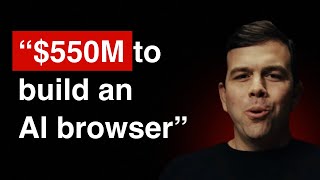
Josh Miller, CEO of the Browser Company, discusses Arc, a browser backed by $550 million in funding. The company built Arc Search with AI features to rethink how people browse the web, competing directly with Chrome's dominance in the browser market.
We hire people that have this innate motivation, this kind of burning desire, almost artistic desire, to express themselves and express their craft and almost like leave their mark on something that they make, not in a selfish way, but in a way of the pride that you feel. Just like the best craftspeople feel pride over something. I think art feels, some people say, soulful or well crafted or like there's beauty and attention to detail is honestly because not because of some product management strategy. It's really just we hire people who care really deeply about their work and the impact it has on people's lives. And that shows up in hover states and transitions and attention to detail. But it comes from the value of hire people that just have this innate heartfelt intensity they bring to the office every day.
My guest today is Josh Mitter, co founder and CEO of the browser company Josh and team built arc, an amazing AI native browser that that's reinventing the way that we use the Internet. Josh and I spoke about how the browser company crafts quality products and hires top talent, how the team built ARC Search, a mobile browser that uses AI to browse for you, and why Josh thinks most consumer AI startups will struggle and how he plans to be different. Josh is an incredibly authentic and genuine founder who's betting it all to transform how we use the Internet. If you enjoy our conversation, please like and subscribe to support the podcast. All right, Josh, welcome. Super glad to to have you here.
Thank you for having me.
Yeah. So why don't we start with this? Why are you trying to reinvent the browser? Let's start that.
Yeah, that is. And it's not the most sexy category of software in the mall, but we ultimately got excited about working on a web browser or what we hope is successor to the web browser, because you spend a lot of time in it. Spend a lot of time in this rectangle that is your web browser. Some people spend more waking hours in their web browser than anywhere in the physical world, for better or for worse. And so got really excited about the fact when you tell someone you're working on a desktop web browser, you ask them what browser they use, they could not care less. They think it's like the most boring thing to talk about if they're even aware of what browser they use. And the fact that you spend that many hours every single day in this rectangle, yet you don't care. And then you think about the kind of love you have for your favorite products or your favorite physical spaces in the real world where you spend a lot of Time or the things you use. A lot of the delta between those two facts got us really excited. Combined with a lot of kind of macro trends happening in the technology industry at the time, that got us excited about what the browser would look like. But I think at its core, it was, we spend a lot of time in these rectangles. They don't inspire us. They don't feel great. That feels.
Well, yeah, it's like. It's like, you know, I use Comcast for my Internet, but I don't feel any loyalty towards that company.
And I remember the first little, like, phone I got when I was in middle school just to call my mom that I was ready for pickup after. And I played Snake on, like, I liked. I liked my calculator too. And then, you know, you think about how I feel about the iPhone today and what it means to me. That's the delta we want to bridge with the browser. We want to be to the browser what the iPhone was to the cell phone. So we're not there yet, but that's the idea.
Got it. So I've been playing with the ARC browser, and the reason I'm really excited to talk to you is, like, it's very clear that it's been crafted with a lot of care. And, like, the people who made this clearly, like, gave a shit about the product. So can you talk about some of the core values at Ark and, like, how that guided you and your team to build products?
Sure. So we have five value. And I won't bore you with all of them, but one of them which you reference is show up with heartfelt intensity. So what essentially that means is we hire people that have this innate motivation, this kind of burning desire, almost artistic desire, to express themselves and express their craft and almost like, leave their mark on something that they make, not in a selfish way, but in a way of the pride that you feel. Just like the best craftspeople feel pride over something, I think. So the reason. Thank you for the compliment. I think art feels some people say soulful or well crafted or like, there's beauty and attention to detail is honestly because not because of some product management strategy or some company, you know, take on the market. It's really just we hire people who care really deeply about their work and the impact it has on people's lives. And that shows up in hover states and transitions and attention to detail. But it comes from the value of hire people that just have this innate heartfelt intensity they bring to the office every day. Something motivates them beyond just what we say here. And I think show it shines through in the product.
And I think you mentioned that's like one of your superpowers, right? Just like hiring great people. And, you know, you've hired both. Like, I think you hired an ex designer of safari, but also I think you hire someone called Nate, who has never been a designer, like officially being a designer before. So, like, how do you find these people and how do you like bring them on board, you know?
Yeah. So I mean, as you're referencing, we've hired people that have resumes that will intimidate you and make me wonder if I can lead them because they have done such a remarkable thing that I feel like I should be reporting to someone that reports to them, that reports to them. And we have people that, you know, were a couple of years out of school that have made a tremendous impact here. And I wish I had a clean answer other than to say, you know, an original. When you see, I don't know, there's just. You look at their work that they've done, the things that they've done in their life, the way they. You just kind of know. And so, for example, Charlie, who is the safari designer you reference that again, has that resume that is intimidating. I overlapped with him at a previous employer. He was always working on these really interesting side projects that weren't going to make any money. They were almost more like artistic projects. He had this app that showed you the current state of the moon. That's all it did. You open the app and you saw the moon or a representation and it was gorgeous. Like the lighting was gorgeous. And I was like the sort of person that just does that for fun and does it with that attention to artistic detail. And then you think, you know. You also mentioned Nate. Nate was. Had never held the title of designer before we hired him as a designer. He was a couple years out of college. But here is this kid that was making web browser for fun after hours and doing it in a really kind of quirky, creative way. He had a personal website that was like a slot machine gamified, kind of making fun of the social media environment. It's just his personality and the soul in both Charlie and Nate's work that even though their resumes are very different, you can't not feel that kind of unique spirit in them. And so I know that probably if you're listening to this and you're wondering how do you get a job to come to a browser company, it may not feel as actionable. Or tactical, as you would like from a podcast. But I wanted to be honest that just we. I gravitate and we gravitate toward the people that have an authenticity and have a character that they're really. They're. They show up with. That's just unmistakably then and unmistakably original.
I think it's actually pretty actionable. I mean, you can kind of tell if someone is doing something to get promoted or like to get more money or someone's just building something because they want to make something really good. And it sounds like both examples.
Yeah, I get emails. Look, this is where mileage may vary. And I know this is not true at all companies. I get emails and DMs and tech all the time from people, you know, that want a job here. And I feel really grateful that we've built a company that. That is true. That wasn't always true. And it's really interesting. I wish I could tell them I don't care where you. I don't care the name of the noun that's in your email. And then, you know, versus that one. This woman sent me this prototype the other day of something she did for fun. And prototypes there wasn't coded. It was just. It was form factor was almost like this like slide deck. But it was just the thought was original, the effort was original, you know, and so, so for us, it's less about where you practice or how good your resume is, and more what are you showing up with in terms of that originality, either in thought or in craft or kind of personality, you know, and then letting that shine through.
Yeah, I love that because that eliminates all the gatekeepers. Right. Then you just. You have your own destiny under your control. Yeah. So you also have like a super passionate community of users who, who. Who love arc. Right. And do you kind of work with these users when you're building new features or like, how do you work with them?
Yeah. So my first company was sold to Facebook. And first I minehouse, second time co founder, network Facebook for a number of years. And the thing that impressed me the most about Facebook at the time, which at the time, you know, was known for having some top talent and top craftspeople, were the user researchers. They were amazing. You know, they were. They had doctor. You know, there were doctors in psychology and sociology from the top universities. And it was just wild that there are these researchers that were there to just help us understand these people we were building for and the ways in which they would help us understand the way People were hacking the product and using the product, find what we intended and defied. And it was striking. At Facebook they were totally underappreciated time. It was like they were used by PMs to validate what they wanted to do. And hey, look, the researcher said this and I just remember thinking at the time, these people should be deciding who we want like these people, because these people are the ones that are channeling the people we actually serve, the people that use Instagram and Facebook and WhatsApp every day. So when we started the browser company, one of the things we did intentionally was we wanted to flip that hierarchy. So we created a team called the membership team which rolled up anything that touches the people we serve, who we call members, whether that's customer support and success at other companies, to user research and everything in between. If you're someone that uses our product, the membership team is responsible for your end to end relationship. And we put them right up there with engineering and design, all the other disciplines as the seat at the product building table. And so yeah, since day one, the hypothesis the company is you use the browser for hours every day. The only product that your mom and your little niece and you all share in common other than like texting and maybe video calls. So we cannot build a better product unless at its core are the people we're building for. And that's part of our product development process. So now that doesn't mean we like do a poll and build whatever what people say, but to the extent we've had any success so far, it's been because it's been a collaborative process with the people we're building for. Thanks in large part to our membership team.
And how do they talk to the customers? They have different channels to use or like, you know, how frequently do they use.
Yes, we're arguably too open minded in how we talk anyway. I mean imessage thread with certain number, you know, because keep in mind this product started, you know I, we hand onboarded the first probably 5,000 people over Zoom one by one, you know, a handful of us, I recorded welcome videos on my iPhone for the first and texted them to the first, you know, couple dozen people, maybe hundreds. And so you know, for some early members, we're friends now we're texting dming we have, we often do kind of more kind of massed surveys and polls. We do very kind of like structured user research sessions over zoom and third party tools. We do it all. We do it all. And our approach has been like let's actually Lower the you let us know however good for you. And it's our job to kind of abstract away that complexity for us and figure it out. But we've actually tried to be approachable on probably too many channels. It's probably something we go through.
Yeah, I mean like I think too many companies are like really opinion for some reason about like hey only these people can talk to customers or you have to use this official channel and like you know like customers are doing you a favor man by talking to you. So why not just like do whatever is easy for them. Right?
So and look, I think a theme I feel at this stage of my career is there's no one right way to run a company. Every company has different goals and values and founders. But yeah, for, for us and how we do things. I. We would not be successful at what we do if we did not build in conjunction with the people that are using our product every day.
Got it. So let's talk about like a specific product that you built. So you know, mobile. Mobile browsing like the browser on a web is mediocre but on a on mobile is like really terrible man. Like there's incredible amount of ads, pop ups, paywalls and all this SEO optimized stuff. And you recently, a few months ago you launched Arc Search. So maybe walk me through like kind of ideation to launch like the high level how this came to be.
Yeah, so the idea for Arc Fidget is actually up and it was a side project which is hard to imagine now because it has become so successful and now a core part of our strategy and our portfolio of products. But at the time it was look, it's been a long year. We've wanted to build the default mobile browser but haven't had a good strategic reason to do it. We just had a company wide off site in November. Let's give ourselves until January to just prototype a default mobile browser for fun. But if we're going to do that, since it's not strategically beneficial to us, let's be really ambitious. And so our ambition was to pick one value proposition. So not to build a better mobile browser, but to pick a value prop within a mobile browser and then do it to 100. Just go wild because it was kind of a freebie project. And so what we decided was look on our phones, as you say mobile browsers you use all the time, it's probably one of your top five apps in terms of opens, but they're kind of atrocious and at the very least they're all the same. And what we realize is like, look, when we use our mobile browser, we're almost always looking something. We're on the go, we're with a friend and we just got to look something up really quick. And so we said, let's turn it up to 100. What is the absolute fastest way to look something up on your. And don't worry about are you a browser, are you a search engine, are you an AI? Don't know. Think about it from a human perspective. We want to get this random fact super quick. And that's how we got to our kind of tentpole feature, which is called Browse for Me, which is look, we did small things like let's have the keyboard up so you can just launch into typing. Let's get rid of block ads and trackers and cookie pop ups. So there's no BS in the way. So we did kind of small things around the edges. Then when we realized, no, it's really time consuming, opening a tab in the search results page, waiting for it to load, scrolling down the page, realizing it doesn't have what you want or you need more information, going back to the Google result, opening a new page, wait a minute, what if we just had the product do all of that for you? So you tell it what you're looking for. It goes to open six different web pages, reads them all, and then create the perfect webpage for you for what you're looking for without you doing anything. And that has now called Browse for Me has become the defining feature of arcserg because you could do these kind of complex browsing sessions to find an answer to something or find information without doing the work yourself. But it stemmed from the place of what is the fastest way to look something up on your phone, not how do we build a better mobile browser. And of course now we did. We do think we built the best mobile browser, but it stemmed from the place of fastest way to look.
Got it. So it sounds like really focused on the primary value prop of finding something, finding information fast. Right. And like how do you guys just like a little more detail. How do you guys land on this? You brainstorm a bunch of different things and you kind of.
Yeah, I got. I'll be really on. I'll be really honest with you. This is. We were really. We've been bad at that with our core product arc. So ARC for desktop, we sort of did the opposite. We made a secular bet that the browser layer was what he wanted to was the most interesting piece of software and part of the software stack to bet on for the next decade. But we didn't have a problem statement. We didn't have the value prop. We're just like, it's already important today, but it sucks. And it's going to be even more important tomorrow and suck even more if someone doesn't change it. Let's go figure out how to make it better and art today, though, I'm really proud of it on desktop and I think it's the best browser. You can feel that in the product and that we've made a bunch of things a little bit better to hopefully create a better cohesive whole. But it's not focused and it's not singular in its purpose. And so going again to the origins of ARC Search, it was a freebie project. It was an end of the year, almost morale. So what we did is we said not only like, take it to 100 and have fun with it, let's also try to push ourselves in product development, trying a different way of building products. And so the reason we decided to pick a singular value proposition was because we actually didn't do that with our desktop product, arc, and we wanted to. Again, we haven't. We. One of our other values is assume you don't know which is literally what the value set. Like, no matter how smart you are, no matter what you've done, your career, no matter how sure you think you are, you must proceed with the assumption that you have no fucking idea, excuse my language. And this was sort of that test of, let's try a product development strategy that we've never tried before and just see what happens. And so the way that we picked the fastest way to get what you need was it was more kind of from an intuitive sense of what do we, the five of us want the most or. Or what do we use the. The, you know, what do we use the browser and search on our phone for the most? But really was more about testing that approach to product development, not making sure we got that value prop correct because it was a freebie project. And I think there's a good lesson in there that it resonated, has resonated in a way. You know, I thought Arkon Desktop. I felt great about our success with Arkon Desktop. And then ARC searches come out and reverse. You know, three months I've been like, man, barring high, like it has been. And I think it is a good lesson for me and us that when we were just having fun with it and being really focused, uncomfortably focused around not what our company strategy Was. But around what does a person need?
Yeah.
That it resonates at even deeper level than this other product we have. But it's also been successful and is successful. So easy to extrapolate too much. But that it's. It was been. It was a surprise.
I love that saying turn up to 100% because like you can make. You can make like three features 50, but only just make one thing 100. And maybe like those people saw out of their minds that like they start word of mouth and like all those positive things.
And this good lesson too is like, you know, I didn't take my own or that advice before this project. You know why? Because turning up to 100 feels risky, you know, and it feels. How are you going to better pick? Right. Because if you turn up to 100 can take a lot of extra work and it's going to be really risky. It might work, but. And it adds all this, like intensity and anxiety to it. And then we're. You know, when you think it's a freebie project, just have fun with it. What do you want to build? This isn't our core strategy. Yeah, let's go for it. You know when you have that like state of abundant. That abundant mindset. Yeah. Like, wow, people want hundreds. And you can do it. You know, you can do it. And I don't even think, by the way, I don't even think it's 100. I think that would be attitude. But we have a lot more work to do to really make it 100. That intentionality of like, we don't want to make a. Or make better mobile browser. We want to redefine how you do something with this device. It's a different attitude. And I make very excited to take that attitude back to the core ARC product.
Yeah. I mean this is probably why you also attract really great talent. Because you want to redefine things.
Yeah. I mean, that's the pitch at its core is I cannot promise you will make more money. I cannot promise you that you will have a better title. You actually will probably have a worse title. I cannot promise you anything other than we are all trying to do the work that will define our careers and it may fail, but we're going for it. And if we succeed, it will define your career and it will define all of our careers. So that's kind of the vibe of the people that come here is you can make more men, more money, value return somewhere else. You can lead a bigger team, have a bigger title, have more chance of success on paper but no one's going to have the. You know, very few places will have the same level of ambition and intentionality that we do here. For better or for worse, we're going to find out. Yeah.
You know, speaking of which, I think back in April, you pulled this tweet saying that you only have, like, 12 to 24 months to win. And can you give some more context about this or, like, why you tweeted this stuff out? You know?
Yeah, yeah, yeah. Of course. I still feel that energy. I mean, there are two parts to that question, right? One is, what did I mean? And the second is, why did I share it publicly? Is there one that you're more. More curious about or.
I think kind of these ones. These are another. So maybe talk about both.
Yeah, sure. I wonder how to say this. That doesn't. So I was a pretty big skeptic of the LLM transformer stuff maybe eight months ago. I'm just general awareness. Until I play with something myself. Excuse me, Until I play with something myself, I don't. I don't really buy it. And I played with all these technologies in these prototypes and forms that felt slow and expensive. I've been reliable and just like, it felt like another cryptic. And after prototyping on the technology more. Oh, wait, I'm going to get to the punchline, because everyone knows where this is going. I truly think that the transformer innovation and everything that come out of it, will come out of it, is going to upend everything we do on computer, whether they're in our pockets or on our desks or on our wrists. And I think there's a very tiny window in time with any one of these big changes, platform changes, whatever you want to call it, where there's a window where the tables are flipped and someone can grab a seat. And I think the dynamics of AI specifically mean that there's an even tighter window, because I think incumbent large companies are better positioned for AI than they were for kind of mobile application development, for example. And I think specifically where the browser layer sits and who we're competing with and for what it means that even after those 10 windows, it gets even tinier. And so I view us as having 12 months to earn a seat at the table, if not the seat at the table, as it relates to how we use our computers of all sizes in this next era. And I think if 12 months, 12 to 24 months, I think it'll be too late. And so that is the attitude I have, and we have at this company, which is like it's now or never. We built four years of foundation. We got so lucky and unfortunate that we were riding a wave that is about to become that large. But we're gonna. It's gonna crash at some point and we gotta go. And the reason we said that publicly was, or I said that publicly was we. That's what we do. Our approach to building things has always been be honest, be transparent, be open about who we are and what we're doing for a range of reasons. And so I think one of things I promised publicly when we first started putting out YouTube videos and tweeting and being open was I will be honest and open with all of you when things are going really well. I will proudly tweet our prototypes and brag about our hires and feel proud of our graphs when they're going the right way. And I will also be honest with you, when we get bad news and when the crash renews, the rate is not what it should be, and we have to apologize. And so I thought this was part of that. I got to be honest with you. I really hope this works. It seems to be working. I hope our best are ahead of us. But now or never, and we're going for it. I don't know what's going to happen. And you just. You should know. So maybe we'll look back in a few years and be like, why did we think that was a good thing to do? But it's felt authentic to us that we were continuing.
Yeah, I love that. I remember watching your Act 2 arc announcement, and then in the first few minutes, you were like the Steve Jobs character, right? We're all black. I was like, who is this guy? It's going to be Steve Jobs. And then it became like, very down to earth, Authentic Industries of New York. And I thought that was great. And I think that feels, like, consistent in all your messaging, right?
Yeah. Yeah. As what you. What Peter's referencing for anyone hasn't seen it, is we kind of unveiled our. Our belief about what we want to do over the next four years. We hit our four year mark at the company, and so this is a video about act two for the company. And we kick off the video and it makes you think that it's a Steve Jobs like, keynote presentation. And then it turns out that was sort of a bait and switch and we were making fun of it. And I think what that gets at is how we generally like to do things in the browser room is we're very interested conceptually about inverted, surprising people with surprise and Awe and wonder. And the unexpected is a lever that's really helpful and, and really worthwhile, whether it's in building product experiences or marketing or communication. And so just in general, we're really interested conceptually in inverting what is expected because we've gone into this like, habit in our industry of copy and paste and reductive experiences and reductive practices. And obviously you don't want to always reinvent the wheel, but when it comes to talking about who we are, what we believe in and how we do it, it's been really fun to try to invert things.
Yeah, no, I think it gives the brand a ton of personality.
So.
And it's great. Here's kind of the crux of things, right? Like, you know, you talk about you have 12, 24 months, but at the same time you really care about craft and building really good products. And we, we've seen some of these other companies, I won't mention names, but like, you know, they take all this time crafting really, really great and they launch it after like a couple years and then it just kind of falls flat. So how do you balance this kind of like desire for high quality with the assume you don't know?
I mean, this goes back to what we spoke about before. This is why we have a membership team. This is why we build alongside the people that we serve. So that's why we have the assume you don't know mentality. So, you know, very tactically, Arc Search, I think if you go download ARC Search today, you may not like it, but you will believe it's one of the best crafted iOS apps you've ever used. And I say that with humility. You may hate it, it may not be that it may not be a good product, but boy, their transitions are juicy. And the, it just, we really sweated the detail. And that showed up in the way that after we released it, it was sort of like an immediate hit. There was a test flight to people not at our company a week after we started that product. And secretly behind closed doors, there were dozens and dozens of people that don't work at our company and are not investors or advisors or anything like that were actively testing the product and we were actively changing how it worked and what it looked like based on that feedback. And so it's not perfect. I can't comment on what other companies do, but our belief that like, we have this bar for excellence in our craft and we are maniacal that about, about passing that bar, that mean that no one can see it or that we can't test our assumptions or build in public and air quotes until it's actually released. Those two things aren't in conflict with often are. By the way, it doesn't mean we don't miss the mark. We miss the mark all the time. Shifting before they're. We should have shipped them and they were never any good. And we hold on too late and we polish something that actually was just lipstick on a pig. So we don't get it right. But I actually think the reason, I don't actually think they need to be in conflict. And if they are, it's because whoever's building it and deep down really actually cares about getting one of one of the two. I think it's more likely that you find you're someone that kind of believes in more of a lean start at methodology. If it's great, then it can be ugly and imperfect and the market will pull it out of you. Or they believe that like, you know, Steve Jobs are bust and we can go away for five years and that's fine. And I think really you need both and that's really hard. And I'm not sure we get it right, but I don't think they're in context.
So basically you had people building this ARC Search product with you from very early days till when you launched it. Right? Yeah, got it. Yeah.
I mean ARC for Windows just launched last week. We had hundreds of thousands of people create an account in the launch week. People were using it for months before. It may have been the launch day. And now anyone can make it, but we. How do you think, you know, we can't. We don't know how to build it except with other people so at all. But again, this is why I used to be so down on the concept of company values and how I so understood and internalized where they're important. Because it all comes back to us. We don't know. Right. If you believe you need to have an unwavering craft bar and love and attention to detail, but you assume you don't know when you're going to get there or how you're going to get there, the only way to combine those things is to do it with other people and in public.
And how do you think about the vision and the strategy versus kind of like iterating with these users and tinkering and making it a bit better. How do you think about this one.
That I'm not sure I can speak to because I don't know if we're going to be Successful in the long run. Right. So I can tell you what we're doing and I guess we'll find out together if it works. I'm really interested in the far end of the spectrum, or I think what we practice are the far ends of the spectrum. And so I spent two years at a venture capital firm which I don't think I'll ever work at again. But I actually had a wonderful experience when I was there. And what was so interesting about working there is you really think in terms of decades, in terms of the bets that you make when you invest in companies, especially at the early this company firm tends to invest in earlier stage companies. And the browser company was then on macro trends, secular shifts, big hypotheses about how society would change the way or continue on certain trend lines over the course of many years, if not decades. And so our strategic bet on the company was you want to go that way, you want to hang around that hoop, and you want to hang around that hoop for these structural reasons that are unlikely to change. In fact, they're only likely to accelerate. And then if we're betting on that to hang around that hoop over there, then the question is just like survive, like just get, just get over. Not even to rub. Just get over there however you can. And so that is focusing on the okay, what do we have to do today? What do we have to do next week? What do we have to do next month? One foot in front of the other. As long as we're directionally going towards that hoop or hanging around that hoot. Get the hoop metaphor of that. But you get what I'm saying. Like at the 10,000, make sure you're making the right and otherwise just focusing on building things that people love. And if you focus on things building. Building things that people love in the direction of those that. That big bet, bet that it will be okay, which I don't know if it'll work for every product and every company and every type of software in every market. It def. Probably definitely doesn't. I'm not sure it'll work for ours. But that was our bet was that if we can build what replaces the default browser or we can be effectively technically someone's default browser that is just so valuable on so many fronts and strategically sound that great. Now we gotta go build the best rectangle to use for five hours a day to render web pages and nothing else matters. And we'll figure out the rest later.
Got it. I mean, in some ways you are already the best pro. The best default Browser for thousands or tens of thousands. I don't know how many people love the browser, but people love it, right? Use it.
Yeah, yeah, We're a blip in the grand scheme of things. Yeah.
Okay, so let me ask you kind of like two hard questions, right? So like the first one is around monetization, right? So you know, like for example, like a perplexity trying to do something similar around search, but they're actually charging a subscription. So I'm curious why you haven't monetized or is that on the horizon?
Yeah, yeah. So I think it's worth separating out ARC Search, which again was this side project that's become to a bigger deal. It's a very different answer than our core product which is arc. So ARP is a browser. I can wax poetic about an operating system for the Internet or what we're going to do. That's different. Let's just take it as it is. It is a web browser, the desktop web browser. And what's unique about a web browser is it's effectively a consumer product. Every demographic, everyone that uses the Internet needs a browser. Every shape and size, every country, every socioeconomic, everyone needs a browser. And you spend hours a day in your browser across all these demographics and across all parts of their life, Work, personal, they buy things, they look up information. And when you look at products that have those characteristics, they are unbelievably valuable because of the distribution potential to other things. Right. So if you think about even like a browser itself, how does Chrome, how does Safari make money? Safari makes $20 billion a year because it is decided that it's going to distribute that attention to Google and get the check. And that's why browsers monetize search engines the most. But really the enterprise value of a browser doesn't come from the search engine relationship. That's just one way seeing distributed comes from the fact that you have this rectangle that everyone in the world spends hours and hours. Not everyone, but a large majority of people spend hours and hours in across all parts of their life. And that means think about the percentage of commerce that is passing through browser. Think about the SaaS economy that's passing through the browser. Think about the search passing through the browser and the ads that are passing the browser. And so those businesses tend to be incredibly easy to monetize, if not lucrative and monetized in a bunch of different ways. The risk is can you get to scale? Scale is typically the hardest. And so our approach has been our enterprise value comes from the time spent The TAM from the number of people it addresses and then the distribution potential if you can get those two things. And so we need to get to scale as quickly as possible to then monetize that attention and distribution in some other way. Which begs the question, okay, how great, thank you for that long spiel. How are you going to do it? And I guess my point is twofold. One, there are so many ways that it's the wrong question to be asking the right question to be asking. How the heck are you going to get hundreds of millions if not billions of people using your product every day when you don't have structural because of you can. We're going to make a lot of money. The second answer the question was, if I had to guess, I think there's something really interesting around commerce and payments and shopping. If you think about how much money literally exchanges hands in the context of a web browser and all of the parts of the experience you can make better or more efficient or more reliable in that experience at scale or, and or the web is a development platform, it is an app platform. And really the browser in the world of web apps has become a, an app platform. And I think there's a lot of interesting proven ways that you can monetize application platforms and distribute mechanisms as well. So again, not to mention search and advertise in the way that other browsers monetize. But I really like to think about the short version would be the real question of like right now, what is the most existential risk in the browser company? It is not can we make money from a web browser? People spend hours in every day across work and personal life and buy things and look things up, et cetera. The existential risk is can you get to scale is this factually of a product and you don't have any structural advantage.
Got it?
Yeah.
Okay. So I, I guess it's a different strategy, right? Because if you look at like for example, you just look at Superhuman versus Gmail, right? Like their strategy is like, well like everyone uses Gmail, but like the people who actually get like a ton of emails or like really want a great experience pay US$30 a month or something. But it sounds like your strategy is just to get you scale just to actually.
Yeah, I think that, I think that's a great example. Like I'm a Superhuman customer. I've been a superhero customer for years. Like one of the only tech products my wife loves. So I my number one Superhuman fan. We are taking a radically different approach to our category. So our equivalent would be to say, you know what's really valuable. Gmail has billions of people and they're in like a large percentage of their lives are passing through your inbox like the router for people's lives. In many ways that is very like, can you beat Gmail getting to a billion people? Not can you monetize $30 a month off of tens of thousands or hundreds of. Both can be successful. Both have different risk reward profiles. We have not gone a superhuman route. We've gone the Gmail or bust route, except we're going even higher in that we're doing the operating system that Gmail sits on top of. So, you know, there are many different approaches to a category of software. And there are many, you know, there's a company called Island Browser that is building an enterprise browser for banks and health insurance companies with HIPAA compliant. There are many different. And it's been very successful and will be very successful. There are different types of ways you can approach a market, whether it's email and browser. And ours has been go for the largest tam, even though it's most likely to fail. And that is, you know, can you get to scale again, WhatsApp, you know, how's WhatsApp gonna monetize it? Still a question that people are asking today, but incredibly valuable asset for meta. You know, ditto with Instagram.
Makes sense. Okay, so then one more tough question. So like, I think, you know, when you launched Browse for Me and Arc Search, there was a bunch of publishers, advertiser journalists who were like, you know, what about the publishers? What about the advertisers? How, how are they going to, you're like disintermediating them, Right? So I guess what's your response for these folks? I mean, like to kind of do it.
That, that is a, you know, that, that is a question. That, that is a tricky question that I don't have. But not, I haven't thought about a way, but more in a, like, yeah, we got to figure that out. Like collectively, we got to figure that out what that is economic model for how people get paid to publish on there. So from an ARC Search perspective, we tried to go above and beyond and did even more after we got this criticism to really aggressively link back and make it clear where this information is coming from and try to encourage you to say, hey, if you find this interesting, go deeper and read where it came from. So, for example, pretty quickly after the product launch. Well, actually when the product launched, we wouldn't let you see the results until we Told you the six web pages it came from and then link to those web pages multiple places on the page after. And actually since people said, hey, this is a really tricky problem, we changed the experience again to actually put the web pages themselves at the very top as the first thing on the page to encourage you to click through. So I think the first thing is we're trying to be as good citizens of the web as we can be with the lens of we're a browser, we represent the user agent, we're their user agent. And so how do we provide value to them while also being good stewards to the other players in the web ecosystem? However, it does break the economic model. And it's an economic model that was already strained and is going to be even more strained. And so what is the economic model that replaces digital ads to. For publishing content? Yeah, I don't mean I got, you know, I'm a creative. I like to think I'm a creative, generative product person. But. And I got ideas, but I'm. I think it's a broader ecosystem question that we have to grapple with. I think for better or worse, it's inevitable because this technology, like it, is objectively a more valuable experience. Everyone that uses the Internet to have a computer read dozens of articles for them to get the answer that they want across a bunch of sources, that is not going to go away.
Yeah.
And so I think solving this economic question is a big one and an important one, but even more important big, because it's inevitable. So we're just trying to be good stewards along the way and do our part. But it's intimidating, honestly, because it really does feel like a societal shift in many ways. I would also note that what is new here is the scale. And that is both clarifying and scary in that the web has always been about summarizing and linking out to things. Like, I remember when I was coming up in the industry, there was all that outrage around blogging, how bloggers and blogs would kind of quote articles and link to things. And was that taking away from the original source? And so I think the story of the web that we can kind of forget sometime. Even tech Meme, which has been partially an inspiration for me, like, I read stuff on tech all the time and never click through. And then sometimes I click through. Like, this is the public web and the open Internet is putting content out there and remixing and linking and quoting. Now, I think the thing that is new and what is unfair about that characterization is before someone manually had to do that by hand. So yeah, they did a pull quote or they wrote a summary and linked back to it, but it was done with maybe more intentionality or in a different context. Now the difference is you can have infinite tech memes for anything, whenever you want, always with greater precision and fidelity. That is pretty wild and that has some second order consequences. But I also think in the life of these words like I are a little bit tightened right now because actually this economic model has already been strained and this is just accelerating unfortunately. So I don't know the answer and we got to figure it out. But yeah, yeah, I mean, I mean.
Like everyone else has to follow the users, right? The users will just do whatever is most convenient for them. But on the other hand you have like probably the most successful economic model ever, right, Like Google Search Lamp. So it's kind of a, it's definitely an interesting space to building for sure. Yeah, yeah.
And I think I, I really just come back to this. I've been on the board of Patreon for over five years and having, you know, seen up close at least with a certain type of creator, the ad based model is not working. I think anyone can go to a mobile webpage and see all the pop up banners and the trackers and the. It's just not, it's not like we're trying to protect something that's working. It's working. It's been fading for a bit. So that isn't justified whatever you want. And that's not what I'm saying. But I do think I actually find it very exciting that I think a lot of really interesting experiments in as early as the media, even like yourself in some ways will come out of this. And I, I don't know what those are and, and we want to be good citizens, but.
Got it. So let's wrap up with this. You know, my audience is a bunch of tech professionals, right? Many of them are working big companies trying to improve some metric by 3% or something. So what's your advice for these people who maybe are like, you know, they want to like build something really good, really important. Like they want to build something they feel proud of. Do you have any closing words of advice for false positis?
The tricky thing about this is I remember the things that I deeply believe now just sound like fortune cookies or something. Like if I had heard someone say one of these things that I might say when I, you know, on the other end I'd be like, God, that sounds so cliche. But I will revert back to authenticity. The truth will set you free. I think just focusing on being really proud and fulfilled of what you do at work every day and using that as your guiding light is the most important thing. And most people don't even have the privilege of doing that. I think if you're listening to this podcast, the better chance that you do. But, you know, like, just doing something that you. If not, maybe love is a strong word. Just like, find pride and again, think about the value that we care about. Show up with heartfelt intensity doing it, whatever it is, in a way that makes you very proud and fulfilled, almost taking that very personal lens to it. But that comes from a place of privilege, and it doesn't work for everybody, and it's not the value system of everybody. But I don't know. I think my career is. Has taken the most turns when I'm at the end of the day. Just said, like, trust in my own gut instinct for what makes me really happy and what makes me energized inside, even if it's not the same for other people. And I think the browser company's a great example that I'm sure people are listening to. His. And a couple things I probably said, like, wow, that doesn't feel like structured an answer as I would have expected or doesn't really sound like they've thought that one through. And I promise you, we thought about whatever that was a lot. What we may have done is optimize for what has felt right to us for what we want to do in the world. And that may not be optimizing for the same things that everyone's optimizing for. So think as long as, like, your heart singing. And as cliche as that sounds, I think that's all that matters. But that's my value system, maybe being placed on other people. So mileage.
No, I don't have to caveat it. I think that's a very noble thing to aim for. You're taking big swings, and who knows what will happen? But you're true to yourself. Right? You're doing what you want to do.
Yeah, but. Okay, I'm actually glad you said that. And this is probably my real answer. You're right that I don't need to caveat. But I think that the reason I'm caveating is, like, that's my answer, is that I remember a decade ago trying to figure out the answer to these things. How should I do that? And I wish I just kind of shut out the noise. Like, what do I want? What am I trying to what do I want my life to be? So, in some ways, my caveat is not, oh, I'm not proud of my answer for my it's more just like, I don't know you. I don't know your listener. They don't know me. They should listen to me. They should listen to themselves. So, again, listen to yourself. But I don't know if I, you know, I'll have to figure out of a quippier, more actual fortune cookie way of saying that. But just that, like, trust, that inner motivation, that own heartfelt intensity, more than what I think or anyone else thinks. Got it.
All right, man. That's amazing. Yeah. I think that's a great time to close on.
More from Peter

Dropbox VP's Best AI Workflows to Help You Take Back Time at Work | Morgan Brown


Canva Co-Founder: The AI Playbook Behind the World's Most Popular Design Tool | Cameron Adams

How OpenAI's Head of Business Products Uses ChatGPT to Save Time at Work | Nate Gonzalez

Complete Vibe Coding Tutorial: Build a Full Stack App in 30 Min with AI | Matt Palmer (Replit)


Complete AI Course (2025): Prompting, Evals, RAG & Fine-Tuning | Adam Loving (Meta)



