LinkedIn’s Chief Product Officer on Growing to 1B Users with AI | Tomer Cohen
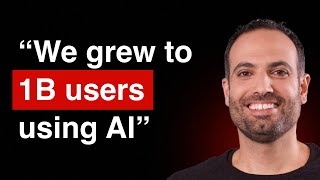
This is a YouTube video titled "LinkedIn’s Chief Product Officer on Growing to 1B Users with AI | Tomer Cohen" published in October 2024. It features a detailed interview between Peter Yang and Tomer Cohen, LinkedIn's Chief Product Officer. The conversation covers LinkedIn's growth to over a billion users, the transformation of its feed into a knowledge-sharing platform, the role of AI in product development, and advice on product management careers. The discussion also touches on LinkedIn's content formats, newsletter platform, and strategies for building AI-driven products, providing insights into product leadership and organizational agility.
There's very specific principles that you need to start learning. One of them is like thinking fast and slow about the outcomes you want. Like, just start with your intuition. But then you realize your intuition is not great enough because there's stuff that could happen and they will happen. So then asking yourself, like, what can unintentionally go wrong if I'm successful? Number two, you mentioned as well is something I strongly believe in, that I see a struggle. You don't control the experience when it comes to AI. If in an irony world, you dictate everything on the screen, you dictate exactly how the buttons would look like and the flow would look like. And now you know you have this powerful technology, but it's not deterministic. And it will work based on your objectives, but it will take time to learn and you'll make mistakes along the way. So if you don't have the patience, like, you would not be able to build a very successful product. The last one, which is if the objective is your number one job as a product leader, I think your second most important job is the data. And that's really key in AI, because how you collect data, collecting quality data, and how you fine tune the data is how you differentiate yourself in this kind of new realm. And I don't see many product folks thinking about data collection fine tuning. They just assume it happens. But you can literally create step function changes in the experience and value for your customers and members if you just train the AI. Right.
All right, welcome everyone. My guest today is Tomer Cohen. Tomer is the Chief product officer of LinkedIn and also hosts the Building One podcast where he interviews other top product leaders. Welcome, Tomer.
Thank you for having me.
Great. All right, so you know, LinkedIn has really become the go to platform for professionals to share their knowledge online. And personally, I spend way too much time on it. I probably get twice the engagement on LinkedIn as any other platform. So maybe you can start by sharing some stats about LinkedIn skill, if you have any off top of your head.
Yeah, that's great to hear. It's been remarkable. So I can tell you I joined kind of more than a decade ago, and when I joined, it was less than than 100 million members. And now we are well north of a billion members and we continue to see accelerated growth. So the exciting part is not only are we not slowing down, we're. We're accelerating in many ways. And you know, LinkedIn, the best way to think about it is just we exist to create economic opportunity. That's our vision. So it's to help every member in the world have access to economic opportunity. And every minute on LinkedIn, it's everything from, you know, feed updates that you're seeing. We have 1.5 million updates being viewed to close to 140 hours of learning content being consumed. But also 70 people are hired every minute on LinkedIn. 13,000 connections are being made on LinkedIn every minute. So in many ways you can really see that exchange of economic opportunity happening across the platform. Whether it's knowledge sharing, whether it's hiring and seeking a job, or it's building your business across the board.
Yeah. And like, you know, just a few years ago, or maybe it was a decade ago, but like LinkedIn usually should just be a place where people update their online resume. Right. And very few people came to the platform to actually consume content. And I think you played a key role in this transformation. So like, how did this happen? Like, can you walk us through how this happened?
Yeah, I think the vision of the company stays the same, that we just realized there's an incredible way to do it on a different platform than we did it before. So, you know, with our vision to create economic opportunity for every member of the global workforce, LinkedIn is this incredible economic platform. So I always think about this like every economic opportunity you can think about, LinkedIn can actually help you do that because it's built on this amazing top social graph. I think the thing that became kind of a big focus of ours in the last several years is knowledge exchange. So, you know, think about the engines of growth for the economy. There is basically labor, there's talent, people hiring, people finding a job, people being hired, companies are growing, there is exchange of products and services. This is how you measure gdp. But the biggest accelerant of economic growth is actually knowledge exchange that tends to have the higher slope in terms of productivity. And for us, that was an amazing way to facilitate interaction and connection on LinkedIn in a way that actually helps you become more productive and successful. So I think it's actually more than a decade ago we launched the Influencer program with long form content and we started to bring in some great voices to the platform to share their knowledge. But I would say the key change was the feed. When we started to focus on the LinkedIn feed, becoming the ultimate matchmaker and facilitator with people who have great knowledge, people who are seeking a great knowledge. And before that wasn't the case. It wasn't a feed focused on knowledge sharing. And that was transformational story. For us, in many ways transitioned that from being more of an activity feed. Who changed the job, who is going where, who is what skill people learn to more of? What does Peter have to share with his audience? And how can I use what you've learned in your job so I can do my job better?
Yeah, you know, I really believe in, like, you know, it's not just about your resume. It's about what kind of information you share online. And if you share really valuable information online, you can attract the right people and hopefully you can land job opportunities or other opportunities. I think that's like super powerful. It really, the Marco ties is everything. Right.
It's incredible. We have so many great examples here. Like, I'll give you one that recently I really enjoy meeting with members and seeing how they use the platform because again, it's a platform, so everybody's using it in a very powerful way. There's one member who was a game designer from Madrid, and he decided he wanted to kind of repurpose his life towards helping people in need and use his skill to build a prosthetic arms nonprofit. So basically helping kids with that needed prosthetic arms and build it for them and build a nonprofit around them. And he started sharing his ideas for building it, started sharing how he would do it, started sharing his key audiences, and he attracted people to his content. So before knowing, like, he had investors lined up, he had partners lined up, he had people who wanted to work for him lined up. And it started by him sharing his passion and what he wanted to do. And according to him, like, LinkedIn was the platform to make it happen. And he's one of the endless stories about how LinkedIn was transformational in that perspective.
That's amazing. Yeah. So let's go back to the feed. I've worked with, like many feed teams at Meta, Reddit and Roblox, and it's always difficult being a feed PM because like, you're like the homepage of the whole thing. Right. And like, there's so much scrutiny, like, if you make one little change, like someone's product metrics go down or like some something happens. So how did you kind of like go from this activity feed to this content feedback without stepping out a bunch of toes?
Yeah, it's a great call. And then the reason, you know, it's the job is hard, but also the job is important is because everybody lands on the feed and it's the main experience of any social app out there. So it requires kind of strong principles and understanding of what you want to build. I think for us, the change has been really changing the objective of what the feed, the purpose of the feed. So I think before actually there was no dedicated feed team. There's multiple teams working on it, and relevance was done by a. A separate team. And we brought it together into one team. And in fact we brought it without the relevance team. And then I realized I can't do anything meaningful without the relevance team being part of this team. So we brought a relevance team together as well. But it starts with the objective. And I think for us, the objective for the feed before was really about in many ways, like, you know, traffic generator or like traffic distributor. Like everybody was putting their valuable parts of LinkedIn on the LinkedIn feed and kind of let members choose. And it was based on a very shallow objective function, which is click through rates. And once you start to transform that into. Okay, I want the feed to be primarily about knowledge sharing, people sharing their craft, people learning about their craft, people finding their interest. Then you start to repurpose that AI function, which is extremely powerful because it will do whatever you tell it to do into that objective. And that we started to move away from CTR as the goal to. We actually first we moved into conversation starters, so people actually having conversations in the feed, but that also is closely attached to viral actions. And viral actions is being heavily kind of abused by spammers. So we kind of went deeper into downstream actions and looking more about are you actually building strong connections? Are you actually having conversations after with those people? And it's not just clickbaits that people are putting in. And then gradually over time, that objective function became very. Became composite, which I think is the right objective functions for AI first teams. And it was kind of trying to really personalize that experience towards the end goal of knowledge exchange and knowledge sharing on LinkedIn.
Got it. It's very hard to find a metric that matches this kind of goal, right? Or maybe it's like multiple metrics. I'll give an example. Like on X, I think the objective function is like time spent rereading posts. And what has happened is like all these viral videos started going super viral because all these memes, because the objective points is time spent. But is that actually valuable discussions, valuable content? Probably not. So when it comes to knowledge sharing, do you have a mix of metrics or.
Yeah, the way I think about it, and I think this is true for one of the principles, I think our AI first for product builders is the idea that you have to think fast and slow about your objective. The Objective of the algorithm. And the objective of the algorithm really is, honestly, it's really your most important job as a product leader. Like, that's supposed to come from you. You should figure out what. Because that's the purpose of the product. And I don't see many product leaders actually spending time on the objective function. They kind of, in a way, sometimes delegate it. And it is the most important job. And it's actually the hardest job, in my opinion, because it has all these nuances of what you want to bring into it, what's a great experience. And the reason I'm saying think fast and slow is I think you start fast with your kind of intuition of what would make it great. So to your point, in maybe in X, I don't know, but maybe in X it's dwell time. So it sounds. It sounds good that, like, if somebody's spending time reading through, it must be a good experience, but we all know it's not. So then you apply the slow thinking to it, which is what could go wrong and, like, who can actually, like, what matter? You know, what could go. Even if you're successful in, like, making your metric go up and to the right, what could unintentionally happen? And there's so many unintentional aspects. There's spammers, bad actors, kind of filter bubbles that could happen. So when you want to start to bring those into play, what you're really finding is you have a composite objective that has a purpose. It's not a grocery list of stuff, but it kind of builds the right guardrails to make sure it's a quality experience, at least for us. That's the way we think about it.
Got it. Yeah. It's kind of like a race. People try to game anything, so you kind of have to put it on the market and then see what was happening and then try to adjust your objective function to, you know, it's never ending.
Yeah. Think about any behavior you see. It's not categorized as one thing. Like, ask you, who do you want to, like? What's the ultimate candidate for you to work on your team? I don't think it's one trait that makes them very successful. Right. Like, there's a composite of traits that will make them very successful. I think it's the same thing here.
Okay, so I have to ask you about LinkedIn lunatics, the. The subreddit. Do you check. Check it out or do you not?
I do not. I've never checked it out.
Okay. All right. Well, there's some pretty funny posts on LinkedIn. There's some really valuable knowledge sharing posts, but there's also some pretty funny posts like, you know, someone posted about how getting married, what getting married taught him about B2B sales, for example. So what's your opinion about all this? Like, is. Is getting a laugh out of your feed as as valuable as getting knowledge or. Yeah, what's the mix?
You know, this reminds me. So it was like three, four years ago, we had this, we added the funny emoji on LinkedIn and we had this debate before we added it on whether it belonged or didn't belong. And there was arguments in each direction. And I made the call ultimately to add the funny emoji because I think when we think of LinkedIn, we sometimes have this model of what's the ideal workplace like when you go to work. And we think of LinkedIn as like going to work but in a great place, a place you want to go to work at. What is that feeling like? And obviously it's productive. You get things done, you, you meet great people, you form strong connections, you learn, you grow in your career, and those are fantastic. But also there's a. Humor is a big part of having the ideal workforce, the ideal, like, workplace environment. You know, there's like hallway banter and conversations and laughter and it's a big part of getting things done and feeling great about your job. And for me, that was a big aspect of it belonged on the LinkedIn feed as well. How do we bring in laughter now? Obviously everything can be taken to the extreme and it could be unproductive, not abusive. And that's not the goal. And that's what we're trying to do with the community guidelines that actually working really well for us, where people kind of, in a way sell, like police the stuff they want to see and like they, they choose the people that actually are sharing productive things and it works pretty well. And so far, some of the stuff I see that are funny are great. You know, I would share them in the workplace as well. And I think those are. That's a great kind of litmus test if it's working or not.
Yeah, yeah. Like, you know, on my team, like, you know, I share memes in Slack all the time. So it's not like, yeah, it can't be all serious all the time.
Yeah.
So beyond the fee, like, what are some other, like, major products that you're investing for content creators or just for people who want to share knowledge in general?
It's a great point because ultimately, when we think about like knowledge sharing, we ask the question of like what formats, what experiences are most conducive to the experience of, of coming together. And I think generally there's two aspects that are like probably far the most productive from knowledge sharing. One is video and the other one is long form. And you know, on the video side we're, I'm sure you're seeing this, but we're heavily investing right now in, in short form, video and building this kind of video feed experience that basically allow people to share their knowledge and kind of bite size aspects. People can kind of grab on their commute. And you know, this morning I kind of woke up to the Fed rate cuts and saw all the commentary about it and it was fantastic. It just gave me kind of a big boost of knowledge about what it means, how it was done, what's coming up, what's the impact in the market. So I think those work really well. The other one is kind of long form. And there we have newsletters and that's been taking off like wildfire on LinkedIn. It's really exciting to see we have close to 200,000 newsletters on LinkedIn, well known for 750 million subscribers subscriptions to those newsletters. And over 150 million people actually subscribe to newsletter on LinkedIn. So it's very powerful in the sense of distribution. Now the beautiful part about it is you don't rely on the feed when you have a subscriber audience, right? So the moment you have people subscribing to your newsletter, they directly get that interaction with you. So it's like a directional relationship with somebody. If I go and I follow you on LinkedIn, you know, I will see your content on my feed. But depending on how much content exists, you know, something might be ranked higher. But when I subscribe to you, I'm really building this unique one on one relationship with you, where everything you're posting I'm getting directly, I'm getting it over email, I'm getting it to the LinkedIn experience and that becomes a great way for me to learn about aspects that come out the most to me. So when you look about what subscriptions out there like, it's across the entire professional spectrum. So everything from economic analysis to startups to geospecific newsletters about like specific countries to healthcare, like I could go on and on and on, AI kind of developments and movements and there's fantastic content in that perspective. In fact, I'm subscribed to a few that I read pretty religiously on LinkedIn. The other format which I think works really well for knowledge sharing is events. And this is where we see a lot of live events kind of happening on the platform. Great engagement with it. We're seeing companies kind of promote their releases on it on LinkedIn, you know, product releases or big announcements. They're doing it, they're kind of launching it on LinkedIn. So those work extremely well. And then on the paid side, we also help companies, especially in B2B. B2B is a lot about knowledge sharing. So when you're trying to sell B2B products, part of it is convincing the customer why this product matters. And it's not like a B2C which tends to be more about the appeal of the overall kind of packaging and the way it looks and the way it makes you feel. In B2B you actually share very specific aspects of why this is a powerful, could be a powerful part of your solution, your solution offering as a, as a company. And for that we added like thought leadership ads. So for example, you can promote thought leadership from people who are big champions of your product to showcase how others are using it. So those are all knowledge sharing formats really. They're all experiences that ultimately are meant to connect between knowledge creators and knowledge consumers. On the aspects of getting my stuff done at work.
Yeah, I mean I spent a lot of time writing a newsletter and I think you maybe have the biggest newsletter platform. I don't think people know this. Right. But the stats you share with me makes me believe that it's probably the biggest newsletter platform out there.
I wholeheartedly believe we are currently like when it comes to like newsletter distribution reach number of subscribers, it's extremely powerful and it's, and it's growing really fast. So we're not, it's still early days when it comes to those.
So just real quick on that. Like, you know, creators have this fear that if they rely too much on one platform then like, you know, if the algo changes the next day or something like their distribution is gone. But I think, but I think you have like beings where like, you know, people can see emails or like there's other ways to kind of like not be so dependent on the home feed like you said. Right?
Yeah, I think the whole thing is a wonderful place for you to, for folks who discover you for your content to kind of get the reach you want. But newsletters is one more venue where people can subscribe to actually events as well. Once you drive RSVP's to your events, that's a dedicated notification that goes to that subscriber. In fact, what we're seeing right now is companies, you know, as we're kind of recovering from COVID and people coming back, going back to in person events, they're still having a virtual event with it and then people can subscribe to that at the same time. So that relationship just allows you as a brand or as a business to build stronger ties or as creator with your audiences. The feed is a fantastic way to do it, but there's other venues on LinkedIn you can do it with.
That's awesome. Yeah, I'm glad you guys think about multiple channels. So let's kind of switch gears real quick. Let's talk about building AI products. You've been doing this longer than most PMs and I've done it a couple times now. And building AI products, especially generate AI products, it's actually kind of annoying, right, because you don't actually know what the thing will output like it's very non deterministic. So how do, do you have any like principles or best practices when it comes to building AI or generative AI products?
You tell your PMs it's a great question because actually I, I teach this, I have two courses on LinkedIn and I teach at Stanford classes when it comes to product development and product leadership, specifically when it comes to AI. And I think this came from my own experience. So when I took the role of leading the feed, there was no such thing as LinkedIn as a AI product leader or AI product manager. And I took that role. I was, I learned AI when I was in school. I did some, you know, basic coding it a long time ago, but never really went as deep. And then I, I just spent my time just focusing on the relevance and AI component of that experience which was the most critical for getting the feet to work. And that for me, as part of this process, kind of developed some really strong principles as a result of that, both in terms of my own development, but also seeing how transformative this could be for the company. And you know, the thing I start with when I talk to product leaders about why they need to learn AI is ultimately, you know, the product is at the heart of your company and AI today is at the heart of your product. So if you don't understand what drives your product, how can you manage it? And for most people they don't. They just assume this is going to be something that basically works. So you know, it's a piece of technology that they're basically embedding in. And for me, I Don't think this is how you build great products. And you're kind of missing the engine of what makes the car move. How can you build a car? And so it's kind of start from this kind of notion that you can't manage what you don't understand. And then it's, it's the transition you have to do. If you're a new product leader, then you're coming fresh. It's fantastic. You don't have any scar tissue of how things used to be built in the past. And I think every tech revolution changes the way we build products. But if you do and you do transition from this like non AI product centric world, let's say a decade plus ago, to what we're seeing right now, then there's very specific principles that you need to start learning. And the three of them, one of them I mentioned, which is like thinking fast and slow about the outcomes you want, like just start with your intuition. But then you realize your intuition is not great enough because there's stuff that could happen and they will happen. So then asking yourself, like, what can unintentionally go wrong If I'm successful, what's the more nuanced way to think about this problem? You know, I'll give you an example. If you are responsible for the Amazon shopping experience, what do you optimize the algorithm for? You optimize for clicks on products. Do you optimize for purchases? Amazon runs on a very small margin. Do you want purchases with no return? So you want purchases that people actually would be happy with, not just generating revenue? We don't, you don't want returns coming in the door, but maybe you actually optimize for prime, because if you're optimizing for prime subscriptions, there's that you're driving a lot more loyalty. So what is the algorithm for the Amazon shopping experience? It's probably a lot more nuanced than buy the product you're searching for. And you really want to think about like the kind of the, the life cycle of that, of that customer. Same for us. When you think about like when we show you job recommendations, is the goal for you to click on the job? No, because that's not great. If it doesn't sound like a fit for you. Is the goal for you to apply for the job? If you're not great apply, then you'll be dissatisfied and the recruiter will be dissatisfied. Is the goal for you ultimately to find a job that you can be successful at? Like that's kind of how we're thinking about it. So you're, you're trying to go very downstream and very nuanced about the recommendation itself. So that's like number one, thinking fast and slow about the user outcome. Number two you mentioned as well is something I strongly believe in, that I see a struggle and not as it used to be, but it used to be a big struggle for people around. You don't control the experience when it comes to AI. You know, if, you know, if in an I world you dictate everything on the screen, you dictate exactly how the buttons would look like and the flow would look like. And now you know, you have this powerful technology but it, it's not deterministic and it will work based on your objectives, but like there's such a space for it to explore and probably it will take time to learn and you'll make mistakes along the way. So if you don't have the patience, like you would not be able to build a very successful product. And that idea is, is really powerful. And the analogy I give there is this form of like you have a chef in a restaurant, like as the product leader, like, you know, the restaurant is something that you dictate every experience in. As a chef, you dictate the music, the ingredients, the plating, the tables. Everything is dictated by you. And now with AI, in a way, let's imagine you just get to dictate the ingredients, but AI decides exactly how the meal is going to be prepared. So that's a critical one, the last one, which is if the objective is a number one or if is your number one job as a product leader, I think your second most important job is the data. And that's really key in AI because how you collect data, collecting quality data and how you fine tune the data is how you differentiate yourself in this kind of new realm. And I don't see many product folks thinking about data collection, quality data collection, fine tuning, they just assume it happens. But you can literally like create step function changes in the experience and value for your customers and members if you just train the AI right. And that means collecting the right data, but also training it really, really well.
Yeah, because you know, trying to write ground truth answers or like trying to clean up the data is not as sexy as like writing a product strategy. Right?
Well, I can tell you early on in my feed, this is a story I tell people early on in the feed, we had to clean up the feed from like a lot of, let's call it like, you know, non professional or non Productive content.
Yeah.
And we had to create quality samples for the AI to see what professional or non productive content.
Yeah.
And we had to create quality samples for the AI to see what is great content and what is not. And that was months of my life doing it, but it was probably one of the most important things I've done in that role.
Exactly. You gotta be willing to roll up your sleeves and do this stuff manually at first, get the AI trained. Let's talk about your amazing career. You were a founder right before you joined LinkedIn and then you grew from, I think, a PM to CPO. You know, let's talk about. There's been a lot of discussion about Paul Graham's essay about founder mode and manager mode. What trace you do the best PMs have from your experience? Like, you know, when you think about your pm. Org. Yeah. What are some of the traits that the best PMs have? Or is it pretty different?
Yeah, I think there's. I would say specifically about kind of the founder mode. We used to have this kind of value internally called act as an Owner. And for me, act as an owner is like you just deeply care. Like, it's not that you come to work at LinkedIn and it's just a place to work. You actually care about the mission you care about the vision you like. You act like this is your company. Like, it's not just a place that you, you know, provide salary for you. And I think this just changes the way you think about the product. Like, especially in the product area, you can easily see who deeply cares and for whom. This is just something that they're trying, you know, to. To do as a job even. Who deeply care go deep. It's almost like, you know, and this is not just. It's almost like a. I don't know, it's a mental state. It's like if you walk in your hallway in your company and there's trash on the floor, do you pick it up or do you wait for somebody else to pick it up? Pick it up. It's your company. It's like in your house, would you leave it on the floor? You wouldn't. So I think like, that's kind of like the, I think the owner mentality, the founder mentality in many ways. Now for me specifically, the folks I love working with, and it's not just product, but the folks I love working with are a combination of dreamers, doers and learners. And I think it's really important in the product area. Like, I think people who have a Vision who know where they want to take the product. It's just, it's much more exciting when somebody walks into the room and they have a vision within the company's vision of what could change in the world if they do an amazing job with this. I think it's really hard to build an incredible step, function up experience if you don't have a dream of where this could take or where this could be. And so I think that's a important trait for product people. The second one is people who can execute ultimately not looking for folks who would pitch and pitch, but people who can actually roll up their sleeve. Talked about like the example of going and cleaning up the feed.
Yeah.
The day people who just like deeply care and they will do the work regardless of how hard it is. I think the combination of doers is really important. And then lastly, you know, we are fortunate to work in a, in a function, in an industry that moves very fast. So the aptitude towards learning that idea that whatever you thought you knew and you became an expert in the moment, you slow down and you stop learning, you're no longer an expert, I think needs, I mean that idea of an expert I think should be challenged in this world because whatever you thought you knew and you became an expert in the moment you slow down and you stop learning, you're no longer an expert, I think needs to be. That idea of an expert I think should be challenged in this world because there's continuously opportunities to learn and folks will learn really well. What I find is they just don't have any ceiling like they, they can continuously just invest in their career and create this compounded like value of not, not wealth in the sense of financial wealth, but this kind of intellectual wealth that they're building for themselves. So for me it's that combo of dreaming, doing and learning that is the folks I enjoy most working most with.
And do you think if you do those three things well, your career will kind of take care of itself? Or do you think, you know LinkedIn is also a big company, right. Like does. How do you as a cpo, how do you like try to reward impact more than optics? Or how do you like try to, you know what I mean? Like how do you try to make the organization as nimble as it can be?
So I think one for somebody's career, I think you're maximizing your chances of being very successful. In my opinion. Again, this is not for every function, but I think in product the notion of dreaming is really important. I don't see Here you do any role without doing so. And then learning is just a way to increase your potential. Like if you think about it, people talk about like how people can meet their potential. I don't think you should meet your potential. I think you should build your potential. Your potential probably. I heard this from Carol Dweck, the kind of the founder and the professor behind growth mindset. He talks about your professional stops when you die. Like you can always build your potential. Like there's no limit to your potential. So I think like the learning side is extremely powerful there. I think in terms of uh, you asked about how to keep the product org kind of working fast and, and yeah, for me it's like, you know, I actually try to keep it small. I think there's. There's just reality that as you grow there is just this externality that's coming to play. There's more communication routes to consider. There's more factors that doesn't exist in a smaller and smaller organization. So there's just reality that when you grow the organization, this is why at a certain point you start to see diminishing returns. Because it's just hard to get things done unless there's a technological leap that actually allows you to do things really, really well. Whether it's email long time ago and then teams or slack or stuff like that allows you to be very productive. I think the idea of trying to keep your organization small as much as possible is a great way to be very nimble, small and flat. Otherwise, you know, like unnecessary layers create just unnecessary needs for information sharing which is transactional and not always super clear. Just like multiple decisions just make. You're making the system more complex. So if you can, I would try to keep it small. And then there's just that realization that every organization that grows has this notion of inertia that is built into the system that unless you fight and unless you try to do a better job in getting that organization to be nimble and fast, it will not happen on its own. You need to be, you need to like, you know, intentionally think about how to create those areas in the system that will help you move much easily and create that a long time ago. And then teams or slack or stuff like that allows you to be very productive. I think the idea of trying to keep velocity you want, but it's really hard to keep the same velocity you have as a startup when you grow into a large company. The bigger could be much bigger as a bigger company, but you need to always fight the trend of the kind of slow, you know, slow growth coming into it.
Yeah, you want to like kind of reevaluate your processes and like are people spending too much time making documents or like going multiple layers up the. You want to kind of like probe on some stuff, right.
Assume people are doing their best and they come with the best intentions and regardless it's moving slow so then it's not the people necessarily. Again it might be also you want to hire for folks who are like more entrepreneur minded, more of that founder mentality who act as owners. But you should also realize the system could be much better. The system could be nimble and figuring out like what's the processes to cut. And I would start with like why do you even need this process before you establish a process before you do something? I think is a great way to do it.
Okay, last question. Tomer, you know, since since you are the CPO of LinkedIn, it's still pretty tough time.
Your organization, small as much as possible is a great way to be very nimble, small and flat. Otherwise you know, like unnecessary layers create just unnecessary needs for information sharing which is transactional and not always super clear. Just like multiple decisions just make. You're making the system more complex. So if you can, I would try to keep it small. And then there's just that realization that every organization that grows has this notion of inertia that is built into the system that unless you fight and unless you try to do a better job in getting that organization to be nimble and fast, it will not happen on its own. You need to be, you need to like, you know, intentionally think about how to create those areas in the system that will help you move much easily and create that velocity you want. But it's really hard to keep the same velocity you have as a startup when you grow into a large main tech.
Right now like a lot of people have lost their jobs or are struggling and maybe a lot of people want to become AI, PMS or something. Like how do people. What's the best way to kind of land your dream job outside of just like randomly applying to a bunch of companies and maybe use LinkedIn?
It's a great question. So one just from where we see the kind of job market going and the skill set necessary, you know, when we look 10, 15 years company, the bigger could be much bigger as a bigger company. But you need to always fight a trend of the kind of slow, you know, slow growth coming into it.
Yeah, you want to like kind of reevaluate your processes and like are people Spending too much time making documents or like going in multiple layers up the. You want to kind of like probe on some of the stuff. Right?
People are doing their best and they come with the best intentions and regardless, it's out. It's really hard to know what jobs will be most in demand. In fact, like, you know, if you asked me 10, 15 years ago that I knew prompt engineering would be the most in demand world right now, I wouldn't. Right. And so, you know, there's a. But basically that tells you is that the idea that you continuously have to build your career and learn is critical. So if you're thinking I'm going to learn this and do this for the rest of my life, I don't think it's a great way to think about kind of building and investing in yourself. So what would ask yourself what paths gives you the highest velocity of learning? How can you make yourself more. And it's moving slow. So then it's not the people necessarily. Again, it might be you. Also you want to hire for folks who are like more entrepreneur minded, more of that founder mentality who act as owners. But you should also realize the system could be much better. The system could be nimble and figuring out like what's the processes to cut. And I would start with like, why do you even need this process before you establish a process, before you do something more valuable every year, what jobs gives you the opportunity to perform but also learn what people you work with that you can learn tremendously from. And especially if you're early in your career, would optimize a lot for learning versus trying to, you know, get a title or an area or so on in terms of, you know, for me I had a big shift in my career where I was like, you know, 14 years ago, I think is a great way to do it.
Okay, last question. Tomer, you know, since, since you're the CPO of LinkedIn, it's still pretty tough time.
About 15 years ago, I focused more on areas that I was super excited about. I had strong conviction in and wanted to work on. And instead of looking at what jobs.
Existed out there, I mean tech right now, like a lot of people have lost their jobs or are struggling and maybe a lot of people want to become a ipms or something. Like how do people, what's the best way to kind of land your dream job outside of just like randomly applying to a bunch of companies and maybe use LinkedIn?
It's a great question. So one just from where we see, I try to find the best people on LinkedIn that can. That are related to those jobs or companies or opportunities and have conversations with them and in a way, kind of pitch myself as somebody who could work on those. But I was very focused on just a few things, few areas. It wasn't kind of across the board. And this was for me, a change where I wanted to focus on areas that matter most to me versus aspect, the kind of job market going and the skill set necessary. You know, when we look 10, 15 years out, it's really hard to know what jobs would be most in demand. In fact, like, you know, if you asked me 10, 15 years ago that I knew prompt engineering would be the most in demand world right now, I wouldn't. Right. And so, you know, there's a. But basically that tells you is that the idea that you continuously have to build your career and learn is critical. So if you're thinking, I'm going to learn this and do this for the rest of my life, I don't think it's a great way to think about kind of building and investing in yourself. So what would ask yourself, what paths gives you the highest velocity of learning? How can you make yourself more and more valuable every year? What jobs gives you the opportunity to perform, but also learn what people you work with that you can learn tremendously from, and especially if you're early in your career, would optimize a lot for learning versus trying to, you know, get a title or an area or so on in terms of, you know, for me, I had a big shift in my career where I was like, you know, 14 years ago, 15 years ago, I focused more on areas that I was super excited about. I had strong conviction in and wanted to work on. And instead of looking at what jobs existed out there, I tried to find the best people on LinkedIn that can. That are related to those jobs or companies or opportunities and have conversations with them and in a way kind of pitch myself as somebody who could work on those. But I was very focused on just a few things, few areas. It wasn't kind of across the board. And this was for me, a change where I wanted to focus on areas that matter most to me versus aspects that just were more in demand. Actually, Even internally at LinkedIn, I mentioned the Feed example that nobody wanted that role. When I took that role, I don't think there was, I don't remember any competition for that. I asked to do that role because I strongly believe in that. I think this is where, like, if you go deep in your, whether it's you're currently employed or unemployed. If you go deep on where you believe that, like, the demand would be or what interests you, that intersection of both. Yeah, I would just spend a lot of time on that. And then, by the way, maybe it doesn't work out and two, three years later you recalibrate, which is completely fine. But at least you're very focused at first about what you wanted.
Yeah, I think that's a really important point. Like, I think trying to optimize for like, a title or like, you know, a company brand name when you don't actually like the work is, like, very risky. Like, you gotta be. You gotta be honest with yourself about what actually gives you energy, you know? And another thing, another thing I've seen is like, a lot of people are like, oh, I need to become a pm and I can really build some really cool products. So in this day and age, like, you can just like, start building shit right now, Right? Like, just start using AI and build stuff, find some customers. To me, that is more impressive than potentially even having, you know, a fan on your resume. If you can do that.
Yeah. I think builders have this privilege that they can talk about what they build and show it. And today, Lunely, to your point, you can build some pretty remarkable things at home from your home office with just a simple laptop.
Yeah.
And you can show your craft, you can show your ability to the extent that this is what interests you. But there's pretty remarkable opportunities in the product space. Cool.
All right, Tomer, so where can people find you on LinkedIn or, like, where can people find your podcast?
Yeah, so thanks for asking. So, on LinkedIn, Tomer Cohen, feel free to send me a message. I read all the messages. I can't always respond to all, but I promise I read everything that isn't sent to me. And whether it's feedback, bugs, reports, or requests for features, feel free to send it to me. And then to the point about the podcast, I have a podcast where I basically interview builders of all spaces. So, like, not just tech, but like, we're from chefs to the founder of Pixar to, you know, the CPO of Roblox to many others. And the thing there I'm trying to convey for people who are interested in this is that there's no one way of building. There's no one way of being successful with building products. It's. It's really diverse and it's what's authentic to you. So hopefully when people listen to the podcast, they not only just taking some great lessons about how those people build, but they're also thinking about, okay, what's unique to me that I can potentially bring out to market and shine in. So we just finished season one, we have season two coming up, which I'm really excited about as well. But also people have feedback on the podcast. I'll be happy to hear that as well.
Awesome. Tomer, thanks so much for your time. Ant, this is a pleasure.
Thank you, Peter. Tomer Cohen, Feel free to send me a message. I read all the messages. I can't always respond to all, but I promise I read everything that is sent to me. And whether it's feedback, bugs, reports, or requests for features, feel free to send it to me. And then to the point about the podcast, I have a podcast where I basically interview builders of all spaces. So, like, not just tech, but like, we're from chefs to the founder of Pixar to, you know, the CPO of Roblox to many others. And the thing there I'm trying to convey for people who are interested in this is that there's no one way of building. There's no one way of being successful with building products. It's really diverse and it's what's authentic to you. So hopefully when people listen to the podcast, they not only just taking some great lessons about how those people build, but they're also thinking about, okay, what's unique to me that I can potentially bring out to market and shine in. So we just finished season one, we have season two coming up, which I'm really excited about as well. But also people have feedback on the podcast. I'll be happy to hear that as well.
Awesome. Tamar, thanks so much for your time, man. This is awesome.
Thank you, Peter. Sam.
More from Peter

Dropbox VP's Best AI Workflows to Help You Take Back Time at Work | Morgan Brown


Canva Co-Founder: The AI Playbook Behind the World's Most Popular Design Tool | Cameron Adams

How OpenAI's Head of Business Products Uses ChatGPT to Save Time at Work | Nate Gonzalez

Complete Vibe Coding Tutorial: Build a Full Stack App in 30 Min with AI | Matt Palmer (Replit)


Complete AI Course (2025): Prompting, Evals, RAG & Fine-Tuning | Adam Loving (Meta)



