The 5 Hidden Rules Behind Successful AI Products | Chris Pedregal (Granola)
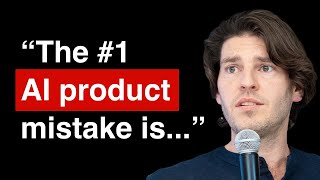
Chris Pedregal, CEO of Granola, shares five rules for building successful AI products, drawn from creating an AI-powered meeting notepad. The conversation covers product development challenges, how to use user feedback, and what works when large language models keep changing.
I think the number one lesson is you shouldn't work on any problems that aren't going to be problems in the short to medium term. There are problems in your product that might get solved by the next model drop, and then there are other problems that are always going to be a problem. You know, things that are always going to be worthwhile no matter how smart the models get. And I think that the easiest mistake to make is to focus on the thing that users are screaming about, but that the next version of the LLMs will just do for you naturally. I think as a product person is like, you talk to your users and they complain about something like, hey, I can't use granola for meetings that are over 30 minutes. Right? And like everything inside of you is saying that's ridiculous. Granola should work for meetings that are more than 30 minutes. This has got to be our number one priority. But something that seems like it's really simple all of a sudden to do well does take a bunch of time. And then like all that time would have been wasted because the next version of the model had a large context window. We could just stick the whole meeting in there. And I think this is something that's like, it's just so easy to get this wrong also because it's hard to predict the future. Right? Which should you be building and investing in now so that you know, 12 months from now when LLMs can do that at a reasonable cost point, your product will be fantastic.
All right, well, welcome everyone. My guest today is Chris Pettigrew. Chris is the CEO of Granola, which I think is the best AI notepad for me meetings. And I'm excited to chat with him about his hard won lessons from building one of the most successful and retentive AI apps in the market. So welcome Chris.
Thank you so much, Peter. Thank you for having me. Yeah.
All right, man, so let's start with some spicy takes.
Yeah.
So, so you know you've been a founder twice already, right? And you've also been a former Google PM twice. So I had to start this question, like, what do you wish Google and other big company PMs did more of now that you've built these successful startups.
What they did more of? Oh, you have to give me more context there. What do you have in mind?
Well, I mean, how is it different being a startup founder and being a Google PM? And what do you wish to Google PMs or like any other big company PM, you've been one, like, what do you wish that they did More of. And what do you wish they did less of to be more efficient?
Yeah, I mean, I think the reality is that there are so many constraints in place when you're a PM at a large company. It's just like a fundamentally, it's like a different sport, you know what I mean? Like, like, if, I don't know, being a founder, just choose a random sport is like American football. And like being a PM equal is like soccer. You know what I mean? They're like, totally. You can't play one game with the strategy or the rules of the other game. I think what I found at Google when I was a PM is that there's so many different types of work that a PM does, right? There's like project management type work, there's like planning, there's like being a leader, there's. And then part of that is also, you know, product design or how should the product work and what should it do? And my experience at Google is that was just an extremely small percentage of your time. And that's just the reality because there are all these demands on your time, all these constraints, all these meetings you have to go to that there was really very little time, at least for me to do the deep thinking on actual like product work. I don't. You can't. It's just the nature of the job, I think. I mean you have, you, you probably are. Have a lot of thoughts on this, Peter.
Yeah, it's almost like you're kind of forced to do the thinking in meetings with other people, which I guess has some benefits, but. But also just like a lot of time wasted just like preparing like communicating upwards, like having all the meetings and presentations and stuff. Right. Like, I totally agree. Like, I like to protect my craft time. Like I actually decline meetings. Probably not good for my career. But yeah, yeah, I'm like, you know, I need to think through the problem. I can't really meet with you right now.
Yeah, I mean, like, I remember, you know, at Google my day was just back to back with meetings, right. So that meant that if I was actually going to do deep product thinking, I'd have to do it on the weekends or in the evenings, you know, or wake up super early to do it. And, and that's just the reality. But it is kind of sad if you're a PM and you have to like do the actual product work on weekends, you know. But I think that's just the reality of a larger org.
And maybe that's why you started Granola. Can you walk us through after you left Google, how did you start? Granola.
Yeah, so I joined Google after my last startup, Socratic was acquired and I ran Socratic for five years. So I had another co founder, Shreyans and I, and we ran Socratic for five years when we were acquired and I was pretty burnt out by the time the acquisition happened. Like I was, you know, five years is a long time on any project and you know, startups are intense and when that happened, I think my son was six months old at the time. So I was also learning that whole set of skills or try figuring out how to be a parent. So I was pretty, I was pretty thankful to post acquisition to just have a bit more breather, a breathing room. But in the back of my mind I knew I'd probably do a startup again. And after a year I was just, I was kind of counting down the days a little bit in my mind until it would make sense for me to do that again. So I ended up quitting Google in I think March of 2022 and I knew I wanted to do a startup. I knew like by that point I had moved to London. So I knew I wanted to do it in London. I knew I wanted to do a startup and I didn't have an idea and I didn't have a co founder. So I started playing around with stuff and almost instantly I fell in love with GPT3. At the time, like when I had been at Google, I hadn't had the time to play with it properly so I'd kind of been like, ah, I don't know about this thing. And once I had some free time I started playing with it and it just, I was like, it blew my mind. I was like, this is, I was like, this is different from other stuff that I've seen. And I basically spent a year building prototypes to get a feel for the technology. Because the interesting thing about LLMs, I think we've, a lot of us in tech have like normalized to it but like the first time you interact with one less so now because they're smarter but like back then especially they'd be like really good at something that maybe like only a college level, you know, college student level educated person could do and really crap at stuff that like my 5 year old could do, you know, and that was like a really confusing thing. And yeah, and then ended up meeting my co founder Sam, exploring a bunch of different ideas and, and then settled on what ultimately became granola.
And so why do you decide to tackle the meeting problem?
Or is that I guess we entered it kind of reluctantly just because they have so many different products out there built for the meeting space. What I guess two things kind of convinced us. Well, I'll tell you the great things about meetings, right? The great things about meetings are one, people have a lot of them and there are. They're scheduled on a calendar. So like sending notifications to use your product when you have a meeting actually feels helpful and not annoying. Like most products if like Granola will like send like I don't know, like six or seven push notifications a day for a user, if they have six or seven meetings that work, Granola would make sense. So it's a really nice user need to build a habit around because they're like these natural hooks. So that's 1, 2 LLMs I think have a few like super power applications. Right. And I think we, you know the one I think is CO Generation 2 I think is like search, right. And another thing that they're incredible at is taking something super long and unwieldy like a transcript and turning it into something useful. So I think I was, wow, there really is so much value here. And then man, we tried all these different ideas and we put them in front of people and no one, they people were just not interested in all of them and their lives. Their eyes lit up when we showed them a thing of like, like first version of Granola because they were like, oh, I hate taking notes, you know. So it was just a combination of things where like, okay, I think LLMs can really. I think there's a product here to be buil that really is going to be helpful to people. And I think if we build it, you know, there's a path here where we can get people to use it and keep using it. But it was like, it was a little scary because there are so many people doing meeting, relating stuff.
Yeah, that's what I'm digging too. Right. So like there's you know like Zoom and Google Meet. I think both offer AI meeting notes now but I think people just love using Granola. I don't know if you can share how many people come back after first week but like one makes you all love so much.
Yeah, it's like 70. Like basically if you use granola like 70% of people come back the next week and then they kind of stick around. Why? What makes, why do they like it so much? Was that the question or like what, what's different from the big ones? I think I'd say over the overarching reason is that it's simple and convenient to use. I really think that's like the main one. There's not a. Is not a bot that joins your meeting. You don't have to open a special ui. It's like a. It's an app on your computer, right, that looks like a notepad. It looks like Apple Notes. And it kind of. You can open it up and use it if you want. And if you don't need to use it, you just close it and you know, you're really in control of it. And I think it kind of integrates seamlessly into people's lives. Like, I think that's the main reason. I think it's. It sounds. When you say it that way, it sounds kind of silly. It took a lot of work to get to that. Like, we had to build a ton of things and cut them out and we had to like, figure out like, what is at the core of the product. Right. And there's some insights I can talk about there, but I think ultimately it's because it's a thing that doesn't get in your way and that people like spending time in.
Okay, so let's dig in a little bit more, but let's talk about it from the framing of your top lessons from building AI products, right? Like, you just published this great blog post, so maybe why don't you start by just listing what the lessons are? Like, what are your top four?
Yeah, sure. And I might mess them up from memory, but I guess the number one lesson, I think so basically I think the defining. These are harder and lessons. So these are like mistakes we made and kind of learned from. I think the defining characteristic of building an AI is that the underlying technology, the models are evolving so quickly that it's a. And that affects the entire environment. So I think the number one lesson is you shouldn't work on any problems that aren't going to be problems in the short to medium term. And, and by that, basically there is. There are problems in your product, right, that might get solved by the next model drop like GPT 5 or 6 or what have you. And then there are other problems that are always going to be a problem. You know, things that are always going to be worthwhile no matter how smart the models get. And I think that the easiest mistake to make is to focus on the thing that users are screaming about, but that the next version of the LLMs will just do for you naturally. And we have a bunch of examples there. Language support is one like context window, like you can only use Granola on like short meetings at first. So like that's one big lesson. Do you want me to go to the next one, Peter?
Do you want to talk about that? Let's go a little bit deeper in that one. So, okay, so like as an example, you mean like users are like, why does this thing work for longer meetings? But your point is like, you know, the next model will have a bigger context windmill, so it will work.
Yeah, exactly. And like so, and what's weird about that, I think as a product person is like you talk to your users and they're, they complain about something like, hey, I can't use granola for meetings that are over 30 minutes. Right. And like every, everything inside of you is saying that's ridiculous. Granola should work for meetings that are more than 30 minutes. This has got to be our number one priority. But you know the way to do that at that time. It like sounds easy, but actually it's like, okay, now you need to chunk up like the meeting into several chunks and summarize different chunks. Right? And that. But now you need to reconcile the summaries. Right? And something that seems like it's really simple all of a sudden to do well does take a bunch of time. And then all that time would have been wasted because the next version of the model had a large context window. We could just stick the whole meaning in there. And I think this is something that's like, it's just so easy to get this wrong also because it's hard to predict the future. Right. Like, like what? Like LLMs are, I mean, I still think of them as primarily text based. Right? That's wrong. Right. LLMs are going to take any kind of input and you're already seeing that with I mean obviously voice, but photos and video soon. And like when an LLM can take all that context in real time, like what's that mean for products? And what should you be building and investing in now so that you know, 12 months from now when LLMs can do that at a reasonable cost point, you're, you know, your product will be fantastic.
Well, what's something that you mentioned that like your 5 year old can do that an LLM can't do? Like something that actually is important to solve now.
Yeah, well, I mean that was a, so that was a reference to like when I started like two years ago it was like basic like math, you know what I mean? Like there's like, like basic math stuff was like really weird or just also just like, like, you know, like the, the classic like positional stuff, you know what I mean? It's like system go on top of this thing or whatever. Like, like they've gotten a lot smarter now. But that was the kind of stuff I got it.
In terms of predicting what LLMs can do in the future, I guess you can look at a few broad trends, like hopefully the cost of inference will come down. It's going to become multimodal, bigger context. Maybe they can do more work, like more agent flows as opposed to you prompting them all the time. Those are kind of the big trends, right?
Yeah, yeah, exactly. I think there's two things you can do. I think the simple thing to do is basically look at what can the most cutting edge, expensive model do today. Right. And then just assume that will be cheap and accessible in not too much time and build for that. And I think everyone should be doing that. Right. So I think we should be. You should be. Everyone should be preparing for a world where you can feed like, like live video into an LLM and that's like doable and, and cost effective. I think if you try to predict past that, it gets really tough. Right. I think it gets, that gets into like sci fi territory. If you're like, okay, like what does, you know, like what will the next generation of cutting edge models do? I think that's a lot harder to imagine.
Got it. Let's go to your next principle. Okay. You have this principle called go narrow and go deep. And I love that because it's about focus and prioritization. So maybe talk a little bit more about that too.
Yeah. I think obviously general advice is really hard. So this is all grounded in my experience with granola. But general purpose tools like Claude and ChatGPT are really good, you know, like surprisingly good at a whole swath of tasks. So I think if you are building a startup, you need to be 10x better than that. Right? At least 5x better than that. And I think the only way you can really do that is by choosing a narrow use case, a narrow path and trying to make that experience really great. And I think when you do that, something that's interesting that comes out is that a lot of the work that you need to do to make that narrow experience really great sometimes has nothing to do with AI. Sometimes it's a lot around like the wrapper. Like, like examples for us for, for granola would be we spend a ton of time. So basically you have to do. People might have headphones on, they might not have headphones on. Right. If you don't have Headphones on, the audio stream from the speakers goes into the microphone. So you have to do this echo cancellation thing and basically like, long story short, like, to make that really seamless, we had to like roll our own echo cancellation, which sounds like super silly that we'd have to do that in like 2024, but we did. And that took a bunch of time and effort and has nothing to do with any like the core like note writing of the product. But it had all, everything to do with granola just being the seamless thing you don't have to think about. And I think that's like, when you go narrow, you like there's all this kind of like parallel work that needs to be done or like that you can do to make that core experience great.
How do you approach this with. Did you like map out the customer journey for like doing a meeting and then you kind of like figure out the little friction points along the way or.
Yeah, yeah, we did, but we. So we were in, we had a closed, like a closed beta for. We were in closed beta for a year and we basically had a small. By the end it was like 100 people that we were building with, but we started off with three. And it became really obvious once you gave it to real people that there are like some basic things that you need to, that you need to do for them to trust you to take notes for them. I think it was just a lot of like giving it to people and spending a bunch of time getting feedback from them and not mapping too far into the future.
I think it's very interesting because with non AI products you can, you know, design something, you can ship it, you get feedback, right? But with this stuff, like the output is like non deterministic. So it's almost like not like, is this good or bad, it's almost like is it good 80% of the time or like, you know, there's like a threshold where you think it's actually good enough to ship. Like has that been your experience?
Yeah, I mean, I think what it makes it just, it makes it harder, I find, to get a handle on what the actual user like the quality of your user experience is, right? Because it's deterministic. And for better or for worse, it's meant we've relied more on direct user contact rather than quantitative metrics on user experience quality. Like I feel like you can on other more traditional flows and might be like, okay, what percentage of people made it through this flow? And you know, is that good or bad or whatnot? Whereas here It's a lot harder to actually measure that. So we end up just spending a lot of time talking to people and.
Let'S get a sneak peek into how this thing works. So it's not just like taking someone's like, transcription, like, you know, using some prompt to summarize it, right? It's. It's actually more than that. Like, can you tell a little more about that or.
Yeah, sure. So like, I guess, I mean, I can tell you the thinking. I can kind of tell you how it works now. I might leave some details out. I think what we figured out is that when we started off, when we started off, like writing the prompts for, for granola, the prompts were very instruction based. It was like, okay, if this is the case, like, write notes like this or if this is the case, include this. And. And don't do that. And what, what we kind of quickly figured out is that the reality of the world is that it's really nuanced and complex and these kind of like binary instructions map very poorly to that world. Because it's okay. It's like, you know, it's like, okay, if there's this type of detail, like this type of information is important to add, right? But don't make the notes too long. And it's like, okay, now how the heck do I know which of those two are more important, right, if I have these conflicting abstractions? So what we found, like our mental model shifted to a different one. It's basically think of the model like the LLM as an intern on their first day at work, which is basically a smart person, right, who has no idea on how you do things and doesn't have any context on what you do and give that intern all the context they need to do a good job. So a lot of the work that we put into granola is basically like, how do we give you, the intern, the right context to do a great job in this meeting? So those are things like, who are you meeting with, right? Like, who are they? What companies do they work for? What jobs do they have for a meeting like this with these type of people and these types of roles, like, what are they probably optimizing for, right? Like what's, like, what's going to get them promoted like that? You know, it's like, think. If you start thinking about that way and then you think about who you are, then you can pull in a bunch of context and kind of give the model a lot of direction on what would actually be valuable to you. When you read those Notes.
Okay, so that's like, I think your third principle, like context is king, right? Yeah, but that's actually very interesting. So your context is not like, oh, you gotta list like three action items and like, you know, five takeaways. It's more like, it's more like teach him some general principles about how meeting notes work.
Yeah, it's general principles, but it can be specific to the people. So like a good example. There is, there are. Let's take, I don't know, like, let's take invest like VCs, like investors, right? Like they do a lot of startup pitches, right? There are a set of things that are really important to investors to make sure that their notes capture when a startup pitches them. Right. And that's very kind of like specific to that use case. So we don't like actually tell you say exactly, hey, write these things. But we do articulate. Okay. Like you need to make an investment decision. Right? These are the types of things that are important when you're making an investment decision. Like write the notes to match. So it's basically, you have to give it the context of what's valuable for those people. But you don't have to be too prescriptive on specifically what to write.
Got it, Got it. And in doing this, what's a day in the life like? Is it just like you're like constantly update a prompt and. Or maybe you're using retrieval or something and then do you have like an eval process going or you just kind of rely on user feedback?
Yeah, we have a very. To be perfectly transparent. We have a very manual eval process going. That word, you know, we're systematizing. I think that you can having automated eval or like we're actually taking the same approach to our eval process as we do with granola, which is we want our eval framework to make it much easier and faster for humans to eval things as opposed to fully automate the human. And the reason for that is like, there's just so much nuance. There's so, so, so much nuance in whether like notes are important. Because like notes are basically, it's kind of like stack ranking of all this information. What's the most important information for you? That's like an extremely hard problem. So. Yeah. So our internal tooling is very human centered and aiming at making our humans faster.
Yeah, I always have some doubts about those synthetic eval stuff where to get the other element to give the score. Who knows if the score is made up or you got to look at this stuff.
Yeah.
So that goes into. Well, okay, I want to finish covering your principles. So you have another principle called your marginal cost is my opportunity.
Yeah.
Can you talk about that?
Yeah. So like, as I was like, you know, since I've like become conscious or like aware of the Internet and you know, started hacking on stuff, like the principle of the Internet has always felt so crazy and so powerful was that if you built something online, you put up a website, like millions of people could go to that website, right. It's like, yeah, it would cost more, it would take a little bit more energy. But like the marginal cost of serving an additional user was you know, basically zero or close to zero. Right. And, and that's amazing. Right, because that means if you build something good, you know, it can scale to tons of people. But it also means that if, yeah, it just means that like the flip side of that is like, you know, if, if, if a Google or Microsoft builds something then like, you know, scale to millions of people in AI because of the cost of like these models are so expensive to run still. Right. That it doesn't work that way. Right. Like the, the, the marginal cost of every user is, is constant. So like for granola, basically we pay money every time we generate meeting notes. Right. So yep, our transcription and our bills map linearly to you know, one to one to how many users we have. Right. So the interesting thing there is that as a tiny startup, you probably don't have that many users. So it's actually possible to use really like cutting edge models. Like, and whereas you know, my, my friends at Google who like that I worked with before I left, you know, if you're on Google Drive, you have so many users and so much data and if you actually want to roll out like a cutting edge feature to all those users, it's just not feasible. It's not feasible from a financial standpoint or from a compute standpoint.
So basically you're saying that you can build like, you can use the best models, even though it costs a lot to deliver like the best in class experience to a small group of users and then expand from there.
That. Yeah, because like, I think, you know, best case scenario as a startup, your user base grows exponentially. Right. And, and if you like, if you look at the cost, basically the cost of inference, like people say like, oh, models haven't gotten cheaper. No, no, models have gotten smarter. Right. Over time. But if you keep the level of intelligence fixed, like what it costs to like run like, I don't know, GPT3 level intelligence today is nothing compared to what it was three years ago. Right. So hopefully, as your startup scales, if even if you're growing exponentially, the, your inference costs should decrease exponentially and you kind of hope the math works out in the long term.
Got it. That makes sense. Okay, so let's talk about your. I'm not sure there's a principle, but I really like, like it. It's. You should build products that feel like they have a soul. What is a soul? Like, what do you mean by have a soul?
Yeah, it's a good, it's a good question. And I think soul is basically this. Does a product give you a sense of cohesiveness when you use it? And that's one of those things where it's like, if something is kind of Frankensteined together, you know, by a lot of like different people, then when you use it, you don't necessarily know what the essence is or what this thing is. Like, it's a little bit like. I know, I think we think of, I think that on some level we interact with products the same way we interact with people. Right. You kind of attribute attributes and you have like a relationship with it. So I think that's. Anyway, yeah, I'll pause there.
So it's like, well, I mean, you're talking about Frankenstein. That's pretty typical at larger companies. You have different orgs trying to build on the same surface and then you just like the, like, what was the point of the surface? There's like five different things that you can do on the surface. Right. So you're seeing kind of like being focused and actually solving, solving a problem or having that emotional connection.
Yeah, I, I think it's maybe a way to put it is sometimes you use a product and you can kind of feel the person who designed it. Like, you can feel the people on the other end who made that product. And you can kind of hear what they're saying or what they felt or what they wanted you to feel. And other times you don't feel that at all. Right. It's like a, that feeling is absent. And I think it's like one of those things you don't, you know, if you stop and you pick up an object, you'll kind of, you'll know if you think about it. But like, you know, it's like one of those subconscious things. Like I, I, I like, I don't know, like early Mac products always felt like that. Like, I always felt like I could feel like the people behind like in Cupertino probably working their butts off, right. And, like, what they were. They're trying to pour a lot of themselves into this thing. And it felt very like they're humans. On the other end of that, I also, with my last startup, I was building for high school students and like, early versions of Snapchat also really felt that way, you know, completely different, you know, product ui, but, like, they real. There was a real, like, point of view on the world, you know, and you could tell that they're like, again, there's something that they're like, really, like, pouring themselves into it. Whereas most products you interact with, you don't get that. You don't get that.
Or maybe you feel people talking about, like, hey, we've got to hit this metric this quarter. So got to put this big banner here.
Yeah.
How do you balance between listening to customer feedback and your own product intuition? Like, do you think the two kind of feed off each other or do you think.
No, Yeah, I think there's a few different schools of thought here. I basically think there's like, on one end, there's like, I'm an artist, right? I'm going to go off and I'm going to come up with, like, the perfect design and it doesn't really matter what people think. Right. I'm just going to like, let's understand this problem. That's one end. And I think on the other end, there is extremely customer feedback driven. Right. Just listen, like, the customer's always right. Listen to what they say and what they want. And, like, my view is that I think for a product to have soul, it needs to be designed with cohesion. So I think it's very important to design based on your intuitions and your instincts, and for that to come from you, as opposed to, like I said, Frankenstein, from a different, you know, I mean, you have, like, a consistent worldview. But I think the problem is that it's extremely hard as a human to put yourself in someone else's shoes. So you need to constantly be getting the context of what other people are thinking. So our view at Granola is not actually to make a list of. Here are the product requests or the pieces of feedback that people give us. And therefore we're going to build X. What we do is we inundate ourselves with product feedback. I try to do a user call a day, every day. We have a screen that will flash the feedback that users send us real time on the wall. We get these digits, basically. It's like, I want us to be immersed. Everyone on the Team to be immersed with what customers are saying, but then only go design kind of from first principles of, like, how we think a thing should work.
Yeah, I love that. It's. It's kind of. It's kind of like prompting, right? You want to have the context. Like. Yeah, because you want to put yourself in a customer's shoes at the end of day. Like, and, like, some of it might not be, like, what they're saying, but, like, actually watching them try to use the product or something, you know?
Yeah, yeah, yeah, 100%. And I think, like, you. You want it to be as, like, I think our brains are really good at filtering information, right? So it's like, if you're constantly immersed in what users are saying or thinking or feeling, then you don't have to analytically say, oh, okay, well, there are, you know, 15 reports of this, and there are 50 reports of this. And therefore, you know, it's like, you'll feel it. You'll be like, now clearly, this is more important, you know, like. Like, I can feel it. It's like an emotional thing. Like, it hurts.
Exactly. Dude, that. That resonates with me so much, man. Like, I. That. That is also why I started this interview with the big company thing. Cause, like, you just don't have time to be immersed, man. Like, you just have so many other meetings with internal stakeholders. It's so hard to be immersed. Some of these big companies, like.
Yeah, yeah. So, yeah. And the other thing that's maybe not talked about a lot is, like, it takes a lot of, like, infrastructure and tooling to. To be immersed, right? So, like, like, so my last startup was Socratic, right? And it was a. It was an AI tutor. It was like a mobile app, right? You're stuck on a homework problem. You could take a photo, try to teach it how to do your homework problem. Getting immersed in feedback there was. Was incredibly hard. It took us a. Like, it took us, like, I think a year and a half to figure it out eventually. What. What we did was. So we were based in Manhattan, so every Tuesday we had a class of high school kids come into our office and just hang out in our office for three hours. So they'd come in after school and they'd hang out, do homework, do whatever. And on Tuesday, it was always the same kids. So it was the high school down the block. And the idea there is, like, we get to know them, we get to see their journey. They'd get to trust us. And then on Thursdays, every week, we'd have a different Set of kids we've never met before, right? And we could do that in New York because, like, you know, Manhattan stands, there are lots of kids. And once it's like a. It's a ton of effort to put that in place, right? You have to source the kids, you have to get them signed disclaimers. They're all minors. Like, it's a huge pain in the butt, right? But, like, once that machine was churning, oh, man, the whole team, like, we would ask them questions about everything, right? Like, we would show them prototypes, we would, like, just shoot the shit and talk about stuff. And that immersion helped the team tremendously, but it took a ton of time and effort to get it.
I do that through discord communities or online communities. And yeah, you have something to go through a bunch of internal approvals, but it's totally worth it because you can just randomly ask some questions throughout the day.
That's great.
My product development feedback loop now is there's three circles. There's like internal stakeholder feedback, there's customer feedback through my community, and then there's AI feedback. Like, I also ask AI all my questions.
Yeah, that's interesting. How's that? What have you found the AI to be helpful with versus not so helpful with? When you're asking questions, it's pretty good.
For, like, obviously it's very good at summarizing stuff, but, like, in terms of asking questions, you have to give it a ton of context. Like, you have to like, I paste in like entire slack threads or like, you know, my entire document and then I start asking questions. Then it's a lot better if you just randomly ask a question. It's probably not very good.
Yeah, yeah, yeah.
But like, it's never going to judge you. You can ask any dumb question you want.
Yeah, yeah, yeah, yeah, yeah. I have this. So I have this go link. I don't know is Go Link. Does everyone know what a go link is or is that just like a Google, like a big tech company thing? Do you guys have Go Link?
It's like a short link, right? It's like a short.
Yeah, it's just like you can. It's like a mini URL, you know, like, and I have one for a cloud project that has a ton of context about, like, Granola and my job at Granola, right. And what I'm trying to do and like, who I work with and like, what our tech stack is and like all these things. So that when I'm asking a question, at least it has all that, like, that general context. Otherwise it'll just, you know, might just go off totally in the wrong direction. And I find that it helps a lot some of the time and other times it just, you know, it over indexes on that. The Humba context.
Awesome. So let's kind of wrap up by. I'd love to hear about what's next for Granola. You know, I've been using it, it's pretty awesome note taking app. I love how it combines my notes with the AI's notes. I kind of wish it let me. Or maybe it already does this, like doesn't let me upload my own templates.
Yeah, for format it does. It's just really hard to find. Okay, so you can. Yeah. After a meeting has happened, you can select from. There are a few templates and. But you can also create your own. But it's really indiscoverable right now. So we're definitely going to make that better.
That might be because like with my prompts, like the more examples I give it of stuff that I want, the better it becomes. That might be an interesting idea. Like pasting a bunch of past mini notes.
Yeah, yeah, absolutely. Yeah. So you're like where we're headed and what we're going to focus on. Yeah, yeah, yeah. I think macro. I think right now Granola is really focused on giving you good notes. Right. And having those notes feel like they're your notes. You mentioned this. I actually don't know if we explain it. Basically, I think what the big difference I think about Granola from all the other like AI note taking apps out there is that it's a text editor. Right. And you can still take notes and then when the meeting ends, it'll flesh out your notes, but it really anchors on what you've written. And like, I think big picture, a lot of the value that Granola is going to provide in the future isn't going to be on the note helping you get good notes. It's going to be on the. Okay, now the meeting's over. What's all the work you have to do as a result of this meeting and kind of helping you do that work? Because the reality is again, we were talking about the importance of context. You know, the context from the meeting and maybe the series of meetings that you've had like on that project leading up to that meeting, like that context is super important. And I'm a, I'm a big believer that a lot of the work, like action items, like all the stuff that comes off of like the back of a meeting Granola should really be able to take away a lot of the repetitive tasks there.
Got it. So it's like, you know, all. Obviously there's like next steps, owners, but actually following through, following up, see if they actually do their job or, you know, that kind of stuff, right?
Yeah, yeah. I guess this is like one of those kind of philosophical discussions where I think, like, I think there's kind of. Obviously the reality is like blended but to extreme. There's. Do you want AI to replace the human who's doing stuff right, or do you want an AI to give the human superpowers so it can do it? Do you want like Jarvis, you know, from Iron man, where it's like, you're still driving, you're still in control, but like now you can do so much more than you could do before? Or do you want something that's like fully automated, that goes and does stuff for you? And like we're, we're at granola. We're very much a believer in like giving people superpower. So it would be less like a go off and like do it, but it would be more like there's all these classic examples, right? Like follow up emails. Like, that's like a classic thing where it's like a lot of writing, a follow up email is kind of rote. And then there's like a few decisions that are strategic that you really want to make sure you get right. And like the human should be doing those. But like all the specifics of like, what was agreed upon in the meeting that, that an AI could write. Does that make sense?
Yeah, that makes a lot of sense. I mean, like, you know, we talked about before this new interview, like, you know, I was in a meeting and everyone else was like furiously taking notes and I was able to just sit there and have granola take my notes. I put some notes there sometimes, but like, then I can actually think about what's going on in the meeting. Right. So I'm just like furiously taking notes.
Yeah.
So that already helps a lot.
Yeah, there's a. Yeah, man. I think there's like, it's an exciting time to be alive, right. Like, I really think the, I really think the tools, like, you know, the famous thing is like, it was like, we shape our tools and thereafter our, our tools shape us. Right? And, and I think that's true. And I think with AI, it's like the potential for the tools to like shape our thinking is exponentially higher. Right? So I think it's like. And that's good and bad, right? It's like it can. Oh, it's like you can kind of push people to think a certain way or not to think about certain stuff or that you could really elevate the types of the level that people are thinking at. Right. Like, I see a future where AI is taking care of all, like, the boring details and you get to think at the higher level about, like, what's really that. What. What really matters. Right. And then you. That's where you influence.
It's gonna. It's gonna let the Google PMs operate like founders, man. That's.
I don't know, I think that's more structural issues there, but. Yeah, yeah, yeah.
So do you have any, like, closing words of advice for people who want to build AI apps or, you know, stuff? Yeah, poof.
I think it is an extremely exciting time to build. Like, I don't know when Sam, my co founder and I started off, it's kind of pinching myself. I'm like, oh, man, I get to be alive now. Like, it feels like one of those moments. Like it a little bit. Like, if you go back to the early computing pioneers in like the 50s and 60s, like Engelbart and Alan Kane, all those guys, like, it feels kind of similar now, except for those guys are looking at the technology of the time. You know, they're looking at this computer that take up a whole room, right. And cost like a million dollars and be like, one day everyone will have their own computer and you have to be super visionary, right, to imagine that. Whereas, like, we get to be like, one day, you know, is going to be able to do this and it's like six months later, it can do it, you know, so it's like, the fact that we get to live through that chase is incredible, I think. I don't know, any advice would be like, the world's moving quickly and I think the right move is to, like, adapt to it quickly as opposed to, like, I think it's really hard to predict what's going to happen. Right. So kind of kind of roll with it and like, every time you get a big technical change, it unearths a bunch of opportunities and sometimes it's not obvious what those are until you kind of just play around with it. So I think there's like a lot of alpha and just playing with the latest stuff and just kind of seeing what, you know, what you discover and where the value might be.
Yeah, I totally agree. Just like tinkering with stuff without any kind of goals or, you know, just like spending time to actually play through with these tools. That's really important.
Yeah. And it's so hard to do that when, you know, you have a busy job and there's things you're trying to accomplish, because it's like a different mindset. Right. You want to be like a kid playing with toys. Right. And just seeing what kind of comes out of it.
Just decline immediate meetings, man. It's not. Yeah, no, no, no. Sorry. For people watching this, where can they find Granola? Where can they use Granola?
Yeah. Oh, yeah, yeah. So Granola AI download right now. It's a Mac app. We. We haven't announced this yet, but there's an iOS app coming soon, so if you don't have a Mac, you'll be able to use that on the phone soon. Yes. So go check it out. Send us feedback. Let us know what could be better.
Okay. Awesome. Chris, this is awesome. I really do feel like Granola is, like, one of the best apps out there. Like, solves a very specific use case very well. So congrats to you and the team, and, yeah, hopefully more people play with it.
Yeah. Peter, thank you so much. It's been a pleasure, and I really appreciate you taking the time.
All right.
More from Peter

Dropbox VP's Best AI Workflows to Help You Take Back Time at Work | Morgan Brown


Canva Co-Founder: The AI Playbook Behind the World's Most Popular Design Tool | Cameron Adams

How OpenAI's Head of Business Products Uses ChatGPT to Save Time at Work | Nate Gonzalez

Complete Vibe Coding Tutorial: Build a Full Stack App in 30 Min with AI | Matt Palmer (Replit)


Complete AI Course (2025): Prompting, Evals, RAG & Fine-Tuning | Adam Loving (Meta)



