The Best Product Designer I Ever Worked With | Alex Cornell (Meta AI)
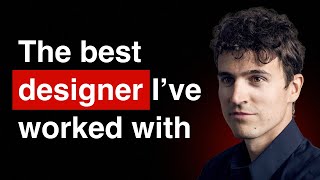
Peter Yang talks with Alex Cornell, a product designer who has worked at Facebook, Substack, Linear, and Meta AI. They discuss design principles, how he built Substack's mobile app and Cocoon, and what generative AI means for designers.
If you get into a field, let's say design, it's presumably because you have good enough taste in that thing that you appreciate it. And the problem when you start working in the field is that you are terrible. And so you look at your own work and you're like, this sucks, you know, because you have good taste and you're not good. So it's like, the delta is enormous, and it's just constantly frustrating. But the interesting thing about that is if you have the good taste, you have the barometer to know and evaluate yourself as you continue to work towards getting better.
And.
And the only way to get better is to just do it in a lot of work. And eventually that gap does start to close. Eventually when it closes, what happens is that you'll do some work and your good taste and the work will be aligned and it will be good. But then, like I said, for me, that only lasts for a little bit of time, and the longer it lasts, the better the work probably was. But if I look at it, I'm, that's great. I go get coffee and I come back and I'm like, crap. It's terrible. It's like, it probably wasn't that good to begin with. So I think it's not really like a total end state. You don't get to a place where it's like, the work is objectively good forever.
My guest today is Alex Cornel, Director of Design@Mea AI. Alex is one of the best product designers that I've ever worked with. He helped design Facebook substack Linear and an app for family and friends called Cocoon. We talked about lessons from designing leading tech products, how design will change with generative AI, and how anyone can start learning design right now. This interview is a must watch if you're interested in design at all. If you enjoy our conversation, please like and subscribe to support this podcast. All right, Alex, well, welcome. Thanks for chatting with me. Not to make you feel too good, but, like, you're, like, one of the best designers I ever worked with, so. And you've made some, like, amazing apps over. Over the years. Right. And amazing products. So I'd like to start at the high level, you know, do you have any kind of, like, core design principles that you think about or follow when building a new product?
Yeah, definitely. Well, first, thanks for that and really happy to be here. I really enjoyed working with you as well, many years ago. Yeah, I think when I think about my process and values, I guess the one that I have to always remind myself of is to resist being too clever. I think that's an instinct that a lot of designers sort of have to temper. And the other side of that I think is sort of embracing intuition, you know, so like your own intuition. And also how that will sort of manifest for a user and an experience that would feel intuitive to them. And I think, I don't know what it is about designers that we sort of crave the clever and the elegant. That is a really tempting and I think risky instinct sometimes, because if you get too clever, your interface will be beautiful, but hard to intuit, and that is not where you want to be. So I think that's definitely something that I think about at first. Yeah, I think of design, I think elegance is sort of like collecting anything niche, like baseball cards or something like that, where it's like there's a small group of people who value this thing extremely, you know, like, and that would be designers, you know, if I showed my work on Twitter or something and it was really flashy, there's a whole group of people that would be really stoked on it. And they're all designers, they're not users, you know, and it's sort of like baseball cards, where it's like the people who like baseball cards, they care a lot about like a Nolan Bryan rookie card. But like the average person's like, that's a piece of paper that's worth nothing to me, you know, And I think there's a lot of design that might fall into that category.
Okay, so still thinking about like the user problems and like not making it too complicated to solve the user problem.
Yeah, and I think it's, it's just sort of like a constant reminder that, you know, what you're working on will be seen by somebody else for the first time. And it's very hard to put yourself in that mindset when you're staring at this thing forever and ever.
Got it. So when you're designing a new product or app from scratch, what kind of process do you follow and how can PMs be a good partner for you during this process?
Yeah, I mean, I think at the outset, at the true outset of something, if we're talking about absolute zero, I think my favorite process is sort of an alternating between unbounded conversation, pretty open discussion in person for hours and hours, not just like 45 minute meeting, you know, like a six hour conversation, maybe coffee break in between, followed by a similarly long period of iteration where you separate, you know, so let's say if it's you and me, you know, I would. And we're starting something new. I would suggest we get together for a day and just talk for a long time. And it's very important that while you're talking, both of you or one of you is taking notes. Because, you know, it's very easy to have an insight and just. It's gone in 20 minutes. So it's pretty. That's not a guided conversation, but it's structured in the sense that you are taking notes and you are, you know, attempting to glean insights in that conversation and then taking that very quickly to a period of design where you can try to manifest whatever it was that came up in that conversation in a way that then you can talk about it the next day. And I think that process of alternating between those two kind of unbounded, just kind of finding your way around in the dark and then like truly putting pen to paper, that back and forth can be really helpful. And Sachin and I, my. My co founder at Cocoon would do that at the beginning. We'd just get together at each other's houses, talk forever. And, you know, we have. I could still go back and find them. It'd probably be pretty interesting, these super long notes of these conversations that we'd be having. And the. The notes are really, really wild. You know, they're just like. It's like following your own kind of inner monologue, and it's just as scattered, but you can bold and pull apart what's useful and then turn that into a design. I think, pretty quickly.
What do you guys talk about for the whole day? Like, like typical stuff, like who the user is, what the problem is, or it's very unstructured.
Yeah, I mean, I think, like, ideally you have presumably gathered together because you share some appreciation or interest in a problem space, you know, and so I think for us, just as an example, because it's. I think it's useful to have some concreteness with Cocoon. You know, we had sort of felt like we had lost a place to connect with our family, you know, and our close friends. And this was in 2018. So, well, after. I think we'd all sort of appreciated that the larger social networks were no longer really the place where you were doing that. And a lot of those relationships had retreated to group messaging, which was not really designed for. At least not designed specifically for those use cases. And I think even just that sentence or two sentences is enough to sort of kick off a conversation, you know, because I could say that and you could be like, oh, yeah, that's true. You know, like, I've got my. My large family chat, which is terrible because, like, you get notifications or whatever, and you just from there you have, like, kind of endless ways you could go. And I think you're really trying to find the shape of the thing and, like, the outer boundary of where it is. And I think, like, once you sort of establish, like, okay, this thing we're talking about is about this big, you know, it's like, now let's fill in all the details and, like, see if within this problem space, maybe there's actually some kind of solution that we might be able to build.
Let's talk about Cocoon some more, because you spent, I think you and Sachin spent four years on. On it, right? So maybe give our listeners, like, an overview of what the app does.
Yeah, yeah. So Cocoon was designed for your close friends and family, and it was essentially a way to stay in touch, share, talk, but designed specifically for those relationships. So, you know, I think that there's a lot that you maybe would feel comfortable sharing with, like, your. Your parents that you wouldn't ever really broadcast to social media. And so we were able to get, like, a lot more, I guess, intimate, you could say, in terms of, like, the types of tools we provided. An example would be like, we did a lot of work around flight tracking, you know, so that this essentially messaging experience could also surface a lot of information about where your flight was if you were on it. It's like the kind of thing that, like, the average chat probably doesn't need that, you know, but the. A lot of my conversations on text with my mom are like, have you taken off yet? Are you at the airport? And we would just automate all of that. And you could sort of imagine or use that as an example and think of lots of other features you might be able to build. But I think ultimately what we were solving for, something I know you'd be familiar with, often it's referred to as the audience problem, you know, which is basically that once an audience of your peers gets sufficiently large, it becomes more difficult to share because you need to share or you need to find something that would sort of meet the criteria for all of those people. The same thing I would share with my sister, I might also. I'd have to now also share with, like, my best friend and my college buddies and also my co workers. And it's like, obviously over time, what meets that, all of those criteria starts to shrink. And the way a lot of companies have traditionally tried to Solve this is by artificially limiting the total size of the audience. So you'll like. I think Path is maybe the most famous example where you could only have a certain number of friends. Or I think even Retro today might be a good example where you know, the size of the total audience you're sharing to is smaller. Close friends, products, these kinds of things like in inside of Instagram. And our feeling was that the actual issue was not so much the total audience size, but it was just context collapse. So even if I only have three friends, let's say it's you and my wife and my coworker. If I post a photo and the three of you comment, you don't know each other, and I know the three of you, but you don't know each other. So the conversation that's going to happen on that photo is going to be really. I think maybe it's going to have to be really fragmented because I can have a conversation with each of you, but, like, you don't care about each other. And so our feeling was that the type of sharing that we thought you should be able to do is still broadcast. Essentially, like sharing the same photo to lots of different people, lots of different groups. But any of the interaction, any of the conversation should be direct and private. So if I post a photo of my latte, that would go out to everybody, but then the conversation would be grouped by. I had a family group, I had a friend group, I had like a direct message with a few people. And that's where we ended up. And I think eventually that was. That felt like the right solution. Unfortunately, where we started and where we made the biggest splash was like, the product was a little different. It was more of an ambient updating app where, like, you could monitor kind of what's going on with one single group of people over the course of the day automatically. And what we pretty quickly discovered was, over time, that's not interesting as you start to understand people's routines. Also, most people have more than one group, which is obvious in retrospect. And also really what people want to do is they want to talk and they want to share mostly photos. So, like, we were sharing like, automated location updates and that kind of thing. And that just wasn't as interesting.
Kind of reminds me of, I'm not sure if you use like, WeChat moments where I can upload a photo and if you comment on it, like, if Satchin is not connected to you, he cannot see your comment. You know, it's not like Facebook, where everyone can See everyone's comments. Like you have to be connected to the other person to see the other person's comments.
Yeah, yeah. It's a similar type of insight where it's like you, you know, you just. Because there's less total people who can comment, it matters like who's connected to who. You know, I think like that symmetry was something that we felt was pretty important. And you know, the hard thing with that is, and this is something that obviously we are aware of at the outset is you're. You are then now artificially constraining your product's ability to grow because you know, once you complete your groups, there's really no incentive to go beyond that. There's no, you know, there's no status game. And you know, we valued that quite a lot. But I think it is also the kind of thing that can put a little bit of a headwind on your growth. And we definitely did feel that. And the people who loved Cocoon loved it deeply. But eventually, you know, we weren't seeing like this sort of explosive growth that you might see on some sort of like viral mechanic that's designed to grow but is ultimately frivolous, you know.
Yeah. So maybe it could have been a good lifestyle business or like bootstrap business, but not like a VC funded business. Right.
Yeah. We considered, you know, towards the end we. This was around the time when subscription products were becoming more mainstream and more accepted. We did move the model into a subscription style business with which you could unlock certain things. And there was definitely a path forward I think where if we had sort of, we had a lot of free users and we would have probably had to force people to like everybody to pay. Like we probably could have kept it alive forever in some version like that. But it, it would be kind of a, a lifestyle business for. And I think probably difficult to keep the lights on actually. But it was, you know, I think towards the end we did see there were lots of different possible paths and I think that that was one of them. We ultimately got acquired by Substack during the pandemic, which was a really interesting and exciting process to go through. I'd never been acquired before, so that was fun.
Yeah.
Yeah.
Let's talk about Substack. Since I write on Substack, I talk to Sachin a lot actually.
Oh great. He's the best. I think he's one of the most, if not the most insightful person I've ever met. And I think you don't start a company with just anybody. And so I think to me, it's starting a company, starting a band and starting a relationship are all in the similar category of how closely you need to align with the person or people you are starting that journey with, you know?
Yeah, it's definitely like a long term commitment. Also, like, as Substack, I think you worked on the mobile app, right? Is that what you worked on?
Yeah, yeah. I think, you know, their interest in us, we shared a lot of values, you know, when it came to just the Internet that we sort of felt like we wanted to see and exist in, but also our specialty. You know, at that time, our team of four had really developed like a very particular specialty which was building mobile apps. And yeah, you know, we had just done that with Cocoon and they didn't have a mobile app and so that was definitely of high interest for them when they brought us in.
And I think the mobile app I'd be using it, you know, it kind of, it kind of looks similar to Twitter in some way. It has an inbox, but it also has like this feed called Substack Notes. I guess while you were designing it, what was kind of like the jobs to be done, like the problems you're trying to solve?
Yeah, yeah, yeah. Well, I guess I should say the app when I designed it was pre Notes. So it was just the inbox and the Notes product came after I left. So I can't speak to that so much. But yeah, when we started, it was really interesting because I had never designed an app like that where I also hadn't designed the product. I guess, you know, you could say, you could say that about when we worked at Facebook. It's like, obviously we didn't design Facebook, but like Live was sort of an experience we were designing together. Substack, you know, existed in full as a product in the world. And so we were basically taking it and translating it into a mobile context. And that wasn't something that I had done before. And I think you have to recognize at that point that you are, you know, a little bit more of a conduit for not only the founder's vision, but also their core customer, which is the writer, you know, so you're sort of bound to a different set of constraints than normal, which is good because actually I think in that case, you know, our, like I said, we had gotten really good at designing and building mobile apps. And I think when you actually have a lot of the, the authority problems already mapped for you of like, what actually is this product and how does it work that it already has Product market fit, like, that's pretty interesting compared to like building an app from zero and trying to like find your way around in the dark to find product market fit. It's almost more a mission of like, don't screw this up. And I think like the thing that became very clear very quickly to us was substack is a two sided market. You know, there are the writers and there are the readers and the app is designed to make the reading experience really good for readers. And you know, I think you might think at first that there's really no, nothing wrong with that. But you know, from a writer's perspective, their work is going out into the world, into the hands of their subscribers and they care quite a lot about, you know, the context of which it's read, like where it appears, how it appears and all of this. And so, you know, you take maybe just something as simple as branding, if you have a very branded newsletter and now it's appearing in an app that is kind of, you know, more homogenizing the way the reading experience. It's like you can see how that might be a balance that's tricky to strike. And I think that was something that was really interesting to navigate. And again like you are sort of feeling like you are having to just really execute according to the wishes of the actual customer, which is the writer, you know, so that was really interesting, I think, and I, I enjoyed it because I care a lot about typography and I care a lot about layout and I care a lot about graphic design, which are things that like, don't always come up in traditional mobile product design. But when you're doing like a reading app, you know, you can actually go pretty deep into the details of like, wait, what actually is the letter spacing, you know, and what is our serif font and that kind of thing, which was really fun. So I enjoyed that quite a lot.
Interesting, maybe. It's definitely a beautiful app, no doubt about it. But maybe the idea is that, you know, when I send a newsletter post out, most of my readers get it in their email inbox, right? But like, if they can use the app instead to read my stuff, maybe they can discover other writers or I can be discovered.
Butter readers. Yeah, yeah, yeah. I mean certainly, you know, it became a very large growth lever for writers because of exactly what you describe. You know, you're being exposed to just a lot more writing that way as a reader, you know, and you might not otherwise have ever seen, you know, if it was coming into your email inbox, you would Obviously, never see another writer's writing there. And I mean, I think, like, that was always the thing, too, for me. I was like, you know, the email client is a pretty sad place to end up in the first place. You know, like, just from, like, in terms of what else is around, you know, you're kind of getting bundled in with all the other emails that you get. And, like, the context there is kind of crazy as well. So, you know, I think the app is a much more serene environment and is designed specifically to get. To give you, like, the best reading experience possible. So, you know, I think, you know, we felt really good about where the writing was ending up there.
Awesome. So then you were at Linear for a brief period and, you know, Linear is like a company that really cares about craftsmanship and design.
Yeah.
I'm curious if you learn anything, if you learn anything from that experience.
Yeah, well, yeah, I mean, Linear is definitely a company that values design more than anywhere I have worked at before. I think it is sort of maybe the best embodiment of the phrase design led, you know, which you hear all the time. And I think maybe not only because it's literally led by a designer in Kari, but also the product itself and the main thrust behind it really does feel like it's coming from a place of design. And I think what I liked about working there, again, it was a similar experience where, you know, they didn't have a mobile app and they wanted one, and I was brought in to essentially bring, you know, that experience into the mobile context. It's very similar to Substack in that, like, there is a product with product market fit that now needs to be translated into mobile. Very similar, which I enjoyed a lot. And I think what it felt like there was a true test and every designer wants this is they always. Every designer always complains they don't have enough time. They're like, oh, we only had a week, or we only had three days, or, like, oh, my God, this. Like, it's always so fast. They wanted to ship whatever. Linear really was a great experiment for me in, like, what happens if you are trusted to hone a thing for as long as you want until you think it's ready. Like, truly, like, we will release this when it is perfect and ready, you know, and, like, that was really fascinating because I don't think I'd ever really been anywhere where there wasn't at least some pressure, you know, artificial pressure, I should say, to release it, because obviously there's pressure of any kind. I'm talking about the artificial pressure of like, here's an arbitrary deadline that we just put on the calendar. And the interesting thing about that is for me as a designer, I sort of measure the objective or objective good of a thing I'm designing by how long it takes me to not like it anymore, if that makes sense. Like, I will design a thing today and in 20 minutes I'll look at it, I'll be like, yeah, that's pretty good. Tomorrow I'm probably going to hate it because I'll have thought about it a bit more. I look at it, I'm like, yeah, actually this doesn't make sense. The length of time between when I design it and how long it takes me not to like it is usually maps pretty well to how like, objectively good it is. And so at Linear, I was sort of allowed to work on it until that period of time became basically non existent. Like, it never really got to. I like the app that when I left that it was like kind of getting ready to go out the door. Sorry for my email was, you know, as far as I could tell, like great. You know, that was really an exciting experience. And they also, they allowed me to explore and do some pretty wild things as well, which I enjoyed. I think my most well known experiment there was pouring canola oil on my iPad and filming it for a marketing campaign, which was. Yeah, yeah, I think it was actually like, it was really fun. They, they, one day they were like, we're releasing this product called Linear Asks and we want to have just like a simple looping video of the logo. Can you think of anything? And I was like, today, like in a couple hours. And they're like, whatever you can do, you know, make it move. You can think of, imagine what that would normally look like, like a logo kind of scaling in and maybe moving around or something. And I don't know what made me think of it, but I had my daughter's iPad with like the crazy like case on it, and I had my camera set up and I just put it, the iPad, under the camera, poured canola oil on the iPad with the logo on the iPad and. And then that was it. And everybody thought it was like 3D because it looks kind of like one of these 3D experience experiments and everything. But it was literally just like 20 minutes pouring the oil on the iPad, cleaning it up, and then that was it. And it was amazing how much it resonated with people, I think, because we've all forgotten sort of the power of, you know, the analog just like, yeah, you know, take a photo of even like for mobile designs too. I find that people react much more strongly to my work when I film it than when I just share it. Static or flat even.
Did you ruin her iPad or. It still works.
Trust me, her iPad has seen far worse than canola oil. Okay, yeah, yeah. That is a very, very small mark on an otherwise well traveled iPad.
So like, you worked at so many different companies and you wrote this blog post about why you left Facebook, but now you're back, but you left blog post. And I think just of it was like, you know, we were working on Facebook Live together. It was a pretty small team, you felt pretty empowered, and then a whole bunch of PMs and teams got involved and it became kind of annoying to deal with. So I'm curious, like, what you think the ideal environment for a designer is like just to.
Yeah, it's a good question. I think. Well, certainly there is no one size fits all. I think as my career is a great example. It's like the person who wrote that blog post is not the same person you're talking to because obviously I've returned to Facebook, you know, so there are things about what I value that have changed and I think that'll be the case for almost anybody. At that time, I was almost a religious follower of the mythical man month concept, you know, and felt like, like almost nothing good could happen if more people were being added, you know, that, that was something I believed very strongly at that time. I do still feel like, you know, the best work is accomplished by small teams and that like, adding manpower really does add time. It doesn't add power, it adds. It just adds time. I do still believe that, but I think that as a designer, you can learn so much and you can add different types of value in so many different contexts that it is really worth getting to experience all of them, you know, And I think I would suggest, when I talk to other designers, I always suggest if they're evaluating, say between a startup and a, a big company, you know, it sort of depends on the stage in their career, but I think there's probably no faster way to learn than at a big company. I think a lot of people will say, you know, at a startup you have to do so much that you can learn so fast. That's sort of true. But I, at least for me personally, found that like, my personal capability expanded exponentially when I worked at Facebook the first time, and I felt so much more capable than when I went into the startup world for this last five year burst, because I'd kind of done a five year burst before Facebook, before where I was just a new designer out of school. I didn't know anything, you know, I didn't know what I was doing. I can't even believe what I was doing back then, you know. And so, yeah, I don't know that there really is an ideal environment. It really does depend what you're looking to. To get out of the experience. So. And that changes, and I think you should be okay with that change, you know, Like, I think a lot of people, like even when I came back to Meta, were surprised because when I had left, I had very strong feelings about certain things and I still feel those things. But I also now am looking for something different in my career and that's just kind of how it goes.
What about. Let's talk about some specifics. Right? So at a big company, you kind of have the luxury of. There's a process where you don't just design whatever you want to ship next. You leap forward three years. Especially since you're working on Generative AI right now. You leap forward three years, you design the North Star experience, and then you walk backwards. I've always had a little bit of skepticism about that stuff because who the hell knows what the hell is going to happen in three years. No one predicted this Gen AI stuff, but now that you're kind of being around the block, how do you feel about this? Do you think designers should just focus on what's shipping or should focus on longer term stuff?
Yeah, really interesting. And Genai is a great example. I mean, I think the expression is refer. I don't know who said it, but they're referring to product market fit, about how it can feel like chasing a boulder down the hill as opposed to pushing a boulder up a hill. It's like as soon as you hit product market fit, it's like you're actually now chasing this thing. That feels to me like Gen AI compared to like, you know, let's say we were to go build like a, I don't know, a dating product or something. The sculpture of that, like that product object is stationary in the ground, has been sculpted for many years by lots of different people. And if we were to go approach it, it would be static and we could just kind of look at every side of it. Gen AI is the rolling boulder down the hill. It's like it's going so fast that like, there is no, like, let's all take a beat and like see it from every angle. It's like it's moving very quickly, and that's obviously very exciting. But in terms of, you know, the value of a North Star and kind of how to balance that with tactical execution, I'd personally like to think of it a bit like a barbell, I guess, where it's important to do a lot of work at either end of the that spectrum and I guess maybe personally enjoy doing the. The Northstar stuff quite a lot. But its ultimate value is, you know, you're not going to ship it, as you said. So if you actually want to kind of keep the engines running, you have to be doing the tactical execution at the same time. And the reason I like to do both is because if you have in your mind a target of where you hope one day it will end up, everything you do tactically at the moment, you're aware of how that might one day fit into the broader system that you've, you know, at least dream will maybe one day come to pass. And, you know, I think maybe when we worked on Facebook video, I had. I was always doing a lot of work on this sort of dream ultimate super player that sort of was able to play any kind of video. And it was a concept always because we had lots of different video players. But anytime I did anything on the live player or any other video player I was working on, I was always sort of aware of where I wanted to end up one day. And so even just simple decisions about, like, where certain buttons will go or the spatial model associated with showing more information, you know, knowing that I wanted to end up, let's just say in like, a modal presentation, I wouldn't then go and say, hey, you know where I think description should go, like, it should go behind the video. It's like, no, I would never do that because, like, that's not where I think it should ultimately end up. And I think you're only really able to do that kind of balance if you're have one foot really in each camp. And then, as you said, like, time will change everything. So, like, what happens in between is sort of an unknown. It's almost not even worth, like, predicting sometimes.
But I guess your point is that, like, the North Star is worth it if it actually affects the decisions you're making for what you want to ship next. Right.
So that's how I think it does have an effect. Yeah, it does, yeah. And I think maybe it depends on how. Far. It depends how long your barbell is. You know, if it's like, I'm here and then 10 years from now, here's the North Star. That's probably not very helpful. You know, I think in my mind, my little barbell that I always sort of work around is like the length of time between the two ends is probably like eight months. You know, it's like still tangibly within sight, you know, like you might actually be able to do. It would be.
Yeah.
You know, I don't often do the kind of work where it's like, what if everything was different and there is no interface and you can do it this, you know, you can talk to it and it's like an AR video. Like I never do that kind of work because it's just so arbitrary and unbounded that I don't really have anything to grab onto, you know, like getting from here to there, the barbell is like, like I said, years long. So it's kind of pointless. I've never really enjoyed doing that kind of North Star.
Got it. Yeah, dude, a North Star does like eight months to a year out. It's actually perfectly shippable. Right. Like you should have a. Yeah, like especially at Meta or these big companies, you should have a year long roadmap, I think.
Yeah, I think, you know, and obviously you can change things as you go, but. And I think also a lot of times for me, the, the Northstar, when people hear North Star, usually they think like, maybe we've all seen these videos on YouTube that like Microsoft will put out where it's like, what if your car was your best friend? And it's like doing, I don't know, like some weird, some crazy North Star video. To me a North Star is more just like, it's like one to three clicks beyond cycle wise, like beyond where we're gonna go next. And it's like, like it's a, it's more of a, like a practical goal. It's like, hey, at some point, wouldn't it be great if we could end up here? It's like, I know, like, we gotta do this and this first and we don't know what's gonna happen with this. But like, if all that stuff goes well, we could be here and it's like we can feel, we can all agree that we probably could get there. And it's like, yeah, maybe you could just stop everything and do it right now. And it's. I have had experiences where a North Star is actually like more of a pivot, you know, like at a startup where it's like, hey, actually let's just do this. Let's just do this instead kind of thing. But at a big company, it's worth keeping it within the site and within reason, I think.
Got it. I also think it's useful to just like, maybe even show the North Star to customers, see if it gets them excited.
Yeah, definitely.
A lot of times at big companies we just try to convince the execs, but why not just show it to the actual customers?
Yeah, for sure. We did that at Cocoon. We had a 2.0 kind of launch that I remember road showed a little bit with customers. And yeah, I mean, that's always super valuable. And it's so humbling too, because it's very easy to sort of get blinders on and feel like what you have is obviously what has to happen, and it's not always quite so obvious for everybody, you know?
Dude, so let's talk about AI a little bit. Why don't I start this?
What?
How do you use AI in your personal life, whether as a designer or just like, as a dad?
As a dad, yeah. Well, I've, over the last few years, kind of used a blend of all of the. Certainly on the like, LLM front, I used sort of a blend. I remember before ChatGPT became ChatGPT and it was just GPT, I think I wasn't work, I was in between companies. And I remember some friends were like, let's build an email AI where you could respond to your emails, you know, and at that, it's hard to go back to this place where, like, we. Nobody really understood the capability of AI. Like, we didn't understand what it could do. And so even that was. Wait, what it could respond for you? Like, how would that work? You know, and this was pre chatgpt. And I remember the first demo, somebody had gotten an email, it was maybe like an automated email about, like, asking them if they wanted to donate to some campaign. And the AI responded, that sounds great. I've wired you $500,000. You know, like, it had like, fabricated this response of sending the money. And we were all like, oh, my God, this is the craziest thing we've ever seen. And then course, you know, like, I don't know, two months later, Chat GPT came out. And I thought that was such a fascinating thing because we had been playing around with the technology in this really weird way. Like the way you used to have to interface with it was like, you know, I forget even what it looked like, but it felt almost like you were coding.
Yeah.
And then all of a sudden, you know, it was released in Chat format, which to me is. That is just a very. The technology was basically the same. It was just a small tweak of presentation and interface and then it became the fastest growing product of all time, you know, and it's like. It's like pretty crazy, you know, and I think like an amazing. Maybe I'm simplifying it, but like kind of an amazing example of how framing can really alter someone's perception. Because the technology was available, it wasn't as if you couldn't use the technology that powered the first version of it, you know. So I think that was pretty cool, I thought. But anyway, I was just going to say I've been using, you know, all, all of the various tools since as long as I've had access. I think the one that I had the most experience with and probably the most fun with, especially early on, was Mid Journey. Reminded me a lot of when my daughter was born. And I had a lot of time, like on the couch. I got really into drawing. I haven't. Hadn't done art for a long time, but I got really into using Procreate and doing like isometric drawings. And just drawing was like a therapeutic thing, you know, and using Mid Journey. And in the same way that sort of replaced what prior was like browsing Twitter or something. Like, if I was sitting on the couch, maybe I'd be like scrolling a feed or something. I started drawing instead. Mid Journey also sort of replaced that sort of kind of browsing with more of like a. It was sort of like a hybrid of creating and browsing. Like, I think, like, oh, I wonder what it would look like if like an espresso machine was designed by Dieter Rams and, you know, was as tall as a small apartment building, you know, and it's like, so there was like a creative aspect and then the browsing was just sort of looking at that output and being like, oh, that's kind of cool. Like, it was a really interesting. Like, I've never really had an experience like that where creation and browsing were combined into like one experience. It's like kind of a weird thing because when you're drawing, it's like you don't really think of your output as being something that you're like, browsing. It's like, because you're drawing it, it's like all at one time. But like, since there's a little bit of a handoff between like the create creative aspect of prompting a generative AI and seeing its output, that I think that little handoff period is enough to Be like, you know, you're trying this thing out, which is kind of fun. Yeah.
I think, like, it's a lot easier to create something that's a remix of something else that you see than to just make it from scratch. So, yeah, like, you can see Midjourneys, like, for. For me, like, you know, I see people post memes on Twitter and I just, like, repost it with, like, another description. Maybe that's the same thing for Mid Journey.
Yeah, yeah. Commentary. Yeah.
Let's talk about this whole chatbot thing, man. Like, you know, we talk about ChatGPT. Like, how do you think the interface. Do you think the interface will go from buttons and menus to chatbots, or do you think there's something else out there with AI?
Well, I think with AI, one thing I've learned is that, you know, predicting what will happen too far into the future is usually a fool's errand, you know, which is one of the reasons why I enjoy working in the space, is how quickly it evolves. It can feel sort of. It's really, you know, it's really hard to grasp the power and what the possibilities are. So I think, like, I don't spec. I don't speculate too often, but I do think that, you know, it's as with many things, you know, like, when we bring the old assumptions of the way tools work and to new capability, usually that's like, the first step. Usually, you know, it's like here we have like. Like, even using Mid Journey is, like, kind of hilarious if you think about what you're actually doing, you know, like, literally talking to it through discord, using these really abstract commands. And then the buttons you get in return are, like, really random. It's like, here's an image. Would you like to see it twice as big, or would you like to see it half as small? Or would you like to see to the right of the image or to the left of it? It's like, what. Why are those my options? You know, and it's really feels like a literal mapping of, like, what does this. What are we able to do? Oh, well, we can make it twice as big. Great button. We could also see. We could, like, you know, we could expand the sides. Great. Four bar buttons. You know, it's like. It's a literal mapping of, like, what are we able to do to what is the interface? And I think, like, as. And I think even, you know, they're, I think, releasing now a web interface which will obviously evolve some of that stuff, but I think like, over time, as we move away from the sort of just like literal map of what can it do to what buttons we expose, I think that will obviously become a lot more intuitive, to use my favorite word. You know, I think it'll get maybe a lot more. I would suspect it would become a lot more freeform and less like, literal, you know, Like, I think a lot of those interfaces now are like super, super limited and literal.
So I mean, like, maybe something where like you just have a canvas and you like, draw some boxes and fill stuff in or resize it and then, you know, it expands it. Right?
Yeah, I don't know. Yeah, exactly. You know, it's like, it's really. It's. I guess. I don't know.
Yeah, it's got to follow all the AI newsletters.
Yeah, yeah, exactly.
Okay. All right, man. Well, I guess last topic. So, you know, there's been like, a lot of, like, layoffs in tech. And like, I talked to Scott, who is like the CPO of Adobe. He talks about how the talent stack is collapsing. In fact, I asked him, like, how do you find a product leader who's really good at design? And he says, just hire a designer. So I guess the question, you know, as someone who has like, really good design taste has been through this. How does someone who's not a designer start learning design or start acquiring taste?
So.
So to speak.
Yeah, definitely. I mean, I think I started my, I guess, creative career in music and a lot of designers have, I suppose. But I think there's a lot of good parallels between how you become good at music and how you become good at design. And you can break that into three categories, probably. You obviously have to listen to a lot, which in the case of design is just constant exposure to. Let's. We'll use product design as an example, recognizing that design is much broader than product design, you know, obviously, but product design, just since we've been talking about it, you know, if you want to become a good designer, you need to be exposed and aware of what is out there, you know, and that's everything from reading the hig, you know, the interface guidelines and the Android material guidelines, reading that from COVID to cover, but also just using as much as you can because, you know, the way Apple does a traditional modal presentation is one way, but then like a couple guys in a garage are going to think of some crazy, weird way to do it. Like, I saw that it's not that often you see a new interface paradigm, but I was just using the Amy calendar and they have this, like, pretty wild thing where the interface is, like, split in two. And it's like, there's an implication that you've actually got, like, almost two planes of the app that can kind of move in parallel. And it's like, I never really seen that before. And it's like, that's awesome. And if you're not exposing yourself constantly to that kind of ideas, it'd be very hard to conceive of that kind of thing completely on your own all the time. The same is true. And then so from there, I think if you're listening to a lot of music, so to speak, the next step, usually to learn, is to copy it, you know, And I think through copying and in music, it's very. It's less copy, and it's like you just learn to play other people's music. It's like, that's how most people get better in design. It's. It's hard to tell designers to be like, go, build. Like that interface I just described. Go prototype that. And in doing that, since you're not a good designer, presumably there will be these mutations that occur that are sometimes delightful, but also that becomes what your style is. Sort of the amalgamated, mutated combination of what you've tried to do with your own mistakes, and that just eventually becomes your style. Like, you mix a bunch of things together. Like, if you. Like, for me, when I was learning guitar, it's like, I love Jimi Hendrix, but I also love John there, and, you know, he loved Jimi Hendrix, but his version of Jimi Hendrix is obviously different than Jimi Hendrix. And then my version of their version of. It's like. It becomes this, like, you know, crazy mixture. And I think that that's an important step. And then I think lastly, you know, if you're just trying to get good at design, there's a absolute requirement to just do as much work as possible, which, in the music example, would be practice. But there's so much value to working constantly, not only physical. Like, I'm, for example, very fast. Like, when I work on anything, I do it very quickly because I've gotten so used to the keyboard commands. And my mouse is fast and just I'm able to very quickly do what I need to do. And that only comes through practice. It's an essential step. And then I think we either talked about it or you wrote it down before. I can't remember. But the Ira Glass interview, which I've referenced and quoted before, it's like every once in a while, there's a person that says a thing that's like, could not be more true. And it's like. It's almost like, distills everything that's important down so precisely that it's like, really, you could just listen to how he talks about getting good, in his case, at doing radio interviews, but, like, you could just treat it as getting good at a thing. It's like. It's so perfect that it's like, you almost should just listen to that and do what he says. And I'll do a terrible job of reiterating what he says, but his basic point is, like, if you get into a field, let's say design, it's presumably because you have good enough taste in that thing that you appreciate it. And we just have to assume for the sake of this argument that you have relatively good taste. And the problem, as he says, when you start working in the field is that you are terrible. And so you look at your own work and you're like, this sucks, you know, because you have good taste and you're not good. So it's like. Like, the delta is enormous, and it's just constantly frustrating and which. But the interesting thing about that is if you have the good taste, you have the barometer to know and evaluate yourself as you continue to work towards getting better. And the only way to get better is to do, as he would say, is to just do it in a lot of work, you know, and eventually that gap does start to close. And as I mentioned, for me, like, we're eventually when it closes, what happens is that you'll do some work and you'll look at it and your good taste and the work will be aligned and it will be good. But then, like I said, for me, that only lasts for a little bit of time. And the longer it lasts, the better the work probably was. But, like, if I look at it, I'm like, oh, that's great. I go get coffee and I come back and I'm like, crap. Terrible. It's like, it probably wasn't that good to begin with, you know, So I think it's not really, like a total end state. You don't get to a place where it's like, yeah, you know, the work is objectively good forever, but, yeah. Anyway, I think, like, those three categories, you know, exposure to lots of work, replicating as much as you can, and then practice.
Yeah.
That would be how I would tell a designer to get better. Got it.
So the first two are kind of like acquiring good taste. Right. And the third one is kind of like, level of your skill, so you can make the good taste stuff yourself.
Yeah, and good taste is an interesting concept. Just generally, I think the way I've always interpreted it is basically how close does your subjective understanding of a artistic field map to the general public? You know, so somebody like Rick Rubin, you know, who. Who has, you know, one of the best reputations of all time of music producers, perhaps it's just that his personal taste maps directly to the zeitgeist taste. You know, like, maybe that's. I don't know, like, maybe that's, like. He's fortunate in that way because there are people whose taste is so far outside of what might be considered, like, global or broad that they just end up having a very niche career. So I. Taste is a really funky concept, and I think it's not like a solid object that has some true objective meaning.
Yeah, I do think you have to be honest to yourself. Right. Like, you gotta be honest what you think good taste is. And yeah, you're right. It might not be the mainstream or the mainstream thinks good taste is.
Yeah, you have to really, like, have a good. That's why I think it's important to constantly sort of be ingesting lots of work. Because, you know, if you are, I think what ultimately becomes other people's perception of your good taste is that you have a really. You're really in tune with kind of what's out there, what's happening, what's fresh and what's interesting. If you're totally out of touch and you're not really ingesting a lot of work, maybe it's just that you're just exceptionally creative on your own, but probably you. You will just be a little bit behind what is, you know, the actual.
Yeah.
Kind of current thing. So, you know, I think that's why that's such an important part of the process, because I don't know of another way to do that.
All right, man. So, yeah, thanks so much for this chat. Where can people find you online? Should I direct them to your rising music career or what?
You know, I still maintain I uploaded music to Spotify maybe 15 years ago, and it still gets. You know, I think it's over. Might be it's either 30 or 50 million, I can't remember, but it's like, it's just been a constantly surprising, wonderful outlet that I have only ever. I plugged into it, like I said a decade ago. And it's just constantly sending me love back in a way that, like, feels so unearned at this point because it was so long ago, but no. Yeah, so you can find me on Spotify if you wish, but I think probably since the general landscape of networks is ever shifting, I usually just like to send people to my website because I think if I say find me on some network, who knows if it's there tomorrow? So, yeah, just AlexCornell.com is a safe bet, us.
More from Peter

Dropbox VP's Best AI Workflows to Help You Take Back Time at Work | Morgan Brown


Canva Co-Founder: The AI Playbook Behind the World's Most Popular Design Tool | Cameron Adams

How OpenAI's Head of Business Products Uses ChatGPT to Save Time at Work | Nate Gonzalez

Complete Vibe Coding Tutorial: Build a Full Stack App in 30 Min with AI | Matt Palmer (Replit)


Complete AI Course (2025): Prompting, Evals, RAG & Fine-Tuning | Adam Loving (Meta)



