The Journey from Senior VP to Solopreneur | Elena Verna (Dropbox)
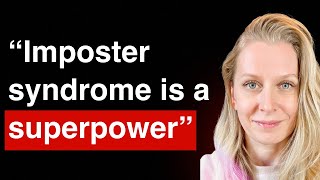
This is a YouTube video titled "The Journey from Senior VP to Solopreneur | Elena Verna (Dropbox)" created in March 2024. The content is an interview-style talk featuring Dara Ladjevardian discussing her career progression from entry-level roles to senior leadership at SurveyMonkey, her transition into advising and solopreneurship, and her insights on growth frameworks and career development. The conversation covers topics such as overcoming imposter syndrome, the importance of mentors, growth laws, and the benefits and challenges of independent consulting. The interview provides a detailed personal and professional narrative aimed at career growth and entrepreneurship.
I have a huge imposter syndrome. I've never shaken it off and if anything, sometimes it flares up deeper and more aggressive than I've ever had it before. Imposter syndrome is not something you should shy away from or using this excuse of why not to do something. Realize that you have imposter syndrome because you set unrealistic goals for yourself and use that as your superpower. Because now you will do extra work and extra research and you will really know your shit before you open your mouth.
Today my guest is Elena Verna, a solopreneur who has served as head of growth at companies like Dropbox, Amplitude, Miro and more. Elena and I talked about why she left a full time role to work for herself, the five laws of growth and how they can be applied to your career and her advice for people who want to explore solopreneurship and going out on their own. Elena is incredibly inspiring and I think you'll love our conversation. Be sure to like and subscribe for.
More interviews like this. Let's dive in. Thanks so much for coming today. Super, super interested in your career, super interested in your growth framework. So why don't we just dive in?
Yeah, let's do it. Thanks for having me.
So you spent the first phase of your career at SurveyMonkey where you kind of rose from a manager to the svp. And we talk a little bit about that phase, like what are some traits that really helped you grow at that company?
Well, I didn't just rise from a manager, I actually rose from entry level IC all the way to SVP in the seven and a half years that I've been there. So I joined there as an entry level analyst. Actually took a step down when I joined SurveyMonkey because before that I was at Safeway and I rose to Senior analytics, but then to switch into tech, I need to take a step back again. So I took a title cut and pay cut in order to get into tech just because I thought there was going to be more opportunity for learning. And I did a couple of career shifts at SurveyMoney. So I went from analytics and I got to a leadership level at analytics to a director level and then I went into product marketing and then I went into growth product management and then I went into growth marketing and then I solidified it as just overall growth which consisted of growth marketing, growth product management and analytics. So there was quite a few changes, but it doesn't mean that it was all linear and it was all happy path. And that's exactly what I wanted to be. There's a couple of things that are were very important for me in my time on SurveyMonkey. Number one, having really fantastic managers and sponsors that actually wanted to challenge me and saw potential in me and wanted to invest into me. So environment very much matters. This is not a replicatable journey that I could have gone through in every single company. I just found the right environment and there is a little bit of a science and a little bit of luck involved in finding that. But at the same time, there's also a very important framework that I've always applied to my life that I only recognized recently. But that is we as humans grow linearly. We go from point A to point B. We have a goal of point B that is linear in nature. However, what we want to have is exponential growth paths in our career. So how do you take a linear growth line and turn it into exponential growth pattern? Well, that is by inflecting the slope of that line as often as possible in the more steep, steeper direction. So the point is to identify the inflection points. And inflection points is what helps you change the slope of the line and create a linear curve out of a bunch of linear progressions that you are shooting towards. And identifying the right set of inflection points for yourself is the most important exercise that you can do for your personal growth. A lot of people think that inflection points are switching jobs. I get a new job and that will be my inflection point. That's actually the biggest deflection point most of the time. Because taking on a new job is extremely risky for you as a person. You in fact absorb all of the risk of taking a new opportunity because you will have to explain that job for the rest of your life in your resume and in your career. For a company, you are a blip in their lifetime. They will never have to explain you. So by accepting a position, especially within our broken recruiting system, you absorb all of the risk of potential failure and company absorbs nearly none. And so for that perspective, yes, new job can be a really amazing inflection point. But more so than not, it's actually a deflection point for your growth. Because you are in wrong environment, in the wrong business, in the wrong industry. You're not able to exercise your superpowers much more stable. Inflection points are finding a mentor or sponsor in organization, getting a new manager, getting new responsibilities, managing up and unlocking new potential, or giving another role another try, like an internal switch within departments that gives you A lot more stable and predictable output to inflect your growth curve as opposed to switching jobs. But that's not to say that I didn't try to switch jobs when I was at SurveyMonkey. I just had really amazing managers that prevented me from doing so.
Okay, so it's taking it out at a good company and then like finding those mentors and find those roles that allows you to. I mean it sounds like you also had like a pretty diverse range of experiences that maybe also helped your senior leadership position where you got it right.
It's like, yeah, yes and no. I mean, at the end of the day I only had analytics experience. That was my superpower and I carried that analytics analytics experience with me into every single position that I took on. I didn't never try to switch away from it. I layered on top of it. So that helps me continuously progress and layer forward as opposed to having to start from the beginning in another position. So when I got to Director of Analytics, I didn't take a step back to ICPMing. When I went into growth product that was already a director a product. Because even though I did have some player jobs and I did PMing myself for the beginning before I hired the team, so to speak, at the end of the day, because I was able to leverage my previous skills, I could continue progressing forward more in the T shape. So I went up vertically as far as I could and then I went T shape horizontally by exercising the skills that I've learned in analytics and then leadership to just start absorbing other teams as opposed to starting from scratch in every single team and special team because I didn't no longer needed to have all of that technical skill set. My responsibility was different on that side. My responsibility ability was more of a visionary for that department, not an executionary that I had to actually go into AdWords and manage the account, so to speak.
Yeah, that makes sense. And we can talk about layering more in the growth frameworks a little bit more about that. But yeah. So after SurveyMonkey, I would love to understand your path from rising up in your organization to doing your own thing and like how you decide to make that leap.
Yeah, that leap came from failures that I've experienced. My first failure that I've had is that I realized that I don't know how to interview for leadership level roles. And that came from when I left SurveyMonkey when it was time for me to leave and there was a lot of events happening with SurveyMonkey that really told me that I had to go One of them biggest one is that our CEO passed away, Dick Goldberg. So it was just a very emotional time at the company and I needed a one step separation. But then I jumped into another company so quickly just because I got attached to idea, I got married to a concept and I thought that all of the problems that the company had is what I could solve. And then I realized that it wasn't a good match. Now it's not that the company is bad, it's just it was a bad match for me and my skill set and I was not successful in that company. And I was trying to reverse engineer my interview process and I'm like, what would I have done differently? And I had a really hard time coming up with how would I interview differently for the next job. Yeah, I can have like this additional data point of what I should be looking for, but I'm missing so many. Like I'm missing a framework of how to find my next best job that I can stay in for next seven and eight years because I don't have any experience in doing that. And everybody in the recruiting market tells you the story of rainbows and unicorns and butterflies, of how everything is incredible because they just want you to sign on a dotted line and then your retention suffers because nobody actually speaks the hard truths about the company and the problems that they're facing. And I'm as a candidate not incentivized to tell hard truths either because I want to land the position. So it's like both parties are lying to each other and then the consequences is bad match most of the time or incorrect placement. And on leadership level, it's very detrimental to hire a bad leader, whether it's for the company or for the person themselves, because you have pretty wide impact on a business. So a bad hire and there's so many bad leadership hires that are happening that are leaving a year, two years after being on the job. It's just it sets everybody back however many years. So I actually went into advising as a way to try before I buy my next position. I never went to it as a way to find my independence and my solopreneurship. I went into it to say, listen, I have no idea how to interview. Let me start advising and then convert one of those advising positions to full time after I validate as a try before you buy concept, so to speak, that this is the right match. I get not only through setup, moment of interview, I get an aha moment with them where I exchange value. I get into habitual moments, I finish my activation and then I can monetize by moving into core frequency of engagement by accepting their full time position. That was my train of thought of why I wanted to do advising.
Got it. Yeah. So you advise to some really great companies like Miro and other companies and at some point you decided not to do a full time thing. Right. You just decided to keep advising. So like how did that have happened? Just like you're enjoying the advising phase. Yeah.
So at the beginning I always thought that full time is the end destination. But then as I started advising, I will sudden saw additional benefit of not being tied to a full time position. Which is for me as somebody who loves growth and who loves data, it's one thing to be in one company and only see data points from that one company only and not really know whether they work because it's that company or whether it's actual framework that is applicable across the entire industry. When I started advising, because I always picked fairly tightly in my swim lane of this is B2B companies with product led growth frameworks within some sort of productivity development developer industry. So when I started advising like, oh, I'm running a multivariate a B test across all of these companies, so I know for sure what is a data point and what is a framework because I very clearly see what tactics and what strategy scale and which ones are super pointed because of how that product or how that user base is acting with that product. So it actually became a lot more interesting to me of focusing not just on successful implementation of one pointed solution in the company, but developing frameworks for the entire industry which then give me ability to create a lot of content. Because now I see what other people have really hard time seeing because they're missing data points and that can act as my freemium acquisition vehicle to create pipeline for more advising. So started creating the content loop for me and standing up the freemium business model. But it took me six to eight months to realize that because at the beginning I was laser focused with hey, I'm looking for my next full time job. But then when I figured out that I can learn more through advising than I can through full time position and I can lose all of the bullshit jobs of creating decks, writing memos, managing forecasts, doing people management, I'm like, I actually can focus on things that I love that are my superpowers, let go of everything else, continue my learning journey and be more self sufficient and not having to be dependent on a single company. But it was an evolution. It's not like I went into it thinking this is what I'm gonna do. This was definitely a prototype that I tested into.
Was it like just at the initial phase, like we didn't have a W2 anymore? Like, was it hard to find the first few companies to do this advisory role or like pretty much you were off the basis right away.
So first of all, it was terrifying. The terrify. I have two kids, I have mortgage payments, I have car payments.
Yeah.
I have vacations that I need to take from my brain. I have groceries to buy. I have private school bills that I had to pay for my preschool and kindergarten age kids. I had at that time. When I did that move, I was terrified. I had a hard time sleeping because like, what am I doing? There's so much pressure on my shoulders to provide for my family. And yet I'm taking this leap of faith into something that I don't even know if it's sustainable. And if it's not sustainable, consequences of it are not, oh, I failed. But I learned, haha. Everything's great, no consequences. I can't make my mortgage payments. I was not financially free. I did not have that financial freedom that people enjoy that say I'm just gonna do things for fun. No, I had to make money.
Yeah.
Because that financial freedom was not there. It was very terrifying. And the way that I tried to de risk it was the following. First of all, I met a couple of people that were already doing it. My most memorable meeting was with Casey Winters who was already doing advising as a full time job. And I'm like, how do you do this? Just to give me an insight of how somebody has been able to succeed with this already. How much was he charging? How was he structuring contracts? Where did he get his healthcare? Like I didn't even know any of those questions because had to answer also all of them. And then the second of all, I actually, there's no really good place that I found yet, at least that you can go to and say, oh, all of these companies are looking for advisors apply here. Yeah, those positions are not advertised. However, what I did do is I have a lot of, well, not a lot, but I had recruiters reaching out to me. And when there was a recruiter that was reaching out internally from the company or even more so if it was a hiring manager that was reaching out to me or CEO reaching out to me from the company trying to recruit recruit me, I would turn back that request and I say, I'm not available for full time, but would you consider exploring advising relationship and to my surprise, 70 to 60% of them said, yeah, absolutely, we need help right now and we'll take any help that we can get. And that's how I closed my first couple of contracts and after I was able to put them on my LinkedIn and like really start changing my positioning on the market that this is what I do now, then the pipeline started coming my way. But that initial switch is you have to take your full time pipeline and convert it, so to speak, to advising pipeline at the beginning before you can start changing your positioning in the market altogether.
Interesting. Yeah. I imagine as like a startup founder, like it also sucks for the founder to like hire someone full time and like have that person leave after a year because it didn't work out. So they probably want.
Cost is enormous. Yeah, the cost is enormous if you have a wrong hire. And the way that I position my advising, by the way, at the beginning, which I genuinely was expecting to do, is to say I'm not looking for full time. Would you do an advising relationship with me right now? If it works out, I'm happy to discuss full time position afterwards, but I just want to understand what's happening first on more of a lighter basis and if this works out, let's talk more. And by the way, one of those advising for Nero that I started first and they actually saw me first speak at Growth Marketing Conference in San Francisco and that's what prompted them to approach me and to say, hey, can we work with you in any capacity? And I'm like not available for full time, but can we maybe do advising? And they said yes. And that transitioned into my first interim gig. So they approached to me and they said, hey, we've parted ways with our head of marketing, part of marketing lab left. Could you step in as our cmo? We need help right now. We know you, us, can you just come in and help us out on a short term basis. And that's how I landed CMO of Miro for the first time. So I saw that it was actually a great way to then transition into additional use case for myself, additional package, so to speak, for myself, which is interim engagements. And that's because advising is awesome. I love advising. That's really my main use case. But as an operator it lacks accountability for me. I love the crushing weight of feeling being responsible for something. And as an advisor, I'm only coaching. I'm not a player mode at all. And sometimes I know exactly what a company needs to do and I just want to shake them and say, please do it. Like I know this is going to be right and they say no, we're going to go in a different direction and I have to accept that as an advisor that they can disagree and they can just go in a different path. So sometimes going back into operating shoes but not have to commit to full time position gives me my fix of accountability and then I can go back to advising. And it also gives me a really incredible way to prototype the frameworks that I'm creating in my head so I can actually run through it myself as a very involved data point and then come out of it without having any long term expectations from either company or market or myself on the position. Go back to advising and select another case study that I'd want to do on an interim basis.
Got it? Yeah, that sounds really awesome because like you're probably also just making more impact on the world by doing this, right? You're like, like helping multiple companies then it's not just one or being it's more diversified.
I actually think the biggest impact that I've been making is with my content on LinkedIn because I have so many people reaching out to me saying it's been enlightening or they share it inside their company or they're learning new ways of looking and thinking about things. So that impact at scale is very gratifying for sure.
Let's talk about some of the the growth loops but maybe like let's make it fun. So let's talk about like some of the growth loops that you have going for yourself. Like what are some of these loops that you have going? You have a content loop, I have a content loop.
My content loop is strong. My content loop is very strong. So I post content, I share it. It's being viewed by many people, hundreds of thousands of people. Sometimes depending on success of the post, they share it with other people internally or they reshare it and the loop just keeps on going because it gives me a great discussion points within my content. Like I read every sing single comment that goes on my post because that's a great source for me to create even more content. That's also a great source for me to connect with people to generate more ideas at the same time. So that content loop, I love it spinning. It's actually a huge educational piece for me and it's a acquisition for my business as well because it acts almost as qualifier for my top of the funnel. People know exactly my point of view, they know exactly my beliefs and my frameworks. So when they come to me for help, I Don't need to screen them. They already screened through my content. So I can go into business of, okay, how can I actually help you? There's like not a lot of qualification that I have to do, which saves me a lot of time. But I also have a really fantastic word of mouth loop. I do a lot of free workshops with companies to assess whether I'm the right advising potential for them. So I have a freemium onboarding for every single advising client. I have a conversation. Okay, it's qualified conversation, interesting company, interesting problem. I go into an hour workshop for free with them to qualify whether they're going to be a good candidate for me to advise afterwards. I do not proceed with probably 50 to 60% of them, but they refer me to other companies because CEO network is very small. VC network is very small. So there's word of mouth referrals out of the workshops that I've held that I even didn't monetize in the end are quite powerful to drive additional very high intent leads my way. And those high intent leads help me create additional streams of how to monetize them. Not everybody needs an ongoing engagement with advising. Some people just want workshops. So I created a plan for just monetary workshop and that's it. Without advising expectations. I've created a plan for just doing a presentation inside the company because they're like we just to want wants to hear from an expert here. I'm like, I can monetize on that because I get a lot of inbound on that. So it starts creating different packages on which my monetization streams can rely as opposed to having only one singular sort of income.
That's awesome. Yeah. It sounds like your advisory and your interim roles are coming from like the C suite. How about just like is there like some sort of user loop where like the people who follow your content or like, like the students that you taught at Reforge? Is there loops there or like maybe something you're planning?
There's a lot of referral loops there that are going out. Most of them are word of mouth or it's. I use it. They share my content. So I'm like, I'm a company generated content and then it's distributed because they share it on my behalf. So there's a lot of referrals happening in that sense. And that falls into brand building fundamentally. And my brand promise, so to speak, is that frameworks are cheap and I'm going to share every single framework possible out there. What's hard is implementing those frameworks and localizing them to your business to actually understand how it works and how to succeed within that framework. And that's what I monetize on. So that's my strategy. So my freemium content is a huge acquisition vehicle for me. I monetize on operationalizing it with few and then there's a lot of word of mouth and referral happening everywhere in between.
Got it. Okay. Yeah. That's awesome.
It sounds like I haven't quantified those loops, but I think I can actually. I should create a quant model for myself.
Yeah, you gotta track all this stuff.
Yeah, exactly.
Okay, so let's talk about growth a bit more. I think why don't we just jump straight to your. Somewhere on your Website you listed 5 laws of growth and maybe you can just like elaborate on what those five things are and just like briefly.
Yeah, yes, absolutely. And these laws of growth is something that I noticed as a pattern of when growth actually works and not. So this is not any company specific. This is just a pattern of what works in the growth field. So first of all you have to do product market fit first. Cannot focus on growth before you reach product market fit. Now growth hypothesis is we've been into the product market fit because especially if you're in product led growth, it has to be weaved in into product market fit. But if you focus on distribution too soon, you actually might kill your potential of reaching product market fit and understanding the problem that is you solving for the market. Then you have to focus on data because the whole concept of growth is to be data driven and scientific about your decision making. So product market fit, then data, then growth. That order is non negotiable. And if you try to switch things around, you just going to have very minimal results out of growth function or you're going to have false starts or very unhappy hires in growth that you bring in if you're missing one of those pieces. And this is really solving for startups trying to hire head of growth growth way too soon before they actually have strong product market fit. Or trying to hire for growth before you have any sort of data infrastructure. And then all that growth person does is just uses their intuition. Why not have just product manager do that? The whole point of growth is to be data driven and experimentation experimental in nature. Second of all is scale with frameworks, not hacking. That's the second principle. Frameworks are just patterns on how to solve problems. Our limiting factor as human beings is context switching. We cannot constantly come up with a unique and solution for every single problem. In fact what makes us scale successfully as team members, as leaders, is ability to have frameworks of how to solve those problems. Now, a hack may be valuable here and there as one off pointed solution that is very specific to this problem. But a framework presents you the patterns that you can apply and solve things not only in predictable way, in sustainable way, but also in a way that the team can do it at scale as opposed to relying only on your yourself to solve things, to solve the problems for your business. So frameworks, especially for growth, ensure sustainability and predictability in your growth model that can scale across the entire organization and the team. The third law is build. Oops, not funnels. Funnels is an awesome framework that was introduced some 10 years ago and it's all about AR. It's a pirate funnel. Acquisition, activation, retention, revenue and referral. And it's incredible. But it assumes marketing will always own acquisition, transition product will always own activation and retention, and sales will always own some sort of monetization and referral piece. While in the world where we have sales led growth models, product led growth models, marketing led growth models, you need to not think about it as a funnel where each department is assigned to a specific metric, but you need to think about it as a growth loop and how each department can contribute into that growth loop. Specifically the breaks with product led growth models. Because in product led growth models, product is responsible for acquisition, product can be responsible for monetization. So you really need to identify those loops and have all of the departments contribute to those loops as opposed to building funnels. Funnels always leaky in general. You constantly need to feed them with more on top to get something at the bottom. Loop is a self enforcing and it breaks the concept of departmental silos as well. So that's the third law. The fourth law is growth is evolution, not a revolution. That's probably one of most important laws. And that's because growth is meant to be predictable, sustainable and competitively defensible. But in order to get predictability and sustainability, you need to evolve there. The whole point is to test into it so you have the learnings of what actually works and what doesn't. If you're trying to revolt and create a revolution, you haven't started growth soon enough because it's already too late and you need a revolution. Evolution gets adoption across the company. Evolution gets more learnings and and sustainable learnings and predictable successes. So I'm all for just evolving in a sustainable way versus revolving or creating revolution within the company. And then the last one, which is just the core concept of what growth is all about, which is turning failures into learnings. Growth is actually about failing a lot. It's not about winning. And only if you can be comfortable with the failures and apply growth mindset to turn those failures into learnings and define better success points based on those learnings. That's the only time that you can win. So learning how to fail will teach you how to win. But going after wins without knowing how to fail and learn from those fails creates not only lack of predictability and sustainability again, but it actually, it undermines the whole concept of growth mindset.
Yeah, if you just see everything, you don't really reflect on anything. So but only when you like painfully fail, then you actually sit down, reflect on what happened.
Failure is the most important things that we can extract day to day out of our life in general, especially in work context. Failures show us that we have perception and reality gap with our customers. And understanding that gap is the most valuable information that you can have in your business. Only relying on your intuition and winning because of your intuition, which by the way is what will reward leadership on have an idea, be right in that idea because that's what we celebrate. Which is so backwards versus saying this is what we've learned and now this is what we're going to do based on our learnings. And this is why perception and reality gaps grow within these businesses and then they get disrupted by somebody else because they become disattached from what's actually happening in the market because they continuously following intuition and black box decision making.
Like what worked before doesn't mean that it'll work now now, right?
Yeah, exactly, exactly.
So like right now it's like a pretty hard time for tech people and you've went on this journey where you've taken the power back for yourself and like, just like, do you have any advice? People who are in different levels in tech who want to apply some of these frameworks for their own career or just like not be at the whim of these different employers. Do you have any thoughts on.
Yeah, so first of all of those different employers play very valuable part in building your skill set mindset, building your learnings and building your brand. So I would not be where I am right now if I didn't have my surveymonkey experience. I'm very grateful to surveymonkey and to my employment there and everything that it taught me. So don't just try to get out of it, use it as a learning opportunity. Like this is my anchor that I'm starting. Second of all. I think it's about setting the correct career goals for yourself. I've actually had incredible correct goals for myself. I always thought that I want to be a CEO or I want to be a VP at the company or SVP at the company because it came with some sort of increased perceived value. It came obviously with bigger impact. I was really shooting for impact. It came with bigger financial upside. I didn't realize that I actually should be shooting much farther than that. I should be shooting to become an independent and own my own own journey as opposed to relying on somebody else to earn to own my success. But that came much later in my realization. I hope I realized that early. So I hope that everybody who's reading this or listening to this will set their goals on career optionality, not on a specific title. That would be my point number one. That's what you should be shooting towards and working backwards from.
More from Peter

Dropbox VP's Best AI Workflows to Help You Take Back Time at Work | Morgan Brown


Canva Co-Founder: The AI Playbook Behind the World's Most Popular Design Tool | Cameron Adams

How OpenAI's Head of Business Products Uses ChatGPT to Save Time at Work | Nate Gonzalez

Complete Vibe Coding Tutorial: Build a Full Stack App in 30 Min with AI | Matt Palmer (Replit)


Complete AI Course (2025): Prompting, Evals, RAG & Fine-Tuning | Adam Loving (Meta)



