This AI Tool Lets You Build Apps Faster Than Googling | Amjad Masad (Replit)
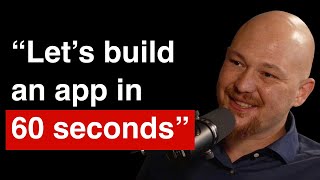
This is a YouTube video titled "This AI Tool Lets You Build Apps Faster Than Googling | Amjad Masad (Replit)" published in February 2025. It features a conversational interview between Peter Yang and Amjad Masad, CEO of Replit, discussing the evolution of programming with AI, how Replit's AI agent helps users build software quickly, and the future of coding and product management in the AI era. The discussion includes a live demo of building a nutrition tracker app using Replit's AI tools, insights into Replit's product vision, and advice for programmers and product managers navigating the changing tech landscape.
I think if you were to work in tech, you have two radically divergent ways to think about it. If you want to be a programmer and have job security, I think you have to pick something as close to the metal as possible. For example, NASA will not have JavaScript generated or like GPT generated JavaScript, run the rockets, right? Or the Tesla cars or what have you. So if you want to work on embedded systems using C, you have job security for 50 years. The other direction is you want to get really good at being a product person and being a generalist, being a designer, a maker, pm. And that's because I think this, like, full Stack developer, that's the thing that's most at risk, right? Because it's the thing that's Most Represented on GitHub. It's the thing that AI is most good at and it's the thing that's already somewhat automated. Like people using Gret and Cursor and others, you're already sort of automating a big part of it. So I think the need, the demand for engineers like that I think will go down and instead companies will look for generalists that can go from ideation to production code by using AI. And I think they're going to be a lot more highly leveraged. And again, also, if you're already in industry, I would run in one of those directions. Don't stay in the middle. I think the middle is going to get squeezed.
Okay, well, welcome everyone. My guest today is Amjad, CEO of Red Plat Red Plate, has 34 million users and just made his AI agent free for everyone to try. So super exciting. Really excited to talk to Amjad about why this is the most exciting time to learn how to code, how Replay is different from other AI tools, and how AI agents will transform product teams. So welcome.
Thank you. It's my pleasure to be here. Excited to share more with you.
All right, so let's talk about how to learn to code with AI. You know, like a while ago, like Jensen Huang said, like, kids shouldn't learn to code because AI will just do all the work for them. But you actually have a law under your name that says otherwise. Can you talk more about that?
Yeah. My view is that programming is evolving and when Jensen says something like that, I'm not entirely sure whether he means that we shouldn't teach programming like we used to or the idea is that we should adapt to how programming is taught. So I think the act of programming with AI is significantly different than sort of sitting down and breaking down the problem. Into components and writing classes and figuring out how to wire these classes and figuring out what package to use. And in a way, programming with AI, I think is a more pure form of programming because you're not dealing with, especially on replit, because we automate a lot of stuff. You're not dealing with a minutia, you're not dealing with the setup, with things that are really, they don't, they're not about building, they're kind of chores, right? So a lot of the chores go away and what's left is you and your creativity. And I think that's the most exciting thing thing about programming. And so the law you're talking about is my observation is every six months we have a new model and every model is getting better at coding. And that's been the case since, you know, GPT3 because there was this observation that coding is, makes models more intelligent at everything else. And then, you know, Copilot became a huge business and it turned out that okay, this is a product market fit for this technology and they started optimizing for coding. And so, you know, GPT4, 4.5 clots on it was this huge jump and now we have O3 mini just come out R1 these new reasoning models which they're really good at programming in certain ways better than the others and other ways different I think still getting better. But there's basically six months on the dot. Claude 3.5 San it was like, it was like you know, June maybe and so December you had, by December you had like, you know, deep seq v3 and 01 preview and all of that stuff. So every six months coding becomes easier to start with and more powerful. So both the floor is becoming more accessible and the ceiling is being raised. You can do more things with AI. Therefore every, every bit of skill of coding or programming that, that you learn is going to take you further every six months.
Yep, makes sense.
Some skills might get outdated for sure, but Nat, I think that the just, just continuously learning a little bit this craft, the skill is going to turn exponentially more on your investment.
This episode is brought to you by Vanta. Whether you're a startup founder navigating your first audit or a security professional building your GRC program, security has never been more critical or more complex. That's where Vanta comes in. Businesses use Vanta to establish trust by automating compliance needs across over 35 frameworks like SoC2 and ISO 27001. Vanta can help you start or scale your security program by connecting you with auditors to conduct your audit and set up your program fast. Plus, with automation and AI throughout the platform, Vanta gives you time back so you can focus on building your company. Join over 9,000 companies like Atlassian, Quora and Factory who use Vanta to manage risk and prove security in real time. Get a thousand dollars off@vanta.com, peter. That's V-A-N-T-A.com, peter, for $1,000 off. Now back to the episode. Yeah, and I love how, like, you know, it's made it so that you can get the reward right away. You can see the fruits of your labor. I mean, I have to give you credit, man. Like, because even before AI, I was using a Replete and AS is like a pm, right? Someone's not super technical. It was such a pain to actually have to install these libraries, try to figure out which library install and do all this stuff. But Ratplet made all that easy even before AI. But even with that, I tried taking your 100 days of AI course.
I think it was like 100 days of Python, right?
Yes, 100 days of Python. And I tweeted about it and then I only got to day seven because life got in the way and it just felt like very removed from the stuff I wanted to actually build. So I guess, how would you recommend?
Yeah, I wouldn't recommend 100 days of code. 100 days? No, not right now. Yeah, yeah.
So how would you recommend, let's say a total beginner trying to learn how to code. How should someone get started?
Now, I would start with something like replit agent. So you put in your idea, you describe it in natural language. Actually, I can start sharing now, I think is a good time to kind of go through once you log into Replit, but the first thing you'll see is like, what do you want to build today? And here you can put a prompt as small and direct as you want it to be, or you can get really creative. And product managers really like to write these sophisticated PRDs. So, Peter, you should give me an idea just so the audience, you know, doesn't think we're sort of cooking this. And this is the real deal.
Why don't we do some sort of a. Okay, so for example, I have problems tracking my nutrition. Like, like, I. I want to eat more protein every day. And like, using my fitness pal sucks. Cause, like, so many ads and stuff in there. Can we do something like a basic nutrition tracker?
I want a basic nutrition. We can do improve prompt and see. See what it comes up with, so web based nutrition tracker, monitor daily food intake, food entry system back your nutrient, daily nutrition summary progress. Okay, great, let's go.
All right, that was the PM part. You just skipped that part.
Yes, yeah, exactly. And so now we go into this sort of lobby experience where the agent takes our prompt, is constructing a plan behind the scenes and any second kind of it's going to give you a plan. So it says, it picked a stack for you. It says, I'm going to use Streamlit for this because I think it sort of inferred that it is a data and visualization heavy application. You can change that. So I can just say, no, I want it in React and I'll propose a new plan. But let's go with this and see. Let's go with the recommended solution and see what it comes up with.
Yeah, that's cool that it gives you the plan first to approve before it.
Just starts coding because we have multiple. I think we'll get to that when we're talking about other tools. But we have a lot of different stacks and we're going to be adding more, we're going to be adding a mobile stack because we want people to do whatever they want. And sometimes one stack will not be able to do everything for you. So back to the question of how could you learn? How do you learn to code? Today I would really start by making things. And the reason why you should start this way is because now you understand what coding is for. Whereas the way coding typically is taught is like you teach the programming, you teach the F statement, whatever, but you wouldn't know what to do with it. And so here we are inverting it where we're going to actually sort of show you what you can do with it. And then the way you learn is basically you'll run into a problem invariably and you're going to have to figure out what kind of tools you need to recover from this problem. And that'll expose you to code. The AI might get totally blocked and you have to go and find other tools, go to stack overflow, go read the code, go explain the code. So now it's taking a screenshot of the app. It built the app and now it presented to us. So it looked at it, it wrote the code, looked at it, make sure it's working, and then it presented it to us. So here it's gonna, you know, we're gonna put our, you know, weight and height and age and let's say moderate activity and let's say we want to lose weight. Let's search for food item. I wonder where get the data from.
Does it add some data or I.
Think that it maybe tried to get. Or maybe it expects me to add a meal here. So add to meal plan Apple. Okay, good. So now we have today's calories. There's zero protein. See progress. So you can see the calories, you can see the carbs, the macronutrients. And so it's, it's pretty complete so far. Add a feature if you like or we can deploy it too.
Where is it getting the data from? Like it's already just added a bunch of data about the truth.
I think we, I think so I created it created a sort of some default data and I think, I think we'll be able to create. Let's see chicken breast. So yeah, we can ask it now where can we create more maybe like assets.
You'll just add a bunch more data. Like probably has data in the LLM. Yeah.
Okay. Yeah. So you know, notice here it's asking you to test it and once you're done testing it, you're going to say yes, it works well, but I want you to add a lot more foods to the database.
Okay. And is it set up a proper database for this or is it like saving stuff on the client or something.
So we can actually see it doesn't look like it set up a database, but so we can ask it. Sometimes if you made it explicit in the prompt, it will set it up, but because it's paid sometimes it'll just give you the ability to do it down the line.
Got it.
You could just say like hey, set up a database for me and make it persistent and we'll go do that. Yeah.
Okay. So it's adding food now. Nice.
Yeah. Here we go.
There's more. Now it's all healthy food.
Should we ask for McDonald's?
McDonald's.
So let me tell it to make a database. It works well. Let's migrate to postgres.
That is pretty unique for Reptile. I don't think these other tools have database.
Yes. At the same time as it's doing that, it just says I created a database for you right here, let me show you the deployment. So you can just click deploy. And this is the other thing that's kind of unique as well is that we have, you know, full deployment environment. You could, you know, you could run seamless, you could run virtual machines, you can run auto scale machines. It has, you know, versioning secrets, logs, analytics. So it's a pretty complete Deployment platform in addition to a development platform.
So yeah, I mean it's great that you built all this stuff before the AI stuff came in because it all works together.
Yes, exactly. We have this eight years head start. So let's see Apple add meal plan. Let's put an apple here.
Okay, so let me ask you two questions. One is like I guess if there's like a bug and I get stuck, right? And like, you know, with these other tools I've tried, you can get into a state where it's like hey, code fixes bug and then it fixes a bug and then there's like a new bug and then I don't actually understand how the code works. So it's like just like hey, coffee bugs. So how do you avoid this like loop that people get stuck?
Yeah. So I want to show you a few things. One is as the AI is coding, it is explaining what it's doing. Oh, that's awesome. Yeah, as it's writing database py, it's saying what it's doing here. So the top of every action it is explaining what it's doing. Then the other thing I'd like to do is, and I encourage people to do is go into the files database PY for example and I want to dig into this and actually try to understand it step by step. For example, I want to see what this does. I'm going to click explain with Assistant. Should go to assistant here. I'm not sure why it did not work here. It replied in line. Sure. It goes through the code line by line and tells you exactly what happens and then you can go to the chat here and have a longer session. So explain to me like five.
Okay, yeah, this is awesome because normally I would just copy it into like cloud or something and try to get explain it. But you can do it right here.
Exactly. Yeah. So you know it can dumb it down for you. You can also let's start in your chat like ask it higher level question, explain how this project is structured. So this project is a nutrition tracking application built with Python Streamlit SQLAlchemy. The main component is App Py Models Py. I can click on it and go to the file.
That's awesome.
Yeah, directory structure and so on and so forth. So I would say like talking to the AI and sometimes yeah, going to Claude is also helpful. So you can get like a fresh contacts or go into ChatGPT or whatever your AI tool of choice and asking questions about the code base. If you run into a bug you could take that Error. Ask about an assistant and then ask it, okay, take me to the file and show me what I do to fix it. If the AI is stuck and can't really fix it, I would go. Google AI is amazing. But by the way, before AI engineers were like half of their time on Google. So Google still has, like, a lot of amazing content for you to explore and learn. And my experience teaching people to program and seeing people using Replit Agent is that you're leveling up naturally, almost by sort of almost by osmosis, because you're flexing that muscle of debugging, of systems thinking. And slowly you learn how to code. At some point, you become so interested in the craft that maybe you'll go take a programming course. But it's after you understood what is programming for.
Yeah, it's almost like the reverse, right? Like you actually build something and then you try to break it down. Like you try to. I think the key step that most people don't do is actually like asking questions. Like, explain this to me, how does this work? That's what you need to do. You ask the questions.
Yeah, yeah. I think knowing what to ask is actually quite an important skill. And the other important skill is, like, what's typically called systems thinking is being able to, like, break down problems, think through them one by one. That also enables you to do the right prompting. Because, you know, a lot of people that I think fail with Agent and similar tools is that they continuously give it, like large scope. And if you're telling it every time to, like, do something really large, then you're increasing the chance of failure as opposed to chunking the request down.
So if you were to give a couple top tips, it'll be do it one feature at a time or one scope at a time. What are some tips to use? Replay Agent?
Yeah, I would say I would start with a chat session, do everything, set up the database, get the first prototype. Now I want to iterate on it. So I will create a new chat and start a new session, a new plan with the agent and do that one feature. For example, I want to add a way to look up food from the Internet. Maybe there's an API. And so I'll start a new session and do that. Now if I failed and it didn't work, well, we have this feature called rollback. So you can click rollback and like, you know, start from the start, because that happens sometimes and you don't want it to break your application. And then another tip is, you know, as the project gets bigger you want to give it increasingly more pointed instructions and tell it what not to do because sometimes it gets too creative and starts doing things it's not supposed to do. And we're trying to fix this problem, but somewhat of an inherent problem with these models being a little creative. And yeah, I would say those are kind of two big tips. Don't be afraid of rollback. Start new chats often and be extremely precise with the prompt and don't make it so that you're asking three different things. Just ask one thing at a time.
In each prompt and then, of course, ask some questions to figure out what he's doing. Just like for learning purposes.
Yeah. I especially recommend going to the assistant, so you can think of the assistant as like the cousin of the agent. So agent is doing things on your behalf. It's going to take a lot. It has a lot of agency. It's going to make a lot of decisions without consulting you. Assistant is more like a copilot kind of tool where it's not going to make any changes until you ask it to. It is really much better at chatting. You can brainstorm with it. And so it's important to know when to use the tools.
Awesome. Thanks for giving me that demo. So let's kind of switch gears a little bit. I want to talk a little about how Replit builds products and why don't we start with your vision for the company. Like, is everyone going to become a programmer or what was the vision?
Yeah, yeah. So if you think about it, the ultimate, let's call it the ultimate function of a computer is to do things on your behalf, is to automate your work, just do things for you. Right. It is not just a tool like a pencil. It is a tool that can, you know, do a lot more things behind the scenes. You give it an instruction. So in an Excel spreadsheet, you change a number, it will reflow do all these calculations. So computers were always meant to be like that. Now the problem is very few people know how to code. And so the most programmable environment that most people have is only Excel. You know that there are other sort of modern tools, but they really, you know, they stop at the sort of the power of Excel. So if you were to wave your hands and get everyone to become a programmer, I think a lot more people would get a lot more of computers and I think productivity would soar. I think people will be happier because they're not doing menial tasks. So it's sort of similar to this vision of AGI, but you don't really need full AGI. As long as you have a machine that is good at writing programs, you're going to have a very powerful tool. So our view is that not everyone needs to be a programmer, but everyone can benefit from making software. So we have examples from a community where a dad makes software for education. Like make it interactive sort of solar system application and you can scroll through and like look at the planets and their information and things like that. Another thing is like, you know, dad made this app called Chore Hero. It's for their, for, it's like a leaderboard for the kids to see who's doing the most chores, who's collecting the most scores and things like that.
That's nice.
So obviously people, you know, we just made an app for workout but people use it for work a lot as well. So it's like this dual nature of it that makes it very interesting. And this is why I feel strongly that we're going to reach a billion people eventually. Because I really think that if you can use a computer, you should be able to make software.
Yeah. And I love how like Aslet is kind of more personal software. Like, like I made an app that just helped me resizes images for my blog and like I never sell it for money but it's like it's a useful tool for me personally. It's like very adjusts one person's problem.
Yeah. And especially all these tools on the Internet that are full of ads and spam and whatever. So making your own tools is just like way better. I said this before we launched Agent, but I said the ultimate test for like a co generation system is that you can make an app faster than you can Google for it.
I love that. Yeah.
In some cases that's true today. Yeah.
Because Google you have to like browse all the links and like, you know, look at all the ads. How do you think about replit? Like how do you differentiate replit against all the other coding agents out there like you know, bolt, code cursor, V0.
Yeah. So I think, you know, I think you know there, there are these apps that are focused on code generation which I put kind of Bolt and Cursor in similar category. It's. You're not using them to make the end user software maybe in some cases because you have to take it somewhere else most of the time. You know, sometimes you make it with Bolt or V0, take it to cursor, improve it in cursor, and then take it to Vercel and deploy it there with Replit, the entire software development lifecycle is in one place. If you're using Cursor, you still need to figure out what database to use, how to do authentic, and you need to learn all of that stuff. You need to learn how to start a development environment. And with Relet, just, you could come to Relet, you put in the natural language prompt. We'll create a database for you, we'll figure out what kind of deployments you need. Obviously we'll make the app for you. You can do sort of database migrations, you can handle different integrations. Like we could have asked Replit to make a, you know, summarize my daily progress of my Nutrition tracker using OpenAI and they'll say, okay, you know, what is your OpenAI secret? Then it'll save that and use that to summarize it. Another thing is Replit supports a lot of different stacks. We have people doing a lot of data analysis and dashboards using Streamlit. We have a lot of people making sort of personal apps either with like Flask and JavaScript or React and JavaScript. There are people making APIs. So I'm just going to make an API, you know, with Fast API or Flask to go grab something from the Internet and return JSON because I want to plug it into zapier or some of my own or I'm going to give it to a front end engineer and they're going to use it. So it's a lot more dynamic tool with a wider sort of aperture and scale of usages.
Yeah, I mean, I mean, you know, going back to. You guys have been doing this for eight or nine years, right? So it's much more full featured. How do you get to be like. Because for a lot of consumers they just care about like the user experience. So I'm just curious like how do you get the agent to build good ui? Like how do you. Is that a hard problem?
Yeah, we've gotten a lot better at it over the past three or four months. A lot of it's just prompts, just figuring out the right prompts. A lot of it is just like yelling at it to like make beautiful websites, make modern production ready websites or something like that.
Okay.
And you know, I'm not kidding, you know, that's a big part of it. The other part is using the light right libraries. So you know, SHADCN is a sort of JavaScript React JS library that ships with components that from the start are actually pretty nice. You know, I'm sure you've seen it vzr I think uses it by default as well. And using like an existing design system like that makes the app by default. It was like, oh, I'm just going to ship this to production. And then there's like responsiveness and there's like making sure you have the right HTML tags. And a lot of it is just like kind of, you know, iterating and fixing all these small things just to make sure the user experience is a lot better.
Yeah, you have to be like very detail oriented during these AI products. What do you think about, let's talk about. I think you worked at Facebook for like two or three years, right? Like a long time ago. And you know, like a lot of these companies have like these annual planning processes with like a lot of PMs in your room and then, and then they have like a three year roadmap or like a vision and then I don't know, I just feel like it's kind of like, you know, not very useful if you spend money doing that kind of stuff. So like how do you guys do planning or like what do you think about all this planning stuff, frankly?
Frankly we don't.
That's great.
And honestly, I think roadmaps are dead. You want to be able to react to new technology which happens every two weeks now. So we dropped everything and played with R1. We decided it's actually very interesting academically, but it doesn't come close to Sonnet for coding, for example. So you want to be able to react to that. But if it turned out to be great, we're just going to pour more resources into it and build it into our system. So in this environment where the ground is shifting underneath your feet, you want to be able to kind of shift resources really quickly. And roadmaps make people rigid because they're going to be single minded about one thing. The way we do things is I generally have a sort of direction or a higher level goal. For example, this quarter or this month we're focusing on growth. And then I say like, okay, come up with ideas for growth and everyone goes and like have, has ideas and then we put them together, we pick the best ideas, we'll split the teams and like we go work on it and then let's say, oh, we want to work on reliability. It's like here are the issues, like you know, agent reliability. We have all these metrics, we want to move these metrics and then, you know, everyone contributes to that. And so we try to do like one or two or three things per whatever quarter or Whatever interval we're thinking about and we don't really plan for the next quarter. Like, as we're doing this, like more information presents itself and the application change and the user behavior change and the technology change. And so then we come up with a priority for the next quarter. And again, it's like single word, you know, growth, reliability, retention, something like that. Sometimes it's like, yeah, we're going to build a new product, right? Sometimes it's like, you know, by the time people are watching this, we would have launched our new mobile app that is Agent AI first and allows you to build apps on your phone. I encourage everyone to go try it out. And so that came out from the feeling that, you know, mobile is a really great, could be a really great experience and we could reach people that otherwise we wouldn't be able to reach because there are a lot of people that spend about zero time on their, you know, on their computer and they spend it more on their iPhones and iPads and, and things like that. So this is how we sort of make decisions and how we align the team. And I think especially small startups should consider doing something like that.
Yeah, and how do you think? Like, how do you guys use Replay internally? Or like, how does the product teams build? How do you guys build the mobile app?
The way we see Replit is it is for making these standalone applications and relatively simple, being able to, you can deploy them, being able to scale them, you can build a business on it. But if you're a professional engineer working at Replit, sometimes you just need an ide. So we have that. But the way we use Repl dot is two or three ways. One is our designers use it to prototype. Increasingly we're skipping the FIGMA step. We go straight to prototypes. Our engineers use it to look at the feasibility of doing something. Our engineers use it all the time for building debugging tools, building proof of concepts, things like that. And every once in a while we use it to build a production system. And typically that's like a microservice or API or something like that. We also use it a lot for data analysis. But if we're building the Rust infrastructure that runs the cloud for replit, we're not going to use Replit for that.
What do the PMs do? Or do you still have PMs in the company?
Do the PMs do we have one PM that was designer originally. We just added also young and very energetic and exciting pm. But PM organization at Repla is not fully developed yet. And RPMs are kind of creators, right. Like, so they spend a lot of time making things either in FIGMA or in replit. They bring experience around how to design experiments. They talk to users a lot. They do research and user testing. They do quite a bit of project management and make sure different teams are talking together and aligning. But we're at a point and you know, maybe someone in the audience would, would want to join. We're at a point where we're hiring for product management.
Okay. Yeah. My theory is that you can't be like a straight shot PM anymore these days. You got to like have some other skill. Like you got to at least talk to the users, man. You can't just like do all the internal alignment stuff.
Yeah, yeah, exactly.
Yeah.
I mean, I think PM is one of those very dynamically shifting sort of roles.
But actually PMs actually can help build AI products now because the prompt is so important and some of this stuff is just very manual and iterative. So yesterday I spent the whole day trying to update a prompt for my product. It's actually kind of annoying work, man. It's like going back and forth.
What is your background?
We're building this. I can't talk too much about it. We're building this AI product internally at Roblox and we're trying to make the output consistent, not have it hallucinate. And updating the prompt is one part of it. Right. Updating a prompt, running the evals. Updating a prompt again, it's like that, that, that loop.
You're a product manager.
Yeah.
And. But you're. It sounds like you're in the trenches building.
I mean. Yeah, I mean I'm like the anti pm. I pride myself on being the anti pm. So like I want to build, I don't want to write documents.
Yes. Amen. Amen.
Well, okay, well, let's wrap up by talking about, let's talk a bit about your big launch. Like what are some of the big things are changing about Replit?
So the big thing is we're making Replit Agent free to try. So we'll give people like a generous allotment of credits to try our Applet Agent. You can go all the way from a prompt to an app that's working and you'll be able to share it with your friends. And I think that's like one of the most cherished experience when you're able to make software and share it with someone. We like. I mentioned the mobile app a couple times, but I think that is quite It's a first of its kind. We took a lot of novel approach for the design to figure out what is like a making experience look on such a tiny screen. And I think we have some really exciting sort of design concept that I hope people will try. And then we were coming out with like a social experience where once you make an app on Replit, you can choose to share it to let other people remix it. And talking about the educational experience that we talked about earlier, being able to remix other people's apps, I found as a kid that's how I learned I would download Visual Basic code from the Internet and tinker with it until it works. We're coming up with a new onboarding experience that teaches you how to use Replit, because for a long time we just threw you on this homepage and you have to figure it out. So this new onboarding experience will, for new users, will guide you through building your first application, perhaps sharing it as well.
Yeah, I noticed that the UI has evolved from, like, it's got a more focus over time all the way to now it's just like an input box. So that's great.
Yeah, I think over time we're going to keep simplifying. And that's the thing about our culture, is that there are no sick or cows. I think you don't want to be tied to a certain time and place and you want to be able to meet the future where it is or actually run towards the future before the future alive. So you can be ahead of the game maybe a little bit.
And do you have any closing words of advice? We're at an interesting moment in tech, right, where maybe it's the year of the AI agents. Maybe instead of doing copilot, saying you can just tell agent, do something and then come back an hour later and it'll be done. And at the same time, you have all these companies, like big tech companies, like, you know, trying to be more efficient, going through layoffs. Like, how does someone get, you know, someone in tech? Think about all this.
Like, I think if you're sort of going through school, you have two, and you want to work in tech, you have two radically divergent ways to think about it. If you want to be a programmer and have job security, I think you have to pick something as close to the metal as possible. For example, NASA will not have JavaScript generated or like GPT generated. JavaScript run the rockets, right? Or the Tesla cars or what have you. So if you want to work on embedded systems using C, you have job security for 50 years, maybe. Similarly, if you work on cloud platform writing, Rust or Go or things like that, I found that the AI's is typically not very good at that because it is not very well represented in the training data. The other direction is you want to get really good at being a product person and being a generalist, being a designer, a maker, a pm. And that's because I think this like Full Stack developer, that's the thing that's most at risk, right? Because it's the thing that's Most represented on GitHub. It's the thing that AI is most good at and it's the thing that's already somewhat automated. Like people using Gret and Cursor and others, you're already sort of automating a big part of it. So I think the need, the demand for engineers like that I think will go down and instead companies will look for generalists that can go from ideation to production code by using AI. And I think they're going to be a lot more highly leveraged. And again, also, if you're already in industry, I would run in one of those directions. Don't stay in the middle. I think the middle is going to get squeezed.
I totally agree. And I think the generalist direction is more fun because you're going to try different things every day and maybe you can just start your own one person company and sell a niche thing and then it'll work out for you.
Yeah, yeah. I know a bunch of people who did that. With the sort of advent of generative AI.
Awesome. Well, Angelo, where can people. Well, I guess I go to replay.com, right?
Go to replay.com, sign up, try agent. If you like it, give us some money and we'll make sure that you're going to have a blast. I was just going to say like a massad am a s a D on the web, like Twitter is the channel I spend most of my time.
On and I want to thank you on behalf of all the pms out there for democratizing programming for all of us. So we have hope.
Yeah, my pleasure. Yeah. Thank you. Thanks for having me.
More from Peter

Dropbox VP's Best AI Workflows to Help You Take Back Time at Work | Morgan Brown


Canva Co-Founder: The AI Playbook Behind the World's Most Popular Design Tool | Cameron Adams

How OpenAI's Head of Business Products Uses ChatGPT to Save Time at Work | Nate Gonzalez

Complete Vibe Coding Tutorial: Build a Full Stack App in 30 Min with AI | Matt Palmer (Replit)


Complete AI Course (2025): Prompting, Evals, RAG & Fine-Tuning | Adam Loving (Meta)



